Blizzard

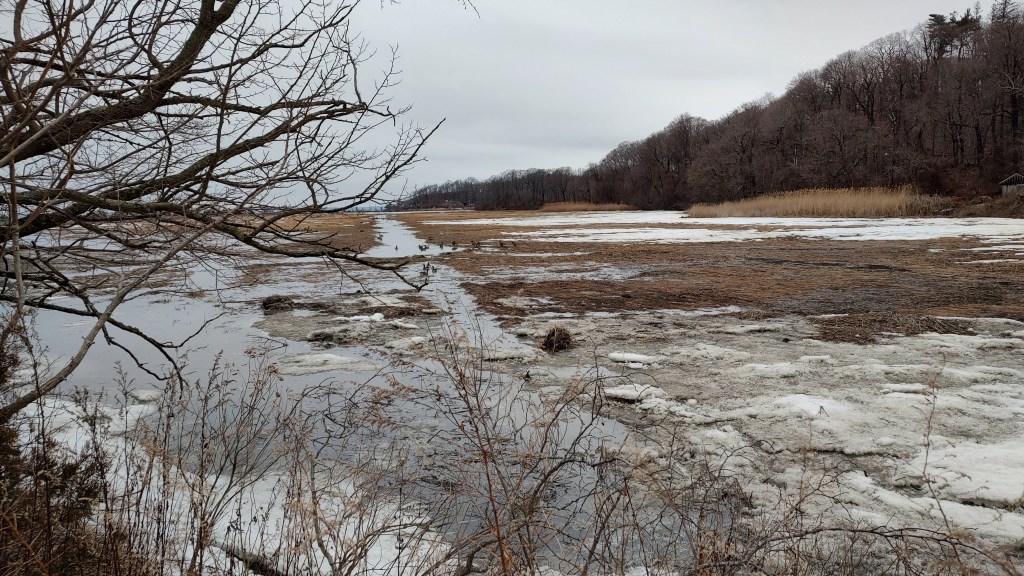
Blizzards, like everything else, are not what they used to be. Oh, snow and wind remain, but consequences tend to be trivial. In 1888, a Long Island blizzard killed hundreds, caught unexpectedly in the fields after a warm spring day. In my youthful 1950s, extended electric outage had my mom chopping up furniture to keep the fireplace going. The current “historic” blizzard of 2026 didn’t even bring down many trees, cause extensive disruption of electricity, close roads more than a day, much inconvenience shoppers or let children have a holiday .

It’s a quite robust world for things that we can prepare for. I not only do not complain, but am in awe at how truly competent our society can be. Not only blizzards, but also other disasters, plagues, and extended patterns like drought, famine. War, of course, remains. And the stubborn, if limited, evil of certain individuals .

Anyway, for a day or so we all enjoyed a true frisson of dangerous disruption. All the better because reality turned out far gentler than imagination. We are quite spoiled .

I try to emphasize that all the time. To be grateful for the normal, the calm, the taken for granted. Glory in how much lives have truly improved for many over the last few centuries. For a little while, to truly embrace the miracles of economic progress .

Legal Childhood

“Childhood” as we know it is a fairly recent invention. Not long ago, many kids would die before the age of five or six and were treated as favored pets. By the age of seven they were often used as near-slaves doing chores for the tribe, family farm, or industry. After twelve or so they were considered fully functioning adults _ married, working, or grittily apprenticed to a future career .

As the European industrial revolution progressed, “childhood” became redefined. Age definitions were gradually raised, partly because of horrendous working conditions, partly from increased middle class wealth and health, partly from a desire to keep youth out of the competitive workforce. The teenager was invented .

Now the plain fact is that in historical terms, “teenager” is a crazy concept. Most 13-year-olds have always been young adults. Our legal conception of teenagers as children is indefensible. 

Admittedly, teenagers and young adults are confused, have a lot to learn, and are not wise (so unlike older adults.) But we should remember that throughout the tens of thousands of years of the existence of our species, the average lifespan was 40 or less. A 16-year-old was in the prime of life .

We should adjust. As all parents have learned, treating a teenager as a “child” is doomed to failure.  Laws which attempt to do the same are not merely wrong, but also immoral.

A Little Knowledge

“A little knowledge is a dangerous thing”. You think you are an expert, but you are not. A very easy trap to fall into, since we tend to overestimate ourselves .

Obviously this is hardly a new condition, but it has certainly been more and more aggravated by media and global electronic connections. We are “aware” of an awful lot of stuff. Unfortunately, that awareness is often shallow, scattered, wrong and only leads to worry about things over which we have no influence. And about which we may have entirely inappropriate background information and deep understanding .

At one time, we left most issues to “experts”. They might have been right or wrong, but it took our minds off such things and – since we rarely are directly impacted by distant stuff – did no harm. But now the internet is flooded with “facts”, stories, and anecdotes that falsely claim to deepen our knowledge about anything and make experts irrelevant .

As we believe we know it all, each of our worries becomes somehow more real and our own responsibility. We MUST do something. We must change things. We think we are fully aware. 

We are wrong. About most of the vast ineffable universe of things, individuals, and society we each know very little except what we directly encounter and we often misinterpret that. The only 

true cure is a bit more humility .

Expected

People are almost infinitely socially adaptable. Almost any condition can be tolerated. We happily navigate through societies where everyone is honest, nobody is honest, haggling is required, bribes are necessary, and even when contacts with certain ideas or groups are prohibited .

Over time, we can adjust, of course. If formerly honest people turn dishonest and so on. But we feel somewhat secure as long as the rules remain more or less as expected. And security, often more than wealth, is what a lot of us desire most. Know what will happen if we do certain things.

Dystopias, such as depicted in “1984”, are often nightmares because expectations constantly shatter. “Interesting times” when the world goes topsy-turvy are rarely happy. When we don’t know if the police are going to save us or destroy us. Even tiny things in our life like whether a food will make us sick or not .

Civilization right now has an odd combination of solid old traditions – meeting expectations – and completely new challenges making every plan fragile. It’s probably not a lot different than living through plague times in an ancient wealthy city .

What never helps is when authority itself becomes irrationally chaotic, so that each day presents new laws and declarations making the old laws obsolete or themselves illegal.

Even when change is what is expected, we may worry nervously .

Influences

Angry white folks are upset that Horatio Alger is no longer taught in public school. He was, of course, a fictional character, fake even in his own time way over a century ago, as unreal as Sir Lancelot .

Alger represented an ideal that anyone could succeed with luck and pluck. Like Caesar, Washington, Napoleon. More to the point Carnegie, Edison, and Ford. In more modern times Gates, Jobs, Musk. Ruthless, lucky, smart and very hard working to achieve great things from their own effort .

Implication in my tender years was that anyone could do this, just by working hard. Only later did we realize that most of those heroes came from backgrounds of wealth, social status, or unusual training. Even Jobs, now lionized, had a technically employed father who brought home computer stuff when most people had never heard of it .

Influences, contacts – whatever. I am not saying that these paragons did not work hard, did not deserve success. They did. But “merit” as a fairy tale of rags to riches is rarely any more true than any other apology for the wealthy and powerful .

The playing field was never level. Maybe even less so now. 

Abundance

Not that long ago, it was assumed that “India could never feed itself”. The “population bomb” would kill us all in malthusian cataclysm. Popular psychology decided that humans always want more than they have .

At least in many places, industrial “abundance” has arrived, and gives every indication of continuing and providing more – ignoring for the moment Black Swan catastrophic events – as automation and technology continue to increase .

What does an era of “abundance” mean? Surely some people are already satiated with food, clothing, shelter and even ”non-essential” stuff like status and entertainment. Their feeling of being “poor” is essentially only a comparison to others of whom they are envious. An outlook that could easily change with cultural shift .

The wealthy, of course, play games and insist that enough is never enough, as they feast on peacock tongues and build mountains of pseudo gold to awe their peers. The wealthy also want to be superior, and spend much time worrying that the poor can no longer be kept in their place. Food, clothing, shelter – my God who will ever work? Lazy bums !

I won’t live long enough to see it play out, but an abundant future, should it arrive, would certainly be interesting .

Tao-Chi

Or Shitao – translations are imperfect and names often change with careers. A Chinese painter contemporary with Reubens and Rembrandt who could not be more different. I’ve never really enjoyed Rubens, but I adore Rembrandt as a free spirit. Shitao is much more modern and kin to John Marin .

Whatever visual art may be in its many forms naturally reflects on its culture. Much of the Renaissance work now seems pretty boring in light of cinema, photography, AI, and slick advertising. The “shocking” impressionists are easily imitated by ubiquitous computer programs. What is a painter to do ?

I’ve gone my own way. I accept my various handicaps as part of what makes me unique. I try to correct a few things, work on fluidity and spontaneousness, be creative but not lose touch with the real world as I experience it .

There’s a great satisfaction in that. It’s why I’ve always admired the “literati” tradition. Although often observed in the breach, the ideal was of gentlemen of means who made pictures in their spare time and did not need to sell them. With a bit of philosophy thrown in .

So periodically I pull out my library volumes and admire some nearly life-size color reproductions. It truly helps me relax and create on my own blank sheets of mulberry paper .

A Pound of Prevention

Everyone knows “an ounce of prevention is worth a pound of cure”. Another one of those wise sayings that seem less useful when applied to your own life .

Oh it’s good to be prepared, and to try to avoid horrible later problems by planning for them and even taking some action to avoid the worst. As a first approximation, it’s hardly bad advice. Filling the gas tank before a long trip across the desert avoids pain and expense .

But these days, there’s a little too much prevention available, and much of that only haphazardly connected to avoiding cures. If you follow every bit of internet advice on diet, for example, no good is likely to result. Much “prevention” rests on flimsy evidence. And genuine “cures” are not all that hard to come by. Pounds of (possible) prevention are hardly worth carrying around to avoid an ounce of cure .

One of the biggest problems, of course, is that advice for the future is based on past experience. In rapidly changing times, the past is hardly the best guide to what will be. Even when we think we are following tradition, the chicken soup we eat today may scarcely resemble that of our ancestors. And honestly, we live in a much different environment from them .

Common sense old proverbs have therefore become suspect. Even though they may sound comforting .

Snowstorm

In this colder than normal winter, another large snowstorm has covered the area. It gives me a chance to reflect on my luck in living when and where I do .

Aboriginal inhabitants of America are often pictured in summer, and described as inhabiting Eden. Early colonists are shown as snug in log cabins. But in fact there was illness and famine, rarely enough heat, and little to do but wait out the season and hope for spring. Even a hundred years or so back there was often no electricity .

I now inhabit paradise. I expect there to be constant warmth, light, entertainment. Too much food, always fresh fruit and vegetables. Medical aid reliably available. People think it’s a great inconvenience to be “stuck at home” for even a day .

Until ten years or so ago I had to shovel a large driveway, but now I just walk behind my machine .

It’s always good to appreciate the best times, the finest weather. But perhaps it is more appropriate to give thanks for our technology and civilization when the natural world is less kindly. This morning I certainly do so .

Ain’t What You Do

As the old song goes “ain’t what you do, it’s the way what you do it.” We have come to recognize the value of those lyrics in these days of a clumsy, brutalist federal government. Maybe what they are doing is not strictly “illegal” – although that is open to question – but the manner in which they carry out activities is simply awful and completely out of step with the traditions of this culture .

The president is a loose cannon. Taking outrageous positions, annoying or horrifying everyone, then forgetting what he was trying to do. His asymptotic hyperbole – anyone who disagrees with his current thinking is foul evil incarnate for a day or so. He must be stroked and praised or he throws a tantrum. We’re not used to that in the US .

And, of course, we have the focal point of ICE, a law enforcement body whose members have no resemblance in appearance nor deed to any police here in the past. To begin with they assume their target is guilty, violent, and vicious (with no evidence whatsoever) and pretend they are engaged in a dangerous heroic act as they haul away frightened men, women, and children whose only fault is to be around when a quota comes due .

There are, and were, civilized and less provocative ways to do this. We used to call it “rule of law” and “due process.” The appropriate terminology now might be “fear and awe”. Or simply “terror” .