Fit for Spring

Many people know that evolution involves “survival of the fittest” although sometimes that really implies “survival of the luckiest”. Too many also assume fitness is a rabid struggle of tooth and claw. Not always .

Consider flowers. Yes, they need to be adapted to environment. But for hundreds of millions of years flowers have also “fought” to have attractive blooms for pollinators, and fruit which will be eaten by mobile animals to allow species dispersal .

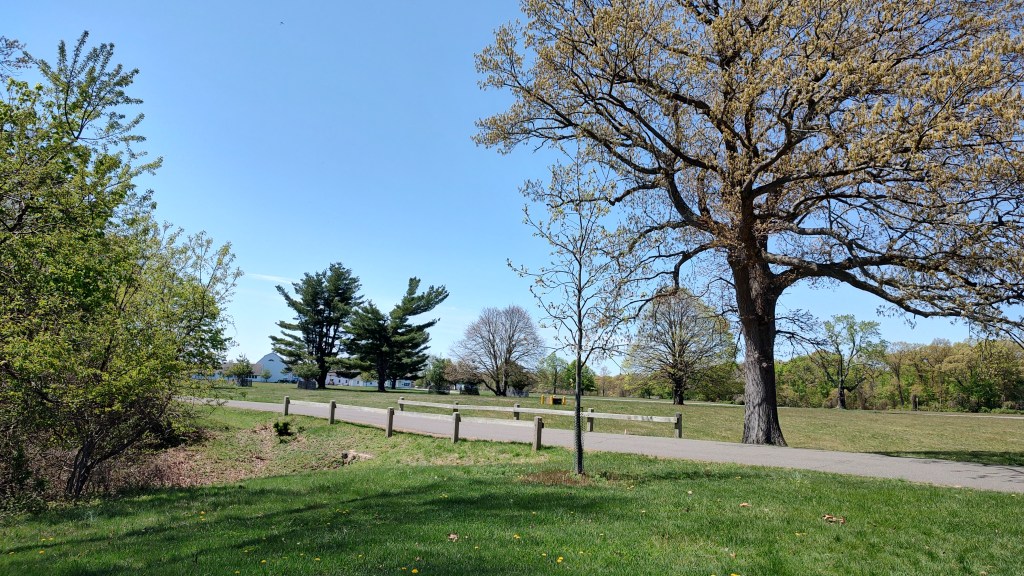
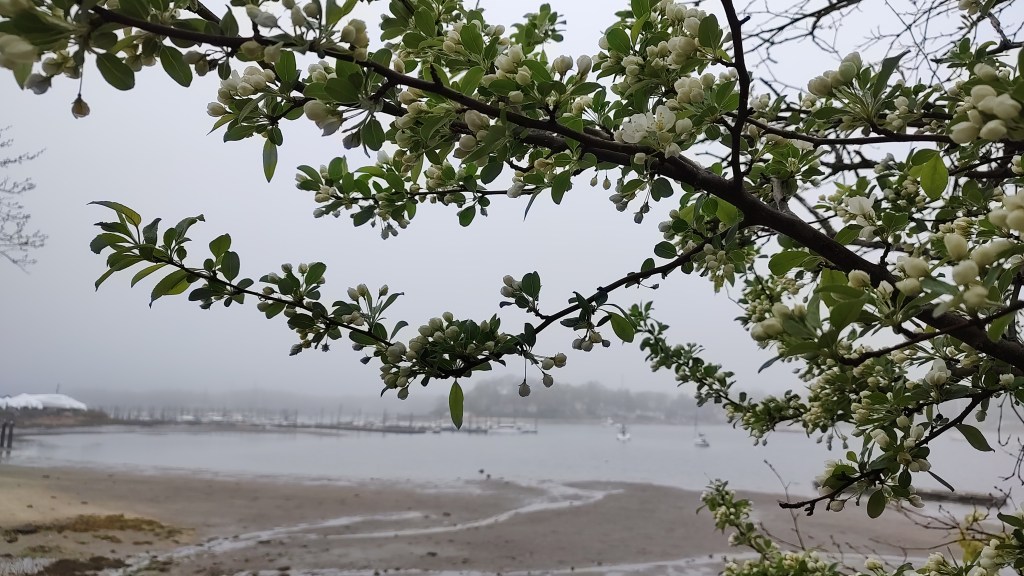
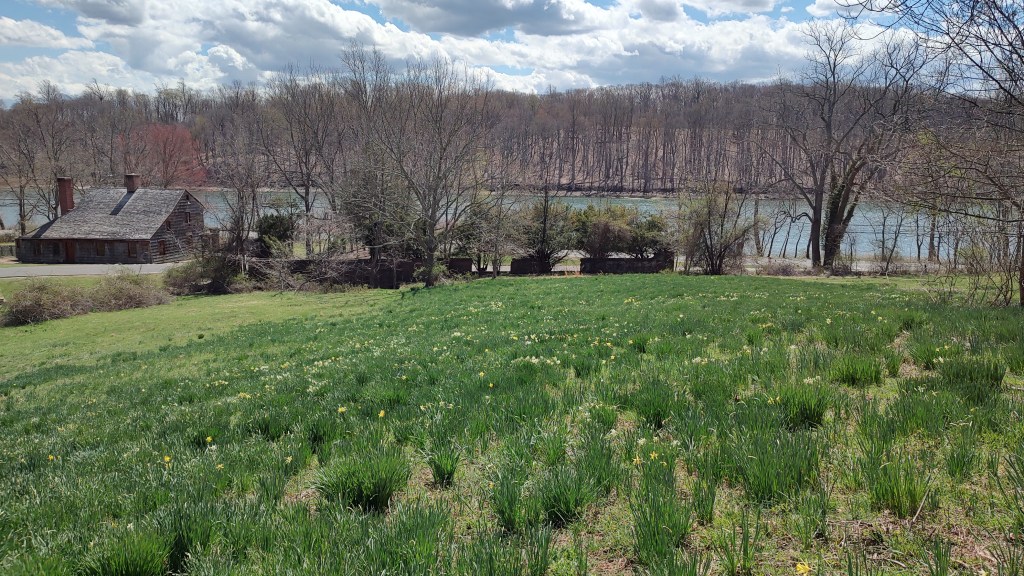
Odd things can be involved in fitness. Around here, most of the spring blooms – all magnificent right now – are either invasive or human cultivated species. Cherry trees, magnolias, forsythias are breathtaking. Daffodils and tulips blanket flower beds everywhere. In the current suburban environment, pure beauty can be “fitness” for a plant.

Even more surprising, recognizing “beauty” can be fitness for animals. Bees need to head for the right flowers, by sight or scent. Animals need to locate sugary pulp. Surely some of this has actively worked and is still working on our own human sensibilities .

But surprisingly, around me, beauty is its own reward, causing me to smile, neighbors to spend money, and all of us to be delighted with the floral displays of April .

Ostrich

Perhaps there is something useful in the apocryphal legend of the ostrich sticking its head in the sand to avoid seeing trouble. In these expansive times, ignoring obscure and distant threats may be an evolutionary advantage .

After all, in the “big picture” we are all doomed, both personally and in our wider manifestations of society and cosmos. We stand on our tiny patch of desert scrub, and perhaps stay there or run a short distance to somewhere nearby. We ignore our inevitable death, or we would fail to function at all .

So in a time when horizons have become nearly infinite and imaginations run wild, maybe a head underground is not so stupid. We are aware of every sparrow that falls in the world, and we can do little or nothing about it. There is too much awareness, omniscience without omnipotence, and that may poison our souls .

Nobody can withdraw completely. Even that pretend ostrich has to come up for food and water. There is still at least a little truth to “think globally, act locally”. But maybe only a little .

In a hysterical interconnected age, too much awareness might be a very dangerous thing to any single individual. It surely is to my own sanity .

A Little Knowledge

“A little knowledge is a dangerous thing”. You think you are an expert, but you are not. A very easy trap to fall into, since we tend to overestimate ourselves .

Obviously this is hardly a new condition, but it has certainly been more and more aggravated by media and global electronic connections. We are “aware” of an awful lot of stuff. Unfortunately, that awareness is often shallow, scattered, wrong and only leads to worry about things over which we have no influence. And about which we may have entirely inappropriate background information and deep understanding .

At one time, we left most issues to “experts”. They might have been right or wrong, but it took our minds off such things and – since we rarely are directly impacted by distant stuff – did no harm. But now the internet is flooded with “facts”, stories, and anecdotes that falsely claim to deepen our knowledge about anything and make experts irrelevant .

As we believe we know it all, each of our worries becomes somehow more real and our own responsibility. We MUST do something. We must change things. We think we are fully aware. 

We are wrong. About most of the vast ineffable universe of things, individuals, and society we each know very little except what we directly encounter and we often misinterpret that. The only 

true cure is a bit more humility .

Abundance

Not that long ago, it was assumed that “India could never feed itself”. The “population bomb” would kill us all in malthusian cataclysm. Popular psychology decided that humans always want more than they have .

At least in many places, industrial “abundance” has arrived, and gives every indication of continuing and providing more – ignoring for the moment Black Swan catastrophic events – as automation and technology continue to increase .

What does an era of “abundance” mean? Surely some people are already satiated with food, clothing, shelter and even ”non-essential” stuff like status and entertainment. Their feeling of being “poor” is essentially only a comparison to others of whom they are envious. An outlook that could easily change with cultural shift .

The wealthy, of course, play games and insist that enough is never enough, as they feast on peacock tongues and build mountains of pseudo gold to awe their peers. The wealthy also want to be superior, and spend much time worrying that the poor can no longer be kept in their place. Food, clothing, shelter – my God who will ever work? Lazy bums !

I won’t live long enough to see it play out, but an abundant future, should it arrive, would certainly be interesting .

Millions

My dental hygieneist tries to scare me into flossing better by saying “there are MILLIONS” of bacteria on your teeth. I am not impressed. All numbers are relative, and this is a little like exclaiming “that brick is chipped!” when viewing a high brick wall a mile long.

“Millions” of bacteria, after all, are not the same as “millions of harmful bacteria”. And there are just as many or more body cells dealing with them. A minor thing that we have evolved to handle.

And, in context, millions doesn’t mean all that much. After all, I have over 30 TRILLION cells, and an almost equal number of quiet or symbiotic bacteria, not even mentioning viruses. A few on my teeth – relatively well-defended against as part of my outer membrane – hardly much to worry about .

We are an alarmist culture, always looking for “news” which is naturally not “ordinary”. We take for granted how well adapted we are for “normal” life. We worry as soon as some obscure tidbit is brought to our attention. This has become a culture with very little perspective .

I know that things can go wrong. I may get sick. At some point I shall certainly die. But I’ve learned it hardly serves my sanity to be alarmed all the time, often about things of very little immediate consequence .

Like those millions of tiny creatures in my mouth .

A Pound of Prevention

Everyone knows “an ounce of prevention is worth a pound of cure”. Another one of those wise sayings that seem less useful when applied to your own life .

Oh it’s good to be prepared, and to try to avoid horrible later problems by planning for them and even taking some action to avoid the worst. As a first approximation, it’s hardly bad advice. Filling the gas tank before a long trip across the desert avoids pain and expense .

But these days, there’s a little too much prevention available, and much of that only haphazardly connected to avoiding cures. If you follow every bit of internet advice on diet, for example, no good is likely to result. Much “prevention” rests on flimsy evidence. And genuine “cures” are not all that hard to come by. Pounds of (possible) prevention are hardly worth carrying around to avoid an ounce of cure .

One of the biggest problems, of course, is that advice for the future is based on past experience. In rapidly changing times, the past is hardly the best guide to what will be. Even when we think we are following tradition, the chicken soup we eat today may scarcely resemble that of our ancestors. And honestly, we live in a much different environment from them .

Common sense old proverbs have therefore become suspect. Even though they may sound comforting .

Fragile AI Dreams

The WSJ and other media are filled with stories and predictions about the “AI revolution”. Some are utopian, some dystopian, some just weird and crazy. But all seem to have one glaring flaw .

That is the fact that AI – unlike life – is quite fragile. All the scenarios I have read assume that somehow things go on as now – lots of power, a connected grid, open communication, government power, social order, no electronic catastrophe (EMP blast, malware, whatever).

None of that is guaranteed, nor even likely .

I sense it as a lot like the advent of the internal combustion engine. Most dreamers saw it as a replacement for a horse. Some maybe understood it had advantages over steam. But nobody foresaw the social dynamics that ensued. Few even understood what it might do to transportation itself – for example to the road infrastructure .

Right now AI is free and exciting. But it can be easily wrecked. I’m not saying it will be, I’m not pretending I know what’s coming .

But I am sure it will be a lot different than what is currently predicted by both admirers and those who worry .

Golden Goose

Traditional children’s fables often contain valuable nuggets of adult lifestyle philosophy. They were, when created, a form of pedagogic knowledge to teach alongside the somewhat confusing and stern biblical narratives .

The story of the golden goose is easy enough to understand, whether in short form or embroidered. Its overt message is basically not to mess with a good thing, especially one you don’t understand. Its deeper implication is to avoid letting short-term greed destroy long-term bounty .

Perhaps “golden goose” should be a required course for MBAs and venture capitalists. They all seem hell-bent on mashing our current culture – which most of us believe is (or at least was) pretty good – so that they can extract the underlying value of anything in which they have invested, or destroy anything in the way of their economic triumph .

Like the man who killed the golden goose, their blind greed may be threatening everyone’s prosperity and happiness. Some folks admit we are not quite sure how everything works, but at least for a while it has been working .

I’m hardly against progress. It’s just that I’m not sure smashing traditions or killing culture is the right way to achieve it.

Quantity Lies

We may not exactly count “one, two, three, many”, but we do lose ourselves as numbers become immense. I think most of us understand 100, but 1 million is hard, and anything higher does become “many”. We can easily visualize odds at “one in a hundred”, but “one in a million” is practical infinity .

Our vast outreach of instantaneous knowledge and awareness has jumbled that picture. Odds of winning a lottery may be “one in 372 million”, but – as my wife claims – “somebody always wins”. We hear about that somebody all the time. Hey, it could be me !

With the unusual reported more than the commonplace, our perception of odds becomes strangely distorted. If chances of anything are truly one in a million, then in a country like ours 360 people (each one interviewed in a media moment) will have it happen to them. In a planet of 8 billion, 8,000 folks will. Suddenly it seems like an awful lot of people. Translated to our own surroundings the odds suddenly appear as likely as 50 or more percent .

That’s why anecdotal “evidence” in medicine, science, or society is so damaging. An anecdote seems real, a statistic kind of nebulous. We think “oh, a person just like me was affected”. Winning, losing. Then we act stupidly .

My antidote has always been “how many people whom I actually know have had this happening?” That is quite sobering, and puts odds into much better perspective .

Vision

Each one of our senses is miraculous and far more complex than we usually give credit for. I hesitate to claim I am primarily “visual” because I truly celebrate them all, but I am often greatly aware of what I see and how I perceive it .

Anyone who gives a moment of thought is amazed at colors, and lines, making sense of the environment by constructing objects in depth. Keenly tuned to any movement. Able to instantly assemble a worldview of depth and perception when we glance around. Focusing on anything for fight, flight, or manipulation. The list is endless, and there is no need to expand the craziness by trying to explain the mechanisms of the eyes, nerves, and brain .

My vision naturally works with everything else. If I hear a noise, I automatically try to see what caused it. Before I eat I view each morsel. When I walk I use my internal visual mapping to aim my steps and avoid bumping into things. 

And I am somewhat frustrated when my eyes cannot help . The wind and cold surprise me. Internal issues scare me. Other times I use eyes unconsciously as when I read and my mind ignores all the intermediate processing from printed symbols to dreamlike thought .

Incredible. Miraculous. Instantaneous. Always available. And – unfortunately – prone to errors, incapacity, and age .