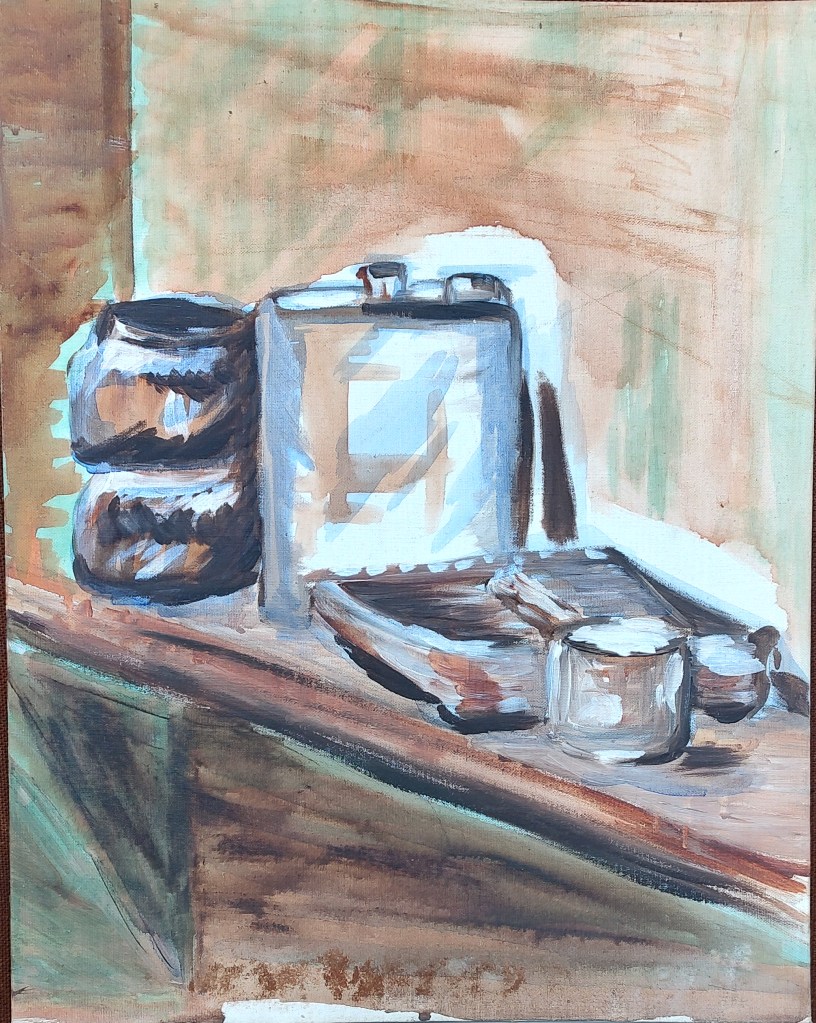
Acrylic on Canvasboard , 1970, 16×20
Studio stilllife
All paintings at: https://sites.google.com/view/cabinetofvanities
Acrylic on Canvasboard , 1970, 16×20
Studio stilllife
All paintings at: https://sites.google.com/view/cabinetofvanities
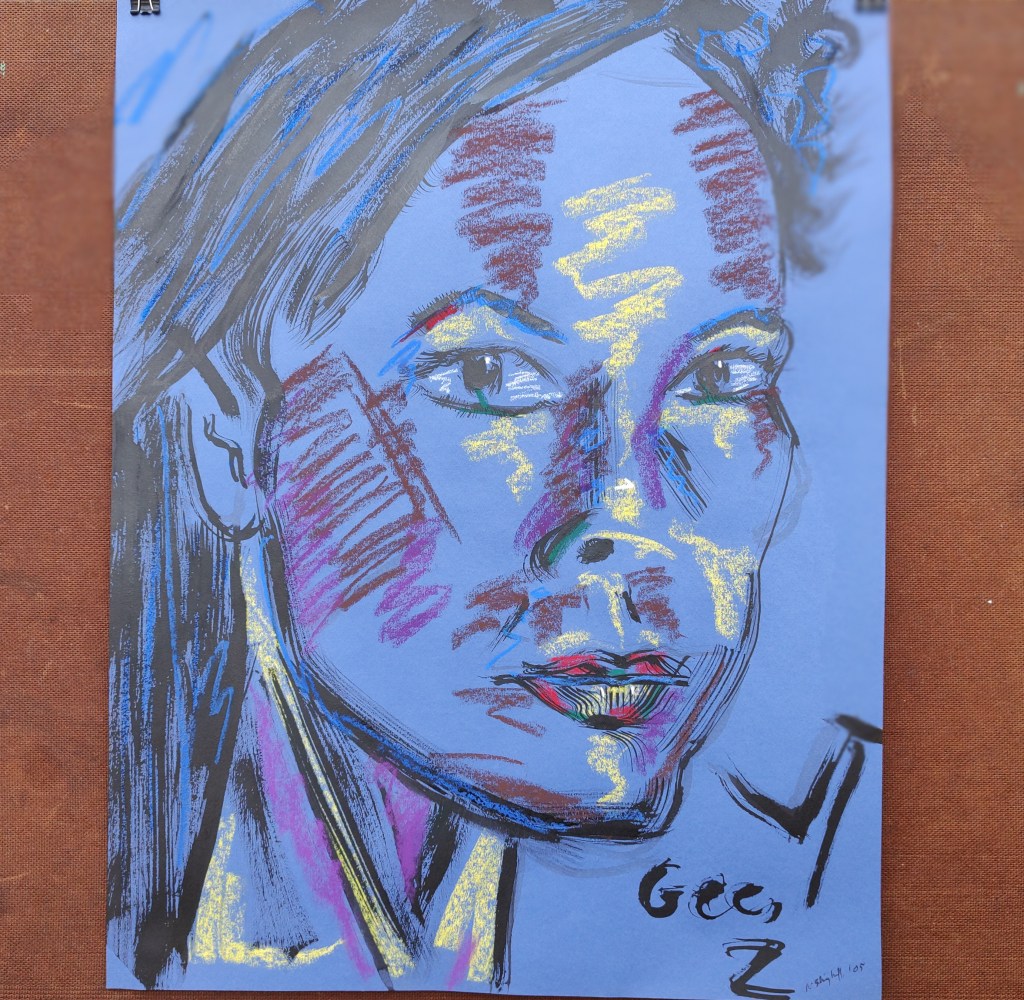
Pastel and Ink on pastel paper , 2000’s, 26×20
Gee,z
All paintings at: https://sites.google.com/view/cabinetofvanities
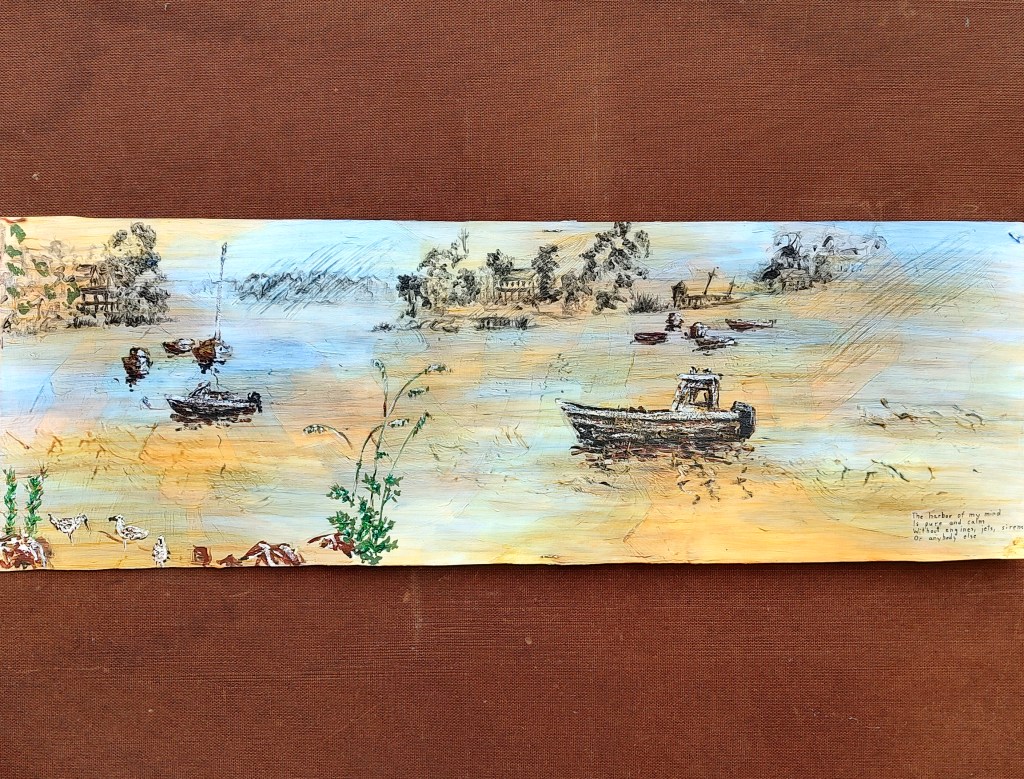
Acrylic on Canvas Paper, 2000, 12×36
The harbor of my mind / is pure and calm / without engines, jets, sirens / or anybody else.
All paintings at: https://sites.google.com/view/cabinetofvanities
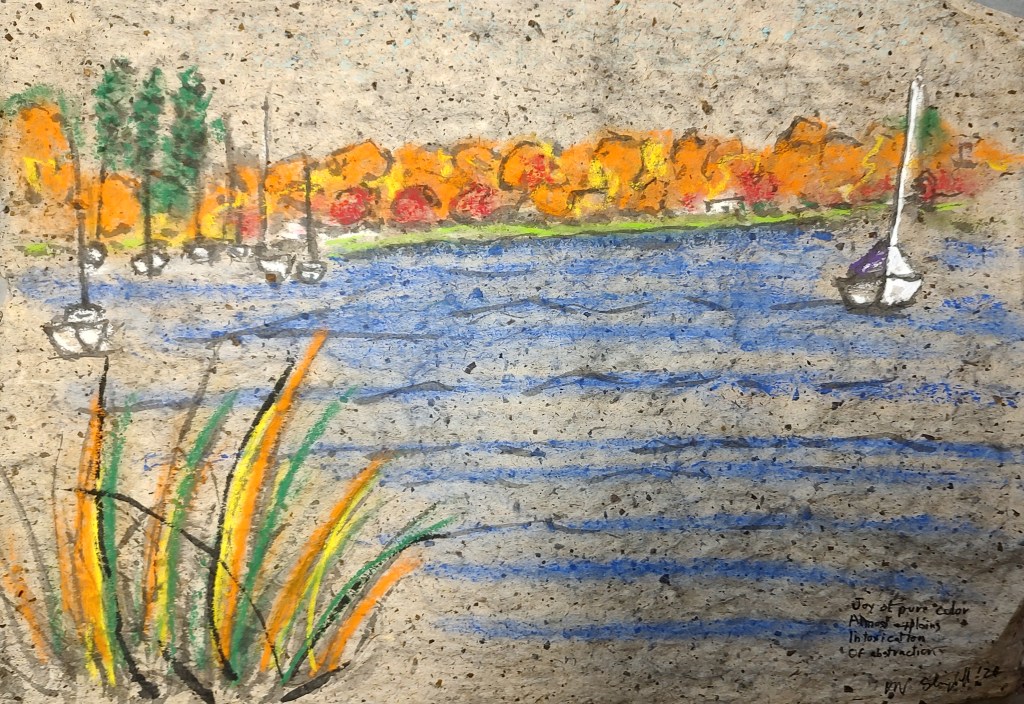
Pastel and Ink on Mulberry Paper , 2026, 11×15
Joy of pure color / Almost explains / Intoxication / Of abstraction
All paintings at: https://sites.google.com/view/cabinetofvanities
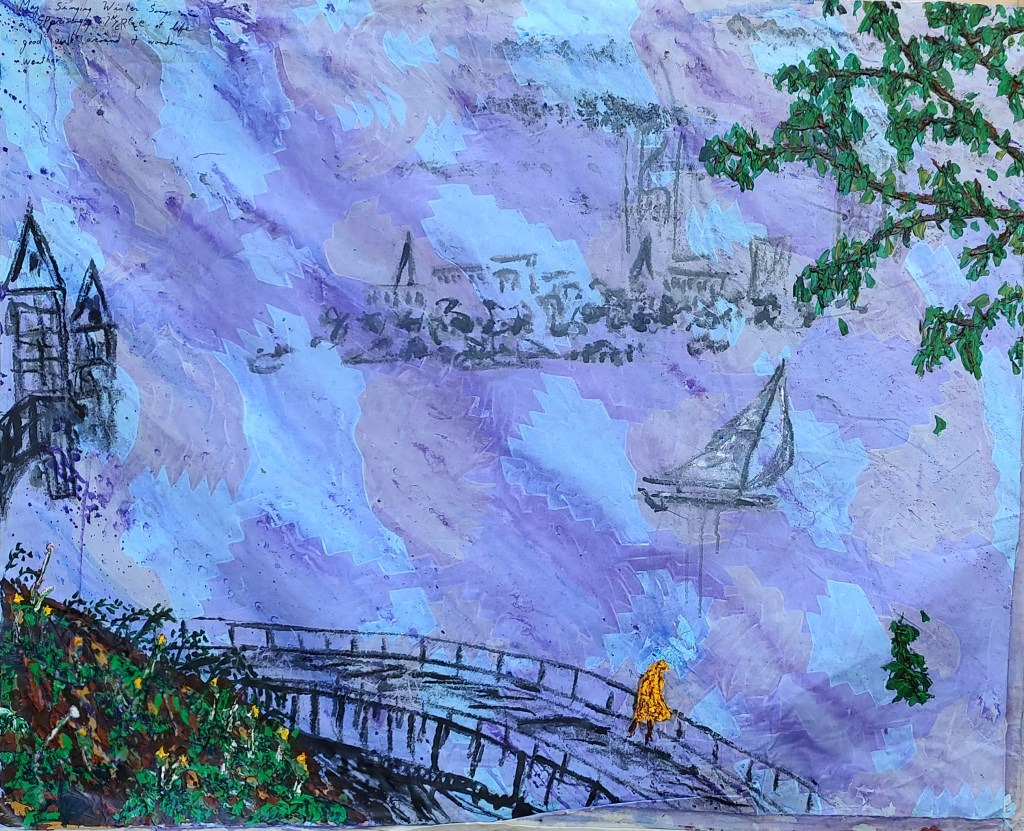
Acrylic on Canvas, 1976, 36×44
May singing winter songs / spring interface of life / good walk around and wonder / weather
All paintings at: https://sites.google.com/view/cabinetofvanities
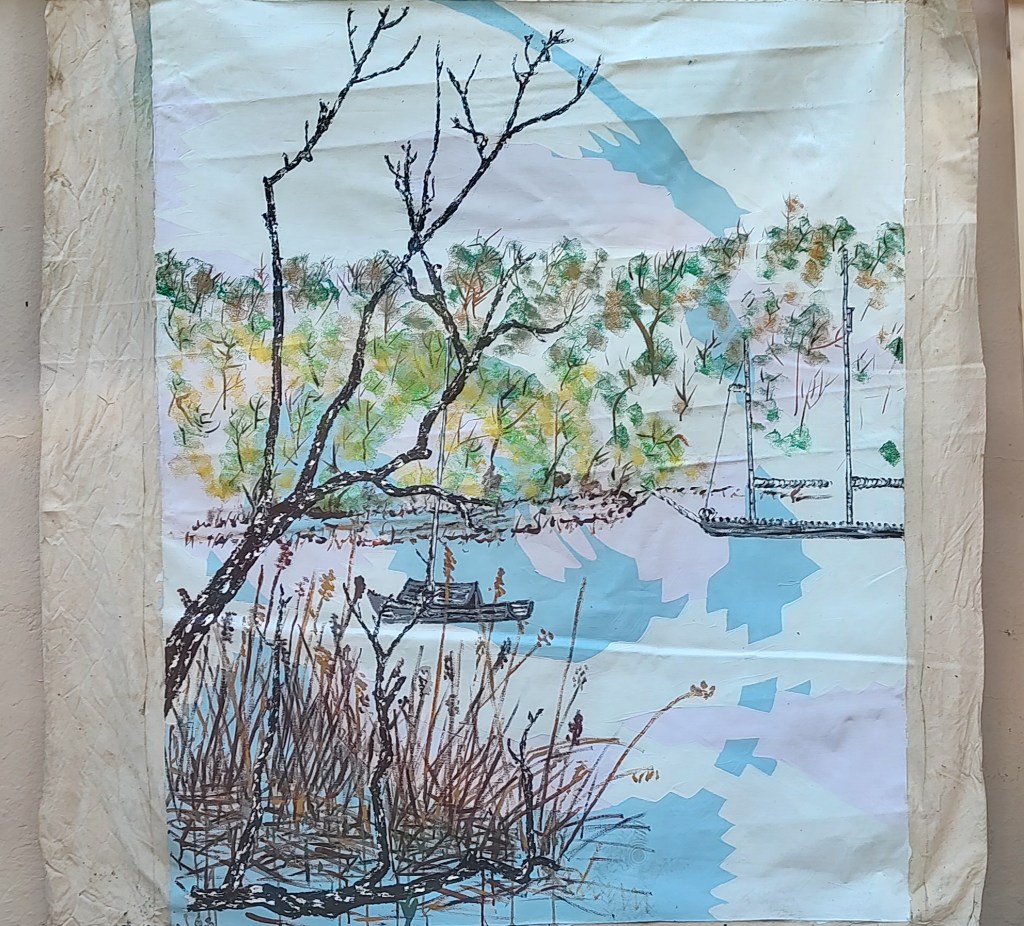
Acrylic on Canvas, 1977, 60×48
Boats behind reeds
All paintings at: https://sites.google.com/view/cabinetofvanities
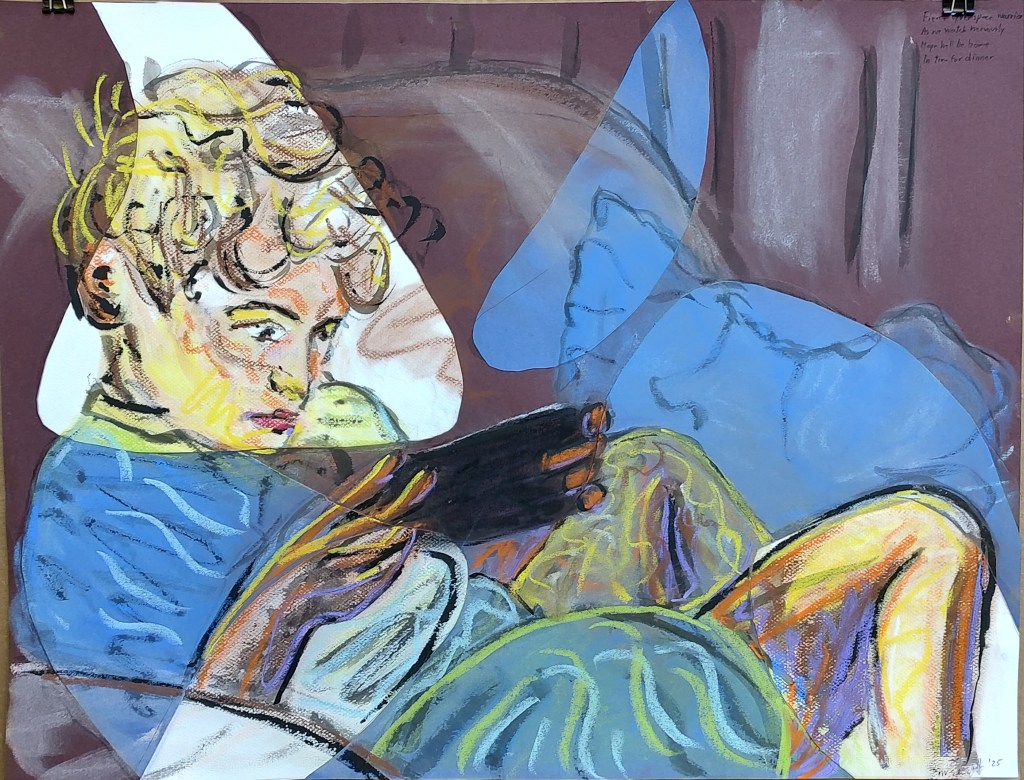
Pastel and Ink on collaged pastel paper, 2025, 20×26
Fierce cyberspace warrior / As we watch nervously / Hope he’ll be home / In time for dinner
All paintings at: https://sites.google.com/view/cabinetofvanities
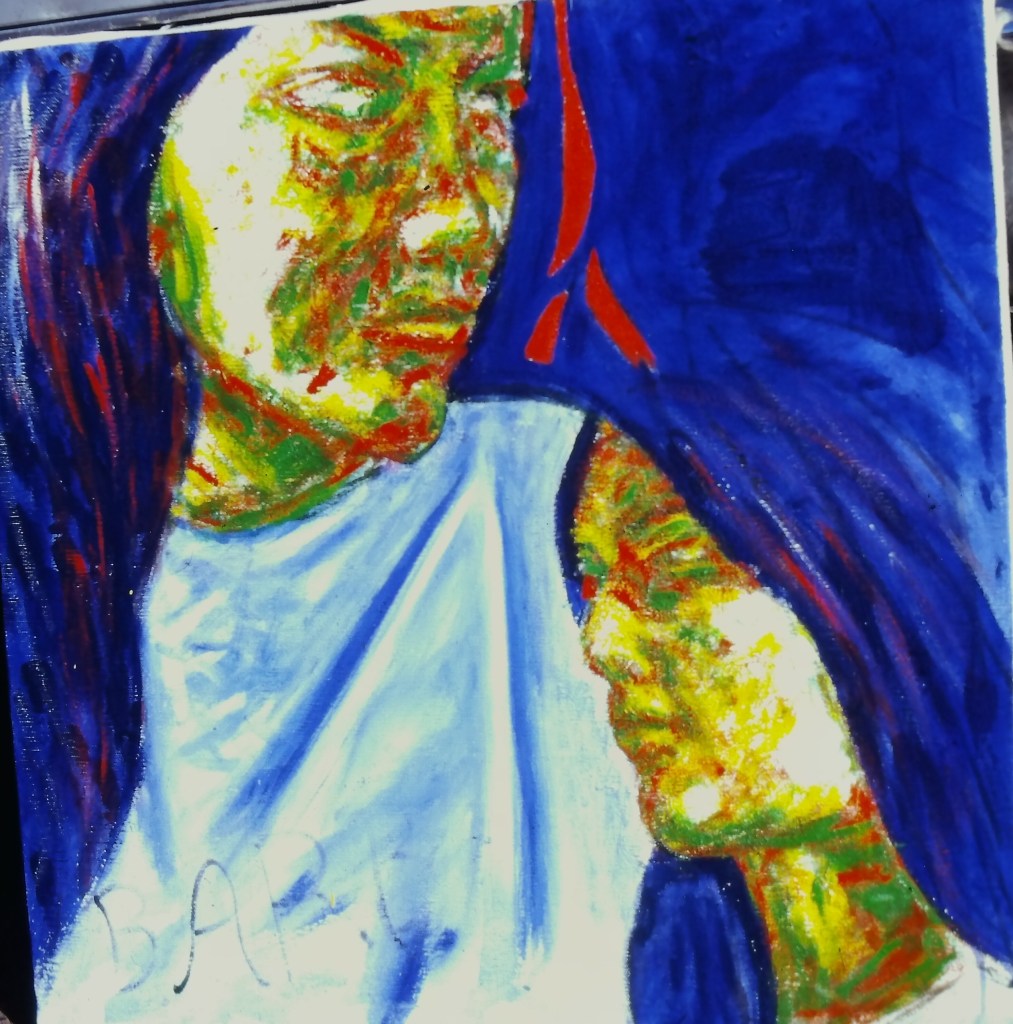
Acrylic on Canvas, 1971, 24×24 (Destroyed)
Portrait of Barb
All paintings at: https://sites.google.com/view/cabinetofvanities
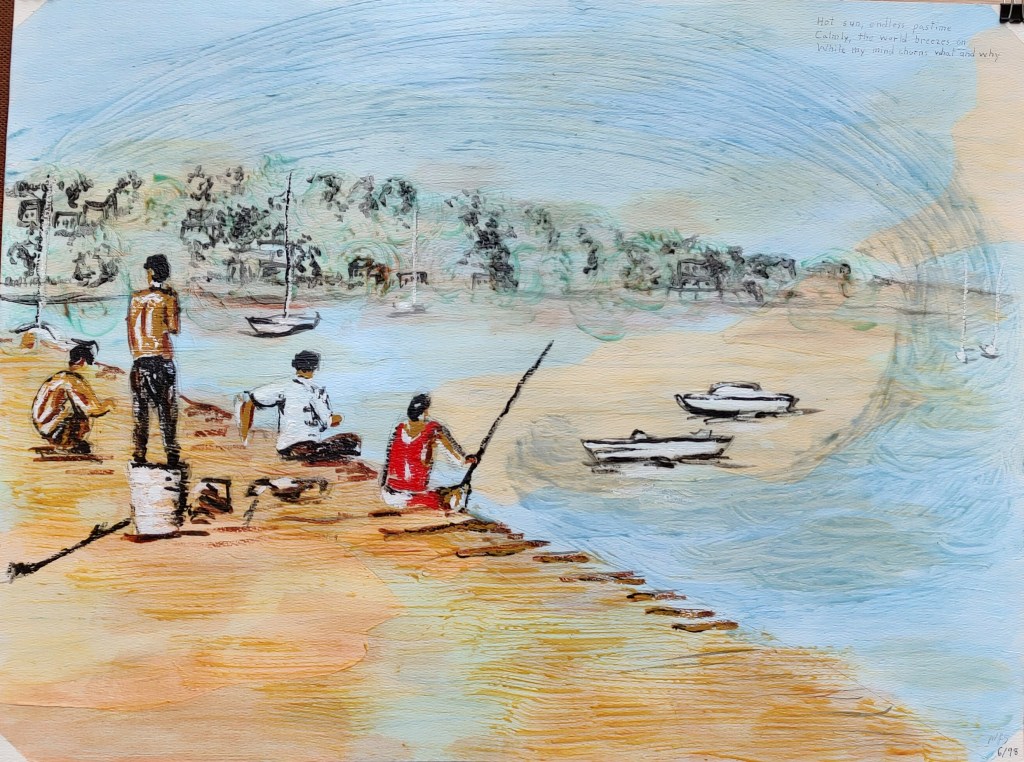
Acrylic on Watercolor Paper, 1998, 18×24
Hot sun, endless pastime / calmly the world breezes on / while my mind churns what and why
All paintings at: https://sites.google.com/view/cabinetofvanities
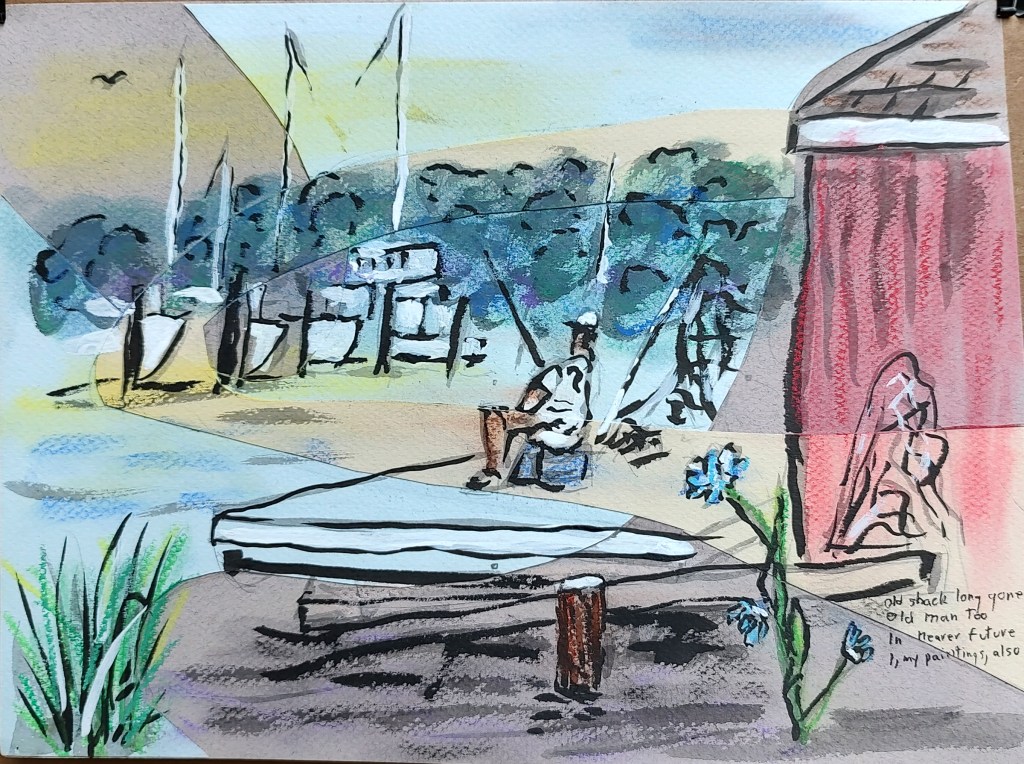
Pastel and Ink on collaged pastel paper , 2025, 9×12
Old shack long gone / Old man too / In nearer future / I, my paintings, also
All paintings at: https://sites.google.com/view/cabinetofvanities

