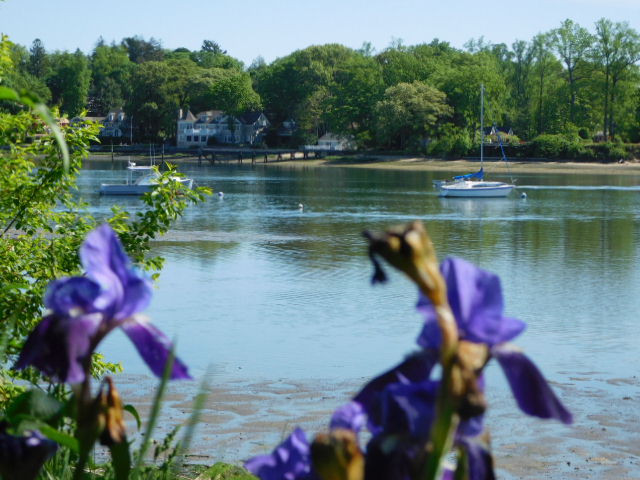

Imagination

Imagination is wondrous. It can raise hopes, deepen fears, widen our perspectives. We can mold it and change focus in an instant. It is the basis of narrative stories and most artifacts .

It is, in fact, as important to our consciousness as logic. And, in the hands of the obsessed or powerful, far more dangerous. Dreaming of doing something is not always a benign pastime, as we know from past activities of prophets and dictators .

Unfortunately, our technology has escaped control by social systems, and society now faces the peril of those with vast imagination, unlimited wealth, massive technology. Most of our billionaires seem to be narrowly ignorant of true humanity .

Perhaps the worst examples are those whose science fiction imagination is creating ruin. They want humanity to expand into space like in Heinlein juvenile novels, and they ignore the wonderful planet they actually inhabit and which will probably remain the only home of humanity forever. In the meantime, among many other catastrophes, they garbage up near Earth orbit with debris that could end our current technology age quite dramatically.  

Unlimited power in fanatic minds is always a prelude to disaster. And that prediction is only a little bit relying on my own imagination .

Make America Something Again

Politicians and preachers have often invoked the image of the last golden age, so unlike these degenerate times. On the opposite pole, prophets of the future proclaim utopian visions. The common thread, of course, is that all you miserable little people will be much happier if you just listen to me (and contribute) .

I’ve always been as skeptical of future visions as I am of any dreams. I know enough history to understand how distorted nostalgia can be. Of course, I’ve never pitied myself as one of those alleged miserable masses of everyone. Most of my happiness has been founded in ignoring the sales pitches so common to our consumer culture .

However it’s been entertaining to follow social fads as they parade through society. At one time (see I can do it too!) religions, for example, may have been fairly stable. But now the latest viral sensations advise and pummel us hour by hour .

Among the silliest are the various “make great”. It is nothing new, people always thought they could “make great” by doing something or other, often involving wiping out other people. It’s the “again” that goes against my instincts, perhaps because I was raised in a progressive-directed environment .

Hate to tell people, but for us “ordinary” folks there was never a perfect world to which to return. Examined closely and honestly, life at all times has been chaotic and desperate and unfair. And fine, wonderful, and miraculous. 

Just like this now moment, the reality you should concentrate on. 

Again and again .

Paving the Road to Evil .

“The road to hell is paved with good intentions”. Although the concept of hell has become somewhat obscured in these enlightened times, we all agree that there is such a thing as evil. Creators of horror media feast on it. Nobody denies that evil exists in the world, but an awful lot of it seems a result of somebody’s good intentions .

For example, we all might easily agree that a psychopath kidnapping a 4-year-old and torturing her to death is an act of pure evil. Yet the same outcome, on a massive scale, might happen as “collateral damage” in what many regard as a just war. In such cases, I suppose, we could say that the event was evil, but the people who caused it were acting with justifiable intentions in a good cause .

It is all very well to dilute the idea of evil to the “intent of those causing it”. That goes right back to the old monotheistic question of why an omnipotent God allows evil to happen. And it helps us build a bearable framework around an unbearable tragedy .

The problem with that – and it always has been – is that we degrade our moral sense and treat evil in a rather cavalier attitude. Fortified by a contradictory certainty that we can clearly determine intent, and can easily assign relative weight (“how evil”) to what should be a uniquely absolute moral judgment .

Anyway, I surely see a lot of earnest paving going on all around me these days .

Abundance

Not that long ago, it was assumed that “India could never feed itself”. The “population bomb” would kill us all in malthusian cataclysm. Popular psychology decided that humans always want more than they have .

At least in many places, industrial “abundance” has arrived, and gives every indication of continuing and providing more – ignoring for the moment Black Swan catastrophic events – as automation and technology continue to increase .

What does an era of “abundance” mean? Surely some people are already satiated with food, clothing, shelter and even ”non-essential” stuff like status and entertainment. Their feeling of being “poor” is essentially only a comparison to others of whom they are envious. An outlook that could easily change with cultural shift .

The wealthy, of course, play games and insist that enough is never enough, as they feast on peacock tongues and build mountains of pseudo gold to awe their peers. The wealthy also want to be superior, and spend much time worrying that the poor can no longer be kept in their place. Food, clothing, shelter – my God who will ever work? Lazy bums !

I won’t live long enough to see it play out, but an abundant future, should it arrive, would certainly be interesting .

Progress

We cherish an ideal of progress. “Practice makes perfect”. The human world obviously runs on learned accomplishment. It does not matter if you are an athlete, a mathematician, or a parent. There’s always something to learn, some way to improve .

My art hobby has reached a point when it has stalled. At least in the sense of progressing to something better. Partly it’s a matter of accepting limitations. More truly, it’s a realization that choosing among various and often contradictory goals is not easy .

I don’t, for example, wish to become more realistic like a camera. Don’t want to head into absolute abstraction. Don’t want to be like any other style. Don’t actually want much of an audience .

I’ve settled for a realization that progress in this is, for me, a blending of the journey with the goal. I’m gratified to wake up enthused, to not be intimidated by a blank page, to not be discouraged if something does not work out. Like my walks, art activity is simply fun, meditative, instructive, and inspiring .

Long ago when I grew up many ordinary activities were like that. Sports, community, home, family, even work. Not improvement ad infinitum, little progress, just a happy sense of doing well and taking advantage of each moment .

Fragile AI Dreams

The WSJ and other media are filled with stories and predictions about the “AI revolution”. Some are utopian, some dystopian, some just weird and crazy. But all seem to have one glaring flaw .

That is the fact that AI – unlike life – is quite fragile. All the scenarios I have read assume that somehow things go on as now – lots of power, a connected grid, open communication, government power, social order, no electronic catastrophe (EMP blast, malware, whatever).

None of that is guaranteed, nor even likely .

I sense it as a lot like the advent of the internal combustion engine. Most dreamers saw it as a replacement for a horse. Some maybe understood it had advantages over steam. But nobody foresaw the social dynamics that ensued. Few even understood what it might do to transportation itself – for example to the road infrastructure .

Right now AI is free and exciting. But it can be easily wrecked. I’m not saying it will be, I’m not pretending I know what’s coming .

But I am sure it will be a lot different than what is currently predicted by both admirers and those who worry .

Taxing Machines

Any society seems to require government, complex societies more so than simple ones. Except under true communism (where the government/people own everything) taxes must be raised to pay for it .

Taxes over the last tens of thousands of years have taken many forms, and involved almost anything imaginable. Fees, income, wealth, property, sales, ethnicity and on and on. But as the industrial revolution morphs into the AI/automation revolution, perhaps machines and processes should themselves provide revenue .

This is heresy to classic economists. More production always enriches society, they say, and should be encouraged. Lately, that may not be true. A marginal gain in output of widgets entirely done by machine instead of traditional labor may actually harm the society more than it helps .

How to directly tax machines? probably with heavy fees and taxes on the input resources they use – electricity, air, water. Large land taxes on the property they occupy. Major levies on associated nuisances like noise pollution or environmental degradation. And, of course, the equivalent of tariffs to equalize all this between nations and regions .

Simple? No. But presumably an AI in charge of government could make it all work .

(As long as that AI was not self-aware !)

Next Time

We are conditioned by evolution and experience to expect there to be a “next time” for most events. Next time the sun comes up, the next time it rains, an endless procession of recurrences .

We use that knowledge to plan and learn. “Next time will be different” we may say. We hope to do better in things at which we have failed, repeat exactly things we have enjoyed. And for most of our lives, for much of our daily existence, that belief works very well indeed .

Oh, we know there are unusual one-offs. Never again a fifth birthday party. Hopefully not another car accident. We stash those away and hope or fear as “once in a lifetime” .

As I grow older, “next time” becomes more problematic. Almost all the things I used to know have changed. Places are no longer as they were. Some people have vanished. Institutions I took for granted have mutated as in horror films. Some of it is good, I acknowledge, but even that means there is no true next time for a lot of my memories .

And it begins to get a little frightening. Any given day, for any given event, any given encounter, there may never be a next time. Such absences cascade until I feel trapped in a few quotidian routines that I can (for the moment) count on .

And yet – I DO still expect a next time most of the time. 

AI and Pride

Perhaps we have all turned into John Henry, pounding railroad spikes trying to beat a machine. Artists are confronted with the same situation as other intellectual occupations – what used to take skill, pride, thought, and time can now be done by any teenager in a dull moment. The internet is flooded with AI images, movies, stories. Work has similarly vanished. Some of us remain luddites, stubbornly sticking to brush and pencil. Why? A waste of time…

But is it ?

Climbing a mountain or hiking in a forest is not the same as viewing a YouTube video of the adventure (not even – as technology advances – an IMAX immersion). Things we do for ourselves have both an outer and an inner component .

Accomplishment of something difficult brings pride. Even if it is only pounding spikes. Or painting a canvas .

The key is that doing something you like to do, either for the activity itself or for recognition, is a kind of play. The same task forced on you (especially repetitively) is a chore or boring job. We should avoid confusing the two .

Mankind evolved with hand coordination. In spite of our big brains, we remain a physically oriented species. I think AI art robs both the creator and the audience of that heritage. Except for the brief thrill of novelty, pride and satisfaction are completely missing .

Risk/Reward

Anyone can anecdotally give good reasons for never using an automobile. High on the list is a possibility of a deadly accident, examples of which abound. And yet, in this culture just about everyone uses a car all the time. Math has little to do with it. Nor do the horrible examples of mangled bodies. “Common sense” tells us that in spite of possible danger, it is far more useful to go places in a vehicle than to stay home. Unfortunately, such “common sense” is in short supply in other areas of our lives involving risk/reward .

Actually, anyone closely involved in a fatal accident either involving themselves or someone close to them wants to blame someone. The car manufacturer, road maintenance, whatever. And they rush about telling one and all about what must be done, maybe avoid cars at all cost .

That isn’t effective with stuff people are very familiar with. True “common sense” kicks in. 

But in areas that are less well or less easily understood, anecdotes seem to rule. Medicines, laws, even right or wrong. Too esoteric to be easily understood. ” I know a man who …”, “I had a cousin who…”,” once I was …”.

All true. All irrelevant. When people try to make risk zero, as any entrepreneur can explain, reward vanishes .