Conceit

“A sucker is born every minute” proclaimed PT Barnum. The “average American voter” has often been vilified for ignorance, prejudice, whatever. Frozen in collective memory by Menken’s “booboisie.”

And yet, we often found that speaking with each other one-on-one revealed a fairly complete interesting human being. Somehow we trusted that – informed by a free press – such good would shine through in the loneliness of the election booth. Mostly, it seemed to work .

But several generations of being assured that “you are just as good as anyone else” have had evil effects. Even in simple conversation, we discover everyone is as conceited as a god, certain that they know everything, sure that anyone claiming to be an expert (except the internet influencers they follow) is a charlatan.

So conceit has fallen on an entire population, certain that at any moment what they believe is true, fortified by warped electronic propaganda. No longer much fun to talk to. Anything but complete interesting human beings. Conceited know-it-alls, who unfortunately carry their very real ignorance and prejudices into the ballot box .

I used to agree that democracy was “the worst form of government except for everything else.” Now I tend to drop the qualifier .

Self Fulfilling

Long before anyone thought of “attractors” there was the concept of self-fulfilling prophecy. What you expect to happen (good or bad) happens, not because of fate but rather because you unconsciously work to make it happen .

These days we have an administration that glories in self-fulfillment. They decide cities are hell holes and work actively to make them so. They say people are unhealthy and act to make their idea come true. They decide most people are criminals and – lo and behold – “criminals” pop up everywhere .

Mostly they say we need a “glorious leader” to bring us out of a political malaise. Their desire for a dictator who makes the trains run on time is coming true even to the point of considering all American armed forces a feudal militia .

The trouble with self-fulfilling prophecy, of course, is that it is usually a distortion of reality. And by ignoring reality, the eventual decay and destruction is much worse than it should have been .

So, “attractor” as such attitudes may be, they leave me fondly wishing for the good old days when logical and informed leaders were willing to admit they weren’t quite sure what was best to do .

Sensible

We often forget that the modern world of science and technology began with a devotion to our senses. The medieval intellectual mind was immersed in logic, perfection, and revealed vision. The senses were regarded as imperfect or evil distortions of higher truth .

The earliest proto-scientists rejected all that. They claimed that “true reality” was only what we could actually perceive with sight, sound, touch, etc. Truth was not what we could imagine, but what we could grasp .

Unnoted at the time and little considered since is that evolution has also provided massive checks and filters on our senses. It’s important for survival to know if what you see is a real lion or a hallucination. Our senses are superb at separating “sensible” from “imaginary” most of the time .

The trouble with generative AI is precisely that it thinks in a medieval manner. All is words, revelations, logic. There are no senses, filtered or otherwise, to evaluate reality. Its answers are only as good as the vast storehouse of words that form its higher truth .

So in any normal human terms, generative AI will never be truly sensible. It may be fully logical as were medieval scholars, and yet totally wrong about reality. That nobody seems to recognize this may be the most dangerous thing about it at this time .

Literature

An editorial in WSJ told young men they should read more fiction. Broaden outlooks, deal with inner complexities. A different editorial, written by a wealthy young twerp, advised that one’s 20’s should be completely devoted to the task of “becoming a billionaire”, after which, presumably we can live a decent life .

Spending one’s twenties (or any other decade) in a narrow obsession is madness. Believing one is in absolute control of the future is an immature fantasy. Perhaps literature is an antidote to that, or at least a window on alternatives. But there are other ways – falling in love, laughing with friends, having adventures. The list is of course endless .

We currently have made heroes of the wrong people. Life is a gift, not a test. It can only be “won” by living it fully and in balance. Hiding in an obsessive foxhole and thinking you are in charge of your fate will only earn scorn. And, of course, the premise is wrong. Reaching a goal does not mean the rest of your life is taken care of .

We all learn that eventually, unless we damage ourselves too much. Usually, such wisdom and reflections take time and effort. Literature, particularly fiction, offers a shortcut .

But the young rarely take the advice of the old. They know better .

I pity them .

Asocial Rulers

There have been ruling monsters throughout history, often exemplified as evil Roman emperors such as Caligula. But more critical has been the constant stream of asocial rulers. Those who care more about systems than people.

If there is one single distinguishing feature about classic Western civilization, it is recognition of the individual. Each person – even children, women, and slaves – has a human universe. Each feels pain and joy, plans and schemes, thinks and experiences. All are valid. We often lose sight of that in practice, but there it is .

Asocial rulers do not think that way. They may respect people in their immediate circle. Beyond that, folks are just objects, masses of creatures to be used or eliminated, to achieve whatever goals are felt desirable. And the fact is that the truly asocial leader does not care at all how the individuals in the masses are affected. In fact, often does not notice that masses ARE composed of individuals .

I understand the social dynamic, and accept that increasingly dense civilization makes asocial rule increasingly necessary. Perhaps that is an attraction in AI takeover. But just because I see it does not mean I have to like it. I want to keep some perspective .

Fire Next Door

Unfortunately, this is not a metaphor. The other day, smoke started coming out of the garage in the ranch house across the road from us. By the time the firefighters had arrived in these suburbs and put it out, the whole place and it’ belongings were ruined. Apparently it is a total loss and must be torn down and rebuilt .

It is a strong reminder of the force of fortune. The owner had for years poured a stream of money into improvements _ so much so that my wife and I were sometimes annoyed at the constant activity, noise, and trucks blocking our driveway across the narrow old street. No matter, gone literally with the wind. Up in smoke .

And of course I sit here and realize that there but for the grace of God go I. Nothing obviously stupid caused the blaze. Bad luck, a wayward electric spark perhaps. But nobody could sit back and think “if only” .

There is insurance, and the owner claims to want to rebuild. But lots of memories are gone, and  no doubt the sense of security once enjoyed. Everything in their world changed in a couple of hours .

If it were not so terrible, it would be a terrific remedial tonic to cure hubris .

Hippodrome

According to Edward Gibbon, the Roman Empire did not completely fall in the late 400s, but continued at Constantinople, speaking Greek and a little Latin for about another thousand years. The Byzantine Empire ruled parts of Asia, the Middle East, Africa. It fought and traded with all the other world powers of the time (Charlemagne, Persia, China). The city inhabitants were, it seems, mostly well fed and well off for those times, going about their daily business as we do ours .

But in all this eon, did the masses care much about the larger issues of civilization? No! They spent most time rooting for and betting on the horse races in the hippodrome. Rulers rose and fell depending on support of the “blue” or “green” factions. Mercenaries fought all the wars, while the citizens rooted for charioteers .

Today it is hard to find an equivalent to blue and green mobs, unless it is maga versus woke. Mostly our obsessive enthusiasms are splintered on the internet. We still hire mercenaries, don’t think much about the larger issues of civilization, and go about our “normal lives” .

Who knows? Maybe this civilization will also last a thousand years .

But if I were one of those gambling fanatics, I know where I would place my bet … 

Age and Tide

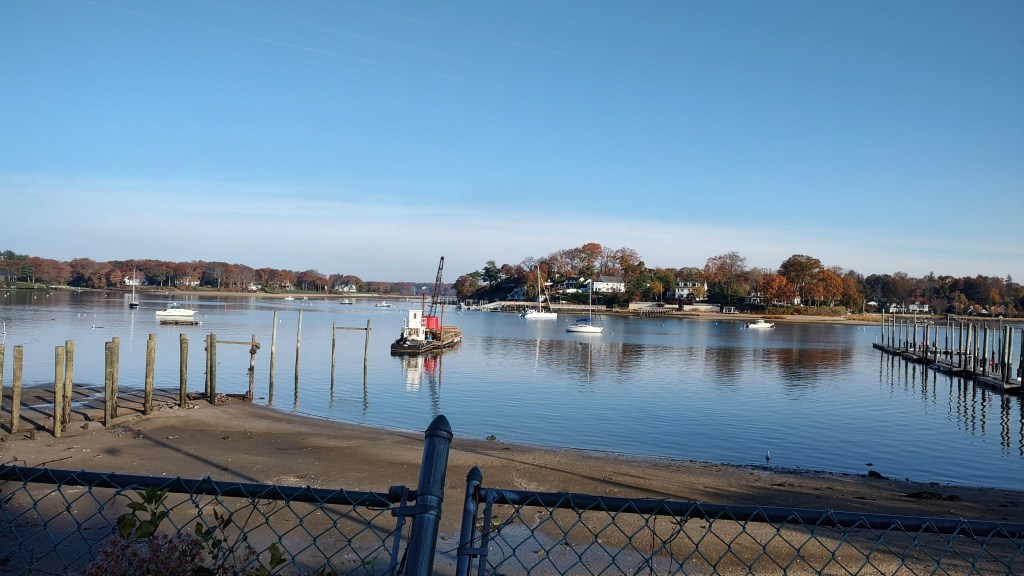
There are multiple ways to turn any natural observation into a metaphor for our lives. Having lived near the sea for most of my life, I am well aware of tides. Age often leaves us casting about for glimmers of cosmic understanding wherever they may occur.

The most famous metaphor is of course King Canute, ordering the tide to cease. A symbol of the uselessness of trying to prevent the inevitable. More deeply, a warning of how stupid it looks to attempt what common sense knows is impossible .

But there is also the idea of ebb and flow, high and low, translated to good times and bad. There will be in any life joy and pain, both of which usually pass one to another in a complex but inevitable rhythm .

For an older person, however, there is yet another lesson, which relates to deceptive normality. The high water mark is indicated with only minor variations day to day and season to season. But suddenly that can change in storm or tsunami, and rage well beyond what we thought we understood as limits. Leaving behind destruction and _ of course _ death .

So here we are, metaphor in hand. Is this next problem merely a usual tide or something worse?

It’s easy to become anxious when the predictable breaks the rules .

No Return

One thing I learned over the years is that social stability is often a kind of mass illusion. People, for example, tend to believe that prices remain steady, or always go up, or will go down. Or that the future will be better. Or that they should do certain things. Until, almost suddenly, everyone changes their mind.

There are parallels in science. Supersaturated solutions will suddenly crystallize. Some “tipping point” is reached and a structure fractures. All of a sudden, equilibrium is different. Or lost entirely to chaos .

Science prefers – which is to say we prefer – a smooth glide and predictable gradual transitions. Our forecasts generally assume trends are known and that the future will mostly resemble today. We project our own ambitions into a future that in most ways resembles our past .

That all works pretty well until it doesn’t. And, like those supersaturated solutions, things can change fast and in really unrecognizable combinations. Society reaches some point of no return – bread lines turn to looting, the king is killed, whatever – and nothing is ever the same again .

I guess things could all turn out to the good. But. Inflation, AI, automation, internet, fusion energy, ecologic disaster, endless lists. Any one of them could unexpectedly end what we assume to be forever .

And, really, not much we can do to predict or direct the outcome .

Optimism

I try to be an optimistic person. I generally believe that things will work out for the best. It makes my life happier .

Yet there is a world of ambiguity in any concept such as “optimism”. To begin with, nobody can know anything about the future. Beyond that, exactly what “things” am I selecting for prediction? And what I mean by “best” may in no way relate to what you consider good. No need to belabor the issue. Like “beautiful,” it is a concept that seems to mean something to everyone, but can hardly be pinned down. Nevertheless, I remain an optimistic person .

I try to pick things that have some actual relevance to my personal well-being. I can be optimistic, for example, that I will enjoy dinner tonight. And by a magic mind trick, I could even be optimistic if I think the dinner will be awful – because it will soon be over !

There are infinite outcomes to choose from, and many ways to wonder what might be “best”. Instantly we bog down into dreamy lists and semantics .

At my age the key is really careful selection of discreetly small things, in a pretty short time frame. And a concept of “best” that reduces to how much worse it could be .

I’m an optimist, but hopefully not a complete fool.