
Beauty

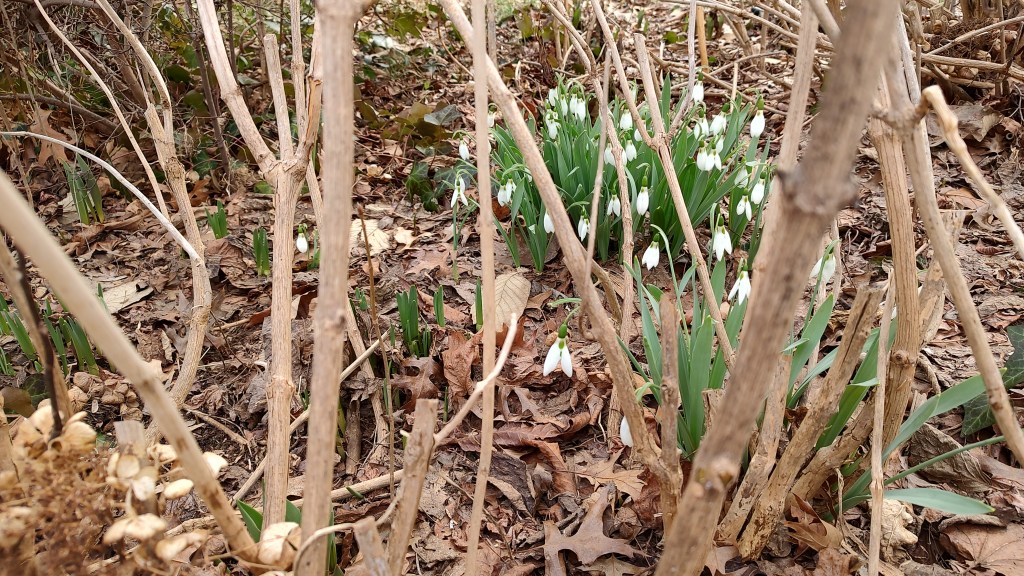
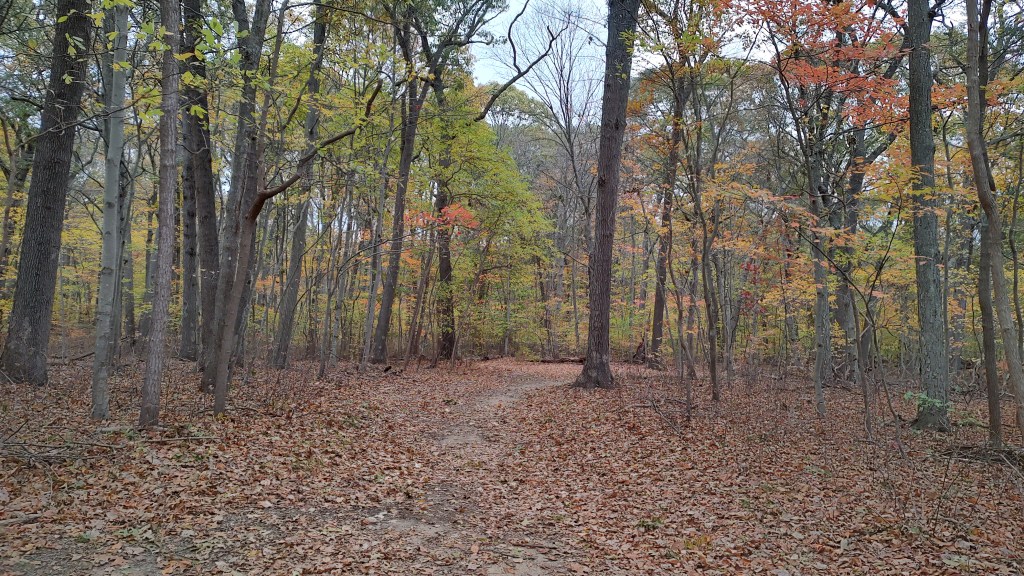
Like ” wrong”, beauty is one of those concepts that can never be simply defined. It depends not only on environmental and cultural factors but also on the mood of the observer. We can often agree, but almost as often argue with others and even with ourselves .

It’s fairly safe to say that even considering beauty requires a sense of security within the observer _ you can hardly appreciate the loveliness of a forest while being chased by a bear. . Whether something is beautiful or not occurs way down on the scale of evolutionary fight or flight. A great deal of the time, most of us hardly notice it at all .

We assume that – like other odd traits – there must be SOME biological reason we can respond to beauty. Perhaps it helps social solidarity. Perhaps it is a shortcut to relaxation. Certainly nothing obvious .

I have noticed that in my own life the idea of beautiful has evolved as I age. When young, it was primarily biological. When older, mostly cultural. And now, in an elder, much more simply appreciation of all that is and how it fits together. A miraculous and – yes – extremely beautiful universe .

At least when I am happy, secure, and not doing too much .

Entranced

I think throughout history most humans at one time or another have entered a trance state. Often from concentration on something, sometimes from unusual circumstances like pain or fatigue, occasionally from use of drugs or alcohol. Always when dreaming .

In a trance we tend not to be fully aware of our surroundings. The universe has narrowed down to a particular selection of mind and senses. We are hyper aware of a few things and ignore the environment. This condition may last a few minutes, a few hours, rarely longer .

I’ve always been easily entranced. When reading a good book, for example. In my working days, entering a fugue in cyberspace as I worked out problems. Now when I engage with a sketch or drawing .

There’s not much to say about being in a trance. To be honest, I most appreciate it when I return to “real life”. I suddenly realize I’ve been away. I am refreshed, relaxed, and surprised. Wonderful things!

Of course, nobody can or should inhabit dreamland forever. There is truly a big universe to appreciate out there. But as a short vacation from the mundane it is magnificent .

Binocular

Old Dutch Master still lifes make you think you can lift flowers or bugs off the painted surface. Modern photographs have the same effect. Yet in a very real way, they do not match the reality we inhabit .

Two eyes let us see – especially nearby – in parallax to be able to judge depth. For distant objects, of course, we have other references like size and haze and perspective, but they can be quite deceptive. In the real world it has been important to us primates to be able to focus in this weird binocular manner to better use our hands for handling fruit and tools .

That is a long prologue to today’s rant about cults – religious, secular, or political. Cults have beliefs that are strictly monocular. They have little depth and allow by definition for no other viewpoint. The strictest cult outlooks don’t even let one move one’s head to get a better or different view – that’s the definition of “heresy” .

Current culture has unfortunately devolved into a set of cults. Perhaps a saving grace is that complex humans can believe in more than one cult – often contradictory – at the same time .

Binocular vision and its philosophic implications is a gift from the universe we should always acknowledge gratefully .

Crude

I was raised in a fairly middling environment. Certainly not poverty nor even “salt of the Earth”, but not high end aristocratic. As I matured, I lost most ambitions of pretentiousness in my quotidian pleasures. I call it my crude peasant outlook .

For example, I enjoy a good steak. I do not go into purple prose ecstasy over exactly how wonderful it is – subtle flavors, tenderness, whatever. I find sauces and garnishes excessive. It’s just a good steak, another fine meal .

Most of the world I read about now seems to have passed me by. Pretentiousness reigns supreme. The “right things” are so much better. Handbags, salads, shoes, schools, cars, swimming pools … The internet sorts it all out for you to aid your expensive tastes .

I don’t pretend I like awful stuff. A dinner of peas and gruel is not enjoyable. Ratty clothes are terrible. But the level of relatively common, useful, and affordable stuff is quite high. And I try to appreciate it .

All in all, I find my crude peasant world a land of luxury and enchantment. I rarely envy all those others who mostly seem to scurry about hoping others will notice and envy them. That pretentiousness seems a terrible waste of our human gift of existence .

Risk/Reward

Anyone can anecdotally give good reasons for never using an automobile. High on the list is a possibility of a deadly accident, examples of which abound. And yet, in this culture just about everyone uses a car all the time. Math has little to do with it. Nor do the horrible examples of mangled bodies. “Common sense” tells us that in spite of possible danger, it is far more useful to go places in a vehicle than to stay home. Unfortunately, such “common sense” is in short supply in other areas of our lives involving risk/reward .

Actually, anyone closely involved in a fatal accident either involving themselves or someone close to them wants to blame someone. The car manufacturer, road maintenance, whatever. And they rush about telling one and all about what must be done, maybe avoid cars at all cost .

That isn’t effective with stuff people are very familiar with. True “common sense” kicks in. 

But in areas that are less well or less easily understood, anecdotes seem to rule. Medicines, laws, even right or wrong. Too esoteric to be easily understood. ” I know a man who …”, “I had a cousin who…”,” once I was …”.

All true. All irrelevant. When people try to make risk zero, as any entrepreneur can explain, reward vanishes .

Clinical Trials

In the last 150 years, biological understanding has increased tremendously. Much is understood at the molecular level. Statistics on detailed populations and outcomes are massive and readily available. A doctor from the 1800s would be astonished .

Yet we cling to ancient rituals, reinforced by old legalities. Once upon a time “clinical trials” made great sense. They were truly a “gold standard” not only at seeing if something worked, but also if it caused harmful side effects .

True clinical trials required “equivalent groups”, one that receives treatment, one that does not. This is quite cumbersome and expensive – and for that reason is embraced by the pharma industry as a barrier to entry. 

In fact with the modern state of knowledge and history, the “control group” is no longer necessary. There is a long detailed chart of what happens to those not treated. There is also a much better idea of what will happen because scientists understand mechanisms and do testing on animals .

Clinical trials have become an annoying barrier to progress. New remedies can be tested on those in need of them, with no necessity to subject another select group to the false hope of improvement .

Literature

An editorial in WSJ told young men they should read more fiction. Broaden outlooks, deal with inner complexities. A different editorial, written by a wealthy young twerp, advised that one’s 20’s should be completely devoted to the task of “becoming a billionaire”, after which, presumably we can live a decent life .

Spending one’s twenties (or any other decade) in a narrow obsession is madness. Believing one is in absolute control of the future is an immature fantasy. Perhaps literature is an antidote to that, or at least a window on alternatives. But there are other ways – falling in love, laughing with friends, having adventures. The list is of course endless .

We currently have made heroes of the wrong people. Life is a gift, not a test. It can only be “won” by living it fully and in balance. Hiding in an obsessive foxhole and thinking you are in charge of your fate will only earn scorn. And, of course, the premise is wrong. Reaching a goal does not mean the rest of your life is taken care of .

We all learn that eventually, unless we damage ourselves too much. Usually, such wisdom and reflections take time and effort. Literature, particularly fiction, offers a shortcut .

But the young rarely take the advice of the old. They know better .

I pity them .

Lost Words

Young people tend to have nightmares or fantasies about old people (to be fair, old people reciprocate.) It is usually annoying to read “youngsters” giving us irrelevant advice, writing ridiculous entertainment scripts about elders, or solemnly discussing our plight. 

It is true we have slowed down and become more careful. (But hardly so slow as the memory medicine ads would proclaim.) It is usually true that we gradually lose our taste for grand adventures – adventures occur all around us all the time, sometimes as simple as going to the store. We remain fully human, but (in spite of protestation) not as we were at 30 .

I feel a gradual degradation, which I accept (as I must, since – in spite of those ads for expensive medication – it is inevitable). Perhaps the most annoying are the constant little gaps in mind and memory. Particularly nasty are the constant stream of “lost words.” I know exactly what I want to say, know there is a word for it, know I know there is a word for it – but nothing but blank .

That clues me into other patterns I may not be quite aware of. Reflexes, adjustment to light changes, peripheral vision, and on and on .

In fact, what most amazes me in the whole process is how much I used to have, how much I can lose, and how I nevertheless remain me.

Almost Right

People like to seize on the clearest and simplest explanations of phenomena. Things fall to earth because they “want to be nearer to it”. The Earth is flat. Those explanations are, actually, almost right. They are good enough for everyday life. They only fail if one is trying to predict something or control it. Malaria was associated, rightly, with bad air and swamps. Which just happened to also be filled with disease carrying mosquitoes. Avoiding the bad air in season almost worked very well. But it was useless for an eventual solution which required either  draining or spraying the swamps.

I’m reminded of this with the MAHA fanatics, who once again want clean, simple explanations to complex problems. They point out that “science was wrong” in believing that COVID 19 was spread by infected air particles (largely able to be stopped by masks) when it was actually conveyed by tiny free floating viruses (against which most masks were useless). MAHA doesn’t believe science should ever be wrong _ if science gives incorrect advice it’s because scientists have nasty secret agendas .

Probably science has become much too complicated for most of us to understand. And it is still notably wrong or incoherent or provisional in many matters of health. So if flat earth and bad air were good enough for our grandparents, folks are sure they should be good enough for us .

Should Be Better, Could Be Worse

Pop psychology asks “is the glass half empty or half full?” I’m a middling type, so I always thought “both”. I was more aware that by tomorrow the glass might be overflowing, dry, or broken .

I’ve led a fortunate life. One of the great gifts – unappreciated at the time – was a spell of near poverty when I was a young adult. It put some perspective into my outlook. Since then, I’ve always been much more keenly aware of the difficulties others have than of their imagined happiness .

It settled into “should be better, could be worse”. That philosophy has served well at work, raising a family, and now in retirement. Half empty, half full, no matter, adjust and seize the day .

Interestingly, most of it is a simple mental adjustment. After all, a monk sworn to poverty can be quite content. Wealthy people with the world at their fingertips can be neurotically miserable. I’ve cultivated a sense of permanent contentment, as opposed to the militant envy screamed by this culture and its commercials .

Anyway, there the glass sits, inertly evoking whatever mood we desire. That trick of permanent uncertainty and our ability to control how we feel about it is one of the greatest glories of being human .