Lines and Shadows

Art instruction books often begin by stating “there are no lines in nature.” Which is obviously, annoyingly, both true and false. “Nature” may not have a horizon “line” drawn where earth meets sky, but people certainly perceive that line. As do their mechanical devices .

So beginners always start with lines. Kids outline flowers and houses in their first drawings. Stick figures, on the other hand, are abstract ideas of people like Mommy or Daddy with important bits – torso, limbs, and head – largely symbolic.

Shading is just as strange. Mostly we perceive shadows as darker shapes, but impressionists found them more real by adding colors .

The point of all this is that very little – even human basic perception – is quite as simple as it appears. This has been driven home lately by how much trouble computers have interpreting visual information like boxes in a pile .

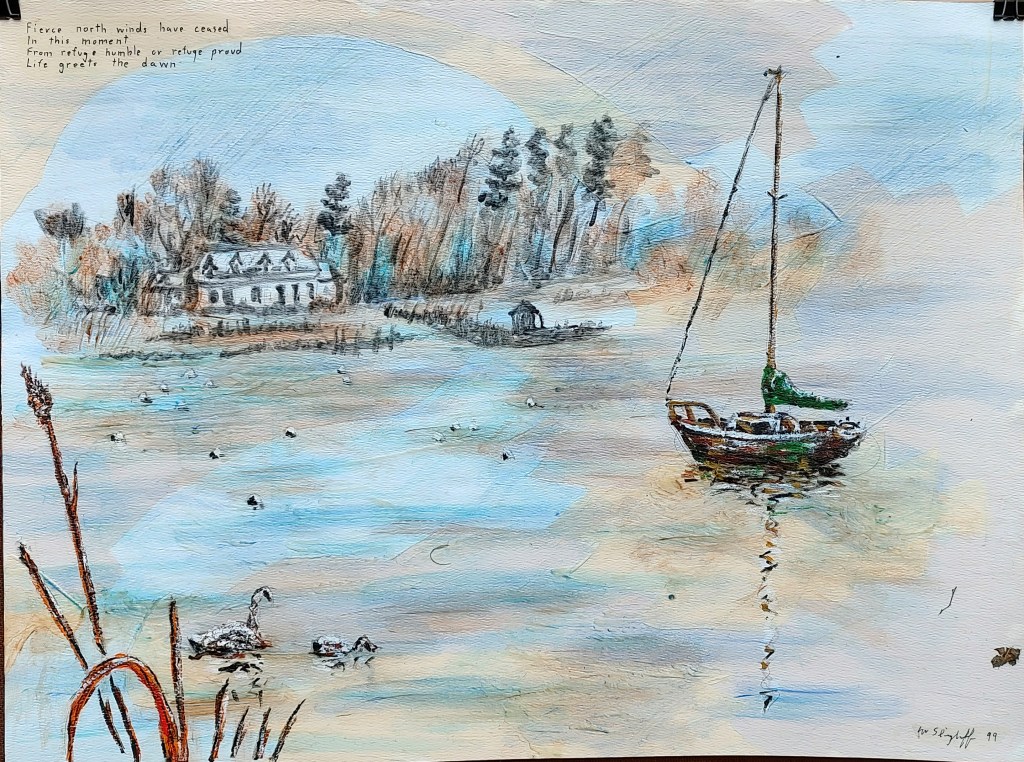
Beyond that, things like lines and shadows require some concentrated imagination which is one of the reasons most of us like drawing and other visual arts. Not because it is “true” but because it is “fun” .

No lines in nature. An awful lot in our heads .
Deregulation

Laws and regulations are both necessary and infuriating. It all depends. We imagine they have been around in one form or another forever – sometimes as traditions or taboos, sometimes merely as the whims of the strongest ruler or group. It is impossible to imagine a society without them .

And that is really the key to the problem. Because with social tribes, we imagine things to be more fluid. “Let me do what I want or I’ll go somewhere else!” We believe that as civilization takes hold, every individual becomes encrusted with responsibilities and prohibitions until he or she cannot breathe. “What is not mandated is forbidden .”

We further imagine the frontier as freedom. Cities are confining. Run away to open space, where each can do as each desires. There may be some truth in that, but people are complex. For some reason, throughout history, folks often ran away from rural pastures and small farms to the great cities .

The advantage, of course, has been anonymity. In a city you feel free because the mobs (usually) don’t know you. In spite of those pesky regulations on everyone .

Regulations do tend to hinder innovation and progress. Keeping them “under control” or focused on “common sense” is difficult. Yet cities usually manage to work it out .

It’s when the rural yokels with little experience take charge and get rid of regulations that things really fall apart .

Fire, Flood, Drought

“Everyone complains about the weather, but nobody does anything about it.” In this era of massive technology, scientific hubris claims we can . Geo engineering concepts abound, from seeding the oceans, to sulfuric acid clouds and/or reducing certain gas emissions .

So far, it does seem the climate is more extreme. Bigger storms, major variations in “normal patterns.” Pretty clearly this is not simply “better weather reporting”. But equally, it is not immediately disastrous to everyone, nor an existential survival threat .

It may be humanity can change things. If not, some small fragment of our bloated numbers could probably survive anything. Famine and catastrophe first, of course .

But what does it mean to me and you? Obviously most of us should avoid building or living in river valleys or on sandy barrier Islands, among other adjustments. But personal changes are largely symbolic, especially if they are not normalized for everyone. 

Brushing my teeth more quickly or dashing in the shower do nothing unless everyone is forced to do so. Also what kind of car I drive or what I eat. Giant problems, unfortunately, require giant solutions. Feeling virtuous about my CO2 footprint is like feeling lucky when I throw a coin down a wishing well .

In the meantime, I better fix my leaky roof. 

Sun Worshipper

An old science fiction novel called the sun “lifegiver.” Obviously true, because without the sun (exactly as it is and has been) there would be no life on Earth, never would have been any life on Earth, never you or me. If it went away this afternoon forever none of us would last long .

Science simply confirms what is intuitively obvious. Solar mythology has existed throughout history and surely long before. Sun dictates our lives, better or worse. At sunset it is normal to evaluate the events of the day, at sunrise it is easy to rejoice .

The sun commands an austere respect. Its location and path cannot _ even in the most fevered visions – be changed with prayer or other magic. Asking it for rain is futile – better to beg clouds – even though without solar evaporation there would be no rain ever .

Now we are ” sophisticated.” We create light in darkness. We know the sun is “just” fusion energy. Some of us concentrate on more important things (like the internet) and ignore it except on special occasions .

A lot of the time, the sun helps me concentrate my exaltation in being conscious. I try not to take it – or anything else – for granted. It is a wonderful aspect of the universe on which to center. And it demands nothing more – or less – then that I be enchanted with being .

Lifegiver indeed .

Target Rock

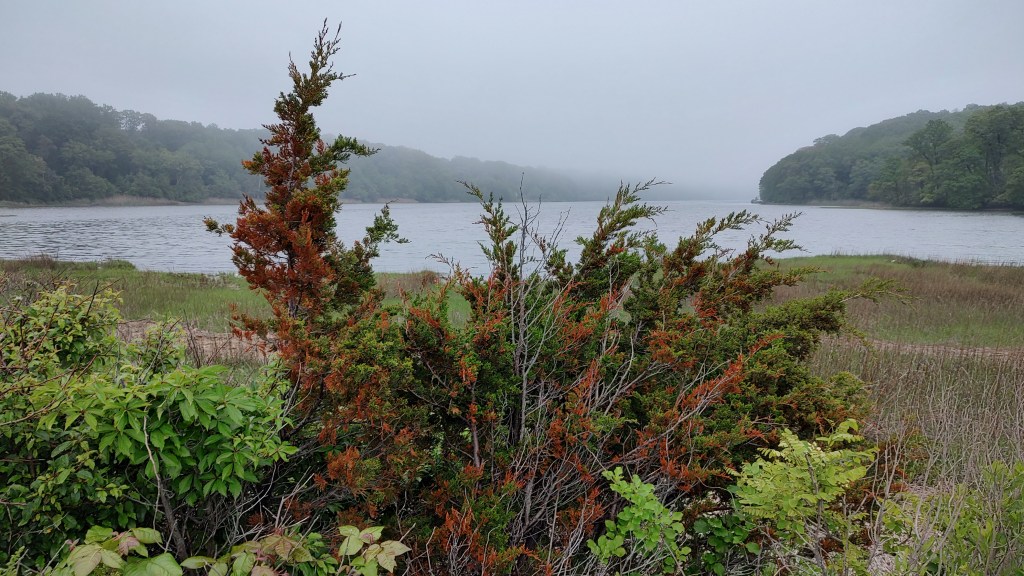
It can be useful to be reminded of both the age and impermanence of the world around us. For those of us aware on Long Island, that is pretty easy. This is a “new” land, formed of sand debris as the last glaciers melted, raised from the ocean when the continent lifted as it was freed of the weight of the ice. Perhaps soon to be submerged by rising seas .

European history here is almost ancient (by European standards). Over 400 years ago – Louis XIV was just building Versailles – the town of Huntington was founded. Before Napoleon, the British defended the island fiercely .

They captured Nathan Hale on the shore line here. They smashed a graveyard to use as a cannon emplacement. And from sandy bluffs, they practiced gunshots at Target Rock, a large erratic boulder lying in Lloyd Inlet .

People and politics come and go. The rock is still there, preserved from use and indignity by its “useless” location. Now the center of a wildlife refuge formed from old Gold Coast estates destroyed by time and taxes .

I love to visit in all seasons, enjoying the trees and birds and wind and shells. Become aware once again of the impermanence of life. Enjoy the connection to “olden times”. Imagine being a native American, a colonist, even a wealthy owner in the gilded age .

But, quite honestly, mostly happy to be exactly like that rock.  Contented where I am .

Tranquility

In our fortunate era, one can do many things, play many roles, in fact be different persons over time. We recognize standard stages of life – childhood, adolescence, young adult, middle-aged, senior, elder – and the various career changes one can make. But our very being can also transmute .

Tranquility is not a revered goal of our culture. It’s more important to be upset, to strive, to be unsatisfied with what is and work to change things for the better. For most of those stages of life, being tranquil is dangerously close to being a lazy good for nothing .

But elders _ well, little is expected at this declining energies and thoughts. Attempts by old folks to do great things is at best comical and at worst annoying and tragic. Tranquility fits those who otherwise get in the way of progress .

I confess to buying into this somewhat. Ever since I read  Innocents Abroad as a boy, I realized that younger people who accept life however awful it may be are more to be pitied than envied. I hardly ever sought tranquility, preferring even painful activity to doing nothing .

But now? I’m afraid I am still not quite tranquil, although I have slowed, appreciate the moments, and try not to regret all the many things I can no longer do. Such acceptance, I suppose, is close to tranquility. Or laziness, of course. 

High Tide

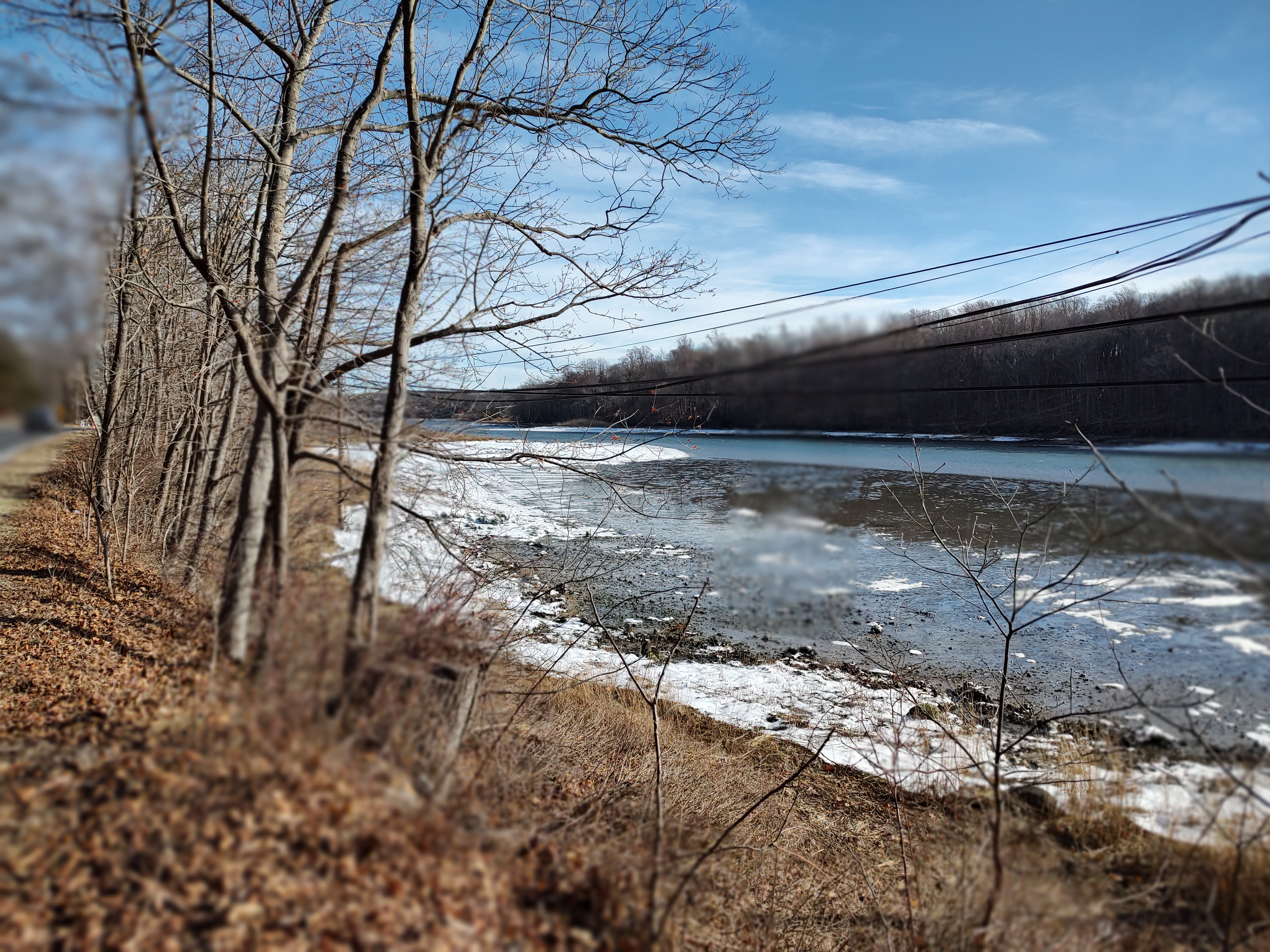
Another “high tide advisory” has been issued. Sea levels are higher. Along the Northeast coast, where I’ve lived most of my life, the wide beaches are being swept away, towns on barrier Islands are facing destruction, coastal flooding is frequent. Although the rise has been incremental so far, melting glaciers could someday cause catastrophe .

Well, it’s one of many things I’ve seen change. Nasty weather patterns. Common insects, birds, animals vanishing. Open land privatized and restricted. Garbage and traffic and . . .  The list is immense. I have no real complaints. I’ve experienced almost all that I could in what was – for me – the best of all possible worlds. And I know each generation must face a different time. I may regret that the younger people will never enjoy what I did, but surely there will be other pleasures.

Some predict a variety of horrible apocalypses. Some predict a geoengineered, AI-directed paradise of long life and sybaritic existence. I reserve judgment. But surely some innocence and freedom has been lost.

Although helpless in the grander scenarios, there are still daily joys. A niche of parks, food, friends. Enveloped frequently by nostalgic memories. For the most part, I can ignore worries about my shortened future. Pay little attention to all the many things that seem to be going wrong. 

Including high tide .