Wage Slaves

Pre-Civil war plantation owners often claimed that their slaves were better off than the “wage slaves” toiling in northern factories. Of course the main difference was that Southern slaves were permanently slaves, unto the last generation, and had no rights at all outside of being a valuable piece of property .

But I wonder if those gentlemen have a point in the modern world. Not long ago we would laugh at the notion of wage slaves. The world was fat in America, companies took care of employees even providing good health care, and there were always alternate possibilities to escape to .

Now? Not so much .

Medical coverage is frightful. Unions are weak and often destroyed by corporate power. Non-compete clauses are enforced. Entrance certifications are insane. More hours are demanded, more severe effort is demanded, each minute is monitored like in an old Charlie Chaplin film. There is no stability, loyalty, pride, or hope. Any worker can be “sold down the river” by email, gone with no trace at the end of the day .  And forbidden to work at the same type of job for years.

There is still a mythology of work in the United States, but it is fraying rapidly. Successful entrepreneurs and the billionaire inheritors are the new plantation owners. It’s a very mean world. 

I wonder how long the center holds .

Taxes

The Roman Empire ran government of the rich, by the rich, and for the rich. Wealthy individuals were required to pay a lot for government positions, in the expectation that they would be more than reimbursed (by bribes, extortion, etc, within reason). It worked remarkably well .

The Roman Empire mostly ignored individual taxes. Entities like cities and provinces were expected to pay decreed amounts, and were free to raise money any way they wanted. If they failed to do so, the legions went in and looted it. That also worked well for hundreds of years .

Modern government is more “enlightened”. It is run “for the people” meaning, by definition, the poor. It is paid for by multiple … well, the problem is that it really is not paid for. The wealthy, as always, have ways to protect their wealth. Their bribes go to preventing taxation, sometimes by illegal evasion, more often by legal maneuvers like “exemptions” or “investment”. The result is increasingly government by debt

In an age when everything will be made by machine and billions of humans helplessly consume, all bets are off. The very idea of paying for scarce items may be obsolete. 

But, of course, that land of cockaigne remains ever over the hill, far away, and in the future .

Crowd Pleasing

We all love a crowd-pleasing act. It is fun to be amazed and entertained by improbable performances that lift us out of our ordinary thoughts. We willingly spend time and money to enjoy the show .

Every crowd pleaser starts as a clown. Bright clothes, exaggerated gestures, loud sounds, and crazy antics. No magician wants anyone to be looking at the sky while they pull a rabbit out of a hat. They must keep us focused all the time on what they want us to see. A wonderful moment, when all goes well .

But is it any way to run a country? Democracy relies on it. Other systems may use brute force, or rigid tradition, or even intellectual logic. But votes (real free votes, anyway) require a massive crowd-pleasing act, first to grab attention, then to follow through on what must be done .

All systems have flaws. The exact type of the democratic tradition matters. Technology and situations radically change things. In a rainstorm a magic show doesn’t work. There’s no reason to believe crowd pleasers are worse than any other kind of ruler .

The only problem – in all methods – is when the audience is too small, too isolated, too ignorant and begins to believe it represents everyone else, or a god, or the universe. Then the performer becomes purely a cult leader rallying fanatics – and often only trying to maintain a tiny audience’s attention and duration .

Father William

“You are old, Father William…” (look up the Lewis Carroll poem if you don’t know it.) It pretty well captures my outlook and that of many of my more sane friends .

Young people think a variety of things about their elders. It’s natural, we did the same thing years ago. In some ways they revere what we have done, they think we have accumulated wisdom and gained perspective. In other ways they know we are irrelevant, stubborn, and often irritating, not to mention completely out of touch. All true .

But the key – as in the poem – is silliness. Elders can hardly take the future seriously (those of us who do so are the worst enemies of civilization.) Old people should be irrelevant to everyone but their immediate family. Our knowledge is vast and hard won, but hardly applicable to various modern crises. We enjoy our personal shell and bubble, but are well aware of how fragile it is. It won’t last very long …

So Father William jokes a lot and seems out of touch and a little sly. And yet – my days are joyful and my worries more immediate than they used to be. I think that attitude is appropriate for my age. But, of course, I would think so. 

Wind and (A)I

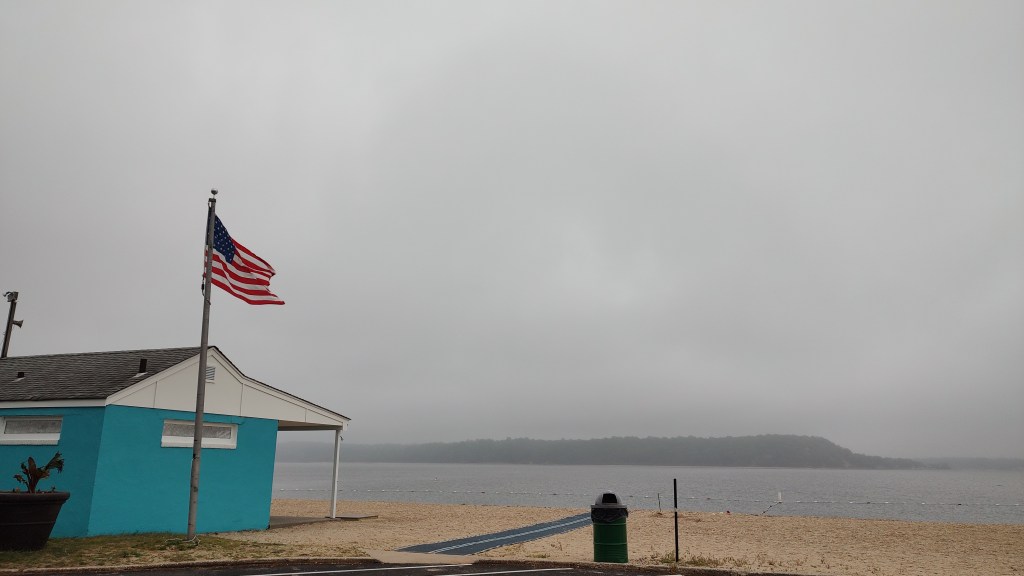
Long Island has so far been spared most of the more severe aspects of climate change. A little drought, more rain during storms. Rising sea levels in the bays wreaking havoc with ecologies and worrying shoreline property owners. Oh, and wind … 

I was walking in the park yesterday into a cold fierce gale. Now, climate deniers will say there have always been such things, but in my experience they seem to be increasing. Anyway, cold, cutting, but benign enough. I smiled into the frosty blow, leaned forward, and enjoyed the minor adventure .

That in a nutshell is why being human is not simply being an intelligence. I feel  the wind and experience the world at an animal level that cannot be wired into a machine. My hormones and flesh react into an engulfing experience .

Now, I know AI will be able to measure the wind, maybe use it to adjust things like turbines, record it, “speak” to others of the “facts”. But it does not now – and I claim never will – feel  it as I do .

That’s why I pity and fear those who claim they hope to pour themselves into artificial intelligence. Smarts with personality. I think that in so doing their pure logic will be horrific, untethered from the reality of experiences like that wind .

All of that is beyond my influence. I commit once more to enjoying my animal nature deeply and with appreciation .

Que Sera

“Que sera sera, whatever will be will be”, a song from childhood. Nice to embrace as one grows older, but in opposition to progressive capitalism .

It’s kind of a variant on “accept God’s will”, a mantra in some form of almost every religion. So obviously it has relevance to just about how everyone considers life, at least part of the time. Find the good, enjoy the moment, do what must be done, “Don’t worry, be happy” .

Of course we also have that old standby “carpe diem”. Seize the day, grab opportunities, define goals, change things you don’t like. There is no shame in failure, only in never trying. 

Two conflicting outlooks. Hegel might claim that of such opposites a synthesis could be formed. But that is wrong. Instead we fragment our times, finding some moments when one approach applies, others when the opposite is appropriate, a lot of situations when neither quite fits .

For me, the resolution has been that rigid dogmatism is useless in life. A person who never lifts a finger is frequently a useless drudge. A maniac who is always taking risks may destroy our community. So we end up back with another aphorism – “moderation, even in moderation” .