Flash Tsunami

Earthquakes and tsunamis often strike without warning, many times in places where they occur only every hundred years or so. These days, there are often warnings. But they seem to be more and more a metaphor for the various “flash” events created by an instantly interconnected world 

You can, for example, be sitting quietly on a bench in a deserted park and be suddenly surrounded by a crowd. Maybe just having fun, maybe robbing everyone in sight, maybe engaged in gang warfare. The point is, it’s a lot of people suddenly appearing at a small place without warning. Only their social media knows why .

Similarly, there can be flash shortages of almost any good or service as advice or warnings go viral and everyone grabs as much of whatever as possible, paying much more than usual. Frantic hoarding clearing shelves instantly .

And of course there is the mental flash information known as “memes”. Suddenly everyone “knows” something they never knew before. Maybe true, maybe false, usually irrelevant but when thousands or millions of people are affected, even mental illusions have an impact .

It seems that such social flashes are more and more frequent. Almost like the “good old days” of the unexpected earthquake or tsunami .
Sanity

Most people feel it is good to be sane most of the time, although a bit of madness now and then may be useful. But to which sanity do we refer ?

Sanity could be defined as how well we integrate with reality. But realities differ. Our internal reality (based on our perceptions) may not be that of others around us. A paranoid, for example, believes he is sane. But no doubt the first test of sanity is if we ourselves believe we are acting appropriately for our environment .

That gets tricky as social environment varies. What I think is sanity may not match at all what others are doing. Fortunately humans adjust well, and can usually adapt to the general cultural perspective, no matter how weird it may seem at first.

But sometimes other people do seem crazy. Proverbially your mother would ask “if your friends all jump off of a cliff would you have to?” There is a logical internal sanity based on “higher values” – God, science, logic, experience – whatever .

All these (and probably more) get thrown into the mix, possibly consciously, possibly not. And then – how do we judge if we are sane or not? Survival? Happiness? Success? Smugness? And what degree, what color or odor the eventual resolution ?

Such a simple thought. Except that all of us are very complicated indeed .

Don’t Worry

In 1971 I lived in a Berkeley commune. Posted on our refrigerator door was a newspaper picture of a smiling guru with the caption “Don’t worry, be happy”. We later learned he had committed suicide .

The possibly apocryphal story was savored by those who laughed at “hippy stupidity”. All of us found it ironic. As the years go by I think on it periodically (and may even have written about it more than once – my memory isn’t the best lately.) Each time it seems to have a somewhat different moral. 

For example, to begin with, it’s not actually a bad philosophy. Most of us do worry too much about things that will never happen or over which we have no control nor influence. Then, there is a realization that any guidance may be appropriate at one time, but useless or toxic in different circumstances. And finally the question of how one reacts when core ideals are broken.

But I always cycle back to how I feel. And there I realize that the old news clipping is simply another odd fragment of my infinite consciousness, to be used or discarded or ignored as I see fit. Sometimes surfacing for no reason at all. Usually provoking thoughtfulness .

For right now, I try to immerse in “Don’t worry”. I nurture the grand enchantment of being happy. Certainly not a guru, but good enough for today .

Medium Well

“All things in moderation. Even moderation.” A wise saying. Living as an uncaring Buddhist saint, ignoring the world, has always struck me as early death. A few extremes add spice to existence .

There are complaints that today is different. We are buffeted by uncontrollable forces. Internet adds to higher highs, lower lows, rabbit holes, and destructive fantasies. It is impossible to be “moderate” in such an environment .

However, that is usually expressed by some of the most pampered people who ever lived. Warm, dry, well fed, with electricity and other comforts not imagined by those living a few centuries ago. The whining of such spoiled brats is very annoying .

Our ancestors faced genuine extremes every day, every year, almost all of them potentially fatal. There was never a better logical reason to “live well today for tomorrow we die.” Disease, disaster, hopeless fate. And yet – they kept an even keel. Mostly .

I’ve adopted a schizophrenic approach. For local matters over which I have control (eg eating, exercise) I continue the advice of “moderation”. For all that “media” hoopla I’m more like the monk, observing but fully dissociated. 

As I think of it, medium well done.

Rule of Law

“Civilized” people like to look down on “primitives”. Among our other virtues, we live by rational “laws” while they have only childish “taboos” to guide actions and keep society working .

Laws are wonderful things, and a “rule of law” assures that we are all treated as fairly as possible. Our lawyers tell us so, and the authorities enforce their opinion. What a laugh it would be, they claim, to try to run a modern city with nothing but arbitrary taboos and foggy customs .

And yet . . . laws are rarely applied in personal life. There are few laws in a healthy family or friendship. There are still only “foggy” customs and basic taboos holding our relationships together. That is human. Even more formal organizations use mostly flexible “rules” and “guidelines” .

Laws try to be logical but are often too rigid to fit circumstance and must be “interpreted”. Lawyers love it. I am well aware you cannot at this moment run a modern society without law, but basing some future utopia on the perfection of its laws is madness .

“Rule of law” is of itself neither good nor evil. Like taboo, it all depends not only on the wording, but also on the application. We are all kind of primitive still .

Marriage

At various times, marriage has been defined as a dynastic continuation, wealth conservation, bourgeois tradition, social requirement, family obligation, or religious fraud. Not to mention modern twists and fantasies .

I’m sure anyone who tries to nail it down is excessively foolish. I will give it a comment anyway. I’ve been fortunate, and still consider our 50-year marriage the core of our lives. So a personal observation .

The main thing has always been trusted companionship, sealed with honest individual oaths. Those ideas of “for better or worse, in sickness and in health” have really meant something, sometimes a burden, more often a comfort. Got us through the inevitable rough patches.

We were fortunate to be well-formed individual people when we met. We did not have identical goals, we did not need to find our own meaning in each other. We were simply a pair who liked to share life and adventure – although still free not to do so all the time. Enough different interests to keep things interesting. And the ability to argue and resolve conflict. I admit that in all that the most important shared value was that of family. Raising children was a goal above all others .

Well – so much for this soapbox .

Cowboys and Indians

Little boys have always enjoyed, I suppose, playing war games of one side against another, often based on historic conflicts. In my youth it was Allies versus Nazis. In other places and times it could have been North versus South, Gauls versus Romans, or that constant favorite, cowboys versus Indians .

The games were usually harmless enough, anyone willing to take any side for an afternoon. Not at all like the real horrors of war. Kids didn’t much care about historic realism, and happily evoked stereotypes .

In real life, “cowboys versus Indians” had nothing to do with cowboys. It was the full military of an industrializing giant civilization pushing out a “primitive” culture. At best, it wanted to turn “Indians” into “white people.” At worst, it judged that impossible and tried to exterminate them or place them in isolated zoos .

In spite of modern romanticism, there was a lot purely awful and nasty about “native American” culture, as any honest reading of historic sources will quickly discover. And that lifestyle was fully incompatible with the onrushing pioneers.

There were no easy answers. And no solutions .

I fear the current Mideast is now turning into such a conflict. Only extermination or zoo preserves will be acceptable. A sad moment in a world not nearly so “enlightened” as we had hoped.

High Tide

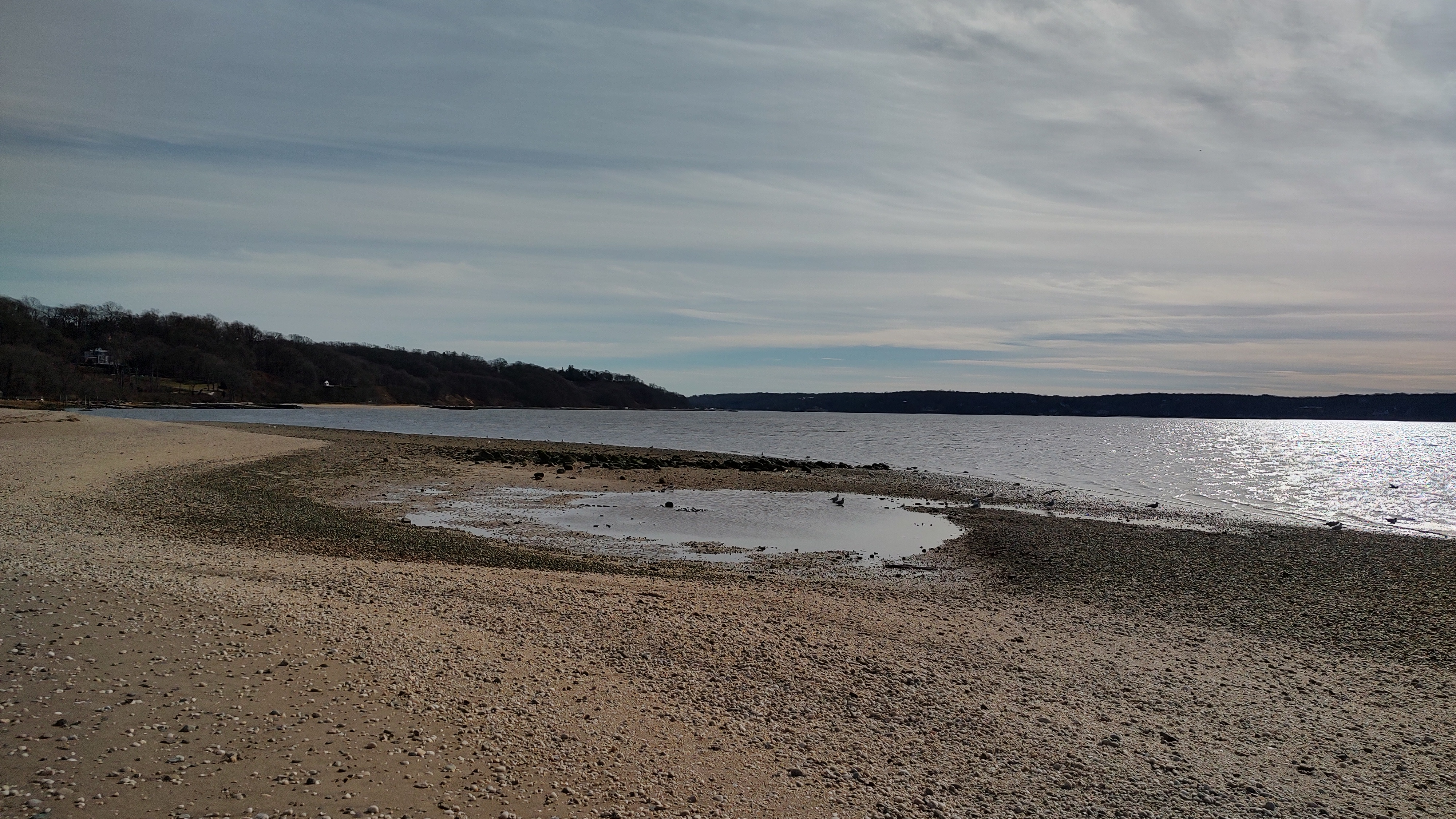
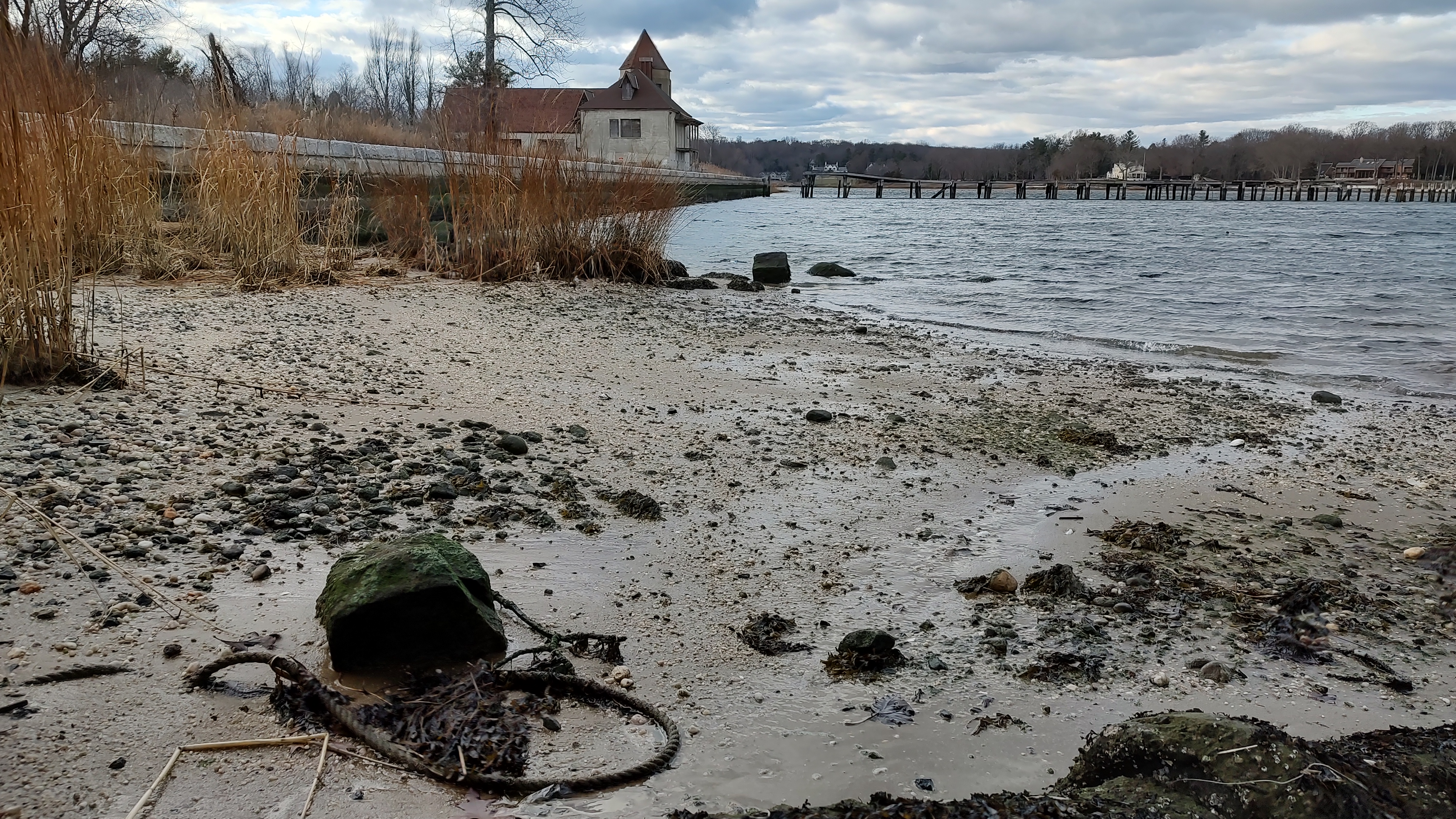
Another “high tide advisory” has been issued. Sea levels are higher. Along the Northeast coast, where I’ve lived most of my life, the wide beaches are being swept away, towns on barrier Islands are facing destruction, coastal flooding is frequent. Although the rise has been incremental so far, melting glaciers could someday cause catastrophe .

Well, it’s one of many things I’ve seen change. Nasty weather patterns. Common insects, birds, animals vanishing. Open land privatized and restricted. Garbage and traffic and . . .  The list is immense. I have no real complaints. I’ve experienced almost all that I could in what was – for me – the best of all possible worlds. And I know each generation must face a different time. I may regret that the younger people will never enjoy what I did, but surely there will be other pleasures.

Some predict a variety of horrible apocalypses. Some predict a geoengineered, AI-directed paradise of long life and sybaritic existence. I reserve judgment. But surely some innocence and freedom has been lost.

Although helpless in the grander scenarios, there are still daily joys. A niche of parks, food, friends. Enveloped frequently by nostalgic memories. For the most part, I can ignore worries about my shortened future. Pay little attention to all the many things that seem to be going wrong. 

Including high tide .

Egomorphism

Anthropomorphism shapes everything into a kind of human, with feelings, desires, and powers similar to us. Not only “hard” nouns like trees, the sun, or buffalo, but also “concept” nouns like luck or evil. Many take it so far as to include imaginary ideas like family, government, or conspiracy.

I would coin an equivalent “egomorphism” for those who narrowly believe everything (including all other people) are exactly like them. They evaluate every part of the universe as if they were in control. Their desires, hopes, and fears become those of everyone and everything .

Unfortunately, it seems that such mentalities also see themselves as essentially rotten. They only survive by suppressing their inner worst tendencies. They assume that everyone else maliciously applies full power as they would do if they had no inhibitions .

That includes what is known as “projection” but it goes far beyond. It includes a basic hostility and paranoia as if fighting inner demons. It assigns agency to illusions such as conspiracies and secret societies all trying to destroy them .

A sad mental state for them .

A dangerous mental state to everyone else .

Decision Destiny

Successful people like to believe that their decisions were the reason for their achievements. People who consider themselves less successful usually blame luck or the conspiracy of others. Both are a little true. But the inverse also holds – success may include luck and the conspiracy of helpful folks. Failure may be due to bad decisions.

Luck plays a huge part in life. Someone born as son or daughter of an emperor will have a much different life than those born to a peasant. And in most societies each son will have a far different life than the daughter. Nor does anything but luck contribute to a person’s genetic attributes or lack of them – beauty, brains, or strength. Not to mention the environment and times in which one appears in the world .

Decisions remain critical. Many are irrelevant, like what to eat for lunch, although a pattern of decisions can determine one’s weight and health. A few decisions are obviously extremely important in future paths – but again, often it is the pattern rather than individual coin toss .

And then there are the “black swan events” _ getting hit by a truck or meeting a billionaire. As they say “life is funny that way.”

All in all, most of us place too much emphasis on one side or another. The best decision is usually to redefine “success” to match your reality .