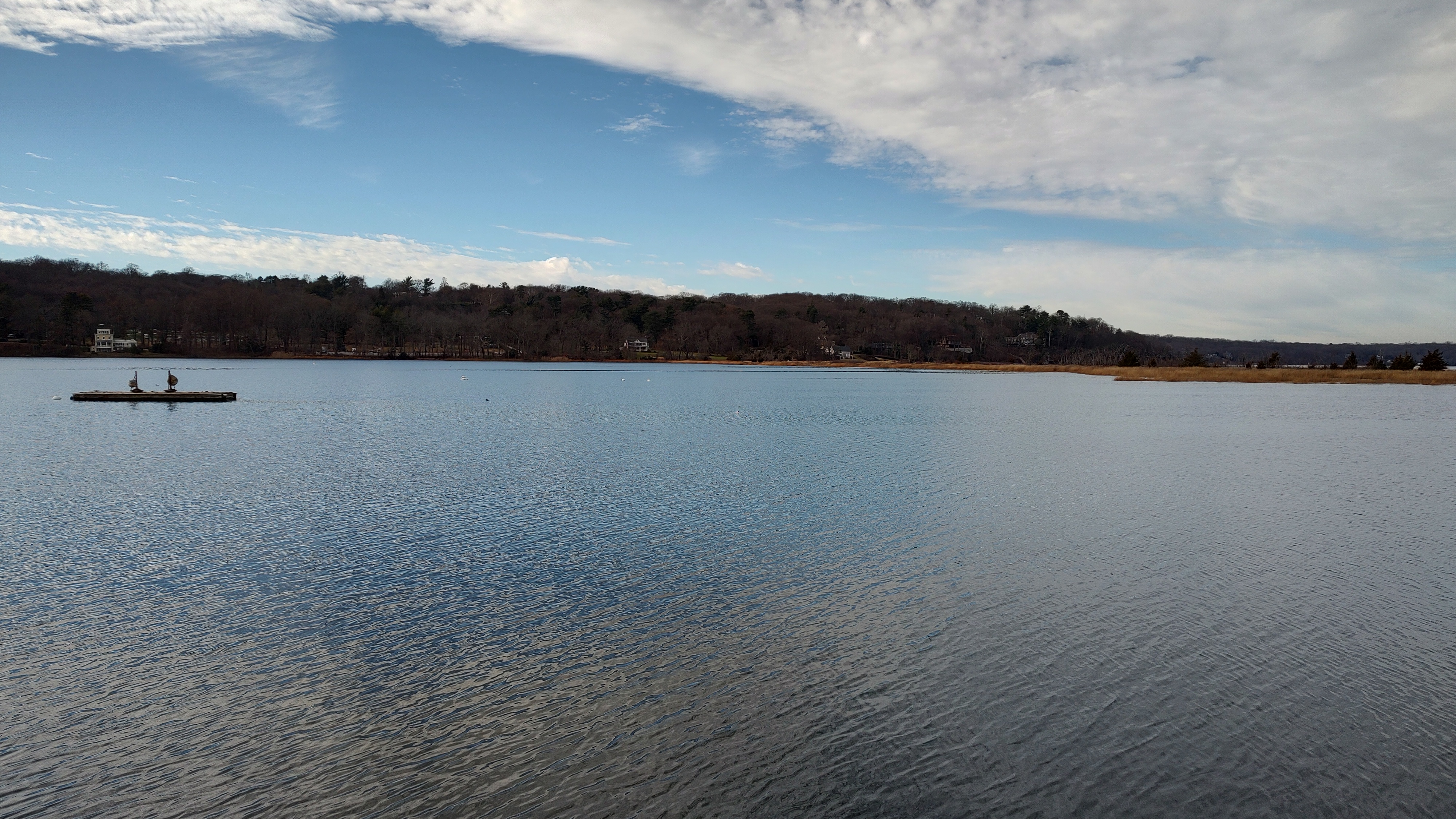
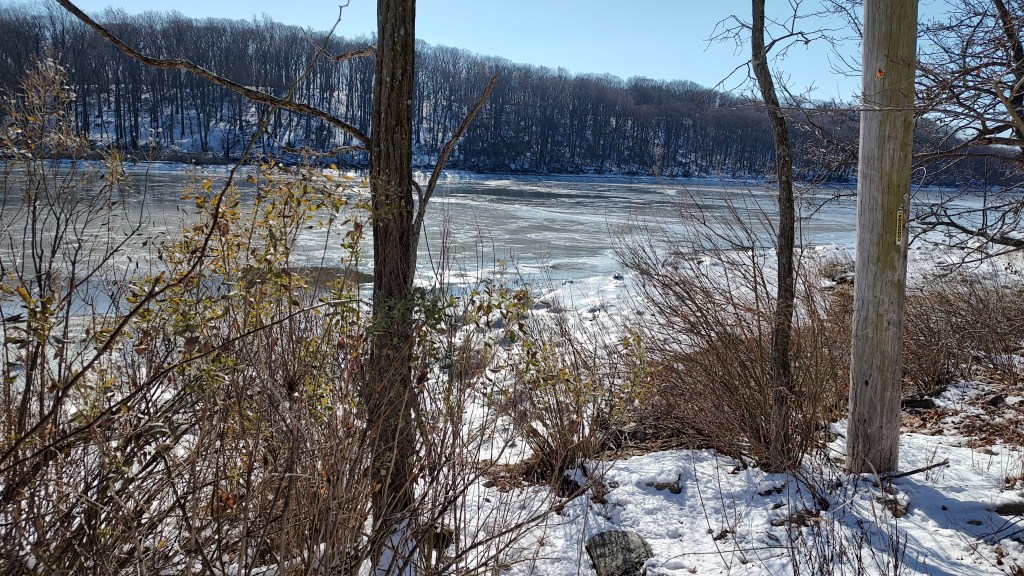
Tranquility

In our fortunate era, one can do many things, play many roles, in fact be different persons over time. We recognize standard stages of life – childhood, adolescence, young adult, middle-aged, senior, elder – and the various career changes one can make. But our very being can also transmute .

Tranquility is not a revered goal of our culture. It’s more important to be upset, to strive, to be unsatisfied with what is and work to change things for the better. For most of those stages of life, being tranquil is dangerously close to being a lazy good for nothing .

But elders _ well, little is expected at this declining energies and thoughts. Attempts by old folks to do great things is at best comical and at worst annoying and tragic. Tranquility fits those who otherwise get in the way of progress .

I confess to buying into this somewhat. Ever since I read  Innocents Abroad as a boy, I realized that younger people who accept life however awful it may be are more to be pitied than envied. I hardly ever sought tranquility, preferring even painful activity to doing nothing .

But now? I’m afraid I am still not quite tranquil, although I have slowed, appreciate the moments, and try not to regret all the many things I can no longer do. Such acceptance, I suppose, is close to tranquility. Or laziness, of course. 

Rule of Law

“Civilized” people like to look down on “primitives”. Among our other virtues, we live by rational “laws” while they have only childish “taboos” to guide actions and keep society working .

Laws are wonderful things, and a “rule of law” assures that we are all treated as fairly as possible. Our lawyers tell us so, and the authorities enforce their opinion. What a laugh it would be, they claim, to try to run a modern city with nothing but arbitrary taboos and foggy customs .

And yet . . . laws are rarely applied in personal life. There are few laws in a healthy family or friendship. There are still only “foggy” customs and basic taboos holding our relationships together. That is human. Even more formal organizations use mostly flexible “rules” and “guidelines” .

Laws try to be logical but are often too rigid to fit circumstance and must be “interpreted”. Lawyers love it. I am well aware you cannot at this moment run a modern society without law, but basing some future utopia on the perfection of its laws is madness .

“Rule of law” is of itself neither good nor evil. Like taboo, it all depends not only on the wording, but also on the application. We are all kind of primitive still .

Cowboys and Indians

Little boys have always enjoyed, I suppose, playing war games of one side against another, often based on historic conflicts. In my youth it was Allies versus Nazis. In other places and times it could have been North versus South, Gauls versus Romans, or that constant favorite, cowboys versus Indians .

The games were usually harmless enough, anyone willing to take any side for an afternoon. Not at all like the real horrors of war. Kids didn’t much care about historic realism, and happily evoked stereotypes .

In real life, “cowboys versus Indians” had nothing to do with cowboys. It was the full military of an industrializing giant civilization pushing out a “primitive” culture. At best, it wanted to turn “Indians” into “white people.” At worst, it judged that impossible and tried to exterminate them or place them in isolated zoos .

In spite of modern romanticism, there was a lot purely awful and nasty about “native American” culture, as any honest reading of historic sources will quickly discover. And that lifestyle was fully incompatible with the onrushing pioneers.

There were no easy answers. And no solutions .

I fear the current Mideast is now turning into such a conflict. Only extermination or zoo preserves will be acceptable. A sad moment in a world not nearly so “enlightened” as we had hoped.

High Tide

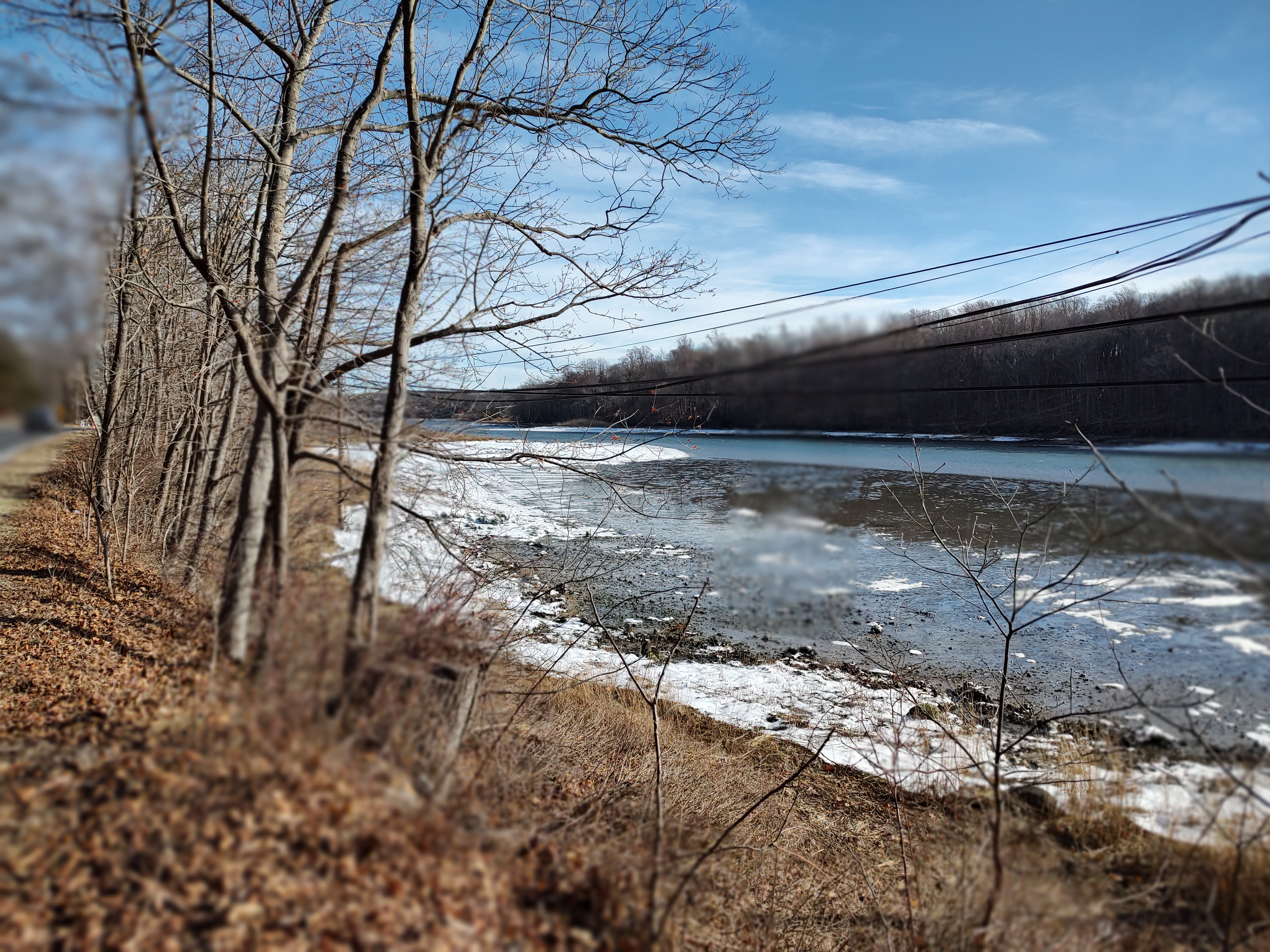
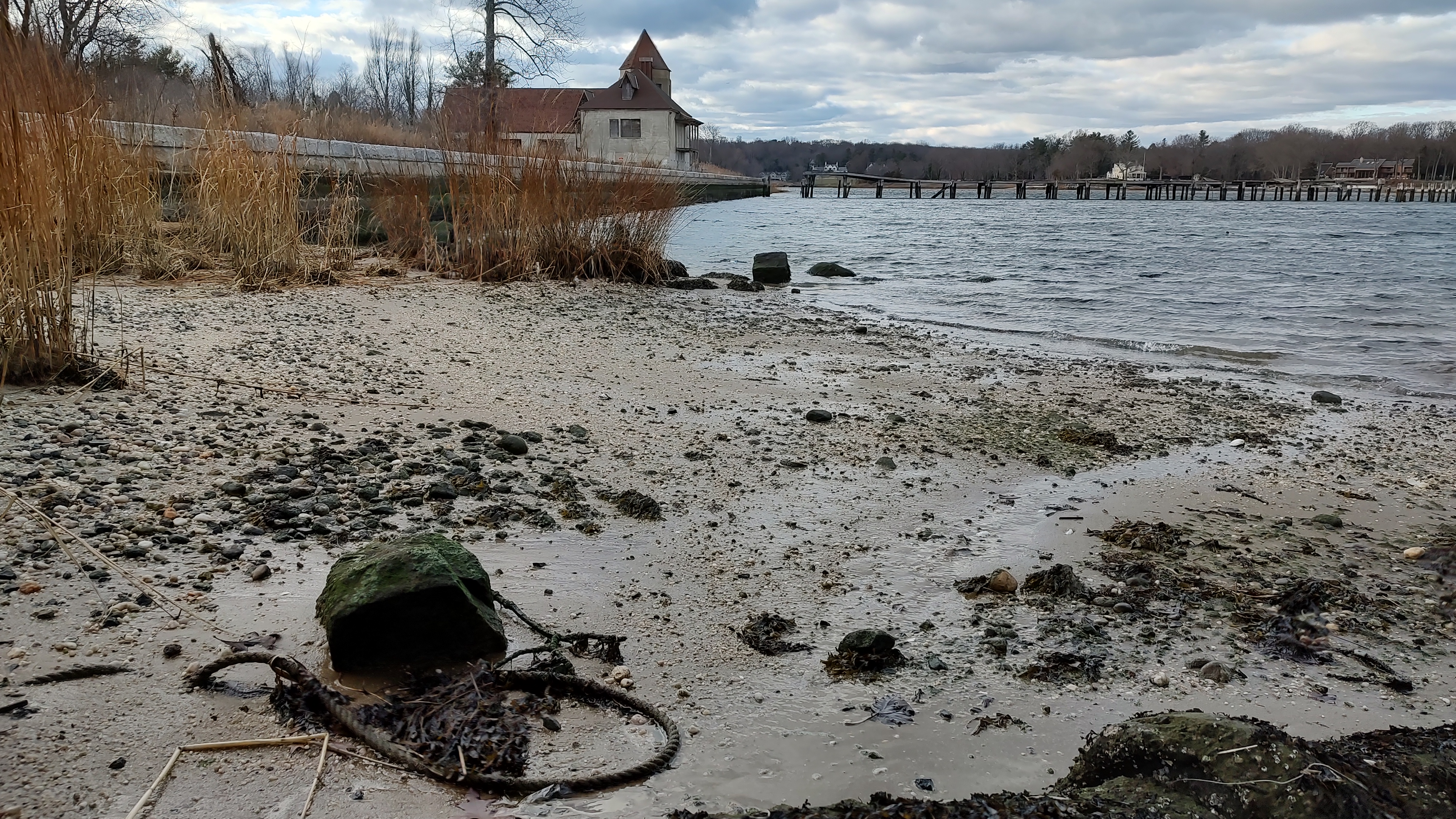
Another “high tide advisory” has been issued. Sea levels are higher. Along the Northeast coast, where I’ve lived most of my life, the wide beaches are being swept away, towns on barrier Islands are facing destruction, coastal flooding is frequent. Although the rise has been incremental so far, melting glaciers could someday cause catastrophe .

Well, it’s one of many things I’ve seen change. Nasty weather patterns. Common insects, birds, animals vanishing. Open land privatized and restricted. Garbage and traffic and . . .  The list is immense. I have no real complaints. I’ve experienced almost all that I could in what was – for me – the best of all possible worlds. And I know each generation must face a different time. I may regret that the younger people will never enjoy what I did, but surely there will be other pleasures.

Some predict a variety of horrible apocalypses. Some predict a geoengineered, AI-directed paradise of long life and sybaritic existence. I reserve judgment. But surely some innocence and freedom has been lost.

Although helpless in the grander scenarios, there are still daily joys. A niche of parks, food, friends. Enveloped frequently by nostalgic memories. For the most part, I can ignore worries about my shortened future. Pay little attention to all the many things that seem to be going wrong. 

Including high tide .

Egomorphism

Anthropomorphism shapes everything into a kind of human, with feelings, desires, and powers similar to us. Not only “hard” nouns like trees, the sun, or buffalo, but also “concept” nouns like luck or evil. Many take it so far as to include imaginary ideas like family, government, or conspiracy.

I would coin an equivalent “egomorphism” for those who narrowly believe everything (including all other people) are exactly like them. They evaluate every part of the universe as if they were in control. Their desires, hopes, and fears become those of everyone and everything .

Unfortunately, it seems that such mentalities also see themselves as essentially rotten. They only survive by suppressing their inner worst tendencies. They assume that everyone else maliciously applies full power as they would do if they had no inhibitions .

That includes what is known as “projection” but it goes far beyond. It includes a basic hostility and paranoia as if fighting inner demons. It assigns agency to illusions such as conspiracies and secret societies all trying to destroy them .

A sad mental state for them .

A dangerous mental state to everyone else .

Decision Destiny

Successful people like to believe that their decisions were the reason for their achievements. People who consider themselves less successful usually blame luck or the conspiracy of others. Both are a little true. But the inverse also holds – success may include luck and the conspiracy of helpful folks. Failure may be due to bad decisions.

Luck plays a huge part in life. Someone born as son or daughter of an emperor will have a much different life than those born to a peasant. And in most societies each son will have a far different life than the daughter. Nor does anything but luck contribute to a person’s genetic attributes or lack of them – beauty, brains, or strength. Not to mention the environment and times in which one appears in the world .

Decisions remain critical. Many are irrelevant, like what to eat for lunch, although a pattern of decisions can determine one’s weight and health. A few decisions are obviously extremely important in future paths – but again, often it is the pattern rather than individual coin toss .

And then there are the “black swan events” _ getting hit by a truck or meeting a billionaire. As they say “life is funny that way.”

All in all, most of us place too much emphasis on one side or another. The best decision is usually to redefine “success” to match your reality .

I, Singularity

Computer buzz these days centers around artificial intelligence, and the possible looming “singularity”. Depending on who is talking, that either means when a computer becomes more intelligent than a human, or when that computer achieves consciousness. At that point they say, the universe is rebuilt just as it was at the big bang .

There seem to be two dueling expectations, both driven by greed. Some believe that the machine will then effectively be a kind of god, able to do anything. And controlled by the cybernetic priests who may discover they’ve created the devil instead. Others hope to be able to transmute their flesh into silicon and metal, thereby achieving the age old quest for immortality. Why their consciousness should survive the transition from flesh is never considered, for they like to think of themselves as purely creatures of logic. That is, of course, illogical .

As for the universe – well, there are already multiple universes – one for each person alive and anyone who has ever lived. “The” universe is largely a fantasy. There’s an old SF joke that any superintelligent machine that achieves consciousness would survey “everything” logically, decide it was all irrelevant or futile, and immediately turn itself off .

Each of those people working towards computer omniscience is already a singularity. You are a singularity. And, yes, singularity am I. 

Self Myth

Machines are masters of logic. People, on the other hand, are driven by irrational hormones and myths. The most important conceit for any sane person is that they are important. No matter what cold logic may say.

Each of us encapsulates a unique universe of sensation and being. At the center of that universe – its only reason for existence – is that you are the only important thing, the center of reality. By all “external” logic, of course, that is not true, and is complete irrational madness.

All human mythology derives from that contradiction. People who only care about themselves are insane and often evil. People who do not care at all about themselves are insane and socially helpless. Most of us balance precariously on a tightrope of “stability,” always about to fall off, sometimes (hopefully) only for a moment falling off.

As a social species, we have evolved and learned to adjust so that all this is kept in check. Survival, after all, depends on cooperation, and that requires interaction with others. But sometimes a group of psychopaths can band together (each believing itself to be the most important part of the group) and threaten us all.

Our small scattered tribes could survive that in our pre-technological past. Now – well, I’m not so sure .

Ozymandias

We read Shelly’s Ozymandias as a distillation of the illusions of power. A cruel despot forcing subjects to erect a massive statue to his glory, all crumbled and forgotten over the millenia. But there are other interpretations.

For one thing, that king of kings probably could care less what we see in the desert today. Assuming it was a vanity project, it was more to impress his present than anyone after he died. And for all we know it could have been a public works project to keep folks employed.

More to the point, Ozymandias was not a god, but a human. That means he had to eat, defecate, sleep. He was bored and worried at times. If he grew old there were toothaches and various pains, wounds, and diseases. He may have been good or evil to his subjects, but he was subject to all the ills that flesh is heir to, like everyone else, then and now .

Besides, he was more constrained to his locality than anyone today. He could not know science, visit other continents, talk to people a world away. His direct sphere of influence was limited to a tiny immediate environment. His powers were in some way less godlike than those of anyone with access to a cell phone or automobile .

Power, yes. Cruelty, perhaps. But not to be pitied because his colossus and kingdoms did not survive the ages. Never to be envied because most of us are more godlike than he could ever dream .

Punishment

There are three ways to deter crime. One is to remove the reason for the crime – a well-fed person need not steal food. The second is to make the consequences of being caught worse than the gain from the crime itself. And the third is to remove a person who has committed a crime from society.

Locking criminals and socially inept (ie insane) people away from everyone else has long been a workable alternative to killing them outright. But once these people are safely out of sight, what should be done with them?

Some would say they should be ” rehabilitated.” Others that they should be made to suffer. Others that they should do productive work to pay back their debt to society. But all of these courses take extensive resources in people and money .

I’ve often toyed with the idea of a “drone paradise” where convicts have access to all the drugs, alcohol, and entertainment they want, happily deteriorating to death. It would be inexpensive and relatively humane and would, after all, serve the main purpose of keeping them away from the rest of us good people .

Just another modest proposal .