Roses

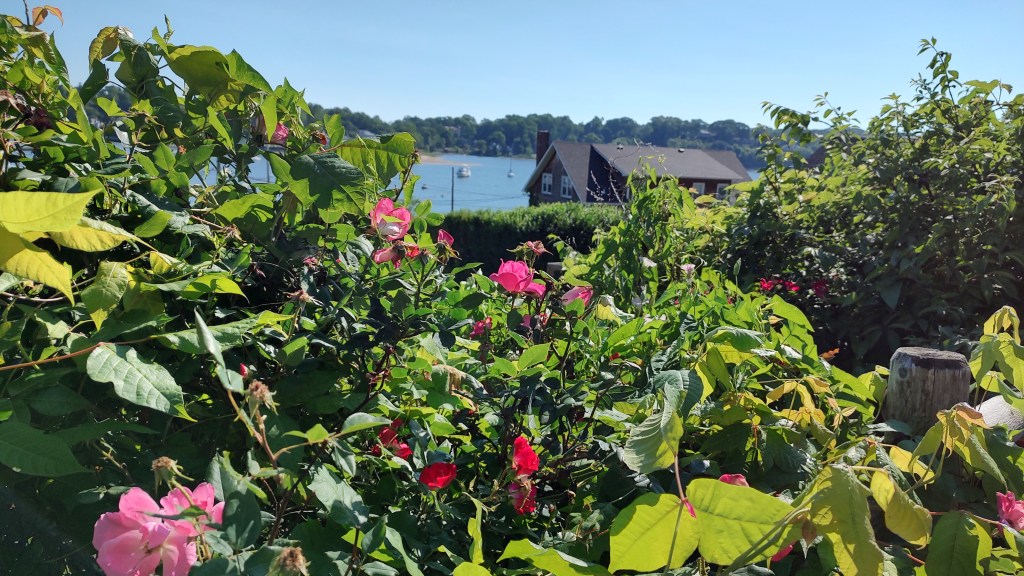
All the roses on the patio are magnificently in bloom. Joan picked them out years ago, we don’t do any special care, but they perform wonderfully year after year. In another part of the yard we have a survivor from her youth, over 60 years ago .

All life is amazing. For most people, flowers are especially beautiful. Roses please us because of years of careful selection and breeding. A common joy it is too easy to take for granted .

As I think and write my mind feels with interesting (to me) dimensions, echoes, lessons.  A rose is a trigger to “deeper” issues. But I ignore that today. Sometimes one should just accept and enjoy the world as it is, this moment of now .

An important aspect is simply visceral. I took no special trip, I am looking at no formal media presentation. When I go out there is heat, sunlight. If I’m not careful, thorns. Scents, in back of me birds crying and a tiny chipmunk running by. In a word, “existence’ itself. Unadorned and infinite .

Finally there is memory and transience. And “this same flower that blooms today tomorrow will be dying.”  Long ago summers recalled, rose gardens elsewhere. Even the sad certain knowledge that this is all to vanish, finally retreat to winter to come .

All this from some common roses in a small backyard. Ah, a lesson there I am sure, but I shall not pursue it today .

Tick Terror

Lately a litany of ills has people around here huddling inside in fear. Deadly fevers from mosquitoes, flesh eating bacteria in the water, invisible plagues in the air. Ticks with strange and horrible diseases .

The common denominator is that the culprits are tiny or invisible. Also ubiquitous if you are in the wrong area. It’s quite difficult to avoid water at the beach, air on the patio, or grass in the park.

Ticks are my favorite public overreaction. Mosquitoes invisibly come from anywhere and bite you right away, germs are generally thinly dispersed, flesh eating is quite rare. Ticks cannot run, jump, nor fly. They’re quite slow and deliberate, and take a pretty long time to climb to wherever they want, dig in, and begin to feed. Lots of opportunity to find and get rid of them if you look.

But folks imagine them as some miniscule land variant of the great white shark. Stalking the grasslands ready to pounce. Dropping from the sky on the unwary. Cleverly racing up legs to hide under socks or shorts. Evolving to be impervious to insect repellent .

The good news for me is that most park visitors remain on paved road. To them, grass is toxic, woodland trails forbidden. I ignore the signs and check now and then, always when I have finished my hike. No problem. But – well – the trails are lovely and empty for us adventurous types, apparently courting death or worse .  I often receive incredulous stares from the crowds on the macadam.

As I often tell my 10-year-old grandson, the great thing to be really truly afraid of here on Long Island is not ticks, mosquitoes, bacteria, or sharks, but cars and the impatient maniacs who drive them.

Daffodils

By Memorial Day, drifts of golden daffodils are long gone. Waves of various flowers are now culminating with rose blooms. Yet the memory remains .

Most of us in the northern climate love daffodils. They are reliably perennial, even spreading into thick patches, in sunlight or various degrees of shade. Before grass greens in the fields. Massive, interestingly shaped, more long-lasting than the earlier crocuses.  Left forgotten and untended for years, usually surviving.

My gardening wife gets a little annoyed that the residual leaf bunches clog the garden as they store energy for the next year. I dutifully tie them into tiny tidy bundles to leave her room to put in lots of annuals – which are themselves beautiful but a lot more work. For example, I never have to weed or water daffodils …

Is there a deeper meaning here? Nope. I guess I wish all introduced species acted so civilly in the ecology. Daffodils are simply a spring delight, something to cheerfully remind us that time is passing. And that the temporary joys of our life are as miraculous and wonderful as any long-term dreams .

Like all the varied displays of the seasons around here, in itself beautiful, meditative, and ready to settle me into my place in the rhythm of the years .

Note: I usually write essays a few months ahead to allow them to settle and for editing.

Medical Mess

Social systems, like organisms, are often insanely complex and convoluted. “Simple” things like an animal taking a step invoke nearly infinitely complicated signals, even after we discount the infinite underlying reactions keeping life going.

Any crackpot or “normal” person tends to believe if we “just keep it simple” we could clean up a social system such as medicine and make it cheaper, more responsive, and more robust. After all, how hard could it be?

Ask a biologist what’s involved in a deer strolling across a meadow.  And don’t forget things like all the trillions of ATP cellular reactions.Fixing a social system is even worse. Like organisms, social systems are not isolated but exist in an ecology. 

Reform may, in fact, be impossible.  What often happens instead is extinction or replacement by creatures invading the territory. 

I suspect we are in such a situation. Most of our cultural systems are complicated ancient relics that still work but are increasingly susceptible to extinction or replacement. 

Not “fixing them up”, not “evolution”, but vanishing into irrelevance.

Medical coverage and practice among them .

In such cases, it seems better to concentrate on “why” rather than “how”. Presumably our AI masters will produce all the answers necessary.

Not sure we will like those much .

Microcultures

For a while, “microclimates” were as much in vogue in viniculture as “terroir.” Any gardener knows that growth conditions vary immensely in small spaces – sun, shade, wet, dry, exposed, sheltered. Some plants do well in one kind of space, not so well in another. When it gets to the size of a large hill or a sizable pond – ah! Microclimate !

Naturally there are limits. A lake may moderate heat locally in summer, but deep winter – macro climate – will be harsh. No matter how “protected,” really deep cold will kill vines. And unusual events like hail, drought, fire, or disease respect no tiny differences .

Yet “microclimate” is real enough. It is where vines, animals and nature exist most of the time. Just as what I will call “microcultures“ where an individual resides in society. Family, friends, surroundings. The tiny and local is usually the most significant element of our consciousness, day by day .

Yes, there are greater things that override it. War, economics, technology, social movements. But that does not make microcultures any less real nor – much of the time – less important than grand historic events .

So, like any adaptive species, try to enjoy your current microculture, or find one more compatible. Even if it is just hanging out with people you like .

Fit for Spring

Many people know that evolution involves “survival of the fittest” although sometimes that really implies “survival of the luckiest”. Too many also assume fitness is a rabid struggle of tooth and claw. Not always .

Consider flowers. Yes, they need to be adapted to environment. But for hundreds of millions of years flowers have also “fought” to have attractive blooms for pollinators, and fruit which will be eaten by mobile animals to allow species dispersal .

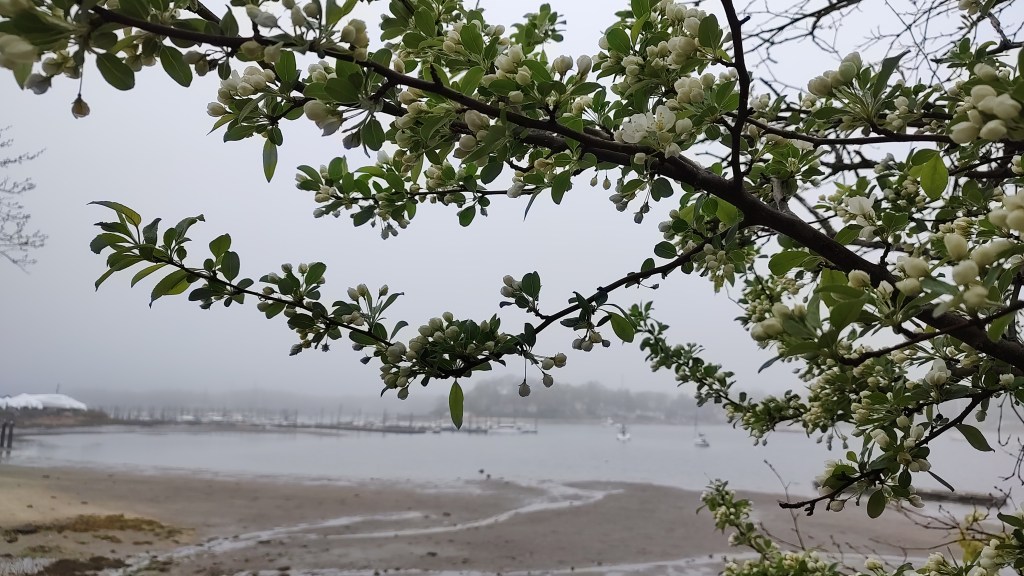
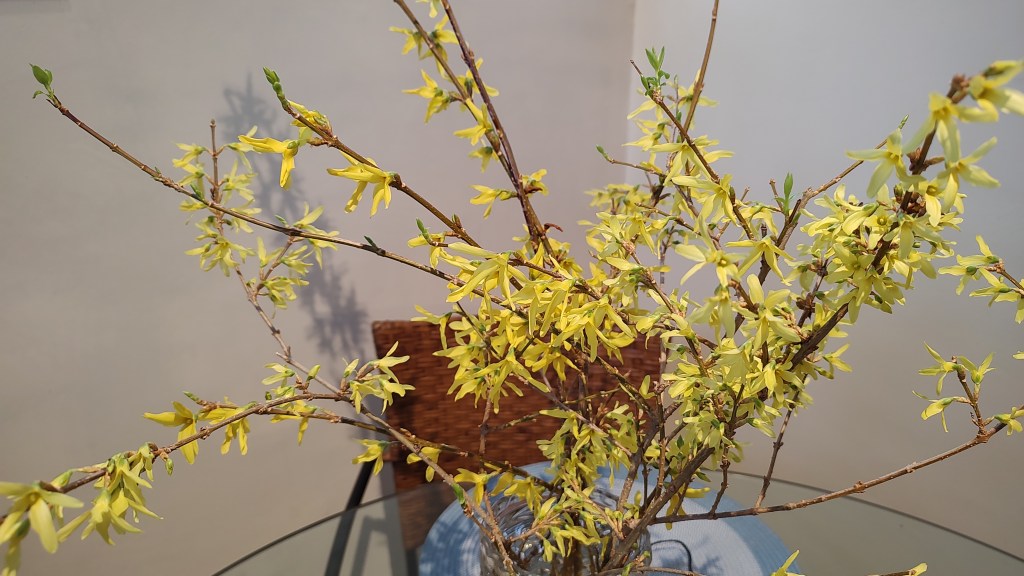
Odd things can be involved in fitness. Around here, most of the spring blooms – all magnificent right now – are either invasive or human cultivated species. Cherry trees, magnolias, forsythias are breathtaking. Daffodils and tulips blanket flower beds everywhere. In the current suburban environment, pure beauty can be “fitness” for a plant.

Even more surprising, recognizing “beauty” can be fitness for animals. Bees need to head for the right flowers, by sight or scent. Animals need to locate sugary pulp. Surely some of this has actively worked and is still working on our own human sensibilities .

But surprisingly, around me, beauty is its own reward, causing me to smile, neighbors to spend money, and all of us to be delighted with the floral displays of April .

Blizzard

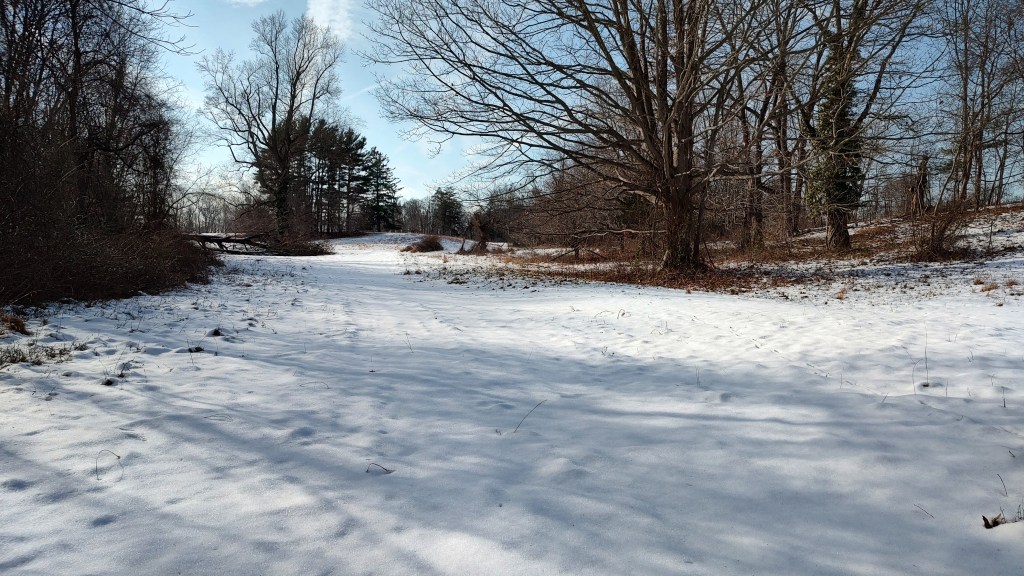
Blizzards, like everything else, are not what they used to be. Oh, snow and wind remain, but consequences tend to be trivial. In 1888, a Long Island blizzard killed hundreds, caught unexpectedly in the fields after a warm spring day. In my youthful 1950s, extended electric outage had my mom chopping up furniture to keep the fireplace going. The current “historic” blizzard of 2026 didn’t even bring down many trees, cause extensive disruption of electricity, close roads more than a day, much inconvenience shoppers or let children have a holiday .

It’s a quite robust world for things that we can prepare for. I not only do not complain, but am in awe at how truly competent our society can be. Not only blizzards, but also other disasters, plagues, and extended patterns like drought, famine. War, of course, remains. And the stubborn, if limited, evil of certain individuals .

Anyway, for a day or so we all enjoyed a true frisson of dangerous disruption. All the better because reality turned out far gentler than imagination. We are quite spoiled .

I try to emphasize that all the time. To be grateful for the normal, the calm, the taken for granted. Glory in how much lives have truly improved for many over the last few centuries. For a little while, to truly embrace the miracles of economic progress .

Millions

My dental hygieneist tries to scare me into flossing better by saying “there are MILLIONS” of bacteria on your teeth. I am not impressed. All numbers are relative, and this is a little like exclaiming “that brick is chipped!” when viewing a high brick wall a mile long.

“Millions” of bacteria, after all, are not the same as “millions of harmful bacteria”. And there are just as many or more body cells dealing with them. A minor thing that we have evolved to handle.

And, in context, millions doesn’t mean all that much. After all, I have over 30 TRILLION cells, and an almost equal number of quiet or symbiotic bacteria, not even mentioning viruses. A few on my teeth – relatively well-defended against as part of my outer membrane – hardly much to worry about .

We are an alarmist culture, always looking for “news” which is naturally not “ordinary”. We take for granted how well adapted we are for “normal” life. We worry as soon as some obscure tidbit is brought to our attention. This has become a culture with very little perspective .

I know that things can go wrong. I may get sick. At some point I shall certainly die. But I’ve learned it hardly serves my sanity to be alarmed all the time, often about things of very little immediate consequence .

Like those millions of tiny creatures in my mouth .

Snowstorm

In this colder than normal winter, another large snowstorm has covered the area. It gives me a chance to reflect on my luck in living when and where I do .

Aboriginal inhabitants of America are often pictured in summer, and described as inhabiting Eden. Early colonists are shown as snug in log cabins. But in fact there was illness and famine, rarely enough heat, and little to do but wait out the season and hope for spring. Even a hundred years or so back there was often no electricity .

I now inhabit paradise. I expect there to be constant warmth, light, entertainment. Too much food, always fresh fruit and vegetables. Medical aid reliably available. People think it’s a great inconvenience to be “stuck at home” for even a day .

Until ten years or so ago I had to shovel a large driveway, but now I just walk behind my machine .

It’s always good to appreciate the best times, the finest weather. But perhaps it is more appropriate to give thanks for our technology and civilization when the natural world is less kindly. This morning I certainly do so .

Medical Crazy

Evolutionary nature is cruel and capricious. The only thing that matters in evolution is reproduction. There are lots of complicated ways for a species to achieve that, including various instincts and even altruisms. But an organism that achieves too great a success will overpopulate and die off. Highly successful strategies that worked for millennia can be destroyed in an instant of bad luck as happened to the dinosaurs .

Until recently, although some humans may have dreamed of “threescore and ten”, most adults died by forty, and most children did not become adults. Old women past menopause would have lost all evolutionary reason to exist were it not for the “grandmother theory” that they promoted culture and advantage to their genetically connected tribe .

These days the pampered masses have lost all sense of gratitude for the scientific miracles surrounding them. Most children do not die before becoming adults. Most adults live past forty. Many can extend prime years to eighty and beyond .

Instead it is a litany of how awful things have become. More children with problems (instead of being dead!), more adults with pain and incapacity (ditto!). Everyone thinks they should be a vibrant perfect thirty-five years old forever .

Nature always disagreed, and still does .