Autumnal Equinox

Mon-

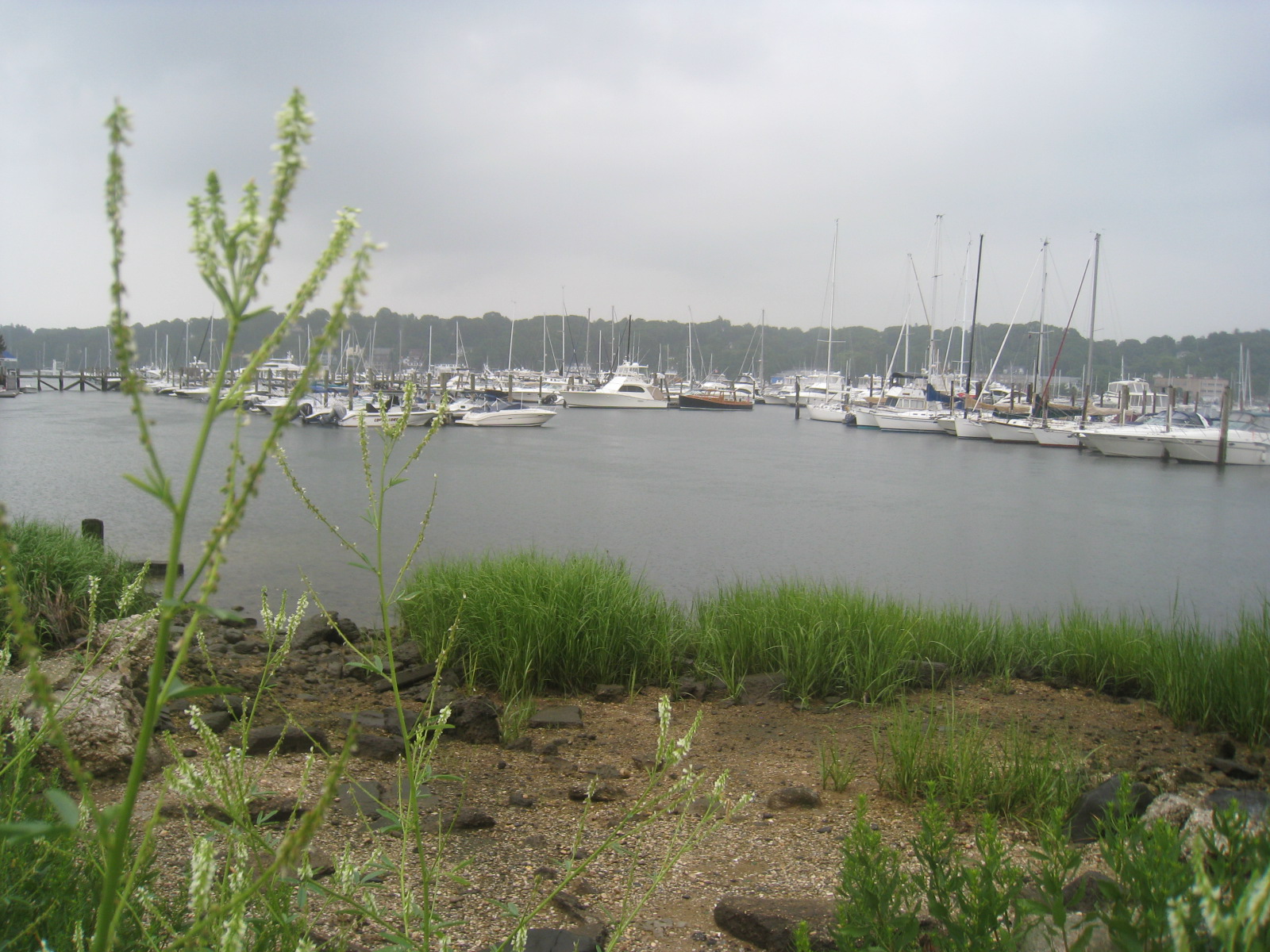
You can’t feel the cold stiff gale requiring me to wear a vest for the first time, and the changing angle of the sun is not obvious.  Even the pictures do not tell the whole story, since they don’t give a full view of the scene.  But for those who look, the clues are obvious.

We don’t usually get the full effect of seasonal change for another four or five weeks _ it often arrives ferociously around Halloween.  But the grasses shown here, certainly know.  The people, in their own way, by letting the yard go to seed also provide clues.  The changing colors, the dry leaves on the ground, the sparseness of the foliage in the trees, all agree with the solar calendar.
Tue-
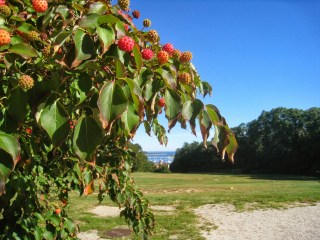


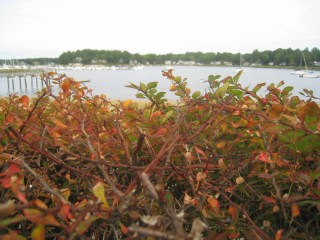
Directly along the shoreline spectacular fall colors generally do not happen.  The oceanic water refreshed on each tide moderates the air temperature too much.  Mostly the tree and bush leaves just turn brown and blow off in one of the first northern gales.


You need to go a little inland, not much, maybe a mile, to get some real reds and yellows.  Even on the harbor. though, if you get up a few dozen feet from the water _ as in this shot along a bluff property _ you can get a little action.  Yet, for the most part, all that will really become noticeable is the drying out. 

Wed-
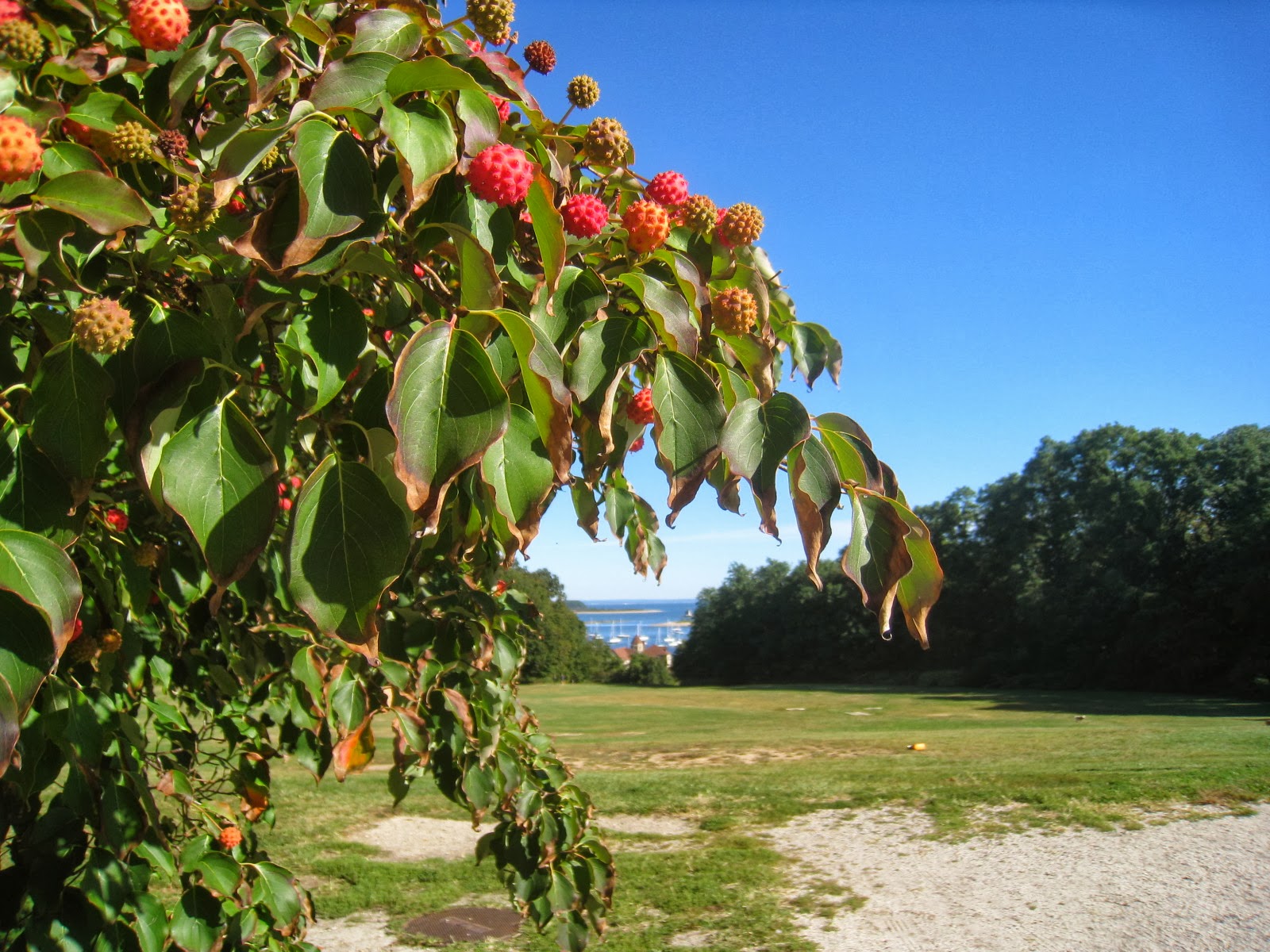
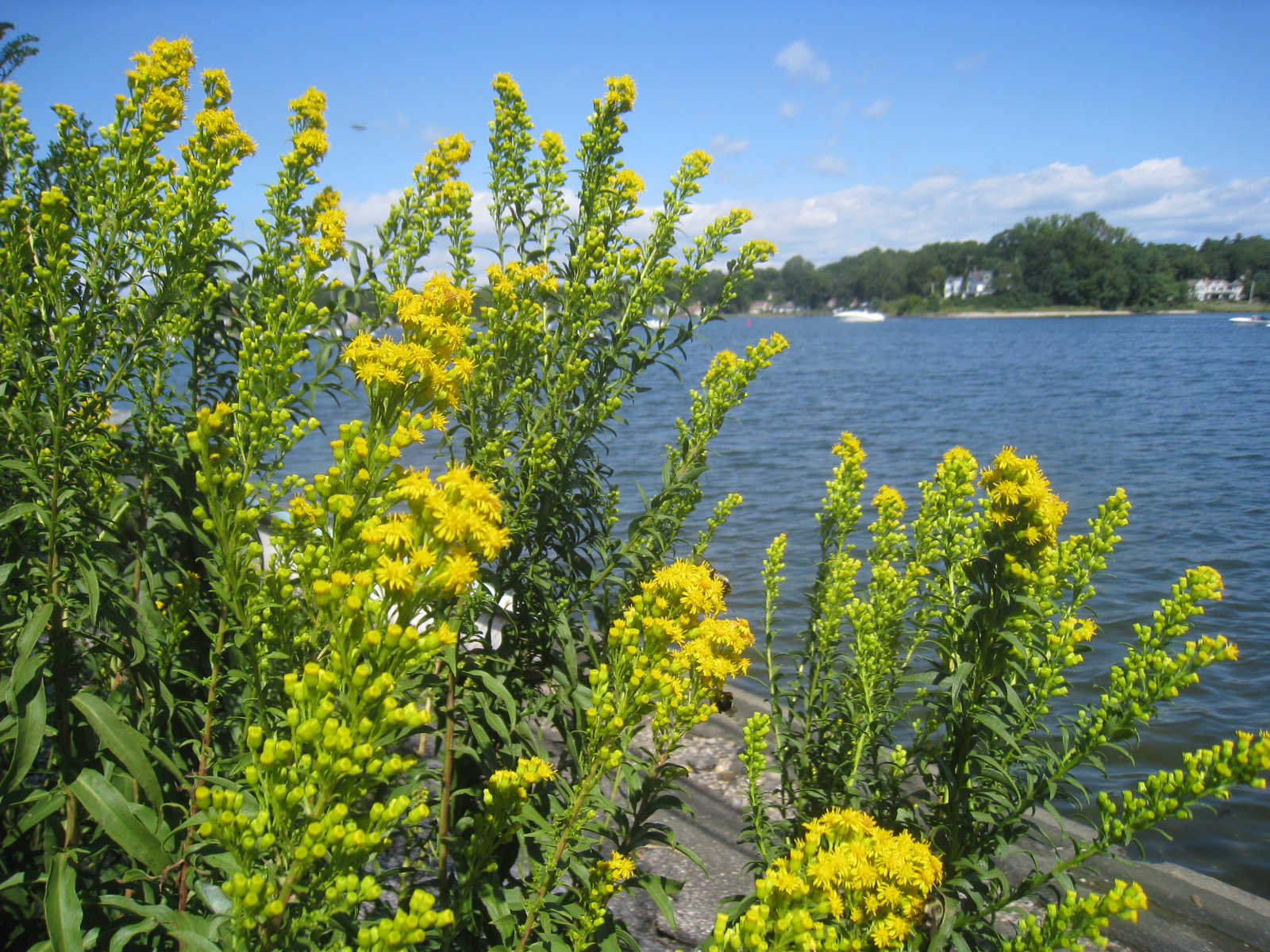
Not all the color comes from leaves, nor all the indications of fall from any color at all.  There are many fruits and seeds ripening in various shades, and for the more knowledgeable the autumn annuals like goldenrod and aster have arrived in all their glory.  Many of the lush grasses are turning brown and stiff, many of the early flowers are stiff and grim skeletons.

The important key is that there can be celebration in each day.  I always loved a place with actual seasons because for me the transience of each moment is reinforced by the certain knowledge that soon it will be gone for another year.  When these fruits fall, there will be no others until next equinox.  That is both discouraging and a source of constant wonder.
Thu-


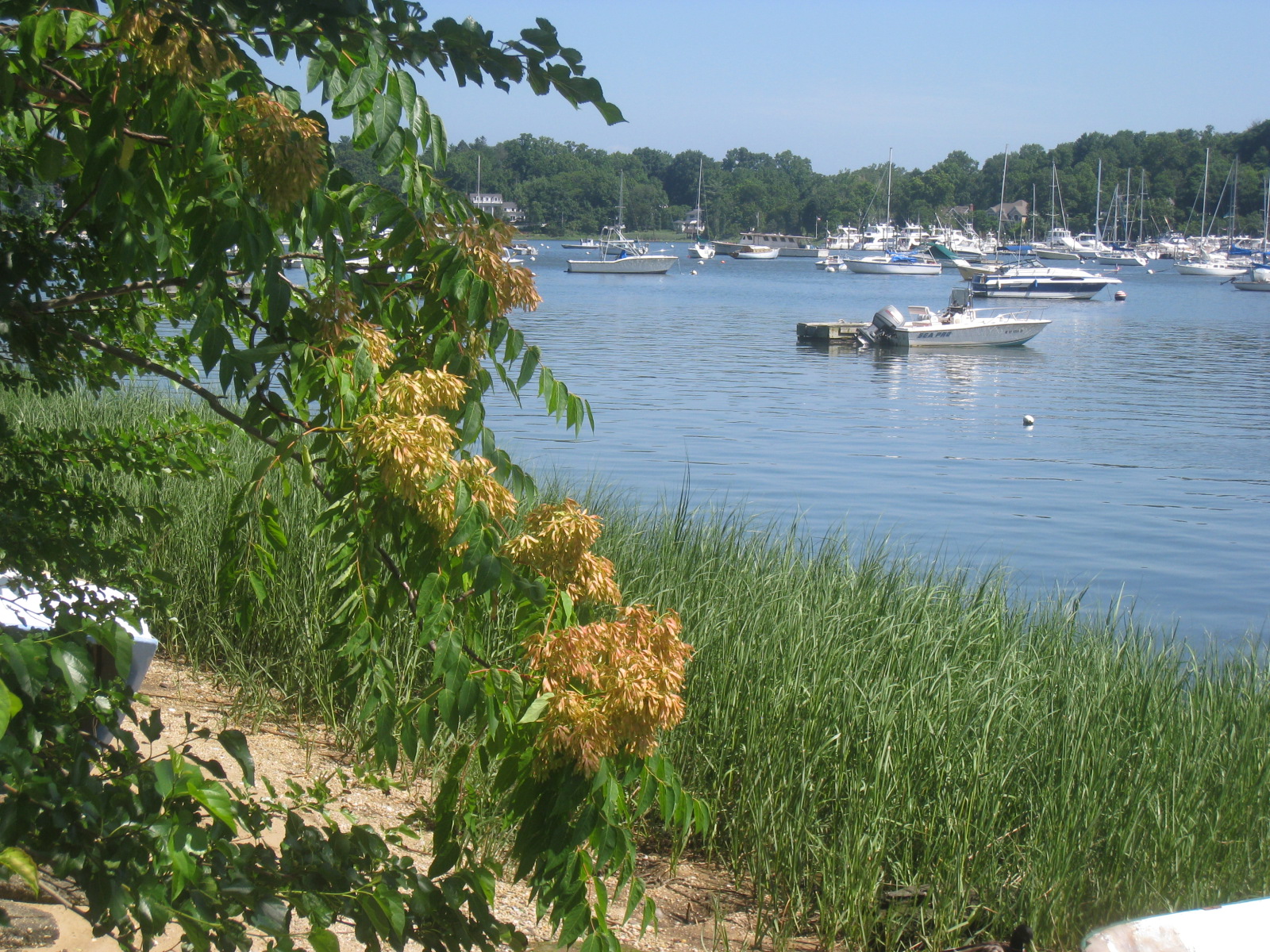
Spartina becomes a beautiful orange-brown, starting at the tops and working down, as the seeds ripen and fall into the bay.  These sheets of grass make wonderful frames for the water, of course, but also provide a rich habitat for the wildlife that remains, including innumerable hermit crabs.  Unfortunately, for many reasons, many of its vast beds are dying back over the last few decades, after being viciously destroyed in previous centuries.

In any case, current predictions claim this will all be underwater in another few decades, and hopefully spartina will have enough time to drift its seeds to sprout where lawns are now.  I will never know, except in imagination,  so I just enjoy this day before the seas rise.

Fri-
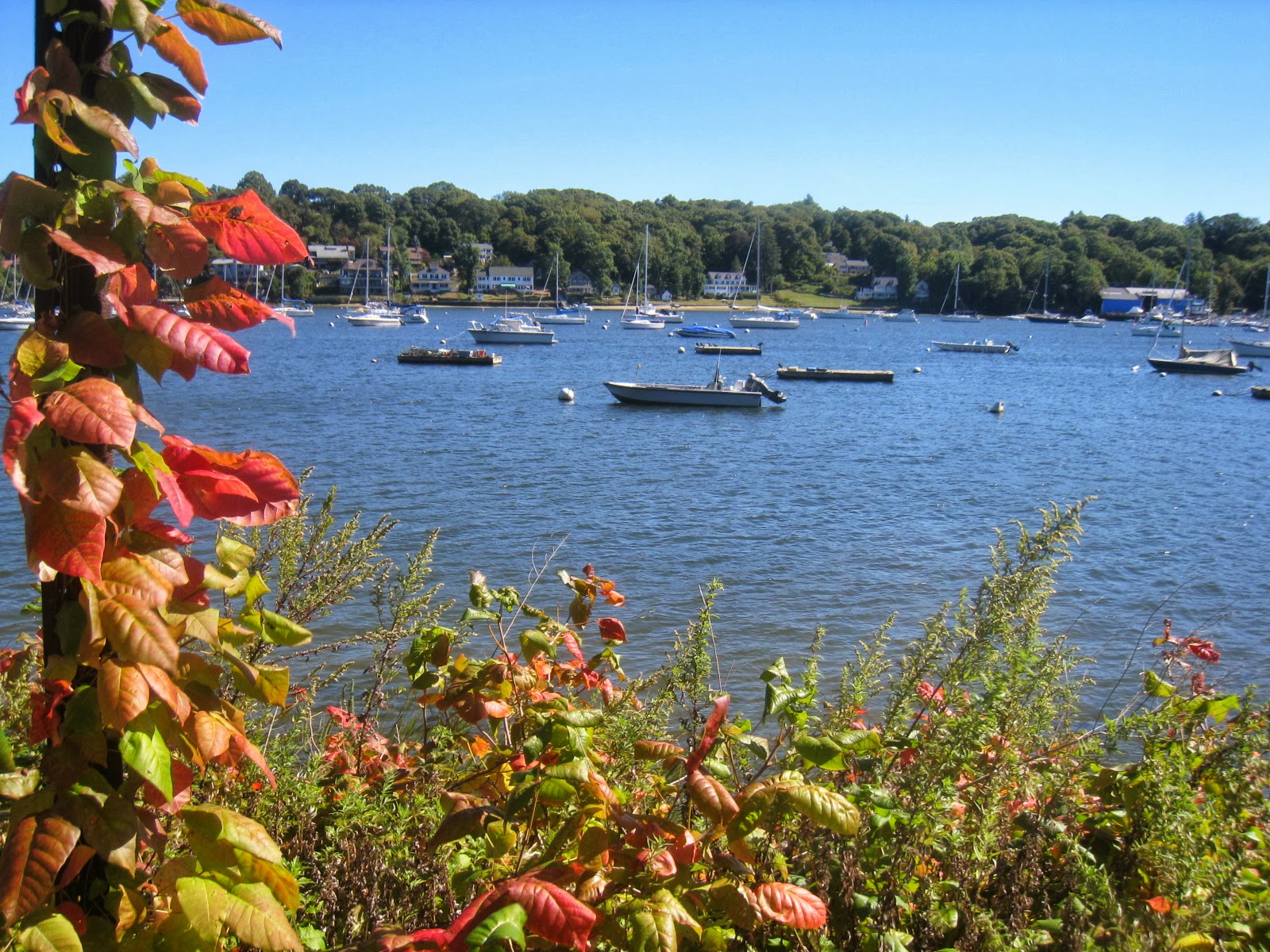


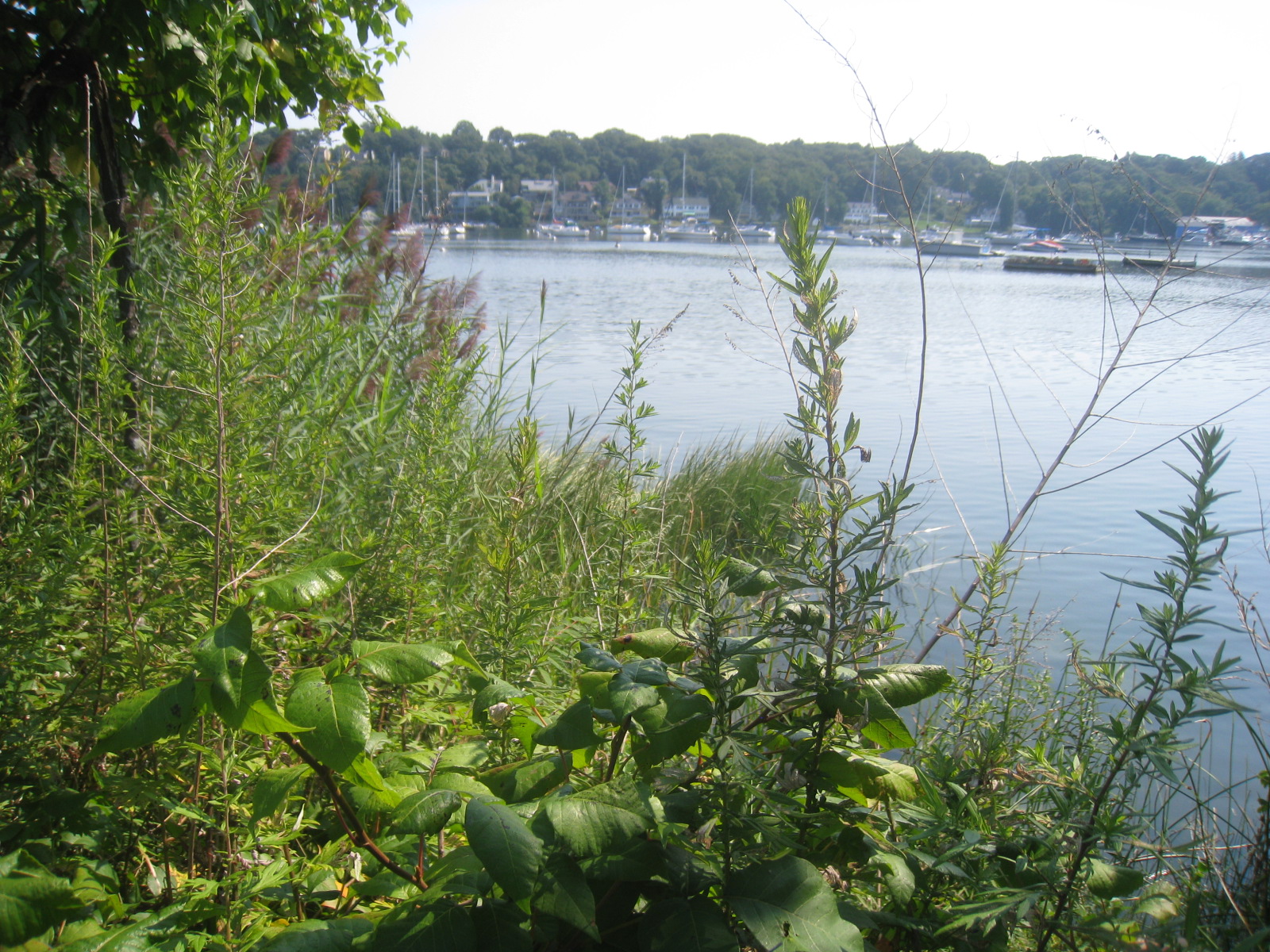
Poison ivy is so pretty in all seasons that it’s almost a shame we react to it so strongly.  Apparently, however, its seeds are good food for wildlife, who don’t share our difficulty.  In the early fall, in particular, the vines turn spectacular shades of red, orange, and yellow, while some of the lower leaves retain their lush glossy green.
There may be some moral here about looks being deceiving, but of course in terms of pure visual interest looks are just looks.  Sometimes our culture tries too hard to find meanings and hidden metaphors in what should simply be taken for granted and enjoyed for the beauties given, and the value to the environment.

Sat-

Most of the year, Montauk daisies are a clump of nondescript dark green, impenetrable to any other flowers or weeds.  In the fall, they come into their glory and bloom in their native element, along the beaches and on the dunes.  The wild goldenrod adds a nice touch.

In today’s hurried electronic times I tended to rush by these sights on my way to work or leisure or just wrapped up in my own cares.  Nature is too vast.  I would glance at it, say, ah, I have seen that, and quickly move on.  Now I have the time, and there are miracles of beauty everywhere.  Even consciously taking the extra time, however, I fear I still rush by much too fast.

Sun-

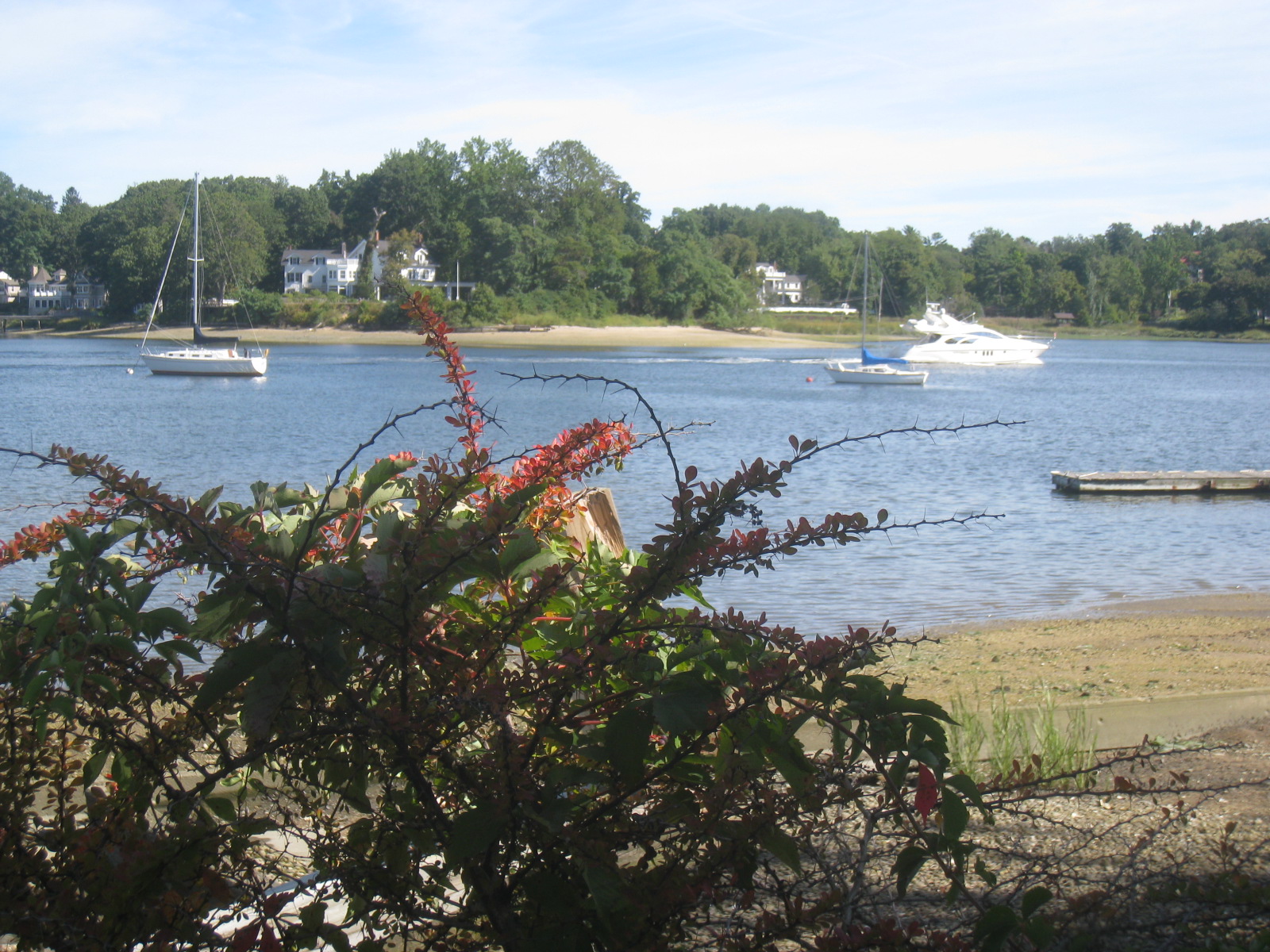
No composition, no artistic merit, but you get the idea.  The prickly hedge is going orange, the bay is in the background.  It’s an open question how much snapshots should bother trying to have some kind of formal architecture anyway.  In fact, the whole field of photography seems pretty wide open, since what seemed correct and proper and striking generations ago has faded into formal dullness, and the various crude shots which were dismissed at the time are recognized as masterpieces recording time and place.

The Romans used to say “life is short but art is long.”  That may be, but the appreciation of art, the evaluation of art, is faddish and fickle and usually even shorter than life itself.
 

Trash

Mon-

In spite of heavy use, the water, shoreline, and highway are kept relatively clean.  But you can’t escape the culture, and our culture generates a lot of garbage, much of it never collected or recycled.  Everyone learns to pretty much ignore it _ if it doesn’t fit into the pattern of how beautiful everything is while you are taking time to do so, you try not to see it.  Of course, some artists reverse the process and shove it in our faces. 

Doesn’t matter _ it is still there.  As the paperback spiritual guides often assert, there must be Buddha in the discarded beer can as well as in the swan.  Those of us less sophisticated just realize that it is part of everything.  Deposit requirements have helped a lot with cans and bottles since I was a kid, and in general trash is better taken care of than a few decades ago, at least in this little local area.
Tue-


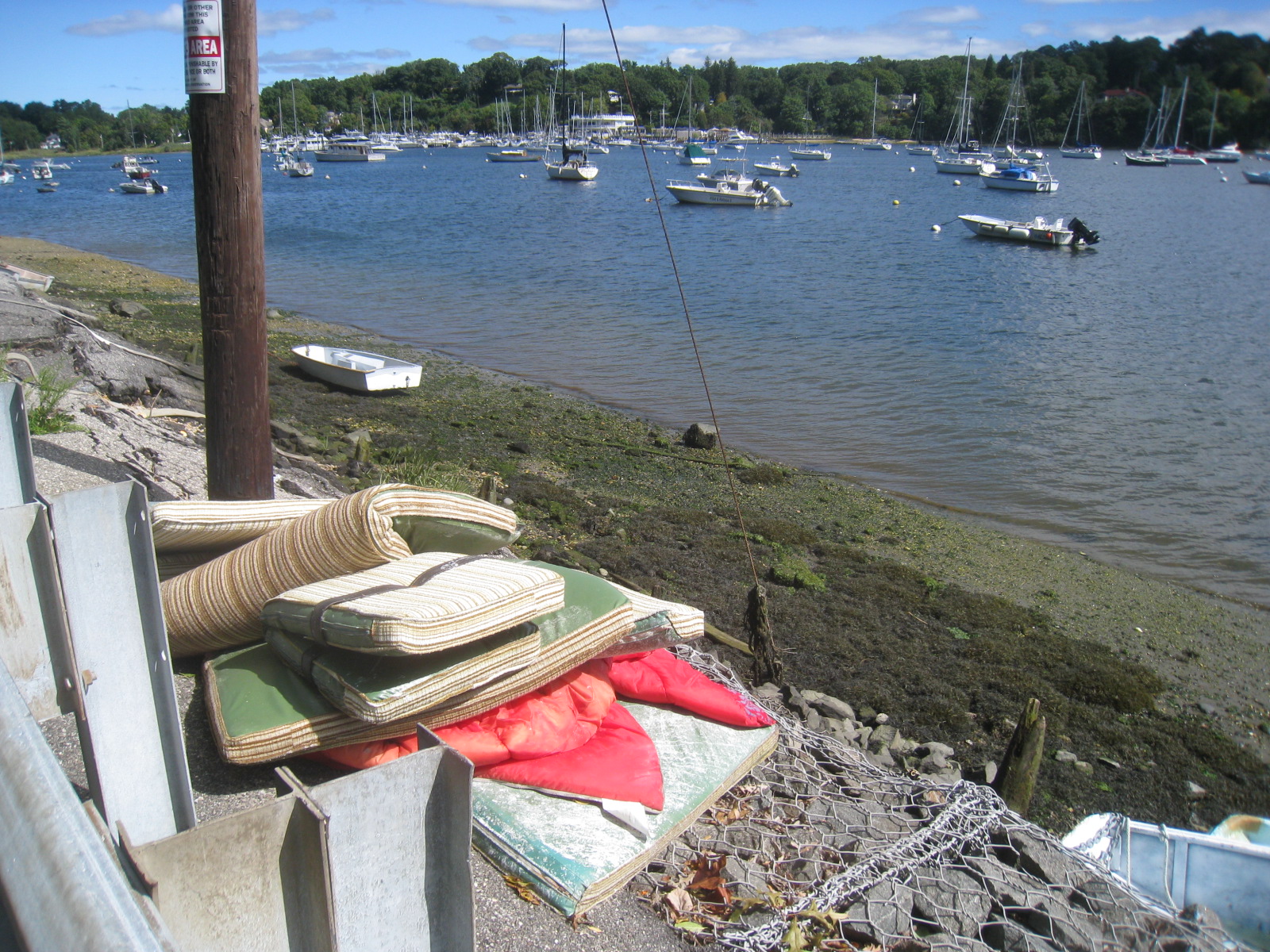
Some trash is kinda cute and picturesque.  Some is just plain ugly.  An inconsiderate oaf unloaded this pile, and now it awaits _ what?  High tide, garbagemen going beyond the call, a civic-minded citizen?


It’s precisely at this pile that I part ways with libertarian tea-party fanatics.  My simple solution is to pay a government to clean up the common areas and punish the oafs.  Their brilliant idea is either to let the junk pile up forever or let the roadside be sold to a private interest who will keep it clean but restrict the view so the rest of us can’t enjoy it.  I believe in common heritage, common rights, and common responsibility, including access and control of common natural areas.  Libertarians do not.  Simpletons.

Wed-

Not a bad harvest for a strong wind pushing flotsam into the wall.  Mostly leaves, a few bottles and the inevitable loose buoy.  Of course, the glass and metal sinks, so you never see it, the paper rots away, and most of the plastic, we are told, turns into a kind of oceanic mush that permeates the world’s seas and will not go away for thousands of years.

Nevertheless, the general pattern seems to be more considerate than it used to be.  Most people, at least around here, have accepted that the world is finite, and that the environment is precious.  Social pressure can influence individual behavior far more than laws, and right now that social pressure concerning trash disposal is pretty good.
Thu-


Well, most people would probably say this is not trash.  After all, it’s carefully in a bag and on the road and will be picked up by the town and magically disappear from the landscape.  And yet, it is trash.  It will join tons of other material on our landfill, which grows larger daily.  Eventually, as the icecaps melt and the sea rises, perhaps only the landfills will jut up from where Huntington used to be.


I’m as guilty as anyone.  If you are part of a culture, you pretty much need to accept a lot of that culture.  We are trying to change over time, but we are far past my boyhood days when we buried cans in a trench in the back field,  composted all the organics, and didn’t have enough surplus to be picked up more than once a week. 

   Fri-

Even in the midst of the garbage crisis, nature continues
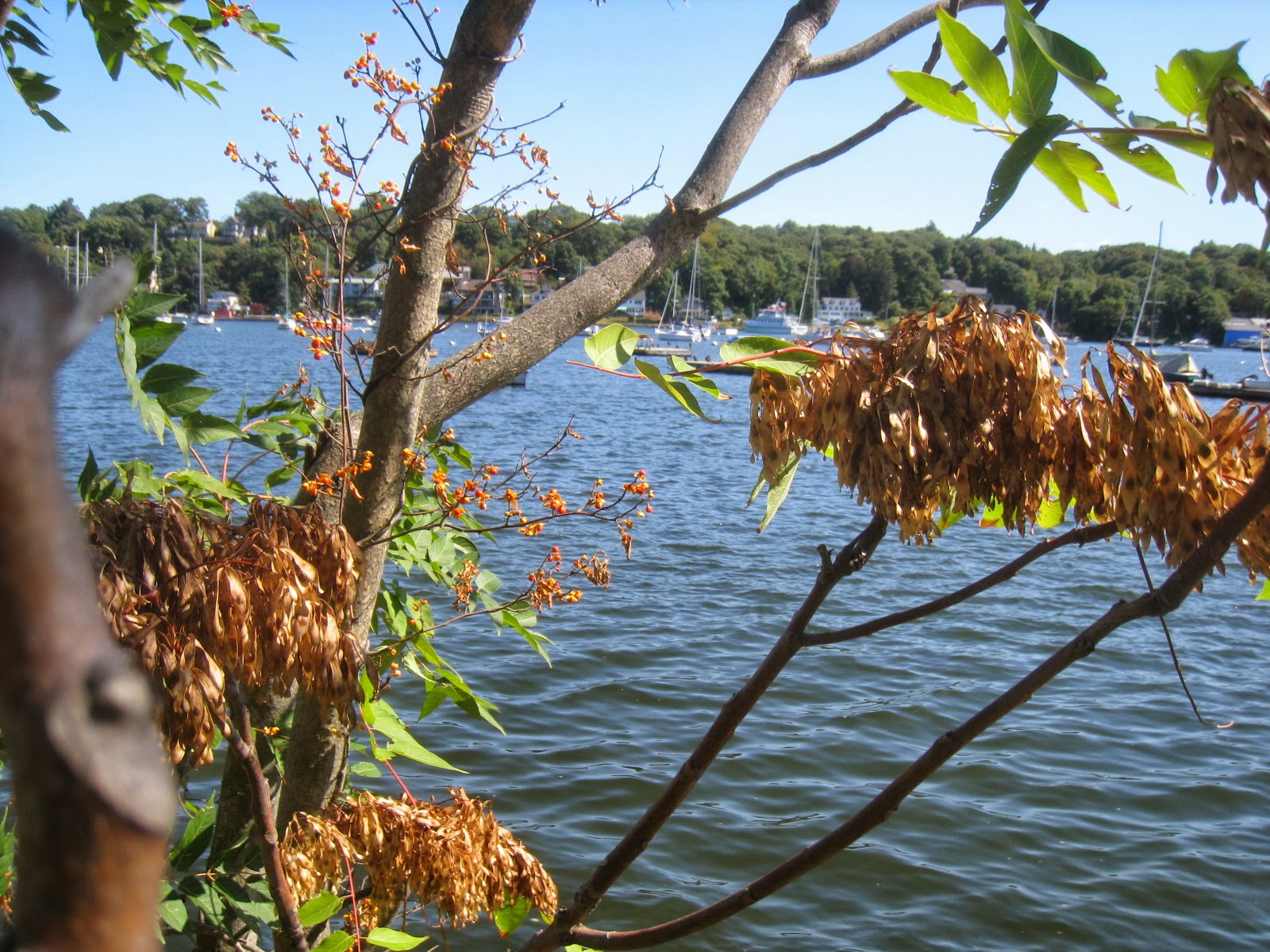
on its merry way.  The bittersweet turns orange, the ailanthus goes brown.  We wonder how much of our proclivity will finally end it all.

I ask, what can I do?  Is there anything one person can change, or is it all ordained by heaven, for us to accept as we will?  I wish I had an answer.  In the meantime, I just enjoy the season and the signs all around.

Sat –


I suppose it’s colorful enough, just another human pattern at the interface between civilization and nature, but when it strikes your consciousness (which it often does not, because we suppress so well) trash heedlessly thrown in beauty is jarring.  We hardly ever pay artists to create hideous works, so creative efforts usually go in the direction of apologizing for the junk and making it somehow pretty and interesting.

Nevertheless, that is a lie.

Sun-


Eventually, a lot of garbage just fades into the underbrush, decaying gracefully or not.  Since we cannot get people _ at least all people _ to be responsible in disposing of their leftovers it seems the only real solution is to make it as innocuous and organically degradable as possible.  It’s not a good solution, especially in the long term _ but its better than the current alternatives.


Between Seasons

Mon-

Ancient astronomers tried to fit the cycles of the moon neatly into the yearly cycle of the Earth, but of course failed because the real universe often maddeningly fails to follow our logical, precise, mathematical models ( a problem science and philosophy still face head on, in spite of denials.)  Stable calendar systems had to come up with months or days thrown in periodically to keep the lunar calendar and annual calendar in alignment.  These inserted bits were often considered “between calendars”.

We would like to believe the seasons follow fairly strict rules around the equinoxes and solstices.  But weather patterns refuse to fall neatly in line, and this time in September can be confusing.  Hot or cold, wet or dry, windy or calm.  The vegetation follows the sun, but must take into account not only the current conditions but everything that occurred during the growing season and (like us) accidents of fate such as when the seed happened to land on wet fertile ground. 

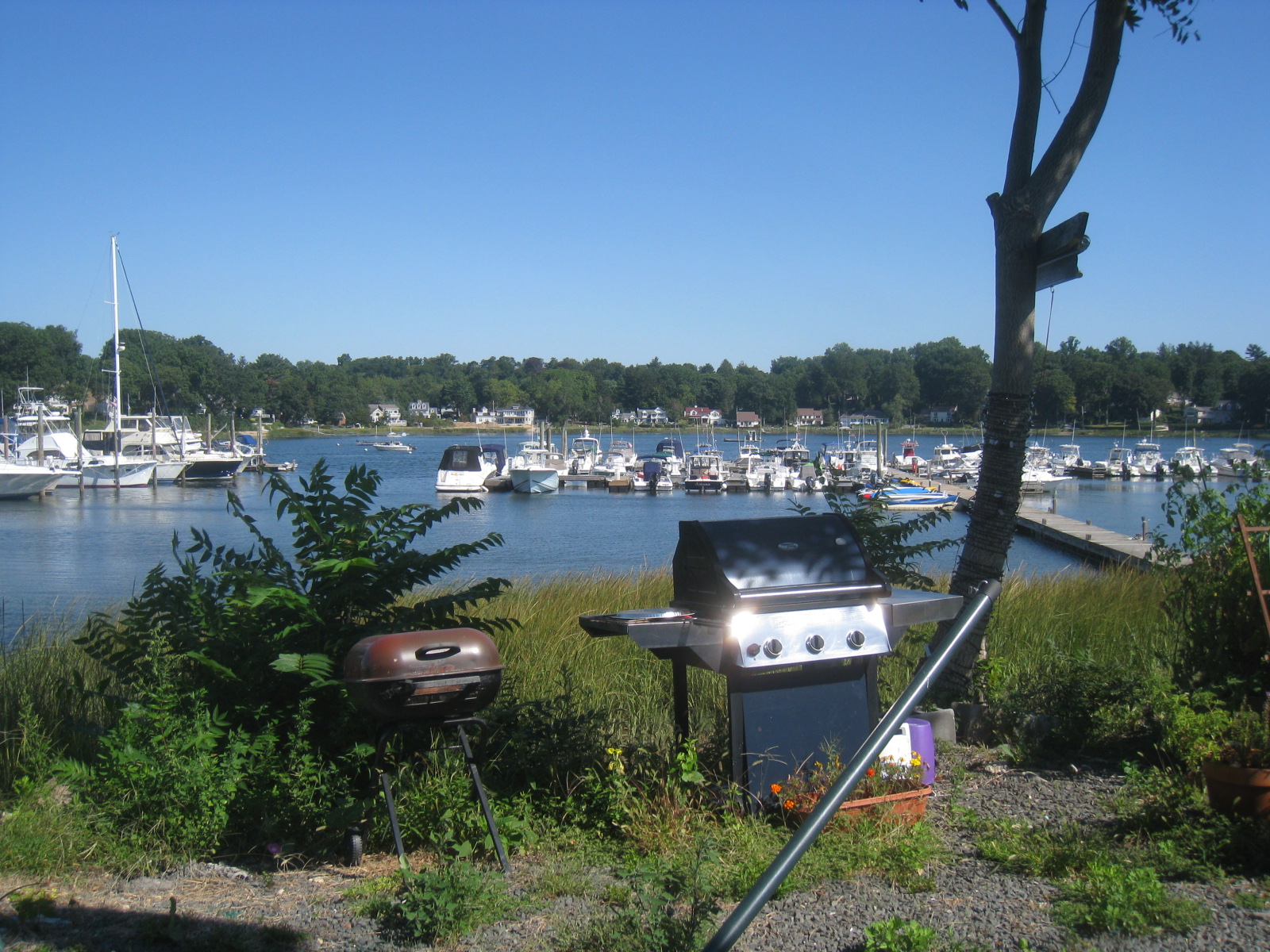
So we keep things like the barbecue and boat ready for the summer-like moments, and start to pack up the bathing suits and get out the sweaters for the chill that is inevitable, and remain in a happy suspense for a while, like the plants, taking whatever comes along. 

Tue-

There should be a “goldenrod” day, presumably on autumnal equinox, when the yellow flowers of fall suddenly burst forth.  But of course, depending on how dry and warm it has been and how much sun each site receives _ not to mention various genetic variables in each plant _ the bloom occurs anywhere from early August to early October.  This year, it seems to be around mid-September.

There is almost no surer sign, in the midst of a late heat wave, that “this too shall pass” and that regardless of what our body is telling us about today, the cycles of the world are relentlessly moving on.
Wed-

Colors are sneaking into the green all the time now.  Some are fruits, some are leaves but they all relieve the inevitable monotony that has gripped the landscape for the last few months.  It’s really one of the things those of us who live where there are seasons appreciate.  Too often, in these extreme times, we are directed to look at only a single spectacular moment _ peak foliage _ as if it occurred overnight.  But there is a wonderful and subtle harmony of changes that glow gradually into that crescendo, and it is a privilege to attend the entire symphony and appreciate nature’s entire work.

Thu-

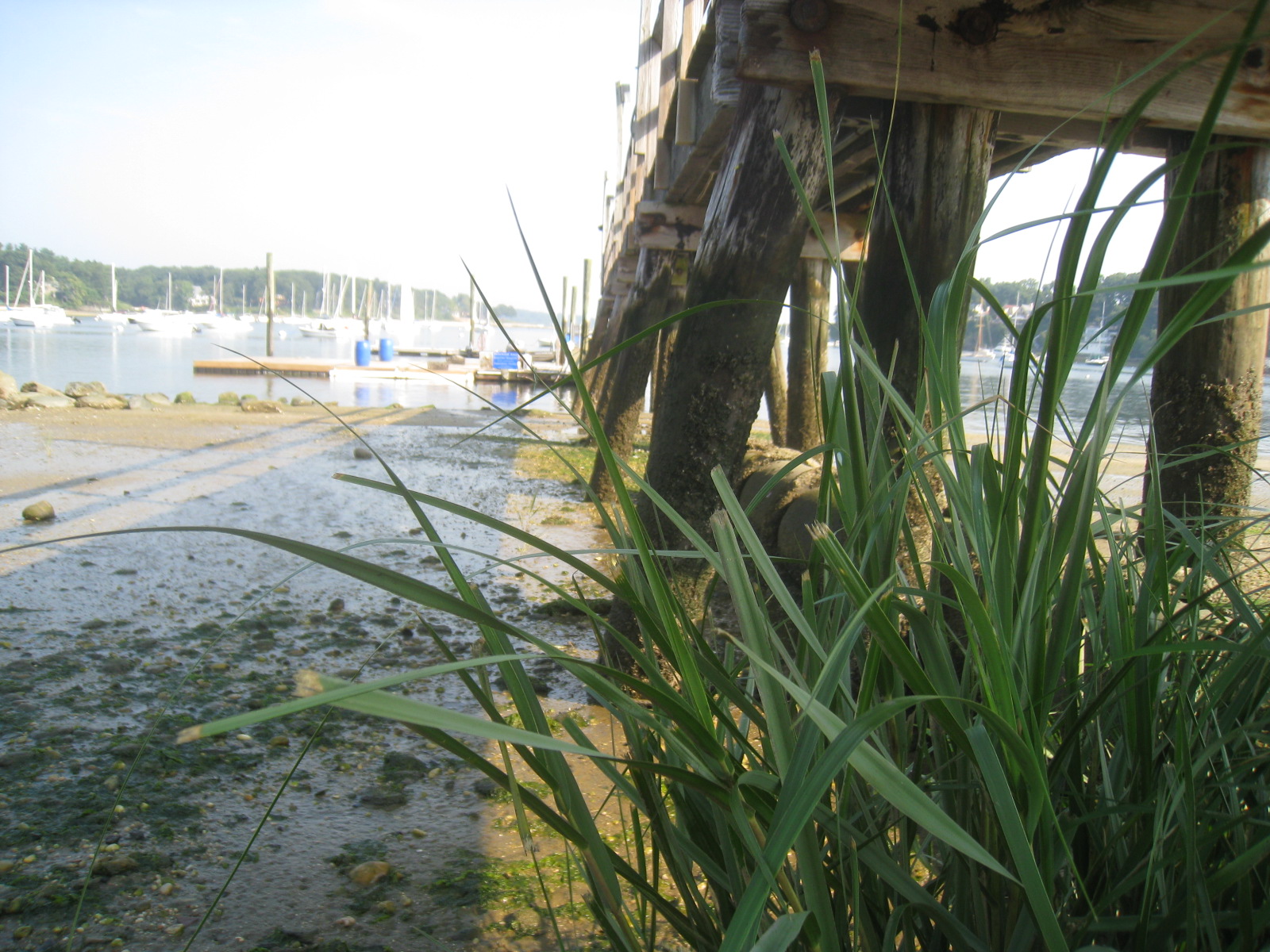
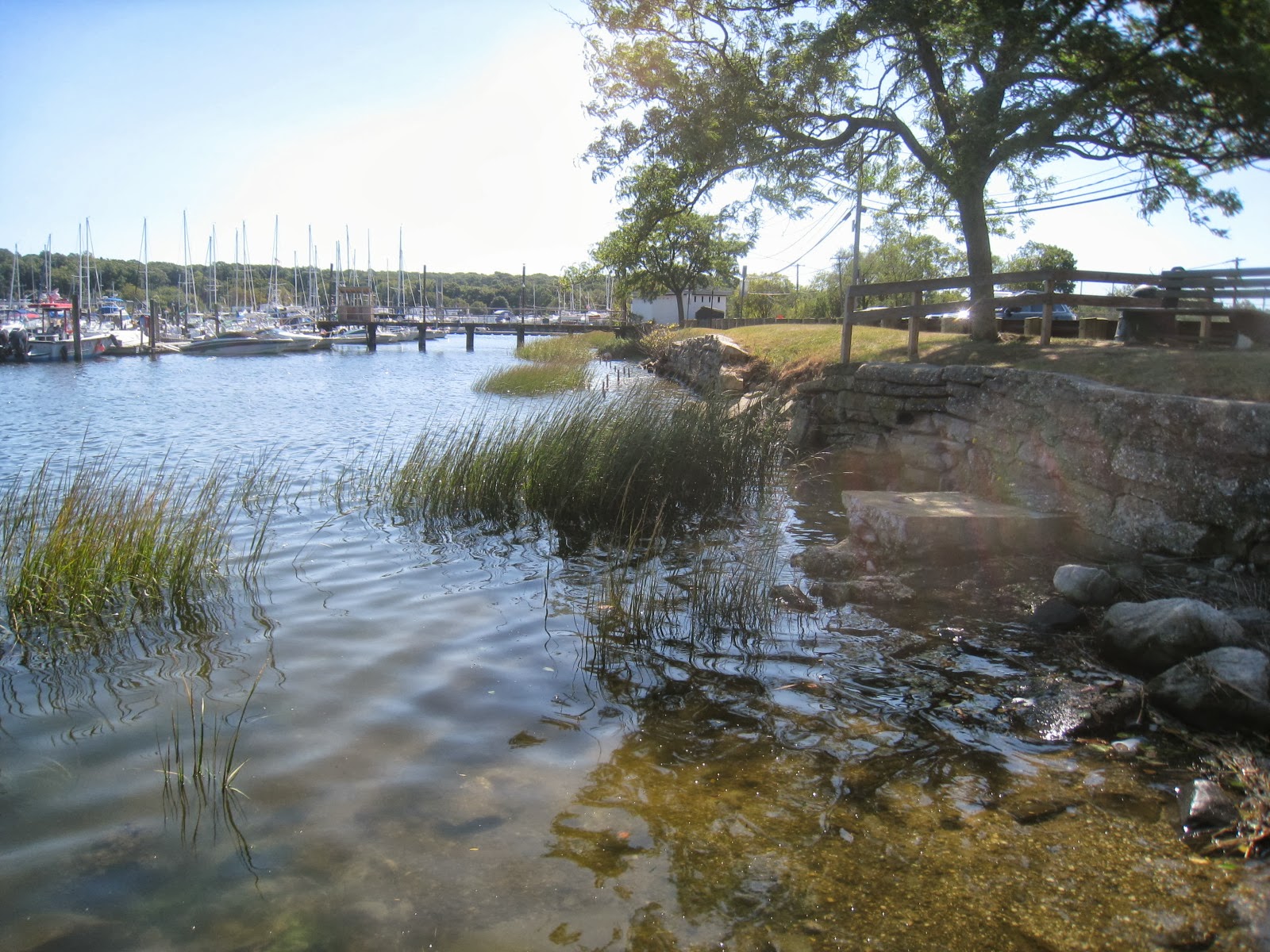
One of the town docks at Coindre, pilings covered in barnacles, clump of spartina colonizing the shore.  All shellfish and plants in some ways cleanse the water, much cleaner now that runoff from the town is treated before running into the harbor.  We have no intensive agriculture around here, but the county has passed relatively strong regulations on lawn fertilizer use which are adhered to pretty well, at least by the contractors.  Still, a lot of dog and goose waste trickles in during rainstorms.
The exposed low-tide bottom was covered thickly in oysters a few centuries ago.  The blue barrels on the docks mark an attempt by some environmentalists to reintroduce them, not so much for an edible industry as to do more heavy duty filtration work.  So far, the results have not been particularly encouraging.
Fri-

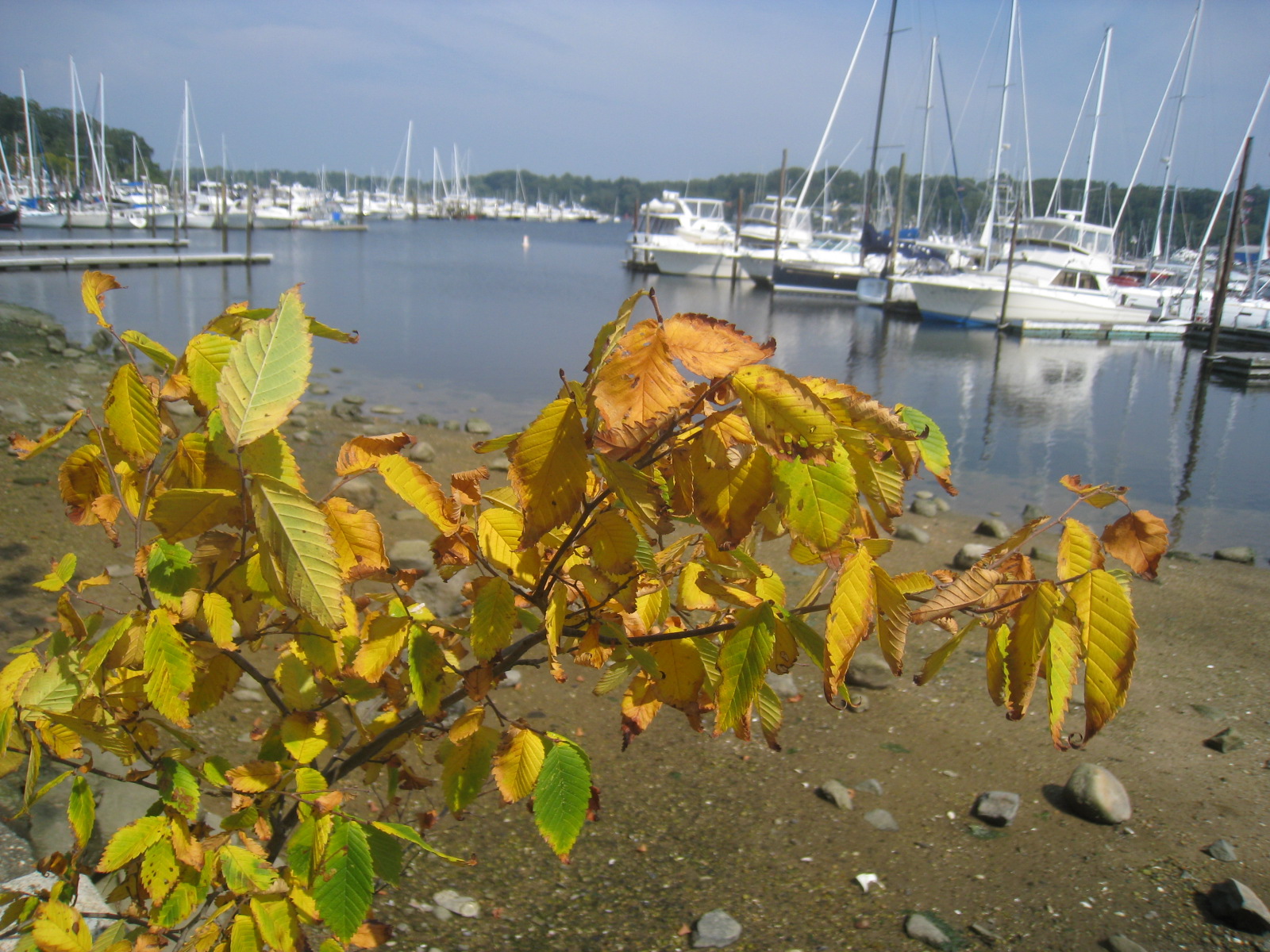
Early burst of color from a doomed tree sprouting from the concrete overlook at the head of the harbor.  Boat owners obviously remain optimistic that some good weather remains, although in fact for several years a lot of the vessels stay in the water year around.  Not quite this many, though, because the more prudent have them lifted and cleaned.

More and more of these spots of yellow, orange, and red as the days drift on.  Photographs by an amateur like me obviously do not do reality justice, but really all I am trying to do is get myself _ and maybe you _ to truly see them and their environment a little better than we normally do by habit.

Sat-


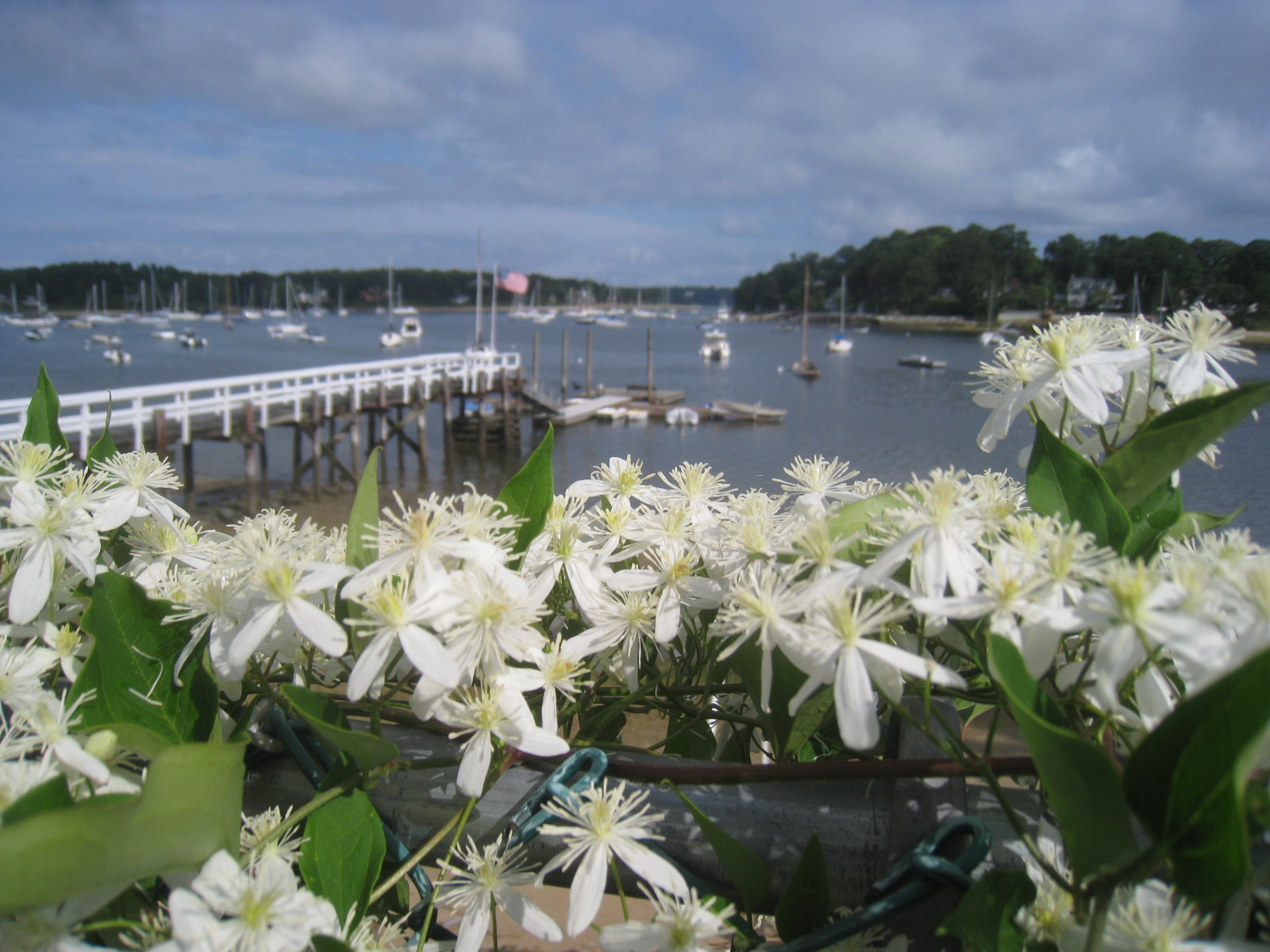
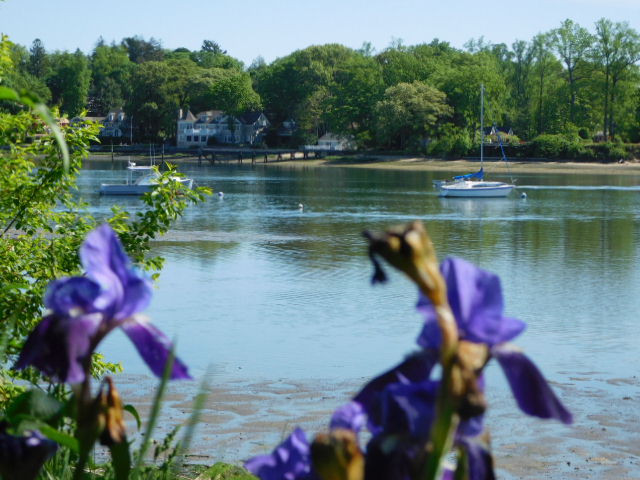
Some flowers like asters and this white silverlace vine bloom as fall approaches.  We tend to accept their aesthetic contributions gratefully without reflecting on how remarkable this really is, considering that everything else seems to shove flowering into the spring and midsummer.  Since we are always alert for metaphors and similes, we seniors who have not yet changed the world like to believe that we, also, are going to burst forth late in life.

Well, any stories that get you through the day and don’t harm anyone are fine.  In the meantime, it’s enough to just inhale the unexpected fragrance and notice how well they contrast with the brilliant atmospheric blues as the angle of the sun relentlessly drops further south.

Sun-


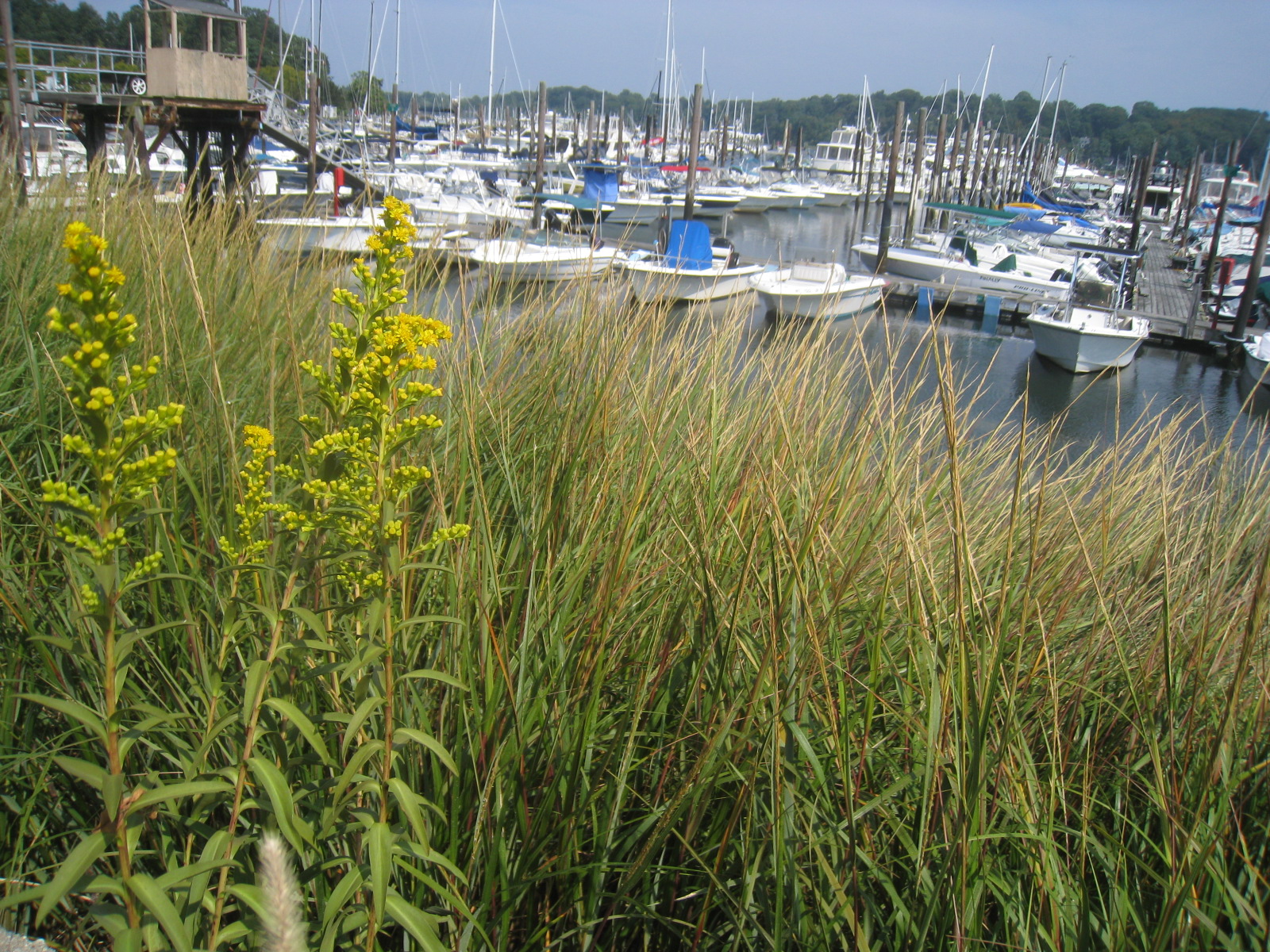
Looks very much like summer _ except for the fruiting grass and the goldenrod.  Of course, if you were standing here (at the slight angle I seem to be, since I still can’t hold the camera level) you would feel that the breeze is very cool, and the traffic has picked up into autumn patterns, and the children are playing their organized soccer and football behind me and it is necessary to wear long pants today.

From the standpoint of what we see, pictures examined closely often tell us more than we actually experience visually at the time.  On the other hand, they are selected from a vast field of vision, and ignore all the massive other perceptions that flood into us each moment, and hence are total lies.  Often, the more art there is in a picture, the more it ignores the reality of being.  Nevertheless, such things are certainly pretty and amusing and useful in their own way.


Hazy Daze

Mon-

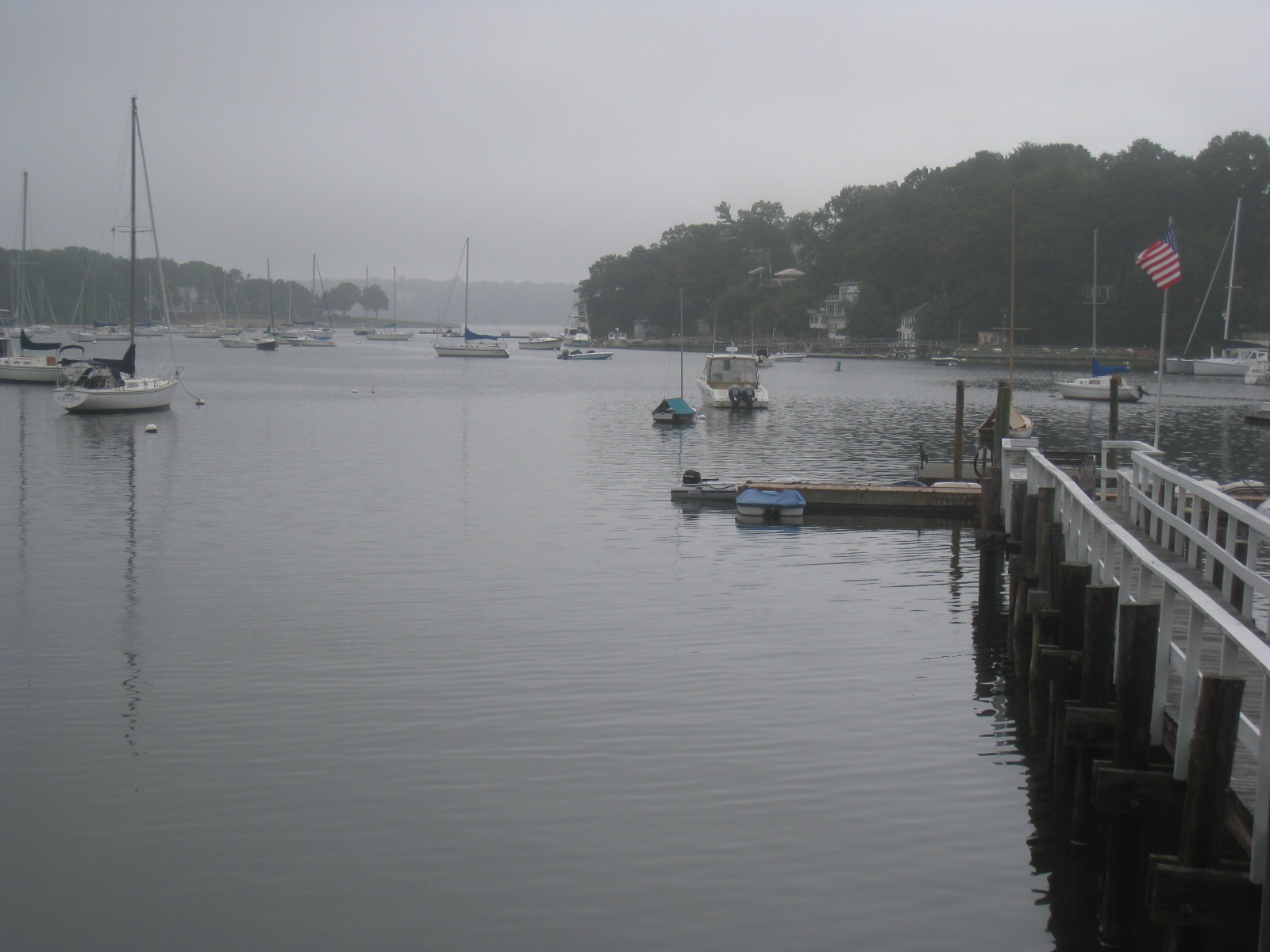
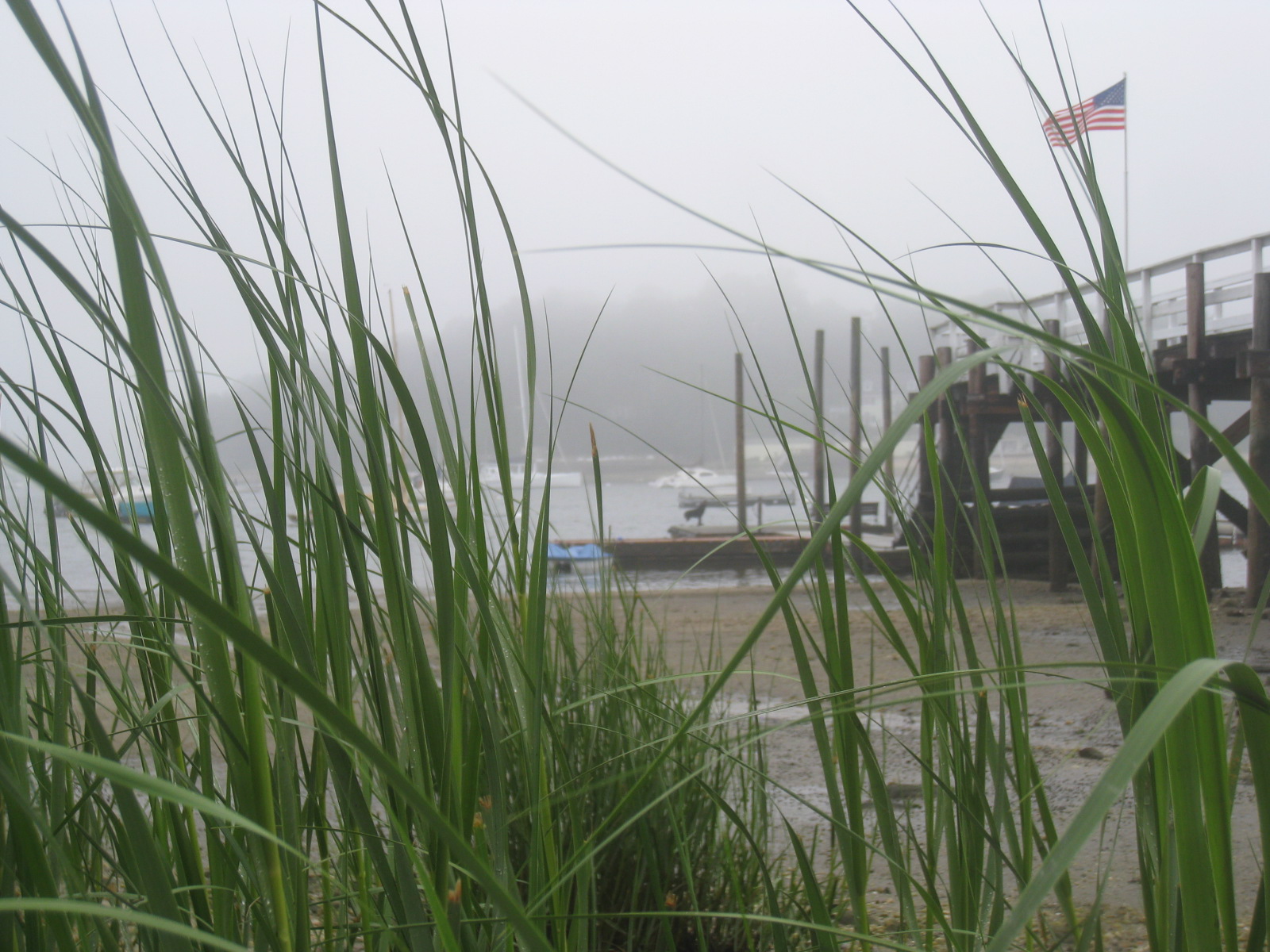
September brings a land of frequent mists, when the dew evaporates into humid low-hanging haze, and the frequent rapid temperature changes produce low clouds and fogs.  And my brains, also, goes into a kind of haze knowing how soon it will all become bleak, with many dark times until the coming later spring.

But no matter how foggy my perceptions may be, they manage to keep a sharp eye out for that ivy which is in its fully shiny poisonous glory everywhere!

Tue-

Sure, it’s all green and inviting – but the far shore is dimmed.  Time grows ever more short.  Tomatoes not picked will quickly rot, and snappers not caught off the docks in the next few weeks become full-fledged bluefish and flee into deeper waters.
Wed-

Fine old Chinese painting ink on silk with light watercolors, as the markers read in the museum.  One reason to enjoy and try to appreciate art is to be able to reward yourself by applying it to the views available to us all the time.  In this case, it would almost be a shame to seek to improve it by actually picking up a pencil or brush, although such an exercise can, of course, deepen our enchantment with being even more.

Thu-

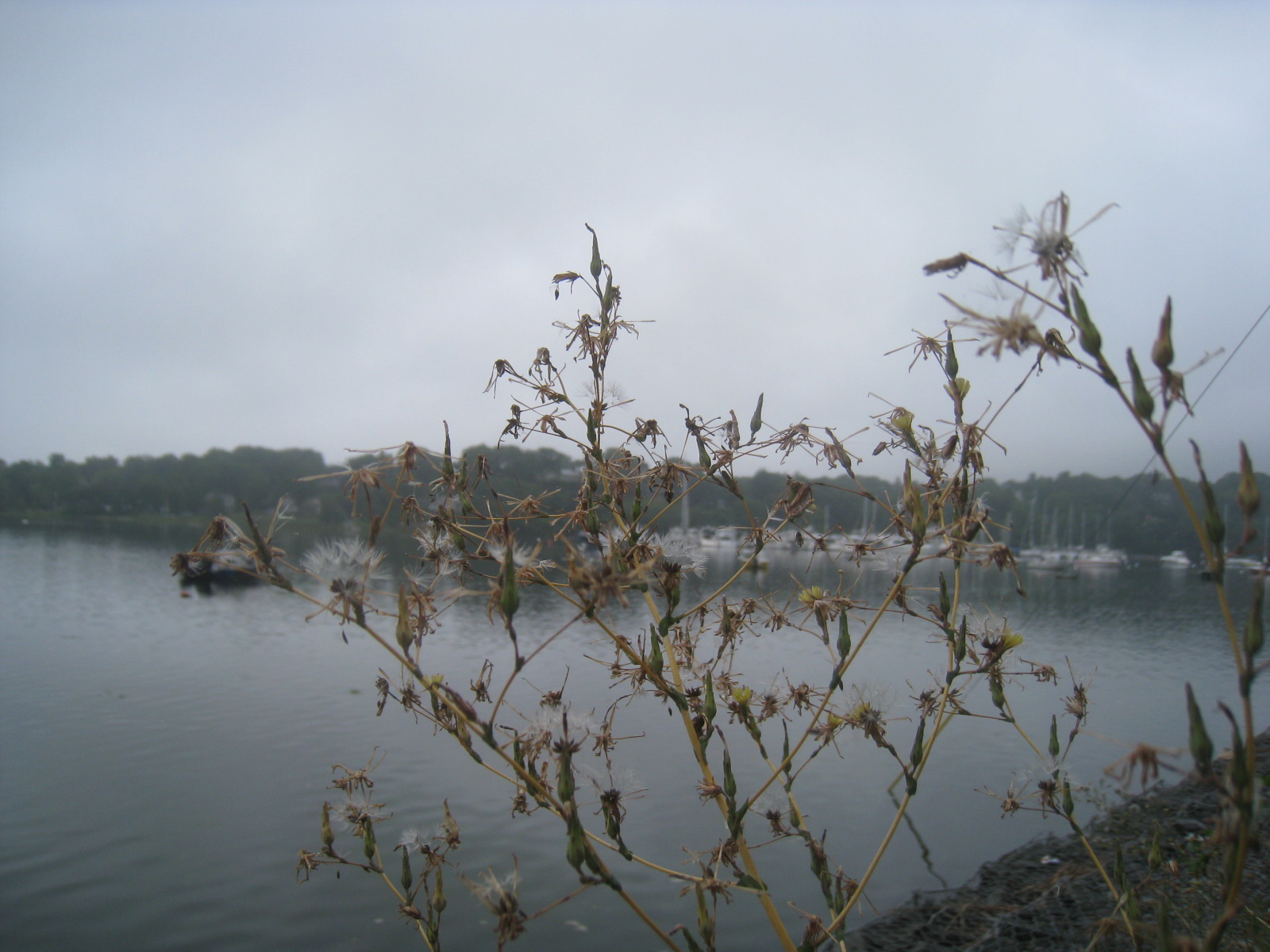
Annuals are all finishing up now, sending fluffs of seeds into each breeze.  Some would think their brief lives are sad, if weeds could feel such emotions, but any life for any time is infinitely longer and richer than anything else in the universe, including rocks and the atoms themselves.  In any case, it is just me who emphasizes so with their plight, and enjoys their form against the unfocused far bank.
 
Fri-
First falling leaves already dotting the tide, but the boaters hardly notice.  The hardy ones, like these used by clammers to get to their moorings, often go all winter as long as the harbor isn’t froze over.  But all the pleasure craft usually are winterized by December.  The season, I’ve noticed, has been pushing back later and later.  Superstorm Sandy gave everyone a bit of shock last year, but procrastination is the order of the day when you’re paying a fortune for a room on the waves.
Sat –

Spartina grass seeding into the high tide while you can just barely discern tinges of seasonal color change in the trees and other vegetation.  Not all of September is haze, of course, but from now on the clear days often mean cooler days with high pressure systems coming in from the North, and the warmer days are filled with fog and rain, both from the southerly breezes and from contrasts of water and air temperatures.  It’s a fine time to be about and take a deep breath and be enchanted by overwhelming beauty and perfection.

Sun –

The old dock at the mansion was effectively destroyed by hurricane Sandy, when the high tides and waves were breaking over the deck so that the supports were ripped up and the piles pulled up.  Nobody has gotten around to removing it yet, there are certainly not enough funds in the county budget to fix it up.  Of course, the lawyers made them put up a fence with legalese signs, but that’s all ignored.  Somehow, the verdant ragweed growing in front of it is completely appropriate.


Boats

Mon-

For three seasons of the year, the harbor is one big marina.  A democratic marina, to be sure, where small paddled boats share the waters with a few ocean going yachts (tied up, to be sure, on the docks.)  Mostly small motorboats large and small, everybody wanting have an attachment to the water.

It always amazes me that such expensive luxuries mostly just sit around unused.  The clammers, at least, go out most days for livelihood, but our neighbors and everyone else seems to just let the money pits bob up and down, just so they can get out for a few hours offshore each year.  Anyway, they provide a certain unique picturesque quality, like that of the Mediterranean.


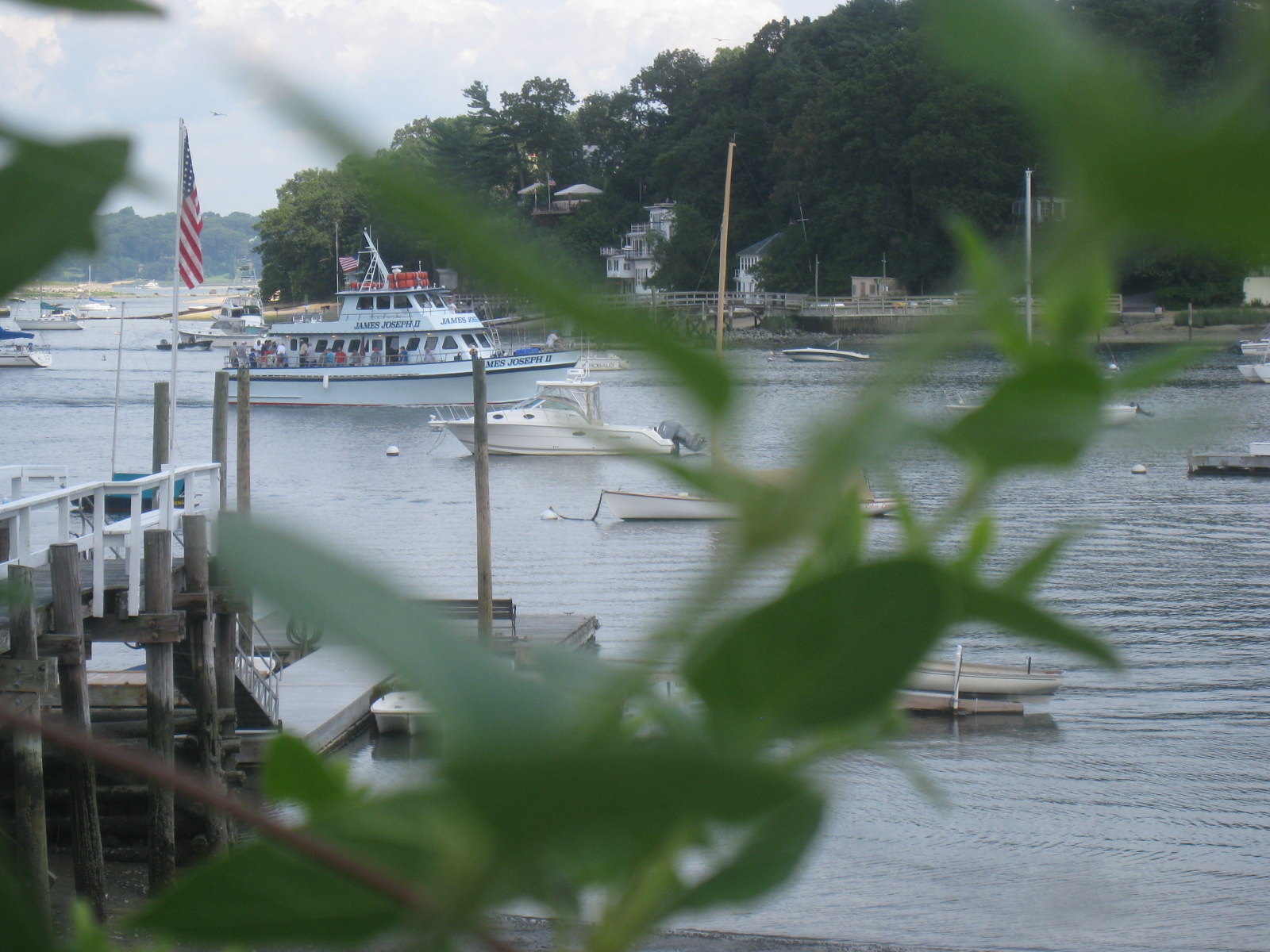
The James Joseph II goes sporadically out of Halesite for an “adventurous” day of fishing in the sound two miles or so away off Lloyd Neck.  I’ve often seem them anchored out there as I walk along the shore of Caumsett park.  Sometimes, in certain seasons (for flatfish) the captain seems to get lazy and they go about a quarter mile from the dock and anchor in the middle of the boat channel _ if I were one of the paying customers I’d probably feel ripped off.

Still, they seem to get adequate crowds, and the seagulls love them, flying around thickly when they return.  Often there are fish bones and heads washing up on the beaches _ but probably from the pleasure boats, not these guys.  In the right mood, I enjoy watching the parade add to the ambience of the day.


Wed-

Sometimes seems there won’t be enough water for all the wood and fiberglass.  Marinas everywhere here at the end of the harbor, and a few dotted along the shores, all with power vessels of all types and sizes.  Yes, even all the apparent sailboats have power, Virginia.

You’d think with these multitudes of ships the channel would be a busy place, but it never ceases to amaze me that most of the boats you see here _ and all the rest you don’t _ seem to only get used a few hours a year.  Considering the considerable expense of docking and upkeep, there is probably some lesson in that.

Thu-

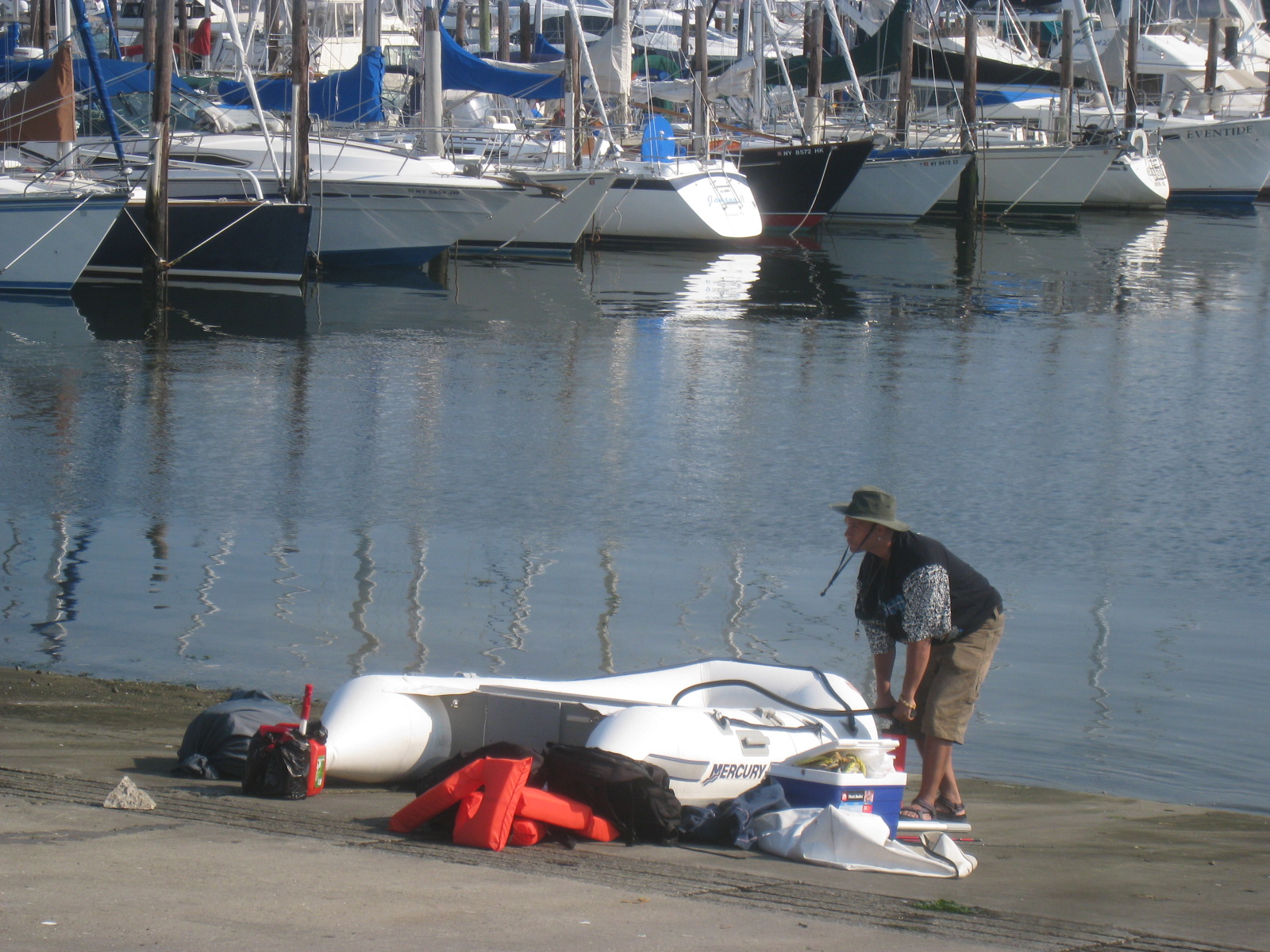
Now this guy has his own ideas.  Who needs to pay a marina, or even take up much valuable garage space?   The only really weird thing in all this is he does seem to be using a hand pump.  I can’t tell you _ often I find it is more fun to leave things mysterious, even to myself.
Fri-
 

Kayaks are out mostly for the town-run summer camp at Coindre Hall.  But Kayaks are so last year _ there was a time when the water was filled, now they are very few and far between.  The current fad is stand up paddle boats.  A decade ago it was small sailboats, followed by a surge of canoes.  I guess being out on the water just isn’t enough anymore.  Kayak once around the harbor and _ well, another checklist complete.  Let’s go buy a sailboat _ or whatever comes next.

Sat-

The boat and dock are remnants of a once thriving lobster industry.  Not long ago, in the winter, the floating docks would be piled high with metal box traps.  Now they serve various purposes _ in this case providing a bit of orange to a photography _ until they inevitably rot and decay into unusability, when they will either be towed to the boat ramp on Mill Dam for disposal, or break up and drift away in pieces during some big storm.

Sun-
 

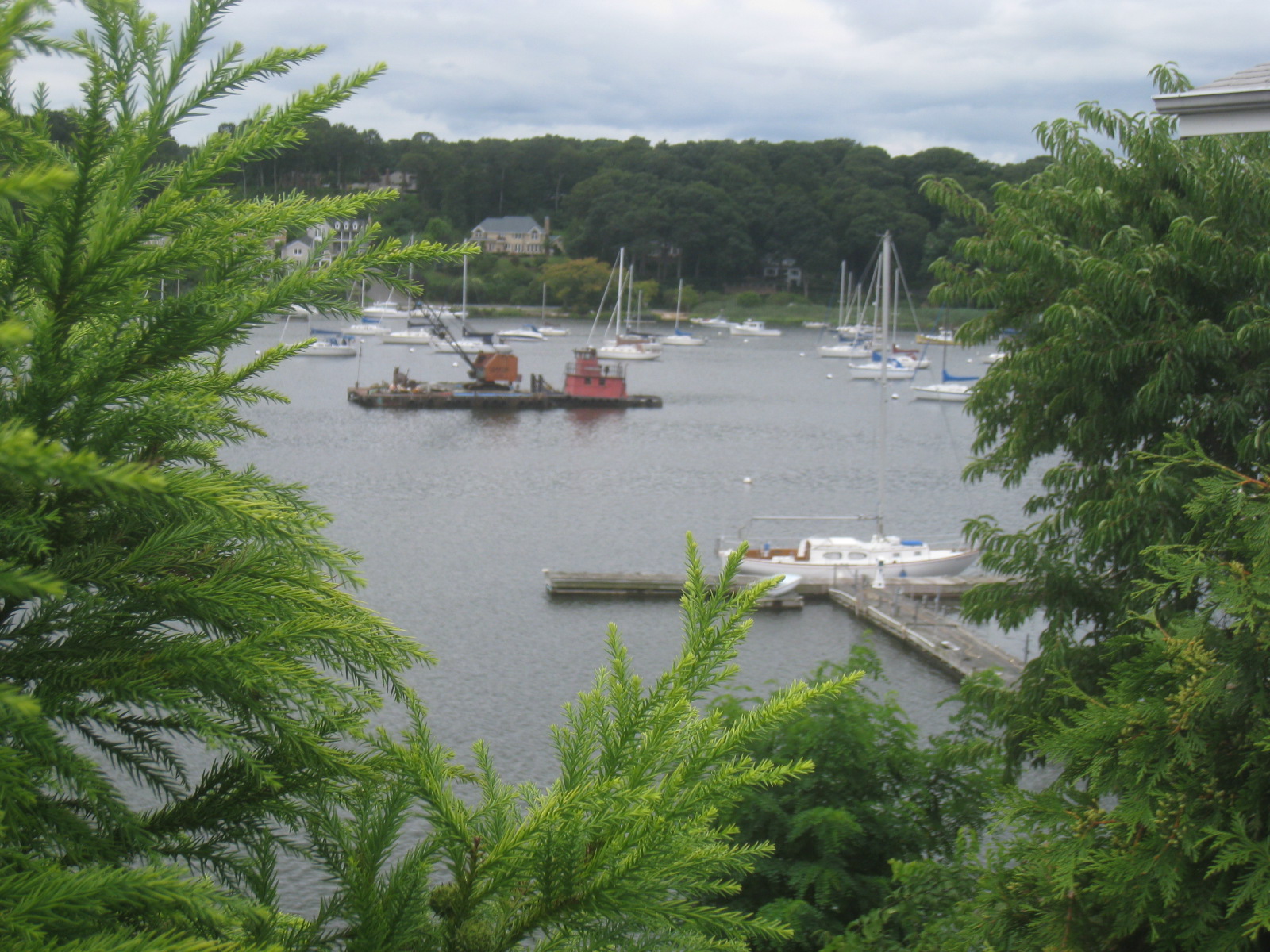
Can you count a working barge as a boat?  Sure.  It may take a tugboat to get where it’s going, but if it happens to run you over in a fog you don’t much care what it’s called technically.  These are kind of the tramp steamers of our limited shores, putting in from marina to marina and dock to dock picking up odd jobs like driving pilings or pulling out wreckage.

Vistas

Mon-

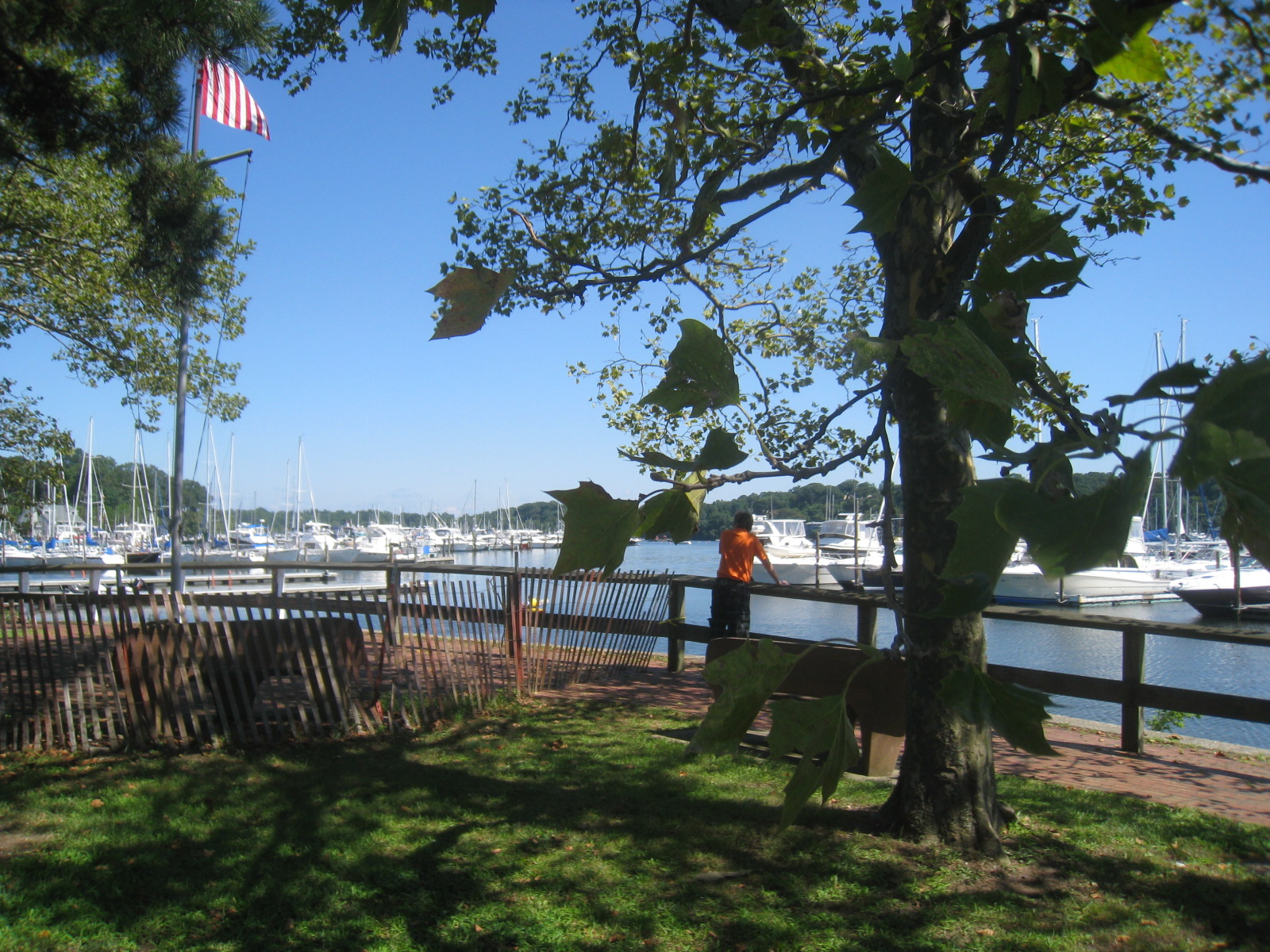
Looking up the harbor from the park at the boat docks at Mill Dam.  This would all once have been tidal marsh, with its associated fish and shellfish and gnats and mosquitoes.  Now there is usually a breeze _ pleasant in the summer, annoying in the fall and spring, brutal in the winter _ sweeping in from the North.

The various storms and tides have undermined the cement bulwark leaving a gaping hole which threatens to cave in at any time.  The town, short of money as towns often are, “solved” the problem by putting up snow fence and sign falsely advertising “under construction.”  A little white lie, I suppose, as we all use when necessary.
Tue-


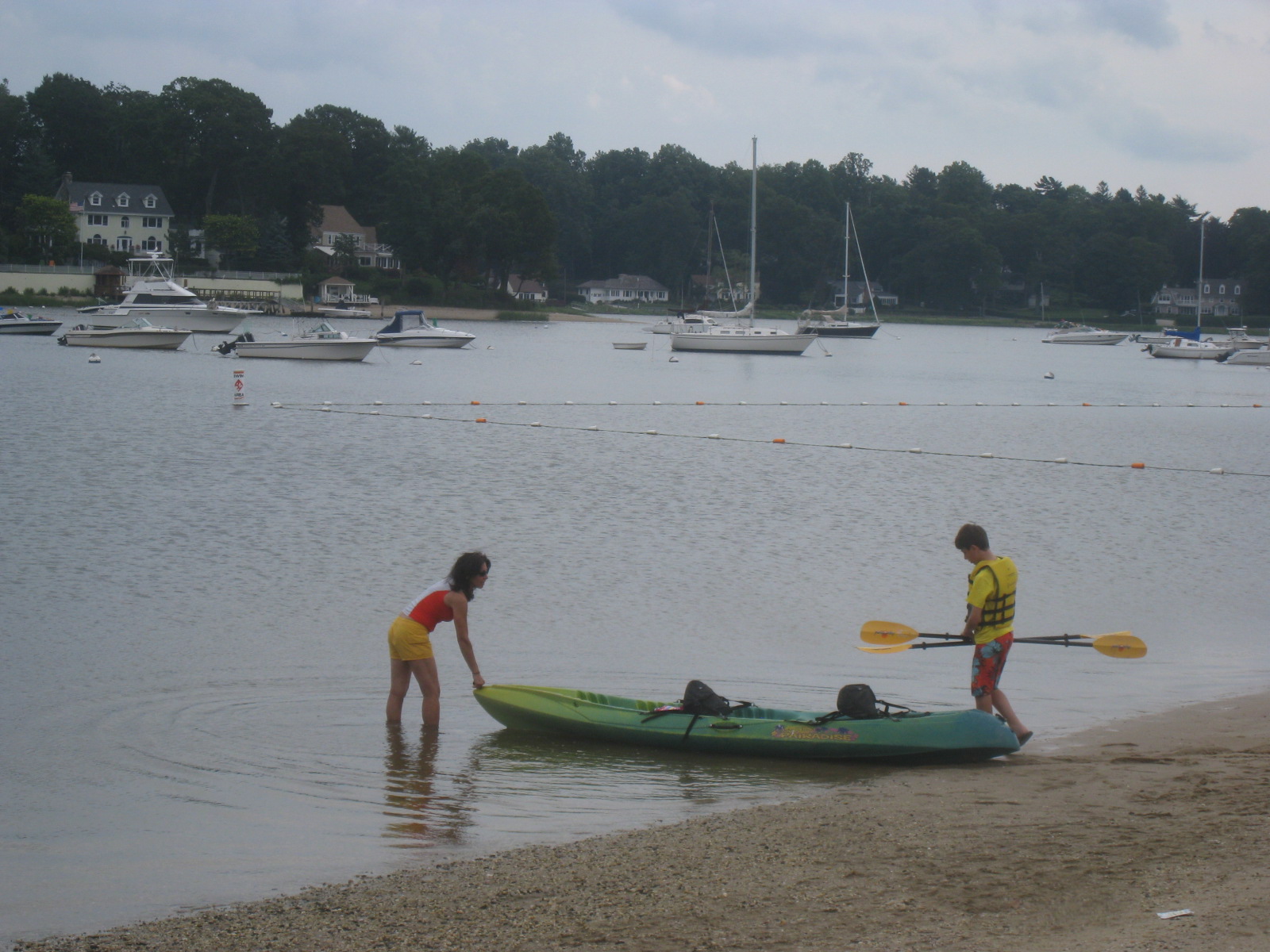
Even with rain looming, it remains summer and time for a few activities on the water.  Kayakers generally don’t care if they get a little wet.  Too bleak for anyone to test the waters in the swimming area beyond, here on Brown’s beach.


The proliferation of kayaks and other small self-propelled or wind-driven craft is a wonderful thing, much better than everyone needing an outboard motor or big yacht.  Not only is it better for the environment, it seems far more picturesque for onlookers, and requires more natural involvement for those participating.
Wed-


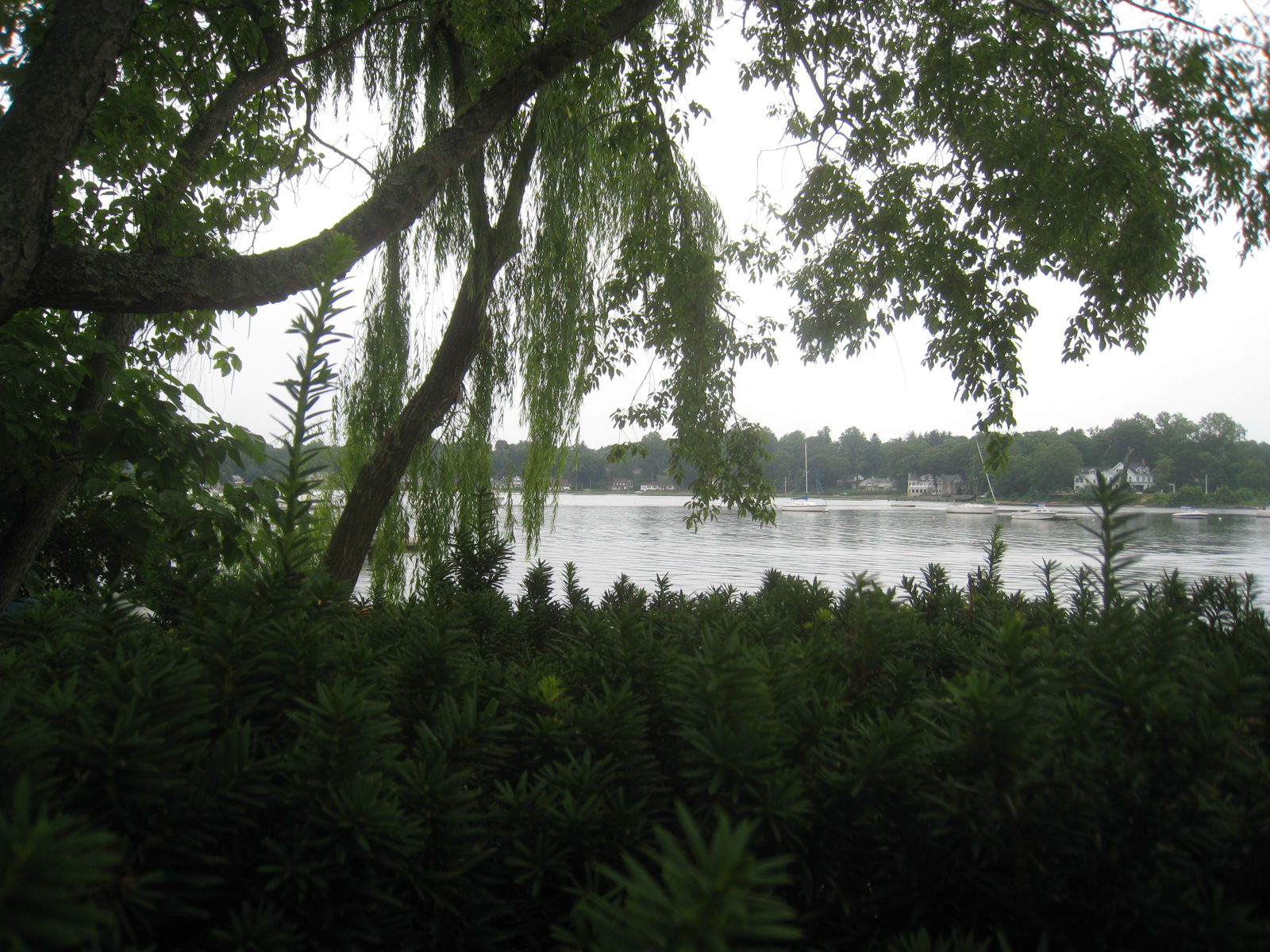
An almost tropical, wild view.  One imagines hyenas in the distance and monkey chatter in the trees.  But it is only outboard motors, the squawks of crows, and the other various odd noises of one of the most densely populated metropolitan areas on earth.  Still, the dripping willow can fool anyone.

Some say pictures lie. Others claim they are worth a thousand words.  Probably, both viewpoints (and many others) are true.  Nothing encountered in life is isolated, and within the many layers and meanings evoked by any one particular moment need be without confusion, complexity, and contradiction.

Thu-

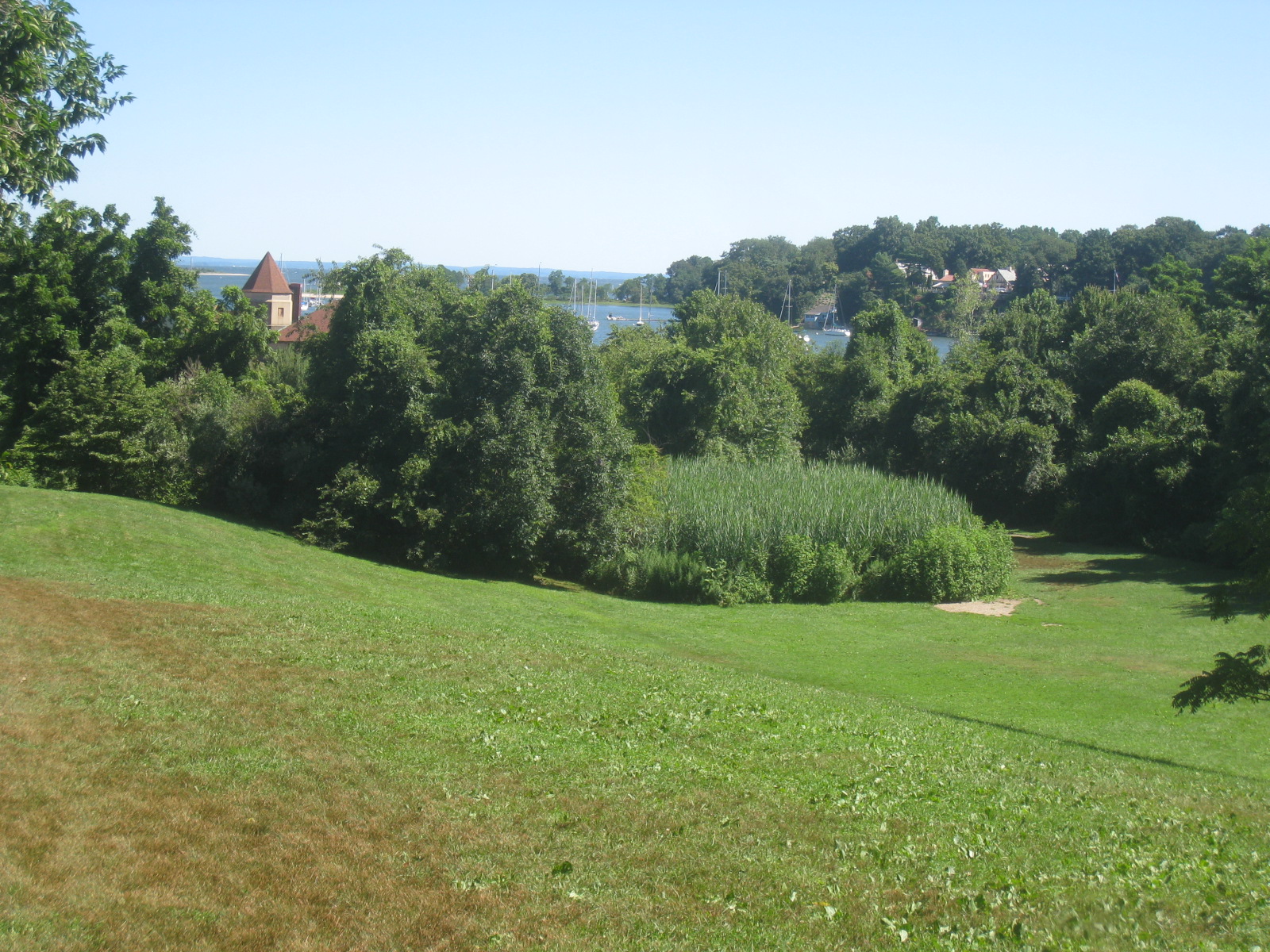
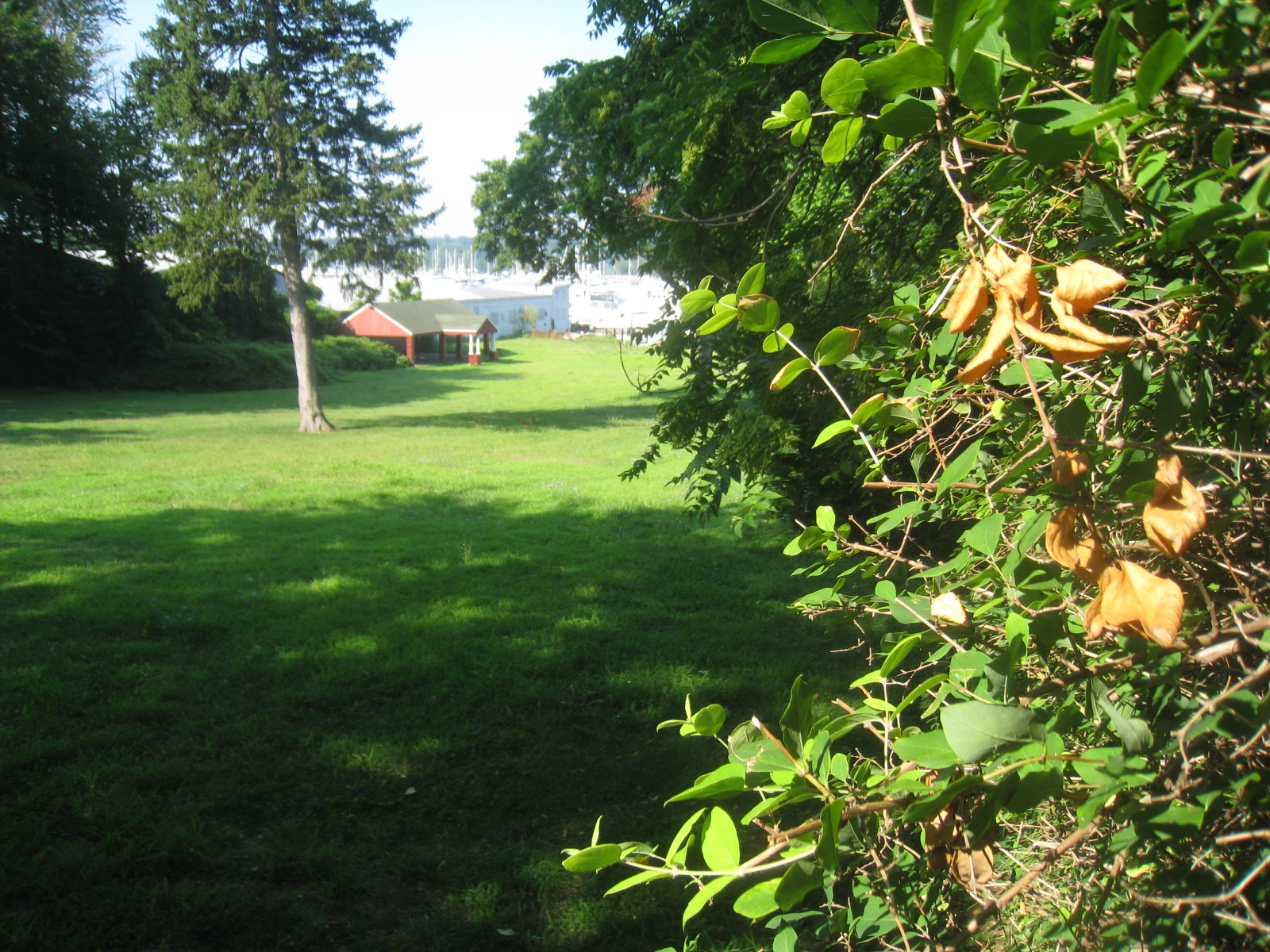
The typical calendar shot taken by thousands of photographers who visit Huntington in search of something beautiful and picturesque but not too complicated nor hard to find is this view from near the top of the hill at Coindre Hall.  It’s a Gold Coast mansion now run as a county park,  with the lawn used by dogs, the refreshing woodlands a reminder to suburban hikers, the sadly run down boathouse (shown) and the ruined dock along the extensive and impressive stone bulkhead.

 
Non-family photographs of places are often like this _ something grand that everyone loves.  Others are some little nook with light and color effects that the artist feels we should experience.  Yet each is one tiny fragment of infinite beauty, which can only be experienced by actually being there and being open to seeing.  Even more astounding, each minute,  hour, day, year is different, no two identical.  That is what I can finally appreciate.

Fri-

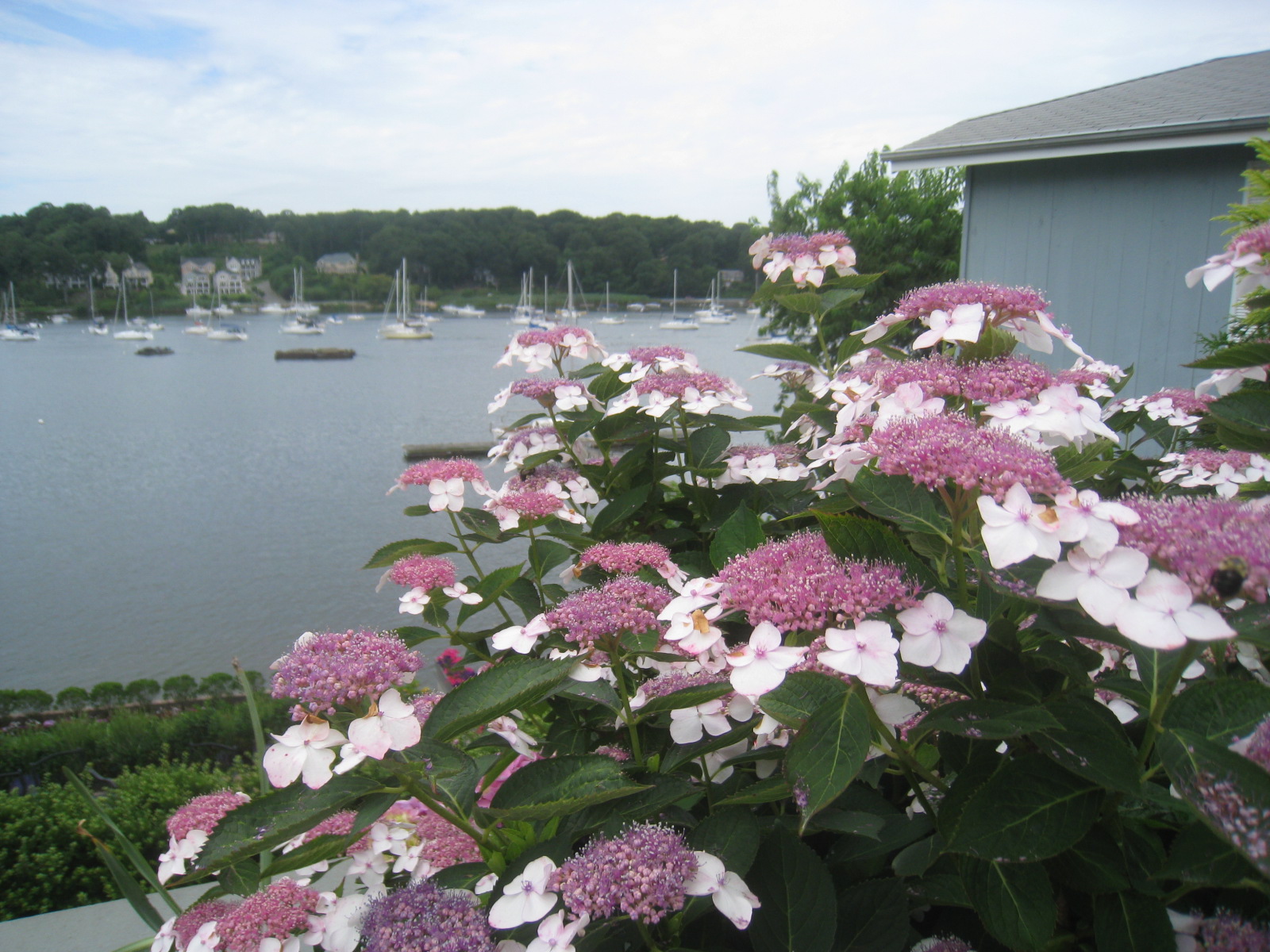
Beach roses set off the drizzly mist and make the water seem wider than it does on a clear day.  If you are so inclined, weather can set your mood and your perceptions, so that a grey day matches an inward calm, or a minor depression.  If you are not, the weather means nothing at all.  And what mood you get from any given view at any given time _ who knows?

We are constantly proud that we can predict things, but I cannot predict how I will feel when I encounter this little patch of water each day.  Nor if I will even notice it.  Science has great limits, and one of the worst is that it cannot truly deal with the chaotic and infinitely unreliable reactions of any person to their environment.

 Sat-


Inlet on the more-or-less freshwater pond behind the old Mill Dam.  There are a lot of birds, migratory and otherwise, here during various times of year.  The town owns all this as a park, but fortunately has not yet seen fit (nor had the budget) to “improve” it much.

Of course, these cheap cameras exaggerate.  Everything looks both larger and smaller, and the lens curves things a bit.  In a way, I prefer these devices where there are obvious flaws, simply because it reminds us that there are flaws in every device, that we sometimes do not pay attention to.  A perfect lens captures a better picture, but no better captures the experiential reality.

 Sun-


Four O’Clock springing from the asphalt that tries in vain to keep the rising harbor tide from eating away at the road.  This area has to be fixed up and filled in here and there every year or two after severe storms.  It doesn’t help that according to reports the mean sea level has risen over an inch in the last two years.

I’ve always enjoyed the interactions and struggles between man and wild nature more than either by themselves.  I am less interested in either wilderness or enclosed malls and tight urban blocks than I am in the garbage that gets into the wilderness, and the weeds that colonize marginal land.  It’s the constant dynamic that fascinates me, intellectually and visually.

Invasive Plants

Mon-

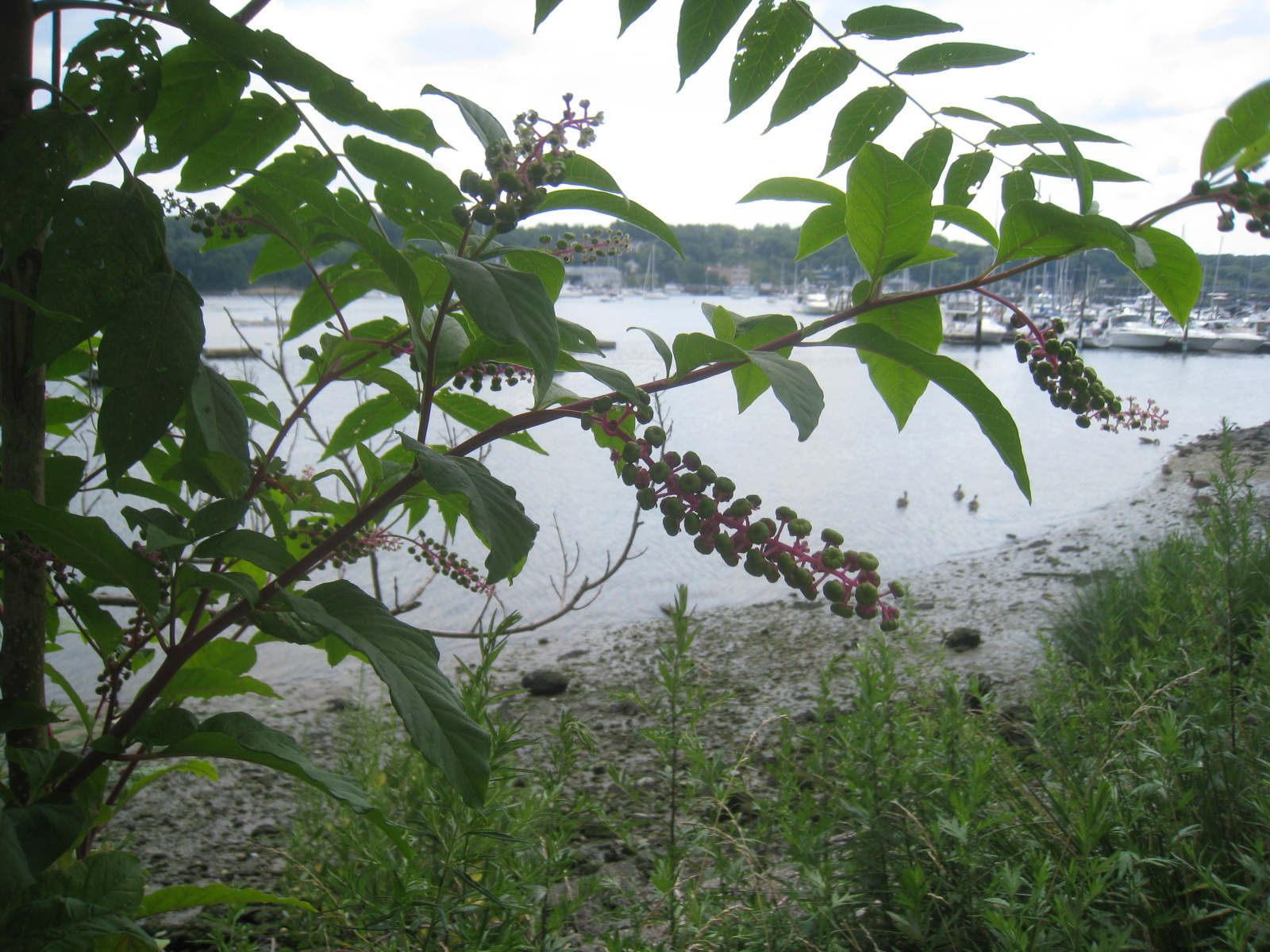
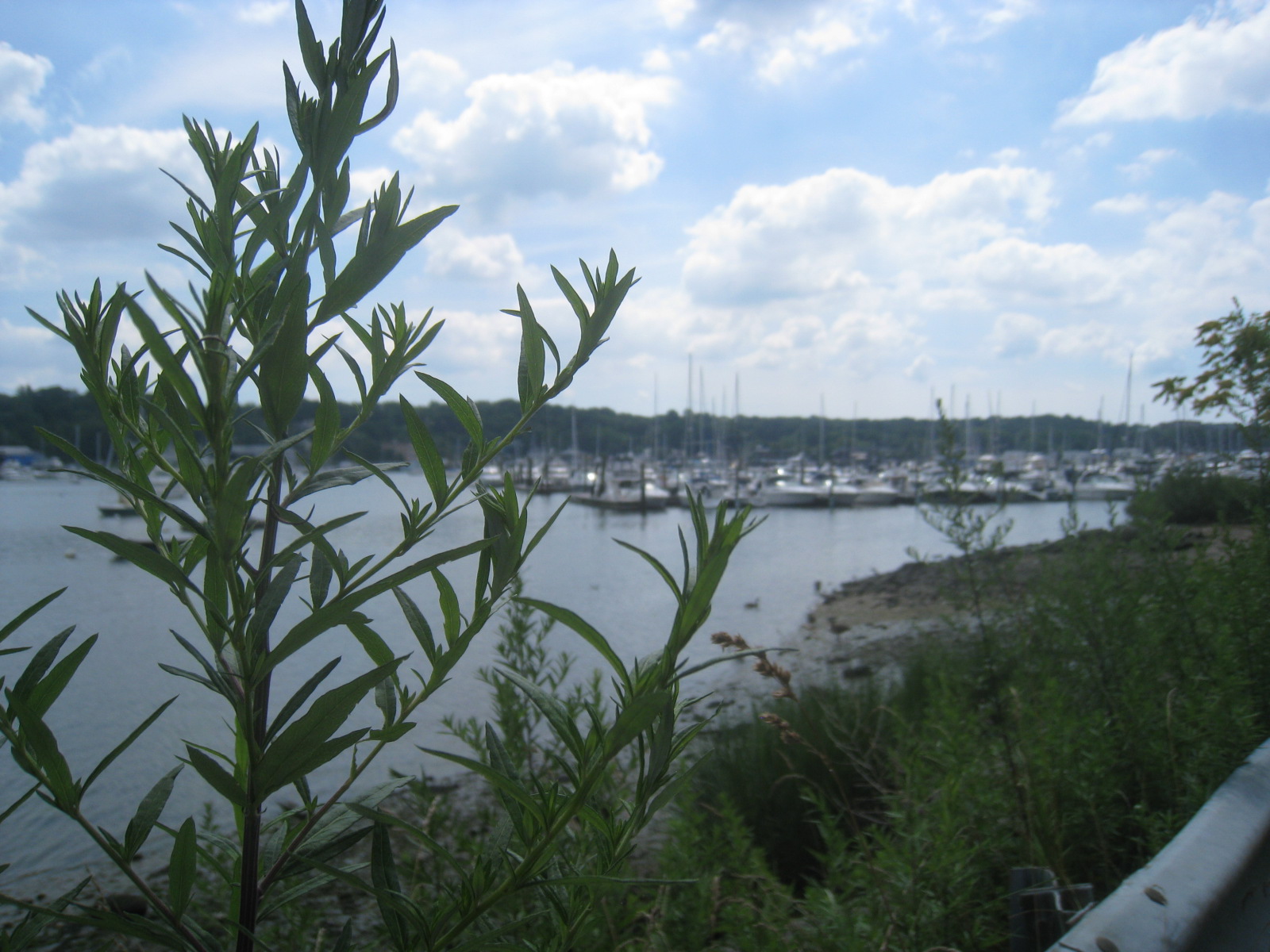
In an area as worked as Huntington Harbor over the last three hundred years, it is inevitable that almost all the plants are invasive outsiders.  Here there are three: ailanthus, ragweed, and pokeweed.  All of them handsome in their way, but certainly not the original native species.

Of course, it is difficult to say what an ecology here should be at this time.  The most natural is no doubt the one that actually exists, ragweed and all.  The constant churning of dust and dirt and poisons is what the human interface brings with it, especially with a dense population.
Tue-


Jimsonweed is so handsome in its own way that it would almost make it in a garden.  Supposedly, narcotic properties which the young have discovered.  The flower is on its way to fruit, part of the long cycle.


We are so attuned to nature that all this looks right and excellent.  It does not matter if this particular plant was here a thousand years ago in the “natural” environment or if it arrived on a boat yesterday.  As long as it does not monotonously cover acres and acres while choking out everything else it adds pleasant contrast and looks just dandy as it is.

   Wed-

Phragmites are pushing out the native spartina grass.  They fill in the salt ponds, and march down the shore, and expand into disturbed flat meadows near the coastline.  Not particularly good habitat for wildlife, nor particularly useful to people.

But it is hard to argue that they are not beautiful.  The bright green stalks shoot up relatively early in the spring, making the harbor outlines more gentle.  In summer as they reach full height they frame views from every direction, a photographer’s dream.   And in fall and winter, the graceful plumes begin heavy and decay month by month never giving up their final outlines _ sometimes snow and ice-encrusted _ until the next year.  If they were not so persistent, they would be treasured.
Thu-


Some consider ragweed by far the worst of the invasive species.  It is everywhere, never particularly pretty with no flowers, little wildlife value, and contributes great amounts of pollen to aggravated allergy sufferers.  The French hate it so much (under the rather beautiful name of Ambrosia) that they have invented diabolical tractor attachments which extend several feet to each side, and produce a heat of hundreds of degrees to cook the plants as it passes over.


Yet, I rarely find it particularly invasive.  Bindweed, for example, is far worse.  Ragweed shows up in the garden but not the lawn, is easily pulled out, and easily identified.  In fact, it is far more at home where pretty much nothing else would grow, replacing not native nor more beautiful cultivated alternatives, but rather adding life instead of dust and mud which would be there otherwise.  Naturally, I am in a minority with this opinion.

Fri-

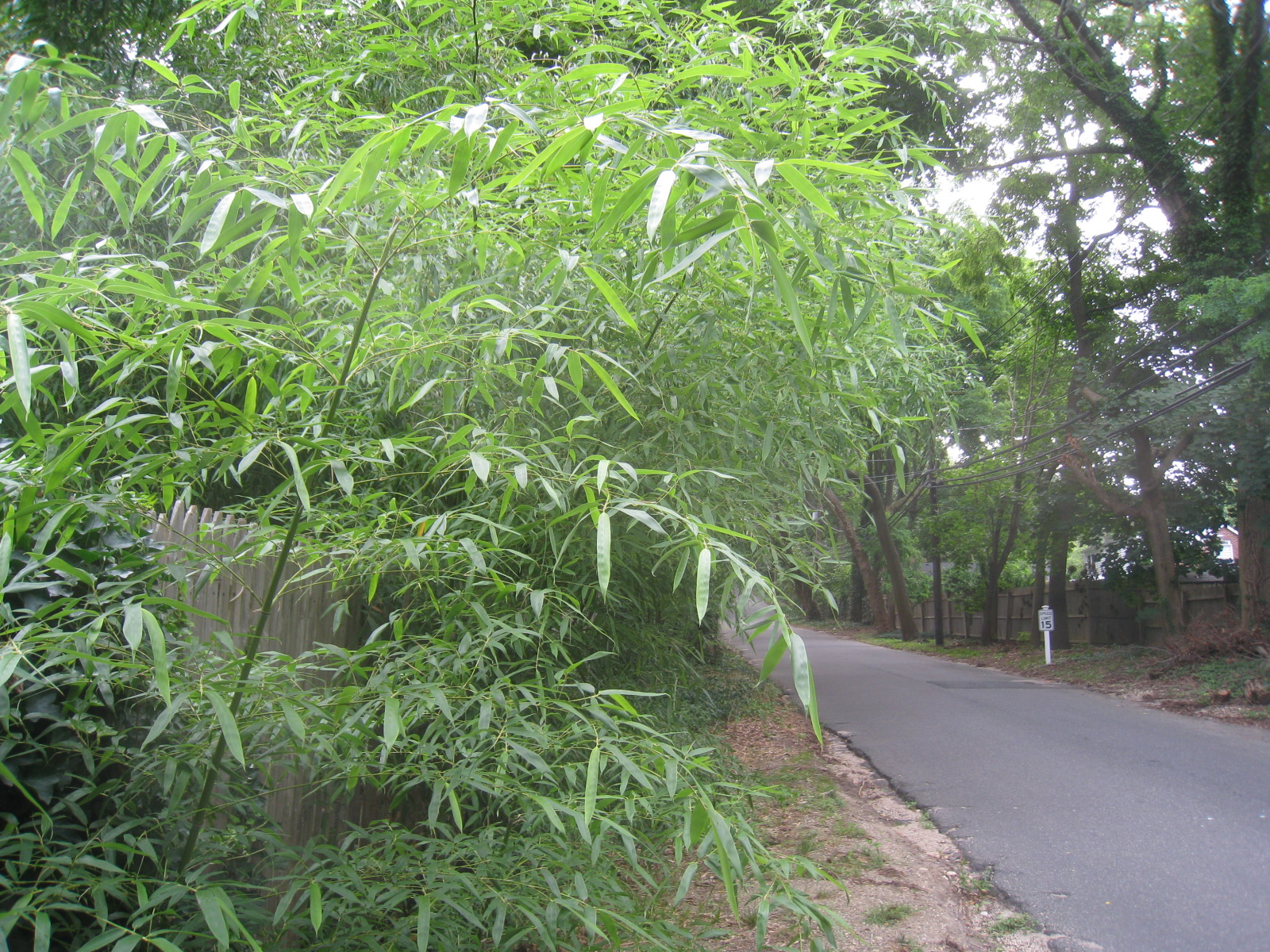
Bamboo fortunately does not propagate around here by seed, but once established in a clearing it crowds out everything and resists elimination by chemical, fire, or backhoe.  The patches have gotten so bad that the county has banned its sale or planting.  It’s pretty enough, but can destroy foundations and everything else in the way of its rhizomes.

It is not really a menace to whatever natural local ecology is left, because the local natural ecology is deep forest and dark spaces under large trees (as homeowners and utility companies constantly relearn to their chagrin.)  Bamboo needs some sunlight, the patch here is marginal.  I kind of enjoy it, the leaves beautiful in all seasons, lovely in winter.  This particular cluster has even provided a few fishing rods for my kids, in times gone by.
Sat-


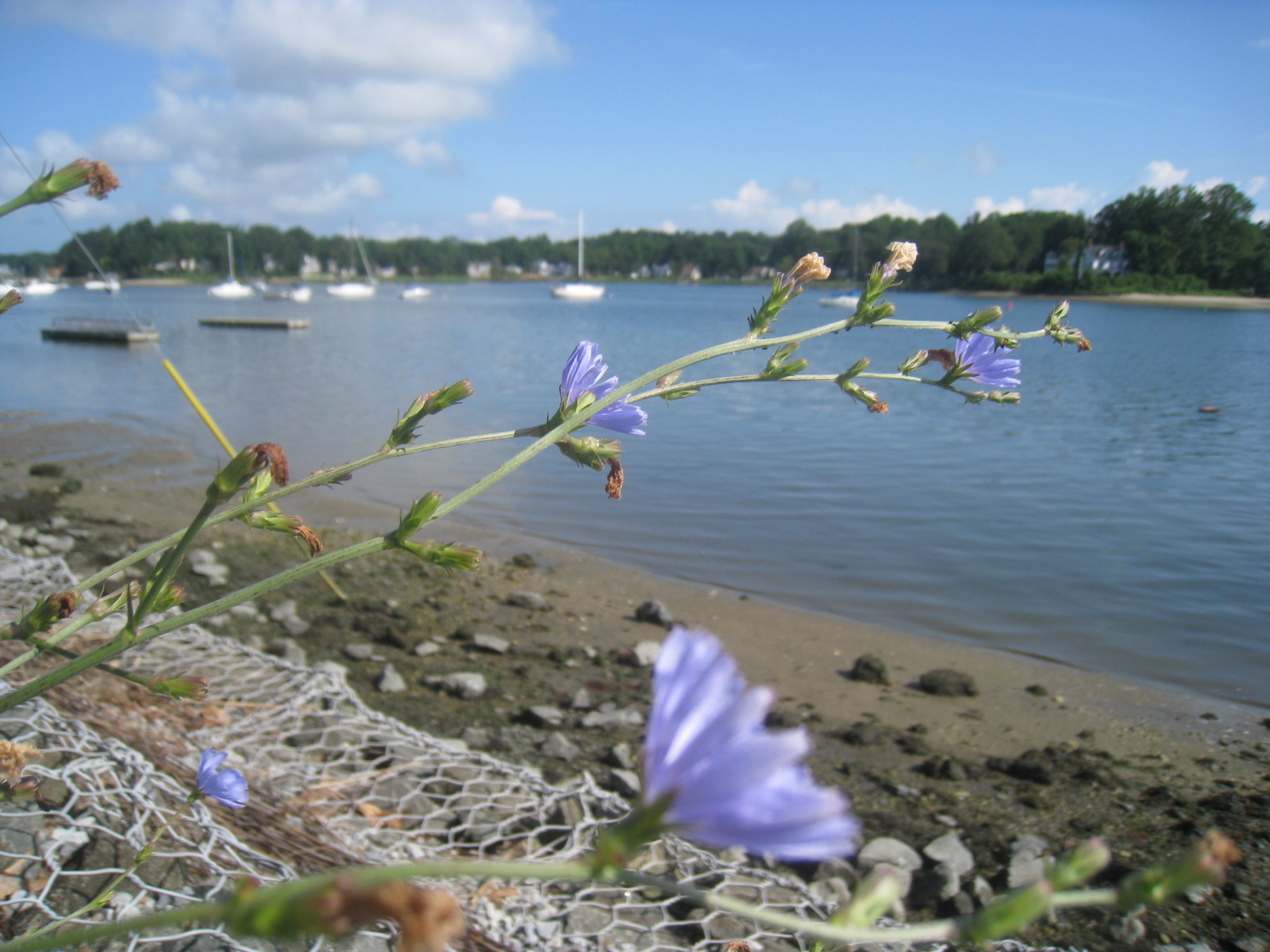
Chicory fills vacant lots and roadside.  Although the foliage is stringy, the flowers are lovely in the morning when they are open.  Once upon a time the roasted roots provided a coffee substitute.

In my mind, this is less an invasive weed than a pretty wildflower.  All of our internal classifications are subjective and open to change, ignored by nature and reality.  To an artist, a rose in a cornfield is fit subject for a photograph or painting or short story, to a farmer it is a nuisance and loss of income.

   Sun-

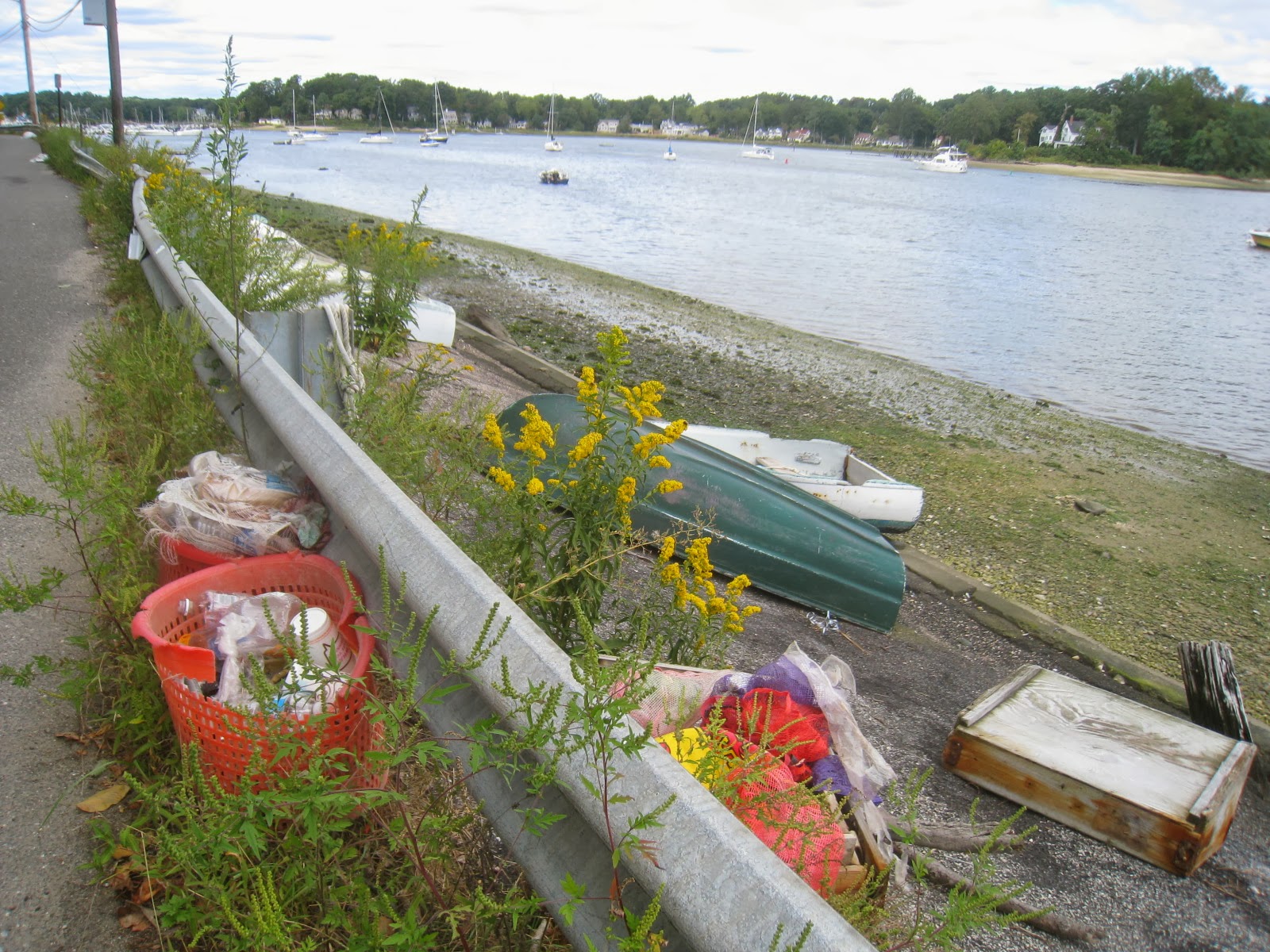
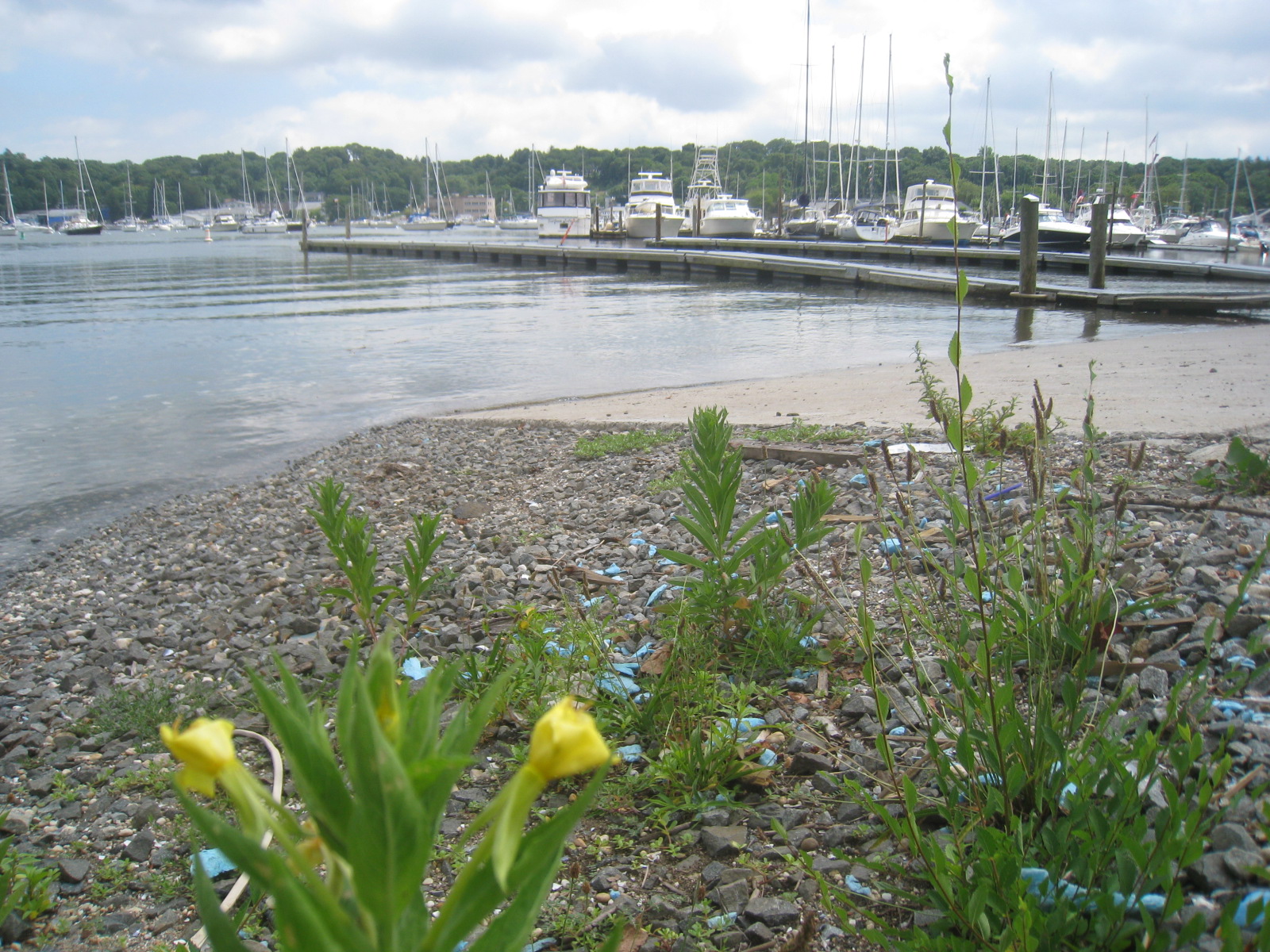
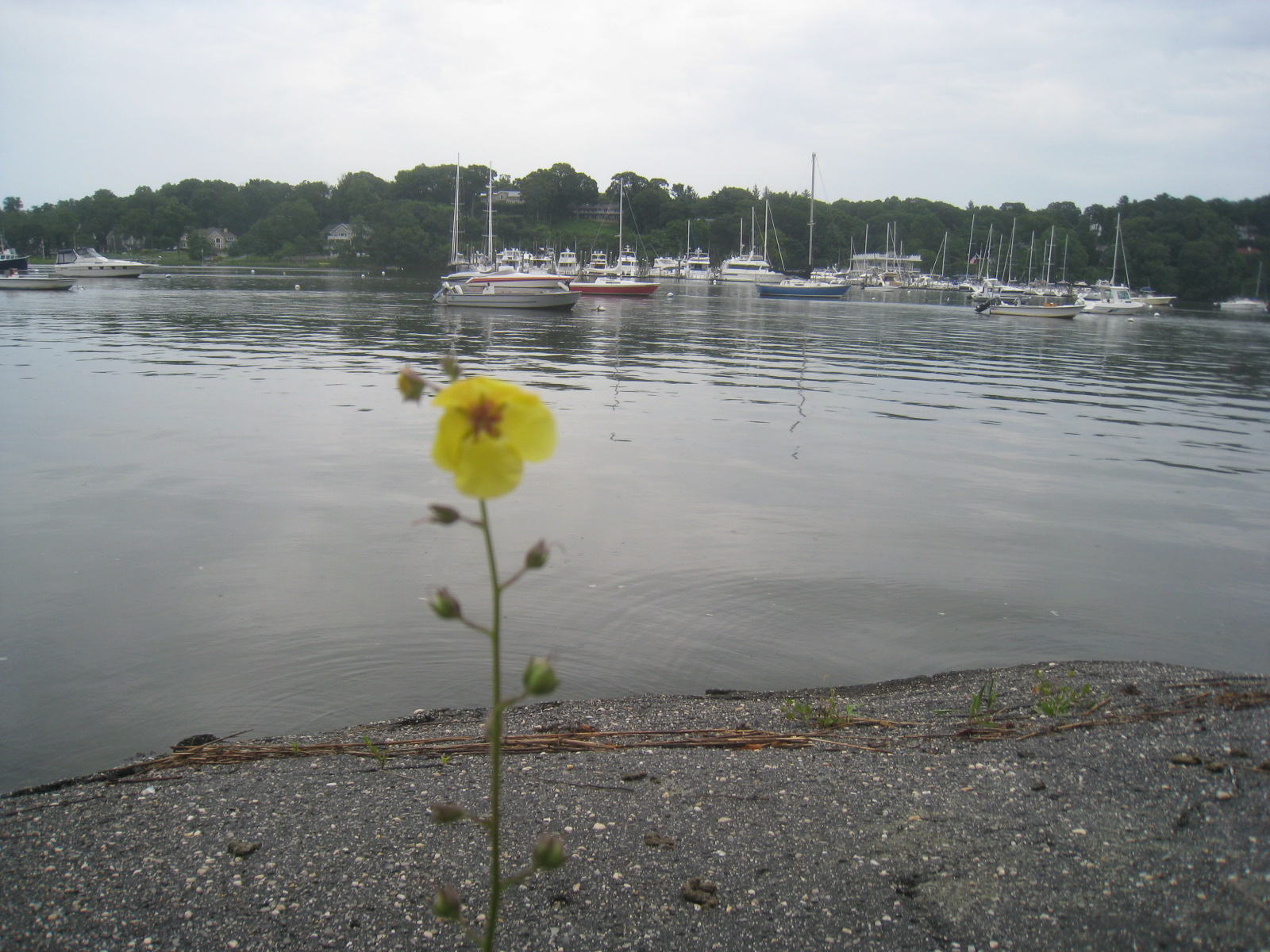
No idea what these plants are, growing along the tideline where old boats, docks, and other flotsam is periodically dumped and picked up by the town.  Could be foreign, could be native, scratching out a thriving living where obviously nothing else is making it.  And making pretty yellow flowers in spite of the obstacles.

It used to give me great pleasure _ a kind of control _ to be able to name everything I say and somehow relate it into the world of book knowledge in my head.  Now, not so much.  The vastness of the world is enchanting in and of itself without being identified, categorized, and filed.  Learning to let go of useless approaches to experience is a difficult task, and too often seen as a loss rather than a gain.


Tides

Mon-

In a tidal area, the view changes dramatically just with the passage of an hour or so.  And yet it is one of the things we can grow so used to that we just ignore it, to the point that when I drove along this harbor every day at work, I would never have been able to tell you later what tide it had been.

Fisherman care, of course, and tidal charts are commonly available.  For people my age it is mostly only important in the summer when we might want to go swimming during the day, or when we want to plan to picnic at night.  The gnats and flies are much less of a problem when the water is high.

Tue-

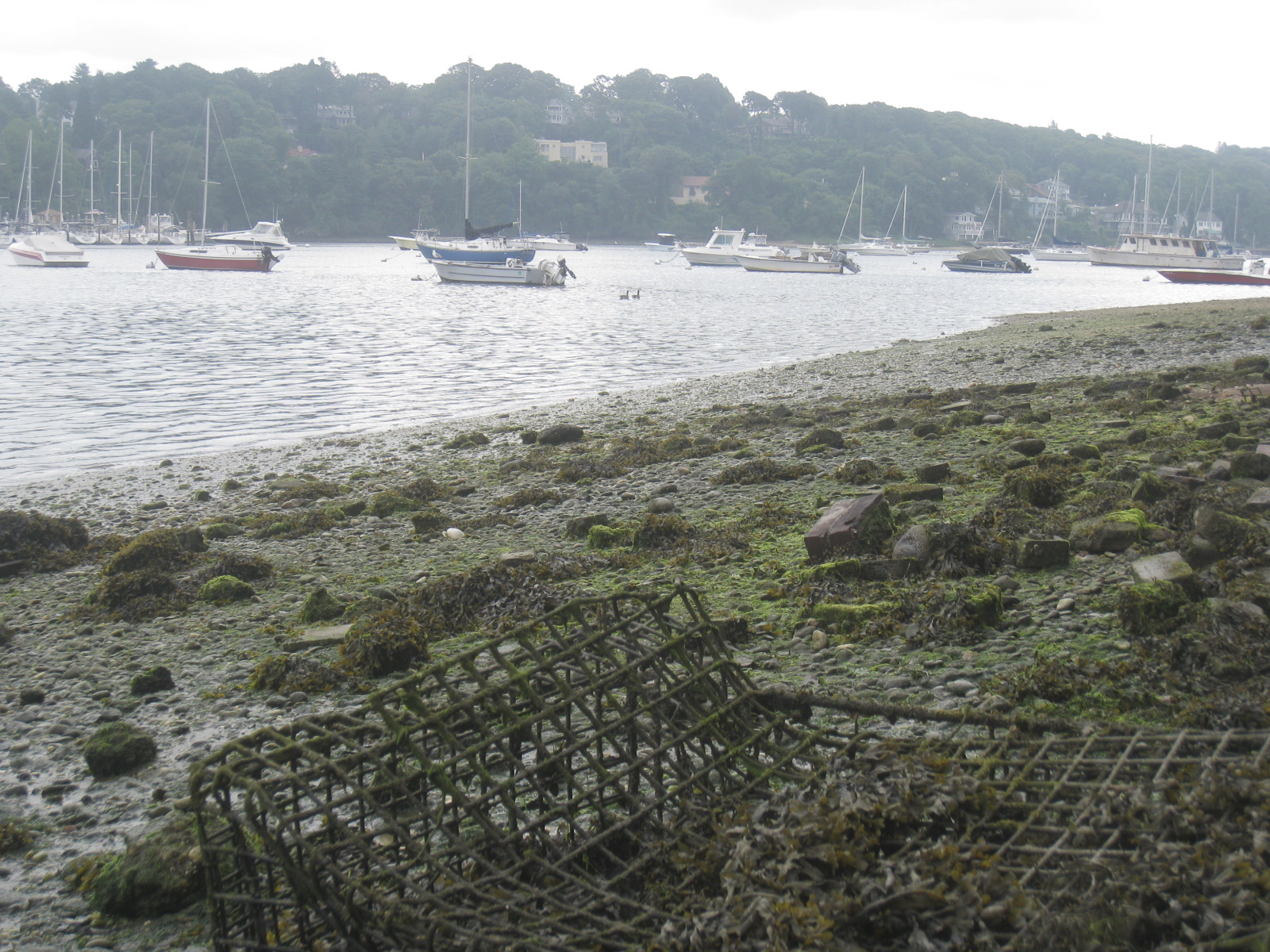
Low tide exposes some of the detritus heaped on the bottom from long use.  It would be romantic to say centuries of dumping, but in fact the harbor was dredged around 1980 which effectively killed off most of the clams and a lot of other stuff.  Anything there now is mostly rather recent, at least near the middle channel.  Supposedly the good news is that Huntington can now host private yachts the size of ocean liners.
The lobster industry of Long Island Sound didn’t end until the mid Nineties, probably from pesticide use to kill mosquitoes.  The financially interested users of pesticides have lawyers and kept scientists who dispute that.  As in most legal matters, statistics can be manipulated by the wealthiest as necessary.  Anyway, there used to be huge stacks of lobster traps stacked on shore or floats during off season.  Now all we have are these algae covered relics, picturesque enough in their own way, I guess.
Wed-


Typical high tide pushes up so there is little room between the deck of the dock and the waves.  During storms, the water will ride well over the platform, often pulling up the pilings and forcing them to be driven back into the bottom muck with a pile-driver on a barge that constantly is pushed from marina to marina by a cute little tugboat.


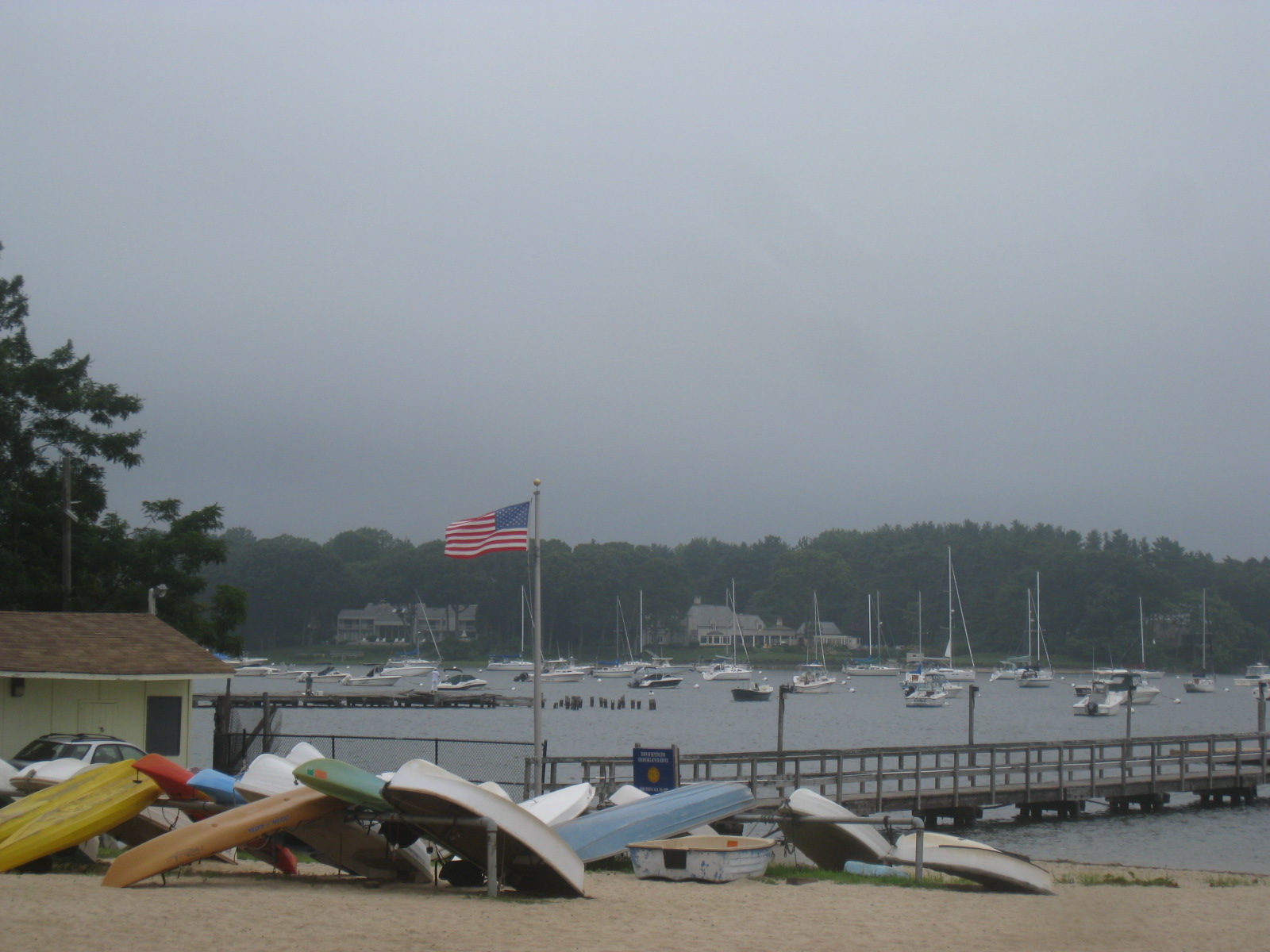
This is another outpost of the town beach, the kayaks are part of the summer kid’s program.  They’re cheaper and more versatile than little sailboats, but somehow a little less picturesque in spite of their bright colors.  Anyway, looked at with  open mind, almost anywhere is a lovely view.
Thu-
Fishermen pay close attention to tides in mysterious ways.  Depending on where they are going, the season, the moon, the weather, and just common fisherman knowledge there are times when it is worth going out into the wider waters, and times when it’s just better to do nothing.  Of course, I suspect that is also a way to get away from other distractions and relax as well.

I’m not a particularly good photographer and have constant trouble even keeping the horizon level.  The tilt of the shoreline may evoke a seasickness, but you will just have to compensate.

 Fri-

Wading birds like this large heron prefer the incoming half tide, when little fish abound.  They’ve adapted surprisingly well to the massive industrialization of the marinas and shoreline, although this side of the harbor is somewhat isolated and protected by the road running along it.

I enjoy the surprising interactions of the wild and the “civilized” more than I do the pure wilderness or the completely urban.  I hope that eventually others will come to share this aesthetic, not completely one, not completely the other, but each able to coexist and interact in surprising and thoughtful ways.


Sat-

An unfocused beach rose frames the tidal flats, filled with clams which can no longer be harvested this far from the inlet due to pollution and tiny hermit crabs which come out each low tide to wave their claws in seeming protest at the sun.  If you walk along the edge, you are likely to see horseshoe crabs flowing about in their ancient rituals.

Tides are pretty unpredictable in terms of how low or how high they actually get.  Each one is somewhat different _ some massively so _ depending on the time of year (solar relations of earth and sun), phase of moon, atmospheric pressure, and, of course, the influence of large storms out to sea. 

Sun-

Fortunately, we still have more seaweed than algae around here, in spite of people fertilizing their lawns excessively and the dog waste which washes down from the hills and road.

That is not completely luck, since the county has fairly strict rules on what fertilizers can be sold and when they can be applied, which is at least followed by most of the yard crews.  And people are now picking up the dog shit more often than not.  So laws and habits can make a difference, and that is always something to keep in mind no matter how hopeless and massive problems may seem.

Heat

Mon-


As the highest temperatures of the year grip the area, people used to flock to beaches and onto boats, anything to get into cooling breezes and away from the stifling, fly and mosquito infested inland areas.  Now there is somewhat less seasonality, as people rush to air conditioned barns to browse and buy what they think they need, and hide out in hermetically sealed homes and cars to avoid the possibility of sun exposure and possible risks like lime disease or west nile virus or e-coli polluted water.


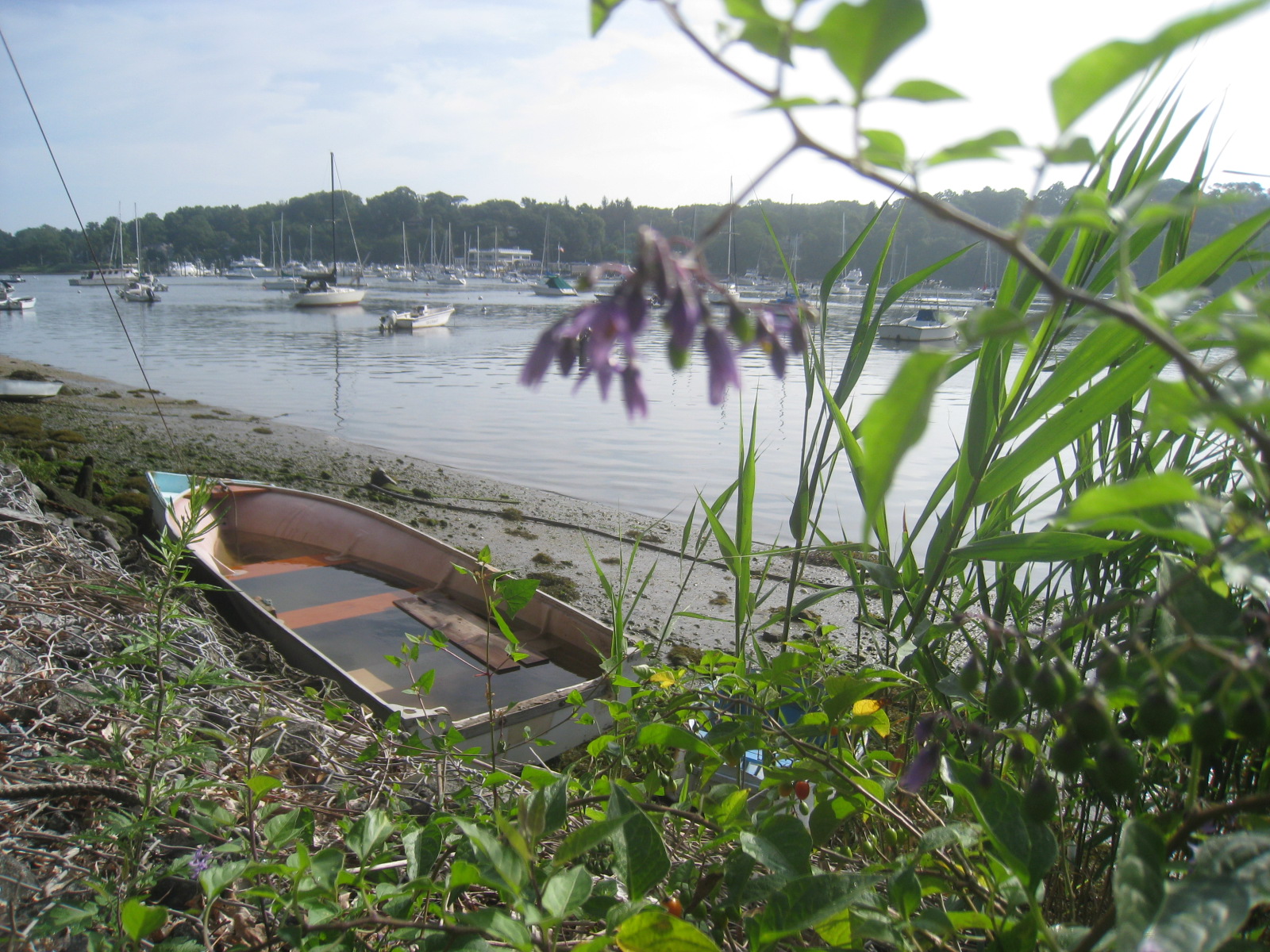
I end up feeling, with a few fellow adventurers I meet walking about or the “lower classes” toiling on yards and actually doing work on the boats, like an almost different race of beings.  The “outdoors” is nature, less artificial, more healing, and whatever danger it may present is danger that is usually to our benefit.  And the stimulation you get _ looking at the deadly nightshade or the neglected rowboat or the weeds in this view, for instance _ is worth almost any price to experience fully.

Tue –

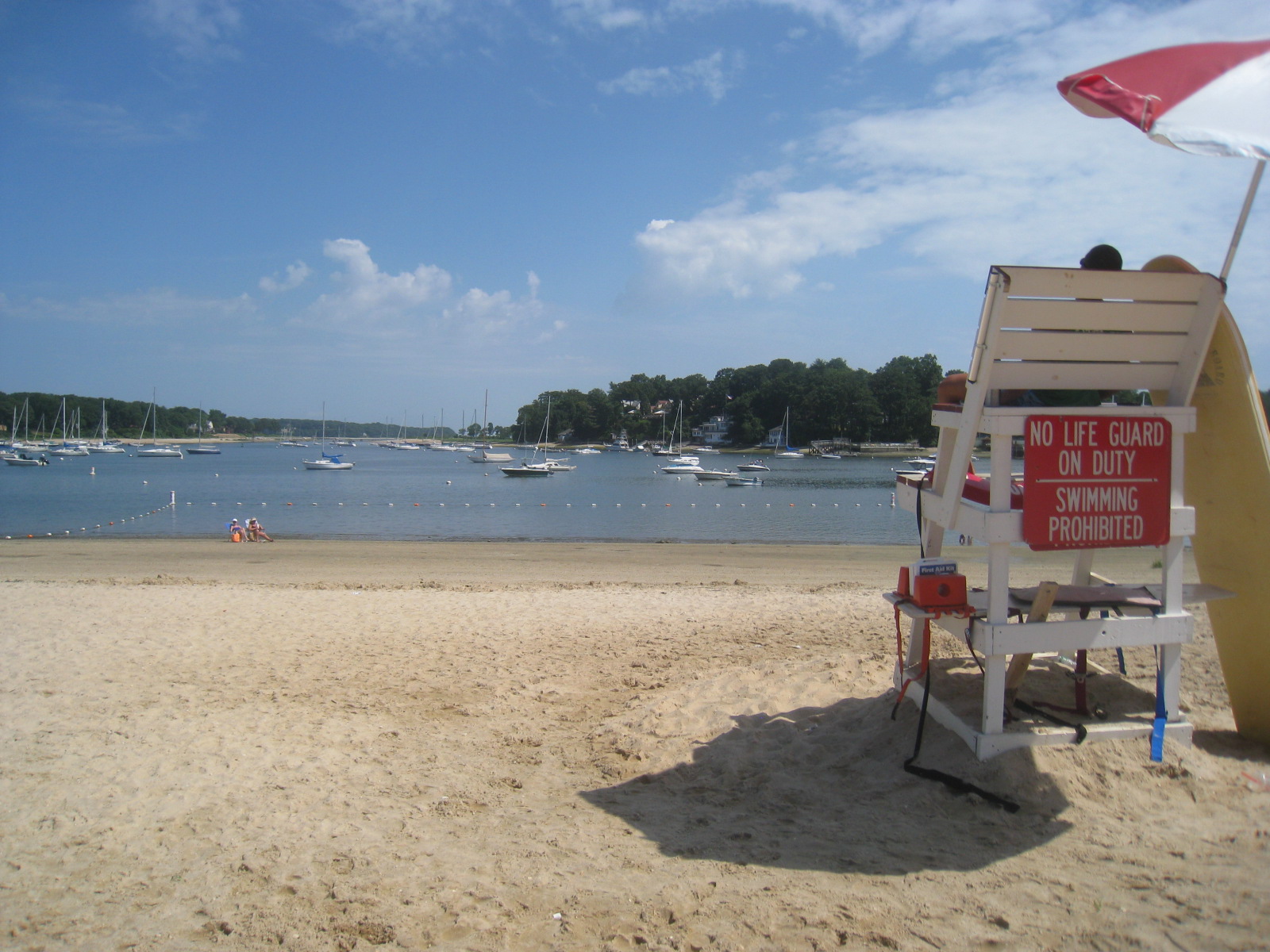
In spite of the sign, there is a lifeguard sitting in the tower at Brown’s beach _ remnant of an old estate.  Hardly anyone goes in at low tide, and besides it’s pretty early in the morning early in the week.  Mostly sandy bottom, but it turns to muck, and the water quality here in the actual harbor _ even though it is right in front of the inlet _ can be suspicious, although it is tested daily.

But it’s a lovely scene and actually quite heavily used, even in the winter.  Kids can run around in the sand, use the playground, and scream their heads off; adults can just stare at the horizon and unwind a bit; and frantic younger folks can grab an hour at lunch or around jobs to sit for a short suntan before heading back.  And it doesn’t cost a dime, which is certainly something an egalitarian like me appreciates a lot.
Wed-


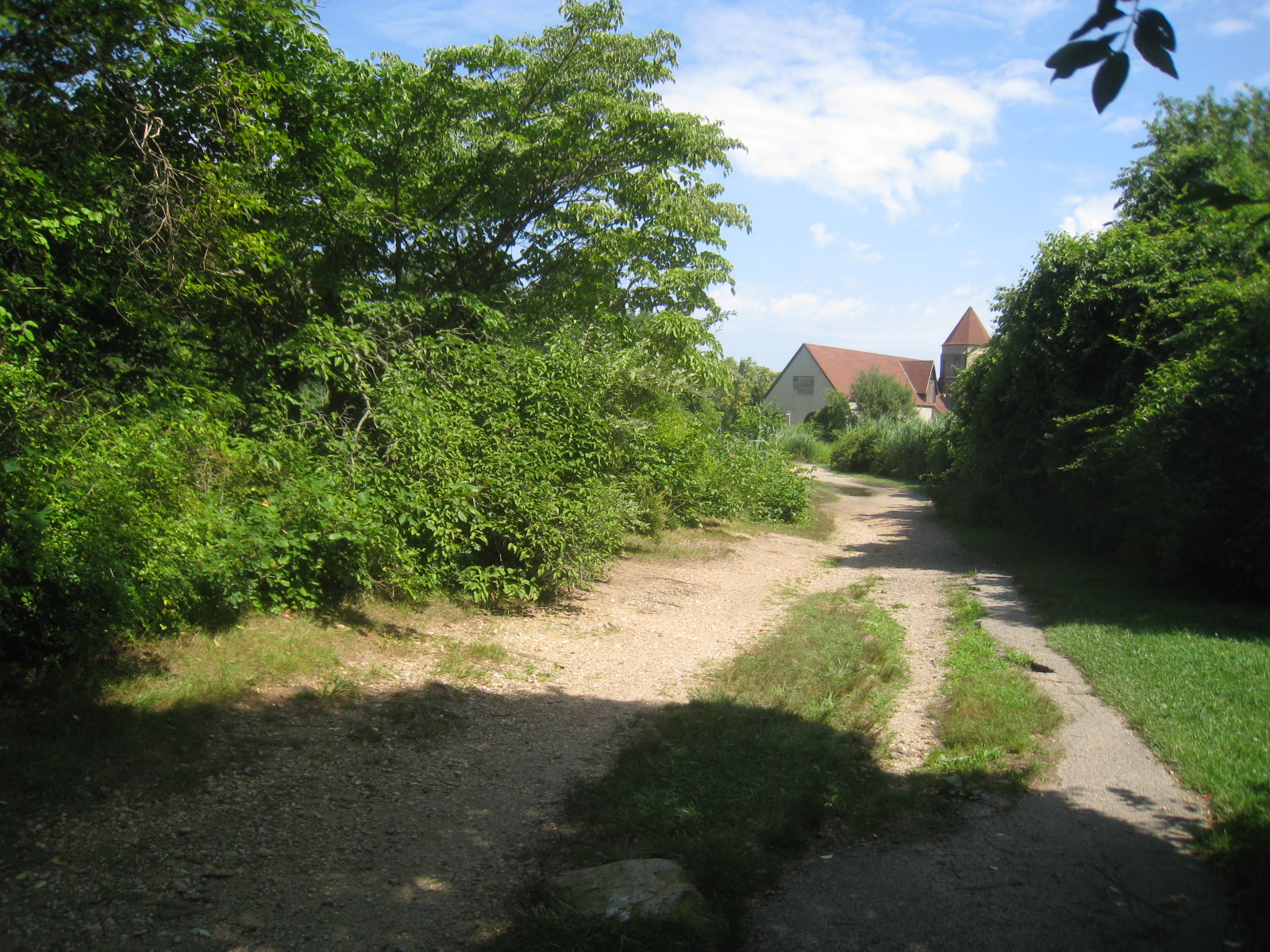
Grand to have a country dirt road on an old estate near my house.  It leads through the overgrowth past a pond from the mansion to the boathouse,  and is filled with flowers and various kinds of wildlife, including _ recently _ a fox.  In a solidly populated metropolitan area (which is what we are here) it’s a breath of an earlier and simpler _ if just as economically unfair _ time.


On a hot July morning, the cicadas are already loud, the birds hide, the tadpoles are just developing, the raspberries are almost ripe, and the humid heat has not yet had an entire summer to ravage the leaves which remain lush.  I could almost pretend I am a kid walking down to the water barefoot with a bamboo pole in hand.  Places that evoke fantasies are as necessary as those that remind us of the interconnected nature  of all life.

   Thu-

By eight AM the temperature is already heading into the 80’s, so people who can have already been out and about.  There is, of course, a significant drop off when any extremes of weather hit _ rain, cold, or heat _ but walking, jogging, or cycling along West Shore road is a favored activity of many when they consider it possible.  The regulars are usually cheerful and friendly, there are lots of others who grimly stride along, trying to lose weight or lower blood pressure, listening to music or talking on phones, angry that their perfect lives should be interrupted by anything so mundane as bodily health.

I’ve always considered it a privilege to be here, where I can walk a block from my house and have the constantly changing seascape and people and their activities besides.  My own personal problem is that sometimes I get too wrapped up in my internal musing to pay much attention to what should be feeding me interest for the rest of the day. 
Fri-

 
At this time of year the harbor is filled with boats _ the visible ones floating, although hulks from many years litter the bottom.  As pleasure boaters go upscale they tend to use marinas instead of dinghies to reach their vessels.  And the clammers ferrying out are fewer and fewer as time goes on.
An inconspicuous yellow hawkweed forces its way out of the asphalt to ripen into soft floating seed carriers. It’s the kind of loveliness you never see when riding a car or bicycle, and rarely when engaged jogging, talking on the phone, listening to a music player or even (my particular sin) following a heavy train of thought. 
Sat-


Kayaks are sitting under the willow, providing a bit of color to the solid greens of midsummer.  Kayaks have become ubiquitous in the last few years, which is certainly a good thing since they have no motors and make no pollution (at least after they are made and until they are thrown away.)  There do seem to be a lot more on the shore and in the racks than there ever are actually on the water.

Surprisingly, surrounded by water and boats, I am not a boat person.  I like to walk _ I subscribe to the belief that golf is “a good walk spoiled” _ and time on a boat with nothing to do is very like being in prison with high definition television.  Something grand like the Staten Island ferry is acceptable.  Thinking about having my own platform on the water just makes me nervous. 

 Sun –

Summer just started, it seems, and heat is high, but already there are premonitions of times to come.  Like these dead leaves at the Brown Pottery site park.  In fact, there are signs everywhere, but it is more fun to wallow in the days that are, rather than worry about the future rain, ice, and cold.

I’m afraid I’ve always been something more of a grasshopper than an ant.  I found life uncertain, and never quite trusted long term plans.  Each moment is more than enough, and we should strive to be aware of and grateful for each one.

Height of Summer

Mon –

Somewhere, the fields of grain are ripe and being harvested.  A few hundred years ago, this whole area had been cleared and made into fields, but the forest has recovered its ascendency.  Of course, many of the trees are ornamental, and there are mostly exotic flowers tended carefully in gardens, even the weeds are generally invasive imports, trying to keep pace with global urbanization.  But much of it is very pretty, and the birds and various wildlife have mostly kept up.

I’ve always been more a fan of the interfaces between humans and nature rather than areas where the people have eliminated nature, or where nature is completely wild.  I am fascinated about how we interact with the world, often for the good, tragically too often for the bad.  Knowing that the past has changed so much, even in a few decades, is somehow comforting to my own sense of impermanence.  This too shall pass.  But, at least at midsummer this year, it remains very good indeed.

Tue-

That guy sitting almost hidden is nominally fishing _ you can see his pole stuck in the rocks if you look closely.  In earlier spring, you might catch some flatfish.  In later summer you could get snappers (baby bluefish) or maybe even a lost striper (bass). And I guess there’s always hope for an eel.  But here in July … nah, probably not.

There used to be a red shack here, worthy of Maine, but after it was torn down, guys (almost always guys, often alone) come and sit for a while and go home with empty pails.  I think it is mostly just to get away from everyone and everything.  Like fishermen and hikers everywhere, just losing worries and spending some quality time with the horizon.

Wed-

Summer seems to have just arrived, but the Ailanthus seeds are already turning red, preparing for the next season.  From solstice on, the varied greens of spring fade into a single dark hue, and the early flowers vanish to be replaced by late bloomers and, increasingly, seeds of all types.

No matter how we may want things to stand still, especially while they seem so perfect, they rush by, the days disappear into the past, and one day we look at colored leaves suddenly swirling and wonder what happened.  As I grow older, I find that as days have always been, years have become.  What happened to the world, that I wake up a stranger here in my autumn?   I can only hope that my seeds, also, physical and immaterial, are prepared for their next season and will prosper no matter what may come.
Thu-


Hecksher Park is about a mile and a half away, with a shallow pond fed by streams from the hills, a source of power and recreation since the town began.  It has always had turtles (some quite large!) and of course swans, geese, and ducks, but lately it has also become home to some river otters, which are apparently recolonizing Long Island in the last few decades.  Behind me is a cute little art museum, and a bandshell where free concerts are given almost every summer evening.


Being a romantic, I like to come here sometimes and sit on the bench, watching the people jog and stroll by, pretending I am in some Parisian green space.  And, to be fair, that is not so far off, in certain ways.  In important ways, of course, where I am is not at all Paris.  But one might equally say that the park I inhabit _ filled with my memories, my selections, my observations, my summarizations  _ is not the “real” Hecksher Park at all.  It’s fun to have the time to consider such bizarre bits of useless speculation.

Fri-

Even in paradise (maybe especially in paradise) it rains sometimes. An
d around here there are also seasons.  Anthropomorphically I see them as nature’s moods, when the world seems calm, or tired, or refreshed, or lively. 

Nothing much bothers me since I spent some money and bought appropriate gear for just about everything, for which my wife makes fun of me.  I have shoes for rain, and snow, and normal days.  I can dress from almost naked to eskimo bundled.  If I cannot get out any given day, I feel I have failed.  Making it into the world, and actually looking around and listening (not buried in email or recorded music or feverish planning) is one of the ways I respect and pay homage to the world around me.  From it, I receive a benediction which I treasure.
Sat-


When anywhere is truly understood, there are many magical times and places and light effects.  A seacoast is favored by mist and fog, or by startling clarity, or by blinding reflection, or by diffuse colored light interactions with the water, land, and clouds.  This makes every day a different visual feast.

I’m excited by the variety, although one of my faults is I tend to become a little too affected in my moods by my projections into the weather.  A foggy day feels different _ more inward, more calm _ than one of bright sun.  I try to reach beyond that projection, and work on the beauty and meaning of everything that is offered to me.  Fortunately, what I learn, like the forms of the moments themselves, is inexhaustible.

   Sun-

Sunday the bicyclists often tour in groups along West Shore road.  Especially relatively early in the morning, before the full heat of the day arrives.  The same reason I am out here now.  Most of them are, it seems, too busy talking to each other to much notice the views, and certainly none can observe the plants, nor hear the birds, nor feel the breeze as I do.

Nothing wrong with bicycles, except that lately their riders have become holier than thou types who think that their few minutes a week on wheels is saving the planet.  They treat all cars with contempt and expect drivers to conform to whatever riders want to do, regardless of common rules of the road.  They expect pedestrians to get out of their way in awe, when they are not ignoring them as a bird or rat in their path.  This inability to emphasize beyond one’s temporary current role (for riders will soon enough take on the roles of drivers and pedestrians) is characteristic of our selfish and increasingly badly focused culture.  Grump, grump, grump, goes the old guy …