Face Blind

In an era of mass production and conformity, it may be easy to forget how different people actually are – both physically and mentally. And how that shapes their outlook on the world. Individuals are treated very much as if they are the proverbial “bricks in the wall,” identical in possibility and hope .

Of course when we think about it that is not true. Short people simply will not be basketball stars. And so on. Talents and handicaps vary. Much depends on the time and situation into which one is born. That is all common sense, easily agreed on. What it means and how much it is actually important is a whole other matter. 

As a trivial example I am face blind – I cannot recognize people from their visage. Not really much of a problem, but it tended to limit me to being comfortable only in small groups and otherwise treating everyone as anonymous strangers. Today, with virtual AI eyeglasses doing facial recognition, it would even be correctable, like lenses for 20/20 vision. But in my times, I realize it truly shaped my response to life .

I worry, then, that the iron homogenization of computerized capitalistic rule is ignoring such basic human facts. A society composed of people finds ways to deal with such diversity. Rigid “scientific” silicon-based laws may not .

Ripples

Our minds can do amazing acrobatics. They can weave complex stories out of anything. Today, for example, I am thinking about ripples and life .

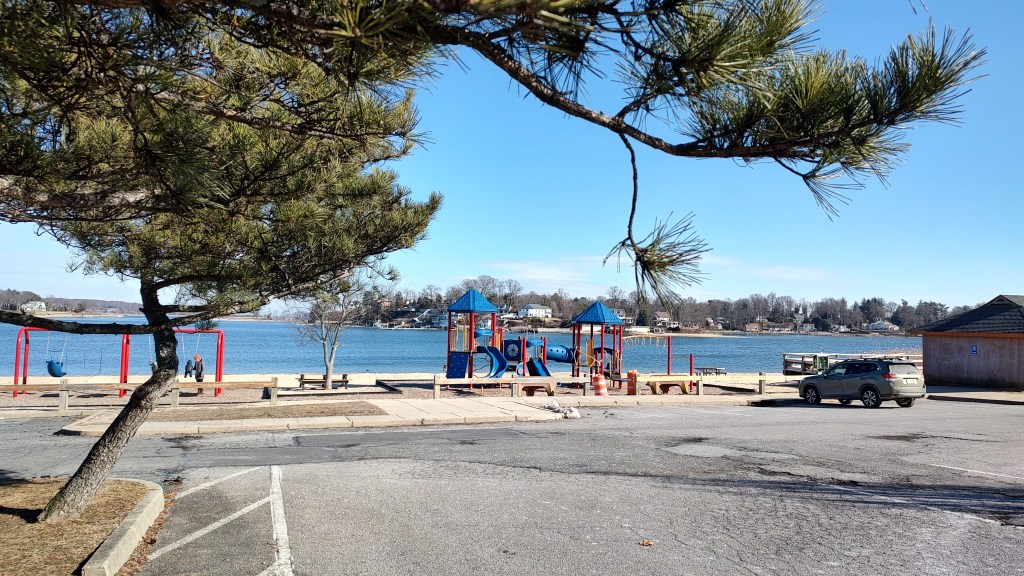
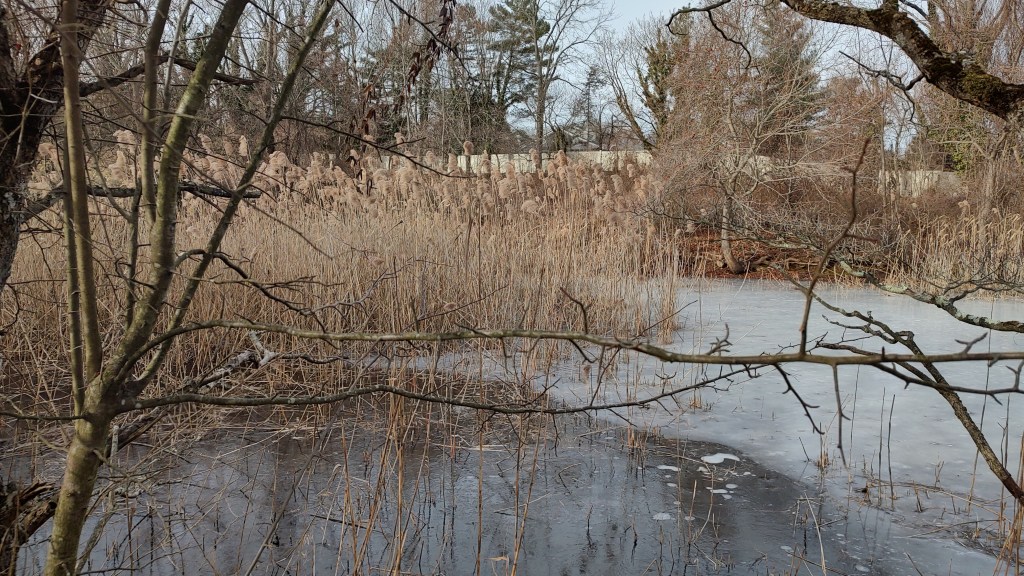
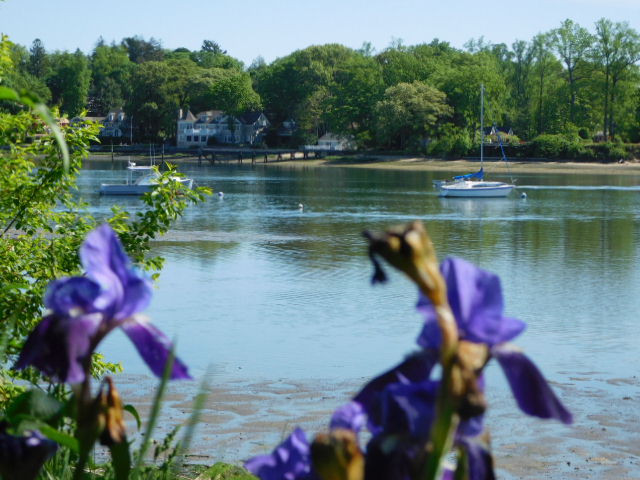
Ripples are pretty gentle and meaningless variations on a water surface. I love watching them on a bay, or as a brook tumbles along. They may sparkle if sunlight hits correctly. Perhaps they indicate something underneath, or merely that a puff of wind is passing by. Impossible to predict, infinitely numerous, gone in an instant, and replaced by another ripple. Sometimes alone, often in sets. And …

But, wait, how does that relate to life? Well I realize how many of the events of our own lives are very like those ripples. Beautiful, constant, but often rapidly gone and meaningless as other events crowd in .

It is important, I think, to help keep events in perspective. We need to know when something is not simple and fleeting. That is one of the true tricks of success, and often very hard to realize. Is that pretty ripple just a delight, or does it disguise a huge wave or other danger ?

Fortunately, this morning it seems that everything I notice is simply of ripple nature. I can lean back and enjoy the patterns .

Sainthood

We often describe someone who is extremely gentle and kind as a “saint”. Sainthood, on the other hand, is a much fiercer designation, at least in Western tradition. 

To achieve Catholic sainthood, after all, may require (these days) proof of miracles, but actually connotates a fairly fanatic personality. Rigid adherence to an internal moral code, often at the cost of common social sense is a given. Following one’s belief regardless of what others may think or do .

That’s fine and dandy as long as the internal moral code agrees with our own. But if the moral code differs, the saint (in our eyes, or those of the church) quickly morphs from being holy to being an obstinate heretic or the devil personified .

I never quite understood what ancient saints – crucified, torched, fed to lions, or shot full of arrows – actually accomplished. Stubborn folks. The medieval European saints are a little more fun – usually local nature spirits and gods cleaned up a bit and turned into good parishioners .

No matter what, true sainthood even in Eastern religions often means a complete break with normal society. That hardly fits with most modern ambitions. 

And, as always, those who most try to be a saint are those least likely to become one .

Sanity

Most people feel it is good to be sane most of the time, although a bit of madness now and then may be useful. But to which sanity do we refer ?

Sanity could be defined as how well we integrate with reality. But realities differ. Our internal reality (based on our perceptions) may not be that of others around us. A paranoid, for example, believes he is sane. But no doubt the first test of sanity is if we ourselves believe we are acting appropriately for our environment .

That gets tricky as social environment varies. What I think is sanity may not match at all what others are doing. Fortunately humans adjust well, and can usually adapt to the general cultural perspective, no matter how weird it may seem at first.

But sometimes other people do seem crazy. Proverbially your mother would ask “if your friends all jump off of a cliff would you have to?” There is a logical internal sanity based on “higher values” – God, science, logic, experience – whatever .

All these (and probably more) get thrown into the mix, possibly consciously, possibly not. And then – how do we judge if we are sane or not? Survival? Happiness? Success? Smugness? And what degree, what color or odor the eventual resolution ?

Such a simple thought. Except that all of us are very complicated indeed .

Don’t Worry

In 1971 I lived in a Berkeley commune. Posted on our refrigerator door was a newspaper picture of a smiling guru with the caption “Don’t worry, be happy”. We later learned he had committed suicide .

The possibly apocryphal story was savored by those who laughed at “hippy stupidity”. All of us found it ironic. As the years go by I think on it periodically (and may even have written about it more than once – my memory isn’t the best lately.) Each time it seems to have a somewhat different moral. 

For example, to begin with, it’s not actually a bad philosophy. Most of us do worry too much about things that will never happen or over which we have no control nor influence. Then, there is a realization that any guidance may be appropriate at one time, but useless or toxic in different circumstances. And finally the question of how one reacts when core ideals are broken.

But I always cycle back to how I feel. And there I realize that the old news clipping is simply another odd fragment of my infinite consciousness, to be used or discarded or ignored as I see fit. Sometimes surfacing for no reason at all. Usually provoking thoughtfulness .

For right now, I try to immerse in “Don’t worry”. I nurture the grand enchantment of being happy. Certainly not a guru, but good enough for today .

Medium Well

“All things in moderation. Even moderation.” A wise saying. Living as an uncaring Buddhist saint, ignoring the world, has always struck me as early death. A few extremes add spice to existence .

There are complaints that today is different. We are buffeted by uncontrollable forces. Internet adds to higher highs, lower lows, rabbit holes, and destructive fantasies. It is impossible to be “moderate” in such an environment .

However, that is usually expressed by some of the most pampered people who ever lived. Warm, dry, well fed, with electricity and other comforts not imagined by those living a few centuries ago. The whining of such spoiled brats is very annoying .

Our ancestors faced genuine extremes every day, every year, almost all of them potentially fatal. There was never a better logical reason to “live well today for tomorrow we die.” Disease, disaster, hopeless fate. And yet – they kept an even keel. Mostly .

I’ve adopted a schizophrenic approach. For local matters over which I have control (eg eating, exercise) I continue the advice of “moderation”. For all that “media” hoopla I’m more like the monk, observing but fully dissociated. 

As I think of it, medium well done.

Tranquility

In our fortunate era, one can do many things, play many roles, in fact be different persons over time. We recognize standard stages of life – childhood, adolescence, young adult, middle-aged, senior, elder – and the various career changes one can make. But our very being can also transmute .

Tranquility is not a revered goal of our culture. It’s more important to be upset, to strive, to be unsatisfied with what is and work to change things for the better. For most of those stages of life, being tranquil is dangerously close to being a lazy good for nothing .

But elders _ well, little is expected at this declining energies and thoughts. Attempts by old folks to do great things is at best comical and at worst annoying and tragic. Tranquility fits those who otherwise get in the way of progress .

I confess to buying into this somewhat. Ever since I read  Innocents Abroad as a boy, I realized that younger people who accept life however awful it may be are more to be pitied than envied. I hardly ever sought tranquility, preferring even painful activity to doing nothing .

But now? I’m afraid I am still not quite tranquil, although I have slowed, appreciate the moments, and try not to regret all the many things I can no longer do. Such acceptance, I suppose, is close to tranquility. Or laziness, of course.