
Millions

My dental hygieneist tries to scare me into flossing better by saying “there are MILLIONS” of bacteria on your teeth. I am not impressed. All numbers are relative, and this is a little like exclaiming “that brick is chipped!” when viewing a high brick wall a mile long.

“Millions” of bacteria, after all, are not the same as “millions of harmful bacteria”. And there are just as many or more body cells dealing with them. A minor thing that we have evolved to handle.

And, in context, millions doesn’t mean all that much. After all, I have over 30 TRILLION cells, and an almost equal number of quiet or symbiotic bacteria, not even mentioning viruses. A few on my teeth – relatively well-defended against as part of my outer membrane – hardly much to worry about .

We are an alarmist culture, always looking for “news” which is naturally not “ordinary”. We take for granted how well adapted we are for “normal” life. We worry as soon as some obscure tidbit is brought to our attention. This has become a culture with very little perspective .

I know that things can go wrong. I may get sick. At some point I shall certainly die. But I’ve learned it hardly serves my sanity to be alarmed all the time, often about things of very little immediate consequence .

Like those millions of tiny creatures in my mouth .
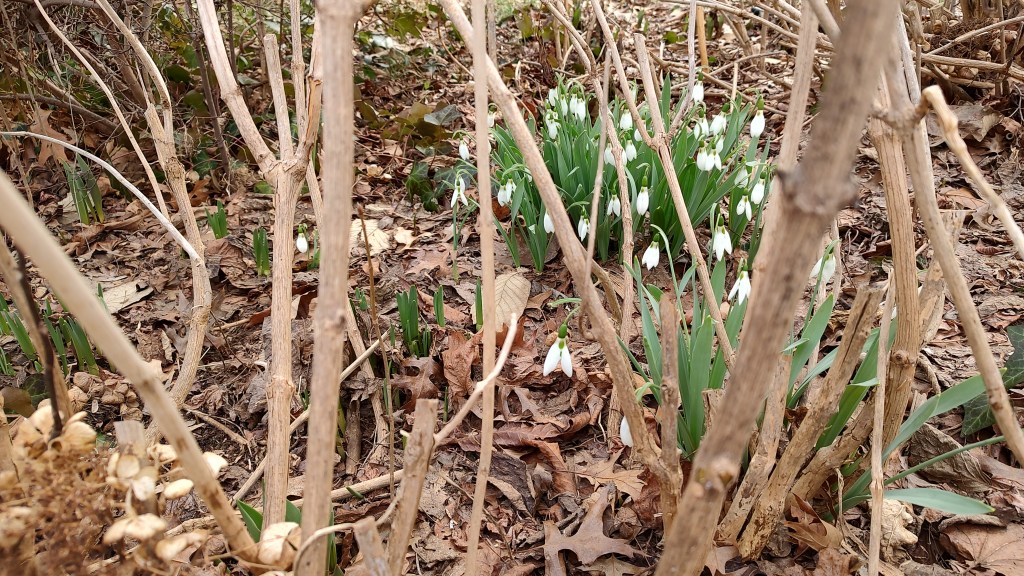
A Pound of Prevention

Everyone knows “an ounce of prevention is worth a pound of cure”. Another one of those wise sayings that seem less useful when applied to your own life .

Oh it’s good to be prepared, and to try to avoid horrible later problems by planning for them and even taking some action to avoid the worst. As a first approximation, it’s hardly bad advice. Filling the gas tank before a long trip across the desert avoids pain and expense .

But these days, there’s a little too much prevention available, and much of that only haphazardly connected to avoiding cures. If you follow every bit of internet advice on diet, for example, no good is likely to result. Much “prevention” rests on flimsy evidence. And genuine “cures” are not all that hard to come by. Pounds of (possible) prevention are hardly worth carrying around to avoid an ounce of cure .

One of the biggest problems, of course, is that advice for the future is based on past experience. In rapidly changing times, the past is hardly the best guide to what will be. Even when we think we are following tradition, the chicken soup we eat today may scarcely resemble that of our ancestors. And honestly, we live in a much different environment from them .

Common sense old proverbs have therefore become suspect. Even though they may sound comforting .

Dreamtime

Sometime in late adolescence I read about the “dreamtime” of Australian Aborigines. Back then, it was presented as an irresponsible immersion in the moment, without regard for the past nor plans for the future. And, from the standpoint of what was still a highly puritan culture, a primitive decadence, hedonistically doing nothing to become better .

Now, as an advancing senior, I find myself also in a perpetual dreamtime. Not particularly hedonistic, but pleasant enough. The past becomes foggier each day, and the future is hardly worth thinking about. But this moment, now, is as wonderful as I wish.

Of course my original perception of ” dreamtime” was wrong. Like all human activities, it was a useful adaptation to a tough environment. More survival than hedonism. And fully sane, given the conditions .

My own dreamtime has a few aspects of that, and although my conditions are more paradisical than harsh, I inhabit the land of cockaigne, where pigs run around pre-cooked with forks stuck in them. Yet each day, even more importantly what I do each moment, is ever more precious. What I did – well, what of it? What will I will do? Forget about it .

No complaints, here at the water hole .

Medical Crazy

Evolutionary nature is cruel and capricious. The only thing that matters in evolution is reproduction. There are lots of complicated ways for a species to achieve that, including various instincts and even altruisms. But an organism that achieves too great a success will overpopulate and die off. Highly successful strategies that worked for millennia can be destroyed in an instant of bad luck as happened to the dinosaurs .

Until recently, although some humans may have dreamed of “threescore and ten”, most adults died by forty, and most children did not become adults. Old women past menopause would have lost all evolutionary reason to exist were it not for the “grandmother theory” that they promoted culture and advantage to their genetically connected tribe .

These days the pampered masses have lost all sense of gratitude for the scientific miracles surrounding them. Most children do not die before becoming adults. Most adults live past forty. Many can extend prime years to eighty and beyond .

Instead it is a litany of how awful things have become. More children with problems (instead of being dead!), more adults with pain and incapacity (ditto!). Everyone thinks they should be a vibrant perfect thirty-five years old forever .

Nature always disagreed, and still does .

Quantity Lies

We may not exactly count “one, two, three, many”, but we do lose ourselves as numbers become immense. I think most of us understand 100, but 1 million is hard, and anything higher does become “many”. We can easily visualize odds at “one in a hundred”, but “one in a million” is practical infinity .

Our vast outreach of instantaneous knowledge and awareness has jumbled that picture. Odds of winning a lottery may be “one in 372 million”, but – as my wife claims – “somebody always wins”. We hear about that somebody all the time. Hey, it could be me !

With the unusual reported more than the commonplace, our perception of odds becomes strangely distorted. If chances of anything are truly one in a million, then in a country like ours 360 people (each one interviewed in a media moment) will have it happen to them. In a planet of 8 billion, 8,000 folks will. Suddenly it seems like an awful lot of people. Translated to our own surroundings the odds suddenly appear as likely as 50 or more percent .

That’s why anecdotal “evidence” in medicine, science, or society is so damaging. An anecdote seems real, a statistic kind of nebulous. We think “oh, a person just like me was affected”. Winning, losing. Then we act stupidly .

My antidote has always been “how many people whom I actually know have had this happening?” That is quite sobering, and puts odds into much better perspective .

Beauty

Like ” wrong”, beauty is one of those concepts that can never be simply defined. It depends not only on environmental and cultural factors but also on the mood of the observer. We can often agree, but almost as often argue with others and even with ourselves .

It’s fairly safe to say that even considering beauty requires a sense of security within the observer _ you can hardly appreciate the loveliness of a forest while being chased by a bear. . Whether something is beautiful or not occurs way down on the scale of evolutionary fight or flight. A great deal of the time, most of us hardly notice it at all .

We assume that – like other odd traits – there must be SOME biological reason we can respond to beauty. Perhaps it helps social solidarity. Perhaps it is a shortcut to relaxation. Certainly nothing obvious .

I have noticed that in my own life the idea of beautiful has evolved as I age. When young, it was primarily biological. When older, mostly cultural. And now, in an elder, much more simply appreciation of all that is and how it fits together. A miraculous and – yes – extremely beautiful universe .

At least when I am happy, secure, and not doing too much .

Entranced

I think throughout history most humans at one time or another have entered a trance state. Often from concentration on something, sometimes from unusual circumstances like pain or fatigue, occasionally from use of drugs or alcohol. Always when dreaming .

In a trance we tend not to be fully aware of our surroundings. The universe has narrowed down to a particular selection of mind and senses. We are hyper aware of a few things and ignore the environment. This condition may last a few minutes, a few hours, rarely longer .

I’ve always been easily entranced. When reading a good book, for example. In my working days, entering a fugue in cyberspace as I worked out problems. Now when I engage with a sketch or drawing .

There’s not much to say about being in a trance. To be honest, I most appreciate it when I return to “real life”. I suddenly realize I’ve been away. I am refreshed, relaxed, and surprised. Wonderful things!

Of course, nobody can or should inhabit dreamland forever. There is truly a big universe to appreciate out there. But as a short vacation from the mundane it is magnificent .

Binocular

Old Dutch Master still lifes make you think you can lift flowers or bugs off the painted surface. Modern photographs have the same effect. Yet in a very real way, they do not match the reality we inhabit .

Two eyes let us see – especially nearby – in parallax to be able to judge depth. For distant objects, of course, we have other references like size and haze and perspective, but they can be quite deceptive. In the real world it has been important to us primates to be able to focus in this weird binocular manner to better use our hands for handling fruit and tools .

That is a long prologue to today’s rant about cults – religious, secular, or political. Cults have beliefs that are strictly monocular. They have little depth and allow by definition for no other viewpoint. The strictest cult outlooks don’t even let one move one’s head to get a better or different view – that’s the definition of “heresy” .

Current culture has unfortunately devolved into a set of cults. Perhaps a saving grace is that complex humans can believe in more than one cult – often contradictory – at the same time .

Binocular vision and its philosophic implications is a gift from the universe we should always acknowledge gratefully .

Crude

I was raised in a fairly middling environment. Certainly not poverty nor even “salt of the Earth”, but not high end aristocratic. As I matured, I lost most ambitions of pretentiousness in my quotidian pleasures. I call it my crude peasant outlook .

For example, I enjoy a good steak. I do not go into purple prose ecstasy over exactly how wonderful it is – subtle flavors, tenderness, whatever. I find sauces and garnishes excessive. It’s just a good steak, another fine meal .

Most of the world I read about now seems to have passed me by. Pretentiousness reigns supreme. The “right things” are so much better. Handbags, salads, shoes, schools, cars, swimming pools … The internet sorts it all out for you to aid your expensive tastes .

I don’t pretend I like awful stuff. A dinner of peas and gruel is not enjoyable. Ratty clothes are terrible. But the level of relatively common, useful, and affordable stuff is quite high. And I try to appreciate it .

All in all, I find my crude peasant world a land of luxury and enchantment. I rarely envy all those others who mostly seem to scurry about hoping others will notice and envy them. That pretentiousness seems a terrible waste of our human gift of existence .

Risk/Reward

Anyone can anecdotally give good reasons for never using an automobile. High on the list is a possibility of a deadly accident, examples of which abound. And yet, in this culture just about everyone uses a car all the time. Math has little to do with it. Nor do the horrible examples of mangled bodies. “Common sense” tells us that in spite of possible danger, it is far more useful to go places in a vehicle than to stay home. Unfortunately, such “common sense” is in short supply in other areas of our lives involving risk/reward .

Actually, anyone closely involved in a fatal accident either involving themselves or someone close to them wants to blame someone. The car manufacturer, road maintenance, whatever. And they rush about telling one and all about what must be done, maybe avoid cars at all cost .

That isn’t effective with stuff people are very familiar with. True “common sense” kicks in. 

But in areas that are less well or less easily understood, anecdotes seem to rule. Medicines, laws, even right or wrong. Too esoteric to be easily understood. ” I know a man who …”, “I had a cousin who…”,” once I was …”.

All true. All irrelevant. When people try to make risk zero, as any entrepreneur can explain, reward vanishes .