Fear of Flying

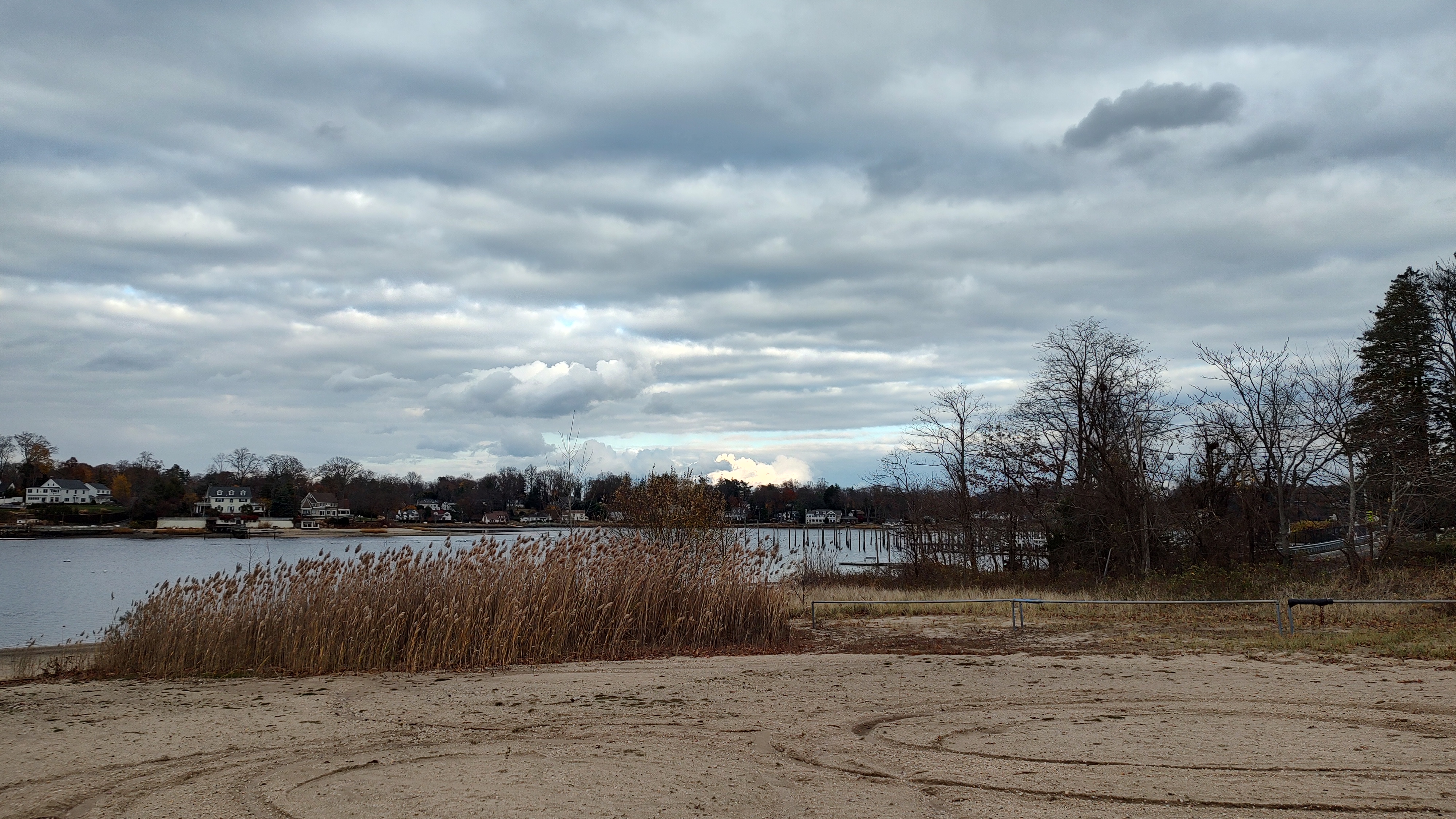
I can sort of understand people’s interest  in night drones in New Jersey. Anything new and different provokes curiosity. Most people ignore the sky all the time in their hermetically sealed lives, so looking up is in itself provocative .

What I don’t get is the fear. “What are they doing?” But what do folks think they could do? These are, after all, just the tiny toy versions (for the most part) of vehicles. “But, but, but” say the frightened. Congress demands answers .

We have a hard time evaluating risk. Any bicycle, yard crew, scooter, delivery van, or neighbor’s car could easily deliver a “suitcase atomic bomb” to my neighborhood. I am very likely to be accidentally injured in thousands of ways. Any drunk driver or armed angry 15-year-old could end my life at any moment. Google has mapped every house, GPS shows every way to get there. What is a poor drone to do ?

As far as flying devices – well I may be atypical in that I’m under a flight path and huge jets fly over our house all the time. Helicopters rush to the hospital, help police, ferry the wealthy to resorts or New York City. Small aircraft buzz all over, presumably for pleasure. All of them are quite dangerous – the Avianca disaster happened a few miles away .

But as often in these manic times, novelty is far more interesting than logic. A fad driven culture, leaving little time and energy for more serious concerns .
Proactive

Broad-minded people understand that others vary considerably, and evaluate each individual on unique perceptions. Narrow-minded people trust only their own tribal kin. Paranoids think everyone is out to harm them. But the most frustrating people are those who fanatically believe everyone else is trying to do to them what they would do to the others if they could, and who believe the only safety is in “doing unto them” first, no matter how stupid, evil, or harmful the act (even to those doing it )

“Proactive” folks fall down rabbit holes easily. Assuming everyone else has weapons, they must buy their own guns. Assuming everyone else would do horrible things if they had the chance, they want to act first to control absolutely the laws and police. They talk themselves into the most illogical and self-destructive illusions.

Worst of all, they always project that “others” have only the evil traits they themselves feel. They think they know what they themselves would do if only they had the power to do so. Lie, steal, kill – whatever – “we have to stop them” and no matter how badly we act, we are only doing what they would do to us if they had the chance .

And yet – in day-to-day “real life” social context, none of this is generally true. Individuals vary a lot, but mostly get along just fine. The projection universe is an elusive virtual fiction gone bad .

Cosmetic Politics

It’s a strange time of extremely divided political views. But not a division along any of the usual lines. Not rich and poor, nor educated and ignorant, nor young and old, not even exactly urban and rural. Yet the demarcation is so bitterly set that rational discussion is almost impossible .

On the one side are all the folks – generally older, rural, or underemployed men – who want the world to be like they remember or think the world was like in 1950. They imagine a world of America as king, lots of money and leisure, only high class European immigrants (and only a few of those), no government taxes or regulation – a sugar-coated vision of life as satirized in Back to the Future.

On the other hand are those who remember or know what that era really was, with racial problems, pollution, and atomic threats among lots of other issues. They don’t quite know what to do next, but trying to revive that 80-year-old corpse will not work .

But both sides are actually too well off to risk much or to take up arms. so it’s fashions and cosmetics for all. Flags of different colors. Social slogans that fit on placards. Hairstyles and specific attire. And – new to the era – only select circles of internet “friends” egging each other on in a fantasy virtual environment .

I tend to side against fake nostalgia, but I admit both sides have gotten a little crazy. So we talk, when we talk, about weather and health .

“It’s Simple”

“It’s Simple”

Nouns really mean something. Water, rocks, people – the descriptive power is infinite. We also use them to describe intangibles – “fact”, “right”. And then we use them in declarative exclamations “that’s the truth”, “we did the right thing.” And, of course, the ongoing political and meme darling “it’s simple .”

But “it” rarely is. “An elephant exists” is simple enough.  But calling an elephant “simple” would be insane. Defining an elephant one can listen to the various blind men saying “it’s simply like a tree”, “it’s simply like a wall” based on the relative position of the blind man. Even when we grasp the whole and understand an elephant is simply not a mouse, we have no idea of the complexity of an elephant at all levels.

The world is infinitely complex, fractally intertwined, especially when time and conditional decisions are involved. Something can be contradictory, both true and untrue, irrelevant or useful, dependent on circumstances. Only a few actions are irreversibly simple: “jump off the cliff” might be one. 

When any leader tells you something “is simple”, beware. It’s one way to end all arguments, but it can “simply” be wrong, untrue, or irrelevant. And certainly ignoring all complexity and conditional options: “it’s simple – we must cross the flooded river” ignores that there are many ways to cross a river, and at various times a river might be lower, and we might really not need to cross the river at all. 

But leaders exist to provoke actions. None as simple as they like to pretend .

“Good Things”

My wife is always suggesting that we should “partake of the good things in life.” The implication, of course, is that we do not do so often enough, and also that we may be unable to do so in the future. It’s not really unexpected because we do lead a fairly comfortable, sedentary existence. 

I find “partake” a fairly cute little word. It conjures images of aristocratic ballrooms or excursions in exotic lands. I never think of folks as “partaking” of a pizza or hamburger. In fact, I rarely hear the word in everyday conversation .

The problem – at least the first problem – is the exact definition of “good things”. I like a walk in the park. She likes shopping. But I guess one cannot “partake” of such commonplace pleasures. No, usually she means something we rarely if ever do. And likely will not. It can generate an intimation that we are somehow being left out of all the fine things everyone else is doing .

A larger problem is that I cannot think of many things that I would rather do than a nice stroll in nature. I am perhaps too much a creature of habit, but that is because over the years I have trained my habits to correspond to my pleasures. Most of the other stuff is, actually, pretty boring .

But what two people want differs. If we ever get around to “partaking” of something she wants, I’m sure I’ll survive .

Supermarket

I am enchanted by the miracle of supermarkets. Others complain of high prices, spot shortages. They dream of olden days when “heritage vegetables” had more taste, or “Paleolithic diets” fortified our ancestors, or …

Until recently, most people ate spare, monotonous diets and famine was always lurking right around the corner. I never envy those ancient times .

Four unrelated inventions have been necessary, along with all the other ignored benefits of modern times. Rapid reliable bulk transportation, refrigeration, manufacture of fertilizer from air, mechanized grain farming. Without all these, food would be limited, expensive, and supermarkets could not exist .

Some pine for old street markets and the local baker and butcher. Those indeed have their charms. And yet _ well, at almost any time I can go to a supermarket, shop for all kinds of fresh or packaged or “ready to eat” food, and be out very quickly with all I could possibly want at a price which in the grand scheme of modern life is almost negligible .

I try to see it as a medieval peasant would. I love to be astonished at the possibilities and displays. It is almost a vision of the garden of Eden or heaven itself. But I admit that like a lot of folks I often take it all too much for granted and even complain when I should be rejoicing .

Bitter Winners

“Nobody likes a sore loser.” To me, worse by far, is a “bitter winner.” They seem to be in full bloom these days, in politics, corporate life, and even among my acquaintances .

These are the folks who by any normal standards have it all. Charmed lives, power, prestige, and especially great wealth. They think they have gained it by simple hard work and smart moves. They think everyone else is a complete loser. They don’t understand why all those losers don’t worship them (although there are many who do.) And, like Napoleon with Russia, they obsess about doing something so outrageously stupendous that they will “finally” be recognized for how great they are .

Their defining attitude seems to be whining. They have been “cheated of their rightful due.” They are not “appreciated” enough. The peons too often ignore their “invaluable” advice and dispute their “absolutely perfect” opinions. They remain bitter that they have achieved what they wanted, but have never found what they needed .

Bitter winners have existed throughout history, but our affluent world seems to have thrown up a bumper crop. And the weeds surrounding them are filled with lesser folk who also believe that they have been cheated by someone out of their rightful place .

Sad and dangerous specimens of humanity .