All paintings at: https://sites.google.com/view/cabinetofvanities
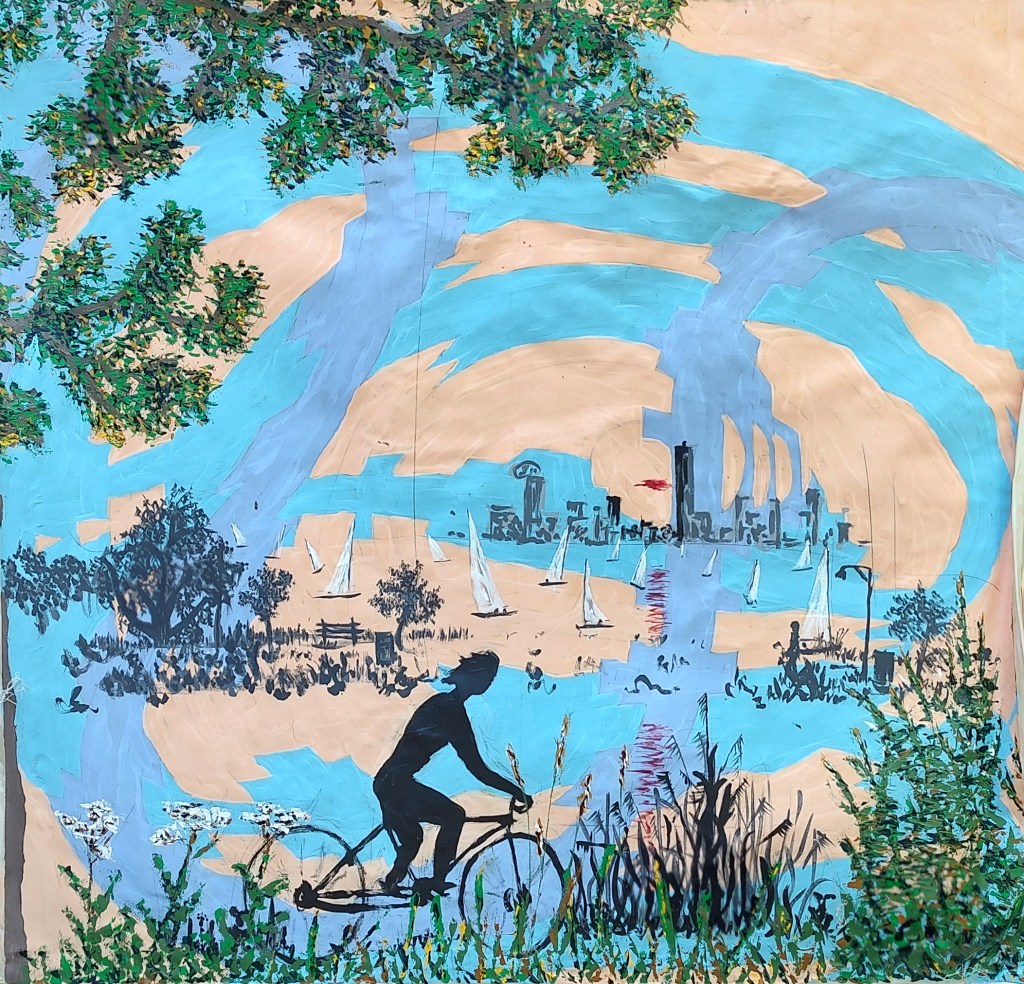
Acrylic on Canvas ,1975 40×40
Bicycling on Boston esplanade
All paintings at: https://sites.google.com/view/cabinetofvanities
Acrylic on Canvas ,1975 40×40
Bicycling on Boston esplanade
The WSJ and other media are filled with stories and predictions about the “AI revolution”. Some are utopian, some dystopian, some just weird and crazy. But all seem to have one glaring flaw .
That is the fact that AI – unlike life – is quite fragile. All the scenarios I have read assume that somehow things go on as now – lots of power, a connected grid, open communication, government power, social order, no electronic catastrophe (EMP blast, malware, whatever).
None of that is guaranteed, nor even likely .
I sense it as a lot like the advent of the internal combustion engine. Most dreamers saw it as a replacement for a horse. Some maybe understood it had advantages over steam. But nobody foresaw the social dynamics that ensued. Few even understood what it might do to transportation itself – for example to the road infrastructure .
Right now AI is free and exciting. But it can be easily wrecked. I’m not saying it will be, I’m not pretending I know what’s coming .
But I am sure it will be a lot different than what is currently predicted by both admirers and those who worry .
This is an age of hyperbole. Everything is bigger, flashier, “more unique”. And there is a quick slide from what used to be gradients to absolutes .
This is easily demonstrated in the current description of “bad” things. We can all pretty much agree that “bad” means something we do not approve of (although what that may be might vary considerably). But there is a tendency for ‘“bad” to slip from “disapproval” to “immoral” to “evil” .
You can easily try it yourself. We may agree that illegal drug use is bad. Yet depending on circumstance, it rapidly becomes immoral, then evil. Then we must expend our energy to vanquish it. We lose our center in an overbalance about something that may not be very important in the larger scheme of things _ trivial stuff like sex, rock and roll, clothing.
The world is complicated but except in special (personally defined) instances we prefer to understand it in binary black and white. Any other approach is too slow and confusing. I realize we are wired for this biologically. We are, after all, often confronted by clearly marked divisions – awake or asleep, fight or flight, be or not be.
We should always retain the flexibility to redefine, and to be aware that such clear judgments are in fact a continuum. Shades of gray. More than that, on a complicated matrix of interest of intersecting evaluations .
Everyone knows that. But time is short, life is frantic, and slogans are easy .
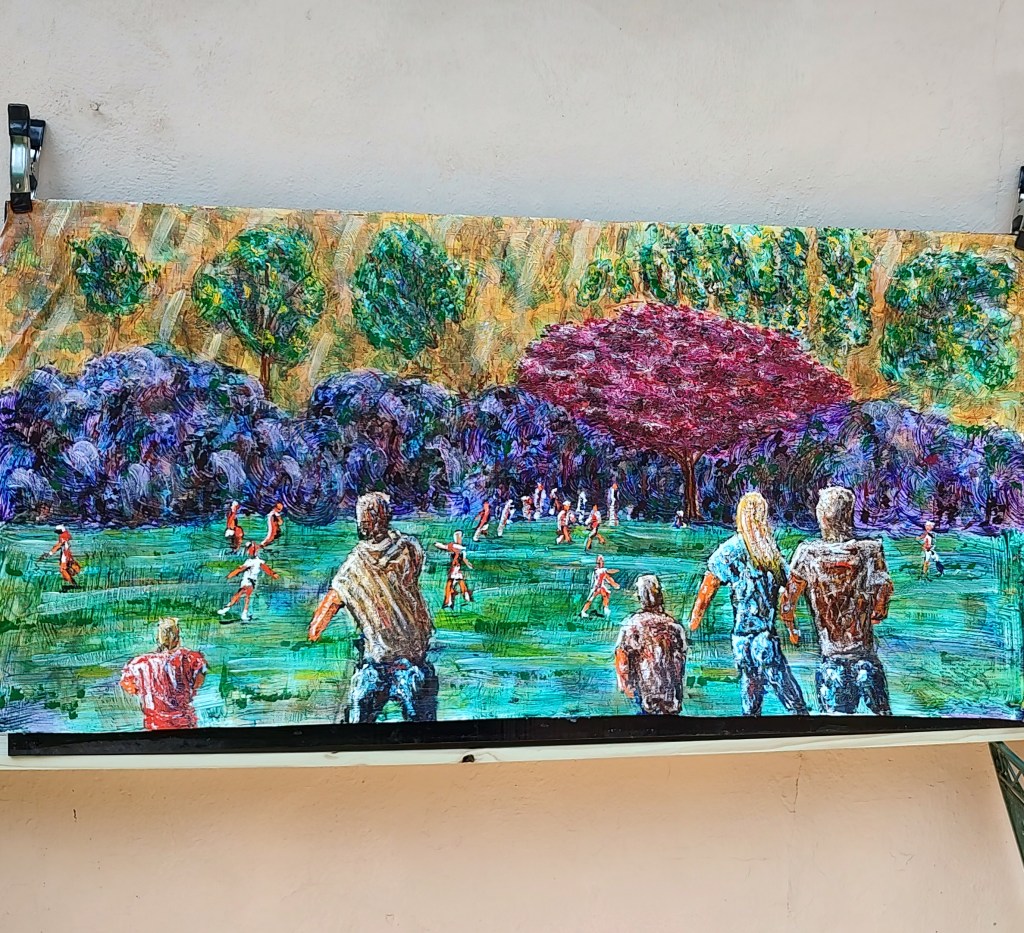
All paintings at: https://sites.google.com/view/cabinetofvanities
Acrylic on Canvas ,1999 36×64
Canopy of trees / marches into autumn winds / we shall never be so young again / I am too old to play / almost too cynical to cheer / never unable to enjoy / these passions, hopes, and dreams
Kings justified themselves by “divine right”. Dictators claim “the will of the people”. In an era that worships wealth, billionaires claim “merit,” They are, simply, the best and brightest .
There is no doubt that many wealthy people work quite hard. As did many kings and dictators. As does, really almost everybody. And it is fair to believe that some work is good for society, and some irrelevant. Most of us want to believe that our tribe is best, and those who help our tribe should be respected .
Modern economics has become a high risk game requiring great access to capital and power. Like any gamble, it does require knowledge and perseverance. But on the increasingly overweight fringes of the bell curve of wealth distribution, it appears that luck rains supreme .
I respect brilliant people who toil for social good. I am less excited by “capitalists” who shoot dice in often rigged casinos. I do not think a “founder” is a god-like “maker” who always benefits society. I think he/she is often an extremely fortunate son of a bitch who began with a lot of advantages, thought only about winning money, and ignored most of their common humanity. Very like bad kings and evil dictators .
I don’t worry too much about wealth inequality. I do worry about idiots (kings, dictators, billionaires) who believe they are right about everything and should be worshiped by the rest of us.
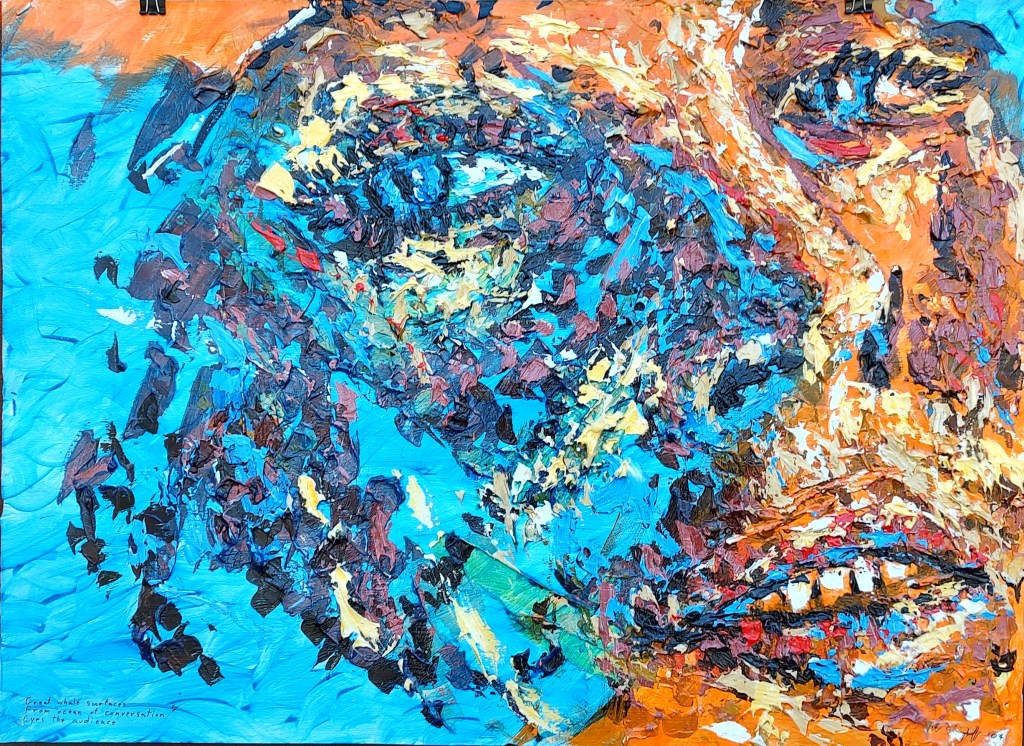
All paintings at: https://sites.google.com/view/cabinetofvanities
Acrylic on Watercolor Paper ,2004 22×30
Great whale surfaces / from ocean of conversation / eyes the audience
Traditionally, “lame duck” has referred to a politician who for one reason or another cannot be reelected, but still remains in nominal power for the remainder of his term. It is a milder form of “dead man walking” .
Typically, it has been felt such people have lost most of their influence. Who will listen to them? And in this scenario (feared by everyone who grows old), the future seems less and less important, no need to care about consequences. So we have senile seniors living in a home filled with cats, for example. Or driving an automobile when addled on medication .
In politics, “lame duck” always implied impotence. But that was before the geriatrics took over. In an age of senile senior lame ducks, there is an increasing tendency for the official to “go rogue” and do anything, heedless of consequences, reputation, or advice .
This has,unfortunately, always been the pattern when emperors, dictators, or whatever have aged too much in office. But the US, until recently, was spared the antics of such as Tiberius, Stalin, or Mao. No longer .
It’s another effect of concentration of wealth. Wealth is power, power corrupts, and at some point a billionaire or trillionaire feels omnipotent, clever, and invincible and nobody can stop the madness .
An interesting phenomenon to observe, if one can stay out of the way .
“Broken window policing” is well known. Its logic is that if you tightly punish miniscule crimes, big crimes will decrease dramatically. That approach has been seen to work in large cities, at least for a while .
A similar approach is now being taken in regard to those pesky “rights” government often finds so annoying. Persecute the tiniest infringements of nebulous laws – then resistance against large intrusions on public and private rights will be much less. Alas, that seems to be working as well .
The final meeting place of this is naturally the famous “what is not mandatory is forbidden”. Law and order folks are fine with this as long as the law is on their side. After all, they are the “decent” people .
A problem with “broken widow policing” is that it raises the bar of criminality, as law enforcement knows. A suspect internally certain of being killed will shoot it out rather than ever surrender. We already see most horrific crimes as expansive suicides .
And there is always the age-old human adjustment “might as well be hung for a sheep as a lamb”. If I’m going to be harassed for saying something “bad”, I might as well go into all out rebellion mode and do something drastic .
Society is a complex brew of ever-changing adjustments and one shot simple solutions rarely work for long.
All paintings at: https://sites.google.com/view/cabinetofvanities
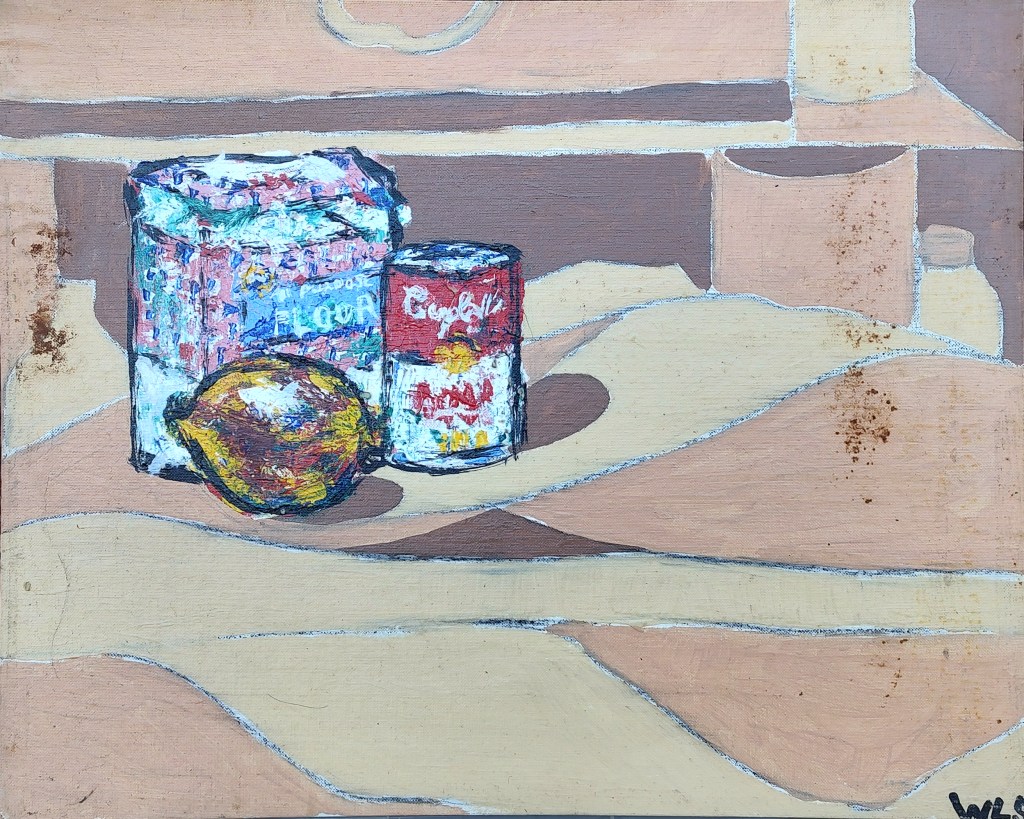
Acrylic on Canvas ,1970 16×20
Still life
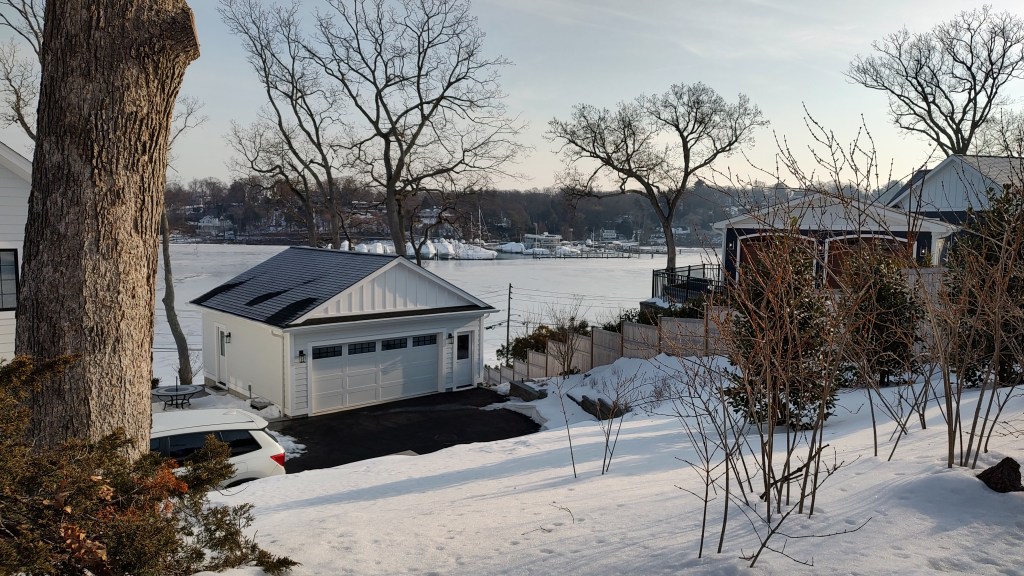
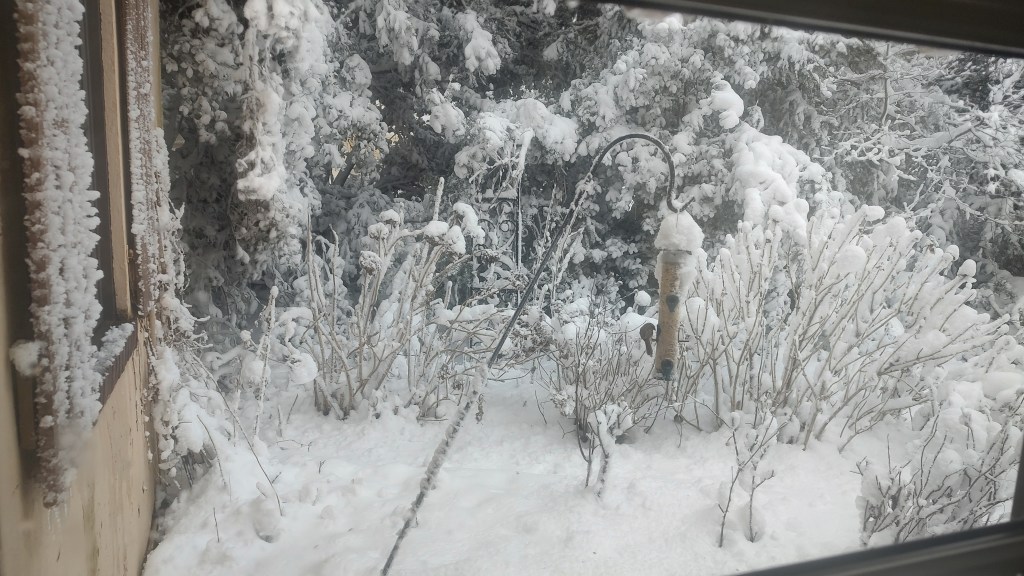
I claim to love living in the Northeast because of the seasons, but the more likely truth is because I grew up here. I do like natural markers of time, such as a noticeable solstice to indicate when winter begins, and the cold weather affecting my usual walks and yard work .
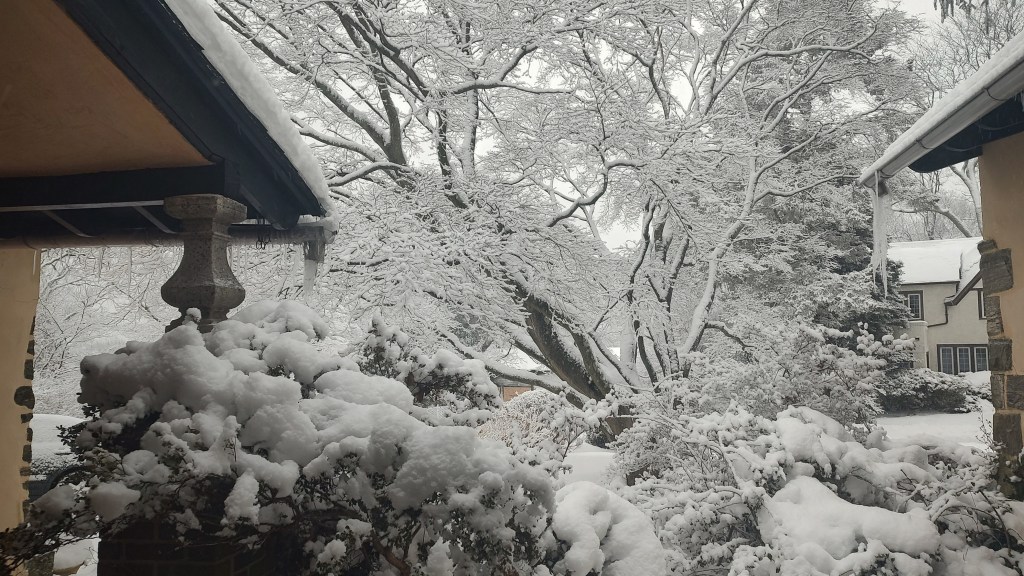
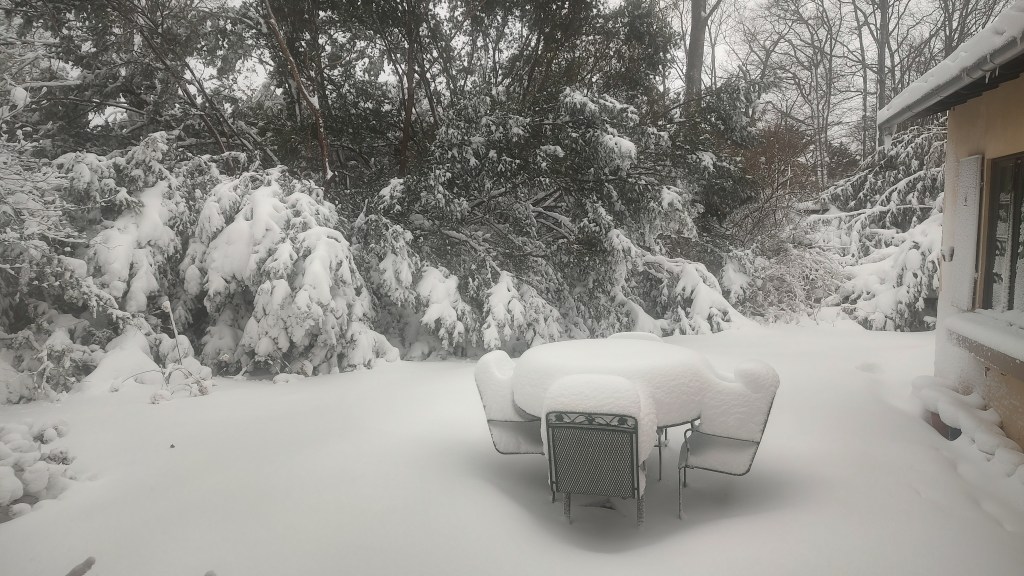
This year has been snowier and much colder than recently. Flu season is immense, and has affected me in spite of vaccination. I sit housebound, almost happily, and rejoice that I live in an era of abundant energy and goods .
I usually enter December wrapping nostalgia around the previous 11 months. At my age if I do not take care the entire past blends into a golden glow, and I quickly forget recent highlights. I accomplish my memory scrapbook with internet cleanups, visits, all the holiday chores and rituals .
And then – January. Looking forward, and during winter but spring is in view. New season tasks popping up already – taxes, travel plans, medical appointments. And a few items – not quite strong nor large enough to be considered resolutions – having to do with lifestyle, hobby, and happiness .
At the moment, however, I look out at snow, cough frequently, and too often say to myself “maybe tomorrow”. I guess concentrating on enjoying each changeable moment is also one of the benefits of very noticeable seasons .
 HuntingtonHarborThoughts