Accelerating Differentials

Monday

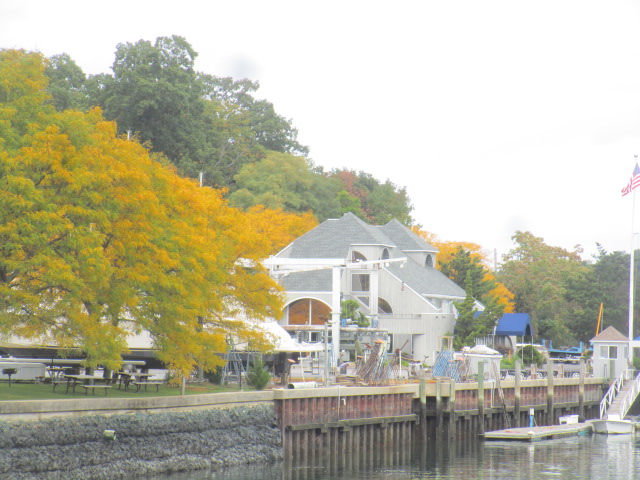
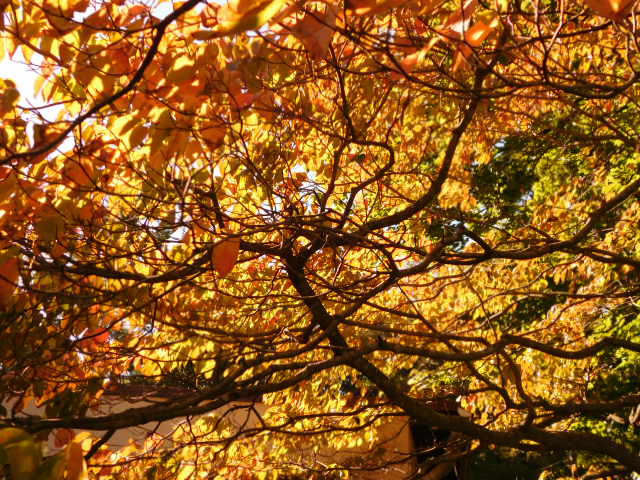
  • Shortening days minute by minute are sneaky, hardly noticed except in quantum weekly leaps of darkness.  Chill wind at dawn, on the other hand, is a brisk slap on the face.  Fading flowers gently slide into another phase, still replaced by an occasional rose bloom or burst of aster blossoms.  Yet suddenly an isolated  tree will flame into orange or yellow, crisp into brown, present stark branches after a storm, all in the space of a few days.  Only a matter of uncertain, but limited, time until heavy dew on the leaping grass is replaced by frost.
  • Cold used to represent the most certain marker of seasonal change.  Even today, I hear a few people vow to not give in and turn the heat on too early.  However, with the din and clatter of noise in the suburbs approaching city levels, not to mention exhaust fumes, most windows are sealed year round, thermostats set to “climate control” and isolation reigns indoors.  Calm, serene, and above all the same temperature.  Our commercial culture leads the charge to what comes next, frantically selling warm clothes and decorations for holidays that are less celebrated than endured.  I admit I wish for a few more warm afternoons, although “warm” is also being redefined.   

Tuesday
Wind rush hushes all
Quiet I sit, shiver, say,
Mantra:
It’s not thatbad _

Yet

Wednesday

  • Nights suddenly in the forties.  Leaves more affected by cold than by short days, will soon transform landscapes.  Fauna, on the other hand, are keenly aware of the sun’s retreat.  Birds have been fattening up or flocking southward, squirrels are burying nuts, a black wooly-bear caterpillar was trudging across the shed floor searching a good place to be transformed, adolescent snappers have migrated into deeper seas.
  • Only I, with unique human perspective, regard this as moments in time.  Only I, with my amazing consciousness, can be aware that falling nuts portend falling snow.   Only I can enjoy the vistas of autumn while dreading the depth of winter and fondly remembering the soothing ambience of summer.  We live beyond today, tendrils towards past and future, and fail to understand how strange and miraculous such magic is.  Meanwhile, I pay obedience to the moment dressed in sweat shirt and vest, not yet requiring hat and gloves, which will be necessary (I foresee) soon enough.   

Thursday

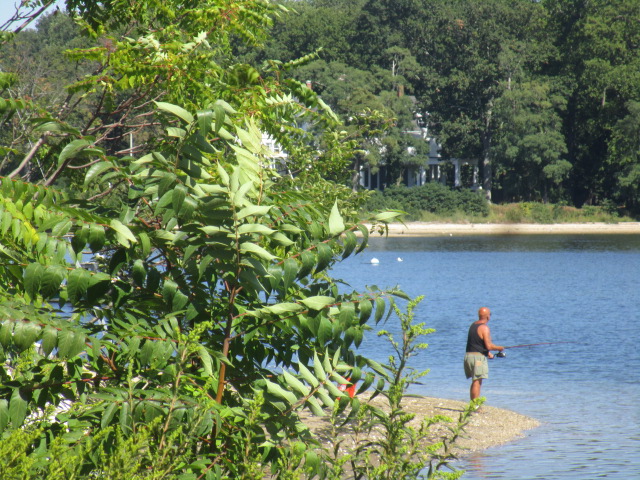
“Whew!” I exclaim, as a nearly-frosty gust skims off the end of the harbor.
“You call this cold?” laughs Larry.  “You should come with us this weekend, right, Jan?”
“And you are going where?”
“We’re off on a bus foliage tour of Vermont,” Jan explains.  “Almost a week of mountains covered with bright colored leaves and warm fires on cold nights at various ski resorts.”
“Enjoy.” I comment.  “I’ve been in New England when the leaves turn, it’s very beautiful.”
“Recently?” asks Larry, skeptically.
“Well, no, a long time ago.”
“You and your wife should do it now,” notes Jan.
“Maybe.  I don’t know.  I remember well enough.  And there are lots of places I go to around here to get the same effects.”
“Like where?”
“Oh, Sagamore Hill, sugar maples on Goose Hill Road, the pond behind St. John’s church, 25A anytime of this month glows all the way.  But I’ve also developed other appreciations.”
“Like what?” Jan is curious.
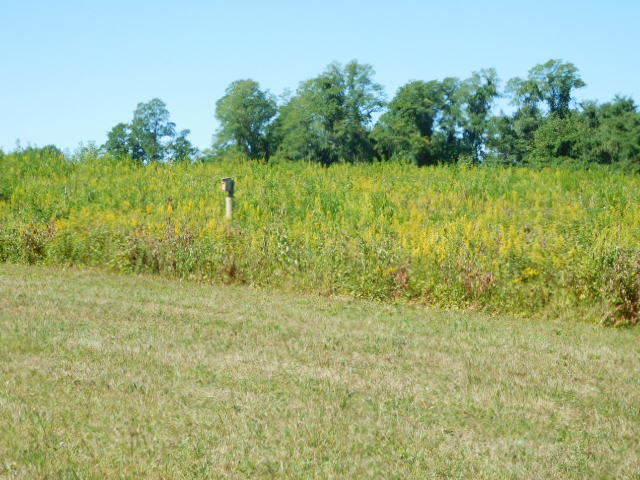
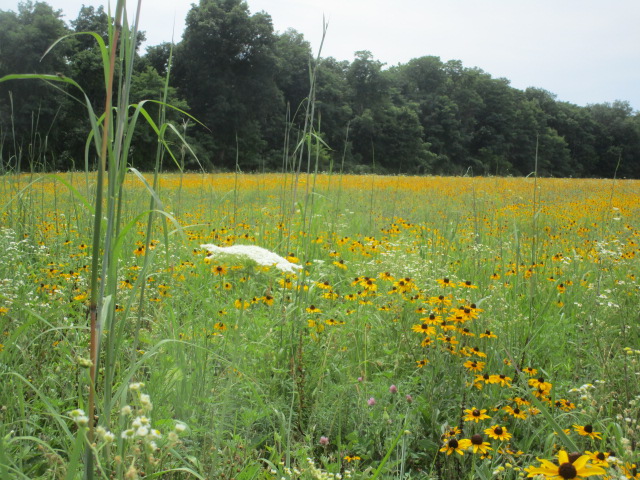
“At upland farms yesterday, for example, I was really excited by the thousand browns and yellows of the weeds in the fields, the metallic crimson sumac shrubs, white asters, purple Russian knotweed and the fluffy stuff spilling out of dried milkweed pods.  Lots of fantastic things if you look slowly and closely.”
“A poet,” exclaims Jan.
“A lazy poet,” corrects Larry.  “He just doesn’t want to bother to go anywhere.”

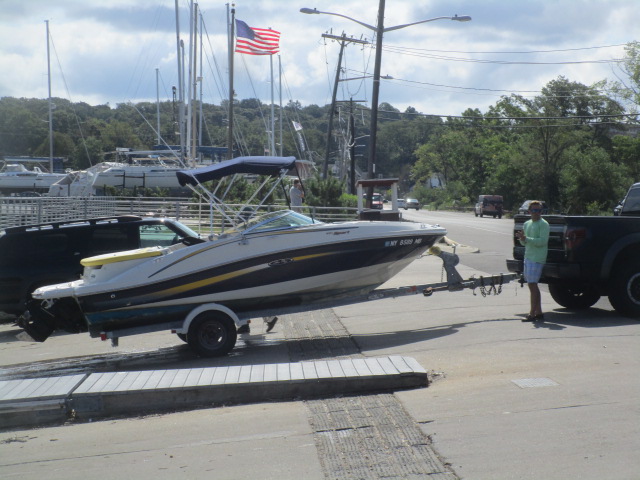
“Some truth in that,” I admit.  “Well have a nice time,” I wave as a boat nudges into q waiting trailer to haul it away to storage somewhere amidst weeds just like those I had been describing.

Friday
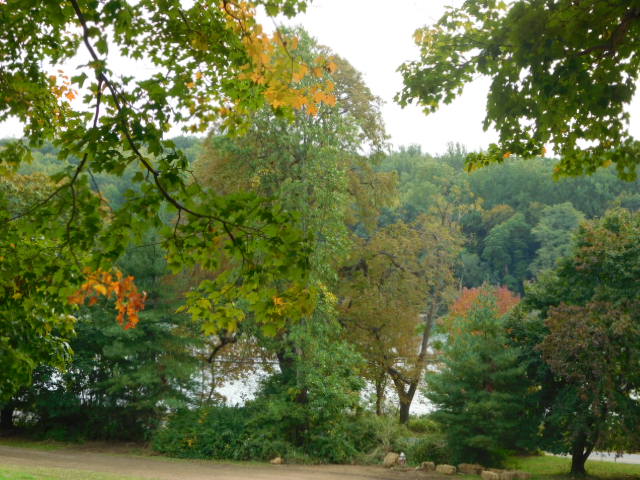
  • Each day delivers astonishment.  A cluster of leaves on a twig suddenly gleams with translucent colors like stained glass, a small patch on a hillside blazes red, crowns of trees flare outlines of gold.  Blink and everything is different yet again.  An impenetrable green sheath obscuring the sky may, after a night of fierce wind, be transformed into naked branches dancing against clouds.  
  • If we were not so grounded in hard science, we would call it all magical, and invoke sprites and dryads as explanation, and I am still not quite sure that would be wrong.  Bits of the landscape are following their own isolated patterns and rhythms, out of step with everything else.  Of course, all those bits always do follow their own path, we are just too ignorant to observe most of the time.  In October, I am happy to let astonishment override my mundane knowledge.

Saturday

  • For centuries, it has been fashionable to regard Nature as a grand artist.  Each sunset is a masterpiece, each April a bubbling extravaganza, each autumn a symphony of coordinated and contrasting hues.  We imagine harmonies and counterpoints, masses of one color offsetting another, a surprise around each bend in the trail, each change of light from passing clouds. 
  • I guess that’s kind of true.  Kind of wrong.  Depends if you regard us as nature.
  • After all, it is unlikely that a worm or a rabbit notices beautiful foliage on a hillside.  The incredible eyesight of hawks and eagles is focused on little scurrying brown objects below.  Ultraviolet vision among insects helps identify the right kind of blossoms.  But people are the only ones who see what we see, probably the only ones who project imagination into patterns, and certainly the only ones who talk about it, even to themselves.
  • You and I are the grand artist, and we each bring our own mastery or lack of it to all that is spread before us.  Some may know each species, others can’t tell an oak from a maple.  Some are so wrapped in their cocoons of electronic necessity that they would hardly notice if the world became shades of black.  If you are lucky, you are one of the people who can appreciate our feasts, visual and otherwise.
  • This is a good time of year to drop everything for a few moments, kick ourselves out of our couches and chairs, and reset our souls with immersion in plain old nature.  Artist or not, there is a lot to see, and even more to weave together in our own masterpieces inside our own skulls.

Sunday
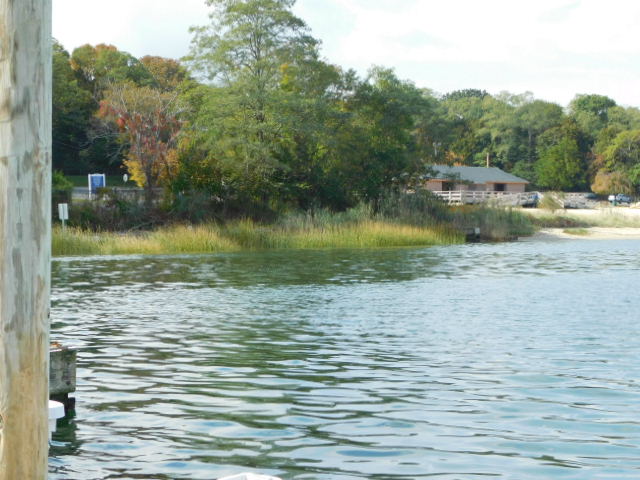
  • Cool air, crisp sun everything, shiny as if encased in plastic.  Crickets sound frantically, hordes of them hiding on the side of the shed door, a few sneaking into the house.  Hardly worth hunting them down, everything is on the way out now.  Grass needs mowing, but stays wet until dusk, a good enough excuse to wait for those not paid for the task.  Each night a reminder that fine days (for a given definition of fine) are going to become rare.
  • Logic clamors it is time to put away the yard stuff, the hoses, the garden tools, the pots, the various little knick-knacks which enliven the patio.  Clean the garage so the car can be put away if necessary.  Clean the shed so the barbecue and certain pots escape coming snow.  Lazy intuition says the heck with logic, just sit back and relax and worry about doing nasty tasks when the days become nasty.  I’ve tried that path once in a while, and it doesn’t work well.  Better a little effort on a beautiful bright afternoon, than cursing and wet on a grey drizzling driving north wind. 
Almost Spoiled

Monday

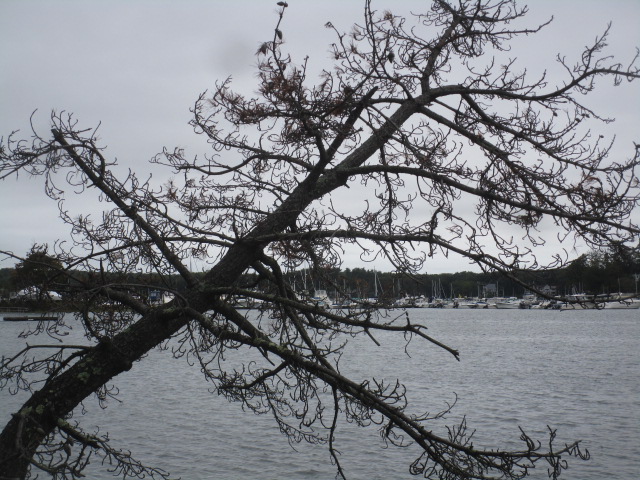
  • Connotations of “spoiled” are generally identical, although exact definitions vary.  A good picnic can be spoiled by a sudden rainstorm or visitation of mosquitoes.  A person can be spoiled with access to too many good things and a belief that the world always owes more.  An expectation (watching a movie, reading a book) can be spoiled by someone giving away the ending.  And food, of course, is spoiled when it rots into uselessness.  In so many ways, this place and time seems tinged with being spoiled right now.
  • I know, this is supposed to be a nature-related musing.  And I suppose I can make a case that summer happiness has now been spoiled by cool damp weather.  Or that perfect flower gardens are now spoiled by spotty leaves, drying husks, and decaying blooms.  But the second part of my meandering thoughts each day does focus on me, and I sometimes am forced to realize how truly spoiled I really am and have been.

Tuesday

Spoiler alert _ you’re gonna die
Spoiler alert _ we’re gonna fry
Might be a billion years or ten
But everything just has to end
Dust to dust and ash to ash
Nothing here is built to last
Some names are known some thousands years
Some simply vanish without tears
Sad to say, but this is so
We live a while, and then we go
If I can, I’ll make mine seem

A long, exciting, brilliant dream

Wednesday

  • People miss the sun only when there have been clouds for days, miss the rain only when nothing falls for weeks.  Human nature often takes the good in life for granted and concentrates on problems.  After all, that is how the struggle to survive has to work _ no use wasting time and energy on what is not threatening.  Fish only notice water when it is not available. 
  • Our capacities in the last century have grown boundless.  Many of us are well supplied and well fed by a global supply chain that depends on a basically peaceful world where commerce is more profitable than war.  I never cease to be thankful for being born in my time, place, and situation.  We are certainly right to worry about ongoing problems and horrors _ life is far from perfect for anyone, wretched for some.  But if the core of what we now take for granted every day is ever shattered, the misery and destruction that will follow will certainly make these times, in retrospect, seem the most idyllic golden age that ever existed on this planet.

Thursday

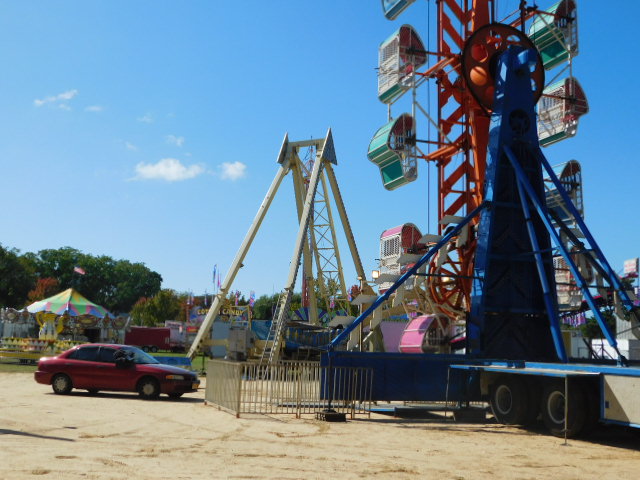
Mike is staring up at some of the carnival equipment parked on the Hecksher ballfield.  Trucks have left huge mysterious structures everywhere, waiting to be unfolded, unpacked, and plugged in.  Columbus Day is always marked by the Huntington Fall Festival.
“Too bad it’s going to rain all weekend,” he notes.
“Can’t tell for sure yet,” I respond.  “Hurricane predictions are always tricky.  Might be nice both days.”
“Might be a monsoon,” he answers.
“Well, any outdoor festival takes a chance …”
“Unless it’s in the desert …”
“But things often turn out better than we expect.  I think we worry too much.  If they just canceled things every time someone thought there might be a problem, we’d sit around doing nothing at all.”
“And here I thought that’s what you do anyway!” he exclaims.
“I’m taking my walk.  Carnivals hardly excite me any more.  At this point in life, I have to be careful about how much junk food and treats I eat.  I remember when I could easily down a sausage and cheese sub on garlic bread without heartburn.”
“I suppose you avoid the rides as well,” he muses.
“Yeah,” I laugh.  “Not even grandchildren can get me on the graviton or anything else.  I get enough thrills on the LIE.”
“Or getting out of bed, some mornings.”
“But life goes on.  Look _ here comes the sun now.”  A few leaves have turned, so there are bright orange and yellow sparkles here and there near the tips of the crowns.
“Betcha a nickel it ends in gales and downpours.”
“No bets.  I need every nickel, and anyway I’ve learned at least a few things in life.  One of the main ones is to never count on weather predictions.  Or my own intuitions.”

The crews begin to unpack, and we watch operations with a growing crowd of the curious and bored.

Friday

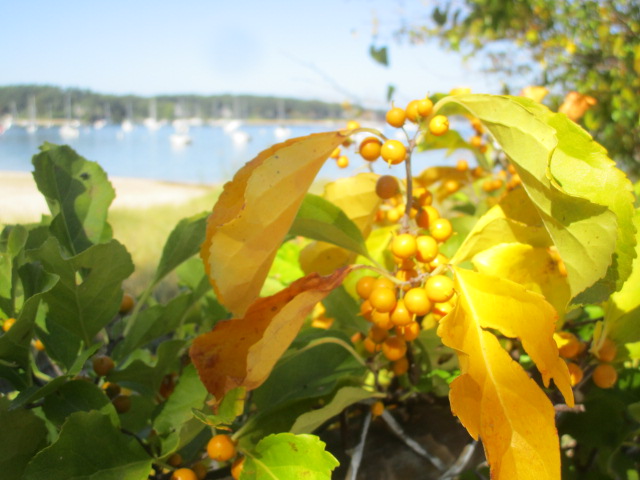
  • Nice warm sunny days are precious now.  People who a few weeks ago were slightly bored with summer have discovered that lately the few hours of free time they have available are often cold, wet, or dark.  It doesn’t take a woodsman to notice creeping signs of advancing season.  Leaves tumble in each light breeze, poison ivy blazes scarlet patches on trees, autumn fruits like crabapples are glossy and complete.
  • The nicest thing about being comfortably retired is the sense that all time is my own.  I need not rush about like frantic younger generations.  I need not worry about what the future holds _ I know damn well what it holds.  That allows a sense of distance from the world providing perspectives I could never before achieve.  No longer a mystery that serene sages are always pictured as old and sitting still.  Often in autumn.

Saturday

  • Most fortunate people in any era probably believe _ with reason _ that they have been lucky to live how and when they did.  Certainly I appreciate how spoiled I have been.  This is not to minimize the hardships and horrors faced by many others.  Nor would I claim that I am particularly normal _ anymore than anyone else I meet is normal.
  • Baby boomers in America have passed through interesting times.  Predictions of Communist takeovers, global nuclear Armageddon, universal mass starvation, deadly ubiquitous pollution, rampaging plagues, and various other horrid fears have not quite come to pass.  On the other hand, glorious hallucinations of free love, peace, and prosperity have vanished into the same clouds as flying cars.
  • Nevertheless, it has been a time to enjoy.  Technology has been breathtaking, globalization has made us aware of corners of the world as never before.  Civilization faces tremendous challenges in climate, extinctions, and social stability, but all of these are just beginning.  In the meantime, there has been food on the table, constant entertainment, and new wonders every week.
  • Usually, I avoid political comments, which flare and die with each passing hour.  But I must note today that some people, in the same culture of which I speak, have used their lives to become ever more wretched and ugly.  It is easy to admire people who have overcome adversity to become shining examples of wisdom and strength.  It is normal to accept people who have used their natural gifts, talents, and fortune to survive and lead some measure of happy social lives.  It is possible to forgive people facing great adversity who have been broken by the weight of their burdens.  But it is impossible to admire or accept anyone _ like Donald Trump _ who has used supernatural fortune, immense inherited wealth, and superior leadership talents to sculpt his being into incarnate evil and profound destructive demagoguery.
  • There are those who are spoiled by too much, or who do not understand how much has been offered and delivered.  They should be pitied their ignorance.  The worst spoilage emanates from those who _ like the proverbial bad apple _ manage to ruin an entire bountiful harvest with their deadly oozing blight.

Sunday

  • Appearances deceive.  To an untrained or uncaring eye, nothing has changed.  Tree canopy remains lush and green.  Breezes are mild and gentle.  Vigorous weedy plants crowd each path and roadway.  Yet, in a month, all will seem to have been struck by death and ruin, brown and desolate.  Like those pictures of state-mandated patriotic rallies in places similar to North Korea, where vacuously happy elite multitudes cheer the shiny social surface, although deeper investigation reveals rot and terror bubbling treacherously underneath.
  • We have evolved to expect tomorrow to closely resemble today.  A period of light, a later dimming, hours of dark while we sleep.  In spite of occasional hopes and fears, we deeply believe that if we have been healthy and well fed on Tuesday, our only care on Wednesday will be to choose what’s for dinner.  Those of us who realize how fragile this illusion of stability really is _ we are only one nuclear button away from global destruction, only one distracted driver removed from personal tragedy _ pause as often as we can to give thanks for what is.  Even that, I think, is not enough.

Oasis

Monday

  • Day follows night, temperatures fall lower, each morning the world wakes once more in miraculous beauty.  Such was true even as plutocratic aristocrats ripped apart the Roman Republic, or black plague swept over Europe, or heads rolled in La Place Du Concorde, or thousands perished under fall of bombs, or millions died of starvation.  Grim global news seems to indicate the Earth is heading for the third and final collapse of civilization and the ultimate war which will wipe everything except single-celled organisms from this planet.  There will still be beauty, but none to notice.
  • What can I or anyone do?  Hope and pray and enjoy the hours that remain?  I foster no illusions that I can make a difference among the mob or the fanatics.  Being an early martyr is hardly more useful to the cosmos than being a later victim.  And so I crouch here, in my lovely local oasis.  I cultivate my garden, cherish each moment, speak out once in a while, and fatalistically accept that the universe is a strange and wonderful place, but not benign, and not guaranteed to continue to allow any more oases such as mine.

Tuesday

On far seas huge waves rush and crush
Ocean tides flood top and drop
Hear breakers roar against the shore
Watch sparkling ripples land on sand
I can’t affect them, nor they me
Vast spaces off, suns burn and churn
Noon beams reflect from hands and lands
Colors glow while shadows grow
My soul basks under warm and charm
But just accepts what’s known must be.
Invisible, life hides and glides
Too small, too crowded, gels and cells,
Full universe alone, unknown
From conceit, I that more ignore
Involved in what I now can see.
Somewhere in branes of strings and things
Quantum singsong pops and stops
Empty magic, weird and feared
I wish to not know much of such
Too tenuous reality
My little spider spins and grins
What’s true must be met in my net
Beyond that nothing real to feel
Patiently I wait on fate

Sometimes happy, always free.

Wednesday

  • All life responds to its environment, many animals are capable of learning, some even show signs of self-recognition and awareness.  But despite the claims of pet owners, animal consciousness is strongly limited to their immediate time and surroundings.  Dogs do not wonder what lies over the next hill or why stars glow, nor do they worry what will happen when they die.  Humans, on the other hand, have an unfortunate habit of overlooking the immediately obvious while dreaming of some distant possibility.
  • Of course, we do strongly inhabit the here and now, sometimes more actively than we wish to.  Our wild imagination tempts us to become depressed over the possible fates of our planet one hundred years from now, or to care about the suffering of people thousands of miles away.  We worry about hopes and fears, sometimes to the point where it interferes with how we actually exist.  I am not yet immune enough to the worldwide web of desperate information about which I can reasonably do little or nothing.  I must take a deep breath, smile into the breeze and refocus on a beautiful white mushroom in the middle of my slightly overgrown lawn.

Thursday

Our discussion group at the library is in full furor over the television debates of the two presidential candidates.  I sit quietly, because there is really nothing new to say.  Only a few rehashed viewpoints.
Jane is proclaiming her standard argument.  “All politicians are liars and crooks.   It doesn’t matter who gets elected and it doesn’t matter at all what they say before they get elected because they won’t do what they say anyway.”  As in the Bri
tish House of Commons, there arises a chorus of low croaking assent.
Marilyn, an activist, chirps, “But this is our chance to make a difference.  No matter what, we should be involved, demonstrating,  contributing to the candidate we like.”  We are all a tad too cynical for that so silence rules.
One of the few supporters of one party grumbles, “I agree with Jane, but at least my crook will shake things up and maybe the pieces will fall back into a better arrangement.”  Cynicism greets that statement as well.
Jeremy, spokesman for the majority, begins a long rant, “Our candidate is clearly better than that other jerk.  I don’t see how any reasonable person …”  Being reasonable persons, we are willing to hear him out, but no minds are being changed.

The sad fact is that like all cracker-barrel philosophers, we spend our few hours chewing the cud in front of the Franklin stove at the village store, getting as heated with what is being said as we are by the fire inside.  Then we’ll head back to our rustic homesteads and fix the windows or pull the weeds and do what we can to make our small slice of the universe a better place to be.

Friday

  • Frightening statistics being thrown about how this area is 10 inches below normal rainfall.  Sometimes the effects show, but there have been enough showers and mild downpours to keep the surface green, even if the subsoil is arid.  Anyway, this is unlikely a climate change issue, just the luck of the weather which for months has somehow split all storms as they reached New York City into two paths:  up the Hudson and out to sea, leaving the Island parched in the middle.  None of that means we have totally avoided cloudy days.  Probably the pattern will change just in time to concentrate blizzards over the winter ….
  • It is always chancy to predict the future from what has happened, or to generalize about the whole world based on what you have experienced.  Just because I’m living comfortably does not mean everyone else _ or anyone else for that matter _ is doing so.  Just because I have not even noticed the drought around me does not make it nonexistent.  For that reason I am hesitant about making broad statements most of the time _ although I can spin whoppers with the best of them if I’m in the mood.   And yet, I remain certain that my limited local understanding of our world should count for something.

Saturday

  • Huge spruce tree, ragweed poking through asphalt along the harbor, starfish living and dead washed on shore, are all playing their parts in whatever universal grand scheme may exist.  Their nearly unnoticed contributions are vital to continuing the spectacle.  What is one more tree, ragweed, starfish?  God may watch the fall of sparrows, but we find it difficult to pay much attention until they go on the endangered species list, when it is often too late.
  • Ancient religions correctly placed us between heaven and earth _ more than plants or animals, less than omniscient spirits.  Today we still find ourselves at war with ourselves.  We know we should make the world better _ or at least stable _ but that is hard to accept if it means we must shiver through the winter, or eat food we do not like.  Nothing in science has helped us cope with our dual and multiple natures.
  • How can we judge a life?  How do we evaluate that ragweed, that starfish upside down on sand?  How do we mark our own purpose, if any?  Unanswerable questions except in so far as the questions may be meaningless.  Perhaps such questions are incapable of being framed correctly.
  • Life is complex and contradictory.  People can and do sacrifice their own happiness and families to save or ameliorate the lives of many others.  Does some invisible Karma make it all finally equal out? 
  • And, of course, another equally challenging thought is should we always be the same?  Can we help people at one point in our lives, and help ourselves at another, and be relatively good for doing so?  Or does the universe, like our corporations, only care about what we have done for it lately?
  • Once in a while I spend too much time contemplating such thoughts.  Even then, I often wonder if such thinking is noble or useless.  And inevitably I return to my comfortable chair, my delicious snacks, and my comfortable existence.

Sunday

  • Ancient 12thcentury Chinese ink scrolls have immortalized concepts of the contemplative scholar, bureaucratic chores completed, wandering through a tamed wilderness, sitting in a quiet pavilion staring at the moon, drinking a cup of plum wine as he traces each line of a delicate peach blossom.    Perhaps he also composes a poem, or himself produces a finely toned brush masterwork.  He is refined, and content, and obviously not impoverished, but neither is he burdened with trinkets nor concerned at the moment with the daily frenzy of the imperial court which it is assumed he must by necessity daily inhabit to continue his existence.  A certain type of idyllic mental oasis.
  • I have always revered this vision, or at any rate my interpretation of it.  I too seek to wander tamed paths finding such nature as I will, to occasionally stare at the moon and listen to crickets in the darkness, and to watch birds through my picture window as I sip a cup of coffee.  I prefer to believe my oasis differs only in particulars from the message of the ink scroll.  There is a degree of charm in remaining unconnected to the electronic web, to bustling consumer acquisitiveness, to concern for striving for more and better.  Seeking to find perfection in this exact moment is sometimes the most profound accomplishment I can achieve. 
  •  

Harvest Equinox

Monday

  • Nights have turned chilly.  No danger of frost yet, but crops are either ripe already or heading into the final stages of harvest.  Tomatoes, for example, may still ripen, but nothing is going to grow much.  Apparently the local drought has produced apples half the normal size, and deeply shrunken pumpkins.  On the other hand, farmers in the Midwest are cursing their third year of spectacular returns _ their income drops as quantities overflow storage.
  • Full moon, or close enough, with crickets and other night creatures chirping merrily.  Lightning bugs few and far between.  Odd mists in odd places here and there, sometimes a haunted feeling in the cool breeze with patches of warmth.  I try to force myself out once in a while after dark, for I find somehow being in the night calms me and eases the nervous artificial energy of reading or watching television.

Tuesday

Dark and light exact the same
Like good and evil some would claim
A useful cosmic metaphor.
As for me, I’m not so sure
I sleep the night, use daytime more,
My memories are most of day
Regardless, I could never say
Cosmos is like me anyway

I am unique, imbalanced, pure.

Wednesday

  • At least on this apple tree this year there are no apples at all, even half-size or shriveled.  Everything else happily received an inch of slow rain yesterday and most of the landscape seems pretty normal for the time of year.  Immature acorns are beginning to scatter the ground along with dogwood pips.  Dogwood leaves are halfway to desiccated descent showing orange and sickly greenish-yellow.  Crickets sound even by day, a harsh insistent chorus at night.
  • I’m grateful for the showers, even though in practical terms it means I must once again mow the lawn.  Each day presents a challenge in dressing correctly _ rain or wind or heat or humidity or cold and how much of each.  Almost impossible to guess until I am out walking, and then it is basically too late to change.  Ah, that all my complaints may remain so inconsequential.

Thursday

Joan and I are strolling the busy sidewalks of Northport on a perfect late September afternoon.  A cooling breeze sweeps up from the bay at the end of the street, as sun warms everyone benignly.  We run into Linda outside Artisans, while Joan is window shopping the various displayed craft items.
“Happy equinox!” I greet her.
“Huh?” she manages to project confusion through her huge mirrored sunglasses.
“He means Fall,” says Joan.  “Happy Fall.  He gets a little crazy about this stuff.”
“I just think we should celebrate the natural seasonal events, that’s all,” I get a little defensive.
“Do you paint yourself blue and run around the woods naked?” queries Linda with an ironic smile.
“Only when he was younger,” mutters Joan.
“I did not!  Anyway, solar events are important.  The days, the night, the tides …”
“Do you go out every month and howl at the full moon, too?” asks Linda maliciously.
“Only when he was younger,” repeats Joan.
“But our holidays are so artificial,” I protest.  “July 4, Labor Day, Valentines, Christmas …”
“Right,” Joan turns to Linda, “Exactly why we are here.  Time to start shopping for presents, isn’t it.”
“Right you are.”

They turn and march into the store, leaving me with my own inner contemplations and a nagging sense that maybe I am wrong after all.

Friday

  • Hot days linger a while, making thoughts of autumn more a concept than a reality.  The usual casual apparel remains shorts and T-shirts, cafes do
    a brisk business on the sidewalks, children queue up for ice cream.  More boats than normal stream through the waters on weekends, now that leisure mariners realize each warm sunny day is precious and will soon be unavailable for at least another half year.  Landscapes are green, birds sing, flowers continue to bloom.
  • Huntington is as lovely as anywhere else this time of year.  Parks are tranquil, beaches open to contemplation, busy sidewalks filled with shreds of global civilization.  I keep reminding myself that I have been privileged to live through and amazing and wonderful period of our world.  I continue to be awed by what still remains of nature, and also of what civilizations have built.  My years on Earth have been during a pretty amazing balancing act, and my main fear for the future (not so much mine as a half century or so from now) is that the balance will be lost and all I have enjoyed become either vanished or reserved for a privileged few.  But _ well I only have this moment _ and this moment, today, hot and beautiful is as miraculous as any I have ever experienced.

Saturday

  • Like most people, I suppose, I tend to consider where I live as “normal.”  So I expect longer days in summer, and shorter days in winter.  If I lived on the equator, I would find no daylight differences by season, although precipitation might vary greatly.  Near the poles the sun barely rises or sets at appropriate equinox.  That would seem strange at first, then I would adjust to the new normality, and wander happily along.
  • Yet even here at home, where I know changes are occurring each day, by minutes or clumps of minutes,  I fail to pay attention until some sudden jolt.  Perhaps I realize that I must turn on a light to read sooner, or that it is already dark when I put out the garbage.  Weeks go by, and all is the same, until suddenly it is not.  I am shocked, but soon fail to observe, once again, that such trends continue.
  • Probably I should remark that we are caught in this trap with climate change.  The temperature is changing, but gradually.  The storms are bigger, but only once in a while.  Suddenly, we will certainly notice weather and climate are not what they used to be.  I hope we adjust as well as we do to seasons.
  • Most of that lack of awareness is, of course, because we filter it out.  Daylight hardly matters when we can turn on lights any time, and too often our entire days are spent one way or another under artificial illumination.  We hardly care what may be happening around us because most of our basic needs are taken care of elsewhere, presumably with better weather for crops than the local fields.  We might never notice until there are few “elsewheres” left.
  • Only by making an effort to enjoy the outdoors do I ever retain a sense of place in the universe.  Being inside all the time has always been a personal torture.  I do not have to be outside for hours and hours each day, but a full hour is perhaps minimum.  And when I do so, I seek to embrace it with as little baggage as possible _ no electronic doodads to distract my meditations and observances.
  • So I see the sun rise a bit later, the shadows weave a bit more northernly, the sun sets magnificently much more to the left over the neighbor’s property.  I pay attention to equinox because it marks the big final turn when this area of Earth begins to radiate more heat back into space than it receives.  Cosmic consequences from gigantic events, while I scurry like any busy ant only paying attention to the trail I think I must follow.

Sunday

  • Cool air swept in with an overnight cold front, a tangible reminder that one season has gone, another takes its place.  Here at Caumsett park, fields are filled with drying brown annuals and masses of goldenrod, while butterflies and grasshoppers frolic about heedlessly.  Sighting a last lonely monarch butterfly has the bittersweet aura of encountering a lingering passenger pigeon.  
  • Heedless of warnings of ticks which effectively seem to frighten everyone else into staying on paved roads, I roam meadows and dappled forest dirt trails all alone.  Quiet mostly prevails, only an occasional airplane breaks into the rush of gentle breeze, rustling leaves, insect murmur.  High blue sky with accented white clouds seems artificial.  A few hours and I am refreshed in soul, tired in legs, happy in mind.  I ask myself why I do not do this more often, and myself replies there is no good answer. 

Biologic Imperative

Monday

  • Gusty winds rushed a line of ink-dark ominous clouds across the sky, ripping leaves, whipping whitecaps, threatening rain which never fell.  In minutes, weather cleared.  A portent such as ancient astronomers would perceive in comets staining their heavens. 
  • Our first grandchild is to be born today.  Coincidentally, we are also to attend the wake of one of our most long-term neighbors.  There are no stronger symbols than birth and death, except that birth and death render all symbolism trivial.

Tuesday

A baby is born
A cute little gem
Hard to believe
I was once just like them
How could I teach him
Of hassles and strife
All the decades it took me
To understand life
A child of our child
On that same crazy slope
Exactly that cycle
Of worries and hope
And will he remember
Or reflect, moving on
Of pasts or of ancestors
Once we gone
A baby is born
Such a common event
Such a miracle moment

Such a wishful advent

Wednesday

  • Half a century ago, everything was simple.  The body was a machine to be disassembled and repaired.  Evolution proved the “fittest” survived.  Genes were all that mattered, and once they were reproduced in the next generation, any individual’s biologic function was complete.  Neat, complete, and totally wrong.
  • Our body is a community organism.  Humans are a social species _ like bees _ where the genetics of individual fitness hardly matter compared to what an organism can contribute to group survival.  We are only gradually realizing that, to some extent, what all our ancestors knew _ before the rise of prim and hubris-laden mathematical science _ is in some ways far more relevant to our actual lives and meaning than any grand recent discoveries.  Such as understanding that another human consciousness in this universe should always begin with celebration.

Thursday

John sits morosely staring into space when I intrude into his vision and shake his hand.  Big smile on my face.
“You on drugs or something?” he asks sarcastically.
“Beautiful day,” I reply.  “And our first grandchild arrived this week.”
“Oh,” he shrugs.  “Well, guess that could make you happy.”
“Me a little,” I admit.  “The parents a lot.  My wife ecstatic.  Happy wife, happy me.”
“Well me, I wouldn’t want to be born today,” he rumbles along.  “Too much falling apart, too many bad things happening, the future looks pretty awful from what I see. Crazy nasty times.”
“Always like that,” I challenge.  “Always.  For every bad thing you could pick out I could find something grand.  Matching until we were hoarse.  Half full, half empty.  Me, I’m the optimist.”
“I know,” he answers.  “Usually annoyingly so.  Congratulations, I guess.  I reserve the right to my dim perspective.  Cold realism.”
“Cold, for sure.” I fake a shiver.  “I’ve always thought of life as an adventure.  I think challenges remain opportunities.  Life now is the same as always.  I admit, however, that the challenges are worldwide and immense.”
“Glad you retain a little sanity after all ….”
“But so are the opportunities.  Anyway, I’m not sure that vast picture matters anyway.”
“Sounds stupid.  Why?”
“All our lives are localized.  Anything beyond our immediate control and perception is in some sense not real.  Being born here today is still pretty good compared to any other time in history.”
“Would you trade your life?” he asks, raising an eyebrow.
“Nah, I’ve been really happy with how mine worked out.  I just don’t think the next generation will be as grim as you think.”
“We’ll see,” he mutters.

“No, we won’t.  But that’s ok.  See you around.”  Refusing to be deflated, I continue my idiotically happy mood and smile my way down the sunlit sidewalk grateful for the times and the morning.

Friday

  • Flush times for birds.  Lots of weeds, lots of fish.  Time to stock up and put on some fat for the coming seasons.  They are surely unaware of why they are hungrier, but that does not matter.  Were they able to think, they might reason that their increased consumption is because of shorter nights or the cooler days.  Reason often rushes to answer questions with any explanation it finds convenient.
  • I like to feel superior, but I am no different.  I like to think I know why I feel as I do, on any given day, for any given feeling.  But in fact I often do not.  The usual cure for me is, curiously, simply to find something _ anything _ to laugh or smile about.  Not unlike locating those tiny little fishes in the shallows, or delicious roots easily pulled from the mud.

Saturday

  • As I watched my son holding his day-old son gently and protectively, as I saw the joy my wife felt also cradling the child, later as I sat outside in the warm September sun, I realized anew how much closer we are to other mammals than we are to machines.  Only recently has consciousness been scientifically explored in dogs and elephants and apes.  I have certain reservations on exactly what consciousness may be among other species _ humans are unique in so very many qualitative and quantitative ways that we are practically supernatural _ but I am sure of one thing:  it would be much easier to transfer whatever is “me” to some being based on a dolphin or giraffe than it would ever be to do so into infinite transistors.
  • Reason is an extremely useful tool of our consciousness.  But it is by no means most of our consciousness, and the logic woven by our brains is well-separated even from reason itself.  We are complex, and that complexity resides in body and tissue and hormone and symbiont and trillions of non-neuronic cells as fully as it does in our magnificently wired, rewired, and overwired brains.  Whatever comes from artificial intelligence of machines may well be dangerous, might destroy us all, but can never replace or replicate the incredible illuminated wonders that we provide to our cold and forlorn universes.
  • Part of our being is that we need to consider ourselves immortal and important _ part of some grander purpose, able to further a perceived design.  Our reason coldly informs us we should know better _ and we respect our reason.  To an extent.  Then we have another bite of dinner, or feel a soft breeze, or catch the eyes of a lover, and reason flees back to its tool shed.  The cause of that is simple _ without such innate beliefs and drives _ and in fact there must have been many failures extinguished for lack of them over billions of years of life evolution _ an organism cannot struggle on, and contribute to the continuation of its species.  Those beliefs are not merely built in, they are necessary.
  • Babies should remind us of that.  Babies are hardly tiny little computers, but they are fully wondrous consciousnesses.  Our technologic scientific intellectuals should spend more time contemplating that.

Sunday

  • Earth continued its busy way all week, humans adding mischief.   Typhoons, hurricanes, huge fires, floods around the world.  Nuclear testing, ongoing war, civil strife, political chaos.  Everybody has reason to be cosmically worried about just about everything.  Although, to be honest, for many all these usually distant disasters are more entertainment than impact.
  • Meanwhile people like us discovered how quickly focus can shift from the far to the near.  Some folks received unhappy news, or endured loss or sickness.  We were most fortunate in welcoming a healthy new baby, which will undoubtedly shake up our routines for a while.   We are told to keep perspective, but perspective is actually an ever-shifting reality, depending on what our mercurial minds decide is the central factor.  

Back Too

Monday

  • This weekend is North America’s signal for “back to.”  Back to class, back to school, back to work, back to getting ready for winter, back to thinking about end of year holidays.  Back to pulling boats out of the water for storage.  “Back to” always has a tinge of resentment _ nobody on Memorial Day in the spring sighs deeply and mutters “Oh, it’s back to summer vacations.”
  • We have conquered the worst impacts of the cycle of seasons.  But perhaps humans enjoy cycles, and if they are not provided by nature we can invent our own.  Industry and advertising, of course, are all for it.  Ironically, “Labor Day” is supposed to be a celebration of the liberation of workers, when it has really come to mostly signal a return to our socially regimented shackles.

Tuesday

Tensions extensions
Dark matter, dark energy, dark time
Incandescent consciousness

Meet my moments

Wednesday

  • Cruise control.  Leaves keep pumping out oxygen, birds constantly flock for food, flowers bloom, squirrels rush about.  Too early for the most dramatic changes in behavior or appearance, but beyond the frantic struggle to get ahead.  As things wind down, so will everything else.  Drought now will defoliate branches without green replacement,  inevitable colder evenings will tinge meadows with yellow and red.  In a month or so gardens will be just a memory.
  • Nice metaphor for retirement.  Cruise control as we finally get a chance to do all day whatever we always wanted to.  But not pushing too hard, not really frantic, just mellowing along.  Anyway, for the lucky ones.  I know some folks regardless of age remain hassled and fritzy.  Being fortunate, I just sit back and enjoy the free entertainment.

Thursday

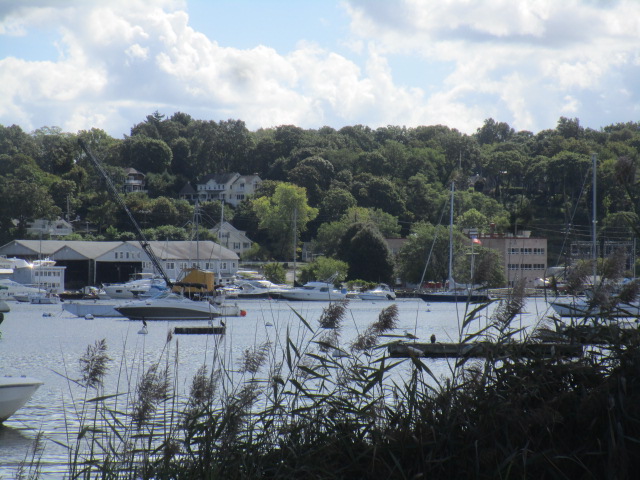
Jean, Joan, and I are down on the dock, watching seagulls swoop in the steady breeze.  A loud backfire startles us into glancing at the road, where a yellow school bus is just lurching off, having discharged a few youngsters at the bottom of the hill.
“Ah, that brings back memories,” I say.  All those days up and down my hill at home, all kinds of weather,  books and lunchbox.  Boy, did I hate September.”
“What?” asks Joan.  “I thought you were good at school.”
“Yeah, but just like now I’d rather be outside.”
“I was glad to get back with more friends,” remarks Jean.  “Summer got a little boring at the end.”
We all stare into the distance for a while, remembering.
“Well, then of course I worked as a teacher for a while.  I kinda dreaded going back too,” Joan finally says.
“Oh, you loved that.  You were ready with lesson plans and all.  I was the one that hated when work geared up again every year.”
“Me too,” says Jean.  “Right up until the end a few years ago.  September was never any fun, in any way.”
“Now, of course, it’s different,” I remark.  “We’re lucky enough to keep doing what we want without alarm clocks and schedules and demands.”
“Just like the seagulls,” puts in Jean poetically.
“Well, I have things to do!”
“Sure, Joan, but the difference is now you can do them when you want to, not when you are told.”

The wind keeps  blowing and the gulls continue their acrobatics as life goes on from all perspectives at once.

Friday

  • After days of cool clouds and brief sprinkles, heat and sun have returned.  Summer flowers are actively blooming, boatyards are still empty, weeds choke every available space with greenery.  Summer continues its merry way.  Only the lack of people outside on this fine weekday betrays the idea that the social world continues as it was, say, two weeks ago.
  • I admit that my problem is that I actively notice changes, rather than continuity.  I see the browning leaves.  I observe that swimming floats have been taken in, that lifeguard stands are put away.  A boat used to remove moorings is now cruising the harbor.  I force myself to rejoice at the wonderful weather, but the crucial and sad fact is that I must force myself to do so.

Saturday

  • For over a week, a hurricane recently meandered around.  In spite of supercomputers and massive reams of data, nobody could predict where it would go when, nor what it would do.  Weather is a chaotic system, which means that even if you know everything, you cannot tell exactly what might happen.  The illustration often used is that a butterfly flapping its wings in China may affect a hurricane in the Atlantic.  But chaos theory really states that it may not.  Like quantum jumps, you just can’t predict.
  • Weather is simple compared to society.  Butterflies may flap wings, but each person is a complete chaotic system unto themselves, and each individual’s acts (or lack of acts) may affect a society profoundly or not at all or in some obscure unexpected way.  The sooner we accept that social studies are not sciences _ except in vaguely and often useless statistical trends _ the better.
  • Most thinking people _ I try to be one _ realize, for example, that grouping and generalization of people is generally futile.  To say most folks are “back to” something ignores the fact that a technological culture grinds on relentlessly without cessation.  Electricity is being generated, goods are being delivered, sales are being made.  Nothing stops.  There is nothing to go back to, because nobody ever left.  Oh, statistics will try to prove that indeed students are back in class, indeed most vacations are over.  But none of that really counts for much.
  • That’s part of why politics is so maddening.  Everyone involved is frantically trying to split the world into groups and factions, and then generalize about what each group and faction is doing or desires.  And, for any given moment, a crowd may agree.  But the minute individuals leave such a crowd, they go their own unpredictable and unique ways, and all bets are off. 
  • Sometimes I prefer the hurricane.

Sunday

  • Nature is also briefly back to summer with a near heat wave of high temperature and humidity.  Only quickly descending earlier darkness provides awareness of the march of the season.  Seeds are ripening quickly now, nuts on the trees swelling to their final dimensions, birds beginning to pass through on migration.  Fish in the harbor endure the final stages of feeding frenzy _ there are frequent disturbed jumps and flashes in the water as rapidly growing bluefish snappers devour smaller ones.  Sunsets turn spectacular.
  • I try to get back to my normal cheerful optimism, but for some reason I am stuck in the melancholy contemplation of what is to come, rather than what is here.  The heat feels too hot, life seems to drag.  My inner soul sometimes fails to heed my reason.  That is a great fault, but I also realize it is part of my humanity.  There are, after all, things wrong with our world, as well as miracles everywhere.  But real life always beckons, and I remain sure that a nice long walk, a quiet natural meditation, will put me back to the normally cheerful spot I desperately try to retain.

Closer Inspections

Monday

  • Among other waning-season signs are the profuse blooms of rose of Sharon, now showing off in yards everywhere.  But even were those absent,  crowns of trees have taken on distinct reddish or yellowish tinges, and close inspection of the leaves finds bits of rust, areas of brown, gangrenous insect-caused holes.  This is all caused not simply by heat and drought, but also by the ever-lowering angle of the sun and shortening evenings.  Schools of snappers now agitate the water as they seek to escape larger predators.  Even the mix of outside birds has begun to include early migrants.
  • So I vow to look a little more closely at the small picture.  Not the microscopic, which is fascinating in its own right, but the visible bits of which reality is composed.  A single branch or leaf, one bloom, a stalk of grass.  In the loveliness of summer I have sometimes become too enamored of wide distant scenes, waves and shores, clouds over hills.  Time to return to the scale of reality at which I actually exist.

Tuesday

Seeing worlds in a grain of sand
Perhaps a little too abstract
Too hard to focus with these eyes
I need some slightly larger facts
“If there were world enough and time …”
Torn wisdom fragments from my youth
I question from my greater age
What such young poets knew of truth
And yet I know I once knew more
Of sandgrains, stars, and even time
Now just today is what I crave

To stare at any leaf I find.

Wednesday

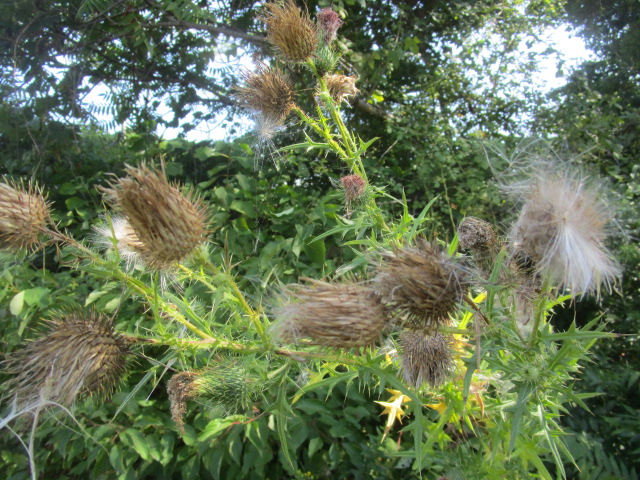
  • This thistle has terminated its destiny of sprouting, growing, flowering, seeding, and sending forth the next generation.  Most of its offspring are doomed, a few will thrive next year.  Even those that fail will enrich the planet with oxygen and food.  Such cycles of all plants and animals create Earth’s incredible biosphere.
  • People always accepted that we were related to animals.   Darwin’s great sin was to show we are just like them.   Beauty, meaning, purpose are in that sense unnecessary.  Humankind has now spent over a hundred years trying to replace the certainty that there was “more to it” with other systems: religion, political movements, social crusades, science, technology, art, individual lifestyle.  Nothing has healed the damage.

Thursday

Enjoying the feel of a dusty road at Caumsett, I ran into Stan and Myra coming up the hill the other way.  We were all soaked in sweat, so the natural greeting was “Hot enough?”
“Sure is,” panted Myra, seizing on the chance for a hiking break.  “Summer won’t give up this year.”
“But we were noticing,” added Stan, “that there are lots of signs of it reaching an end _ look at those brown fields…”
“Well,” I exclaimed cheerfully, “After all, tempus fugit.”
“Wayne!” scolded Myra, “watch your language!”
“I think he means tem-pus foo-jit,” Stan said.  “Time flies.”
“Everything in nature except people seems to be getting that message,” I ignored the correction.
“Everything in nature has to endure this heat, drought, freezing cold, snow, and predators all the time,” pointed out Myra.
“Yeah,” Stan remarked, “but the only cycles we really notice are those of work and politics.”
“I can only agree,” I sighed.
“And aging,” chimed in Myra.
“Depressing thought.”  I waved around.  “Contemplating nature is supposed to be uplifting.”
“But, even so,” she continued stubbornly, “we are, in the end, as impermanent as everything around us here.”
“Take her away!” I laughed.  “I still have a ways to go here.  See you around …”

We parted happily, our thoughts perhaps a little more profound, as hawks circled overhead.

Friday

  • Hooray!  Something does eat this plant!  At this time of year, bindweed is the scourge of any gardener, who discovers that overnight beautiful beds of phlox and roses have been strangled in a thick mat of nearly impenetrable vines and leaves.  And if not cleared immediately, it goes to flower and seed.  Then that space may be nearly unusable for a few years, even with diligent care.
  • Our world hurtles on.  Pessimists wail it is hell-bent for destruction.  Optimists dream it is rocketing towards paradise.  Most likely, as always, contradictory bits of heaven and hell will intertwine.  But no matter what, like weeds and the world itself, we all hurtle on.

Saturday

  • There’s great satisfaction in discovering signs and assigning patterns.  I watch a changing leaf here and a browning seedpod there and suddenly the world of autumn unfolds before me.  I immediately imagine what will come, and seek confirmation of expectations.  That is essential human (and animal) mental behavior.  It is, after all, the basis of training anything.
  • Such information is useful.  Properly leveraged, it can make some people rich.  More importantly, having the foresight of possible and probable future problems is one basis of civilization.  Knowing there will be a winter is why we sow and grow and harvest crops.  Knowing there would be a dangerous night with predators active is why our ancestors built camps and utilized fire.  Knowing the Nile will flood … well of course the list is endless and ongoing.
  • One problem I have already discussed.  In concentrating on signals about what may come, I may forget the thing in itself.  It is well to guess what the future may hold, but the present is already full and I should try to take advantage of it.  Besides that, I can easily lose myself in the game itself, rather than the actual reality that game is trying to reference.
  • The other problem is that my connections may be wrong.  Since I, like any other human, am the center of my universe, I assume unconsciously that the universe is all about me.  I become certain that if I wear a lucky sock my team will win, if I pray to the right gods it will rain.  Most of those me-centered predictions tend to be incorrect.  That doesn’t stop my brain from happily constructing them from gossamer patterns of invisible connectivity. 
  • Summer is ending.  Fall arrives soon.  The signs are all about me.  So what?  I need to take out the fiddle and play up a storm, for until summer does end, it still remains.

Sunday

  • Until a few hundred years ago, things seemed remarkably simple.  Not systems, of course, nor life itself; but those objects which constituted reality.  A bird was a bird, a tree a tree.  Thunder was mysterious, but nevertheless a certain event.  There might or might not be gods.  A solid framework was resolutely present.   Since then, of course, everything has been revealed as infinitely complicated, no matter how closely examined.  A bird, its components, its atoms, those atoms, their subatomic structure _ nothing ever really clarifies except at its proper level.  There is always more to it.
  • The wonder is that there is no end of wonder.  No matter how deeply we peer, how closely we examine, how devotedly we concentrate, there is even more to amaze.  And yet, as we move up to broader view, outward, there remains enchantment.  A night horizon with moon, sky and stars is as amazing as any set of chemical bonds.  Beyond and out into the vast universe, continually astonishing.  And yet _ being human _ I can sometimes become blasé and bored with it all anyway.  That in itself is worthy of wonder.

Ragged Climax

Monday

  • Like many gardeners, nature itself seems to have given up on the weeding.  Whatever vegetation has survived this far extends out of control, taking over every vacant bit of light and moisture, yet hardly making a dent in the survival of any nearby plants.  A glance at any exposed space would convince a neutral observer that this land is well on its way to becoming jungle.  Unchecked, this growth would quickly return fields and towns to primal wilderness.  But the season grows late ….
  • Oppressive heat and humidity has many of us longing for the cooler breezes of autumn, of which we will tire of in turn.  It is easy to forget how not long ago weather was a local matter of life and death, rather than a seasonal entertainment.  Blizzards and floods could kill on vast scales; drought, heat, and cold could bring starvation;  any extreme condition represented misery.  Technological civilization insulates us from such intimate connections, which is on the whole better for everyone.  I know it may all collapse, wilderness triumphing after all, but at this moment I am very content to be able to experience any meteorological inconveniences innocuously.

Tuesday

Streams of sweat drip sting my eyes.
I’m thirsty, heated, happy, slow
Watch gentle waves in absent wind
Nowhere to be, nothing to know
An empty bottle cast on shore
Residues of memory
Phantom dreams drift of our past
My contemplative lazy me
This cannot last, no worries, cares
Soon worlds of problems must appear
Tomorrow will _ but this is now
Sunshine seas erase my fears.
Beach nirvana, is it wise?
Or lotus-eater melody?
A stream of lassitude allowed

A moment to be fully free

Wednesday

  • Exercising an innate capacity for appreciating beauty is a constant joy.  Some approach it with exclusivity, as if true beauty is perfection in an imperfect world _ and consequently rare.  Their primary ability becomes locating flaws great or small which mar that which they wish to experience.  Others claim beauty is everywhere, even in trash and tragedy.  They seek to adjust their perception to cast an enchantment on whatever exists.
  • I am obviously prone to the latter.  A glass of cool clear water is as satisfying and wonderful as a perfectly prepared cup of coffee or tea, although coffee and tea (however prepared) are also fine.  Of course, I understand some things should be changed _ a house on fire may be majestically beautiful, but it should be extinguished.  Trash on a beach may add ironic visual highlights, but should be removed.  Overall, however, I exist in an environment much of which I cannot control nor modify except within myself.  I prefer to find most of what I encounter there an echo of the harmony of the spheres.

Thursday

Joan waves another fly into the onshore wind, as the muffled sound of a distant speedboat blends with thunder from an overhead low jet heading for landing thirty miles away.  Waves sparkle below tree-greened horizons as families splash in bathtub-warm mid-tide.
“Not too many people, for such a hot day,” I break our silence.
“Well, it’s starting to get low and a little dirty.  They probably don’t want to get an infection,” she replies.
“Oh, people like you are afraid of everything,” I chuckle.  “I swim in all the tides, head under water, and nothing ever happened to me.”
“It will, sometime,” she notes darkly.  “I heard on the news …”
“That’s the problem!” I break in.  “That stupid news.  Someone somewhere got an earache, someone somewhere drowned, someone somewhere always something.  Zika, skin cancer, West Nile, paralyzing jellyfish, cataracts, and probably food poisoning from eating a popsicle from the ice-cream truck.”
“Well, things do happen to people, all the time,” she says in a reasonable tone.  “We
need to be careful.”
“Compared to our ancestors, we are about as safe as it is possible to be,” I look around at well-fed folks lying half naked, protected by life guards, help a phone call away.  “And yet everyone still worries.  What if one of those backpacks explodes …”
“Don’t even think about it,” she grimaces.

“Fear of fear itself,” I mutter.  More loudly, “Ready for another dip?”  She nod’s agreement and we head down to water’s edge, challenging fate once again.

Friday

  • Deep drought continues at lower soil levels, but the surface has been periodically refreshed with frequent thunderstorms and short downpours.  Grass remains green, everything continues to grow.  Nevertheless, the blooms of summer are quickly turning to seed, autumn flowers are showing, and all vacant areas have been overrun with massive bunches of ragweed and crabgrass.  Summer remains in force, but is beginning to strain with the effort.
  • I’ve already heard folks complaining about our protracted spell of sun and heat.   What seems a perfect month or two to a few of us is wretched for others.  Isn’t that too true about an awful lot of things these days, from food to entertainment to future hopes and fears?  Such diversity of opinion is wonderful, as long as we can somehow manage to hold common ground, which is one thing that sometimes seems in question lately.

Saturday

  • “Let a thousand flowers bloom” is a nice sentiment, but ignores the fact that in the real world over 900 or so of those will be crowded out, withered, eaten or killed off in some other manner.  What is left is magnificent, but nature remains ruthless. 
  • Since at least the time of the ancient Romans, each generation has produced a few people who miss the “good old days” of their fevered imaginations.   According to them, the golden era has passed and these are degenerate and wretched times, with everyone (except them) too lazy, too coddled, too ignorant.   I’ve been hearing a lot of this claptrap lately, starting with making us “great” again.
  • I’m the first to admit I’ve led a fortunate life, and there are others who do live in eternal misery.  I would never have chosen to be alive in any other era.  Discoveries are happening daily, but there remains mystery in the world.  We are overpopulating the planet, but there is still enough for most. 
  • As for purpose, which is frequently said to be missing, we’ve been doing all right.  There have been no major wars for over fifty years, whole populations which would formerly have been starving are now fed and clothed.  Everyone everywhere has hopes of a better future.  All we need is to decide to clean up the environment and spread the wealth and that would provide purpose enough for quite a while.
  • Glass half full?  More like almost overflowing.  And yet there are angry folks everywhere, and agitators who stir the pot, and even those who are obscenely wealthy think they are god’s gift to the world and why couldn’t everyone else just work hard like they did.  I’ve gotten to the point where it is almost painful to listen to the news or read editorials.

Sunday

  • Days of brutal humid heat have kept much of the population safely hidden into air conditioning.  No such luck for the outdoor flora and fauna.  Lack of rain, air pollution, all the usual complaints of late summer.  Meanwhile, everyone frantically realizes that regardless of how it feels, the season is drawing to a close.  Panic to enjoy the last weeks has set in for boaters and other vacationers.
  • I’ve been more or less confined to the house, not wishing to run into big box stores for relief.  In some ways it is worse than cabin fever when blizzard-bound.  Even the few times the temperature let me venture out to read on the patio, mosquitoes have quickly driven me back in.  So I too am trying to throw off my recent lethargy and low spirits in a final summer fling of activity.  

Nervously Normal

Monday

  • Sometimes the mood is that of an approaching hurricane.  Calm now, nothing anyone can do here except make futile preparations, and wait to see what exact track it takes and how severely it hits the neighborhood.  Everywhere in the world, which attained an all-time high in average warmth last year, there seem to be 100-year droughts, 1000-year floods, massive devastation both directly from weather and as a result of its anomalies (vast forest fires, immense insect infestation, death of species.)  An apocalyptic outlook is fairly easy to feed in such times, even though locally everything remains as it has always been.
  • We tend to forget exactly how bad some local and even regional events used to be for the people living through them.  The year without a summer in 1816 causing starvation in New England, famine in France in 1787, widespread deep snow killing crops and hastening the black plague in 13thcentury Italy.  Middle Eastern ancient religious texts speak of vast floods, as do Chinese chronicles.  From an individual standpoint, the past was just as bad _ and often far worse _ than what we are experiencing.  And we should not forget that through everything there were always people who blamed themselves, their neighbors, or their society for what was going wrong.  But will “think globally, act locally” be enough this time around?

Tuesday

On the beach _ a summer glory
On The Beach _ a frightful story
Doomed insects dancing in the wind
No gods to care if they have sinned
Fish flashing, brightly wild and free
‘Til swallowed whole when they can’t flee
Birds growing fat on bugs and seed
Triumphant conquest by the weeds
I see it all, I simply pray

I’ll watch again another day

Wednesday

  • Long Island has large parks in addition to vast stretches of sand and wetlands shoreline.  So for those fortunate enough to have time and leisure, shady lanes wind through forests, and dirt paths wander surrounded by ferns.  This year there is a minor drought, so insects are less annoying than usual for August _ not good for swallows or bats, nice for someone striding along trying to flick gnats out of their eyes.  In such moments the world seems benign and well.
  • I used to take these hour or two strolls with improvement in mind.  Although that is still true as an exercise and a mental contemplation, I often no longer fill my moments with attempts to identify trees and flowers, nor to visualize scenes “as an artist,” nor to follow deep and often futile trains of thought concerning philosophy or the cosmos.  I am, finally, content to not know so much, to just enjoy the experience, and to be grateful for a sense of well-being.  I recognize that we must preserve wilderness and rain forests and coral reefs, but truthfully for myself what must really be fought for are these nearby refuges that can be reached and experienced without great preparation.

Thursday

Only our heads show above the waves as we notice Harry and June plopping down their beach chairs next to ours.  Temperature in high eighties, so they are soon along side, June and Joan pairing off to discuss offspring and other social gossip. 
Harry comes up dripping and smiles.  “Ah, global warming.  Good for something, anyway.”
“Right,” I agree.  “Water really beautiful this time of year.”
“I wonder what we’d do if a tsunami happened right now?”  Harry likes the oddball and even ridiculous non-sequitur in his conversation.
We both glance at the narrow inlet a half mile away through which all the tides must ceaselessly flow.  “Outrun it, I suppose,” I say, figuring not much would get in very quickly and would dissipate as it spread.
“Probably right.” Harry agrees.  “But there’s so much concentration on catastrophes that I find them almost interesting to imagine.”
“Black swan events don’t need global warming,” I note.  “That’s the trouble with projections.  A hundred years before the big asteroid, any intelligent being would assume dinosaurs would still be ruling the Earth today.  And nobody still knows where the ice ages came from, or when they might return.”
“Don’t forget the Black Plague,” he added.  “And the Huns and ….”
“Oh, I know, there’s enough to go around.  What’s that got to do with the price of bread, anyway?”
“Well, it’s one way to avoid guilt.”
“Ah, guilt,” I ponder.  “Well, I don’t feel all that guilty about all that.  Our generation worked out a few problems, as did generations before us.  The next ones will just have to do the same.  But I’ll tell you one thing…”

Harry ducks his head again and looks at me expectantly.  I continue “I doubt if we have any idea what those problems will really be.”

Friday

  • Sticky hot thunderstorm weather has settled in for the week.  Peeking outside the door causes sweat to break out.  Taking a walk will lose a few pounds of water.  Any moment, tropical downpours may empty buckets on the unsuspecting, then stop as quickly as they began, almost without warning.  Nevertheless work must be done, often outdoors, and humans are surprisingly well adapted to such conditions.  Well, people did come out of Africa, after all.
  • Generally, those who can avoid going out in such conditions do so.  For the last hundred years or we’ve been able to fully control internal temperatures, and the use of those has spread.  Many folks seem to rush from air conditioned home to (pre-) air conditioned car to air conditioned store or office.  Soon, no doubt, they will be wearing air-conditioned suits as well.  Maybe it is nature evolving us to finally move off-planet.  In the meantime, I enjoy the hot and sticky, at least for moderate amounts of time, although I admit I also hide away in my burrow a good part of some days.

Saturday

  • Little doubt of climate change any more.  The world has not only hit record highs on average the last few years, but the immediate consequences of energy-activated weather are too prevalent and destructive to be ignored.  The acceptance is odd, in that only a decade or so ago there were fierce protestations of how silly the idea was, massive counter-examples being utilized to prove nothing was happening. 
  • But prevailing wisdom has changed, just as the arguments against air and water pollution control eventually fell into disuse in the sixties and seventies.  Anyone with half a brain now knows the biosphere is heating up, and those without half a brain don’t matter anyway.  The only remaining question is what can be done about it, if anything.  More importantly, what adjustments and preparations are appropriate _ individually, locally, and globally.
  • Some say nothing.  I think they are wrong.  I lived through the times when we were reliably informed that dense smoke in Pittsburgh, toxic smog in Los Angeles, fires on the Cuyahoga River in Cleveland  were simply necessary adjuncts to our consumer lifestyle, and of little consequence.  DDT was the only way we could manage insect-borne diseases _ what’s a bird’s life against a child’s? they asked.   But somehow, civilization moved on, and all that has become almost a forgotten past and prelude to new challenges.
  • Consensus does eventually filter up from accepted common sense in the masses to those in power.  In spite of our predilection to see the worst in humanity, most people do care about their immediate environment and want the world to remain habitable for their children.  I suspect in the next few years, climate change will become one of the driving forces of political decision-making, if only for how to handle its increasingly devastating effects and increasingly costly preparations.  Putting New York under a bubble will not come cheap.
  • I have faith in our technology.  With will, we can still find a way.  An easy start is a large carbon tax.  I believe that once we all start to act for real  _ just like the pollution crises _ significant solutions will arrive in a decade or so. 
  • Until then, we have the opportunity to swelter, watch historic fires and floods and winds, and imagine catastrophe around every corner.  In the meantime, I will poke my head out the door yet again and maybe even venture out on a short stroll to warm my bones.

Sunday

  • Dew-drenched air forms a light haze in early morning.  Soon enough, sharp low sunbeams will slash that into sparkling clarity.  By this afternoon, only distant features will be dimmed, the Connecticut shoreline across the sound a vague blue ribbon, if it can be seen at all.   Fish are leaping frantically, spoiling calm reflections.  It seems a summer moment from forever.
  • Forever, we have learned, is a scientific fiction.  We swim in change, for better or worse.  It once seemed cruel that we are born, age, and die _ some cosmic joke in an eternal universe.  Although it is hardly comforting that the universe itself shares our fate, we can no longer complain about being singled out.  Like the universe, we just have to deal with things as they are _ and at this particular moment, right here, they are lovely indeed.

Livin’ Easy

Monday

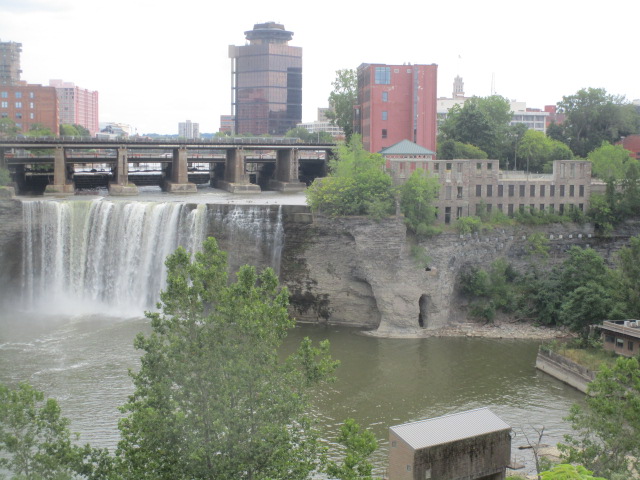
  • Residual industrial residue along the great falls of the Genessee.  At one  point this water _ diminished now due to a moderate summer drought _ provided enough energy that the millstones grinding western wheat renamed Rochester the “flour city.”  Later it drove machinery for the largest button factory in the world,  generated electricity, and was tapped for countless other uses, not least of all several large breweries that still exist on the high cliffs alongside the river gorge.  Maybe in the future it will once be utilized for renewable energy, not so great for the scenic view.
  • Industrial architecture and ruins in North America only go back a few centuries, hardly touching the older debris of Europe, Asia, and Africa.  Yet they too insinuate tales of rise and fall, great commercial empires, individual struggle and triumph.  Weaving such reminders into the fabric of our cities’ revitalization is one of the supreme architectural challenges of this age.

Tuesday

Summer half gone
Half to go
Shimmering afternoons, endless
(but growing shorter)

Slowly transient paradise

Wednesday

  • Huntington home, back by the beautiful bay.  Salt water instead of fresh.  Anxious people following anxious activities, afraid of missing something or losing a possible future option.  Long Island is marvelous, but laid-back it is not.  Quite a contrast with some other places, although not quite as hassled as New York City proper.
  • People everywhere have worries.  But certain places emanate cultural tension, and others are more laid-back.  Of course, I’m only looking at summertime _ it’s quite likely that come the cold season everyone buckles down to business at the same pace.  I remain amazed that in relatively short distances, attitudes can so differ.  George M. Cohan immortalized that idea in “Only 45 Minutes from Broadway …”

Thursday

George was as usual reading his paper with half an eye on the activities on the boat launch.  “Hey, Mr. Lazy, ain’tcha got anything better to do?” I call.
“Nope,” he replies.  “Done my time, back when.  This here is now my work, my passion, and my purpose all rolled into one now.  Enjoying my life, appreciating the world, artistically shaping each day as I want.”
“My, my, a deep philosopher.  You should have a long white beard, toga, and sandals.”
“Maybe next week.  Anyway, I’m well glad to be out of the rat race.  It seems to be even less fun today than when I remember.”
“I think,” I muse, sitting down on the wooden bench next to him, “or at least I remember it being pretty nasty when we were working.”
“Well, I didn’t get calls all times of day or night.  I didn’t worry about losing my job any given month or day.  I still had a life of my own, with my family.  And nobody tried to tell me that selling communications equipment was the justification for my being alive.”
“I don’t know,” I begin to argue, “there were long hours, and homework, and …”
“For those who have jobs now,” he points out, “your work is everything.  Twenty hours a day, no letup, no relief.  For those without, finding work seems to be just about everything.  No time for much else ….”
“Sourpuss.  Too many papers …”
“Hey!  I’m happy!  Look at that blue sky, those lovely hills!  Whatever the problems of the world may be, at least they are no longer mine.”

We spend a little more time watching nautical activities.  My legs finally well rested, I nod goodbye and continue on my way, mind filled with new thoughts, senses telling me to ignore them.

Friday

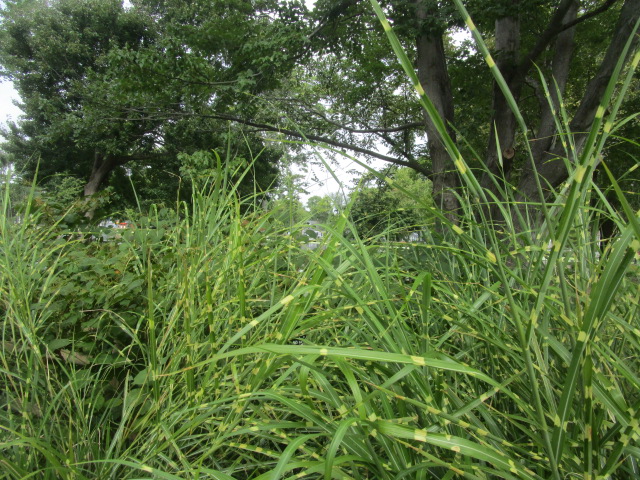
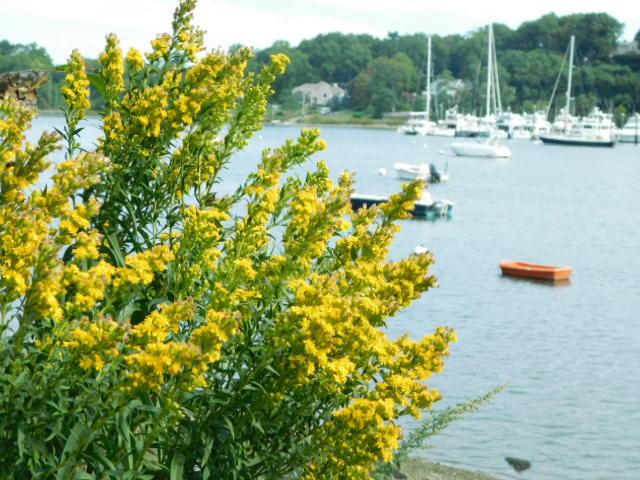
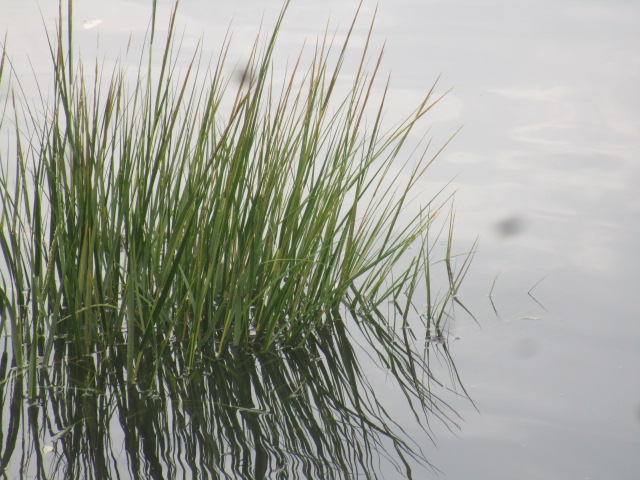
  • Almost all late bloomers are now in action.  These spartina grass blades prepare seeds for next year, even though as perennials the same patch should return next year.  Depending, of course, on tides, storms, sand shifts, and grinding ice floes.  Birds relax a bit, fattening up either to survive the rigors of winter or to migrate elsewhere.  Birdsong is notably less melodic, restricted largely to shrieked warnings of nearby predators.  There are even occasional hints of the final act of summer opera _ a few yellow goldenrods, rose of sharon.  Numerous fish jump and skip the surface,
    disturbing lightly riffled harbor waters.
  • I could dwell on what may come, worry about snow and cold, regret the missed chances of July.  Or I could glory in the heat and bursting vitality of this morning.  Or I might ignore it all and be disturbed by events in faraway places, or by intellectual and social actions “of great pitch and moment.”  I believe, however, I shall settle for what I usually do, which is to sample many things in due measure and occasionally let my thoughts fly off into meditation or fantasy, occasionally swoop down to fully sample my engaged senses, occasionally pursue some fleeting chain of logic.  Seems like a good season to become unfocused and simply accept enchantment as it arrives.

Saturday

  • Retirement and aging in general are often compared to autumn.  That may well be, as time goes by.  But for the more fortunate it is more like perpetual late summer.  Crops are planted and taking care of themselves, harvest and preparation for winter is indefinitely delayed into the future.
  • One major fault of our culture, I believe, is to try to ignore differences in age.  We see “ageism” even in relation to how we consider ourselves as some kind of deep sin.  An old person, we chant, is just as good as a young person.  Elders themselves are encouraged to see themselves as young. 
  • A consequence is that ages of man _ which should be encouraged and celebrated _ are mushed together and afflicted with insipid constant philosophy.  Childhood, instead of a being a time of exploration and carefree play, is increasingly a nasty directed mini- adulthood.  Youth is chained and restrained and encouraged to think like an old miser saving for an improbable future.  Middle age is filled with achievement, limits, triumph and despair _ as always _ but has incorrectly become the onlytrue standard of who one really is.  And those who manage to grow old are seen as hedonistic freeloaders who ought to be working and playing as hard as anyone else.
  • Hedonism, laziness, accomplishment, and all the other good and bad attributes society assigns to individuals, especially those outside norms, must be placed in relation to one’s situation to have any meaning.  An essential part of that situation is age. 
  • Retirement, like late summer, is a time of reflection and wise contemplation.  The frozen past resolves itself into meaning, and a more gentle purpose can seize each ambition of each day.   Livin’ easy, perhaps, but eliminating nagging guilt for doing so is sometimes a challenge.

Sunday

  • Green dominates the natural world pervasively.  Only sky and water manage to compete, if an open view emerges.  Patches or points of color from flower or fruit are lost unless one observes closely.  As always the unnatural world _ if human activity is so termed _ remains an exception.  Houses, cars, clothing, trash, roads, anything may be any hue at all, and as large as conceivable.  But in late summer, even those stalwart standouts or eyesores get a run for their money from the verdant vegetation.
  • Leaves are as varied as snowflakes are supposed to be, if I bother to examine them closely.  Every glance through vines and branches presents a unique picture of our universe.  I am not willing to believe that each miracle of creation is striving to match some universal perfect form.  Each of these bits of life is in itself its own perfection, unique in all time and space.  But _ well admittedly, it is all just green and more green endlessly, and just a little boring as well.