Supermarket

I am enchanted by the miracle of supermarkets. Others complain of high prices, spot shortages. They dream of olden days when “heritage vegetables” had more taste, or “Paleolithic diets” fortified our ancestors, or …

Until recently, most people ate spare, monotonous diets and famine was always lurking right around the corner. I never envy those ancient times .

Four unrelated inventions have been necessary, along with all the other ignored benefits of modern times. Rapid reliable bulk transportation, refrigeration, manufacture of fertilizer from air, mechanized grain farming. Without all these, food would be limited, expensive, and supermarkets could not exist .

Some pine for old street markets and the local baker and butcher. Those indeed have their charms. And yet _ well, at almost any time I can go to a supermarket, shop for all kinds of fresh or packaged or “ready to eat” food, and be out very quickly with all I could possibly want at a price which in the grand scheme of modern life is almost negligible .

I try to see it as a medieval peasant would. I love to be astonished at the possibilities and displays. It is almost a vision of the garden of Eden or heaven itself. But I admit that like a lot of folks I often take it all too much for granted and even complain when I should be rejoicing .

Bitter Winners

“Nobody likes a sore loser.” To me, worse by far, is a “bitter winner.” They seem to be in full bloom these days, in politics, corporate life, and even among my acquaintances .

These are the folks who by any normal standards have it all. Charmed lives, power, prestige, and especially great wealth. They think they have gained it by simple hard work and smart moves. They think everyone else is a complete loser. They don’t understand why all those losers don’t worship them (although there are many who do.) And, like Napoleon with Russia, they obsess about doing something so outrageously stupendous that they will “finally” be recognized for how great they are .

Their defining attitude seems to be whining. They have been “cheated of their rightful due.” They are not “appreciated” enough. The peons too often ignore their “invaluable” advice and dispute their “absolutely perfect” opinions. They remain bitter that they have achieved what they wanted, but have never found what they needed .

Bitter winners have existed throughout history, but our affluent world seems to have thrown up a bumper crop. And the weeds surrounding them are filled with lesser folk who also believe that they have been cheated by someone out of their rightful place .

Sad and dangerous specimens of humanity .

Morning Celebration

There have been many periods in my life when there was little time in the morning for more than getting myself up and out the door. Since I’ve retired I can act a bit more like the rich folks I read about in the Wall Street Journal and make an effort to consciously slow down, celebrate, and appreciate my life so far, my exact moment, and the day to come .

We all have certain habits and rituals. I’ve tried to make mine as joyful and profound as possible. Not quite mindless meditation, more like letting my mind idle and expand my sensory awareness .

Coffee helps. My real trick has turned out to be (as advised by many others) to practice conscious breathing. Not for hours or even minutes. But a few deep breaths or controlled exhalations or simply a heartfelt sigh can do wonders. It sometimes broadens my outlook entirely .

Fear of missing out has become a great burden of modern life. “What am I missing?” “How will I ever get anything done?” “Oh no, what now?” A conscious breath also helps me fully reset my sense of time, which in turn allows me to contemplate my universe in less frantic ways .

So, a bowl of cereal. Deep sigh. Ah _

Changing Leaves

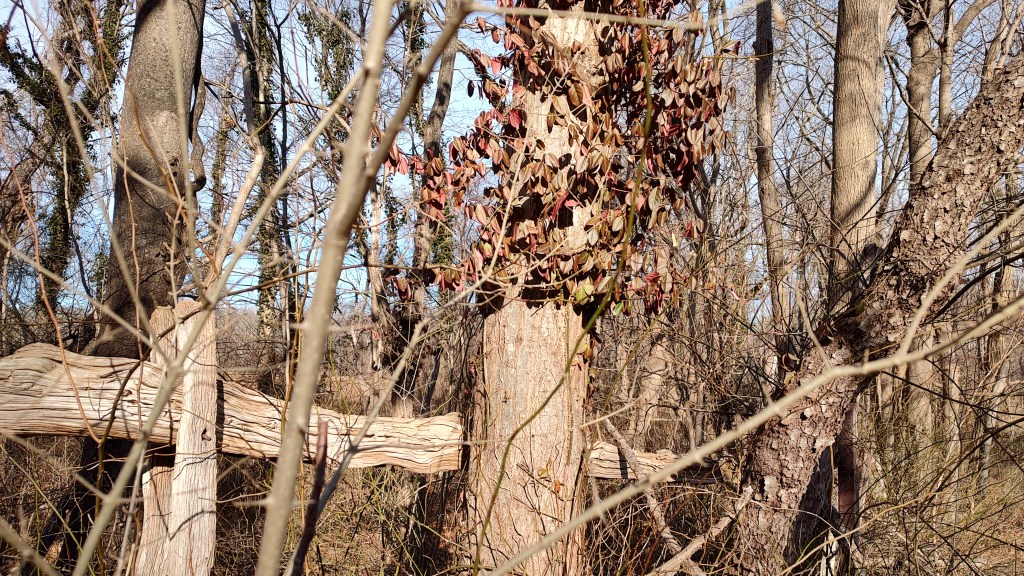
Autumnal equinox has arrived once again. Maples and dogwood are tinged with red, some of the ornamental shrubs have gone even further. Not sure what this one will be like. I remember a brilliant flaming fall in New Hampshire in the 1970s, when foliage almost hurt the eye. And more recently a few here on Long Island had trees just turn brown and drop.

Variety is one of the enchantments. Not only the seasonal changes, but also what kind of season it will be. Most such memories, at my age, are soon lost, embedded in similar long-term remembrances, but living through another period of cool creeping darkness and the Earth’s responses is always fascinating .

I try to greet each day with enthusiasm, each moment with zest. But it is rewarding to recognize the long swell of differing patterns as a solar cycle goes by. Makes a year resemble a lifetime. The coloring of leaves here is a fine marker .

Most songs and poems characterize Autumn as sadness. Winter is coming, harsh and dreadful. The joys of Summer freedom and carefree existence are gone. I never felt that way, and now even less so. I welcome the reminder of impermanence, and the cycles that overcome it .

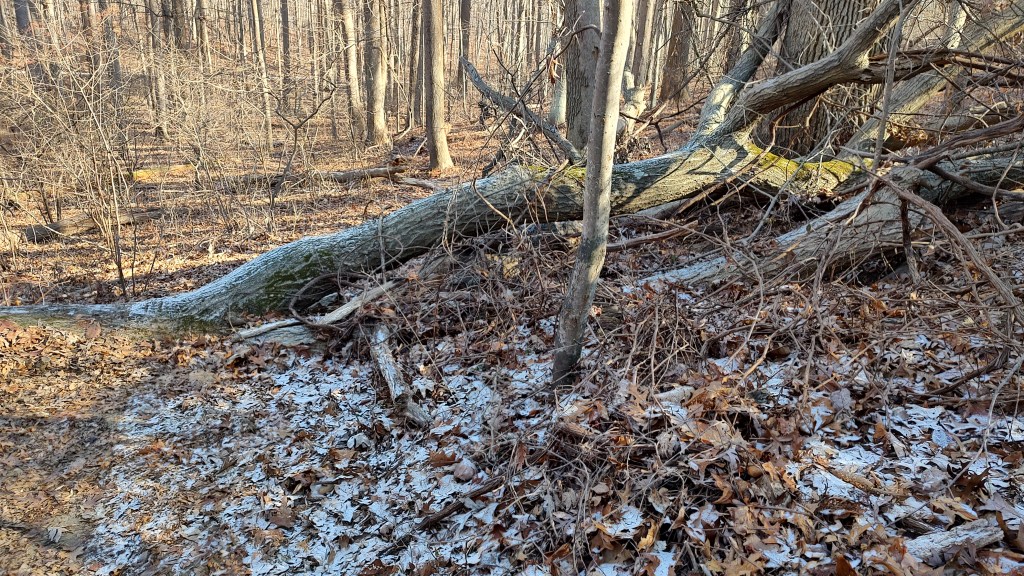
So I go out and admire the views. Long forest vista, individual masterpieces on a twig. All part of glorious, miraculous existence. And I still appreciate them in wonder .

Ethical Rituals

I do not believe there is or ever could be an absolute universal code of ethics for humans or the cosmos they inhabit. I do believe there is a code of ethics implicit in every civilization. This indicates what should be done even if it is not legally necessary. And cultural rituals enforce and recognize these ethics .

For example as a sign of respect in different places one may offer a handshake, or a bow, or a kiss on the cheek. Customs indicate how strongly one is affected by statements or arguments. Expectations of acceptable behavior when shopping range from blind acceptance of prices to extensive haggling. Beginnings of romances vary greatly. “Telling the truth” means different things in different situations .

Sure, laws are necessary. But the web of “ethical” behavior and its rituals may be the real glue of civilization. In fact, too many “petty” laws trying to enforce former common rituals may be a sign of the decline of any society.

People are, in general, surprisingly social. Amazingly adaptable. And generally quite content to “go native” and “when in Rome .”

A culture which has lost most of its ethical rituals and instead relies on enforced laws is probably not much fun. Rituals have a way of expanding personal freedom, which laws usually do not .

Practical

We inhabit an age of miracles. “Impossible” has become a label only used by those ignorant of possibilities. There is no quicker way to be labeled a curmudgeon than to tell someone their dream or plan is “impossible”.

We also live in a society that dislikes absolutes. Most things are considered “relative.” “Impossible” has about as as much finality as can be expressed. It can only be used when politeness no longer matters. The “impractical” then becomes very useful. Since it only indicates “almost impossible”, “unlikely”, “probably a waste of time”, it is relative and less forbidding. Telling someone it is “impossible” that they saw a fairy flying in the garden is nasty. It is much less combative to say it is “impractical to believe that unless proof is offered .”

“Practical” thus would seem to indicate high praise. But it also has limitations. It works best with the short term, familiar, and local. It’s practical to plan what to do tomorrow, less so to schedule a year, decade, or century from now .

Used excessively, “practical” is also limiting. Visions narrow, often too much. It is sometimes healthy to venture into the unfamiliar. Out of the rut. Maybe not quite “impossible”, but dreams that let us stretch .

Too complicated? Ah yes, why it is hard to teach children or reform ourselves. Hard, but practical and never, thankfully, quite impossible .

Camel Nose

“The camel nose under the tent”, “the slippery slope”, “the gateway”. These are all expressions currently in vogue by absolutist extremists. No matter that such ideas are generally nonsense .

The extremist is certain of two things 1. that he or she alone knows the perfect truth. 2.that such a perfect truth sits at the tip of a cone from which the slightest movement only leads down to horror.

Now, the usual way to criticize such concepts is to claim that each particular “truth” is wrong or partial. And certainly such may often be the case. But I criticize the concept of the cone of correctness rising above a sea of sin .

Life, in particular, is not built of perfect points but of antagonistic forces kept in balance through tensions and self-corrective mechanisms. There is no “perfect” blood pressure – it varies considerably – but when it gets too high or too low in healthy people, homeostatic reactions bring it back to “normal” range. such is true all the way down to cellular activity. So much more our consciousness. No perfect mood. No perfect path. Everything a balance. Not a cone, not even a tightrope, but more a net. 

Because of their self-centered righteousness, extremists are usually insufferable. And unfortunately, dangerous. Nothing in life is a cone and should not be treated as one .

Freaks

It is generally agreed that until the agricultural revolution of 10,000 or so years ago, humans – like most primates – lived in small tribes. Within those tribes we performed all the social roles and games we are used to – rulers, bullies, families, mutual aid, grievances and so on infinitely. And naturally, there were always certain individuals who were best at one role or another .

But massive crop food meant the tribes became larger and larger. There were petty kings, then emperors with more extensive reach. Hierarchies always led to the one at the top. Although different activities (trade, politics, religion) might have different types of hierarchies and multiple high spots, there were always only a handful of “the best” at the top. And now, with connected populations in the millions and billions those who are the “best“ are always  “freaks”.

By that I mean that they are the strongest, smartest, luckiest, or have some other overwhelming advantage over “ordinary” folks. The rest of us must be content to simply accept their dominance and (often) to just try to stay out of their way and not get crushed by the play of the mighty .

But the real problem with “freaks” is that they are poised on the edge of disaster. Star athletes are near human physical limits, and consequently often injured. Geniuses frequently become mad or emotionally unstable. We all know examples .

I worry, sometimes, about the long-term consequences of putting such fragile freaks in charge of everything .

Memories

How we encode memories is one of the great mysteries of biology. An even greater one is how we retrieve them. And of course you and I both know how hard it may be to use them well .

I admit I try to mostly live life in the present. But as I become more sedentary with age, memories become all the more important ways to pass time. Some are frozen, some are tarnished, some are golden. And I am very well aware of gaps and imperfections .

Any memory is an amazing thing. It might be sharp or foggy, include all senses or only a few. Might present itself as if I am reliving it, or might show up as if I were an observer of the scene. And for that matter, might be real or simply a deep recollection of something dreamed or encountered as a book or a movie .

We used to think that at least near term memories, very vivid, were nearly infallible. Now we distrust eyewitness accounts, not to mention our own impressions. Again, as I age, I find the older memories a lot more solid than yesterday’s. We can truly believe what never really happened .

I only hope I do not become like other elders I have known. They can – and do – repeat the same story often in the same words thinking it is fresh to the audience. But, honestly, in spite of the hyped drug advertisements, there is not much I can do except enjoy the weird ride wherever it goes .

Locally True

Since I was a baby, the culture has screamed I must pay attention to the larger world. My parents had fought in world war II and now isolationism did not work. That was reinforced by the fear of nuclear devastation. Science taught that there was a “real” world not at all like the one of “common sense.” The ecological cry to “think globally act locally” rang out everywhere. 

Then there came a flood of “real”, global issues. Crazy society, crazy people, crazy climate, crazy catastrophe, crazy new everything. Each more frightening than the last, more to be ignored, all “real”. As antidotes we try to drown out the cacophony with work, alcohol, drugs, meditation, religion – any loud internally focused obsession. Peace for a while, but often just making things worse in the long run. Perhaps we should just slow down and accept – concentrate- on what is “locally true”.

Examples: we are informed the earth is round, bricks are made of empty space and molecules, pain is just electric impulses interpreted by brain neurons, diseases are all around floating invisibly. But: everywhere I go, the Earth is flat with hills and valleys. If I drop a brick on my toe I feel it, and the pain is real – interpreted electric signals or not. Mostly those invisible diseases do nothing. That is all locally true .

So I take a deep breath. My neighborhood is made of mostly normal people. My weather cycles more or less as usual. I age as always. And, I reflect, all this local “untruth” is where I really, truly live and the medium in which my acts actually mean something .