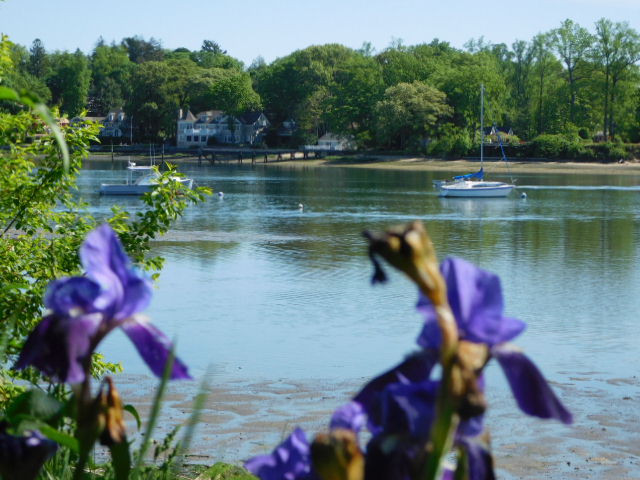
Monday
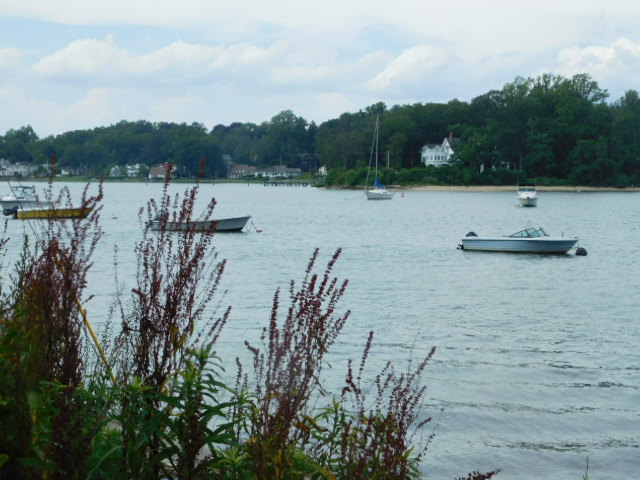
Humidity dims distance, as usual heat clouds pile up along Long Island Sound over the far shore.
- Surprisingly, as twilight lingers into short nights and late darkness, I become more aware of the moon, stars, and lights in the heavens. Milder temperatures encourage me to pause a while when I take out the trash, and to look overhead.
- Of course, there are few stars to be seen, around here. When the night is absolutely clear there is the moon in its constantly changing phase, if it happens to be overhead in its complicated journey. And a few of the brighter stars from the few constellations I remember. Then it is almost a game to pick out Venus, Mars and Jupiter from hordes of approaching and departing jet aircraft.
- Writers use terms like velvet black. Huntington skies are always an orange glow. Town and increasing suburban electric illumination reflects back from clouds and vapor, so much that no night is truly dark. There used to be only dim porch bulbs on houses, but now harsh security beacons either blind constantly, or switch on at every momentary sound and motion. Cars blaze along each few minutes, actinic blue in front, trailing flaring crimson. More and more, annoyingly tiny twinkles of solar-powered junk line walks and driveways.
- All of this, all the time, and only I seem to notice, for nobody else is usually outside. The final rays breaking charm of dark evenings are multicolored flares emanating from windows where huge screens provide something to look at which is more interesting than moons, planets, and stars.
Tuesday
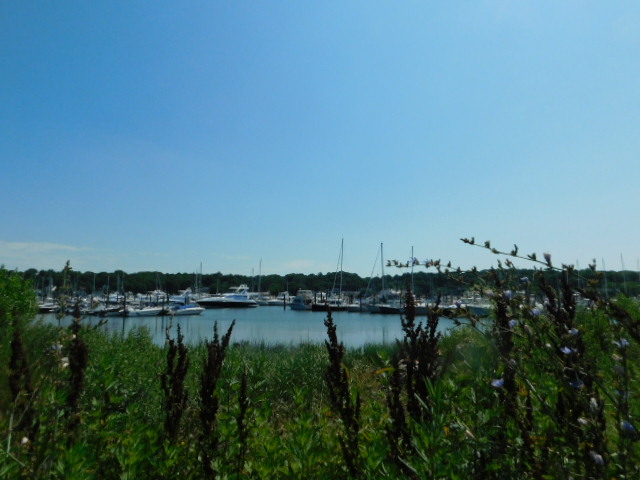
Clear air all the way to low satellite orbit, too early for much smog.
- Volcanoes, pollution and _ presumably _ massive asteroid strikes create spectacular sunsets. Turner’s exotically flamboyant paintings, once thought the product of an overactive imagination and exaggerated romantic senses, were recently reevaluated and declared quite realistic based on the documented effects of the massive 1815 Tambora eruption (which also caused the “year with no summer” in New England.)
- Huntington is graced with marvelous sunsets lacing and luminescing through the soot, gasses and general industrial activity of New York City immediately to our west. Once in a while an inversion will extend contaminated air all the way to our part of the island, but mostly we know it by its evening sky signature. As with all such phenomena _ oil sheens or explosions come to mind _ awful causes can have beautiful effects.
- I would be foolish not to enjoy them. “Taking time to watch a sunset” is a cultural meme. But I would be amiss not to realize that they are the result of a high price we are paying to allow our civilization to continue its ways.
Wednesday
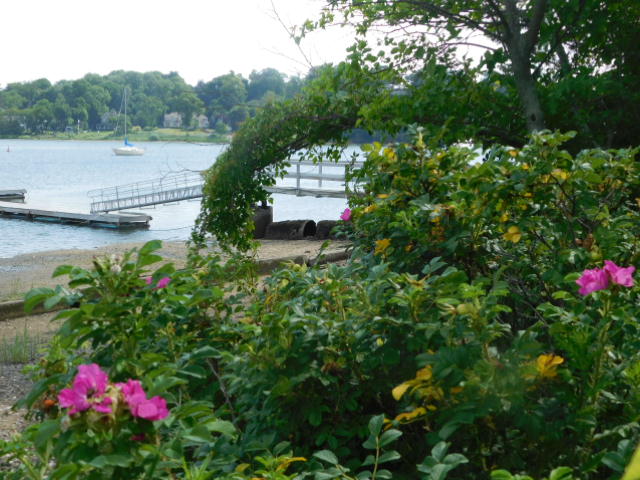
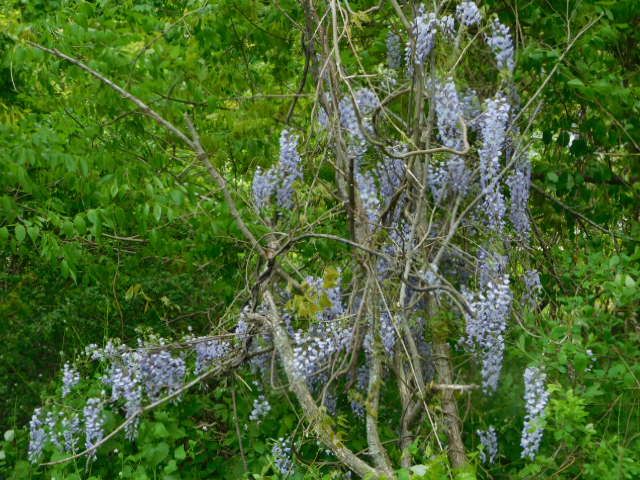
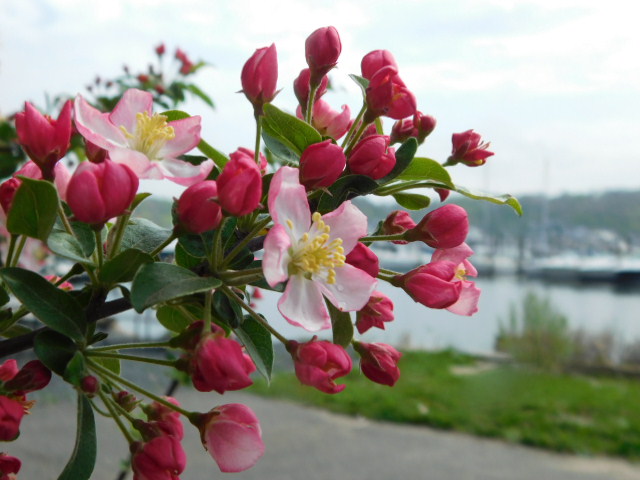
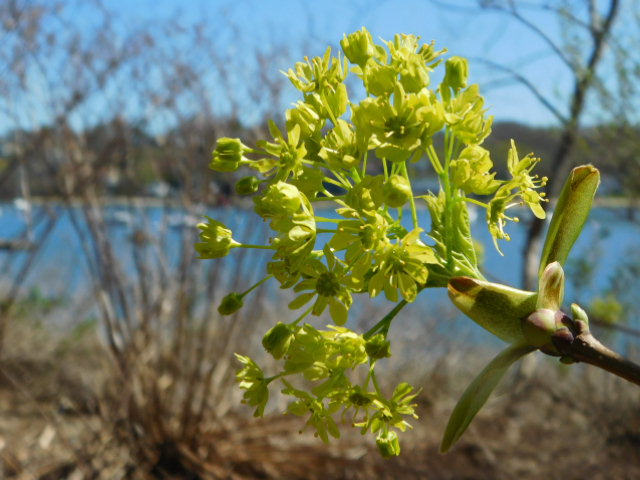
Beach roses are infallible markers of warmer days when a dip in salt water is a perfect experience.
- Hey diddle diddle …
- If the cow tried to jump over the moon these days, it would probably bump its head on a communications satellite.
Thursday
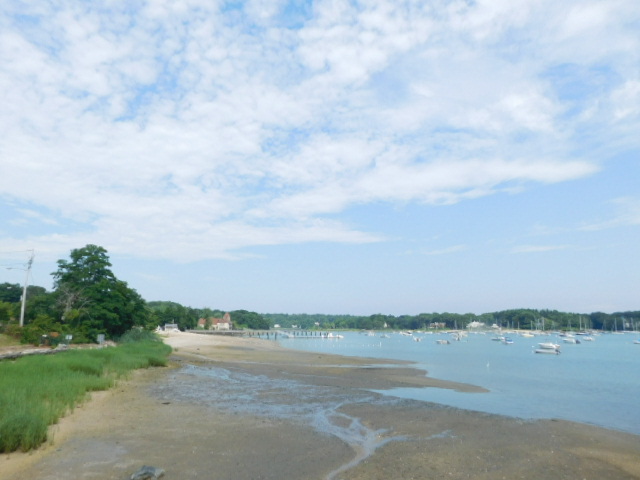
Last evening’s thundershowers are boiling off to form interesting patterns soon cleared away by sunshine.
- For the last two centuries, it has been almost impossible to take a panoramic photograph without catching at least a few of the poles and wires on the horizon or nearby overhead. Poles and wires are a definitive marker of this culture, which future archeologists can probably use to identify this particular layer of civilization in their digs. They are so common that we unconsciously filter them out of sight, so that we are frequently disappointed when our carefully composed pictures end up being spoiled by lines and blockages we didn’t really notice at the time.
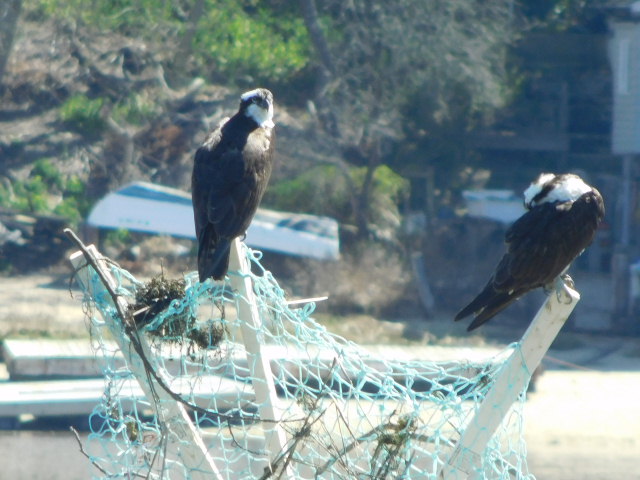
- I can’t claim that such ruin the skyline. They are just there, and frequently have a complement of birds sitting high up, and don’t block much of what I want to see. But surprisingly often they put the lie to some composition that tried to capture nature at its raw best.
- In the future, solar and other local technologies will probably make them obsolete. Already, many thick cables and their supporting structures are dinosaurs. Massive imposing beasts, soon to be vanquished by off-the-grid solar power and invisible airwaves. Undoubtedly in some future parkland or designated city area they will be as carefully recreated for historic nostalgia as gas lamps and cobblestones are now.
Friday
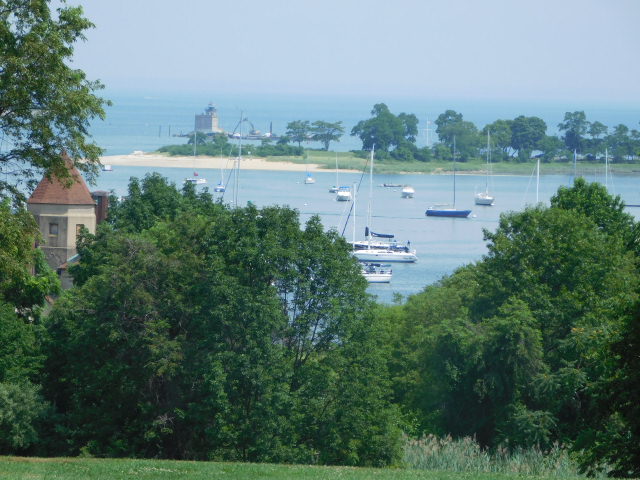
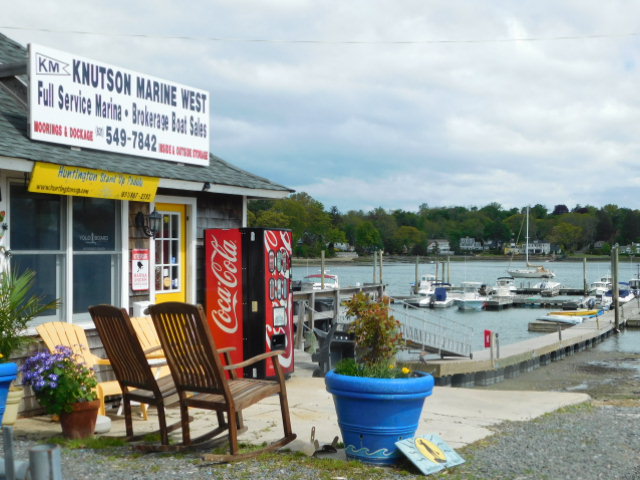
Pollution welds sky to sea as Connecticut shoreline vanishes.
- Dawns are different, for me at least, than sunsets. For one thing in the summer I’m rarely awake in
time for them, certainly not dressed and outside. For another, leafy trees to our east hide direct beams until around nine or so. By then, if the weather is warm and dry, I can ditch this computer and eat out on the patio dressed in pajamas while waiting for my wife to wake up. - Morning sunlight is usually clearer than that of the evening. Eastern Long Island has less factories than exist to our west, and local pollutants have temporarily settled down. Bright sunbeams set off brilliant blue sky, while birds proclaim their supposed mastery of the air.
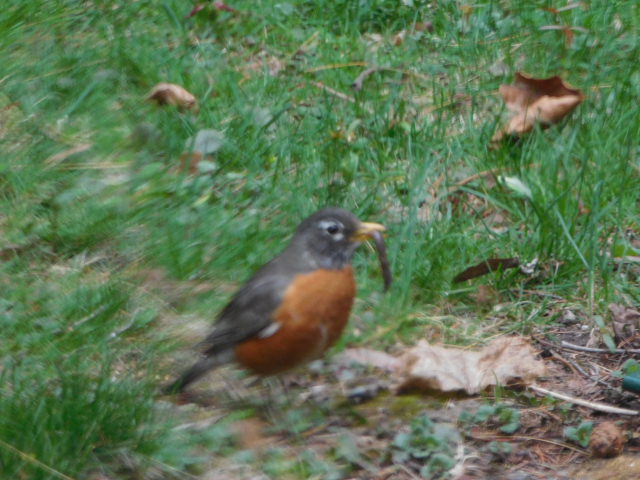
- Mornings are another part of Northeastern Lights, even when we have fog and mist. Dew often sparkles back fractal reflections. Cobwebs trace amazing patterns. Sharp shadows cut around me. Maybe it is all only so surreal because this time of day I am fully awake and aware.
Saturday

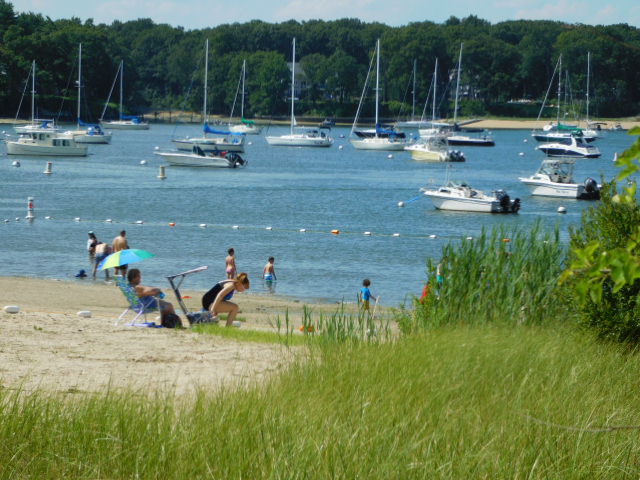
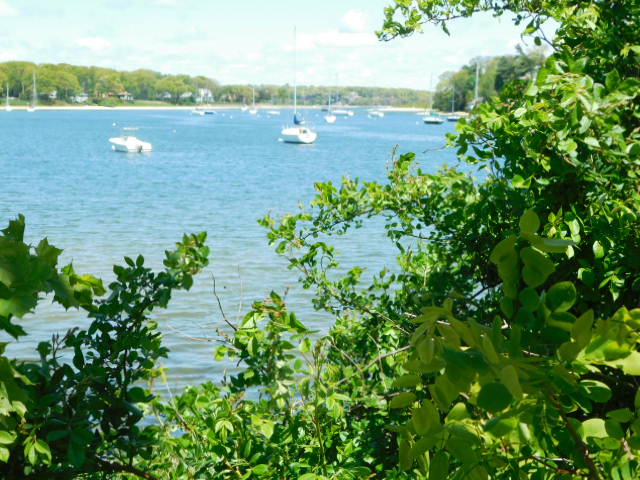
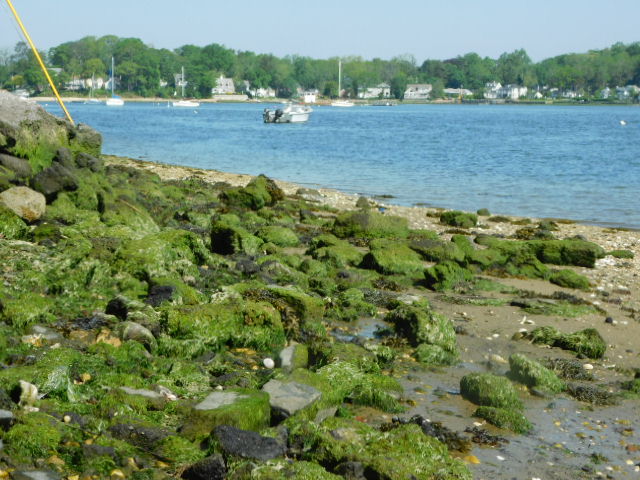
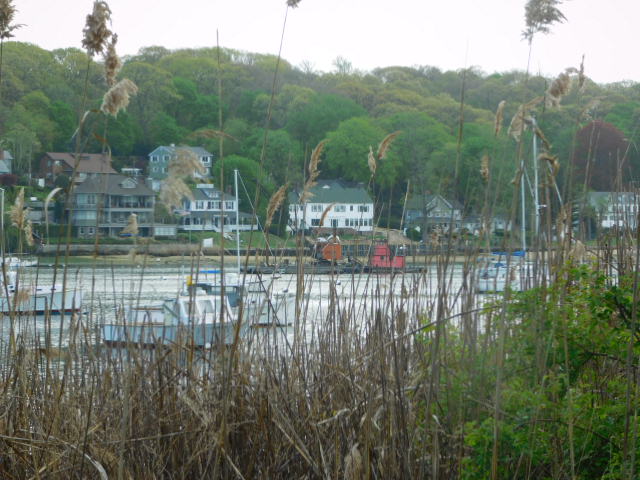
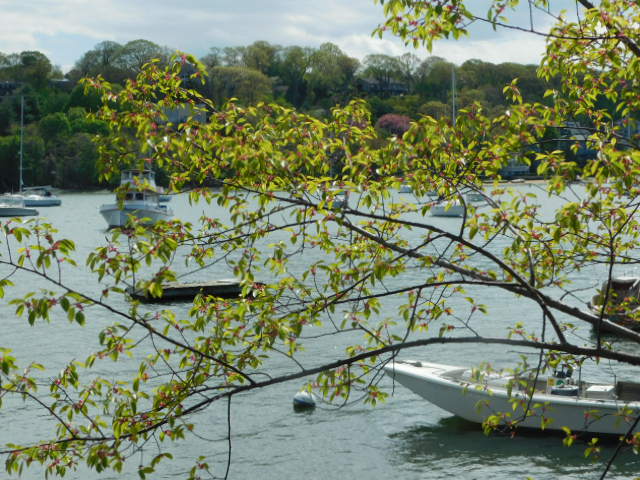
Deceptively tranquil puppy cove, like everything connected to troubles of our wide world by wind and tides.
Somewhere, physicists maintain, in impossibly infinite mathematical spacetimes, Prometheus and Orion are arguing about our night time skies.
“It’s all your fault, Prometheus,” Orion complains bitterly.
“What have I done now,” Prometheus sighs.
“Nobody pays attention to me any more. They can’t see me,” replies the constellation.
“And that’s my fault? Why?”
“Gift of fire, remember.”
“They don’t use fire much, and certainly not overhead.”
“Yeah, but it led to technology and now look at this place. They can’t see anything any more except their own nocturnal pollution.”
“Not fair, that. You might as well blame Vulcan for letting them learn to chip rocks to make stone-age tools and expand their brains.”
“Well, yeah, but you owed me after I rescued you from that stupid boulder you were chained to.”
“OK, I’m sorry. I admit it was a mistake. The rest of the planetary ecology has been raking me over the coals as well. Guess the Gods knew what they were doing when they punished me.”
“Ah, it’s all right, I guess,” says Orion. “After all, humans took care of the Gods themselves some time ago.”
Sunday
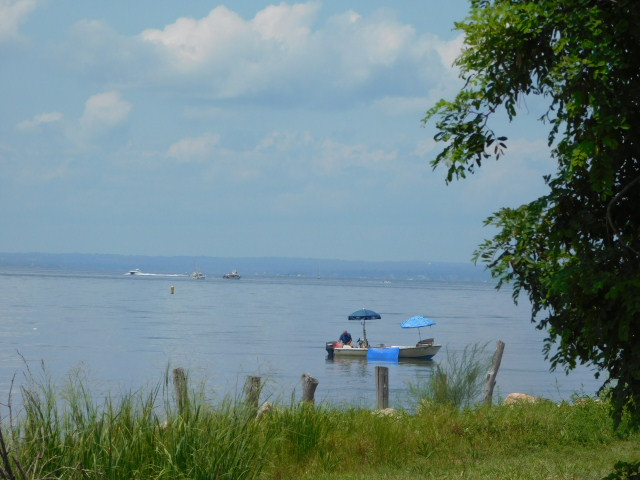
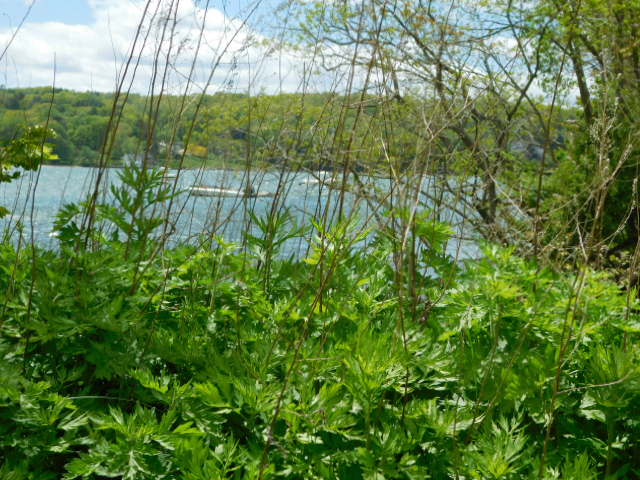
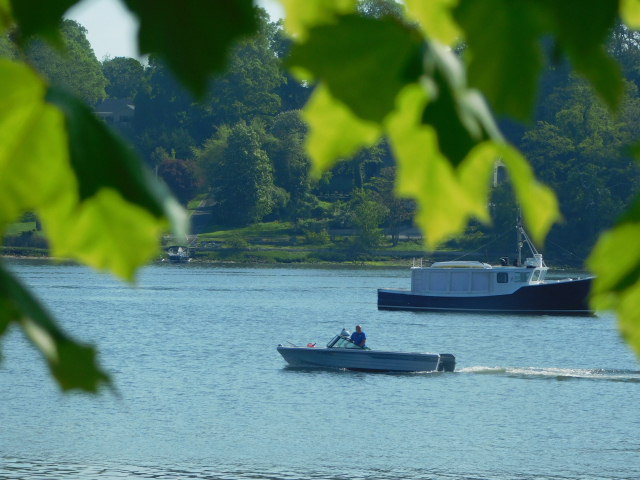
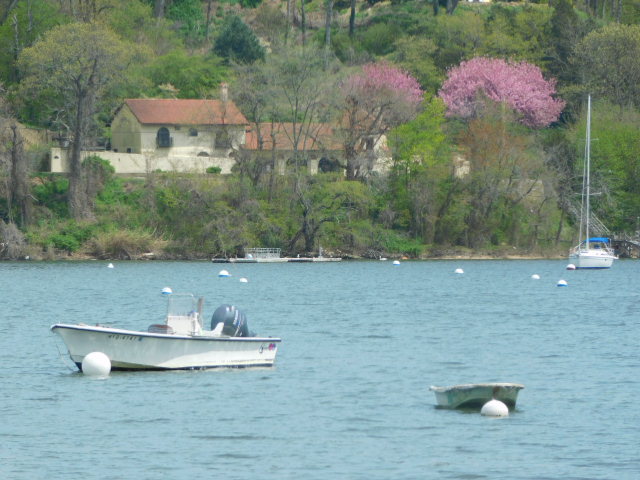
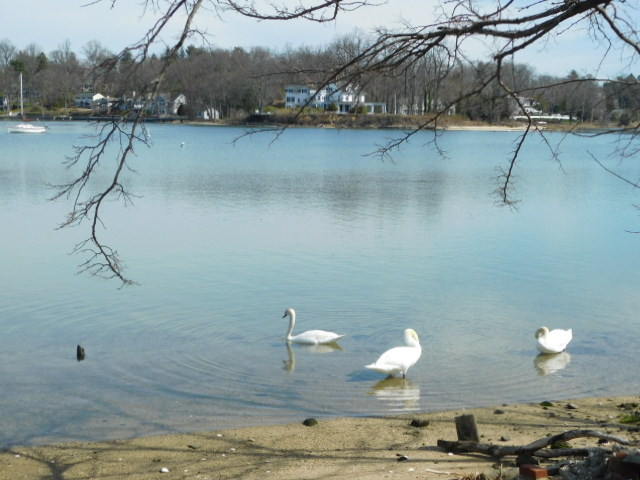
Solitary clammer tries his luck on Oyster Bay, hard work in hot conditions with a beautiful view.
Bright light night, such easy rhyme
Freely used by poet scan
Always a part of each day’s time
They think that all will understand.
But night is gone from human ken
Banished by electric flares
What was once feared is now ignored
Day or nighttime, no one cares.
Most ignore Northeastern lights
There’s better things to see
I’d cast aspersions on my peers
Except they’re just like me.
















 HuntingtonHarborThoughts