2026 Methodology

Future posting methodology follows that of the last year:

  • Essays are written longhand several months ahead on Monday, Wednesday, and Friday and are edited before they are posted.  
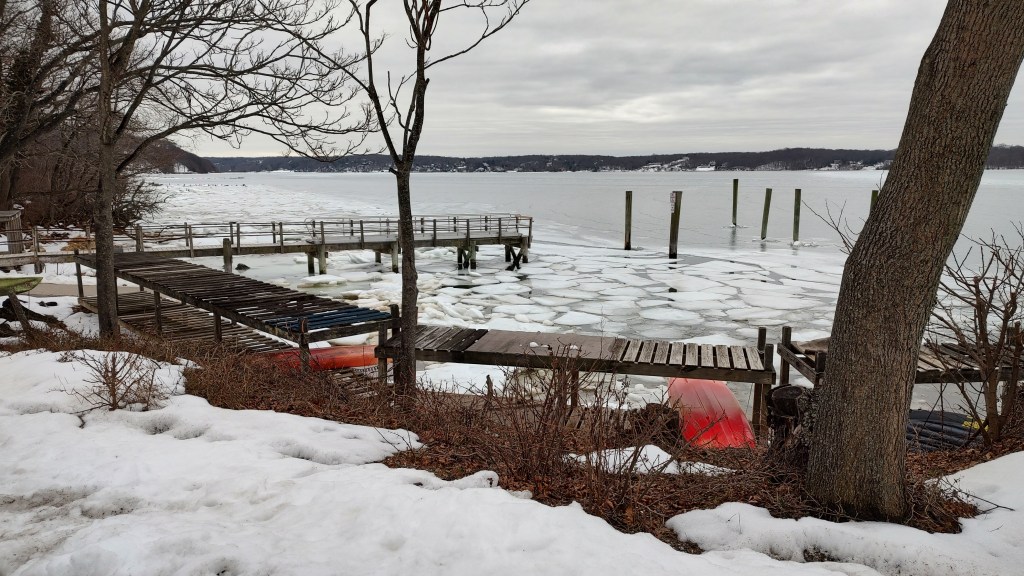
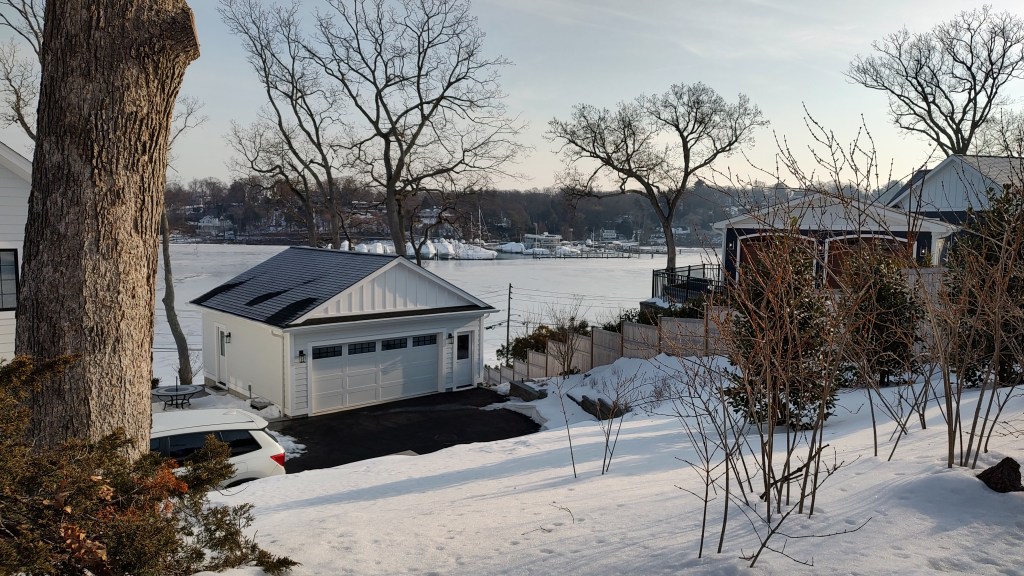
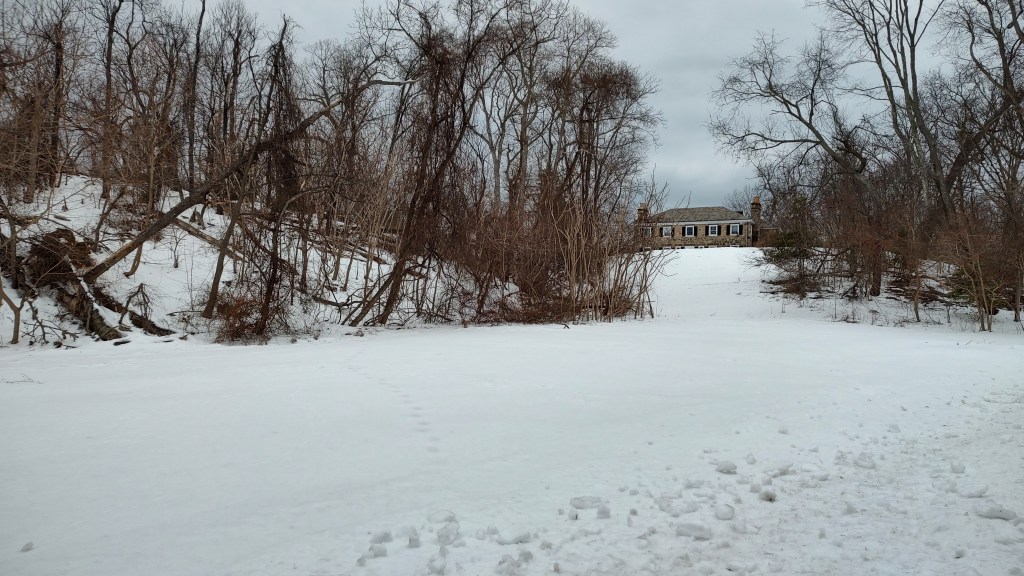
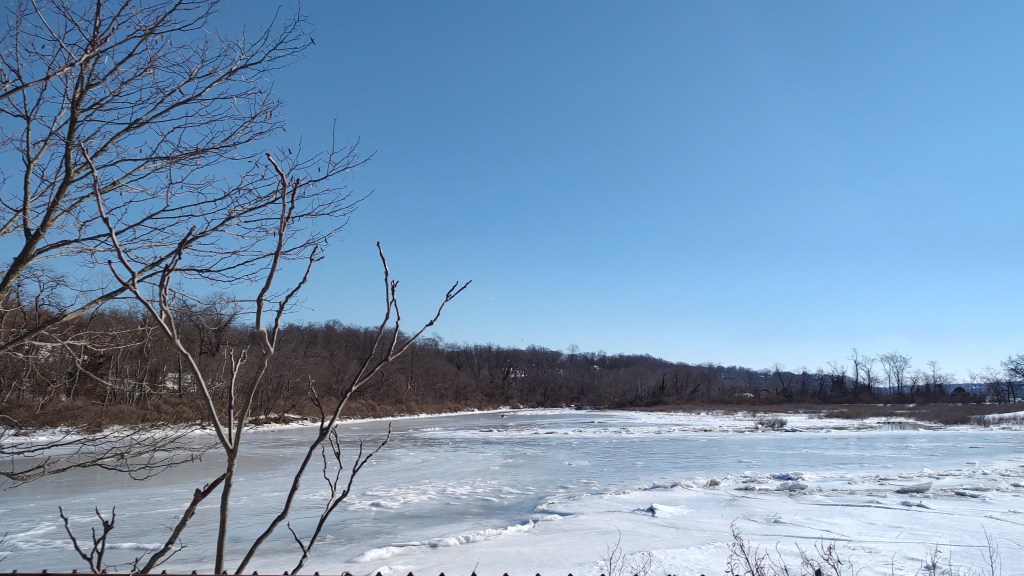
  • Essays and recent local cellphone photos are posted to WordPress blog on Monday, Wednesday, and Friday, to Facebook on Monday, and a summary list of the week to Bluesky on Friday.
  • Artworks previously posted over the last two years are reposted on WordPress and Bluesky each Tuesday.
  • Previously unposted artworks are selected for WordPress, Facebook, and Bluesky on Thursday.
  • All artwork postings also show media, year created, and size (length by width in inches), with any accompanying text written on the picture.
  • Please visit the WordPress blog (https://weeklyobservations.blog/), and my website (https://sites.google.com/view/cabinetofvanities) which contains a catalog of all artwork, various biographical essays, and links to several books I have either self published or provide as digital documents.

Anti

We seem to find it easier to be against something than for it. Maybe hate is easier than love. What we dislike – noise, clothes, morals – is often in sharper focus than what we are for .

Accordingly it is pretty simple to form social and political groups strongly against what they are certain they do not like. Trying to get people in favor of something often comes down to defining the enemy. Protect the environment, for instance, by hating industry .

The problem with anti-groups is a proverbial observation about always using a hammer because that’s what you have. And the problem with a hammer is that it is very easily turned against almost anything. Those against gay rights easily morph into being against certain ethnicities or religions. Those against certain medicines are easily marshaled against certain foods. Those who hate one modern morality are ready to go against any others .

With luck, very strong anti-groups eventually splinter against each other and dissolve. Without luck, all bets are off .

Quantity Lies

We may not exactly count “one, two, three, many”, but we do lose ourselves as numbers become immense. I think most of us understand 100, but 1 million is hard, and anything higher does become “many”. We can easily visualize odds at “one in a hundred”, but “one in a million” is practical infinity .

Our vast outreach of instantaneous knowledge and awareness has jumbled that picture. Odds of winning a lottery may be “one in 372 million”, but – as my wife claims – “somebody always wins”. We hear about that somebody all the time. Hey, it could be me !

With the unusual reported more than the commonplace, our perception of odds becomes strangely distorted. If chances of anything are truly one in a million, then in a country like ours 360 people (each one interviewed in a media moment) will have it happen to them. In a planet of 8 billion, 8,000 folks will. Suddenly it seems like an awful lot of people. Translated to our own surroundings the odds suddenly appear as likely as 50 or more percent .

That’s why anecdotal “evidence” in medicine, science, or society is so damaging. An anecdote seems real, a statistic kind of nebulous. We think “oh, a person just like me was affected”. Winning, losing. Then we act stupidly .

My antidote has always been “how many people whom I actually know have had this happening?” That is quite sobering, and puts odds into much better perspective .

Bernard DeVoto

Historians weave bygone  “facts” into various narratives, depending on their own outlook and goals. Most intelligent readers know there are many valid aspects to such interpretation. I enjoy the American trilogy of Bernard DeVoto _ tracking the European overrunning of the North American continent .

Unlike many modern writers, DeVoto was able to be both brutally critical and empathetically understanding of some of the horrors and gallantry of the topic. He did not mind stating his opinion, always clearly as an opinion, but with a certain judgment often missing in the more shallow morality tales which treat the same subject today .

Brilliantly evocative, as I read – say – “The Course Of Empire” – I can nearly gasp at some of the appraisals of figures and cultures, which seem whitewashed in later treatments of the same subject. So much now forbidden language, so many prejudicial statements, so blunt a panorama of suffering, heroism, evil, stupidity, and progress .

Years ago I bought print books of these works. I often worry that in the future an Orwellian AI culture existing mostly electronically will hide, erase, or cancel anything like this by whim or accident .

In the meantime, I reread it all periodically as a treasure of my heritage .

Museum

I contend, contrary to current corporate creed, that there is value in public expenditures and public places. Plazas, parks, churches, and, for the purpose of today’s thought, museums .

A public museum is a marvelous place. Its purpose is always to arrange stories and show versions of reality. Sometimes bones or rocks, sometimes paintings or sculpture, sometimes any oddball mix of anything. Objects usually with a story attached to amaze, mystify, or educate .

There are claims that with the advent of virtual spaces on the internet, museums are obsolete. That may be true in terms of tagging objects. But another function of public places is as a setting for everyone’s street theater, to see and be seen by others. A crowd sharing some momentary focus. 

You protest that is also true of things like private parties and such. Sports events. I agree. The bounds are fluid. But by being open to all, a public space provides a wide variety of experience. To get back to the title, I love museums. Old, new, whatever. They make me consider what some other folks considered important. They let me see how contemporary peers react .

Such public interaction is a great binding experience, less frantic and directed than a stadium light show .

Vision

Each one of our senses is miraculous and far more complex than we usually give credit for. I hesitate to claim I am primarily “visual” because I truly celebrate them all, but I am often greatly aware of what I see and how I perceive it .

Anyone who gives a moment of thought is amazed at colors, and lines, making sense of the environment by constructing objects in depth. Keenly tuned to any movement. Able to instantly assemble a worldview of depth and perception when we glance around. Focusing on anything for fight, flight, or manipulation. The list is endless, and there is no need to expand the craziness by trying to explain the mechanisms of the eyes, nerves, and brain .

My vision naturally works with everything else. If I hear a noise, I automatically try to see what caused it. Before I eat I view each morsel. When I walk I use my internal visual mapping to aim my steps and avoid bumping into things. 

And I am somewhat frustrated when my eyes cannot help . The wind and cold surprise me. Internal issues scare me. Other times I use eyes unconsciously as when I read and my mind ignores all the intermediate processing from printed symbols to dreamlike thought .

Incredible. Miraculous. Instantaneous. Always available. And – unfortunately – prone to errors, incapacity, and age .

Elder Myth

Most of us understand our lives as a narrative story. Elders tend to form that into a mythology. Like any good literature, the best exaggerate the highs and lows and often have a structure with a moral. Grandparents especially enjoy inflicting this on their young grandchildren. Or at anyone else when there is a holiday gathering. It’s a way of making a mark on the universe, claiming an importance almost as meaningful as in tales of heroes of old .

Nor is it wrong to do so. There is more to existence than daily meals and bedtime. Formulating one’s place in eternal mystery is important to all of us. And once in a while it is nice to share – even proclaim – that adventure .

Unlike many others, I do not think such tales actually help the young in their own lives. Life and circumstance were always unique, and the days change at a dizzying speed. At best this is just another form of entertainment with the added benefit of being (mostly) true .

Oh, perhaps there is some moral value. But really it helps everyone share and join internal narratives to feel far less lonely in the ineffable cosmos. 

Sanibel Sad

“You can’t go home again” -, well you can’t really go anywhere as it once was. Older folks are often wrapped in nostalgia. As one of them, I remember many places I was privileged to visit before great change. Often merely modernity, sometimes catastrophe. Sanibel Island was one of them .

When my wife and I visited years ago it was – like many places we went – caught between old and new. The new was glitchy, shiny, and inaccessably privatized. The old had a patina of history along with the comfort of the commonplace. 

Hurricane Ian exchanged all that, of course. New things are being rebuilt, but all is shiny, private, glitz. I find myself never wanting to revisit anywhere that once charmed me .

This culture is, I think, testing the proposition that private wealth is always better than public for anything but the most utilitarian needs. Mostly gaudy and ugly, but above all else tightly secreted away. With rare exceptions, America has no grand public spaces, and even fewer that are not merely an attempt at preserved wilderness .

It’s a forward-looking time. Ignoring real history in favor of myth, and ignoring the present in the race to the next great thing .

Sometimes an old man believes all the great things are gone with the wind .

Beauty

Like ” wrong”, beauty is one of those concepts that can never be simply defined. It depends not only on environmental and cultural factors but also on the mood of the observer. We can often agree, but almost as often argue with others and even with ourselves .

It’s fairly safe to say that even considering beauty requires a sense of security within the observer _ you can hardly appreciate the loveliness of a forest while being chased by a bear. . Whether something is beautiful or not occurs way down on the scale of evolutionary fight or flight. A great deal of the time, most of us hardly notice it at all .

We assume that – like other odd traits – there must be SOME biological reason we can respond to beauty. Perhaps it helps social solidarity. Perhaps it is a shortcut to relaxation. Certainly nothing obvious .

I have noticed that in my own life the idea of beautiful has evolved as I age. When young, it was primarily biological. When older, mostly cultural. And now, in an elder, much more simply appreciation of all that is and how it fits together. A miraculous and – yes – extremely beautiful universe .

At least when I am happy, secure, and not doing too much .

Light Lessons

My wife usually gets her hair “done” in a salon,. When she gets home, there are inevitable complaints that it “looks different”. Of course – the lighting is changed .

There have always been different light effects – sunset, noon, overcast. And artificial from candles, gas jet, incandescent. In the era of LED, any “temperature” of red or blue or green or yellow mixture can be served up, bright or dim .

We deal with all this amazingly well. Red usually looks red. A landscape picture resembles itself in almost all conditions. But that should indicate to us just how amazing our vision is – both raw data gathering and interpretation .

Painters always knew this. Patrons who bought things done under “Northern light exposure” in studios rarely hung their purchases under similar conditions. Poor artists’ dimly lit barns had different lighting then when the work is hung in a brightly illuminated museum. And forget trying to recreate the conditions of “plein aire” .

My lesson is that much of our life is like this. We may think things are exactly the same, but only because our brains automatically adjust to what are objectively quite different events. It’s part of our amazing ability to compose and generalize, the core of our knowledge. 

Not quite obvious, and easy to ignore. Until the hair looks entirely different …