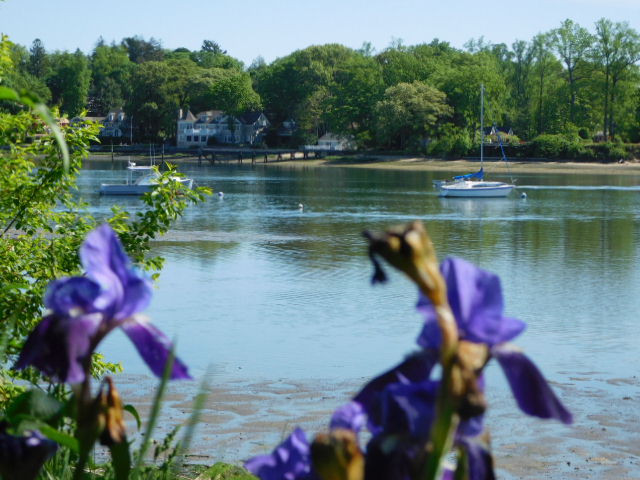

Acrylic on Canvas, 2001, 30×40
Solitary/behind Bay grasses//beauty all around/but also/one of all
More of my paintings and writing at: https://sites.google.com/view/cabinetofvanities
2001-ACV-30×40-040
Acrylic on Canvas, 2001, 30×40
Solitary/behind Bay grasses//beauty all around/but also/one of all
More of my paintings and writing at: https://sites.google.com/view/cabinetofvanities
2001-ACV-30×40-040
It is generally agreed that until the agricultural revolution of 10,000 or so years ago, humans – like most primates – lived in small tribes. Within those tribes we performed all the social roles and games we are used to – rulers, bullies, families, mutual aid, grievances and so on infinitely. And naturally, there were always certain individuals who were best at one role or another .
But massive crop food meant the tribes became larger and larger. There were petty kings, then emperors with more extensive reach. Hierarchies always led to the one at the top. Although different activities (trade, politics, religion) might have different types of hierarchies and multiple high spots, there were always only a handful of “the best” at the top. And now, with connected populations in the millions and billions those who are the “best“ are always “freaks”.
By that I mean that they are the strongest, smartest, luckiest, or have some other overwhelming advantage over “ordinary” folks. The rest of us must be content to simply accept their dominance and (often) to just try to stay out of their way and not get crushed by the play of the mighty .
But the real problem with “freaks” is that they are poised on the edge of disaster. Star athletes are near human physical limits, and consequently often injured. Geniuses frequently become mad or emotionally unstable. We all know examples .
I worry, sometimes, about the long-term consequences of putting such fragile freaks in charge of everything .

The ” future should look like the past” crowd would try to have everyone live as as they imagine people lived in the 1950s. Presumably all songs written after 1955 would be banned. They should listen to a few of those cheerful tunes written during depression, dust bowl, and war. One that I like is “aren’t you glad you’re you?” Which neatly expresses my own take on a good life .
Reactionaries are always Cassandras. Their future is always bleak, and more horrible the more distantly they imagine. They are infected with lollipop nostalgia of a past that never was, and they are too dumb or too ignorant or too lazy to investigate actual history .
These days we are sandwiched between dour polarized fanatics. On one hand the future is evil because of climate change, computers, population growth, anthropocene extinction, and so forth. On the other side we are doomed by government, laws, social breakdown, and flagrant selfish individualism .
Are they right? Maybe. The one true axiom in all of economics is Keyne’s observation that “in the long run we are all dead.” Looking too far ahead, planning beyond yourself, worried about uncontrollable possibilities, have always been bad bets for living honestly, well, productively and – yes – socially .
So – “every time you’re near a rose, aren’t you glad you got a nose?” Spend each moment as joyfully and consciously as possible. Maybe we all die tomorrow. True history and our own common sense say “probably not.” And memory of the perfume of that flower will last as long as anything else in this unknowable universe .
 HuntingtonHarborThoughts