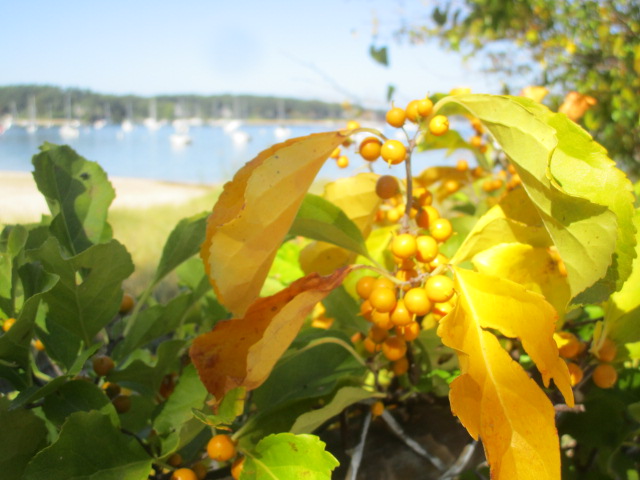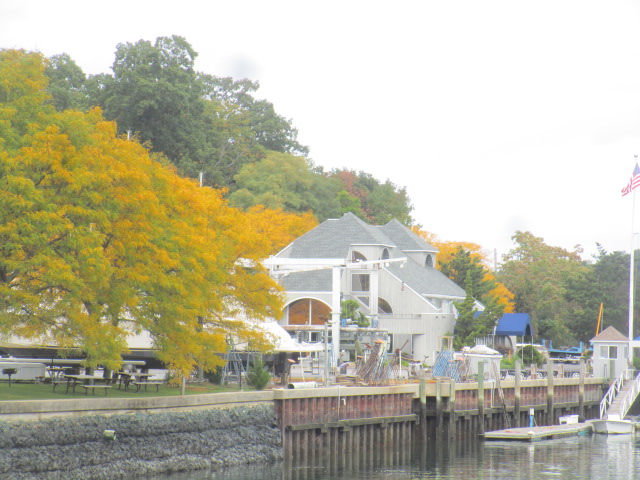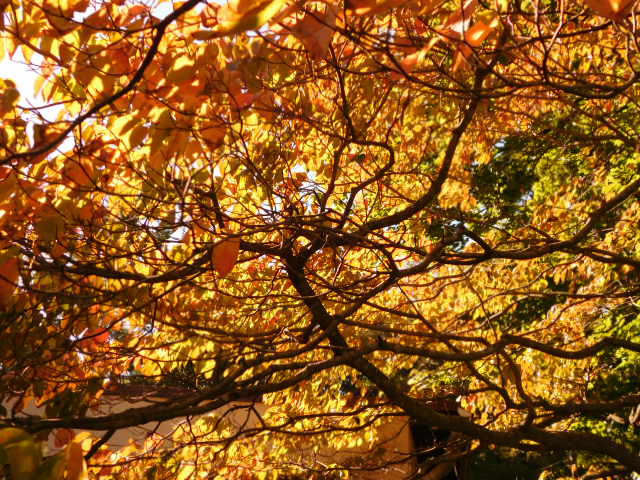
Ingrates

Monday

  • Platitudes this week are as numerous as leaves on our front lawn.  Lists of what to be thankful for are as long as they are meaningless.  Others lament “thankful for what?” still bitter at the election or some personal hurt.    Mostly, I must admit, I find our tiny corner of the world to be filled with cold ingrates, who have almost no appreciation of how lucky we are to be alive in this time and place.
  • When Lincoln declared the first of these November Thanksgivings back in 1863, few from today’s world would have had much idea what he was talking about.  From over a century on, it very much seems a plea as desperate as any offered by some refugee trapped in the current Mideast violent madness.
  • A war was raging, bloodshed was immense, vast numbers of men in their prime had died, and in spite of Vicksburg and Gettysburg,  the Union appeared lost.  Hordes of Irish refugees had arrived in the previous decades, fleeing the potato famine, and although they were now eating, they had made some of the slums in cities almost uninhabitable.  Millions were enslaved under the lash.  Corruption ruled politics.  Most children died before they were ten, mothers often died in childbirth, common diseases were fatal.  Life anywhere, except for a fortunate few, was harsh, filled with hunger and cold and uncertainty.  There was no electricity, not much indoor plumbing, barely heated homes, poor food storage and distribution.
  • And yet, in the midst of all that, Lincoln put together an inspiring declaration.  Not surprising, maybe he was thinking of the next election.  But astonishingly a lot of people said, “Yep, fine, ok, let’s give thanks for all we have.”  And the tradition carried on from there until now.
  • I will not repeat all those platitudes you are reading, I will not compose some longer list than those you are finding everywhere.  I will simply encourage you to reflect a moment on whether you would really, truly, trade for anyone else anywhere else in history _ not for their great deeds or immortal works _ but for their daily lives.  I would not.  I suspect almost anyone would be a fool to do so.

Tuesday

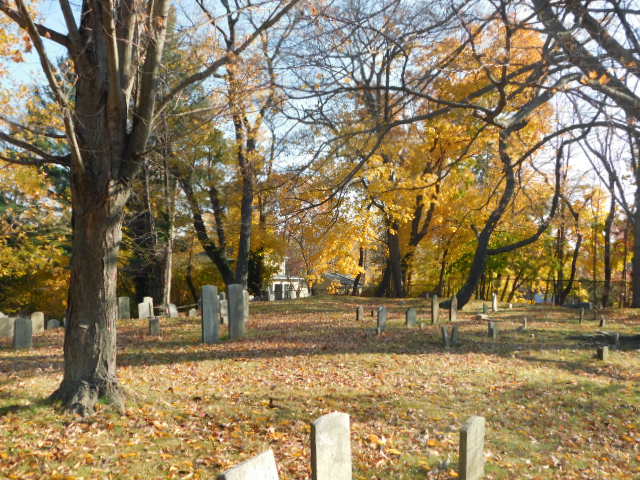
  • In North American deciduous forests, leaf-fall recycles organic materials to the benefit of the entire ecology.  Trees are better prepared to bear the weight of snow and ice, small rodents and other animals burrow into the soft thick quilt covering the ground, nutrients seep into the soil as decay sets in.  The true owners of the planet _ bacteria and fungi _ feast and thrive.  Probably only humans enjoy the spectacle as an aesthetic masterwork.
  • Suburban dwellers are perverse.   Maintaining green lawns where there ought to be woodland is a constant chore, not least when they are covered with dried foliage.  In spite of the recycling, in spite of the spectacle, I admit that I do not jump up on November mornings happily shouting “golly gee, I get to rake and bag today!”  Once outside, I am content enough at my labor until some jet pack roar of a whining leaf blower interrupts my quiet meditations. 
  • At least, I tell myself, it gets the blood moving, and it is, after all, an outdoor activity.  Often mild enough not to need gloves.  Eventually, I reconcile myself with farewells to such rituals until spring arrives, and go about my day watching the hazed sky, facing the constant wind, and listening to the scrunch of organic detritus as I complete my chores.

Wednesday

  • Americans seem to be raised grasping and envious.  Most ignore Thoreau, who wrote that “a man is rich in proportion to the number of things which he can afford to let alone.”
  • Own all that you can own, wish for more than you can imagine.  An exacting recipe for perfect perpetual misery.

Thursday

  • Darwinistic evolution is often presented as “nature red in tooth and claw,” where the survival of the fittest means the losers are always being consumed, one way or another, by the winners.  The slowest zebra falls to the fastest lion every day, for eons, and pretty soon there are very few slow zebras.  In such a view, nature is a bloody mess, a paranoid world of constant death.
  • Nevertheless, I look out my window at the bird feeder and rarely see blood.  Squirrels and birds peacefully coexist.  The trees are certainly not dripping with the ichor of ongoing conflict.  At any given moment, nature is just as peaceful and calm and serene as any Romantic poet could wish.  I have yet to see much of natural evolution, although birds are occasionally killed by the neighborhood cat, and I often see ospreys carrying a dripping fish in their talons.
  • Which brings us to terror and events like the Macy’s Thanksgiving Day Parade.
  • All my life, there have been some terrible events around me and in the world.  I was born shortly after World War II, when Hiroshima victims were still dying of radiation, populations in Europe were starving, and Stalin was enforcing the gulag.  Closer to home, friends died of leukemia or were affected by polio or simply were involved in childhood accidents.  In maturity I have been extremely fortunate personally, but could not ignore conflicts, wars, famines and other nasty fatal events in the world.  Age inevitably carried some close relatives and friends off, cancer struck others, and at slight remove car accidents always harvest more than a few.
  • Why, then, does being injured or killed at a parade become such a fear?  I would be far more likely to be killed trying to get there _ there are worries enough about drunken drivers on the highways, crumbling infrastructure on the trains, homicidal lunatics in the subways _ than I would be even were some explosion to happen.  Logically, there are so few terror attacks in this country _ so few airplane incidents for that matter
    _ that this should be at the very bottom of our concerns list.  But it is not.
  • I think it is because of manipulation.  The government, the police, the elite always want the masses to think they are doing something important, and that life would be awful without them or if they scaled back their activities.  It is in the interest of the military and the police to have us believe we are in constant danger and only live because we pay an awful lot for protection.  It is in the interest of politicians to claim that by doing nothing at all they have actually kept us safe from certain tragedy.  It is in the interest of media to fan our fears, to keep us addicted to the latest shot of fright, like teenagers flocking to midnight horror movies.
  • I know that mankind red in tooth and claw can sometimes be true, as it is right now in the Mideast.  I do not pretend there is nothing to fear but fear itself.  I sympathize with victims of attacks, as I do with victims of automobile accidents or disease.  But, as in real nature out by the bird feeder, I also think that for most of us most of the time most of our moments our world are quite safe and always wonderful.

Friday

  • During my daily walk, I was observing the first bufflehead duck to arrive when an osprey swooped so low overhead that I could feel its passage.  As soon gone mysteriously out of sight as the buffleheads, which vanish all summer long.  Raptors and ducks have made a nice comeback since the banning of DDT, and I am grateful for hawks circling overhead,  ospreys on their massive twig nests, and reports of eagles’ return. 
  • In other times I would have rushed to learn the winter habits of ospreys, the summer dwellings of buffleheads, but no more.  I am content with mystery.  I do not seek to know everything about everything, but to fully appreciate what I find each moment.  I wish to locate balance in our real world, for those of us who do not have time, desire, nor resources to concentrate on one tiny aspect of something.
  • Trying to know more than everyone else is a form of ownership, a kind of attempt to create envy in others.  It is perhaps less destructive than accumulating goods, but chasing knowledge like some modern Faust will lead to the same damnation that he endured _ a life badly spent, the eternity of moments we possess regretfully wasted.  Better to just smile as the osprey passes, grateful that we can still share our worlds. 

Saturday
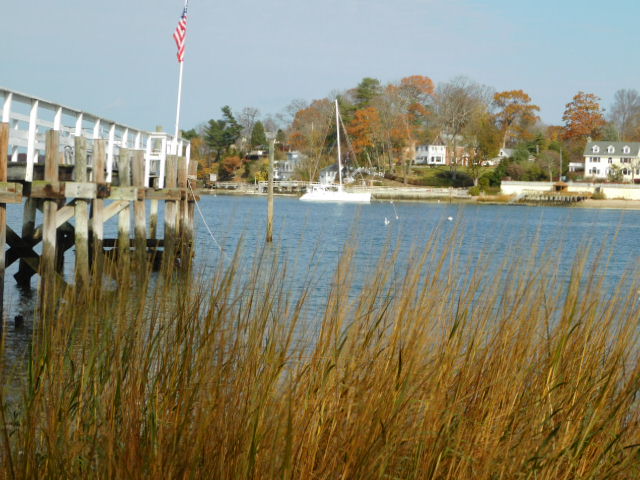
  • Blustery winds sweep down the harbor from dark purple-streamed clouds off to the north.  Larry seagull poises happily over a fat dead fish washed up by the receding tide on the shell-strewn sand.  Good day for a feast, he thinks.
  • A shriek overhead startles him a moment until he realizes it’s just Moe, as usual, arriving late and noisy.  He waddles away calmly away from the dive bomber who is now squawking “mine mine mine” at the top of his lungs.  Of course, that display has caught the attention of Curly, circling over the far bank, and he is soon on his way getting ready to rumble.
  • Moe struts around his prize, taking a peck here or there, tasting and hardly getting much because he is keeping a wary eye out for competitors.  Curly swoops in out of the sun with a ferocious display of huge wings, claws outstretched aimed directly at Moe, who angrily hops out of the way.
  • The two circle each other, hurling insults and challenges.  “I got it first!” shouts Moe “wait your turn!”
  • “Out of my way, you fat moron!” cries Curly, shoving his wide open yellow beak menacingly.
  • “Guys, guys,” says Larry calmly.  “There’s enough for everybody.  Calm down …”  Of course he is ignored completely, and backs off to meditate on the day and the season.  What the hell, there will be lots of leftovers.
  • “Stop now!” shouts Curly.  “Idiot son of a scavenger go home!” shrieks Moe.  They circle like ancient Greek wrestlers seeking the first fall, but never actually touch each other.  Running, quick winged hops, occasional near misses.  This goes on for almost five minutes, as they each jealously keep the other from getting too much, which means that by far the largest portion of the menhaden remains untouched.  Finally, breathing heavily, too tired to stand, they float warily offshore, circling.  “I’ll get you someday, you crook!” taunts Moe.  “You and what army?” mumbles Curly, but his heart is no longer in it.
  • Larry, the largest brown gull around, realizes that it is his turn, and slowly wanders down and prepares to take his fill.  Moe and Curly remain too involved with each other to notice.
  • Sometimes, he realizes, when there is too much at the feast, it is best to wait until the crazies are out of the way.

Sunday

More, please.
More days, more joy, more sun, more hope
More things, more stuff, more life itself
And while we’re at it
More needs, more wants,
More all

More more.
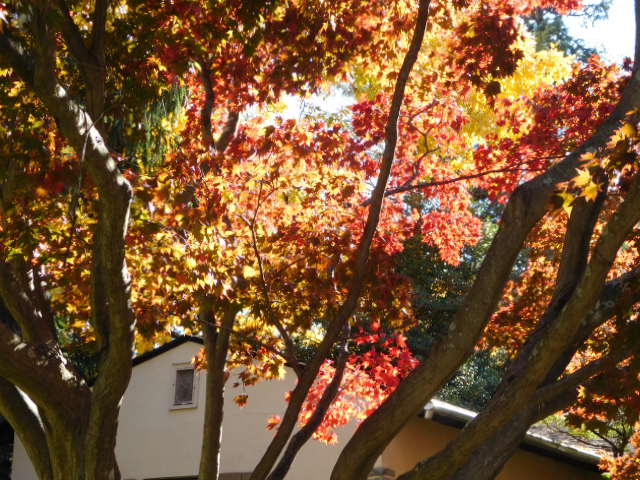
Kaleidoscope

Monday

  • As happens periodically, I grow weary of current patterns, including the one I have used on this blog for the last year or so.  Like seasons, an occasional change is required. 
  • New formats are in flux.  Social and philosophical commentary easily becomes tedious, even to the writer.  Reaction to current events tends to bitter shallow sloganeering.  Yet pondering the deeper course of nature and cosmos becomes a mere escape from daily reality.  Nevertheless, pondering and commentary and reaction is what I have available.  I am not about to leap into action and somehow save the world, nor even a single soul.
  • Kaleidoscope represents this weekly theme of all that is swirling about, colored leaves constantly falling, turning brown, drying on the ground.  What can be isolated from that constantly changing view, what meaning should be attached?  Twist the device and suddenly all fractures again, yet with similarities.  So it is with perspectives on life and society and nature.
  • Twist again.  I am not sure where, if anywhere, I should settle.  Pardon my confusions, as I seek my path into the next stage.

Tuesday

  • Something seemed different the minute my Honda reached the long causeway through the marshes, Saturday after Veterans Day.  Too many cars, in both directions.  Sure enough, Caumsett which is often nearly empty at this time of year, especially on such a chill wind afternoon, looked like a rock concert.  Cars lined down the entrance road, parking lot jammed, enough people walking with strollers, bikes, and young children to fill Central Park.  Even a family of five on large unicycles,  following their mother like wheeled ducklings.
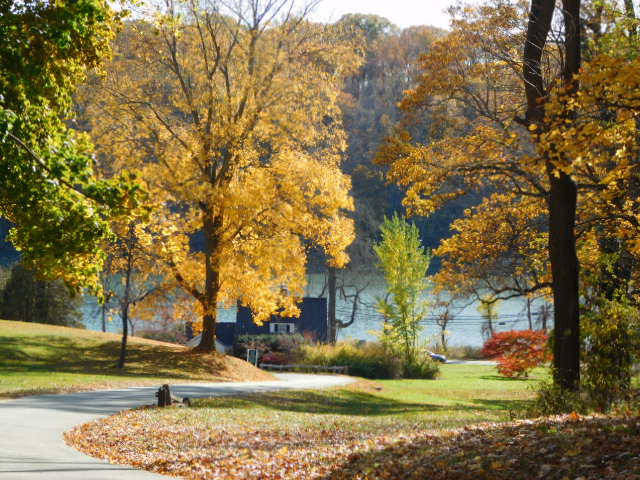
  • I don’t dislike people, but I come to this state park for solitude.  Fortunately, the less known dirt roads and paths through the woods, sprinkled with leaves of all colors and shades of yellow and brown, were almost _ not entirely _ free of humanity.  Squirrels dashing about the underbrush were about the only noise rising above the gentle rush of drying branches and foliage.  Sunbeams slicing through translucent patterns like nature’s stained glass.
  • The park on a day like this is a natural cathedral.  Everybody knew it, which accounts for the crowds.  And, I suppose, also to relieve some of the hysterical social tensions of the last week, and get back to understanding that the world is more than politics, more than television, more than slogans, and even more than anyone’s ambitions. 
  • More than that, this cathedral remains free to all those willing to make the effort, take the time, and experience it.

Wednesday

  • Walking into southerly setting sun, camera slung around my neck, trying to take pictures of the harmoniously hued majesty revealed everywhere, but the results cannot begin to recreate what I enjoy.
  • Frame, focus, visualize clearly.   Success often requires ignoring wider reality.

Thursday

  • This is my sixty-ninth fall to heaven, as Dylan Thomas would put it.  Long Island has experienced twenty-one thousand such cycles since its formative glaciers receded.  By geologic time, even by personal time, this is one season among many.  Nature continues its stately rhythm.  Unlike our own quickly distracted and worried minds.
  • Breathless screaming media, panic in the streets, end of civility, civilization collapsing.
  • I can’t help thinking this is a bit of overreaction to an election.  But maybe people are too young to remember really fearsome times:  Germany invading Poland in ’39, Cuban missile crisis, Nixon’s win in ’72, even Chernobyl melting away forever.
  • We’ve survived worse.  Very little is about to change very much, which will make some people very angry, and some people very relieved, and most people just continuing about their lives.  Leaves ceaselessly drift down.  Snow will arrive soon enough.

Friday

  • Autumn is more about age than death.  Another cycle of closing up and seeking shelter through difficult weather.  Not the grand newborn hope of spring, not the eternal dance of summer, but not the chill of icy endings.  Fall marks time passing, and inevitable decline to await better times.
  • Like aging properly understood, autumn is a time of spectacle.  The grand survivors reveal themselves in full complexity of lives past.  Younger trees are stripped of gaudy leaves and stand slim beside massive trunks.  Undergrowth briefly becomes visible, displaying fallen giants as reminders of seasons past, decay fungus setting in.
  • We gradually become aware of the bones of our natural world exposed, the fantastic twists of tree limbs, the undulations of earth.  I would lie to claim it is a happy or hopeful time.  After all, that is why we so frantically engage in our various festivals of light as the days grow short.  But it certainly is not the dead calm of waiting out a blizzard, the creeping pain of deep cold, the pure endurance of hoping for better days that we encounter in February.

Saturday

Squirrel hunches nervously seeking any small remaining seeds from the cascade that continues to fall as tiny migrant birds attack the feeder, spilling more than they eat.  Crow flaps in ostentatiously, scattering a couple of doves as it lands and struts, occupying territorial ground space.
“Hey, Sherry, what’s up?” he squawks imperiously.
“Busy, busy, busy,” answers Sherry Squirrel, barely looking up from her nearsighted endeavor.  “Have to put away as much as possible you know.  Hard times coming, hard times.”
“But,” notes Clark Crow, “There’s big fallen nuts all around the yard.  What are you wasting time here for?  This stuff is hardly worth bothering about.”
“Not enough hickories this year, not enough,” complains Sherry.  “Hardly any acorns.  I’m stopping by for a quick snack, this quick snack, before I get back to burying my future meals.  Need to get ready now.  Besides, I could ask you the same, Roadkill.  Why are you here?”
Clark is not happy with his nickname, but he endures it as pridefully as possible.  “Same thing.  I get tired of the same old diet of squash.  Squashed rats, squashed raccoons, here and there a seagull.  This stuff is like candy.”
“Wonder where it all comes from,” wonders Sherry.  Suddenly loud screeches sound all around, high up in the trees.  She lifts her tail and glances up in near panic.
“Neighborhood watch!” explains Clark, getting ready to take off.  “Either Cat or Hawk has been sighted. We take turns covering each other.”
“Great idea!” snaps Sherry, grabbing one more seed.  “I lost my friend Ralph last week over at Coindre because he was on the open lawn and not paying attention.  Must rush!”
“Yeah, Heather got gutted by Cat a while ago.  She was too fat to take off quickly, of course, her own fault really…”
“Gotta go now! Go!” shouts Sherry jumping onto a tree and scampering up into thick branches.
“Later!” Clark flaps up to the highest point in the blue spruce to see if he can figure out what is going on.

No matter how easy life seems, friends have to stay alert.  

Sunday

Gold, russet, sienna, scarlet
Just words meaningless
Unless

Your memory evoked

Cool Anticipation

Monday

  • Cool days have arrived, and cold will not be far behind.  Some leaves cover the ground, but great mounds are to follow.  The days are shorter, but in a month nights will seem to last forever.  Meanwhile, anticipation for end of year holidays builds and commercial displays are beginning to blossom everywhere.
  • This is a culture which thrives on anticipation.  Some people could not wait for the heat and light of summer to end.  They were either bored with it, or annoyed by the humidity, and find crisp breezes invigorating.  Soon enough they will wish for snow, and then grow tired of winter’s freeze.  I have grown out of always hoping for the next thing, and trying to enjoy this thing right here.  Today is bright, clear, cool, and only grudgingly autumn, as much remains bright green, and I celebrate it as it is.

Tuesday

Our world ever new awakes
Each day to calmly opened eyes
Before fevered brain kicks in
Firmly layers us complex
Sandwiched into heaven, hell
Unsure remembered maybe pasts
Imagined could be hopes and fears

Identical transmuted self

Wednesday

  • Last week displayed mid-autumn, but felt like August.  This week the reverse.  Folks in hats, gloves, and heavy jackets vainly seeking incredible foliage.  In some ways, the contrasts are quite pleasurable, like unexpected spices on food.  On the other hand, the dissonance can be disquieting.
  • I rejoice that experience is so fractured and inconstant.  Perfect serene and complementary moments, when they exist, quickly become boring.  Surprise feeds my enjoyment.  So if I rush out the door into right sunshine, only to dash back for some warm wrap, that’s fun.  Virtual reality misses that so far, which makes it very very far from true reality.

Thursday

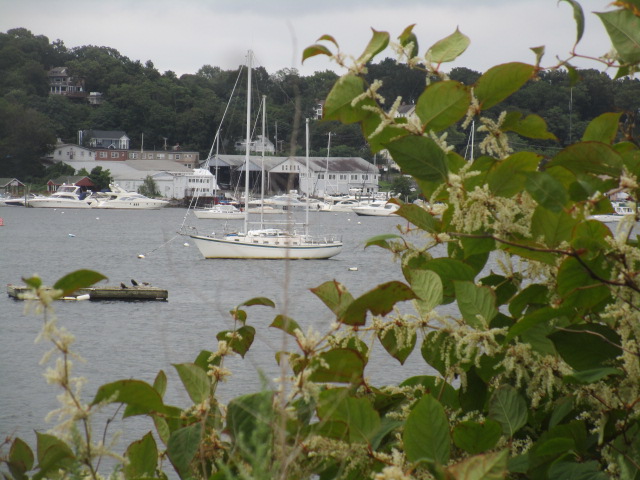
Mission-focused streams of overly dressed people stride around Hecksher pond, bright cold and windy day, too cool too rapidly for the season.  Joan says, “well, at least they’re smart enough to be wearing hats.”
She has a point.  “Yeah, I know, when the season sneaks up there’s a tendency to not dress well at all.  Look _ even the kids on the playground have winter coats.”
“I see so many people all year just walking around with sweatshirts, no hat, nothing, like it’s summer.  I’m sure they have to get sick.  And their kids …”
“I once saw somebody running across the street in town in a snowstorm in bare feet and tee shirt,” I remark.
“Well, probably crazy drunk.  I’m talking about normal people.”
“I guess it’s easy for us to change outdoor dress.  I just move the winter stuff to the front of the closet, and when I reach in there it is.  I think we were a lot more mixed up when we were younger.”
“You might have been more mixed up,” she remarks.  “But it sure was harder when the boys were small.”
“The other thing,” I continue, ignoring her, “is that our stuff _ my stuff at least _ is much better quality now.  So I can wear the same boots, coats, gloves year after year and they hardly age.  Hats, I admit, I still wear out pretty quickly.”
“Don’t forget the lined driving gloves I have to get you almost every Christmas.”
“Right.  But even so, I’ve hardly bought anything new in years.  The good stuff just lasts and lasts.”
“But your Bean stuff costs a fortune  …” she complains.
“It works.  It almost never needs replacing.  And it is easy to find, because all I do is push it back in the closet.”
“That’s just you!” she says in a huff.  “I love to buy new things, and new things discounted are the most fun in the world.”

She matches the American consumer.  I don’t.  We continue to sit on the bench in silence, and watch the parade continue.

Hang Time

Monday

  • In slow-motion video, sports stars float serenely, suspended between jump and the certain knowledge that they will eventually succumb to gravity.  Suspense builds as to just how long the action can continue.  And so it is now with the foliage and flowers.  Just how many days can a given sugar maple remain fluorescent orange, how long can lingering roses resist frost?  Mid-October is nothing but hang time, gasping at spectacle, awaiting the inevitable return to earth.
  • Each morning, the light radiating off our backyard trees has a different hue, sometimes subtly and sometimes dramatically different than yesterday.  Each leaf remains poised to color vividly, turn brown, or dry. Asters and goldenrods fight the golden brown tide surrounding them, but we know that is simply a valiant rear-guard action.  Still, we hope the loveliness will last at least another day, perhaps another week, even longer, who knows?  Meanwhile, this moment hovers, as all moments must, between the past and future.

Tuesday

Everything green changes hue
Bees find that flowers are few
Sparkles are bright
But it’s freezing at night

And I’m not quite sure what to do

Wednesday

  • Roman historians reported that among the Teutonic tribes it was a crime _ sometimes punishable by death _ to fatally injure a tree.  Early Americans, confronted by the same dark forests, decided that it was worse to leave forests standing unimproved and unused for growing crops.  Almost all the magnificent autumn displays throughout New England come from second or third growth woodland, the original having been logged off long ago.
  • We still reserve our respect for historic or magnificent specimens, sometimes for overwhelming spectacle.  But for the most part we cut trees for furniture and lumber, or mash it into paper.  I am not saying such is wrong _ at least it is biologic and recycling, since trees will grow back eventually.  As many homeowners around here ruefully find out, maples and hickories actually grow back a lot faster than expected, shading flowerbeds, draining water from lawns, showering cascades of thundering nuts, and threatening houses with heavy overhanging limbs.  We still need to prune or remove these giants once in a while, but we should always approach them _ even just to admire their foliage _ with a degree of humility.

Thursday

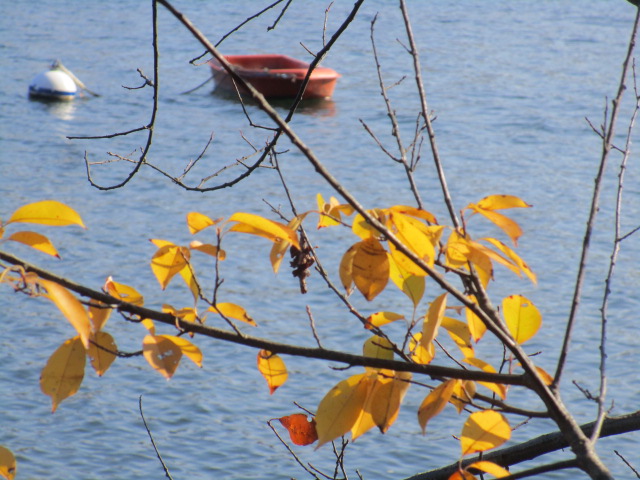
This time of year, I am easily mesmerized by one branch or twig surrounded by its colored ensemble.  Or, especially, by a single fruit, one brilliant leaf.  I am paused in reverie staring at a particularly lovely specimen when John passes by and calls.  “You know that’s poison ivy.  Look but don’t touch!”
“Yeah, yeah,” I laugh.  “Learned that the hard way.  Still, loveliest display along this route today.”
“There’s a moral there somewhere,” he suggests.
“Oh, there’s a moral in everything.  Many morals.  The one we select always turns out to be something that supports our current agenda or mood.”
“So what’s yours today?”
“The transience of everything, I suppose.”
“Ah, romantic deep melancholy.  Too bad, with the day so lovely,” he critiques.
“No, no,” I insist.  “Transience in a good way.  This is the time to enjoy this particular leaf.  Tomorrow it may be brown or fallen.  Right now it is a marvel.”
“Like you, I suppose.”
“Well, OK.  But mostly, I want to take advantage of the micro-views of the world.  The pretty leaf right here, the flaming tree over there,” I gesture across the harbor, “no need to travel to far away destinations to take advantage of what is being offered.”
“Today only!  Don’t miss out!  Hurry!” he mocks.
“If you will.  Anyway, isn’t this nice, all red, orange, yellow, spotted and shiny?  Here, I’ll pick you a bunch if you want….”
“Fiend!”  he yells dramatically.  “Begone!  I walk in beauty, I do not drink of it!  Although,” he adds slyly, “you are free to take as many as you want for yourself. “ He continues on his way, whistling.

I try to get back into my study, but the spell has been broken.  Anyway, there are more things to see, and tomorrow will surely offer others, certainly different.

Friday

  • No matter what, triggers have been fired.  Even if days remained extraordinarily warm until Christmas, leaves would brown and fall, perennials would dry and hibernate, annuals would not sprout.  Everything now awaits the new triggers of cold and damp, and goes about its business of dismantling.  Leaves and nuts will cascade down everywhere, inevitably.
  • Sometimes the differences of a mile or so can be disorienting.  Drive down one street and the scenery remains that of late August.  Take another route and crisp golden orange leaves everywhere herald the imminent arrival of November.  Unlike Robert Frost, I have the pleasure of being able to take each road diverging in these yellow woods, and enjoy whatever unique perspective and thoughts they inspire.

Saturday

  • Way back when biology was simple, many of us received our first lesson in environmental ecology and recycling from the story of our northern forest.  In the spring, roots would send water to buds to swell manufacture, and start using chlorophyll.  All summer long, roots continued to draw water and raw nutrients from the soil in exchange for the carbohydrate food sent back by the leaves.  In fall, shorter days made the leaves stop producing food, so the roots stopped sending water, the leaves dried up, decayed, and fell to the forest floor.  All winter that biomass decayed, leaching raw materials back into the soil, ready for the roots to repeat the cycle next season.
  • Neat, simple, made sense, and although true in a grand sense, also wrong in details.
  • In the fifties we constantly tended to underestimate natural biology.  We thought of most of it as at best machinery, at worst a mere extension of basic laws of, for example, evaporation.  We were sure we could do just as well, in almost no time, with our scientific medicine.  We had yet to discover almost anything about life, but were nevertheless sure we knew the big things and would soon control all there was to know. 
  • Now the complexity of even the forest has been revealed, although not completely understood.  But one thing is certain: the fall ritual of dropping leaves is a lot more complicated than we thought.  After various triggers are associated and set off _ in itself somewhat mysterious _ hormones are released and active deconstruction and storage of leaf materials begins.  The components of chlorophyll and any trace elements and chemicals that are hard to come by are not abandoned in the leaves, but rather carefully removed, broken down, and shipped to the roots for storage. 
  • What remains are primarily stiffening compounds _ silicates and such _ used in veins to provide shape and easily recovered from groundwater next year.  And carotenes, which provide more structure and incidentally a nice red orange yellow color.  That color, we all know, only appears when the chlorophyll is gone _ not destroyed, but deconstructed and shipped out.
  • That’s why you can’t recreate autumn the rest of the year by picking a branch and letting it dry.  All you get there is dead brown decay.  Marvelous colors are hardly the sign of the tree giving up and going back to sleep, but rather the result of furious activity actively heading into hibernation and a planned renaissance when the next cycle occurs.
  • I suspect our current visions of some simple deeper universe or reality are just as naïve as our former visions of forest cycles.

Sunday

  • An afternoon of cold rain, a night of howling north wind, and landscapes are green again.  Any brilliantly colored foliage has been stripped off, what remains are still undead verdant leaves merely tinged off-hue.  Weather forecasters have expanded their realm and now predict when “peak color” should arrive in any region.  Fortunately, they have a better chance of getting that right than they often do the track of storms.
  • From experience of other years, I believe that peak color has already passed many of the places I most visit.  From here on there will be shades of yellow gradually mellowing into browns which will lazily drift from sky to ground.  Besides, there are at this late date sure to be more savage winds and harsh heavy rains.  My task now is to seek out whatever small highlights I can find, and like everyone else around here, start to clean ongoing accumulations from the yard.

Accelerating Differentials

Monday

  • Shortening days minute by minute are sneaky, hardly noticed except in quantum weekly leaps of darkness.  Chill wind at dawn, on the other hand, is a brisk slap on the face.  Fading flowers gently slide into another phase, still replaced by an occasional rose bloom or burst of aster blossoms.  Yet suddenly an isolated  tree will flame into orange or yellow, crisp into brown, present stark branches after a storm, all in the space of a few days.  Only a matter of uncertain, but limited, time until heavy dew on the leaping grass is replaced by frost.
  • Cold used to represent the most certain marker of seasonal change.  Even today, I hear a few people vow to not give in and turn the heat on too early.  However, with the din and clatter of noise in the suburbs approaching city levels, not to mention exhaust fumes, most windows are sealed year round, thermostats set to “climate control” and isolation reigns indoors.  Calm, serene, and above all the same temperature.  Our commercial culture leads the charge to what comes next, frantically selling warm clothes and decorations for holidays that are less celebrated than endured.  I admit I wish for a few more warm afternoons, although “warm” is also being redefined.   

Tuesday

Wind rush hushes all
Quiet I sit, shiver, say,
Mantra:
It’s not thatbad _

Yet

Wednesday

  • Nights suddenly in the forties.  Leaves more affected by cold than by short days, will soon transform landscapes.  Fauna, on the other hand, are keenly aware of the sun’s retreat.  Birds have been fattening up or flocking southward, squirrels are burying nuts, a black wooly-bear caterpillar was trudging across the shed floor searching a good place to be transformed, adolescent snappers have migrated into deeper seas.
  • Only I, with unique human perspective, regard this as moments in time.  Only I, with my amazing consciousness, can be aware that falling nuts portend falling snow.   Only I can enjoy the vistas of autumn while dreading the depth of winter and fondly remembering the soothing ambience of summer.  We live beyond today, tendrils towards past and future, and fail to understand how strange and miraculous such magic is.  Meanwhile, I pay obedience to the moment dressed in sweat shirt and vest, not yet requiring hat and gloves, which will be necessary (I foresee) soon enough.   

Thursday

“Whew!” I exclaim, as a nearly-frosty gust skims off the end of the harbor.
“You call this cold?” laughs Larry.  “You should come with us this weekend, right, Jan?”
“And you are going where?”
“We’re off on a bus foliage tour of Vermont,” Jan explains.  “Almost a week of mountains covered with bright colored leaves and warm fires on cold nights at various ski resorts.”
“Enjoy.” I comment.  “I’ve been in New England when the leaves turn, it’s very beautiful.”
“Recently?” asks Larry, skeptically.
“Well, no, a long time ago.”
“You and your wife should do it now,” notes Jan.
“Maybe.  I don’t know.  I remember well enough.  And there are lots of places I go to around here to get the same effects.”
“Like where?”
“Oh, Sagamore Hill, sugar maples on Goose Hill Road, the pond behind St. John’s church, 25A anytime of this month glows all the way.  But I’ve also developed other appreciations.”
“Like what?” Jan is curious.
“At upland farms yesterday, for example, I was really excited by the thousand browns and yellows of the weeds in the fields, the metallic crimson sumac shrubs, white asters, purple Russian knotweed and the fluffy stuff spilling out of dried milkweed pods.  Lots of fantastic things if you look slowly and closely.”
“A poet,” exclaims Jan.
“A lazy poet,” corrects Larry.  “He just doesn’t want to bother to go anywhere.”

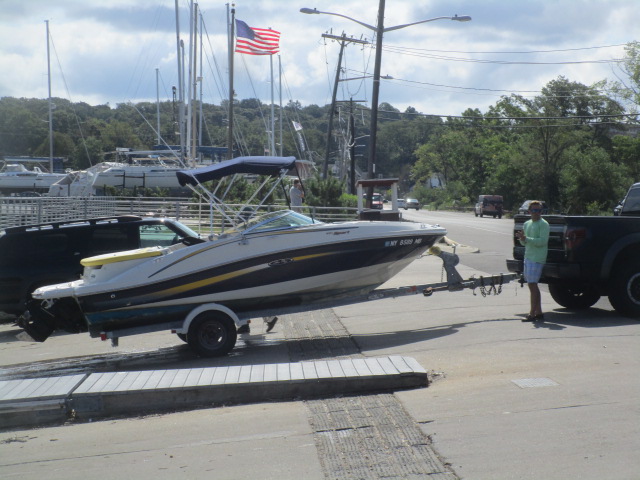
“Some truth in that,” I admit.  “Well have a nice time,” I wave as a boat nudges into q waiting trailer to haul it away to storage somewhere amidst weeds just like those I had been describing.

Friday

  • Each day delivers astonishment.  A cluster of leaves on a twig suddenly gleams with translucent colors like stained glass, a small patch on a hillside blazes red, crowns of trees flare outlines of gold.  Blink and everything is different yet again.  An impenetrable green sheath obscuring the sky may, after a night of fierce wind, be transformed into naked branches dancing against clouds.  
  • If we were not so grounded in hard science, we would call it all magical, and invoke sprites and dryads as explanation, and I am still not quite sure that would be wrong.  Bits of the landscape are following their own isolated patterns and rhythms, out of step with everything else.  Of course, all those bits always do follow their own path, we are just too ignorant to observe most of the time.  In October, I am happy to let astonishment override my mundane knowledge.

Saturday

  • For centuries, it has been fashionable to regard Nature as a grand artist.  Each sunset is a masterpiece, each April a bubbling extravaganza, each autumn a symphony of coordinated and contrasting hues.  We imagine harmonies and counterpoints, masses of one color offsetting another, a surprise around each bend in the trail, each change of light from passing clouds. 
  • I guess that’s kind of true.  Kind of wrong.  Depends if you regard us as nature.
  • After all, it is unlikely that a worm or a rabbit notices beautiful foliage on a hillside.  The incredible eyesight of hawks and eagles is focused on little scurrying brown objects below.  Ultraviolet vision among insects helps identify the right kind of blossoms.  But people are the only ones who see what we see, probably the only ones who project imagination into patterns, and certainly the only ones who talk about it, even to themselves.
  • You and I are the grand artist, and we each bring our own mastery or lack of it to all that is spread before us.  Some may know each species, others can’t tell an oak from a maple.  Some are so wrapped in their cocoons of electronic necessity that they would hardly notice if the world became shades of black.  If you are lucky, you are one of the people who can appreciate our feasts, visual and otherwise.
  • This is a good time of year to drop everything for a few moments, kick ourselves out of our couches and chairs, and reset our souls with immersion in plain old nature.  Artist or not, there is a lot to see, and even more to weave together in our own masterpieces inside our own skulls.

Sunday

  • Cool air, crisp sun everything, shiny as if encased in plastic.  Crickets sound frantically, hordes of them hiding on the side of the shed door, a few sneaking into the house.  Hardly worth hunting them down, everything is on the way out now.  Grass needs mowing, but stays wet until dusk, a good enough excuse to wait for those not paid for the task.  Each night a reminder that fine days (for a given definition of fine) are going to become rare.
  • Logic clamors it is time to put away the yard stuff, the hoses, the garden tools, the pots, the various little knick-knacks which enliven the patio.  Clean the garage so the car can be put away if necessary.  Clean the shed so the barbecue and certain pots escape coming snow.  Lazy intuition says the heck with logic, just sit back and relax and worry about doing nasty tasks when the days become nasty.  I’ve tried that path once in a while, and it doesn’t work well.  Better a little effort on a beautiful bright afternoon, than cursing and wet on a grey drizzling driving north wind. 

Almost Spoiled

Monday

  • Connotations of “spoiled” are generally identical, although exact definitions vary.  A good picnic can be spoiled by a sudden rainstorm or visitation of mosquitoes.  A person can be spoiled with access to too many good things and a belief that the world always owes more.  An expectation (watching a movie, reading a book) can be spoiled by someone giving away the ending.  And food, of course, is spoiled when it rots into uselessness.  In so many ways, this place and time seems tinged with being spoiled right now.
  • I know, this is supposed to be a nature-related musing.  And I suppose I can make a case that summer happiness has now been spoiled by cool damp weather.  Or that perfect flower gardens are now spoiled by spotty leaves, drying husks, and decaying blooms.  But the second part of my meandering thoughts each day does focus on me, and I sometimes am forced to realize how truly spoiled I really am and have been.

Tuesday

Spoiler alert _ you’re gonna die
Spoiler alert _ we’re gonna fry
Might be a billion years or ten
But everything just has to end
Dust to dust and ash to ash
Nothing here is built to last
Some names are known some thousands years
Some simply vanish without tears
Sad to say, but this is so
We live a while, and then we go
If I can, I’ll make mine seem

A long, exciting, brilliant dream

Wednesday

  • People miss the sun only when there have been clouds for days, miss the rain only when nothing falls for weeks.  Human nature often takes the good in life for granted and concentrates on problems.  After all, that is how the struggle to survive has to work _ no use wasting time and energy on what is not threatening.  Fish only notice water when it is not available. 
  • Our capacities in the last century have grown boundless.  Many of us are well supplied and well fed by a global supply chain that depends on a basically peaceful world where commerce is more profitable than war.  I never cease to be thankful for being born in my time, place, and situation.  We are certainly right to worry about ongoing problems and horrors _ life is far from perfect for anyone, wretched for some.  But if the core of what we now take for granted every day is ever shattered, the misery and destruction that will follow will certainly make these times, in retrospect, seem the most idyllic golden age that ever existed on this planet.

Thursday

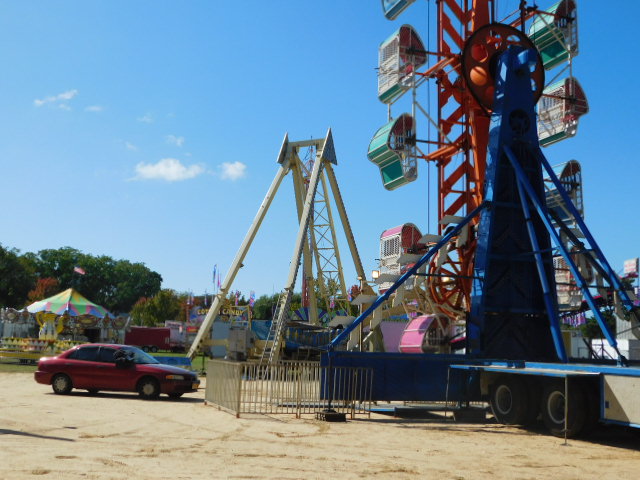
Mike is staring up at some of the carnival equipment parked on the Hecksher ballfield.  Trucks have left huge mysterious structures everywhere, waiting to be unfolded, unpacked, and plugged in.  Columbus Day is always marked by the Huntington Fall Festival.
“Too bad it’s going to rain all weekend,” he notes.
“Can’t tell for sure yet,” I respond.  “Hurricane predictions are always tricky.  Might be nice both days.”
“Might be a monsoon,” he answers.
“Well, any outdoor festival takes a chance …”
“Unless it’s in the desert …”
“But things often turn out better than we expect.  I think we worry too much.  If they just canceled things every time someone thought there might be a problem, we’d sit around doing nothing at all.”
“And here I thought that’s what you do anyway!” he exclaims.
“I’m taking my walk.  Carnivals hardly excite me any more.  At this point in life, I have to be careful about how much junk food and treats I eat.  I remember when I could easily down a sausage and cheese sub on garlic bread without heartburn.”
“I suppose you avoid the rides as well,” he muses.
“Yeah,” I laugh.  “Not even grandchildren can get me on the graviton or anything else.  I get enough thrills on the LIE.”
“Or getting out of bed, some mornings.”
“But life goes on.  Look _ here comes the sun now.”  A few leaves have turned, so there are bright orange and yellow sparkles here and there near the tips of the crowns.
“Betcha a nickel it ends in gales and downpours.”
“No bets.  I need every nickel, and anyway I’ve learned at least a few things in life.  One of the main ones is to never count on weather predictions.  Or my own intuitions.”

The crews begin to unpack, and we watch operations with a growing crowd of the curious and bored.

Friday

  • Nice warm sunny days are precious now.  People who a few weeks ago were slightly bored with summer have discovered that lately the few hours of free time they have available are often cold, wet, or dark.  It doesn’t take a woodsman to notice creeping signs of advancing season.  Leaves tumble in each light breeze, poison ivy blazes scarlet patches on trees, autumn fruits like crabapples are glossy and complete.
  • The nicest thing about being comfortably retired is the sense that all time is my own.  I need not rush about like frantic younger generations.  I need not worry about what the future holds _ I know damn well what it holds.  That allows a sense of distance from the world providing perspectives I could never before achieve.  No longer a mystery that serene sages are always pictured as old and sitting still.  Often in autumn.

Saturday

  • Most fortunate people in any era probably believe _ with reason _ that they have been lucky to live how and when they did.  Certainly I appreciate how spoiled I have been.  This is not to minimize the hardships and horrors faced by many others.  Nor would I claim that I am particularly normal _ anymore than anyone else I meet is normal.
  • Baby boomers in America have passed through interesting times.  Predictions of Communist takeovers, global nuclear Armageddon, universal mass starvation, deadly ubiquitous pollution, rampaging plagues, and various other horrid fears have not quite come to pass.  On the other hand, glorious hallucinations of free love, peace, and prosperity have vanished into the same clouds as flying cars.
  • Nevertheless, it has been a time to enjoy.  Technology has been breathtaking, globalization has made us aware of corners of the world as never before.  Civilization faces tremendous challenges in climate, extinctions, and social stability, but all of these are just beginning.  In the meantime, there has been food on the table, constant entertainment, and new wonders every week.
  • Usually, I avoid political comments, which flare and die with each passing hour.  But I must note today that some people, in the same culture of which I speak, have used their lives to become ever more wretched and ugly.  It is easy to admire people who have overcome adversity to become shining examples of wisdom and strength.  It is normal to accept people who have used their natural gifts, talents, and fortune to survive and lead some measure of happy social lives.  It is possible to forgive people facing great adversity who have been broken by the weight of their burdens.  But it is impossible to admire or accept anyone _ like Donald Trump _ who has used supernatural fortune, immense inherited wealth, and superior leadership talents to sculpt his being into incarnate evil and profound destructive demagoguery.
  • There are those who are spoiled by too much, or who do not understand how much has been offered and delivered.  They should be pitied their ignorance.  The worst spoilage emanates from those who _ like the proverbial bad apple _ manage to ruin an entire bountiful harvest with their deadly oozing blight.

Sunday

  • Appearances deceive.  To an untrained or uncaring eye, nothing has changed.  Tree canopy remains lush and green.  Breezes are mild and gentle.  Vigorous weedy plants crowd each path and roadway.  Yet, in a month, all will seem to have been struck by death and ruin, brown and desolate.  Like those pictures of state-mandated patriotic rallies in places similar to North Korea, where vacuously happy elite multitudes cheer the shiny social surface, although deeper investigation reveals rot and terror bubbling treacherously underneath.
  • We have evolved to expect tomorrow to closely resemble today.  A period of light, a later dimming, hours of dark while we sleep.  In spite of occasional hopes and fears, we deeply believe that if we have been healthy and well fed on Tuesday, our only care on Wednesday will be to choose what’s for dinner.  Those of us who realize how fragile this illusion of stability really is _ we are only one nuclear button away from global destruction, only one distracted driver removed from personal tragedy _ pause as often as we can to give thanks for what is.  Even that, I think, is not enough.

Oasis

Monday

  • Day follows night, temperatures fall lower, each morning the world wakes once more in miraculous beauty.  Such was true even as plutocratic aristocrats ripped apart the Roman Republic, or black plague swept over Europe, or heads rolled in La Place Du Concorde, or thousands perished under fall of bombs, or millions died of starvation.  Grim global news seems to indicate the Earth is heading for the third and final collapse of civilization and the ultimate war which will wipe everything except single-celled organisms from this planet.  There will still be beauty, but none to notice.
  • What can I or anyone do?  Hope and pray and enjoy the hours that remain?  I foster no illusions that I can make a difference among the mob or the fanatics.  Being an early martyr is hardly more useful to the cosmos than being a later victim.  And so I crouch here, in my lovely local oasis.  I cultivate my garden, cherish each moment, speak out once in a while, and fatalistically accept that the universe is a strange and wonderful place, but not benign, and not guaranteed to continue to allow any more oases such as mine.

Tuesday

On far seas huge waves rush and crush
Ocean tides flood top and drop
Hear breakers roar against the shore
Watch sparkling ripples land on sand
I can’t affect them, nor they me
Vast spaces off, suns burn and churn
Noon beams reflect from hands and lands
Colors glow while shadows grow
My soul basks under warm and charm
But just accepts what’s known must be.
Invisible, life hides and glides
Too small, too crowded, gels and cells,
Full universe alone, unknown
From conceit, I that more ignore
Involved in what I now can see.
Somewhere in branes of strings and things
Quantum singsong pops and stops
Empty magic, weird and feared
I wish to not know much of such
Too tenuous reality
My little spider spins and grins
What’s true must be met in my net
Beyond that nothing real to feel
Patiently I wait on fate

Sometimes happy, always free.

Wednesday

  • All life responds to its environment, many animals are capable of learning, some even show signs of self-recognition and awareness.  But despite the claims of pet owners, animal consciousness is strongly limited to their immediate time and surroundings.  Dogs do not wonder what lies over the next hill or why stars glow, nor do they worry what will happen when they die.  Humans, on the other hand, have an unfortunate habit of overlooking the immediately obvious while dreaming of some distant possibility.
  • Of course, we do strongly inhabit the here and now, sometimes more actively than we wish to.  Our wild imagination tempts us to become depressed over the possible fates of our planet one hundred years from now, or to care about the suffering of people thousands of miles away.  We worry about hopes and fears, sometimes to the point where it interferes with how we actually exist.  I am not yet immune enough to the worldwide web of desperate information about which I can reasonably do little or nothing.  I must take a deep breath, smile into the breeze and refocus on a beautiful white mushroom in the middle of my slightly overgrown lawn.

Thursday

Our discussion group at the library is in full furor over the television debates of the two presidential candidates.  I sit quietly, because there is really nothing new to say.  Only a few rehashed viewpoints.
Jane is proclaiming her standard argument.  “All politicians are liars and crooks.   It doesn’t matter who gets elected and it doesn’t matter at all what they say before they get elected because they won’t do what they say anyway.”  As in the Bri
tish House of Commons, there arises a chorus of low croaking assent.
Marilyn, an activist, chirps, “But this is our chance to make a difference.  No matter what, we should be involved, demonstrating,  contributing to the candidate we like.”  We are all a tad too cynical for that so silence rules.
One of the few supporters of one party grumbles, “I agree with Jane, but at least my crook will shake things up and maybe the pieces will fall back into a better arrangement.”  Cynicism greets that statement as well.
Jeremy, spokesman for the majority, begins a long rant, “Our candidate is clearly better than that other jerk.  I don’t see how any reasonable person …”  Being reasonable persons, we are willing to hear him out, but no minds are being changed.

The sad fact is that like all cracker-barrel philosophers, we spend our few hours chewing the cud in front of the Franklin stove at the village store, getting as heated with what is being said as we are by the fire inside.  Then we’ll head back to our rustic homesteads and fix the windows or pull the weeds and do what we can to make our small slice of the universe a better place to be.

Friday

  • Frightening statistics being thrown about how this area is 10 inches below normal rainfall.  Sometimes the effects show, but there have been enough showers and mild downpours to keep the surface green, even if the subsoil is arid.  Anyway, this is unlikely a climate change issue, just the luck of the weather which for months has somehow split all storms as they reached New York City into two paths:  up the Hudson and out to sea, leaving the Island parched in the middle.  None of that means we have totally avoided cloudy days.  Probably the pattern will change just in time to concentrate blizzards over the winter ….
  • It is always chancy to predict the future from what has happened, or to generalize about the whole world based on what you have experienced.  Just because I’m living comfortably does not mean everyone else _ or anyone else for that matter _ is doing so.  Just because I have not even noticed the drought around me does not make it nonexistent.  For that reason I am hesitant about making broad statements most of the time _ although I can spin whoppers with the best of them if I’m in the mood.   And yet, I remain certain that my limited local understanding of our world should count for something.

Saturday

  • Huge spruce tree, ragweed poking through asphalt along the harbor, starfish living and dead washed on shore, are all playing their parts in whatever universal grand scheme may exist.  Their nearly unnoticed contributions are vital to continuing the spectacle.  What is one more tree, ragweed, starfish?  God may watch the fall of sparrows, but we find it difficult to pay much attention until they go on the endangered species list, when it is often too late.
  • Ancient religions correctly placed us between heaven and earth _ more than plants or animals, less than omniscient spirits.  Today we still find ourselves at war with ourselves.  We know we should make the world better _ or at least stable _ but that is hard to accept if it means we must shiver through the winter, or eat food we do not like.  Nothing in science has helped us cope with our dual and multiple natures.
  • How can we judge a life?  How do we evaluate that ragweed, that starfish upside down on sand?  How do we mark our own purpose, if any?  Unanswerable questions except in so far as the questions may be meaningless.  Perhaps such questions are incapable of being framed correctly.
  • Life is complex and contradictory.  People can and do sacrifice their own happiness and families to save or ameliorate the lives of many others.  Does some invisible Karma make it all finally equal out? 
  • And, of course, another equally challenging thought is should we always be the same?  Can we help people at one point in our lives, and help ourselves at another, and be relatively good for doing so?  Or does the universe, like our corporations, only care about what we have done for it lately?
  • Once in a while I spend too much time contemplating such thoughts.  Even then, I often wonder if such thinking is noble or useless.  And inevitably I return to my comfortable chair, my delicious snacks, and my comfortable existence.

Sunday

  • Ancient 12thcentury Chinese ink scrolls have immortalized concepts of the contemplative scholar, bureaucratic chores completed, wandering through a tamed wilderness, sitting in a quiet pavilion staring at the moon, drinking a cup of plum wine as he traces each line of a delicate peach blossom.    Perhaps he also composes a poem, or himself produces a finely toned brush masterwork.  He is refined, and content, and obviously not impoverished, but neither is he burdened with trinkets nor concerned at the moment with the daily frenzy of the imperial court which it is assumed he must by necessity daily inhabit to continue his existence.  A certain type of idyllic mental oasis.
  • I have always revered this vision, or at any rate my interpretation of it.  I too seek to wander tamed paths finding such nature as I will, to occasionally stare at the moon and listen to crickets in the darkness, and to watch birds through my picture window as I sip a cup of coffee.  I prefer to believe my oasis differs only in particulars from the message of the ink scroll.  There is a degree of charm in remaining unconnected to the electronic web, to bustling consumer acquisitiveness, to concern for striving for more and better.  Seeking to find perfection in this exact moment is sometimes the most profound accomplishment I can achieve. 
  •  

Harvest Equinox

Monday

  • Nights have turned chilly.  No danger of frost yet, but crops are either ripe already or heading into the final stages of harvest.  Tomatoes, for example, may still ripen, but nothing is going to grow much.  Apparently the local drought has produced apples half the normal size, and deeply shrunken pumpkins.  On the other hand, farmers in the Midwest are cursing their third year of spectacular returns _ their income drops as quantities overflow storage.
  • Full moon, or close enough, with crickets and other night creatures chirping merrily.  Lightning bugs few and far between.  Odd mists in odd places here and there, sometimes a haunted feeling in the cool breeze with patches of warmth.  I try to force myself out once in a while after dark, for I find somehow being in the night calms me and eases the nervous artificial energy of reading or watching television.

Tuesday

Dark and light exact the same
Like good and evil some would claim
A useful cosmic metaphor.
As for me, I’m not so sure
I sleep the night, use daytime more,
My memories are most of day
Regardless, I could never say
Cosmos is like me anyway

I am unique, imbalanced, pure.

Wednesday

  • At least on this apple tree this year there are no apples at all, even half-size or shriveled.  Everything else happily received an inch of slow rain yesterday and most of the landscape seems pretty normal for the time of year.  Immature acorns are beginning to scatter the ground along with dogwood pips.  Dogwood leaves are halfway to desiccated descent showing orange and sickly greenish-yellow.  Crickets sound even by day, a harsh insistent chorus at night.
  • I’m grateful for the showers, even though in practical terms it means I must once again mow the lawn.  Each day presents a challenge in dressing correctly _ rain or wind or heat or humidity or cold and how much of each.  Almost impossible to guess until I am out walking, and then it is basically too late to change.  Ah, that all my complaints may remain so inconsequential.

Thursday

Joan and I are strolling the busy sidewalks of Northport on a perfect late September afternoon.  A cooling breeze sweeps up from the bay at the end of the street, as sun warms everyone benignly.  We run into Linda outside Artisans, while Joan is window shopping the various displayed craft items.
“Happy equinox!” I greet her.
“Huh?” she manages to project confusion through her huge mirrored sunglasses.
“He means Fall,” says Joan.  “Happy Fall.  He gets a little crazy about this stuff.”
“I just think we should celebrate the natural seasonal events, that’s all,” I get a little defensive.
“Do you paint yourself blue and run around the woods naked?” queries Linda with an ironic smile.
“Only when he was younger,” mutters Joan.
“I did not!  Anyway, solar events are important.  The days, the night, the tides …”
“Do you go out every month and howl at the full moon, too?” asks Linda maliciously.
“Only when he was younger,” repeats Joan.
“But our holidays are so artificial,” I protest.  “July 4, Labor Day, Valentines, Christmas …”
“Right,” Joan turns to Linda, “Exactly why we are here.  Time to start shopping for presents, isn’t it.”
“Right you are.”

They turn and march into the store, leaving me with my own inner contemplations and a nagging sense that maybe I am wrong after all.

Friday

  • Hot days linger a while, making thoughts of autumn more a concept than a reality.  The usual casual apparel remains shorts and T-shirts, cafes do
    a brisk business on the sidewalks, children queue up for ice cream.  More boats than normal stream through the waters on weekends, now that leisure mariners realize each warm sunny day is precious and will soon be unavailable for at least another half year.  Landscapes are green, birds sing, flowers continue to bloom.
  • Huntington is as lovely as anywhere else this time of year.  Parks are tranquil, beaches open to contemplation, busy sidewalks filled with shreds of global civilization.  I keep reminding myself that I have been privileged to live through and amazing and wonderful period of our world.  I continue to be awed by what still remains of nature, and also of what civilizations have built.  My years on Earth have been during a pretty amazing balancing act, and my main fear for the future (not so much mine as a half century or so from now) is that the balance will be lost and all I have enjoyed become either vanished or reserved for a privileged few.  But _ well I only have this moment _ and this moment, today, hot and beautiful is as miraculous as any I have ever experienced.

Saturday

  • Like most people, I suppose, I tend to consider where I live as “normal.”  So I expect longer days in summer, and shorter days in winter.  If I lived on the equator, I would find no daylight differences by season, although precipitation might vary greatly.  Near the poles the sun barely rises or sets at appropriate equinox.  That would seem strange at first, then I would adjust to the new normality, and wander happily along.
  • Yet even here at home, where I know changes are occurring each day, by minutes or clumps of minutes,  I fail to pay attention until some sudden jolt.  Perhaps I realize that I must turn on a light to read sooner, or that it is already dark when I put out the garbage.  Weeks go by, and all is the same, until suddenly it is not.  I am shocked, but soon fail to observe, once again, that such trends continue.
  • Probably I should remark that we are caught in this trap with climate change.  The temperature is changing, but gradually.  The storms are bigger, but only once in a while.  Suddenly, we will certainly notice weather and climate are not what they used to be.  I hope we adjust as well as we do to seasons.
  • Most of that lack of awareness is, of course, because we filter it out.  Daylight hardly matters when we can turn on lights any time, and too often our entire days are spent one way or another under artificial illumination.  We hardly care what may be happening around us because most of our basic needs are taken care of elsewhere, presumably with better weather for crops than the local fields.  We might never notice until there are few “elsewheres” left.
  • Only by making an effort to enjoy the outdoors do I ever retain a sense of place in the universe.  Being inside all the time has always been a personal torture.  I do not have to be outside for hours and hours each day, but a full hour is perhaps minimum.  And when I do so, I seek to embrace it with as little baggage as possible _ no electronic doodads to distract my meditations and observances.
  • So I see the sun rise a bit later, the shadows weave a bit more northernly, the sun sets magnificently much more to the left over the neighbor’s property.  I pay attention to equinox because it marks the big final turn when this area of Earth begins to radiate more heat back into space than it receives.  Cosmic consequences from gigantic events, while I scurry like any busy ant only paying attention to the trail I think I must follow.

Sunday

  • Cool air swept in with an overnight cold front, a tangible reminder that one season has gone, another takes its place.  Here at Caumsett park, fields are filled with drying brown annuals and masses of goldenrod, while butterflies and grasshoppers frolic about heedlessly.  Sighting a last lonely monarch butterfly has the bittersweet aura of encountering a lingering passenger pigeon.  
  • Heedless of warnings of ticks which effectively seem to frighten everyone else into staying on paved roads, I roam meadows and dappled forest dirt trails all alone.  Quiet mostly prevails, only an occasional airplane breaks into the rush of gentle breeze, rustling leaves, insect murmur.  High blue sky with accented white clouds seems artificial.  A few hours and I am refreshed in soul, tired in legs, happy in mind.  I ask myself why I do not do this more often, and myself replies there is no good answer. 

Biologic Imperative

Monday

  • Gusty winds rushed a line of ink-dark ominous clouds across the sky, ripping leaves, whipping whitecaps, threatening rain which never fell.  In minutes, weather cleared.  A portent such as ancient astronomers would perceive in comets staining their heavens. 
  • Our first grandchild is to be born today.  Coincidentally, we are also to attend the wake of one of our most long-term neighbors.  There are no stronger symbols than birth and death, except that birth and death render all symbolism trivial.

Tuesday

A baby is born
A cute little gem
Hard to believe
I was once just like them
How could I teach him
Of hassles and strife
All the decades it took me
To understand life
A child of our child
On that same crazy slope
Exactly that cycle
Of worries and hope
And will he remember
Or reflect, moving on
Of pasts or of ancestors
Once we gone
A baby is born
Such a common event
Such a miracle moment

Such a wishful advent

Wednesday

  • Half a century ago, everything was simple.  The body was a machine to be disassembled and repaired.  Evolution proved the “fittest” survived.  Genes were all that mattered, and once they were reproduced in the next generation, any individual’s biologic function was complete.  Neat, complete, and totally wrong.
  • Our body is a community organism.  Humans are a social species _ like bees _ where the genetics of individual fitness hardly matter compared to what an organism can contribute to group survival.  We are only gradually realizing that, to some extent, what all our ancestors knew _ before the rise of prim and hubris-laden mathematical science _ is in some ways far more relevant to our actual lives and meaning than any grand recent discoveries.  Such as understanding that another human consciousness in this universe should always begin with celebration.

Thursday

John sits morosely staring into space when I intrude into his vision and shake his hand.  Big smile on my face.
“You on drugs or something?” he asks sarcastically.
“Beautiful day,” I reply.  “And our first grandchild arrived this week.”
“Oh,” he shrugs.  “Well, guess that could make you happy.”
“Me a little,” I admit.  “The parents a lot.  My wife ecstatic.  Happy wife, happy me.”
“Well me, I wouldn’t want to be born today,” he rumbles along.  “Too much falling apart, too many bad things happening, the future looks pretty awful from what I see. Crazy nasty times.”
“Always like that,” I challenge.  “Always.  For every bad thing you could pick out I could find something grand.  Matching until we were hoarse.  Half full, half empty.  Me, I’m the optimist.”
“I know,” he answers.  “Usually annoyingly so.  Congratulations, I guess.  I reserve the right to my dim perspective.  Cold realism.”
“Cold, for sure.” I fake a shiver.  “I’ve always thought of life as an adventure.  I think challenges remain opportunities.  Life now is the same as always.  I admit, however, that the challenges are worldwide and immense.”
“Glad you retain a little sanity after all ….”
“But so are the opportunities.  Anyway, I’m not sure that vast picture matters anyway.”
“Sounds stupid.  Why?”
“All our lives are localized.  Anything beyond our immediate control and perception is in some sense not real.  Being born here today is still pretty good compared to any other time in history.”
“Would you trade your life?” he asks, raising an eyebrow.
“Nah, I’ve been really happy with how mine worked out.  I just don’t think the next generation will be as grim as you think.”
“We’ll see,” he mutters.

“No, we won’t.  But that’s ok.  See you around.”  Refusing to be deflated, I continue my idiotically happy mood and smile my way down the sunlit sidewalk grateful for the times and the morning.

Friday

  • Flush times for birds.  Lots of weeds, lots of fish.  Time to stock up and put on some fat for the coming seasons.  They are surely unaware of why they are hungrier, but that does not matter.  Were they able to think, they might reason that their increased consumption is because of shorter nights or the cooler days.  Reason often rushes to answer questions with any explanation it finds convenient.
  • I like to feel superior, but I am no different.  I like to think I know why I feel as I do, on any given day, for any given feeling.  But in fact I often do not.  The usual cure for me is, curiously, simply to find something _ anything _ to laugh or smile about.  Not unlike locating those tiny little fishes in the shallows, or delicious roots easily pulled from the mud.

Saturday

  • As I watched my son holding his day-old son gently and protectively, as I saw the joy my wife felt also cradling the child, later as I sat outside in the warm September sun, I realized anew how much closer we are to other mammals than we are to machines.  Only recently has consciousness been scientifically explored in dogs and elephants and apes.  I have certain reservations on exactly what consciousness may be among other species _ humans are unique in so very many qualitative and quantitative ways that we are practically supernatural _ but I am sure of one thing:  it would be much easier to transfer whatever is “me” to some being based on a dolphin or giraffe than it would ever be to do so into infinite transistors.
  • Reason is an extremely useful tool of our consciousness.  But it is by no means most of our consciousness, and the logic woven by our brains is well-separated even from reason itself.  We are complex, and that complexity resides in body and tissue and hormone and symbiont and trillions of non-neuronic cells as fully as it does in our magnificently wired, rewired, and overwired brains.  Whatever comes from artificial intelligence of machines may well be dangerous, might destroy us all, but can never replace or replicate the incredible illuminated wonders that we provide to our cold and forlorn universes.
  • Part of our being is that we need to consider ourselves immortal and important _ part of some grander purpose, able to further a perceived design.  Our reason coldly informs us we should know better _ and we respect our reason.  To an extent.  Then we have another bite of dinner, or feel a soft breeze, or catch the eyes of a lover, and reason flees back to its tool shed.  The cause of that is simple _ without such innate beliefs and drives _ and in fact there must have been many failures extinguished for lack of them over billions of years of life evolution _ an organism cannot struggle on, and contribute to the continuation of its species.  Those beliefs are not merely built in, they are necessary.
  • Babies should remind us of that.  Babies are hardly tiny little computers, but they are fully wondrous consciousnesses.  Our technologic scientific intellectuals should spend more time contemplating that.

Sunday

  • Earth continued its busy way all week, humans adding mischief.   Typhoons, hurricanes, huge fires, floods around the world.  Nuclear testing, ongoing war, civil strife, political chaos.  Everybody has reason to be cosmically worried about just about everything.  Although, to be honest, for many all these usually distant disasters are more entertainment than impact.
  • Meanwhile people like us discovered how quickly focus can shift from the far to the near.  Some folks received unhappy news, or endured loss or sickness.  We were most fortunate in welcoming a healthy new baby, which will undoubtedly shake up our routines for a while.   We are told to keep perspective, but perspective is actually an ever-shifting reality, depending on what our mercurial minds decide is the central factor.  

Back Too

Monday

  • This weekend is North America’s signal for “back to.”  Back to class, back to school, back to work, back to getting ready for winter, back to thinking about end of year holidays.  Back to pulling boats out of the water for storage.  “Back to” always has a tinge of resentment _ nobody on Memorial Day in the spring sighs deeply and mutters “Oh, it’s back to summer vacations.”
  • We have conquered the worst impacts of the cycle of seasons.  But perhaps humans enjoy cycles, and if they are not provided by nature we can invent our own.  Industry and advertising, of course, are all for it.  Ironically, “Labor Day” is supposed to be a celebration of the liberation of workers, when it has really come to mostly signal a return to our socially regimented shackles.

Tuesday

Tensions extensions
Dark matter, dark energy, dark time
Incandescent consciousness

Meet my moments

Wednesday

  • Cruise control.  Leaves keep pumping out oxygen, birds constantly flock for food, flowers bloom, squirrels rush about.  Too early for the most dramatic changes in behavior or appearance, but beyond the frantic struggle to get ahead.  As things wind down, so will everything else.  Drought now will defoliate branches without green replacement,  inevitable colder evenings will tinge meadows with yellow and red.  In a month or so gardens will be just a memory.
  • Nice metaphor for retirement.  Cruise control as we finally get a chance to do all day whatever we always wanted to.  But not pushing too hard, not really frantic, just mellowing along.  Anyway, for the lucky ones.  I know some folks regardless of age remain hassled and fritzy.  Being fortunate, I just sit back and enjoy the free entertainment.

Thursday

Jean, Joan, and I are down on the dock, watching seagulls swoop in the steady breeze.  A loud backfire startles us into glancing at the road, where a yellow school bus is just lurching off, having discharged a few youngsters at the bottom of the hill.
“Ah, that brings back memories,” I say.  All those days up and down my hill at home, all kinds of weather,  books and lunchbox.  Boy, did I hate September.”
“What?” asks Joan.  “I thought you were good at school.”
“Yeah, but just like now I’d rather be outside.”
“I was glad to get back with more friends,” remarks Jean.  “Summer got a little boring at the end.”
We all stare into the distance for a while, remembering.
“Well, then of course I worked as a teacher for a while.  I kinda dreaded going back too,” Joan finally says.
“Oh, you loved that.  You were ready with lesson plans and all.  I was the one that hated when work geared up again every year.”
“Me too,” says Jean.  “Right up until the end a few years ago.  September was never any fun, in any way.”
“Now, of course, it’s different,” I remark.  “We’re lucky enough to keep doing what we want without alarm clocks and schedules and demands.”
“Just like the seagulls,” puts in Jean poetically.
“Well, I have things to do!”
“Sure, Joan, but the difference is now you can do them when you want to, not when you are told.”

The wind keeps  blowing and the gulls continue their acrobatics as life goes on from all perspectives at once.

Friday

  • After days of cool clouds and brief sprinkles, heat and sun have returned.  Summer flowers are actively blooming, boatyards are still empty, weeds choke every available space with greenery.  Summer continues its merry way.  Only the lack of people outside on this fine weekday betrays the idea that the social world continues as it was, say, two weeks ago.
  • I admit that my problem is that I actively notice changes, rather than continuity.  I see the browning leaves.  I observe that swimming floats have been taken in, that lifeguard stands are put away.  A boat used to remove moorings is now cruising the harbor.  I force myself to rejoice at the wonderful weather, but the crucial and sad fact is that I must force myself to do so.

Saturday

  • For over a week, a hurricane recently meandered around.  In spite of supercomputers and massive reams of data, nobody could predict where it would go when, nor what it would do.  Weather is a chaotic system, which means that even if you know everything, you cannot tell exactly what might happen.  The illustration often used is that a butterfly flapping its wings in China may affect a hurricane in the Atlantic.  But chaos theory really states that it may not.  Like quantum jumps, you just can’t predict.
  • Weather is simple compared to society.  Butterflies may flap wings, but each person is a complete chaotic system unto themselves, and each individual’s acts (or lack of acts) may affect a society profoundly or not at all or in some obscure unexpected way.  The sooner we accept that social studies are not sciences _ except in vaguely and often useless statistical trends _ the better.
  • Most thinking people _ I try to be one _ realize, for example, that grouping and generalization of people is generally futile.  To say most folks are “back to” something ignores the fact that a technological culture grinds on relentlessly without cessation.  Electricity is being generated, goods are being delivered, sales are being made.  Nothing stops.  There is nothing to go back to, because nobody ever left.  Oh, statistics will try to prove that indeed students are back in class, indeed most vacations are over.  But none of that really counts for much.
  • That’s part of why politics is so maddening.  Everyone involved is frantically trying to split the world into groups and factions, and then generalize about what each group and faction is doing or desires.  And, for any given moment, a crowd may agree.  But the minute individuals leave such a crowd, they go their own unpredictable and unique ways, and all bets are off. 
  • Sometimes I prefer the hurricane.

Sunday

  • Nature is also briefly back to summer with a near heat wave of high temperature and humidity.  Only quickly descending earlier darkness provides awareness of the march of the season.  Seeds are ripening quickly now, nuts on the trees swelling to their final dimensions, birds beginning to pass through on migration.  Fish in the harbor endure the final stages of feeding frenzy _ there are frequent disturbed jumps and flashes in the water as rapidly growing bluefish snappers devour smaller ones.  Sunsets turn spectacular.
  • I try to get back to my normal cheerful optimism, but for some reason I am stuck in the melancholy contemplation of what is to come, rather than what is here.  The heat feels too hot, life seems to drag.  My inner soul sometimes fails to heed my reason.  That is a great fault, but I also realize it is part of my humanity.  There are, after all, things wrong with our world, as well as miracles everywhere.  But real life always beckons, and I remain sure that a nice long walk, a quiet natural meditation, will put me back to the normally cheerful spot I desperately try to retain.