Fin De Siecle

Monday

  • Barbara Tuchman’s Guns of August opens by describing the mood of Europe in 1910 _ the so called Fin De Siecle or “End of Century.”  She shows how this was unexpectedly related to what happened a few years later.
  • At the time, Europe had enjoyed a period of nearly 100 years without a major war, almost 30 since the last minor one.  There had been a few conflicts that raged in the rebellious Philippines and South Africa, a shocking conflict between Japan and Russia, but all in all the international order was stable.  Nations’ rulers, often blood relations, were on good terms with one another.  A homogenous Christianized culture bound the majority of inhabitants together.
  • Elites were fat and happy.  They considered war impossible because of the bonds of trade and logic.  Science produced daily marvels, many applied to day to day life.  The standard of living for most people was sufficient and rising.  Marvels were expected in the near future.
  • But.
  • Elites turned tricky and boring government over to whoever wanted it.  The military command grew tired of never having chances for glory and promotions.  Industrialists thought that their rivals were being too much helped by colonial subsidies.  Moralists thought rot had spread through society which required an idealistic purge of bad ideas and people.  The masses felt they were cheated and wanted their fair share of increasing wealth.  And local cults _ some racial, some philosophical, some religious, some cultural _ all thought a quick shake up would put them on top, or at least in a much better position.
  • By 1914, almost all of Europe looked forward to a quick glorious war which would solve all their problems.  Instead, of course, they endured 50 years of unremitting horror, slaughter, and hardship. 
  • I worry about the mood today, which strikes me as increasingly similar to that not so long ago.

Tuesday

  • Even in the midst of vast extinctions, even in one of the most densely populated and ecologically damaged areas of the planet, the complexity and number of shellfish washed up on shore by tide and storm remains amazing.  Clams of several types, oysters, periwinkles, moon, whelk, and others unnamed, in multiple subspecies, too many for me to know nor name.  Infinite piles along certain areas of the coast, renewed constantly.  Nature struggles, but some life remains vibrant.  All strange, all complex, all exotic.
  • For true complexity I need not venture outside my skull.  Consciousness forever eludes analysis.  The physical foundation of consciousness drives biologists to despair from sheer interrelated complexity.  Western culture’s greatest sin has been, continues to be, that the universe is mechanistic and can be somehow understood and controlled piecemeal.  Sometimes it is proper to blink in amazement at where I am and simply accept the exotic immensity of the unknown supporting my familiar.

Wednesday
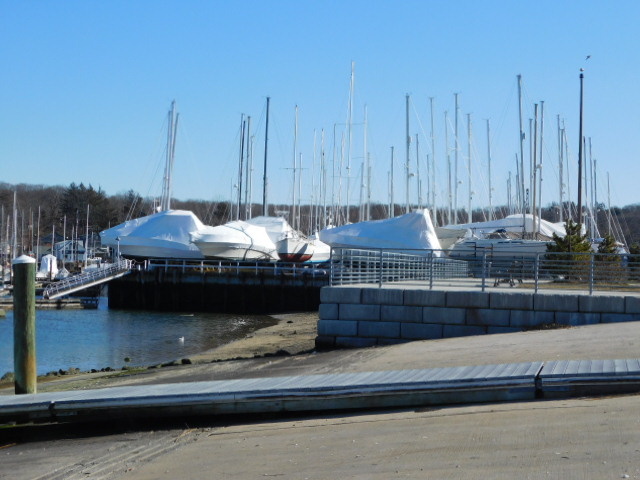
  • Fractals and Quantum guarantee we never reach the bottom of systems.
  • Chaos assures whatever we think we know is wrong.

Thursday

  • Lurking below a surface daily joy, there seems a great unease in public mood.  Today is fine, many people think, but they are worried about tomorrow.  They are worried that they may control what is around them, but vast unseen currents are sweeping problems their way, most insoluble.  Nostalgia for a presumed simpler past is rampant.
  • Some of the disquiet manifests itself in conspiracy theories _ somebody somewhere must be controlling the world.  Some shows as a distrust of any statement _ if truth is deep and complex then there is no truth, and any lie becomes plausible.  Some, of course, simply translates to a vague anger that at times can be incited to violence.
  • Wishing for this fog of dread uncertainty to be swept away is dangerous.  We may get what we wish, and like many wishes granted we may discover there are consequences far more dire than what we had been experiencing.  Clean revelation and revolution never occur _ there must be blood, often an awful lot of blood _ and the end results never match the glorious visions.
  • I worry about all the cartoon philosophies floating about, all the gossamer juvenile spiritualities clutched by those wanting something simple to believe.   If we are to have a better world, a world of dreams and hope, it must be a complex world, a foggy world, and a world where the unexpected is accepted as part of our bargain of being consciously aware of who we are.

Friday
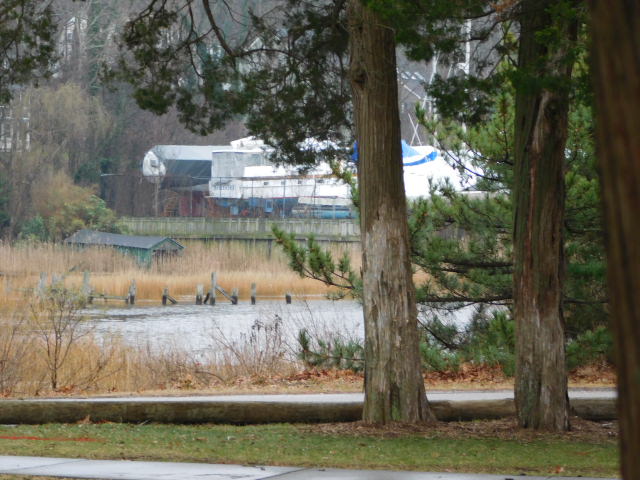
  • For long eras of Earth, especially when landmasses were connected, there was probably a fairly stable and slow-changing dance of species, gracefully drifting into similar niches everywhere.  Breakup of the continents followed by pulsating ice ages changed that, creating isolated environments which remained in constant flux.  A huge number of species evolved, including one that threatens all the others.
  • Anyone who existed in the twentieth century most likely experienced maximum diversity of life on our planet.  Now globalized bugs, weeds, and other aggressive survivors are crowding out more delicately balanced forms.  Meanwhile industry reworks every spot on the planet _ either directly with human devastation, or indirectly through acidification and water table manipulation.  The coming poverty of nature is unfortunate and ugly, but probably closer to the long term average than we would suspect.  

Saturday
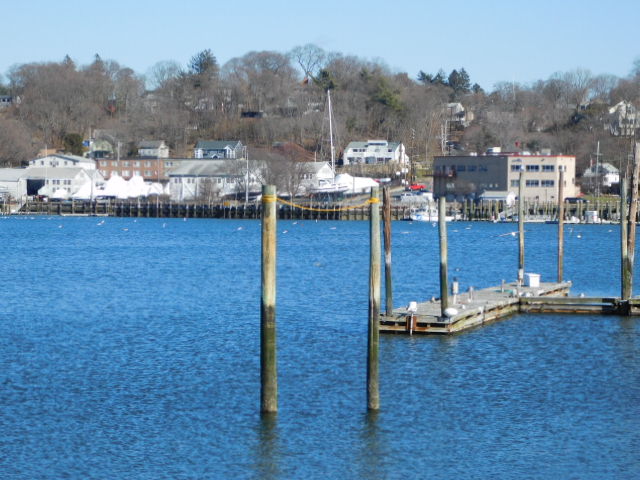
Joe and I stand under the library overhang on a miserable chilly rainswept afternoon.  We watch bent and bundled pedestrians, half with umbrellas, scurrying along trying to avoid puddles.  Frustrated drivers perform the necessary dances to move their vehicles along choked Main Street.  I turn to him, “Feels like the end of an era.”
“How so?”
“Well, you know how you can always tell 1890’s Paris in old photographs and paintings?  All big hats, and horse carts and a certain feel to the light and costumes.”
“Ok…”
“Well, I think this scene is just a temporary.  In fifty years it would be totally different.  Not like the change from the sixties to here, which are very much the same.”
“And you think the new scene will be …. What?”
“Oh, I don’t know.  Just different.  Smaller cars, if cars at all.  People wearing much less bulky clothing.  Maybe clear domes to keep out the rain.”
“Ah, science fiction.  And no darker side?  What about blasted rubble or detritus-strewn streets with no life moving.”
“Except insects _ yeah, I know.  But I’m an optimist.  Assuming good things, I still think we are at the end of an era in all kinds of ways, some visual, some social, some we don’t have any idea about.”
“Well, won’t affect us,” says Joe.
“True, true.  I need to return these books.  See you in a while….”

The lobby is refreshingly warm and happily quiet.

Sunday

We assume that things will change
Assume that much remains the same
We hope for better finer days
While treasuring our ancient ways
We fight to stay just where we stand
Faith as solid as the land
We drift and paddle on time’s flow
Moving, not sure where we go
Hardly matters, here or there,

We’re insubstantial as the air.  

Exotic Locals

Monday

  • My parents loved Bing Crosby, so I grew up listening to his cover of “Faraway places with strange sounding names.”  It referenced Spain, and Siam, and a general wanderlust to be somewhere else.  Probably coincidentally, I have visited and lived in many places during my life.  By no means an inveterate traveler, but certainly not someone who always stayed in his native neighborhood forever.
  • As I grow older, definitions change, a phenomenon I note not just in myself but in my peers.  For many of us, a mile or more from our houses has suddenly become “faraway places.”  We like our comforts, we enjoy the familiar, we get just a little peevish when we have to give them up for more than a few hours.  It is not that we are scared of travel, and even do it relatively often, but only if we can wrap a good deal of our usual environment around us like protective bubble wrap.
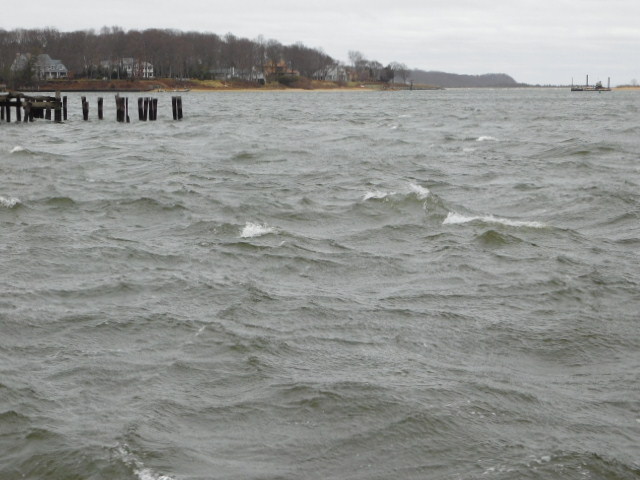
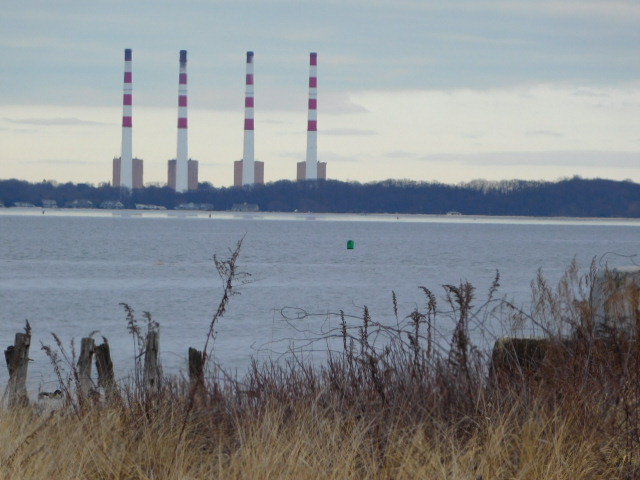
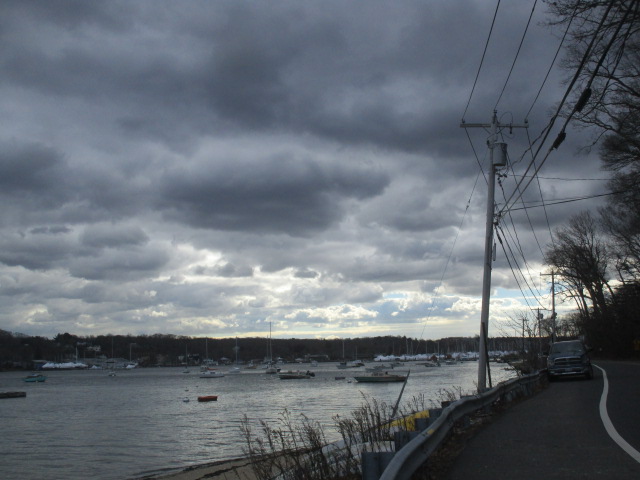
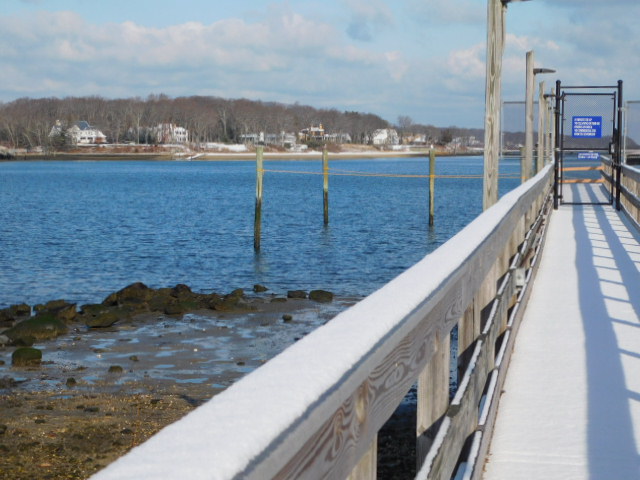
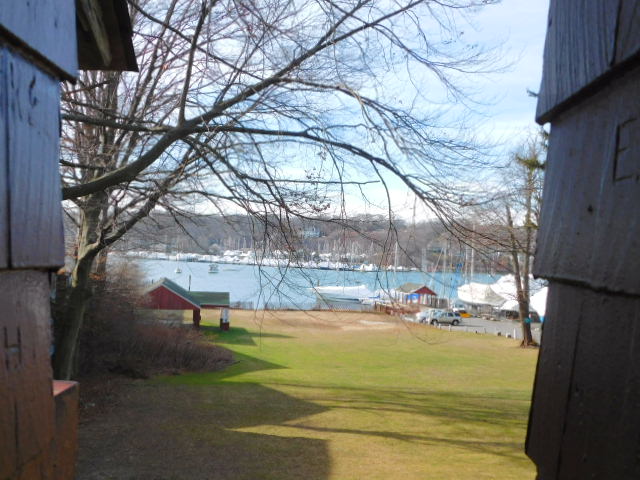
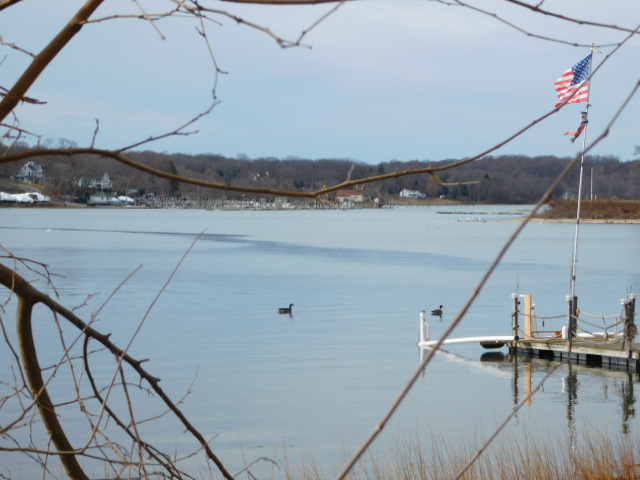
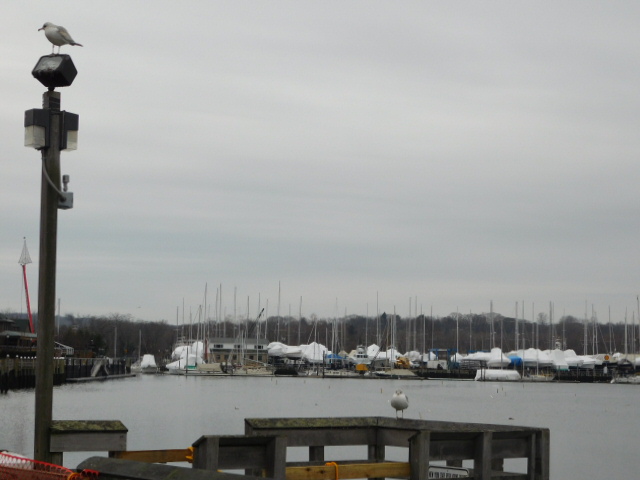
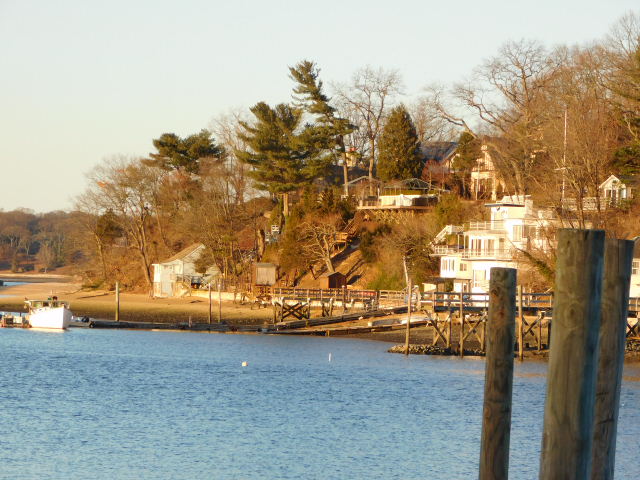
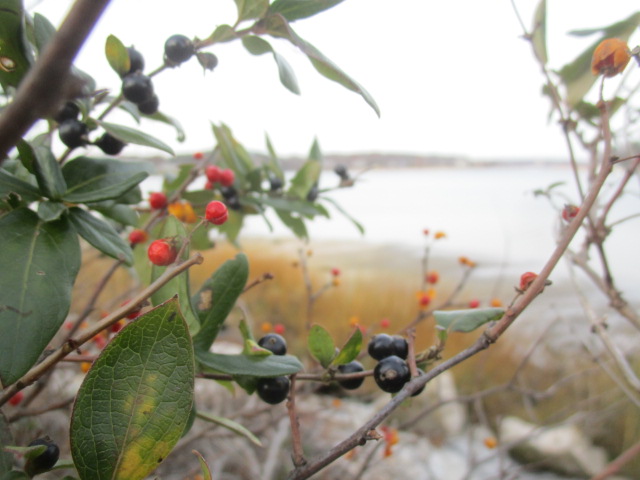
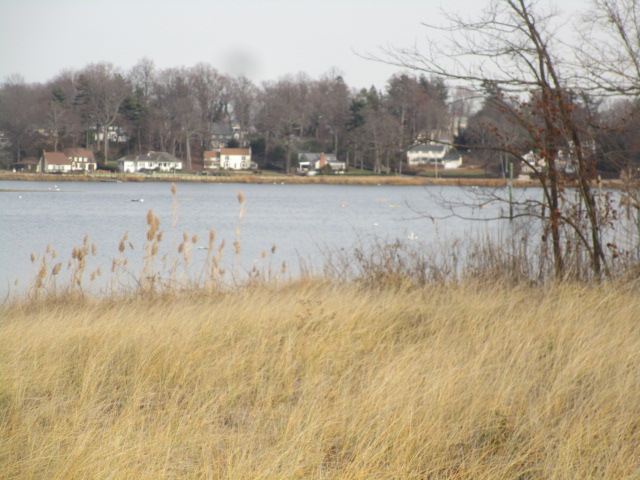
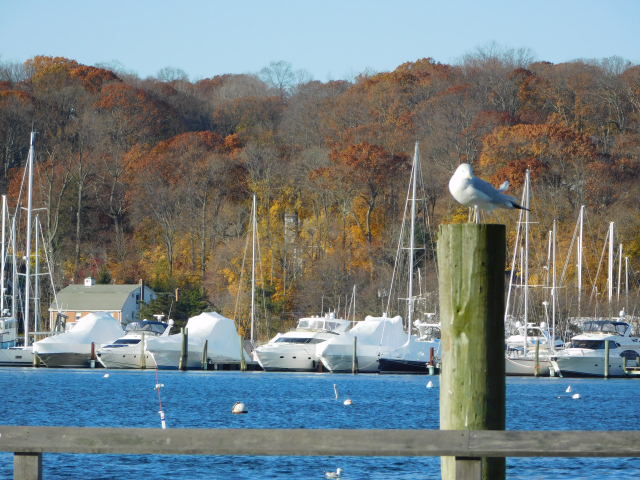
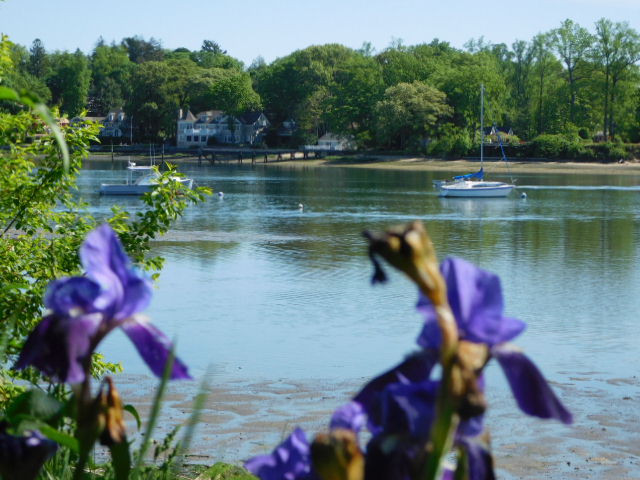
  • Some days, even getting out of the house and walking a few blocks to the harbor can seem like heading for a faraway place.  Perhaps my memory dims, but each moment seems new, each view seems fresh, many things I notice I have rarely seen before.  I guess I should feel sad at my atrophying senses, but I am grateful that I can increasingly perceive that what others see as boringly normal I regard as exotic.
  • There is happiness in sculpting local into distant.  Just as we never cross the same river twice, we never truly view the same scenery.  Waves, mists, leaves, clouds, animals _ always different.  The trick is to focus on the subtle and render it sublime.  Not unlike the purpose of art.  

Tuesday

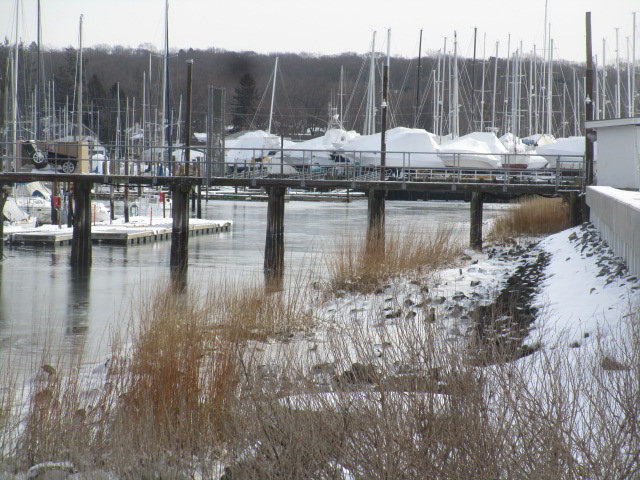
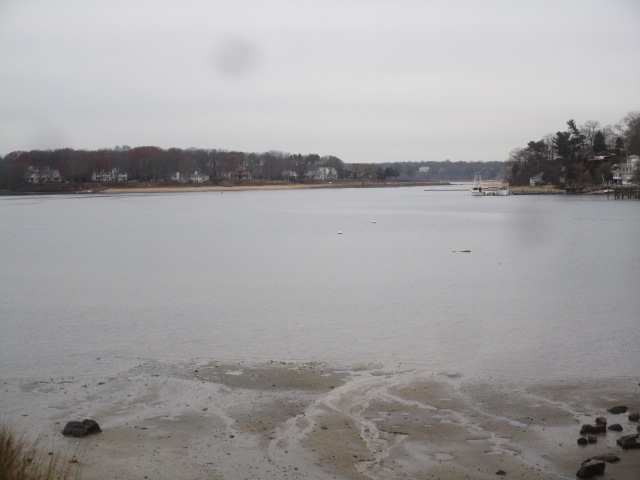
  • Tides go in and out, predictable with Newtonian mathematics and no requirement to understand Einstein.  Even so, they are complex, and vary with barometric pressure almost as much as with sheer gravity.  It is always a shock to those who live by the sea to visit a lake and see docks built just above water level.  The reward, of course, is the periodic exposure of mud, sand, shells, and detritus, not to mention the antics of fiddler crabs and squirting clams.  In winter, all the activity is less apparent, but it is there anyway.
  • As I walk each day, I try to be as aware of the moon as of the weather.  Some spring tides are incredibly low and high, but sometimes planets and storms align and we have super slosh over the low highways.  Obviously, the level becomes a bit higher each year, in spite of the claims of those who screech we cannot know.  I imagine the fish, crabs, and clams hardly notice the tides _ it’s people who are the real enemies.

Wednesday

  •  “The farther you go, the less you know.”
  • To be aware, you need to stare.

Thursday

  • If we visit somewhere just once, it is frozen in our minds for all time, with its good and bad, often shading to good because of our usual glow of nostalgia on, say, a vacation.  Locations closer to home evolve rapidly, but we hardly notice unless we make an effort to remember how things were.
  • For example, just in our harbor, I have seen a huge barge delivering oil to large tanks,  red shacks decaying picturesquely on a pier,  lobstermen setting out and storing traps each winter, a lovely larch tree shedding needles each autumn.  All gone, like much else, although this has fortunately been an area all but frozen in time.  That too is changing, as old people die and move, their house torn away, and huge monstrosities built on tiny lots.  An awful lot of big old trees are being trimmed severely or cut down completely _ none of the new people want their harbor view obscured by branches and leaves, even though this clearing ruins landscapes.
  • But on a daily basis, I have no trouble.  What is more shocking _ and sometimes prevents me from even desiring a new trip _ are the immense changes where I have not viewed them since my long ago visit.  Most of them, in my opinion, are for the worse.  Farms gone, open fields turned to asphalt, all the normal complaints.  Well, in all honesty, some of those memories bright in my mind are from over half a century ago.    The world moves on, whether I want to ride along or not.

Friday

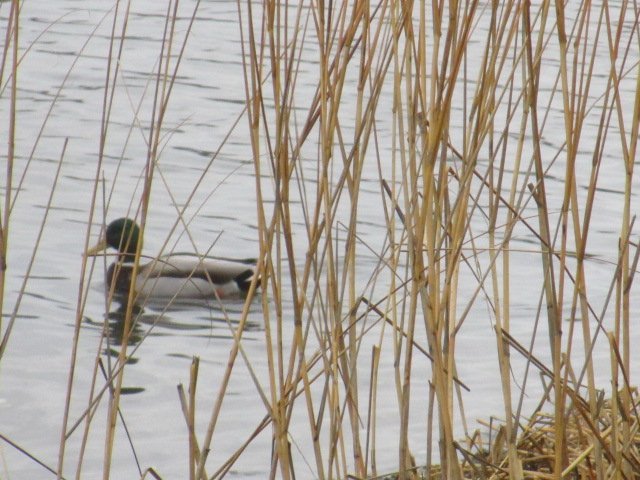
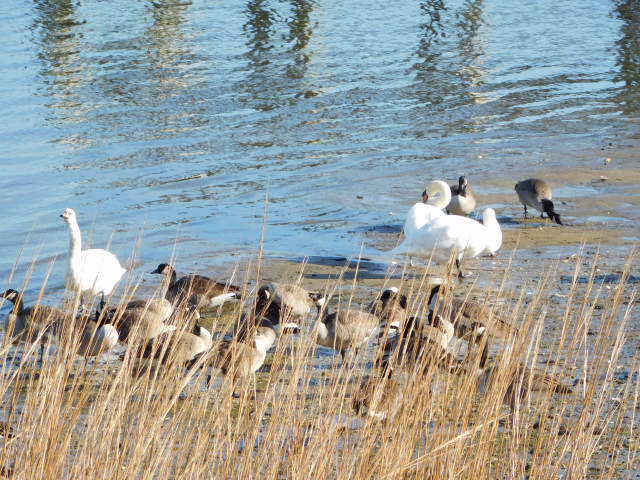
  • Chinese mountain landscapes rarely include pictures of birds, although somehow they always give the idea of being painted from a flying perspective.  On the other hand, their close studies of birds can be magnificent.  Waterfowl around here of the common type _ ospreys, gulls, several types of ducks, cormorants, swans and of course geese galore.  In the summer terns and egrets liven the place up.  Crows are hardly considered waterfowl, but they often crash the shoreline party.
  • I rarely photograph them.  I’m not much of a wildlife photographer, even if I had proper equipment, which I don’t.  So by accident and laziness my photos sometimes have some of the elements of brush drawings.  

Saturday

Sun and wind take a break from beaming and blowing.  “How’s it going, Wind?” asks Sun.  “Ready for another contest.”
“Oh, not that tired old thing with getting a traveler to take off his coat,” replies Wind.  “And the last time we tried to get them out of their automobile nothing worked.  They seem to just ignore us.”
“We could team up, I guess,” says Sun hopefully.  “You know we have a good combination in drying out crop lands.  That always gets them stirred up.”
“Or freezing the oceans and rivers solid …” remarks Wind.
“I don’t know,” notes Sun dubiously.  “Those pesky devils seem to be doing something to the planet.  Not easy to chill it down enough any more.”
“They sure annoy me with those itchy scratchy things they keep flying through me.”
“Oh, yeah,” Sun agrees.  “They’re even starting to throw stuff at me.”
“Even big storms don’t do what they used to …”
“Too clever for their own good.”
“Well,” declares Wind, “just a little more clever and they’ll leave the planet to us.  I’ll miss them sometimes.”
“Not me.  Oops, there’s another sunspot I have to take care of.  Later….”

“Woosh!”

Sunday

Unusual views
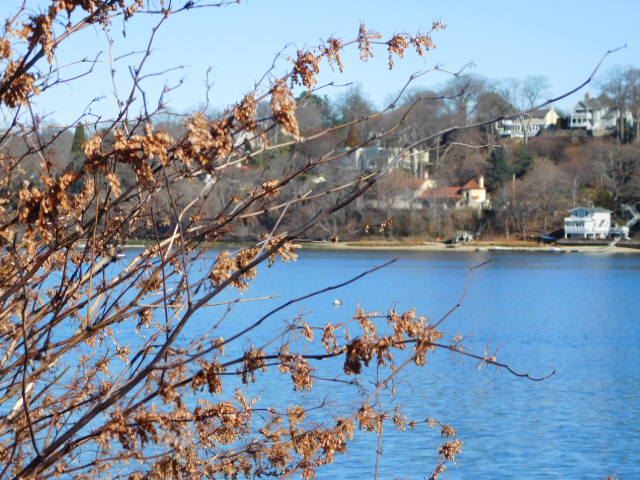
Water, hills, houses, sky
Overflowed people
Home

Weird as anywhere

My Selfish Tao

Monday

  • “The Tao that can be told is not the eternal Tao.”
  • It’s odd for a religious book to declare at the beginning that the words which follow can be ignored.  Most religions have holy script directly dictated from gods, through visions, dreams, magical tablets, trances, ancient stories _ and it is assumed that such holy writings are exact and perfect transcriptions.  But the fact is words can never exactly describe experience _ love, happiness, fire, a tree.
  • Our intelligence is centered on discovering useful patterns, whether deciphering speech out of sounds, or guessing at what our vision glimpses, or connecting cause and effect over time.  Naturally we have a “religious impulse” that seeks the pattern of our lives, of our meaning, of our future.  People usually find something to believe in _ and honest ones understand that the true core of faith cannot be described in words.
  • The Tao Te Ching by Lao Tzu continues, improbably, with more words. Its very nature encourages one to make their own protestant version.  I would call it a kind of selfish Tao, something only useful for me, my own interpretation of words translated from ideograms translated from an old man’s wisdom.  What I tell you I believe is not the eternal what I believe.
  • Over the years, spelling has changed.  I hold fast to my own printed relics which have ancient meaning for me.  Spelling matters even less than words, and words do not matter at all.  Take Yin and Yang, the clash of dualities orbiting the core of the Tao.  I have also come to the belief that the universe is constructed of tensions such as gravity vs. momentum.  The words are different. 
  • But I like the selfish Tao.  It is not about telling anyone what to do to satisfy the gods.  It is about living in a useful and common-sense manner.  It is very much about meditating on life, and being mindful of all that is around us, and trying to find our place in the world without disturbing the center of that natural harmony too much.
Tuesday

  • Traditional Chinese wall paintings are often heavily influenced by traditions of the Tao.  In them, mountains and forests rest peacefully in mists, as scholars wander paths or sip wine in pavilions, while here or there a boat or deer accent the landscape.  It’s a benign world, devoid of grizzly bears and snakes, filled with the awesome but tamed power of nature.  Quiet contemplation is the goal. 
  • Until recently, Western painting was far more about individual people and religious or historical mythology, filled with blood and struggle.  I appreciate these various viewpoints.  I continue to see scholars in mountains as older satisfied folks, and I regard struggle as a proper pastime for youth.  Elders thrashing constantly, youth indolently bored, are both perversions of biological destiny.

Wednesday

  • Some Taoists desperately sought immortality.
  • Unaware, we experience eternity each moment.

Thursday

  • Religion is one of the strangest human impulses, at least in its manifestations of trying to gain mind control over others.  It is relatively easy to understand and even justify people who fight because they want or need what other people have.  Introspection reveals that each of us might seek personal power or unleash anger against others.  But to struggle bitterly, even to the death, to force an abstract and unknowable philosophy on everyone around us?  That is incomprehensible to a sane logical mind.
  • The clearest justification given is that religion provides social glue, making tribal members conform to normal and acceptable standards.  Yet there are societies which do not need the strong whiff of authoritarian supernaturalism to thrive. 
  • I prefer my own version of contemplations such as the Tao, simply because it does not contain a lot of odd rules and strictures.  It is good to understand I am a small part of something greater, good to be advised to study the deeper harmonies of the world, good to be encouraged to seek what is right.  I accept all that, and mix in whatever else I may desire. 
  • But I would never force you to accept what I think in this nebulous realm.  I resent all those who try to do that to me.  I don’t care if they are sincere, or charlatans, or worse.  If a god has not spoken to me directly, I do not particularly want to hear what someone else’s god thinks I should do.

Friday

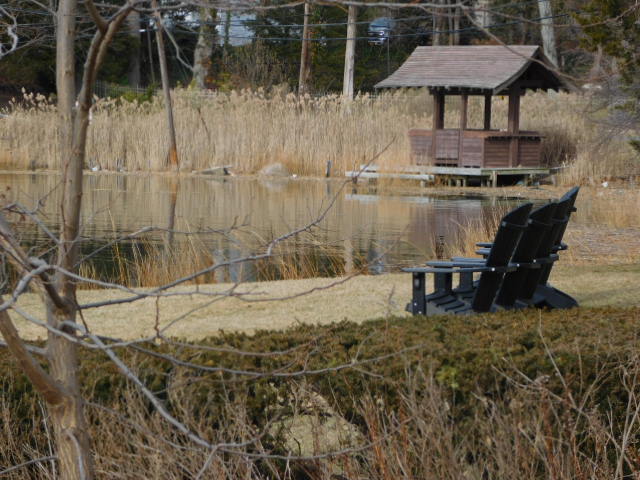
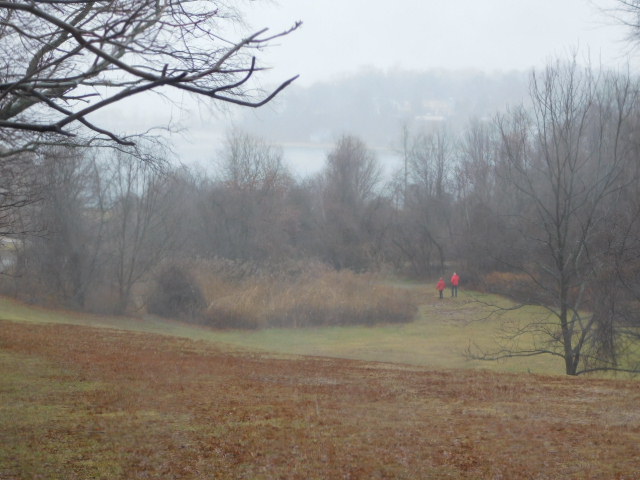
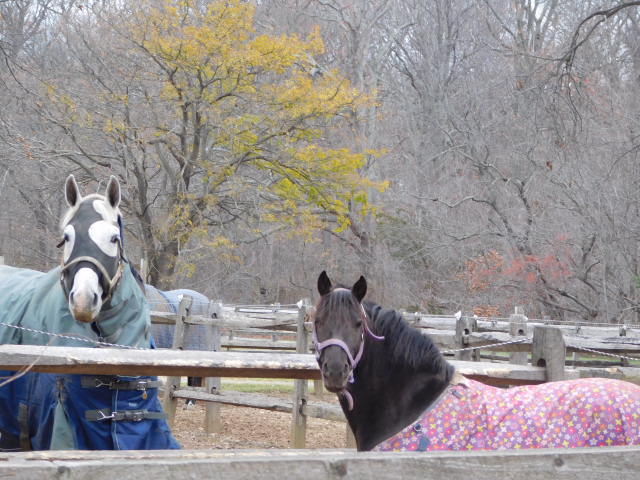
  • Wandering the many tame woods and meadows of local parks always presents stunning vistas, unique close ups, and strange juxtapositions.   A feast for the eyes, relaxation for the body, enchantment for the soul _ even without pavilions in which to rest or a servant carrying plum wine and writing materials.  Utilizing and protecting these treasures has fortunately become a priority of nearly everyone.
  • When strolling about, I find myself in one of three moods _ careful examination of things I may not have noticed before; mindless soothing surroundings as I follow internal trails of thoughts; or a passive but enriching meditation which I only with difficulty later recall.  All are important to me in their own way; all relate to my conception of the Tao.
  • My Tao concentrates on similar aspects of being:  The Universe is inf
    inite and has been around a long time and has done quite well without me.  I should understand interrelated patterns of the whole before attempting to master specialized details, no matter what I am trying to do.  And I should always be consciously attempting to think out of the box and not take my ancient preconceptions for granted.  It is a wonderful privilege to be alive and conscious _ no matter what, I should appreciate everything.

Saturday

Well I came upon a Chinese monk, he was walking along a horse trail
When I asked him where he was going this he told me ….
“I’ve been asleep some thousands years, discouraged at the ways of man, and I hoped to find relief in this new century.”
“Ah,” I understood.  “Master Lao Tzu, this is a smartphone.  I can show you …”  But he needed no instruction, of course.  He perched on a cold bench in deserted Caumsett, cruising the internet for an hour or more, with not a sound. 
Finally he looked up, sadly discouraged.  “I see it is no better, in spite of your many advances into the world of things.  People still kill, still fight, still hate and still waste their lives in ignorance.”
“But we have electricity, scientific understandings, biological wonders, grand entertainments.”
“All true,” he replied.  “Yet I find this park a more refreshing place than your entire electronic world, this tree more real and yet even now not contemplated correctly.”
“So you will go to sleep more thousands of years?”

“Not at all,” he murmured.  “It appears that not long from now there will be not much of a world to return to later.  I shall wander and experience as I can, and treasure these memories for the burden of my coming eternity.”

Sunday

Shall I compare Tao to a winter’s night?
It rests more quiet, more to contemplate.
Purest velvet pricked with points of light
Draining cares and worries about fate.
Sometimes too wild our will to action cries
And oft we helpless wrestle with despair
As all around iced shards of failure lie
Wrecked by chance, or from mishandled dare
But Tao drifts healing into all and out
Always was, is now, and ere shall be
Nor can it fail so long as mind’s about
Beyond the reach of time or what we see
I feel alone, bewildered, small,

But Tao insists, a part of all.

Janus

Monday

  • According to Wikipedia: in ancient Roman religion and myth, Janus is the god of beginnings, gates, transitions, time, doorways, passages, and endings. He is usually depicted as having two faces, since he looks to the future and to the past. It is conventionally thought that the month of January is named for Janus.
  • Janus presided over the beginning and ending of conflict, and hence war and peace. The doors of his temple were open in time of war, and closed to mark the peace. As a god of transitions, he had functions pertaining to birth and to journeys and exchange, and he was concerned with travelling, trading and shipping.
  • As we are arrived at moments of great transitions, not to mention issues of war, peace, and trade, perhaps we should revive some reverence for the old guy.  In particular, how the past must be faced equally with the future to understand change.
  • An interesting fellow.  What were his powers?  I’m not sure what you’d pray to him for.  I don’t recall any ancient myths in which he was involved even peripherally.  He is one of the few Roman gods which had no Greek counterpart, and I suspect few if any of the regions conquered by the legions contained an equivalent within their own pantheons. 
  • Well, we are each our own Janus.  We are only in the moment, filled with amazement beyond comprehension,  but we simultaneously recall massive threads from the past, and wide projections of possible futures.  We live in that very transition as time flows around us, or we flow through it.  So perhaps we should reconstruct Janus as our god of time, plop him into the books alongside Einstein, and compose a few stories.
  • In these interesting times, I doubt it would hurt to do so.

Tuesday

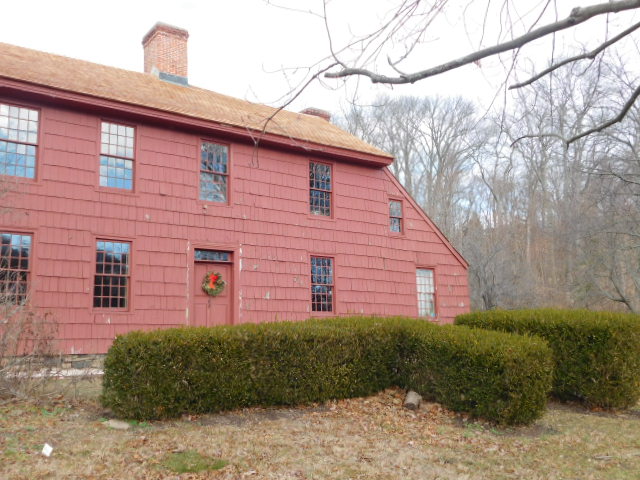
  • To study nature is usually to be concerned with life.  The environment which contains the theater of the living also includes the land itself.  Understanding the changes in the land over time it is possible to develop a deeper appreciation of what it now is or may be.  This park, for example, was once primal forest with access to immense food in the bay, sheltered from the north wind, watered by nearby clear streams, a perfect home for native Americans.  Then it was cleared and houses constructed and a pottery works dug into clay pits up the hill, next to the busy town docks.  Over a century ago, it became a pleasant park from which to picnic or bathe at the northern terminus of the cross-island trolley.  Once a whale beached here, and had to be cut and carted away at great expense.
  • Right now I walk to find it decaying, slightly sad, underutilized, all but forgotten.  During my thirty years residence, large trees have died and been cut down, docks have fallen to rot, bulkheads have cracked,  and pavilion upkeep neglected.  Through all that, living nature has changed and adapted, tiny wildflowers managing to fill straggling grass, pokeweed thick along the boatyard buildings, ubiquitous ragweed near the shore.  All that, and surely much I do not know, in less than four hundred years.  My mistake is always to see something interesting, and because I see it now, assume that it has always been so.  

Wednesday

  • “Those who do not study the past are doomed to repeat it.”
  • Those who do study the past are doomed anyway.

Thursday

  • Life is active transition, seeking to perpetuate itself from the past to the future through this present.  It differs from rocks and other elements only in being locally anti-entropic _ building complexity instead of decaying into a lower state, as normal matter always does.  We have refined transition into exquisite beauty, and are aware of past and present and not only real but possible futures and not only the actual but the imagined.
  • Some transitions are slow and hardly noticed as they pass.  I wonder at the loss of my years _ when did my aging occur?  As the days passed, each was almost identical, but suddenly I look back and all has become strange and weird.  Trees are there as always,the sky.  Yet the sky is more filled with smoke, some favorite old trees are gone, some new ones have come from nowhere.  I am a traveler from a remembered past, a stranger in this strange land.  And I never saw it coming.
  • Other transitions are more sudden.  The birth of a child, the onset of an affliction, all the many local shocks in life, and of course the cultural effects of grand players and events.  Those we are well aware of as they break our lives into parts, and we struggle to survive and recover. 
  • Through it all, I suppose Janus smiles.  Or maybe he sighs.  Who can tell, with a god?  I always felt that, with the exception of the classic Greeks, being a god was a constrained, boring, and sad existence.  You don’t get to p
    lay much, as a typical god.  You are responsible for right, and justice, and making the world run the way the world runs.  At the beck and call of priests and rituals for all sorts of stupid stuff.  Never allowed to go beyond your special area of expertise.  Kind of like a perpetual retail clerk, keeping the universe ready for the human customers.
  • This year, I am afraid I have spent too much time looking back, not enough forward.  As always, the drumroll of each day will call me into the present, where I actually belong.  I am my own Janus, and thankfully I do have the ability to laugh and smile and enjoy the whole shebang.

Friday

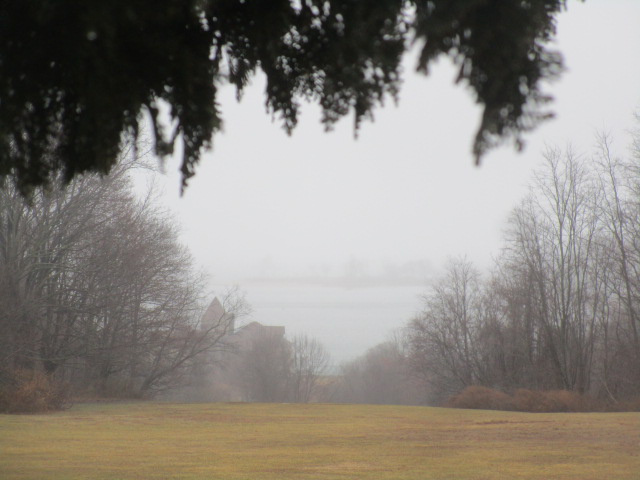
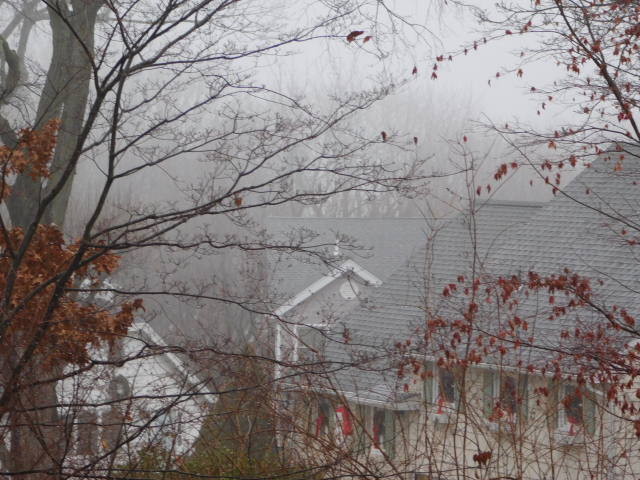
  • Fog settles as a perfect metaphor for time.  Farther away in past or future, one can make out nothing even if certain of surroundings.  It is prone to sudden clearing when nearby objects startlingly materialize, and to random thickening when all sense dulls.  Sounds are muffled, directions lost, indistinct forms cause randomly incorrect interpretations.  Fog may suddenly vanish, or become mist, drizzle or heavy rain.  And although a secure poet might find it magical, most travelers and sailors are properly terrified by its onset.
  • Unless caught on a highway, I tend more to poetry, finding fog a refreshing change from crystal vistas and clear thinking.  As I’ve aged, I’ve come to feel the same way about time itself.  Knowing less about the past and nothing about the future no longer bothers me, as long as I am conscious of this present.  Perhaps I feel less a traveler than in my frantic long ago youth.

Saturday

Joan is carefully wrapping and packing the last of the Christmas decorations in the living room, for another year of storage somewhere in the garage.  She sighs as she takes yet another candle and places it into a labeled box.  “It’s so sad,” she notes, “that these are up for such a short time.”
“Well, I suppose,” I reply, “but after all, just having them out for a little while is what makes the end of the year so special.”
“I love Christmas,” she continues, ignoring me, “but it makes me sad too.  My parents and brother no longer with us, and all the family scattered.  It’s not like when we used to have the family parties when the kids were little.”
“I think that remembering is part of the magic,” I muse.  “Every decoration you have out here is attached to some event in the past.  And we still have the boys visiting and reinforcing our own family.  And the new baby, of course.  Someday they will be doing the same thing you are.”
“I guess,” she says half-heartedly.  “I just wish it was all like it once was.”
“The past lives in our thoughts,” I try to console her.  “And this helps us mark the transition to what we hope will be a wonderful future for our children.  That’s what makes it all special.”

She doesn’t answer, and goes to take down another glittery ball from the mantle.

Sunday

We think time flows, but we are wrong
Through frozen space, we sail along
Our consciousness reviews this realm
Facing backwards at the helm
We love, remember, laugh to be
Cosmic senses overwhelmed
By life’s infinity of song

Unfit to know reality

Lash of Fortune

Monday

  • Life is unfair.  The universe is remorselessly cold.  An end of all is in sight.  In cosmic terms, nothing we do matters.
  • Maturity is to a large extent learning to deal with those facts.   Overcoming adversity, moving on from disappointment, treasuring this moment and not worrying too much about hours to come.  I’m not sure we can ever program machines to be so illogical,  but our own biological nature provides surprising happiness and delight except under the most extreme conditions.
  • On the other hand, we are needlessly cruel if we leverage the misfortune of others.  Charity exists partially because we ourselves might need it some day,  but mostly to thumb our nose at harsh reality itself.  Anybody can hope for a better moment if we merely help them.   Compassion will not necessarily create a better tomorrow, but it can expand our special bubble of meaning beyond a fragile need for self-preservation.
  • Cassandras cry that civilization falls, and wealthy Cassandras blame those not so well-off as they are.  They screech at individuals for not trying hard enough, for making the wrong choices, for giving up too easily, even for accepting moments of joy on a hard and nasty road.  They intone that only the hopeless joy of their grim prophets should be accepted as real, and those grim prophets themselves claim all is lost without constant vigilance.
  • A strange philosophy for an Earth potentially overflowing with abundance.  But our masters have come to wield the lash of fortune, and to inflict wounds on the afflicted, and to proclaim doom for all that is not savagely ripped from the web of existence and hung on the wall as a trophy.  

Tuesday

  • Lloyd Neck is a small peninsula into Long Island Sound.  It is covered with what, for this area, is old forest, none of it original growth.  On the property of Caumsett State Park sits the 1711 cabin of the original Mr. Lloyd, who with the help of his slaves cleared all the magnificent logs and sold them along the East Coast and into Europe.  Many trees have grown large and wonderful in their own right since then, of course, but lots of those were toppled in the catastrophe of superstorm Sandy.  With the lash of fortune driving such unpredictable events, what is meant by “survival of the fittest”?
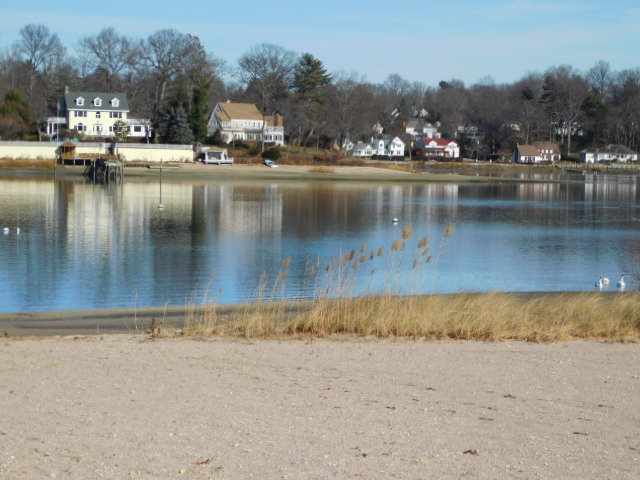
  • Our biology textbooks and popularizations give an impression of nature having a workout and getting in shape for some grim game.  The former idea that evolution was aiming for intelligence _ particularly us _ has fortunately been shelved.  But we are still somewhat stuck, I think, in seeing life as some kind of race where the early bird gets the worm, and the strongest live until another day.  What Darwin actually noted was that evolution involves immense overbreeding by the luckiest.  Sometimes a slight advantage can give better odds, but _ for example _ the luck of many species of trees has nothing at all to do with competition in the environment, but the merely fortuitous chance that they are of some use or pleasure to people.

Wednesday

  • Infused with the spirit of his age, Alexander Pope rhymed “whatever is, is right.”
  • Alexander Pope is full of shit. 

Thursday

  • If people cloned or bred true, if life passed with invariant rules, comprehensive insurance would make sense.  However, the real world dictates that people are different, situations are different, risks are different.  Insurance assumes that a pool of folks are very much alike, but some will be unlucky.  Within a self-selecting pool, this can be true enough to be very useful.  The standard example is a group of homeowners in a small town self-insuring against fire damage, or a church congregation supporting its own long-term members.  Insurance allows us to handle the fog of future visions in a rational way, based on simple probability computations.
  • Comprehensive insurance, on the other hand, admits everyone whether in a similar pool or not.  And then everything goes badly wrong.  Some homeowners are far riskier than others.  Some homes are not well kept, some people smoke in bed or play with matches, and some areas are prone to forest fires.  Suddenly, the pool of prudent policy holders feel they are carrying a bunch of lazy idiots on their backs.
  • Technology  exacerbates the problem, for two reasons.  On the one hand, it allows more and more risky situations to exist _ people kept alive beyond normal lifespans, houses built beyond common sense.  On the other, it also permits a far more detailed projection of the risk level of any given individual based on past behaviors, genetic patterns, and data analysis.  Some people are, for one reason or another, just really bad risks for car insurance.  Rational economic response is to put such people into isolated pools, and charge rates accordingly.  But with technology, even isolated pools are rapidly reduced to consisting of just one person, and probability of risk becomes useless against true fortune.
  • It may be that insurance as an economically viable way of handling risk is about to become obsolete.  Such paradigm shifts do happen.  There was no insurance as such in the middle ages in Europe, nor anywhere else for most of history.  In the meantime I can only chuckle as definitions clash with definitions and goals clash with goals as politicians try to stuff a very square huge peg through a very tiny round hole.

Friday

  • No birds at the feeder in the back yard this morning.  Not many for some time.  A hawk or an owl or both have discovered that birds gathered at a convenient feeding spot are also easy prey.  In spite of these swooping raptors crashing into our windows once in a while, they have managed to succeed enough to chase all the feathered guests away.  That makes for a less lively view from the window, although it has also cut down considerably on the cost of feed.
  • Unintended consequences are the backstroke of the lash of fortune.  I thought I was doing something fine _ fattening little songbirds, cardinals, jays, even doves against the coming chills.  But I was merely setting them up for carnage.  That so neatly illustrates much of the best laid plans of our lives that it is almost a parable.  I know what I think I am doing when I do it, but I am always wrong about the exact outcome as the future extends.  I wish our society would contemplate its own hubris, as we hurtle on with innovation and construction everywhere.

Saturday

Hundreds of birds jostle for position where sweet water trickles in rivulets into the salty marsh.  Pecking order must be set between the flocks, within the flocks, one on one.  Following furious screeching, honking, mock attacks, ruffled feathers, things finally settle down and the serious business of gossip can begin.
“Did you hear about poor Holly?”
“Holly?  No, what happened …”
“Smashed on that weird endless strip of rock up there last night.  Another monster slashing by.”
“I always hear them.”
“Apparently you couldn’t hear this one.  Some of those monsters have gotten really quiet.”
“Jeez, now you’ve got me scared.  What are those things, anyway?  They don’t even stop to feed after the kill.”
“I know.  Poor Holly, such a dear.  So young.”
“Any kids?”
“Nope.  Engaged though.”
“Well, I for one plan never to alight on anything but sand ever again.”

“Fine, but I hear some of the monsters have even adapted to cruising the beach ….”

Sunday

Ode On Solitude by Alexander Pope
“Happy the man, whose wish and care
A few paternal acres bound,
Content to breathe his native air,
In his own ground.

Thus let me live, unseen, unknown;
Thus unlamented let me dye;
Steal from the world, and not a stone
Tell where I lye.”
How boring such a life t’would be
Full harsh unending miserie
None to know nor aught to care
Of sadness, joy, achievement, dare
I’ve oft such weary dust bestrode
Grim or cheerfilled empty road
Sought loud companions, boisterous rude

And only sometimes solitude.

Flawed Visions

Monday

  • As a new year begins, we love to make predictions of what might happen next.  Strangely, unlike the stock market, “past performance is a good indicator of future results.”  What has happened before, especially for decades before, will most likely continue, as surely as day dawns or night falls.  The grand and great trends and situations are just as likely to repeat as the tiny triumphs and annoyances.
  • Human nature loves to embellish this, less with fact than with interpretation.  Will things be good, better, worse, bad?  Everyone is, in their own peculiar way, a Delphic Oracle when the ball falls.  Just as right, just as wrong, fully as ambiguous.
  • We are most drawn to a comparison with the events of the passing year, which necessitates that we enumerate and evaluate what can be remembered.  That provides our baseline for what we hope or fear may occur instead.  We make vows that we mostly know will be broken, especially if they focus on change of habits.  Easy to keep a resolution to eat breakfast every morning, if that is what we already do.
  • But all this is being said, and has been said, because one certain prediction is that a vast reservoir of words will pour forth on various media.  This too has happened since humans first strode across the African savannah in distant ages.  We’ve merely extended the campfires to a bonfire that encompasses the entire world.

Tuesday

  • Average temperatures this time of year in Huntington are 41 high, 26 low.  Ducks, squirrels, oaks, frogs have adjusted to that, enabled by natural selection over eons to endure what may happen next and to survive today.  The consistently varied length of daylight is an astronomical certainty, although the actual amount of sun energy received is hostage to average cloud cover.   Wild animals react to temperature and moisture while vegetation hovers, but neither “expect” anything.  Blizzards, warm spells, rain, drought all come and go, as the sun maintains its stately march towards spring.
  • People are different.  We expect conditions to closely match the past _ winter weather, good or bad.  Unfortunately, any average can hide an awful lot of extremes, which is where we fall into error.  The old saying is “if you have an icepack on your head and your feet are in boiling water, on the average you’re pretty comfortable.”  In our controlled universe, we mistakenly believe that average is certain.  So I expect the thermometer to each a high near 41 every day without fail. When it doesn’t I think something has gone drastically wrong, and call on scientists, politicians and the gods themselves to rectify the problem. 

Wednesday

  • Much of our wisdom may be encapsulated in popular songs running through our minds, perhaps modified a bit by experience.
  • Meet the new year, same as the old year …..

Thursday

  • This January, more than most others, Americans are contemplating what will happen in politics.  How much remains the same, how much will change.  Many are scared, others euphoric.
  • The United States has been governed recently by idealistic intellectuals who hoped to bring a better world into being, while restrained by those who feel no better world can exist.  Before that it was ruled by “realists” who clearly saw the evil in everyone but themselves.  For a while, technocrats attempted to apply scientific rules developed from a logical universe to the illogical  process of government where each person consists of infinite laws unto themselves.  All succeeded, or failed, in one way or another.
  • Now it is the turn of the plutocrats, with their entourage of narcissistic apologists and pocket generals.  They may succeed or fail, but they will certainly discover that trying to govern a country is not at all like running a business or an army.  There are no simple goals, no clear win or lose, no applicable financial yardsticks. No solutions, only outcomes. 
  • My poor pessimistic prediction suspects that this will become the greatest kleptocracy in history _ the rich piling the trough higher and higher for each other.  Conflict of interest hardly begins to describe the most likely scenario.  Whether that leads us into becoming a banana republic where we peasants are repressed or a socialist state when the peasants revolt will be the most interesting, if unpleasant, storyline to observe over the next four years.

Friday

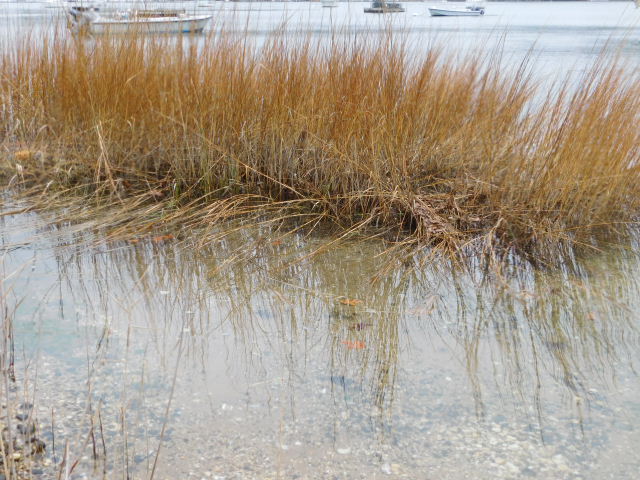
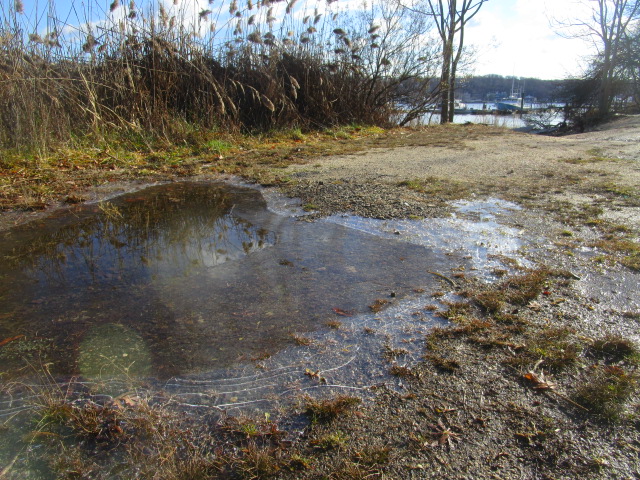
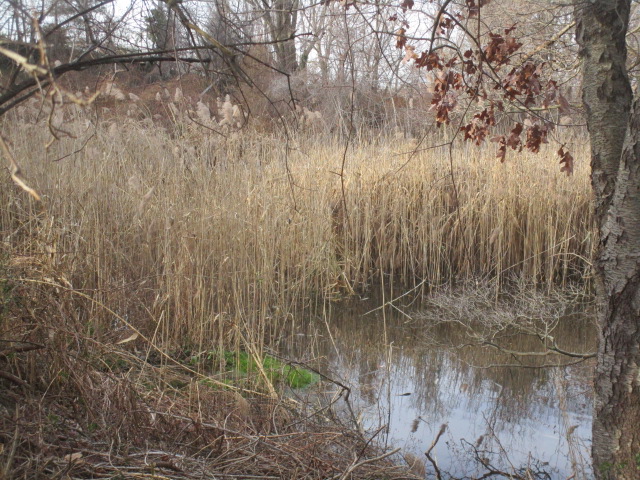
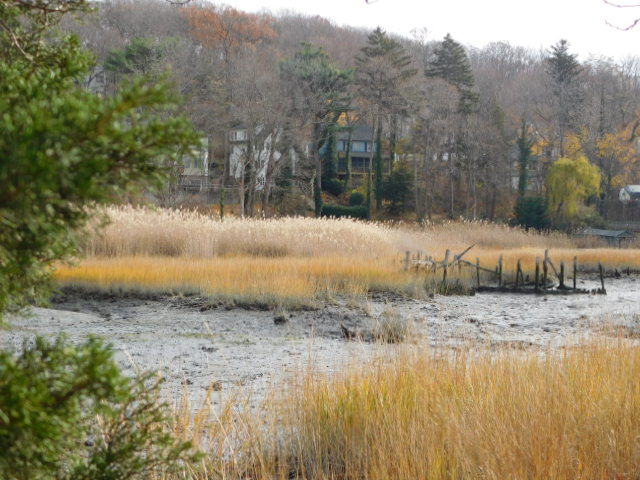
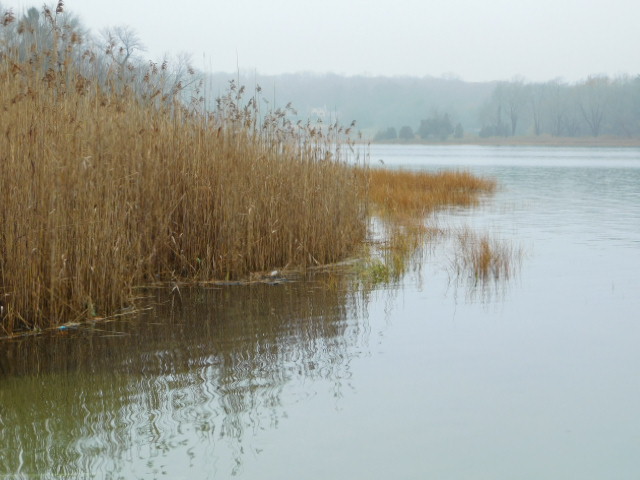
  • Husks of water reeds are everywhere, still mostly sturdy against wind, rain, tide and a quick slushy snowfall last week.  Until ice becomes thick and shifts with the water, they will remain mostly so, often until spring.   Then there will be thick mats decaying along the bottom, or cast ashore on sands, annoying bathers but providing a haven for flies and other insects.  This happens every year at this time, although roots shift with mats over the season, and seem scarcer as waters continue to inexorably rise.
  • Almost the first thing Europeans did around here was to drain the “pestilential” swampy wetlands.  The only thing that saved any of the original landscape was that it was too low to bother with _ not even fit for mowing salt hay.  But wetlands form the basis of much local ecology, and harbor and bay are much poorer for t
    he “improvements.”  Reeds hang on, adapting, but of course the key question now is will rising oceans drown them faster than they can move and drift to new locations.  I will never see what happens in the long-term, so I guess it should hardly personally matter.

Saturday

Bright flash, deafening sharp bang, Bing jumps and almost loses his footing on the old split rail fence.  His world fills with more noise, sirens, pops, lights, screams and yells.  He races along the wood and scampers into a tree, “What the hell?” the squirrel asks the once darkly quiet night.
“Hoo-mans” comes a low call from above.  “Just hoo-mans.”
“That you, Ben?”
“Just me, Bing.  And all those crazies.”  Another firework display streaks high above.
“What do they think they’re doing?”
“Scaring away evil spirits, as I understand,” replies the owl.
“What spirits?”
“I told you hoo-mans were crazy.  They think invisible masters rule the universe.  Some are good, some are bad, some are ….”
“But there’s just now.  What is this good and bad business, anyway?”
“Too complicated for our little brains,” says Ben.  “I prefer to think they are just crazy.”
“Well, they sure scared the evil spirits, whatever they are, out of me.  I nearly had a heart attack.  How long do think this crashing will go on?”
“Almost over, as I understand.  Hoo-mans do it every year.  They never learn.”
“OK, Ben.  Have a good night’s rest, anyway.”
“Not I, not I.  Working night shift, you know.”
“Sleep well tomorrow, then.  Happy new year.”

“Say the hoo-mans, so they say.”

Sunday

One potato, two potato
Three potato, four
Many piles of memories
More on more
People vanish, decades flee
Remember, wonder,

Am I me?

Darkling Moods

Monday

  • The Western European end-of-year holidays existed for a reason.  Darker, longer nights, and a need to be fortified by hope against coming winter.  But also the traditional times of warfare were suspended _ the Mediterranean too stormy to plan campaigns, deep cold and snow in northern Europe, shorter days, the need for manpower to reequip and in a few months for most of the men in armies to help plant crops.  Until recently, most such activity left winter itself as a relatively quiet and inactive period, which could truly be celebrated by the festival of returning sun.  Their year was in some ways as regulated by winter solstice as the ancient Egyptians were by the flooding of the Nile.
  • On the other hand, for much of the Northern Hemisphere, winter was a grim time.  You did not need imaginary creatures to be worried about being devoured by wolves, freezing to death, or facing certain starvation.  And for most, sunset marked the effective end of each day, with little left to do.
  • So this week, I do not celebrate our modern Christmas and other orgies of consumption, which are now gigantic commercial affairs or an overblown religious observances.  I consider Darkling Days, Darkling Moods, affecting us far more certainly with the depression of missing daylight than the phases of the moon.  I rejoice in having food and electricity and transportation and warmth and machines that let us ignore most old terrors, even as we invent new ones to take their place.
  • The woods are cold and bare, fields fallow, but nature never quiet.  People add their constant noises even in the hush following snowfall, but birds still sing, the wind whispers, the waves break on shore.  They are as still as we probably should be, but we have too much to do, which, all in all, is probably a good thing, even in those dreary months to come. 

Tuesday

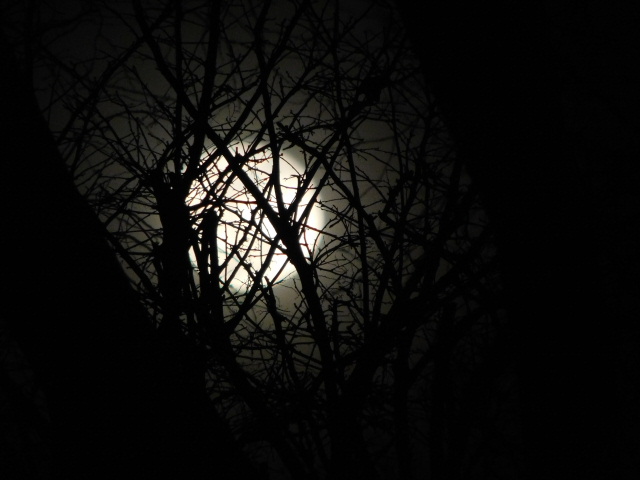
  • Even at solstice, midday sun at Huntington’s latitude is blinding to stare at, and painfully glaring on snow or ice.  Plenty of sunshine to determine color of remaining leaves and berries.  Enough energy to slow the seepage of heat until spring.  Romantic or Gothic poets spin darkling tales of how the solar disk transforms into a wan ghost of former glory, but they are imagining rather than observing.
  • If our descendants colonize Mars, their sun will truly become a pale darkling brightness.  I do not think those colonists _ given current advances in genetic engineering _ will be like you are me.  All the more reason for us to defend our planet ever more militantly and jealously, for it is the only home that we and those like us will ever inhabit or enjoy. 

Wednesday

  • Darkest just before dawn only works (as a tautology) if dawn is defined as exact moment night becomes brighter.
  • Sunrise remains hours away.

Thursday

  • For some people, Druids are a glazed fantasy of bearded wise blue-woad priests who understood ancient mysteries, and of wiccan initiates who danced natural rites.  Mistletoe.  Yule logs.  Living at one with Mother Earth.  It’s just as well those dreamers won’t accept the actual bloody Neolithic world, as revealed by archaeology. 
  • Similarly others have their own dreamy fantasies of Santa, Victorian courts, Medieval saints, rollicking knights, and _ of course _ all the fables, miracles, and philosophies of the ancient world.  “People just like us” we are told, “who understood the true underlying cosmic and metaphysical mysteries.”  Contradictions apparently just add to the glamor.
  • We must have fantasies to survive.  “This will be the best Christmas ever;” “through the years we all will be together;” “everything will work out;” “live laugh and be happy;” “things will be better someday;” and, of course, must cherish our inner certainty that moments will continue forever, while life around and in us ages on.  What is the alternative so such hope?
  • Logic laughs at darkling nightmares, and the dreams we construct to combat them.  Logic is hardly all _nor even the most important portion _ of mental balance.

Friday

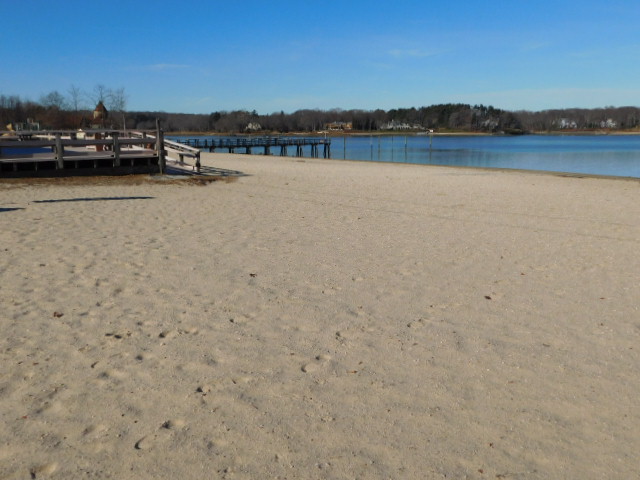
  • Beaches at winter have an empty feel, which because of the holidays and lack of snow cover has not yet quite set in.  It takes some work to find open expanses clear of people and dogs.  Generally, however, the sand is uncluttered, hardly marked with footprints.  Little life is evident along the shoreline, where murky summer waters have cleared and in crystalline depths rounded pebbles glow.  Even the wind feels empty and clean, containing no exhausts from pleasure boats nor perfumes and pollen from trees and flowers.
  • I dress warm and enjoy a place away from everything and everyone.  Even normal annoying sounds are drowned out by the rush of the wind, cry of gulls, and especially breaking wavelets.  In this crowded area, nothing can be called loneliness, but patches of solitude can hover briefly.  For the next two months, trailing dropping temperatures will render such locales more and more inhospitable, more inaccessible to normal access.  Yet at winter solstice, touches of the previous season linger on, and sometimes pleasant memories of warm times past are easily recalled. 

Saturday

Large crowds of flocking geese _ not the usual overwintering kind _ have arrived to cover the bay, ignoring the massed swans who dislike the competition for fresh water.  A few ducks, but not so many as to be noticeably different from other times of year. 
One of the swooping seagulls cries out to a tiny white-headed duck, “Hey, Bufflehead Bob, see you’re finally back!  How did the North treat you this past year?”
“Well enough, well enough.  Boy, that cove over there gets more and more crowded each time I arrive.  Doesn’t anyone ever leave any more?”
“Nah, most of them have gotten too fat and lazy.  Easy pickin’s the last few seasons.  If we have a hard January with the harbor frozen over and icicles forming on beaks we’ll see things thin down pretty quickly.”
“Yeah, true, but that affects us to, so no evil wishes from me.”
“Where do you go, anyway, Bob?  Is it just like here.”
“Not hardly.  Lots of room, lots of quiet, lots of trees and open marsh.  It’s work to pack and work to go but Fran and I love it up there.”
“In the right season, right?”

“Oh, yeah, in the right season.  Well, got to get busy diving.  See you around.”

Sunday

Winter solstice sun sets
From our porch
Clouds permitting
Right down neighbor’s chimney

Unexpected monolith

Overloaded

Monday

  • One might naively suppose that with adequate food, clothing, shelter, security, and health any human would be happy and satisfied.  Of course, such conditions might also describe a prison cell.  When we add freedom and pursuit of happiness to the mix, the actual level of contentment seems to drop precipitously.
  • Never is that more evident around here than during the end of year holidays, stretching for several months, culminating near New Years.  Folks are told how lucky they are and how much they should strive to please everyone else until they are ready to puke.  From their usual overcommitted daily frenzy, no one has time to add on shopping and cleaning and decorating and planning and worrying.  But they are told, by others and themselves and ubiquitous blasting commercial media that they must.
  • So no other season is quite so grim.  Drivers become maniacs.  Shoppers retreat into cold hard little shells, elbowing everyone else out of the way.  Laughter is all too uncommon _ a waste of precious moments.  And _ greatest crime of all _ moments slip away, consumed without notice by attention spans fixated on the near future and an occasional nostalgic wisp of past memory that only causes greater angst.
  • Oh, I know.  Scrooge here.  Yet I am content with the season, just disappointed with its effect on others.  In fact I feel more like Tiny Tim surrounded by legions of cloned Scrooges.  Bigger, better, more, not enough, I’m more important than anybody, rich, fat but mostly _ and this is what disappoints me most _  profoundly unhappy and unaware Scrooges. 
  • So Happy Holidays anyway.  But try to remember it is really really good to have food, clothing, shelter, security and health.  Throw in a dollop of freedom and pursuit of happiness, but don’t overdo that dessert.

Tuesday

  • Even though true winter arrives in a few weeks, this remains a fat time for wildlife.  All seeds that will be produced are exposed in hearty abundance.  Berries load trees and like a natural buffet gaily reflect orange and red and white back through bare branches, or needles or fat greenery (like holly).  Most migrating populations have passed by, leaving residue of the feast for animals that remain.  Those are frantically fattening up for harsh weather around the corner.
  • I’d say it is a fat time for local humans also, except that it is always a fat time for our particular local humans.  We live in an abundant society, and tales of destitution and hunger are basically problems of distribution and quality, rather than actual shortage.  Most of the denizens of Huntington have long ago blown through Maslow’s chart of escalating needs, into stratospheric conceptions of what is required for success and demonstration of success to others during the holidays.
  • In fact, I tend to think of our overblown consumer society as somewhat akin to Darwininan selection, where a characteristic is exaggerated for sexual or domination reasons, until it becomes a handicap.   Holiday shopping can look like useless (from the point of survival) gaudy male peacock feathers.  Or apocryphal stores of saber tooth tigers with tusks so long they can no longer open their jaws and thus starve to death.  Shoppers with so many packages …. Well, you get the idea

Wednesday

Time just is.

Our knowing hours separates us from every other creature.

Thursday

  • Dante cleverly built a Hell in which punishment fit the crime so absolutely that in fact punishment was simply an eternally exaggerated repetition of the sin itself.  Those tossed about in life by emotional frenzy end up in an anchorless whirlwind, perpetually rushing by those they would like to meet, torn apart by the gale.  Teams of Hoarders and Wasters scream while randomly crashing boulders.  Angry people desperately claw at each other to get ahead while wallowing in endless filth.
  • His point remains valid.  Whatever our eternal destination, sin and temperament can punish us throughout life.  That allows me to smile at the impatient drivers all about, stewing in their own chaos of not getting where they must go as quickly as they think they need to.  I wonder if the circles of Hell have added specialized technological niches, maybe one for cell-phone addicts.  Glowering visages of those tramping malls in forced quests only make me smile, grateful that I do not inhabit their nasty enclosed universe.
  • I suppose it is perverse to associate end of year mirth with Hell and damnation, although in that observation I simply join many others such as the Puritans.  I know that there is a fair amount of joy and happiness out there, even in the malls, even as people drive.   But most folks hate to show it, and many of them seem truly overwhelmed and miserable.  I try to step back a bit and realize how fortunate my society and I myself have been and continue to be.

Friday

  • At the height of holiday madness, an escape to a local park is still possible.  Temperatures are often less than bitter, and snow cover usually does not arrive until later.  But it is in winter that the limits of these preserves are fully displayed.  Without intervening leaves and
    vines, bordering houses are clearly shown, sounds cut through the woods without muffling, and other visitors are visible a long ways off.  Woods and fields seem to shrink, and it becomes impossible to pretend this is a glimpse of wilderness.
  • Everywhere on Long Island the presence of others is more defined.  Trees along parkways no longer screen nearby developments.  Traffic and leaf blowers and chain saws and jet engines provide constant murmurs at all hours.  Our human beehive is nakedly visible, and palpably present.  My real escape for the next few months is at a few local beaches, which are frigid, windswept, usually deserted, and still present open vistas of water, wildlife, and distant hills.  Wind and wave sounds drown out civilization, and I can still find myself happily solitary.  Perhaps even humming a carol to my inner self.

Saturday

I’d been blindfolded at the airport, and driven to this remote beach on some Caribbean island.  Also forced to leave my phone and all recording equipment behind.  My report of this interview would have to be from handwritten notes alone.  I blinked in dazzling sunlight and finally focused on the large bearded man sitting in front of me, as smallish waiters brought drinks.
“Ah, Mr. Claus?” I began.
“Ho ho ho,” he responded heartily.  “Here, have a Polar Vortex _ Bubbilo invented these just for me.”  I’m handed a white drink dusted with sugar resembling snow. 
“It seems retirement is treating you well.”
“Can’t complain.  Should have done it years ago.  But, you know, it took technology.  Couldn’t have managed it at all in the fifties …”
“What technology do you use, anyway?”
“Well, we handed the sleigh off to Norad a while back, of course, and before that I had the clones in the department stores _ before we even knew about DNA, mind you.  But now the naughty and nice list is sorted by Google on the cloud, delivery is with Amazon and UPS, and guest appearances are via hologram and Artificial Intelligence generating media events.  All me and the boys need to do is sit back and watch the show.”
“Don’t you even answer letters?”
“All done electronically _ most come in email anyway, but the rest are scanned.  Logoli fixed up a nice chatbot that handles all the responses.  Now I can just sit back and watch the sea life.” He sighed happily.  “Better than a blizzard, I’ll tell you that.  Right dear?” he asks Mrs. Claus, coming across the courtyard.
“Don’t you feel just a little guilty?”
“Why? I put in my time.”
“But how can you possibly afford all this?
“Royalties, you know.  Markak trademarked us years ago.  And anyone who doesn’t pony up gets to meet our ‘protection services’ in the form of Gremanon and her flood and fire brigade. Ho ho ho.”
“Aren’t you even going to ask me …”
“What do you want for Christmas?  Don’t be silly.  This interview is all you ever wanted.  Ho ho ho!  Have a great holiday!”

They blindfolded and led me away, but it was true.  Once again, I had to believe in Santa.

Sunday

I’m wealthy, you know, get out of my way
Don’t bother to speak, I won’t hear what you say
I’m busy and anxious and quite out of time
I need what I want without reason or rhyme
I deserve every penny, no second is free
The world as I know it revolves around me
I’m not very happy, I don’t have that skill
Just hard work and hard play and a fabulous will
Have left me quite bitter, but that is ok

As I said, I must hurry, get out of my way.

Twinkle

Monday

  • We haven’t seen a starry night in Huntington since superstorm Sandy knocked out all power on the East Coast.  The moon bravely shines through the local illumination pollution, and I can still make out Polaris and Orion in winter.  The planets are often visible, although easily confused for a while with jet plane wing lights swarming Kennedy and LaGuardia.  But there is not a trace of thousands _ let alone billions _ of stars, and certainly not a hint of the Milky Way. 
  • We get an awful lot of our “nature experiences” from media.  Habits of wild animals, wonders of the cosmos, terrors in jungles or icecaps are all available when I pick up a book or turn on television.  I’m sometimes shocked at the difference even with a stroll through small tamed local woodlands.  On the other hand, I’m quite content not to come face to face with a lion.
  • I’d be lying to claim I miss the stars much.  I was never a night owl, never a wilderness explorer.  I like my soft warm bed when I sleep.  At most, I’d glance up now and then.  So not having countless little sparks overhead has never particularly affected my mood.
  • Like many people, I suppose, I like the idea of brilliant starry nights more than the actuality.  Just as I enjoy stories of epic nature more than living the adventure.  My delights are local, calm, beautiful, constrained _ beaches and shells, dirt paths and leaves, birds and bugs.  Yet I can be saddened to contemplate that starry heavens are missing, just as that countless species enter extinction even though I would never have encountered them in person. 

Tuesday

  • Once upon a time, twinkles were pretty much confined to stars overhead.  Now they are commonly artifacts of tree branches waving and temporarily blocking artificial electric lights.  But twinkles, like their daytime cousin sparkles, carry mostly benign connotations.  Evil characters rarely have a twinkle in their eye.  The few other times twinkles are glimpsed _ in a raindrop or dew for example _ they pose no menace.  A happy, flashing surprise to jolt thoughts out of whatever rut they may have fallen into.
  • This time of year twinkles abound as folks put strings of small lights all over houses and trees, as darkness falls quickly and early.  Twinkles reflect on the harbor from homes outlined in white, masts of small sailboats gaudy with colored strings, and out my window as the remaining leaves momentarily obscure neighbors’ decorations.  Soon I will add my own decorations to the grand mélange.  I’m pretty sure the energy expended does not help the planet at all, but it cheers us up and I guess a few iguanas, toads, and lizards more or less are a price worth paying.   

Wednesday

  • Our eyes can glance at the sun, be dazzled by sparkles on the sea, gaze at a sunset, wonder at a full moon, and be entranced by countless twinkling stars.  If we pay attention.
  • Human senses are only incredible when mediated by mind.

Thursday

  • Some claim to see the future through a glass darkly.  I always regard it as twinkling possibilities.  My adolescence was filled with stories of alternate incompatible futures, mostly world-ends in bangs or whimpers.  The only escape was vaulting over the near future into centuries or eons of distance.  And those grand masters of the genre of science-fiction could twinkle grandly indeed.
  • Age brings its own perspective, and hammers home the true realization that for each person, the world ends at death.  So worry about climate, automation, disaster, and other global terrors subsides into “will I wake up tomorrow, and how much of me will remain if I do”.  We consider the immediate futures of our children and those closest to us, of course, and those projections (sometimes unfortunately) often prove true.  But beyond a year or so, we are as ignorant of what may happen as any German peasant about to be overrun by armies during the Thirty Years War, or any complacent mid-level nobleman in Renaissance Florence unaware that Black Plague is beginning to seep into the edge of the city.
  • Nevertheless, we all peer upward into the future, see glimmers of hope and fear, and watch them blink or vanish behind clouds for a while.  Their twinkles provide a spur to our imaginations, and by doing so enrich our thoughts.  What might become of everything is a fruitful source of daydreams.
  • I think I understand twinkling stars as I gaze upward.  But in spite of science, I have not experienced their essence.  The twinkles which seem to animate them are illusions of vaporous atmosphere.  That I do not really understand them should be depressing.  But I am fortunately able to still immerse myself in undying memories of space opera, uncritical examinations of nocturnal beauty, unhindered visions of marvelous futures, and to allow my own consciousness to twinkle brilliantly.

Friday

  • Apocryphally, Eskimos have twenty words for snow.  That is not unusual _ English has many words for a bright light of short duration _  pop, burst, flash, blink, wink, sparkle, twinkle.  None of these can be illustrated with a still picture _ each requires ongoing time.  They are not synonyms, exactly, but all share features and can be interchanged to a certain extent.  Whether a sunset on a sea twinkles, or when sparkles turn to twinkles as dusk falls,
    is open to dispute.
  • Words like these come so loaded with cultural and personal connotations that they are among the most difficult for non-native speakers to understand.  Santa Claus typically has twinkling _ definitely not flashing and usually not sparkling _ eyes.  I suppose that terrifies professional translators, but it can lead to the most astonishingly incongruous machine translations.   Some are ideophones _ which somehow suggest in sound the things they represent, even though those things produce no sound at all.
  • I use them as I will, especially in this blog where any excuse for anything is a good one.  December for me, both in nature and not, is a season of twinkles everywhere.  

Saturday

I am in the midst of untangling wires and plastic edging when Stan and Jane hail me from the road.  I take a moment out to walk down the driveway, grateful for a break to put my hands in pockets in the frigid breeze.  “Merry Christmas,” I greet them with little enthusiasm.
“Once again, once again,” chuckles Stan.  “What, you don’t get excited that Santa will be here soon, with his sleigh and reindeer and …”
“Blizzards and ice and gloom,” I finish.
“Bah! Humbug!” laughs Jane.
“Got that right in one.  Just more chores, and here I am, seeing what works and what doesn’t.”
“Lots of blinking lights on the trees?”
“Just a few.  We gave up on blinking a long time ago.  I find the twinkle of off and on kind of monotonous, rather let the leaves and wind do the work.”
“We just saw Patty’s house _ looks like the mall or one of those neighborhood displays you see on TV. “
“Way too much work for me,” I note.
“Actually,” Sam says pensively, “we think they got it done professionally.  Anything that goes up that fast without us seeing them slaving at it is probably from some service or other.”
“Wouldn’t surprise me,” I reply.  “Just about everything around here lately seems to be done by somebody else.  Not like when we were kids, that’s for sure.”
“Nothing is,” Jane adds.  “Anyway, we’ll let you get back to work.  We need to put in a few more steps before dinner.”
“Gee, thanks a lot,” I start back up to the garage.

“Don’t mention it, Scrooge.  God bless us every one!”

Sunday

You don’t twinkle, little star
I don’t worry what you are
If sun blinked like that, or our moon,
Everyone would scream and swoon
Life itself can twinkle so
We accept it as we go
Illusions fill the near and far

You don’t twinkle, little star.

Conventionally Brown

Monday

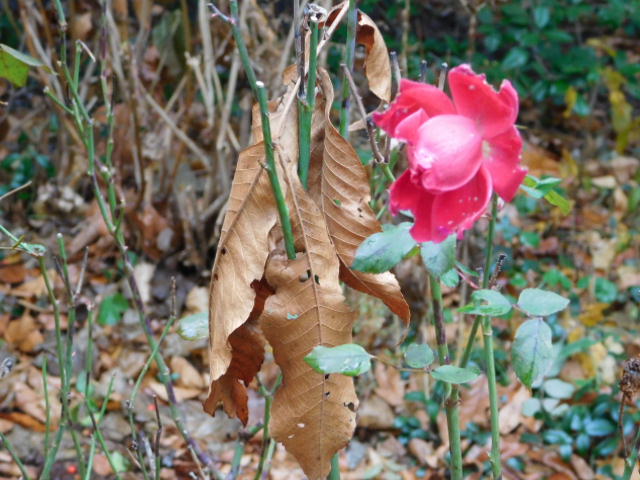
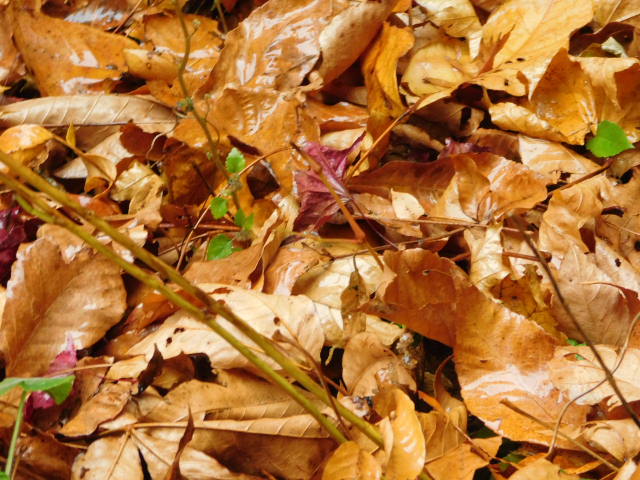
  • Ask most residents of Huntington what the common color of nature is, this week after Thanksgiving, and most would say “brown.”  Forest floor is covered in brown, and what leaves remain on the trees have lost all other colors.  Exposed branches of the deciduous canopy are various shades of what might be called brown.  Dried weeds and exposed earth are only charitably tagged as “sienna” or “umber.”  “Brown” is the safe, conventional response.
  • Brown is an odd color, not found in the rainbow.  Nature, even now, is not brown.  Tree trunks do not resemble the drawings of children with crayons _ most are more closely grey.  Cloudy skies are tinged with blue and yellow, clear skies are azure, without even mentioning sunrise and sunset.  Water echoes sky, with deeper tones.  Evergreens remain verdant, lawns are still emerald.  Looking closely other colors peek out here and there.  And it is almost impossible to miss the brilliant hues of man even in the most natural setting _ bright red jackets, or brilliant yellow cars, for example.
  • Conventions help us organize our thoughts.  So it is not exactly wrong for me to think of late fall as brown, of winter as white, of spring as brilliant lime.  By contrast to each other, there is a grain of truth in categorization.  But I should never confuse that convenience for reality.
  • I would extend that to our thinking about society.  Conventionally, we may see desperate times, or loss of civility, or intolerance, or downright stupidity.  And, again, although there may be a grain of truth and a bit of useful categorization in such characterization, it is hardly the whole truth and maybe not even close to reality.  Just as late fall nature is not really brown, America today is hardly as desperate as fanatics on any side of the political spectrum lazily perceive it.

Tuesday

  • Appropriately, humans cast the world in human terms.  There is a clean logic to that, especially since it is hard to believe that any other species on the planet would consider alternate interpretations.  It is unlikely that a fox or willow ever wonders what it would be to experience life as a person.  Only people try to understand alternatives _ even if that is usually simply anthropomorphic casting.
  • Why we have been endowed with intelligence and ability is a profound question.  Scientists point to the climatic insanity of the ice ages.  Religions claim the spark of the divine.  The true issue is not how we have become as we are, but what we do with it now that we exist.  Too often I take my conventional outlooks for granted, barely pausing to understand how wonderful they are, and how amazing that I can change them at will.
  • So I stroll under “menacing” skies that are merely water vapor and gas, watch “playful” birds that are only trying to eat, contemplate “majestic” trees that “endure” harsh storms.  That is right and proper, but I must always also realize that any mood I project, however conventionally true, is nothing more than my projection.  The way I think can sometimes be more of a hindrance than a help.  I strive to remain able to reset and find fresh alternatives to what I too easily accept.  

Wednesday

  • Conventional truth is not reality; we merely construct useful beliefs.
  • Each moment of our experience is a tangle of partial fragments and misperceptions.

Thursday

  • Islamic State and White Supremacy are isomorphs.  Each is an exclusive conventional idea of superiority based on race, religion, or some other easily determined marker.  All cults transform their inner circle into presumed magicians, their followers into unquestioning parrots, and everyone else into subhuman “others.”  As tribal creatures, we are easily seduced into such groups. 
  • Logic in tribal association is less important than proximity, intuition, and reinforcement.  Society can rarely break up proximity _ the Roman diaspora of the Jews notably failed _ and intuition resists anything but revelation.  But we can counter reinforcement. 
  • Magicians can be proved powerless.  Adherents can discouraged by incompetence in the real world.  The most important counterweight is social civility.  Even the most isolated tribal member often feels a strong attraction to get along with others, if only to convert them.  By providing a civil society which promotes the idea that there are no true “others”, and which encourages interconnection between everyone, tribal exclusiveness is weakened.  It is no accident that the first thing cult leaders attempt to do is to restrict access to the outside world for all those who join its circle.
  • When conventional tribal ideology becomes fanatically destructive, like Islamic State or Nazi Germany or the American Confederacy, the end result is usually the immolation of the tribe, although it may take many others down with it.  One of the great tasks of this century will be to understand how and when to contain such a malignancy, either with more powerful social conventions, or early use of naked force.

Friday

  • Conventional understanding of any situation is always subject to change.  Standing in deep woods looking into sunbeams slicing through tree trunks presents a radically dif
    ferent set of images than those seen by simply turning around.  Walking beyond into a meadow is to gain a totally reoriented perspective of forest.  Flying as high as a hawk transforms terrain yet again.  And poking around with a magnifying glass or microscope supplies yet another slice of whatever “reality” may be.
  • Conventionally, we are told to “think out of the box” or take a “view from twenty thousand feet.”  These admonitions are almost useless.  We are trapped not within a box, but within shapeless but generally useful tricks of survival.  A view from higher than a hawk circles _ a few hundred feet over treetops _ is of no value to anyone except real estate developers.
  • Having conventional views is not the problem.  They are what we are, our primary tools of survival.  Not realizing that they are conventions is our problem, and one of the reasons art is such an important element in any culture.  Art not only focuses conventions, but by doing so also allows us to step out of them, as into a meadow, and reorient our perspective of society.

Saturday

Pinny Oak stretches her limbs away from the northern blast and yawns mightily.  Leaves cascade away, leaving her three-quarters undressed.
“Going to sleep already?” asks Sam Spruce across the yard.
“I always get tired this time of season,” she replies.  “I leave late months to you.”
“You’re missing the best part of the year,” Sam tells her.  “Hardly any pests, lots of water, fairly quiet, and those pesky humans mostly scurry away and leave us alone.”
“Not what I heard,” says Pinny.  “Your cousin Jane over in the corner says she’s lost relatives.  Just cut down and dragged into humans’ burrows for some obscene ritual or other, then tossed out when they have been sucked dry.”
“That seems to depend on where you live and how big you are,” notes Sam.  “They don’t seem to bother any of us around here, thank heaven.  Anyway, I find it a wonderful contemplative time.”
“Well, I can’t help it.  I need my hibernation or I’m a mess in the spring.  Anyway, it’s not ‘already’, I always turn in around now.”
“Pleasant dreams,” mutters Sam politely, as another strong gust rips by.

“Good winter to you as well.”

Sunday

If I could see or clearly know
I’d fill my time with what was right
Choose true paths
Ignore the strange.
What lies about is fog and mist
Scattered forms in subdued light
Which subtly shift
Or quickly change.
I think I’ve found what’s real at last
Clutch my prize to hold it tight
Then wind blows biting, clears my brain

All is formless once again.