All paintings at: https://sites.google.com/view/cabinetofvanities
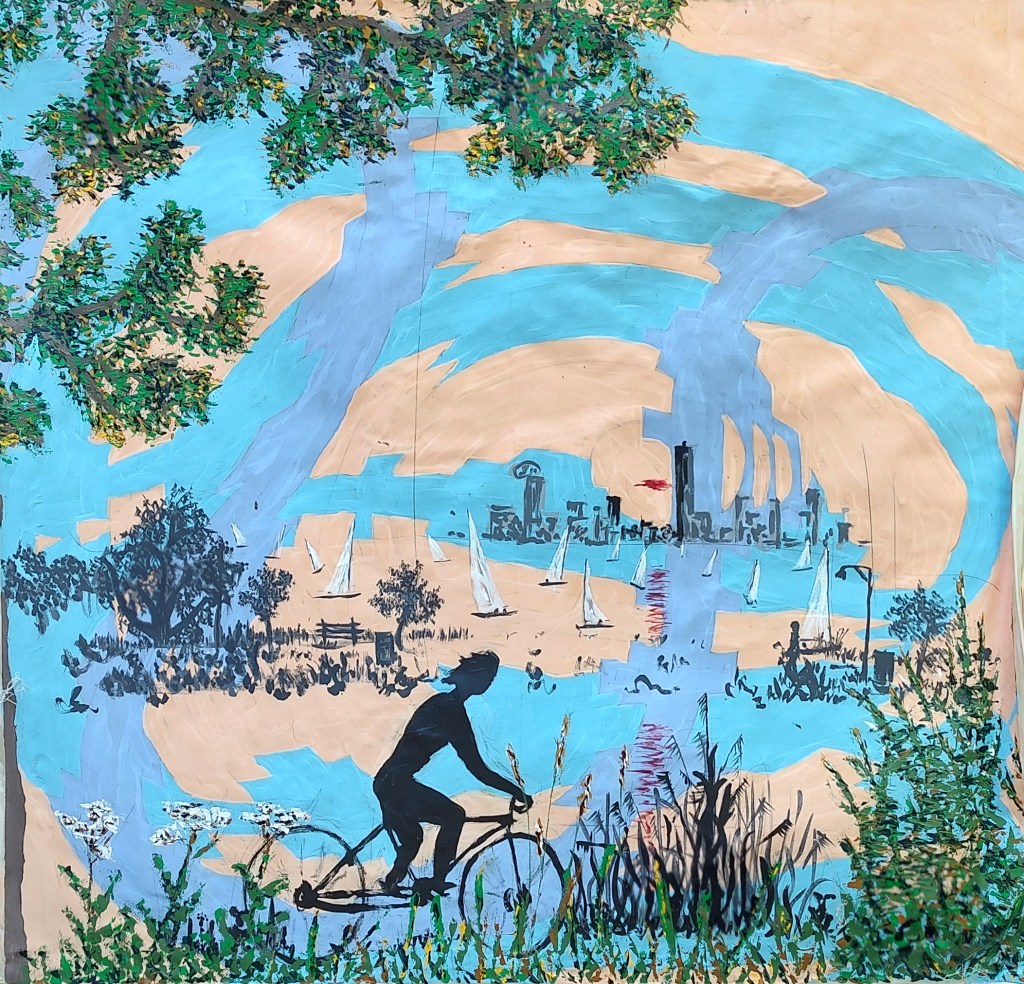
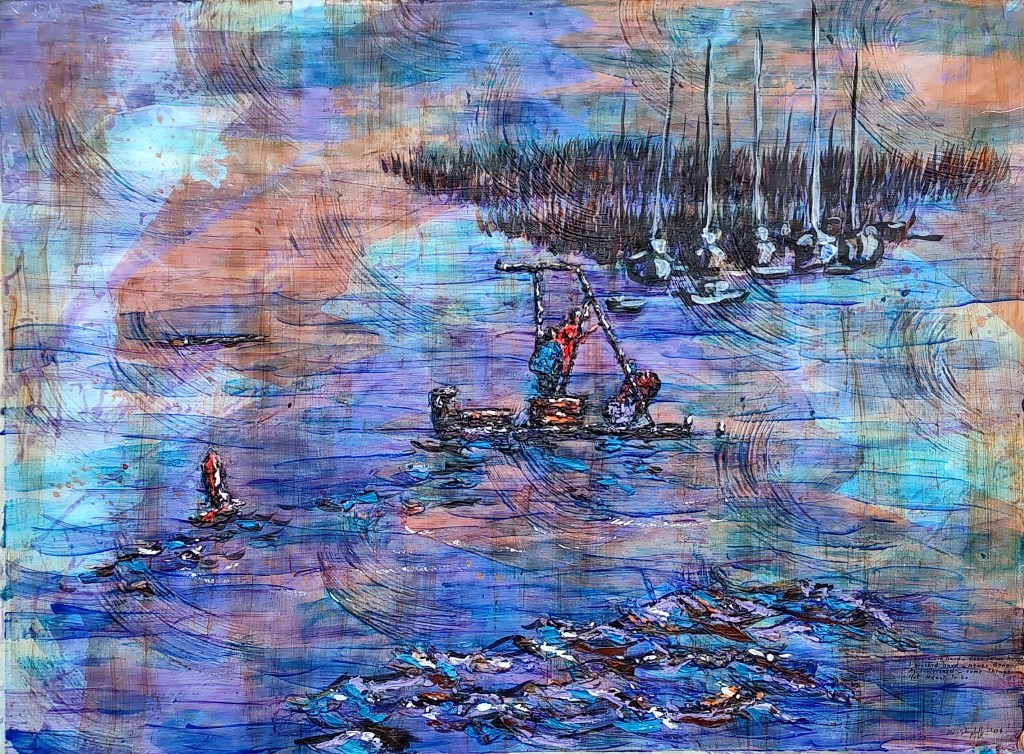
Acrylic on Watercolor Paper, 1998, 18×24
On the float, mayfly humans / dance ephemeral existence / soon tide covers the rock / no more persistent than they

All paintings at: https://sites.google.com/view/cabinetofvanities
Acrylic on Watercolor Paper, 1998, 18×24
On the float, mayfly humans / dance ephemeral existence / soon tide covers the rock / no more persistent than they

All paintings at: https://sites.google.com/view/cabinetofvanities
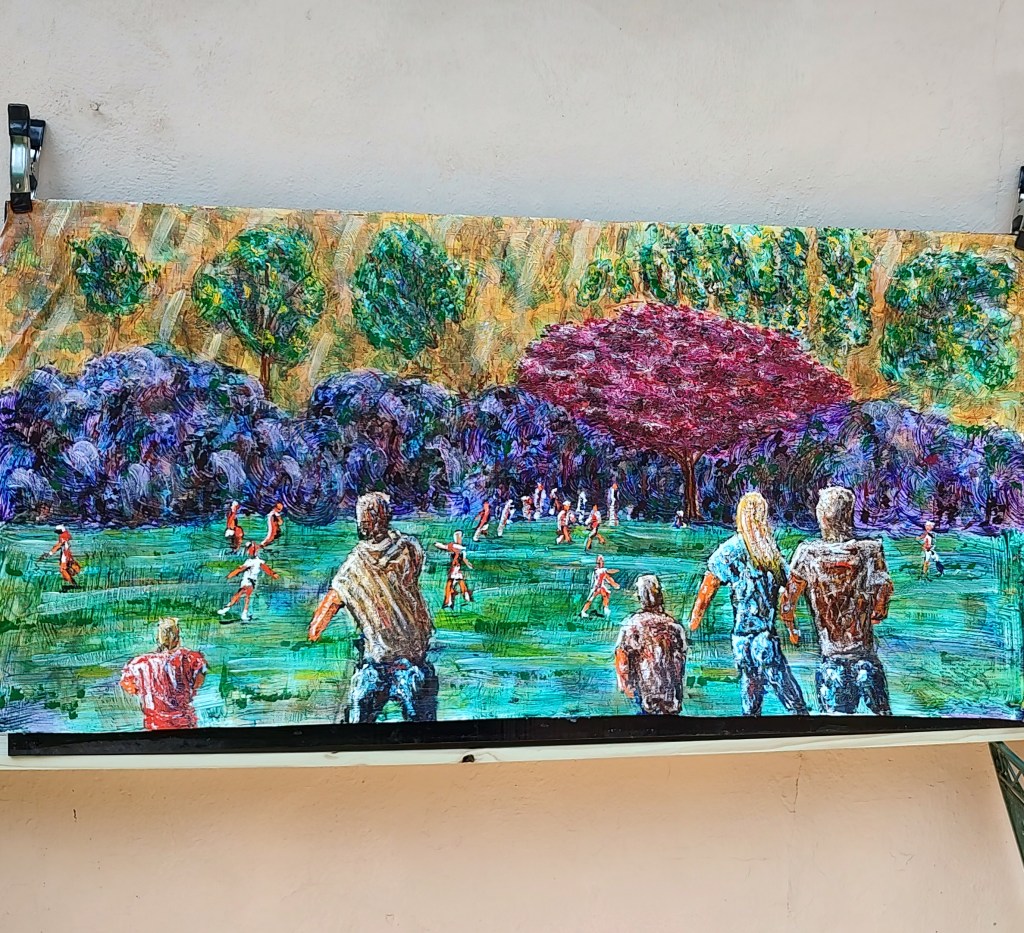
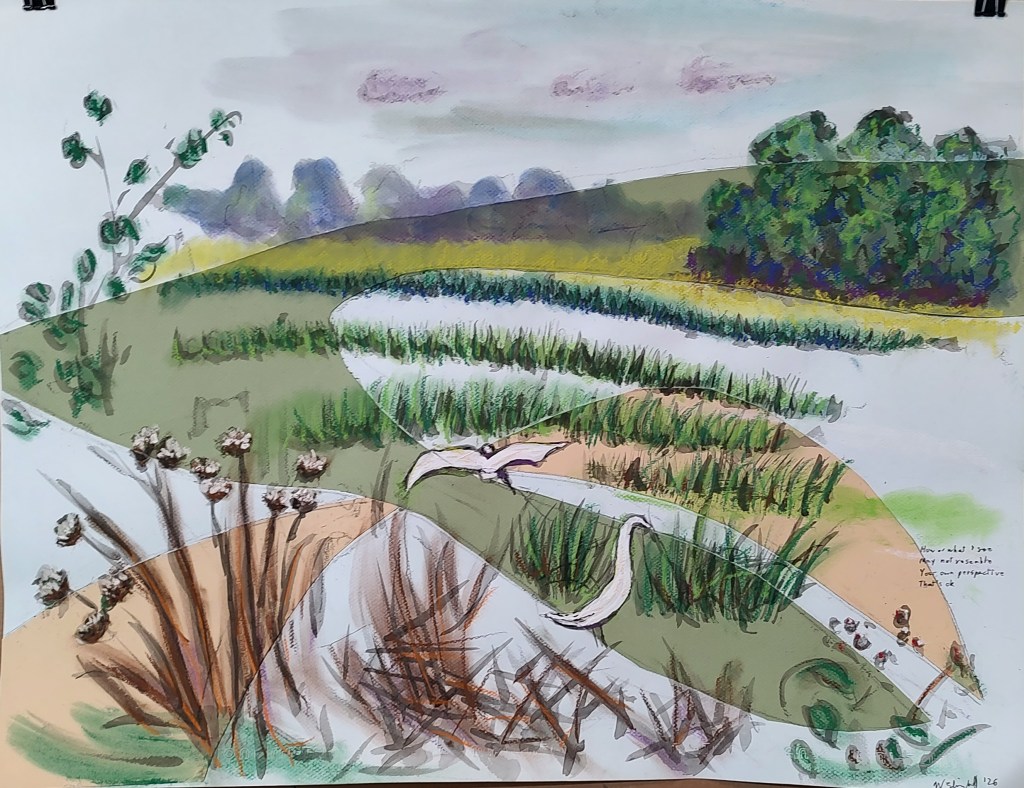
Pastel and Ink on collaged pastel paper , 2025, 20×26
Odd placement / Not conventional / Just how I saw / Just how remembered

I contend, contrary to current corporate creed, that there is value in public expenditures and public places. Plazas, parks, churches, and, for the purpose of today’s thought, museums .
A public museum is a marvelous place. Its purpose is always to arrange stories and show versions of reality. Sometimes bones or rocks, sometimes paintings or sculpture, sometimes any oddball mix of anything. Objects usually with a story attached to amaze, mystify, or educate .
There are claims that with the advent of virtual spaces on the internet, museums are obsolete. That may be true in terms of tagging objects. But another function of public places is as a setting for everyone’s street theater, to see and be seen by others. A crowd sharing some momentary focus.
You protest that is also true of things like private parties and such. Sports events. I agree. The bounds are fluid. But by being open to all, a public space provides a wide variety of experience. To get back to the title, I love museums. Old, new, whatever. They make me consider what some other folks considered important. They let me see how contemporary peers react .
Such public interaction is a great binding experience, less frantic and directed than a stadium light show .

All paintings at: https://sites.google.com/view/cabinetofvanities
Acrylic on Canvas, 2002, 30×40
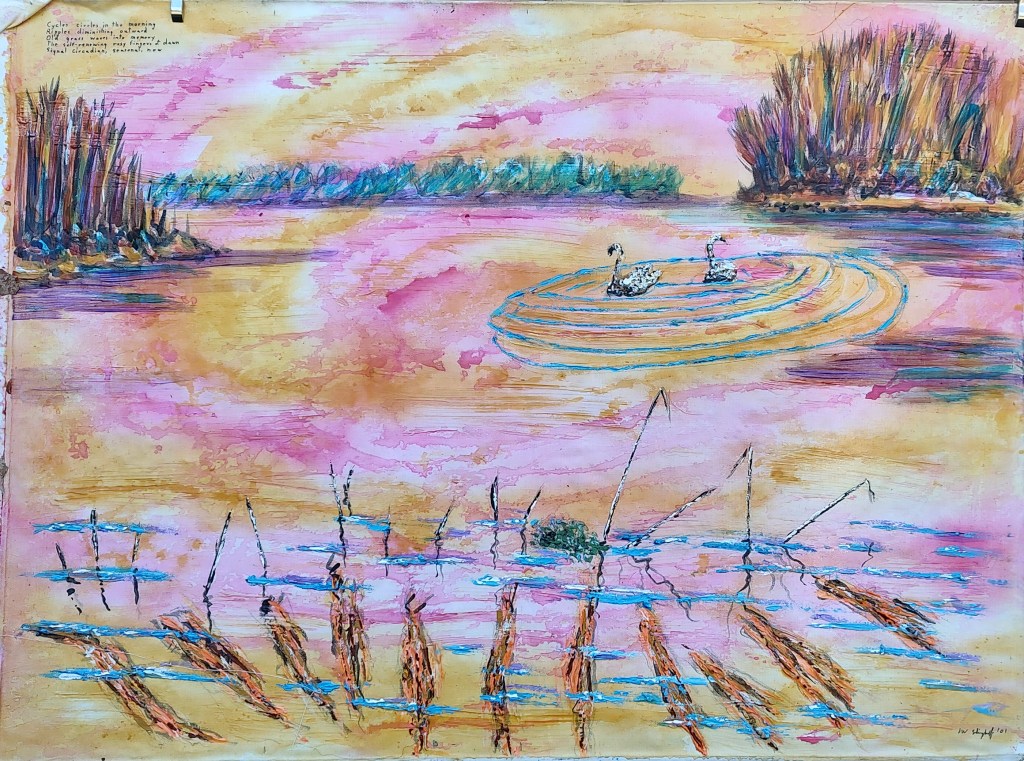
Wild geese with purpose / noisy fly west, / flood tide lies quiet / under the long moon / artist reflects, wistful / scribbles of moments gone.

All paintings at: https://sites.google.com/view/cabinetofvanities
Acrylic on Canvas, 2002, 30×40
All modern Americans shop / I see them gathered in parking lots / like flocks of gulls / so busy being fed

All paintings at: https://sites.google.com/view/cabinetofvanities
Acrylic on Canvas, 2006, 30×40
Two corner me / not One Corner Ma / the original inspirations / continue, unheeding.

All paintings at: https://sites.google.com/view/cabinetofvanities
Acrylic on watercolor paper, 1998, 18×24
If a sunlit day can be ugly / this was an ugly day / wind cold and promise of worse / that guy needs solitude, beauty or cash / real bad

Like ” wrong”, beauty is one of those concepts that can never be simply defined. It depends not only on environmental and cultural factors but also on the mood of the observer. We can often agree, but almost as often argue with others and even with ourselves .
It’s fairly safe to say that even considering beauty requires a sense of security within the observer _ you can hardly appreciate the loveliness of a forest while being chased by a bear. . Whether something is beautiful or not occurs way down on the scale of evolutionary fight or flight. A great deal of the time, most of us hardly notice it at all .
We assume that – like other odd traits – there must be SOME biological reason we can respond to beauty. Perhaps it helps social solidarity. Perhaps it is a shortcut to relaxation. Certainly nothing obvious .
I have noticed that in my own life the idea of beautiful has evolved as I age. When young, it was primarily biological. When older, mostly cultural. And now, in an elder, much more simply appreciation of all that is and how it fits together. A miraculous and – yes – extremely beautiful universe .
At least when I am happy, secure, and not doing too much .

All paintings at: https://sites.google.com/view/cabinetofvanities
Acrylic on Canvas, 1971, 28×36
Joanne in Kansas City

My wife usually gets her hair “done” in a salon,. When she gets home, there are inevitable complaints that it “looks different”. Of course – the lighting is changed .
There have always been different light effects – sunset, noon, overcast. And artificial from candles, gas jet, incandescent. In the era of LED, any “temperature” of red or blue or green or yellow mixture can be served up, bright or dim .
We deal with all this amazingly well. Red usually looks red. A landscape picture resembles itself in almost all conditions. But that should indicate to us just how amazing our vision is – both raw data gathering and interpretation .
Painters always knew this. Patrons who bought things done under “Northern light exposure” in studios rarely hung their purchases under similar conditions. Poor artists’ dimly lit barns had different lighting then when the work is hung in a brightly illuminated museum. And forget trying to recreate the conditions of “plein aire” .
My lesson is that much of our life is like this. We may think things are exactly the same, but only because our brains automatically adjust to what are objectively quite different events. It’s part of our amazing ability to compose and generalize, the core of our knowledge.
Not quite obvious, and easy to ignore. Until the hair looks entirely different …