Walking

I ran distance track and cross country back in the ’60s, when a lonely jogger on roads or open fields was regarded as either a freak or a criminal. For about a decade I kept it up afterwards. Then I began transitioning to long walks and never looked back. I’ve had no desire to get into the current competitive mania of training and races. 

For the last 50 years, I’ve constantly walked for long distances. Not mountain trekking or overnight excursions, but a nice comfortable 4 to 10 miles off and on, 2 miles or so a day usually. Admittedly I have slowed down some now and 5 miles or so is a long distance. With pauses. 

Never, in all that time, have I tried “power walking” or ” “brisk” as my wife keeps claiming we need. I move comfortably steadily thinking and seeing, amazed at how good it all feels and how rapidly ground can be covered by an easy human exercise. 

Generally, I admit to “exercise,” but the real reason is to calm my soul. I do usually feel better physically, when I return, I usually sleep better, digestion improves. But it’s my mind, senses, memory, imagination I am exercising even more. I glory in existence as I rarely do sitting on a couch. 

No abs of steel, bunched biceps, or infinite endurance. Just a little old walk for little old me. One of the best habits I ever acquired. 

Chance

Some are born with a silver spoon, blessed with perfection in body and intelligence, fortunate in every chance they ever take. Others are delivered into hopeless poverty, crippled in body, dumber than a post, and everything always goes wrong. An unfortunate few of the former are tragically cut down in youth or in their prime. A tiny group of the latter somehow rise in the maelstrom of life. 

All of us recognize the extreme poles of luck in our own lives. We hope that hard work will make the most of whatever comes our way. Unfortunately, hard work is often overcome by being in the wrong place at the wrong time. Just as being in the right place at the right time can be the real difference between success and failure. Those who claim to know how to recognize the right place and time are liars. 

Hard work matters. But the real control we have is adjusting our attitude – “making a heaven of hell.” That is truly available to all of us. And, of course, continuing to hope as we cope. Real stability is only available within social groups. 

The worst people today are “winning” loners. They think there is no chance in their lives. They know they alone are responsible for all they have, anyone else could have done the same with a little hard work. They are wrong, dangerous, and corrosive to civilization. 

The world has always had heroes. Today’s financial giants are no different. And, like those heroes, many have feet of clay.

Museums

Every once in a while (well maybe too often) I get a random thought such as ” what about museums?” What are they? Why do they exist? Why do I like them? And of particular interest to me, “why art museums?”

The easiest answer is to “why do I like them.” The huge and grand like the Metropolitan, Louvre, or Natural History are simply playgrounds for mind and body, with trickles to the soul. The little and strange are windows into universes of the way other people think. All of them help me place myself in society in a new and hopefully better way. 

Why they exist – well I hate to admit it – but I think an awful lot is pure vanity and exhibitionism. The wealthy get to show off their power and taste to a gigantic and envious audience. The curators get to display special knowledge and justify their own narrative. I do not say those motivations cannot be noble and even heroic _ being noble and heroic is also a kind of vanity, isn’t it? 

I’m happy to have access to museums. I wonder how long they can continue in an age of virtual satisfactions. Like public libraries they may have already had their moment in time. Like public bathhouses, they may fade into total irrelevance in our wonderful new age. 

Random thoughts, random reasoning, but fun to exercise the imagination once in a while.  

Permeable Blindness

Most Americans today want strong national borders. Many want to build a wall around the country. But the reality of today’s economy is that walls are difficult to design, hard to build, and require a kind of selective blindness. 

Permeable membranes are what people really want. Let in bananas from Central America, blueberries from Chile( in season), coffee from Kenya. But keep out the damn Central Americans, Chileans, and Kenyans. Presumably deliver things in sealed containers handled by robots. 

And of course there are other semi-permeable goods and services, like clothing, obtained much more cheaply elsewhere but a “threat to domestic producers.” So slap on a tariff. But then, maybe, the bananas will cost too much. 

And tourism? Oh no, we may want to visit them. They cannot come here. Well – maybe – if they go through the right procedures. With money. And on and on with increasing complexity. 

Mostly people who want such barriers claim they desire to save our ancient and established culture and way of life. Newcomers must be carefully and slowly allowed in. Of course the original peoples _ and their cultures even more ancient _ oh, never mind. 

Eventually, even the most obstinate may recognize they inhabit one Earth, artificial barriers or no. And they will need a much higher IQ than they currently exhibit to work that out to their satisfaction.  

Grandparent Peer

As in any other time of life, grandparents find themselves in a variety of situations. Their response as elders varies. Some are fully constrained by their own health and circumstance, some more free with time, and relative financial security. Some are forced into roles such as primary caregivers. 

I’ve been very fortunate in all this, with a relatively easy glide path and many options. Since retirement, I’ve happily lived as if I were an 11-year-old. So my chosen role as our grandson grew towards 8, is that of being an elder peer – almost a brother surrogate. With privileges (authority freedom etc) only rarely exercised.

A child is mostly free of the concern with the future that arrives around year 10, and haunts us well into our 70s. And so I have been able to truly enjoy each day as if it were unique and marvelous. When things are working well, I convey that to him and we just have a fun time. 

Everyone else, of course, is really busy. When they have time, they are always “making” my grandson do something, to get him to learn. Forcing him to grow up. I hope to be a refreshing, if temporary, change from all that. 

Our precious time together is a grand experience for me, losing a little more of my own residual fear of the future as I immerse myself in all his childhood moments that remain. 

Magic Pebbles

It has been well known for over 50 years that we are made of “star stuff.” The original universe only contained hydrogen and helium and maybe a few other elements. Almost everything we require was built in the explosions of dying stars and the slow accretion of that matter. 

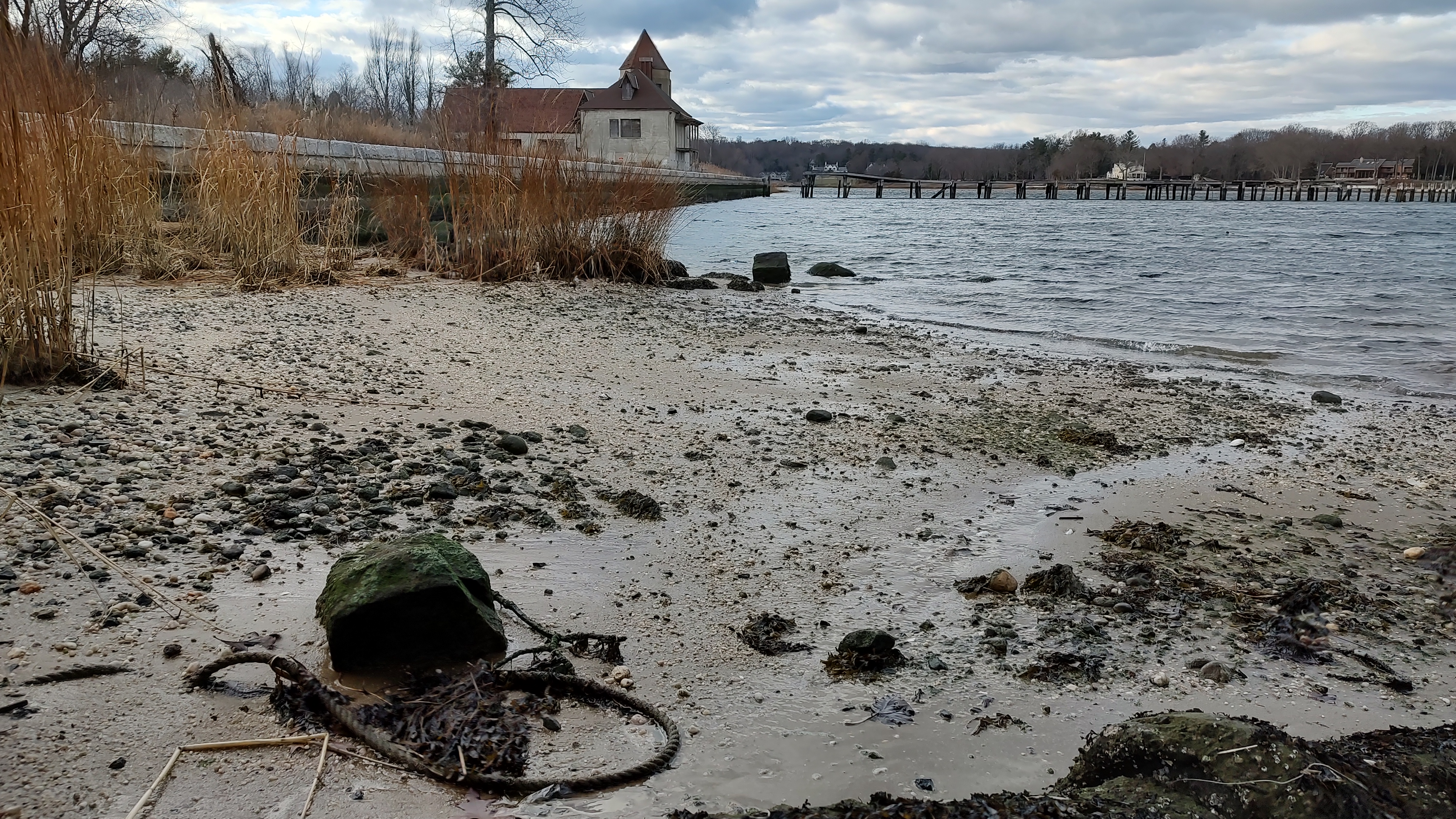
When I sit on a beach I try to ponder this grandeur. To see the pebbles all around me as constructed by near magical time and process. Of course, the sand on which the pebbles rest is just as amazing, being made of rocks formed by volcanoes, eroded, compressed, ground down again over the mere 5 billion years or so of this planet’s existence. 

The shells, from dead snails and clams and oysters, are more recent than I myself. The seaweed possibly only a few weeks old. Immense history lessons as I sit under a blue sky and blazing sun that concentrate this exact instant into my consciousness. 

The real miracle is that my momentary consciousness, floating free of the star stuff in my brain, can range over time and space to imagine such things. To imagine even more. To find ways to discover or “prove” such ideas. It leaves me breathless. 

I pick up a nice hot rounded pebble. Ancient stars in my fingers. And me – lord of my own universe, free to roam my thoughts and memories. 

Militants

American mythology is almost all active struggle. Conquering a wilderness, gaining and keeping your property, defending your rights, building for the future. Very little of our culture has ever been praised for being passive. We are generally proud of the belief that all our ancestors were in one way or another militants – in a good way of course. 

Unfortunately, struggle often became violent. Cowboys and Indians, labor and business, revolution from England, civil wars. Slavery. Even gangs and cities, immigrants, ranchers and farmers. 

As America grew in power, we projected this dynamism to much of the world. We tended to view most foreign places as just another frontier to be tamed. We like to think we were mostly helpful, but we were never meek. And when necessary, our militant sense of what was right turned violent.

I find “militants” today amusing. The militants themselves want to tame distant “frontiers” over which we have no control. The “counter militants” just want the militants to go away and leave them alone. And a lot of the concern over “free speech” antagonisms is just plain silly – snowflake versus snowflake.

One thing certain is that militants – and some violence – are truly at the heart of American culture. We are not alone in that, but we should at least acknowledge our biases 

Predictions

As little kids we rarely think about the future. Then, from adolescence through young adulthood, we are obsessed with it. Adults strive to make their own future as happy and secure as possible. Old folks increasingly dread it. Predictions are important.

At least in this culture. My probably simplistic images of other societies goes something like this: tribal and what used to be called primitive societies are fully engaged in each present moment – all past and future is equally vague “dream time.” Some cultures such as the Egyptians believed that all time was like the present – eternally the same. Buddhists believed in a great wheel, changing but repeating forever. Chinese time floated along like misty clouds and mountains, eternal but transient. And modern Europeans believed in an arrow of progress – even in religion – where actions in the present could determine the future. 

The “arrow predictors” have won, at least in this industrializing era. Those who figured things out and applied their ideas changed the world. Caring about the future, consequence, and planning have now turned into religious visions. 

Like other religious visions,these have also rapidly fragmented. So now we have predictions good and bad. Unfortunately often shaping our lives into fantasy as we are informed by various “experts” about what the future holds in store. 

We are just as blind about what will come as any homo sapiens ever was. We still only inhabit the moment. The predictions of our shaman equivalents – ” experts” – are just as unlikely and irrelevant as dream interpretations ever were. 

Evidence

In the last hundred years, the concept of “evidence” has undergone vast and confusing change. More scientific and “hard” _ good for prosecutors.  More esoteric and complex _  great for defense lawyers. And now easily faked by AI _ great for nobody. 

A typical crime in, say, 1900 had no photographs or video. No fingerprints or DNA. No trail of computer searches. Just means, opportunity, and motive. Sometimes eye witnesses, sometimes objects, but often guesswork. 

Then as now, the main clue for non-violent offenses was simple greed. The main determinant for violent crimes was relationship. Very few truly random attacks occurred. We have lived through the golden age of crime solving, although our ancient trial methodologies often ignore it. Video capture, DNA, psychiatry, written trails of past behaviors. The real problem has been how to reconcile the current near-certainty of guilt with the former “presumption of innocence.”

Of course, that all changes now. Constant surveillance, historic documents stored in media, everything can be completely manipulated and an alternate past “made real”. Proving anything. I could be convincingly shown killing my mother before I was born. 

It’s hard to predict how common sense will work out against artificial intelligence. But I am sure that in 100 years the rules of evidence we use now will seem as primitive to those then living as the rules of evidence in 1900 do to us now.  

Borders

Artists are often instructed that “there are no lines in nature.”  Nevertheless, most art does contain lines, which we easily interpret as nature. We have a facility to construct imaginary boundaries which are very useful to us. 

Some cultures – mostly those with a sense of private property – construct territorial lines over every clod of dirt or distant mountain. They claim to control the land thus enclosed, even though obviously sun, sky, light, sound, air, microbes, and the very molecules and atoms of which matter is composed ignore those imaginary boundaries entirely.

Ah _ but laws and people? There we believe we are on firmer ground. Inside or outside? What is allowed? What is forbidden? Citizen or foreigner? If borders are secure, we believe, we are secure and all will be well. 

Except that _ well _ things tend to be fluid. Of course armies can change map colors. But there are lots of invisible borders between, say, rich and poor, educated and ignorant, believers and infidels, the list goes on. And all those borders exist – like lines for an artist – only in the minds of those who think they see them. 

As in many human conditions, of course, what we imagine is often more important than what actually exists. Beyond that, we can elevate such trifles to cosmic levels and assume that by doing so all will be well. 

But we may be in for a big shock.