Imperfect

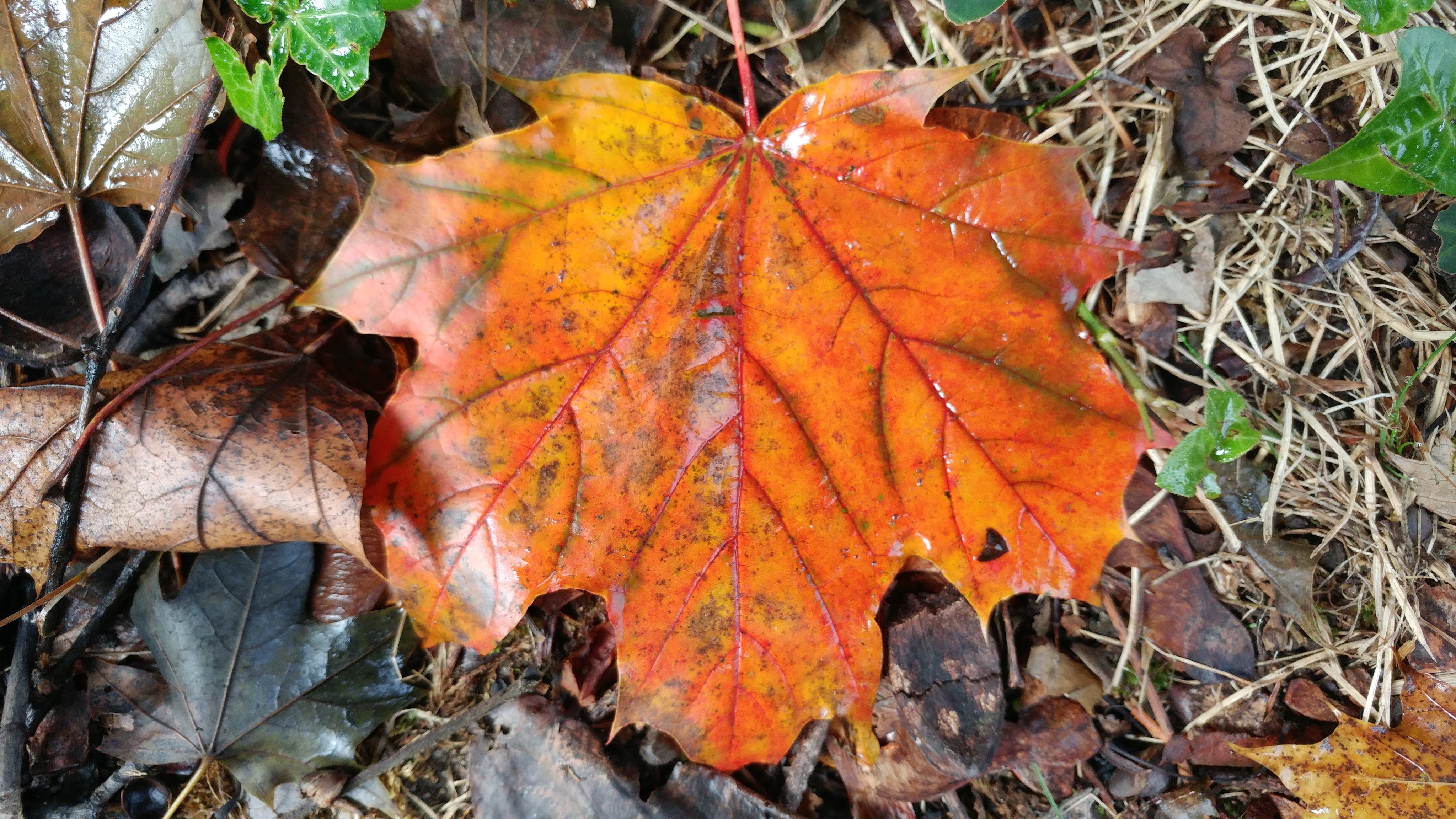
Even Plato realized that his ideal forms did not exist in our reality. The perfect circle, perfect vacuum, or perfect good exist only in imagination. We can never find a perfect autumn maple leaf.

Yet we can intelligently use “perfect” in our conversation. A “perfect moment” has meaning, and a meaning that indicates more than “simply better than most.” We  internally also understand that there are limits and contradictions implied.

Confusion arises when terms like “perfect” become a fad. Lately, for example, we are told of “perfect adaptations to an environmental niche.” But there is no such thing. Life is ruled by “just good enough” and evolution by “just a tiny bit better adapted or lucky.”

The old saying “don’t let the perfect be the enemy of the good” expresses that perfectly. We apply it all the time in daily society _ a ”little white lie” is a useful example.

Then, alas, there are formal religion and academic philosophy, where suddenly absolute perfection has a starring role. That such a chimeric concept should drive so many brilliant minds to madness and fury is a constant marvel.

Me, I’m quite content with imperfect, and even glory in the halo of ambiguity it casts around my existence.

Just Me

Samuel Johnson declared “only a blockhead writes for anything except money.” Those who have kept diaries, journals, blogs or even unpublished books would disagree.

There is something in organizing writing that not only concentrates thought, but also leaves a residual Improvement on the brain. It is a solitary equivalent of conversation. It is also a wonderful (or time wasting) diversion whose other virtue is that it costs little.

Technology has made writing and exposing so easy today that everyone does it. So many thoughts. In that flood, impossible to read much. Not too many centuries ago, all the literature many colonial Americans possessed was the Bible and the plays of Shakespeare. Today more than that pops up on the internet in a minute or two, intertwined with other seductive media.

Not long ago, many aimed to write to change the world. Now that is a forlorn hope. In that way, we have returned to the environment of Dr Johnson. 

But I find great freedom. No longer constrained by dreaming of great influences _ nor even of just changing your mind _ I can say just what I want, when I want, for the sheer joy of shouting into the universe.

It’s just me … and my trusty chromebook.

Foolish blockhead.

Religion

Religion and philosophy are basically the same thing, a response to our overwhelming impulse to respond to the unknowable. Both strongly fixate on doing the right thing now to be in harmony with the infinite universe.

I am skeptical of people who tell me that the purpose of life or the will of God is mysterious and beyond our comprehension, but who nevertheless want to explain their take on it to me. I get it, it’s unknowable. It’s fascinating. It helps pass the time. 

Philosophy is generally thought to follow passionless logic and quiet wisdom, often emanating from some dried up old geezer with nothing to lose. Religion, on the other hand, is best led by thunderous prophets with all to gain. But for those unaffected by the plague of the ineffable, they are equally weird.

I embrace the unknowable and coddle my own religious impulse. I pray, if only to create a mantra of what is truly important to me. I tend to respect those with similar beliefs more than others. But I can never claim to know divine truth and I fear those who claim to do so.

I can reasonably discuss what is important to me and to others, but only based on our own intertwining daily lives, never on fevered dreams of cosmic systems.

Sunshine

Bright early sunny September morning. Writing these messages seems to me a bit like what old time ministers did each week. That begins with a search for a topic. I could use anything at all but today I choose sunshine.

Sunshine, in this case, is an example of all that separates humans from animals and machines. In spite of rampant anthropomorphism, it is hard to imagine an oak or sparrow awaking with joy at the brilliant beams of dawn. And no matter how many scientific facts a machine intelligence could accumulate, it would never feel the multiple lifts you and I get from arising and stepping out into a beautiful day.

Some would claim that the oak feels energized, the sparrow quickens with instincts, maybe even the solar powered machine begins to do its electric tasks. My argument is that none of those can appreciate sunshine as you and I do.

Appreciation involves the moment, with all senses engaged, often with knowledge and logic lurking in the background. We tie in past and future _ other lovely moments, will it rain? We plan activities like picnics. The more humble among us give thanks for this immense miracle. Sunshine as experienced by you, is an ever-new element of your universe, never to be exactly existing before or after now.

Today sunshine makes me happy. But it is just one facet of mindful life among an infinite variety of joys.

Order

“Cleanliness is next to godliness.” My wife Joan would replace cleanliness with “being organized.” Nothing to her is more important than having things in their proper place_ physically, socially, and mentally.

It is true that organizing puts items into a possibly useful pattern. But what principle of organization is the right one? There it all falls apart. Alphabetic order is not much use if you are laying out a machine to assemble. Chronological order doesn’t help if you are picking a soccer team.

The real problem is that those who want to organize assume that whatever principle we use should be simple. In reality that is not so. Life is highly organized – if it were not it would just be a stinking puddle of chemicals. Yet any doctor will tell you how far from simple your body and health are.

I do not deny that organizing is a useful tool. It can help bring a little sense out of chaos and let us gain some control over our environment. As in all things the problem lies in taking it too far, letting any given organization obscure the original whole.

Existence has infinite intersecting organizational principles. Picking one of them to develop a story or textbook is going to be not only inadequate, but also blindingly wrong.

Wayne’s Wager

Pascal’s wager famously states that one might as well believe in God because if he exists the possible reward is far greater than the minor inconvenience of belief. That might come as a surprise to all the faithful who have adapted odd moral codes and dietary habits to please their particular deity, or to the martyrs who have died in defense of their ideals. Yet this wager remains very much alive in social discussions.

My wager is a little different. In contrast to Descartes “I think therefore I am,” and all the current floundering about “is anything really real,” I propose a new formulation: “Everything is exactly what it seems to be.”

You might as well believe that reality is as our senses and science indicate, and that other people are just like us, because doing so costs you nothing and will help you in daily life. And it will not harm you at all if everything outside your own mind is truly an illusion. 

This is not easy. Much more comfortable to believe I am special, that there are hidden levers controlling external things. There are – just as you sense them. Making “sense is the core of reality” an absolute guide to life is a difficult concept. It implies that mind hardly counts as powerful in the “real” world. And that is frightening.

But, again, it is simply a bet. If all is illusion then no big deal to treat it as reality. But if all is really real, treating it as illusion will get you in big trouble.

Age Dependent

A 7-year-old knows as much about what makes him or her happy as a 47-year-old. Sometimes more. But few of the guidelines are the same. We change as we age, as we should. At 77 I am different than I was at 17. Not better or worse, necessarily, but different.

Aged people are usually the avatars of philosophy – white beards and all (men are the dominant avatar.) All old people are happy to tell younger folks about their wisdom – often at odds with that of other elders who ignore each other’s advice.

Unlike science, philosophy seems conditional: “don’t kill anyone _ unless she is in another unholy tribe.” Anyone who seeks fixed, firm, and absolute guidelines to life and rules of conduct is doomed to failure. What is ethical, unfortunately, is like figuring out what is hot _ it depends.

And one of the situational conditions we cannot ignore is age. The right action for a young person is not the same as that for an old geezer. Ambitious at 25 is a good thing, Ambitious at 75 is pitiful. 

Too many of our moral codes ignore that fact. They continue to treat each human as an identical commodity. With that attitude, nothing can go right in determining what is right.

Goldenrod

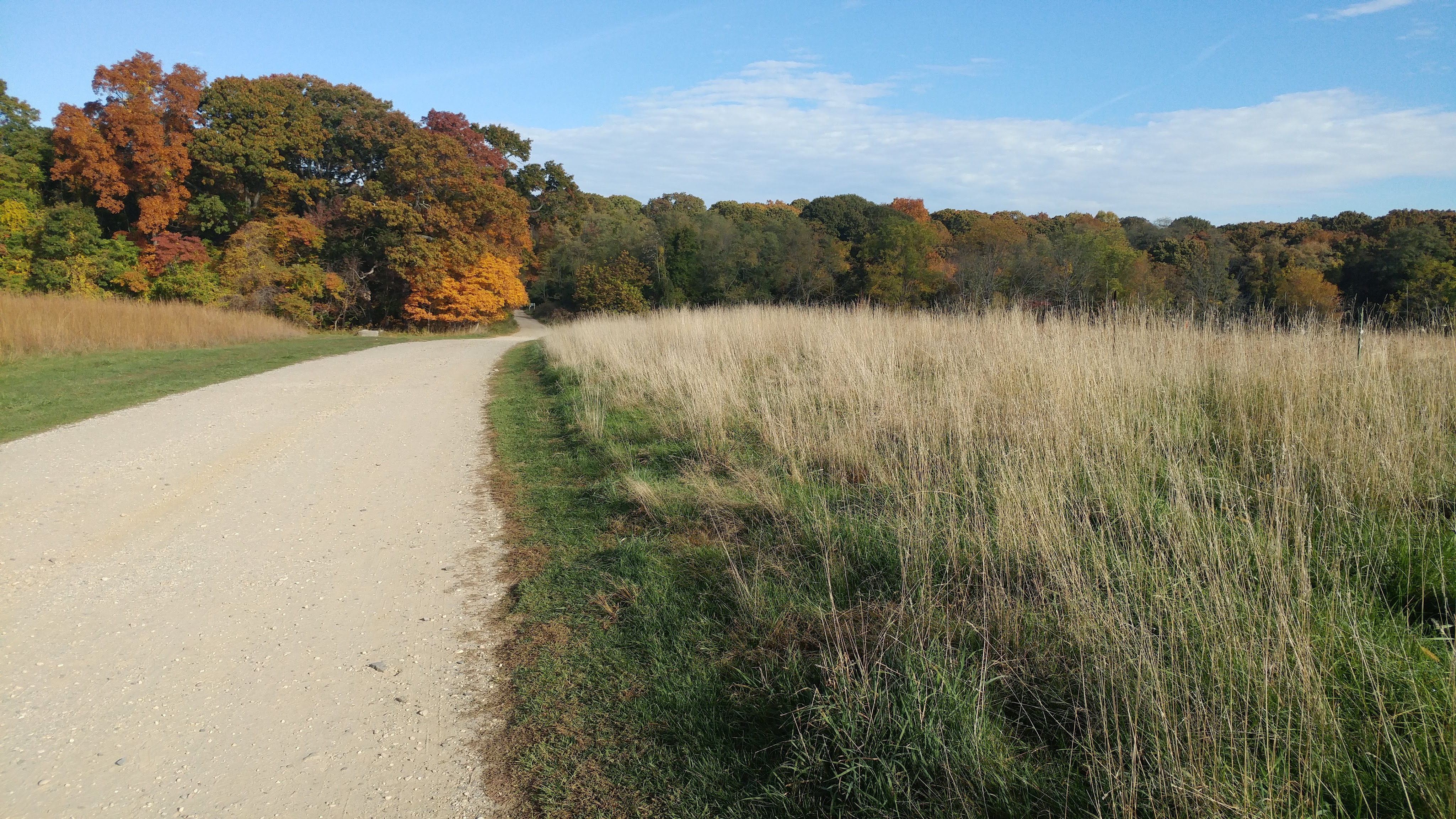
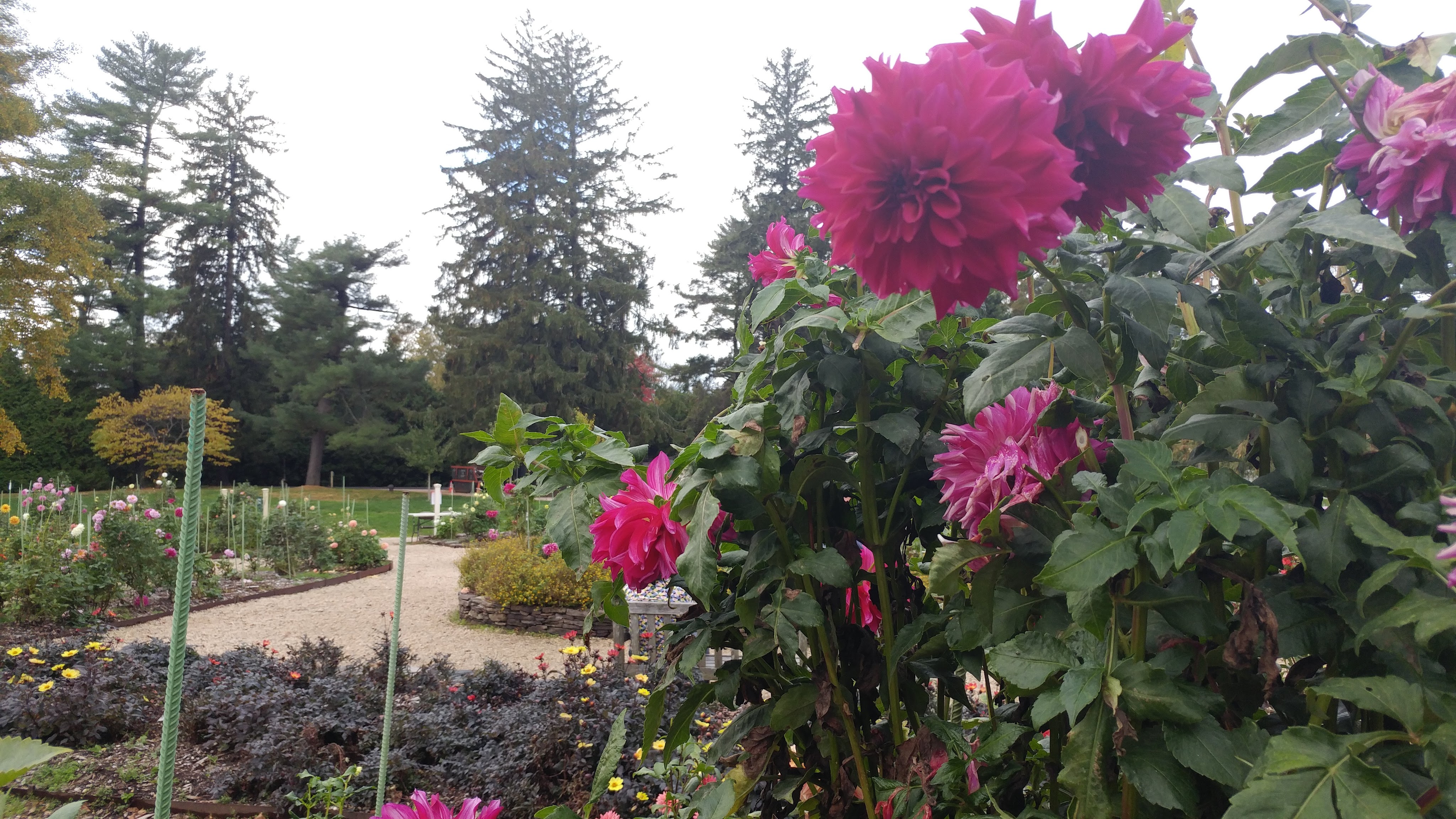
My writing trails by months to age a little, photos less so _ mid October here

September tomorrow. I’ve just returned from wandering fields at The Nature Conservancy Preserve in Cold Spring harbor. Goldenrod bursting into bloom, accented by purple thistle. Butterflies and dragonflies and cicadas _ all less than in olden days because of a dry summer and cumulative calamities. A flock of goldfinches flitting southward.

Grounded. That’s when philosophy begins. Where is our firm ground that lets us evaluate decisions and act? Surely it is in nature, from which we came but of which we also remain a part. Nature is a far surer and more useful guide than poets or thinkers or demagogues. And it always brings us to our senses, where true sense resides.

At all times when I worked, even in urban Industrial areas, I would leave my computer screen at lunch. Walked for a while under open skies. Admired weeds if nothing else was available. Came back a better person and certainly more productive.

Our progenitors could see flowers before they could walk, walked before they had nimble hands, had hands before a big brain, and a big brain before they had a conscious mind. Surely it is appropriate to often recapitulate that journey in daily life.

Goldenrod is probably more of a survivor than most butterflies, possibly it will remain when humans are gone. But while we are here together it is a part of nature which should always evoke a sense of wonder. And we should seek such reminders. .

Simple

Late October quiet

The simple answer is “keep it simple.” The shortest true philosophy is “don’t worry, be happy.” After all, we get up every morning, eat, go about our business, experience joy, fear, hope, achievement. And we mostly just make it through the day.

Our problem is leisure. One rarely encounters a peasant or slave philosophy, except how to endure or escape. When we have free time and energy, we tend to spend a lot of it on what we ought to do and why.

The simple answers are true, but unsatisfactory. And they rarely serve as adequate guides to conduct. It is all very well to be happy , But how does one go about achieving that in a world often full of strife and sorrow? How do we balance now with the future? The short answers are empty. Even “carpe diem” has immense flaws _ how exactly should we seize the day, and to what end?

Then it all comes apart. The closer we look, the less we know. The future, being largely unknown, is largely irrational. And philosophy thinks of itself as logic incarnate. Yet philosophy is also considered a tool with which to handle the present to prepare for the future. 

And so we are stuck. Dreamlike, we envision a crystal-clear simple guide to living. but find it disintegrating into smoke every time we try to use it.

Art

Not much, but fun

There is time enough for many of us to do – if not all things, at least a near Infinity of them. That has been especially true in cultures of abundance. But exactly what should we choose with so many ways to fill our sometimes infinite-seeming moments?

I tend to pity those specialists who can only consider diving more deeply into what they know. The universe abounds in rich choice and ignoring it all seems a shame. But the specialists claim they are happy, and who am I to judge?

I have always preferred something a little different, if not too extreme. In my case, for a while, that was painting. It seemed to give me a little bounce, an alternate path to enchantment, and a small escape from daily routine boredom.

Smart folks, I suspect, all have such escapes, varying according to means and circumstance. Sometimes it is just a vacation. For others, a hobby with a bit more depth – art, cooking, running, and so forth. Makes us aware of a world beyond our usual concerns.

Those of us who can are fortunate to be in an era when such exploratory freedoms are possible. Balancing all this also must be one of the goals of a philosophic attitude toward life.