Grasseous

Monday

  • Any introductory biology textbook will likely state “flowers changed the world.”  Which may be true, but the heavy lifting had already occurred in DNA and the biosphere.  A person transported back to the era of cycads, ferns, and conifers shortly before flowering plants appeared would be able to breathe air, drink water, eat food, contract diseases, and die of organic  toxins.
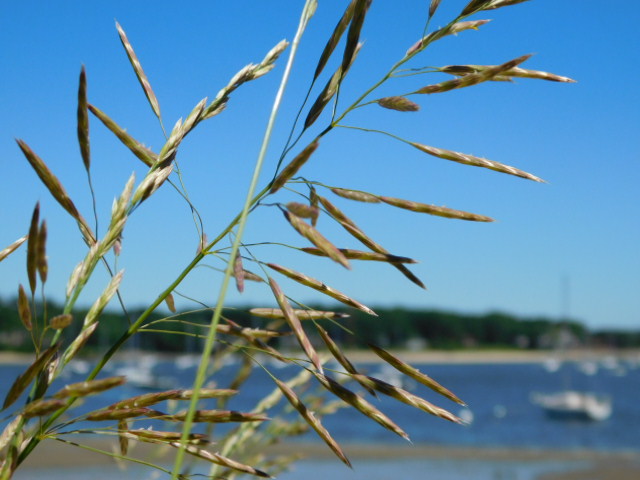
  • We first think of flowers as gorgeous blooms of roses and lilies, then perhaps of fruits and vegetables like apples and zucchini.  Perhaps more important than all of those for you and I were the grasses.  Primates left trees to begin walking upright when climate change expanded the African savannahs _ grasslands.  Civilization for the last ten thousand years has largely depended on domesticated grains and animals that can turn grass blades into protein.  Without grasses, it is almost inconceivable that I would be writing this now, nor you reading it.  

Tuesday

Wild wheats which once waved on wide plains
Our ancestors bred into grains
Civilizations were fed
With production of bread

While we’re worried now of weight gains

Wednesday

  • Grass is almost as adaptable as humans.  Patches of it exist in deserts or frozen tundra.   There are high grassy alpine meadows, waterlogged grassy marshes.  In temperate areas with rainfall too slight for trees, vast steppes, plains, savannahs stretch to the horizon in all directions.  Even more impressively, it coexists easily with people, who cultivate it for crops or beauty everywhere they can.
  • Perhaps that is why I hardly notice it most of the time.  Something that is always present tends to fade into the background, so I am only shocked to awareness at its absence.  Even the meadows and estate lawns that I favor as open spaces, created by grass, are interesting to me more for the butterflies, grasshoppers, flowers, and birds that they nourish than for the common denominator and most dominant species of all.  Like air, I just take it for granted and continue looking for alternate treasure.

Thursday

“And, so you see, humans and civilization as we know it are largely a result of grass,” I finished grandly, waving an extravagant arm gesture to the fields around us a Caumsett State Park. 
“I don’t know,” replied Dave as we paused on the gravel driveway.  “I see your point, but people eat a lot more than cows and sheep _ fish, bears, dogs on occasion, shellfish.  And they have more staples than grains _ potatoes, breadfruit, coconuts, yams, peanuts. “
“Well, yeah, ok.”
“I mean,” he continued, “South Sea Islanders had a pretty interesting civilization and I’m pretty sure they had no grain at all.”
“Exceptions, I guess.  All grand theories have exceptions, you know.  Heck, the law of gravity has exceptions.”
“Look,” Dave was trying to be nice, I could tell, “Maybe I’ll give you the thing about primates onto the savannahs, but we don’t really know.  Maybe I’ll give you that the whole Guns Germs and Steel primacy of the Eurasian land mass was tied up in cultivated agriculture like rice and wheat and what not, or even in nomadic domestication of grass-eating food supplies.  But I think there is a lot more to it than grasses, that’s all.”
“But it’s such a nice theory…” I whined.
“Even if it were true, so what.  How does it help calm our current world?  What does it do for you or me today or tomorrow?  You might as well be writing fairy tales.”

And that was that.  He had me.  Nice speculations, and lots of fun, but not worth a nickel at the supermarket, and even less in most conversation.  Well, at least the grasses spread on the rolling hill before us were still beautiful.

Friday
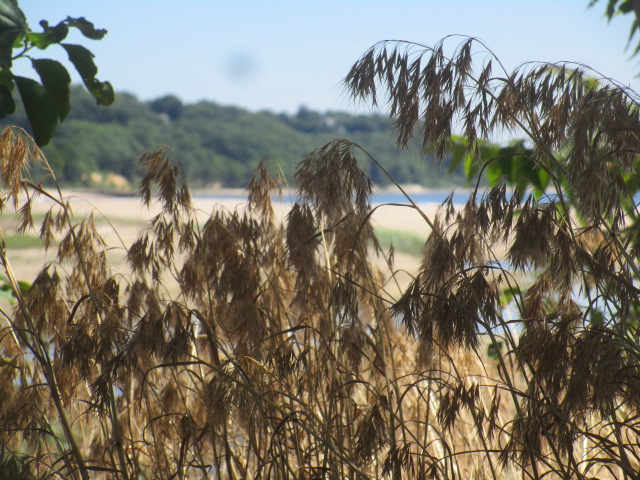
  • Grain crops are bred to yield abundant and nutritious harvest, of course.  But they are also selected to be hardy and to survive in marginal conditions.  Inevitably some, such as these oats, escape into the wild to compete in the rest of the environment.  Ornamental grasses such as bamboo are notorious for overwhelming local vegetation.
  • The saving grace so far has been that our crops are annual, and must be sown from seed each year.  With modern genetic techniques, it is increasingly likely that future wheat and rice will be perennial.  Thick overwintering deep roots will not only eliminate erosion and sowing,
    but may also be tailored to host nitrogen-fixing bacteria so no fertilizer would be required.  If such strains should be developed, native grasses on steppes and plains will stand little chance against them.  Like Japanese Knotweed and Kudzu, modified grasses may come to completely dominate entire ecologies.

Saturday
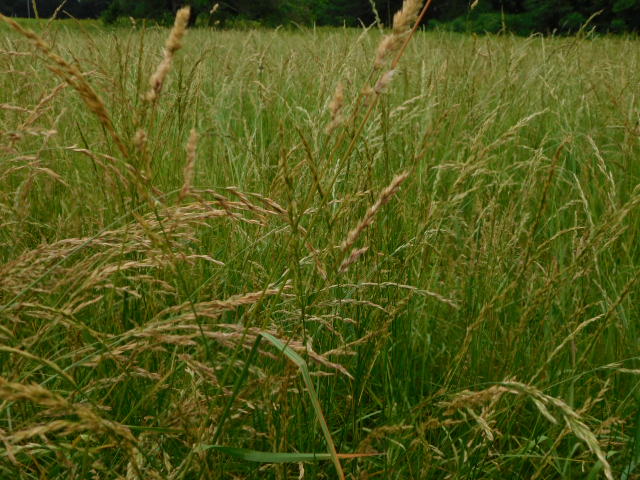
  • Are we just blades of grass in a vast field?  We feel like more.  Surely no stalk of wheat ever considers itself master of the universe, or abject victim beset by untold cares of the world.  There is so little resemblance between us, what should I care about such a lowly organism?
  • One of the problems of our civilized, globalized, wealthy, and generally secure and insulated modern lifestyle _ at least around where I live _ is that I become too easily removed from nature.  In many ways that is wonderful _ I have no desire to desperately search for my next meal, nor endure clouds of mosquitoes in summer nor heavy snows in winter for lack of shelter.  I appreciate electricity and running water and even _ on occasion _ fume-belching automobiles and noisy suburban machinery.  But I can end up turning inward to a good book, a television entertainment, or the momentary pleasures of window shopping in large mall and big-box bazaars.  I miss sunsets while mindlessly being shown distant disasters.
  • Spending time regarding a field _ its multitudinous inhabitants, its imagined past, its possible future, its stage of growth as summer solstice approaches _ is an exercise in humility.  No doubt in the grand scheme of things _ if there be a grand scheme of things _ I am exactly as a blade of grass or possibly this field itself.  A humble part of a greater biosphere, a bit player in the adventures of Earth.
  • But what I most enjoy is my magnificent duality.  That I can feel important _ not merely a little important but supremely important _ is a gift of heaven.  That I believe I can experience and know and enjoy and reflect on the cosmos and myself and all I can possibly imagine is a treasure beyond price.  And that _ in all this self-absorbed hubris and pride _ I can also somehow manage to contemplate being humbled by a field of grain or a blade of grass is possibly the most astonishing ability of all.

Sunday

  • Gazing along parkland lawn, everything back to its accustomed place.  Lawn no more than green open stretch to allow framing with trees and spectacular flowers.  Like sun, like harbor waters, just another landscape element.  Nothing to see here, folks.  At least nothing much worth noting.
  • I will rarely again think of what composes that emerald carpet.  I will scarcely notice stiff brown stalks or dusty green blades as I seek color and unusual patterns.  My focus moves on to more exciting and unusual thoughts and visions.  I suppose I should feel guilty, but the world is rich and inexhaustible, and I know I am missing everything whenever I pause to concentrate on something.  A happy dilemma, indeed.
Fluidities

Monday

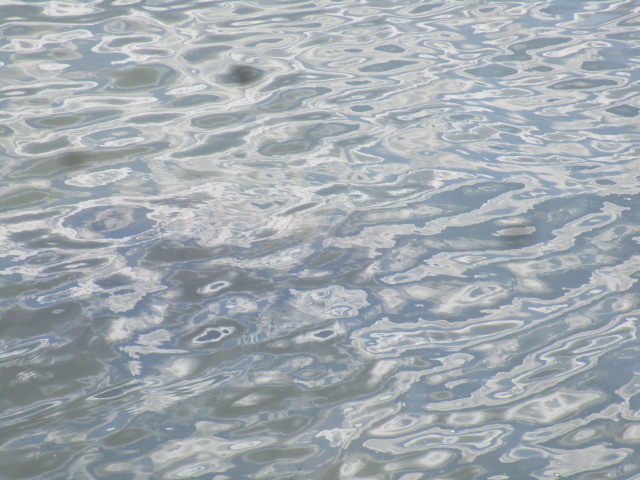
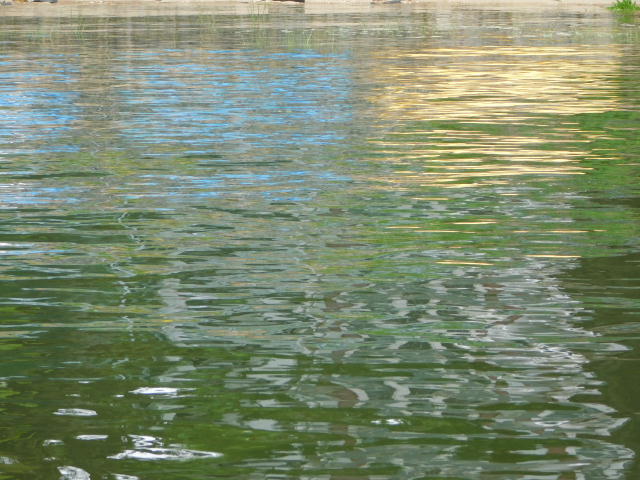
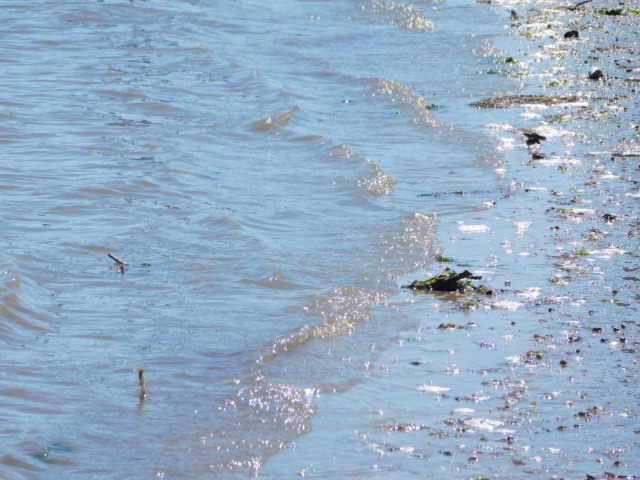
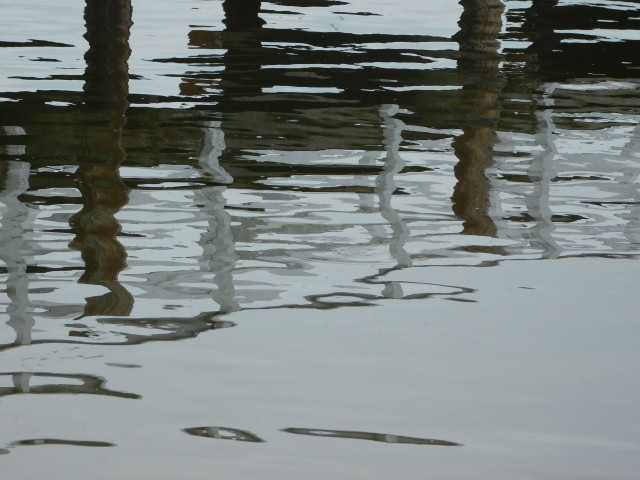
  • Nothing exposes limits of still photography like water patterns.  Water does not look like its picture.  Even videos, more faithful, fail to capture the experience, because when there is no central focus, such as on a distant scene, the eyes wander and see differently all the time.   Sometimes refracting almost (but not quite) geometric patterns , sometimes ongoing glints of sunlight, sometimes resolution into tantalizing reflections.
  • Gazing at a water surface seems a good metaphor for how I view my life.   There also lies shifting focus, things appear one certainty, then another.   Impossible to capture, impossible to remember exactly, and impossible to decode into Newtonian or mathematic schematics.  Beautiful but frustrating, and, most important, impossible to truly know.  

Tuesday

Go with quick flow, glide over tide
Inspect what reflects, gaze ranks of waves
Nothing is ever the same
See flowing seas, sight ripples bright,
Astound each rebound, stare into glare

Never exactly again

Wednesday

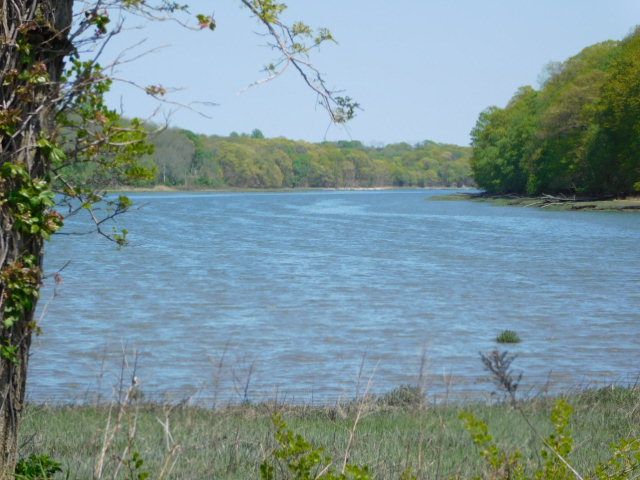
  • Water views are disorienting when presented out of context.  In real life a viewer is aware of looking down or out, of what is up or sideways, always peripherally focused by what surrounds the framed image.  An isolated water view requires complicated investigation and intuitions.  Even this pond’s calm reflecting surface is difficult to decipher.  A photographer might claim a photograph such as this approaches the “modernity” of abstraction.
  • When not confronted with survival-level challenges, too much leisure in hand, I become obsessed with transitory passions.  I may, for example, deeply examine weeds or wildflowers or historic markers.  People I know turn into connoisseurs of cooking or craft beer or social media.  Such personal myopia bores other people.  A saving grace is that each pursuit remains fluid enough that I may drop it in the blink of an eye to move on to something else.  

Thursday

Waves drift in endless lines, encountering other disturbances, bouncing and reflecting and picking up glints of sunlight.  I try to make sense of it all, then fall into a reverie.  “Hi Wayne,” brings me back to my body here on the dock.  Oh, our neighbors Joe and Linda.
“Watcha up to,” asks Joe,  staring where I had been looking.  “I don’t see anything.”
“Just being hypnotized by ripples and reflections,” I answer, “doing nothing.”
“Ah,” he intones dramatically, enunciating  slowly in a deep fake voice “You will now jump in the water …”
“If you were a wave,” I laugh, “I probably would.”
“It is beautiful here,” Linda murmurs.  “Especially when the sun is setting over those trees.”
“Just looking at the surface activity is always wonderful to me,” I add.  “Kind of an aid to mindless meditation.”
“So do you do this often?”
“Probably not often enough,” I admit.  “Like everyone else, I always seem to have something more important to do.  But when I force myself, this can seem just as critical to my thought balance.”
“Know what you mean,” Joe gestures to his boat.  “When I’m out there fishing I can get into the same kind of trance.  Refreshing.”
“Given the problems of the world,” muses Linda, “I suppose mindless is good.”
“I don’t know,” I reply.  “Seems to me mindless is the cause of a lot of the problems of the world.”
“Well, we’re off to the deeper waters,” says Joe as they start down the gangplank.  “Give us a minute to fire her up and we can add some big action to those waves of yours.  No, no, don’t thank me now.”

“Have a great afternoon.”  I turn back to the circles and flickers and darks and intimating patterns, lost in complexity and happy for it.

Friday

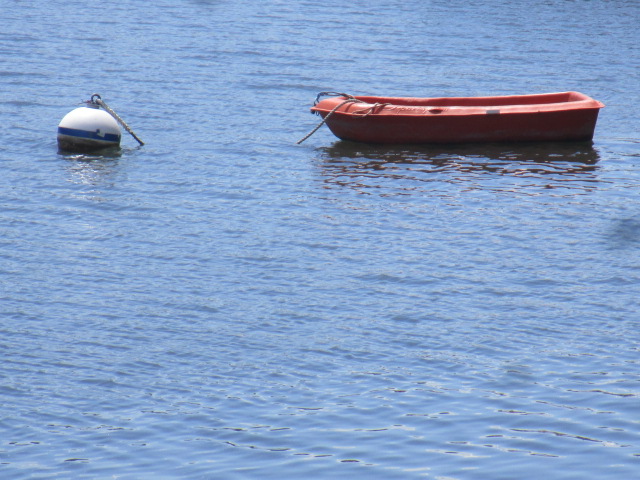
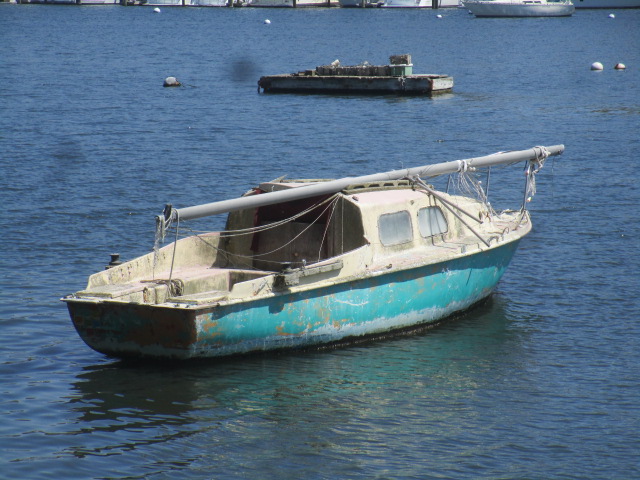
  • Until the late Renaissance, artists hardly attempted the depiction of water.  Rembrandt showed interesting spills from a goblet, but even Courbet and Homer painted waves that appear more like copies of photographs than reality.  Canaletto’s intricate and beautiful wavery flecks around gondolas (this skiff as close as Huntington gets) are hardly what the grand canal looks like, but are accepted useful convention.  Marvelous abstractions of Turner and the Impressionists are all but meaningless unless a viewer is already familiar with water, mist, and waves.
  • We laugh at the schematic efforts of small children, who put a blue line on the bottom of their picture and draw their tree as a green lollipop with brown stick.  Yet I see that way most of the time.  A car is a box on wheels _ all I really need to know is if it is moving and in what direction.  Houses are giant covered boxes with holes cut in.  And, yes, most trees are lollipops.  The world is so complex and fantastic and liquid that without use of schematics I would never be able to concentrate on what is required for my current task.

Saturday

    • Liquidity refers to how quickly we can turn assets into cash.  Cash will let us buy a candy bar, video game, steak dinner, car, boat, milti-million-dollar house, or election, depending on our level of affluence.  Liquidity determines how quickly and easily those purchases could be used to get something else. 
    • Fluidity is different.   A gas is intangible, has no shape, and offers little resistance to anything.  A solid will break your nose if you try to walk through it because it resists everything.  A liquid, on the other hand, flows around and modifies, but still has presence and resistance to change.  A fluid can be contained, but not grasped.
    • American morality is oddly fluid.  We claim to admire rock-solid values, never deviating, break-your-nose if you waver or flip-flop.  Yet we profess a gaseous mantra of forgiveness and understanding.  Adjectives applied to a more liquid morality are hardly admiring _ oily, sleazy, shifting.  Contradictions pile up, and it must be so, because in fact all of any society is more fluid than static.  Rigid societies crack under tension, and are unable to handle real changes in their environment.
    • I suppose Karma comes as close as anything to the nature of our fluid interactions.  What we do will bounce back, reflections will affect us, what we accomplish is less eternal than we think.  Ripples in a small puddle.  Yet without some anchor of moral certainty, however arbitrary, we drift queasily on unsettled waters.
    • Mostly, fluidity is a concept of play, to let me try out different viewpoints, evoke unusual fantasies, make ridiculous judgements.  A game, but possibly a very serious one.   Meanwhile, I stare from the shore and let my mind flow as the waters, hopefully sparkling internally once in a while like the breaking foam.

    Sunday

    • Three quarters of the surface of this globe is water,  almost the entire human body is constructed of it.  Although apparent solids remain the center of attention, liquids are the essence of being.  Fluidity is not some cosmic fantasy of consciousness, but the essence of life itself.  And even after that is acknowledged,  for the most part all the liquid which is noticed is the mere skin, reflecting light, rippling along.  The much more extensive lower internals are forgotten or ignored.
    • Do I think of what lies beneath the surface?  Not often.  I am too concerned with the pretty baubles readily available to vision, to easy photographs.  My thoughts are often limited to “is that fresh or salt?” unless there is an unusual tide or storm.  And so it is with fluidity itself.  That whole concept, with all its complexities, is a reason I distrust silicon “thinking” machines.  I do not think artificial solid intelligence can ever mimic fluid intelligence, and I believe we should all spend more time considering the vast difference.

    Fleurs de June

    Monday

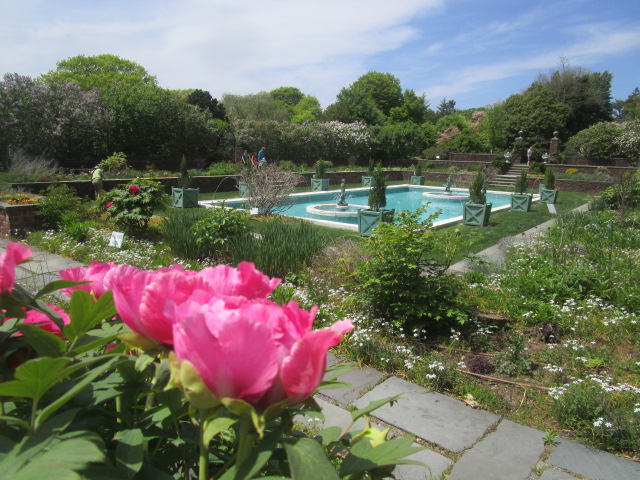
    • Impossibly well-endowed rhododendrons, carpets of showy roses, brief delicate appearances by irises and orchids such as ladies slipper _ June arrives with a flourish.  Depending on temperature, some will last a few days or a week, others extend the entire month.   In a few weeks, as solstice arrives, almost all annual blooms will reach peak.  Some will continue all summer, others will quickly be pollinated and work on the important target of producing fruit. 
    • A few people claim this is absolute perfection, and believe a continuous floral world would be heavenly.  Such exists in tropical zones.  But I truly enjoy the wild madness of seasons, when solar energy must be seized as conditions are right, and every day is preparation for another cycle of dormancy.  Maybe I am just a masochist, but that aspect of nature presents a continuous morality play and entertainment unmatched by the stifling dripping sameness of an equatorial jungle. 

    Tuesday

    Stein sighs a rose is just a rose
    Exactly true, yet also wrong
    Several billion years of death,
    And birth, and glorious strife
    Enclose each rose
    As they do you,

    As they do me, who is just me.

    Wednesday

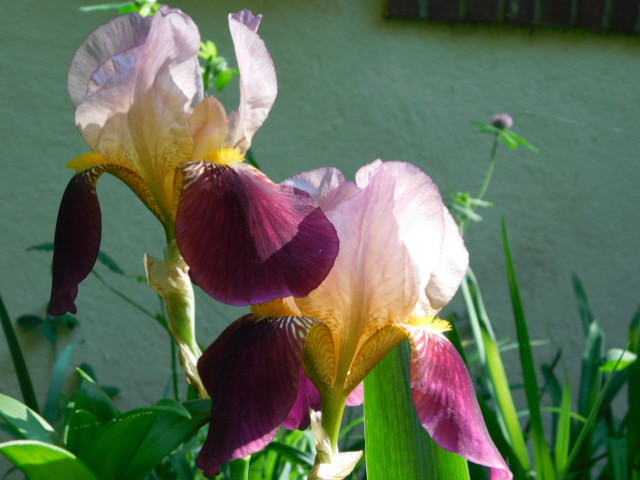
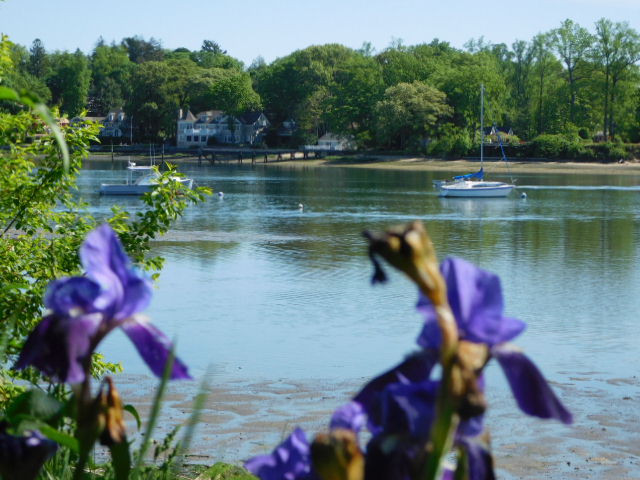
    • Swordlike leaves, sultry voluptuous flower, an iris resembles something out of medieval mythology.  Adding to the mystery is the impossibility of telling exactly which plants will bloom, if ever.  When display does appear, it almost instantly vanishes, broken by wind or rain or some internal process of shyness.  Like a unicorn, the more it is pampered, the less it thrives, dying of attention.  An impossibly perverse plant, but gorgeous.
    • Ours came with the house, originally started by Joan’s mother, under whose care they thrived.  We have had no such luck, but we keep nursing them along, and hoping, and are occasionally rewarded.  This specimen, in particular, lasted exactly three magical days, racing into high heat, destroyed by heavy downpour.  I could force a lesson into that, but for once I will rest content at simply having enjoyed its moment.

    Thursday

    “Your patio is amazing,” remarked Jean as the four of us settled into our chairs.  “How did you get it all so early?”
    “Joan does all the work,” I said, “she’s been shopping for weeks.  We had some of the stuff in the garage for a while when the weather was so bad.”
    “And then I have to plant it all,” noted Joan proudly.  “Lots of work.”
    “Not as much work as the shopping,” I reply.  “She needs everything just exactly the right color.”
    “They usually don’t have just what I want.  I need to keep going back and grab the right plants when they come in.”
    “So all of this is new every year?” asked Richard, amazed.
    “No, there’re a few annuals,” Joan pointed a few out almost defensively.
    “I was reading about making a really natural garden in one of my magazines.”  Jean likes to have a point of view.
    I laughed.  “If we let this become natural it would look like any vacant lot in town.  Does anyway, if we don’t keep up with the weeds.”
    “But I read it’s not as good for bees and birds and butterflies if you just put in common stuff from the store.”
    “Well, I like what I like.  I know how I want it to look.”  Joan is, in gardening, a true artist.
    “We get lots of birds in any case,” I added, trying to find a middle ground.

    Fortunately, at that point the conversation swerved into families, and we could relax for a while to enjoy our drinks in peace.

    Friday

    • Roses star in Huntington’s June.  Not only are many insanely beautiful, but the wide varieties include native or naturalized species that thrive like weeds (which is, remember, the classic definition of a weed _ a rose in a cornfield.)  Some fill the air with perfume, some climb thickly as if by design on old buildings and walls, some stun with intricate internal folds and patterns.  For the next few weeks
      , they are ubiquitous.  After that, they become less clamorous, although there always seem to be a few blooms somewhere until frost.
    • Years ago, my own statements would have sent me racing to reference materials.  “How widespread are roses?”  “What does the species include?”  “Which were originally found on Long Island?”  Now I rarely bother.  That may be a failure, or sheer laziness, but I prefer to think of it as a deepening wisdom.  It is well to know the accepted details of many things which can expand my worldview, but enchantment does not really require massive common knowledge.  Enchantment with life is what I now seek.

    Saturday

    • Now almost a century on, back in my mother’s day, there were small crystal globes filled with liquid in which was preserved a flower _ typically a rose or orchid.   Often it held memory of some special moment _ a dance, a wedding.  Like a soothsayer’s apparatus, this small keepsake would hold place of honor on a shelf, mantle, or table.  We would examine it closely once in a while, the curved glass acting as a magnifying lens, a strange curiosity.
    • I sometimes think of my life that way, as a bloom to be preserved in the equivalent of one of those spheres.  I am not of the generation that thinks in terms of being embedded in a matrix, nor of the persuasion that my disembodied spirit will somehow flit free of worldly ties and do something else.  I like my fleshy envelope, and would be quite unhappy and quickly bored without it.  But, like most humans, I find it is a little frightening to consider that all ends, and the universe continues on as if I had never been.
    • Ah, but preserved as some rare bloom _ I like that.  Some creature out of time free to examine my prides and faults, to admire or point out blemishes.  I imagine a kind of envy such as I sometimes have reading a particularly good biography.  Time, of course is the last frontier, and we are so entangled with it that I doubt we shall ever comprehend how life and the arrow of entropy really intertwine with the cosmic surge of leptons and branes.
    • Am I a weed or lovely hothouse production?  Does it matter?  All such judgments are in the eye of the beholder, and as far as I know I remain the sole beholder.  Misty fantasies for a rainy, meditative afternoon.

    Sunday

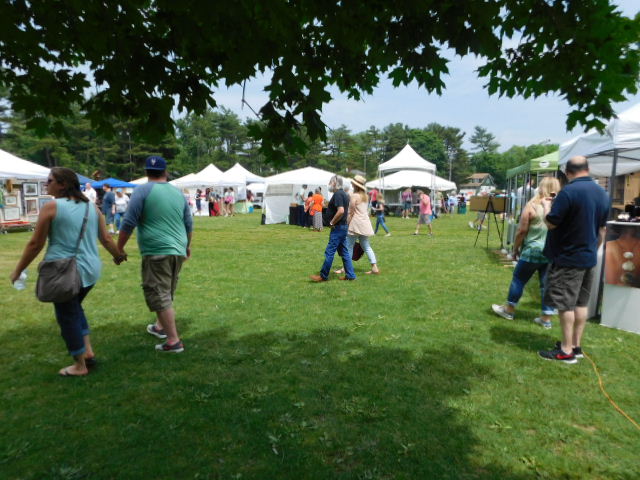
    • Assorted festivals and fairs, like this art show in Hecksher Park, are part of the human efflorescence of the month.  Weddings, of course, are the other tradition.  People and their crafts of amazing inventiveness bloom as much as any flower.  Passersby are merely amazed at what they can see, touch and purchase.  This day was perfect, but rain washed out the next.
    • From conversations, most of the artisans here are dilettantes, in the sense that all their income is not dependent on what they make and sell.  Quality is as high or higher than that of professionals.  I understand that those who live and breathe and sell and perfect art are wonderfully able to craft things nobody else can.  But in the American market, at least, those who seek to earn a living from their efforts find they must devote huge amounts of time to sales,  and warp their skills to continually provide artifacts which require more novelty than vision and technique.   

    Greenleaves

    Monday

    • Suddenly the great vegetal switch has been thrown.  Following warm spring rains, all is instantly green and becoming more so.  Early trees which flowered before foliation fade as blossoms hide behind newly developing leaves.  Ground perennials and annuals explode early spurts of stalk and shadow, competing for increasing sunlight before bothering with flower and fruit.  After all, just over a month to solstice.  A few beauties , such as dogwood and azaleas, break the pattern, but they provide bright accents, rather than the show itself.
    • I admire these miraculous temperate zone cycles.  The constant equilibrium of more equatorial regions seems boring.  Spring around here is an athletic contest, a race for life, a display of hope and ambition by every species.  Even evergreens break their staid majesty to push out bright buds of cute soft miniscule needles.  A fine time to lounge around and enjoy _ except, perhaps, for ongoing warm spring rains.

    Tuesday

    So many synonyms for green
    All strung together can’t describe

    Exactly what I see
    Wednesday

    • Even a casual glance at the newly verdant horizon reveals an astonishing assortment of hues, textures, shine, patterns, and transparency.  In another month,  things will dry and settle into a darker, duller, generality.  In May, however, both long views and close up inspections of anything yield pure amazement.  So much variety and so much effort that is usually just taken for granted as folks rush on their busy way.
    • I try to compose pictures, sometimes with a theme in mind, sometimes hoping the theme will leap from the photograph later.  I have to admit that often I repeat almost exactly _ my brain may be infinitely adaptable, but my thoughts travel well-worn paths.  The freedom is in the “almost.”  After all, this spring itself, this fine cool day, is almost like the season last year, almost like yesterday, almost like tomorrow.   And you and I are almost identical.   But from our restricted perspectives, almost is an infinite universe of its own.

    Thursday

    Winding through dirt paths snaking in copses of trees around the pond at Coindre Hall, I almost literally run into Kevin who is staring up in concentration at a large maple.  “Oops, sorry,” I stumble to a halt.
    “No problem,” he laughs.  After all he’s nearly twice my size. 
    “What are you so excited about?  Some unusual bird up there somewhere?”
    “No, no, I was just amazed at how high these things are, how heavy the branches get, and how they ever manage to stay together through rain, wind, and snow.”
    “Some don’t,” I gesture at broken limbs back up the trail, the main reason I hadn’t been paying attention to where I was going.  “I tend to be more astonished that we get so much out of such a tiny little layer of biosphere.”
    “What, you don’t think this guy is large and magnificent.”
    “From one perspective, sure.  But think of how big the Earth is, and how short the height from deepest roots to topmost leaf.  We take it all for granted.  I find it humbling and a little scary.”
    “Well, my friend,” he responds, “then I won’t scare you even more by mentioning that three quarters of that little space is water, and an awful lot more of it is covered in sand or rock.”
    “Somehow, it all works.  But I am always humbled by how tiny our realm is compared to the universe.”
    “Be as humble as you want, but you still need to respect each individual specimen, especially one like this.”
    “A secret woods-worshipper, are you?”
    “Maybe,” he chuckles.
    “I don’t think you were looking at branches at all.  I think you were trying to find a dryad or nymph.”
    “Even if I found one, why would I tell you?”

    “Ok, be that way.  Give her my best.  I’m going down to the shore to see if any mermaids have stopped by.”

    Friday

    • With herculean effort, the entire arboreal canopy has been regenerated for another season, thick and all but impenetrable.  From the air, Long Island now looks more like virgin forest than one of the most densely populat
      ed places on Earth.  The colors, like the leaves, are sharp and clean and clear, with no insect, drought, nor wind damage marring their newborn outlines and vein structures.
    • Like ourselves from age twenty on, it’s all downhill from here.  Each tiny chlorophyll factory is put to work mercilessly, with barely a rest because solstice nights are short.  Should a worker leaf falter or become sick, it is abandoned and dropped.  And the grand reward at the end of a long summer’s job well done is brutal recycling into the forest floor.  But right now _ ah all is hope and magnificence and wonder.   Why I should concentrate on today.

    Saturday

    • It’s easy for us to get too caught up in cycles.  Already there are signs of coming winter, summer weeds like dock are in full bloom, we say “Oh, June already?” and dread next November.  Most of the permanent leaves are fully grown, degradation and decay have set in on a few, there are brown masses indicating flowers gone already.  Trees may regenerate crowns even now, for example if defoliated by caterpillars, but that costs so much that many die over the next year or so.
    • It’s easy for us to get too caught up in the arrow of entropy.  The seas will rise, the glaciers may come, the sun shall dim, in a few tens of billions of years the universe itself will be gone.  Today is useless, what we do has little value, and in the end everything is dead.   Or we shorten our view slightly and decide we can always make things better, or things will always get worse, or things will over the long run stay the same _ why fix a leaky roof when tomorrow may bring sun?
    • It’s easy for us to get too caught up in the moment.  Carpe Diem.  Have another glass of beer.  It’s all the greatest highs or the deepest lows.  We can’t predict the future, so why worry. 
    • Trees, we assume, have none of these problems.  They are driven by local genetics, with no central control.  Animals can be trained, but they have little conception of the long run beyond a season or year or possibly decade.  Only humans face such delicate balances of perspective, which unlike leaves, can spring up instantly and occasionally cripple our thoughts.
    • Some of this is intellect, some of this is hormones.  The wonder is that wonder can be provoked.  The miracle is that most of us, most of the time, do not slide into a pit of viewpoint, and that we can always regain perspectives on cycle, entropy, and moment.

    Sunday

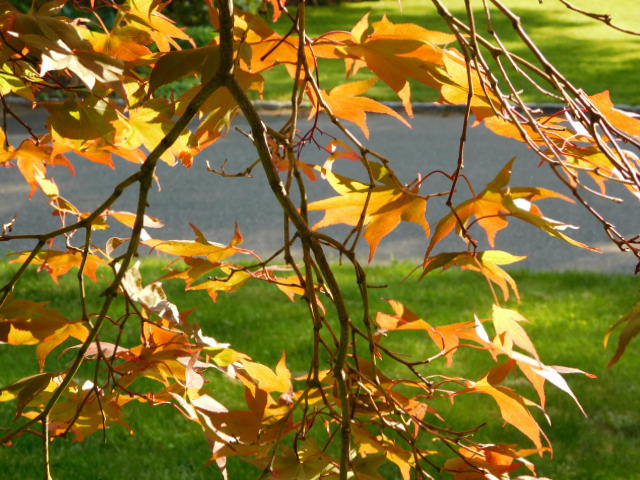
    • Branch of Japanese maple glows crisply in fresh morning sun, as the desk calendars would put it.  This small example contains almost uncountable individual leafs, each working to provide food to the rest of the organism.  Yet were it torn by wind or pruning, the tree would recover, because there are so many more.  Imagine the not-quite-infinite number in Huntington, Long Island, North America, or the world!  Yet in some ways the whole assemblage is as fragile as this branch itself.  
    • “Normal” appearance for me tends to be around arm’s length.  My binocular vision is working at that point, yet I still have the advantages of perspective.  Anything further away tends to become part of masses and shadows and other elements of landscape.  Anything closer is extravagantly weird right down to the sub-microscopic level.  Except in certain odd religions or scientific philosophies, my observational point has little to do with “objective reality,” in which the “actual” size is fixed at some defined measurement.  But truly my reality has little to do with that “objective” fantasy.

    Luscious

    Monday

    • Wind rips clouds revealing sun reflecting from whitecaps.  Clarity melts into confusion as senses merge and stray.  Sounds waft pure scents, fresh growth glistens like marketplace fruit.  Immense desire to grasp, engulf, and drink this luscious moment.  A drunken mixed feast of experience, perhaps soon forgotten as giddiness later fades into memories of just another marvelous spring day.
    • English has a word for everything.  Mixing of senses is “synesthesia,” famous in literature and psychology and physiology.  Knowing a word is not experience, but it can focus an unusual perspective.  So I can apply it to how I felt while walking along a happy carnival of so infinite an array of brilliantly mixed sensations that I could never separate nor adequately describe their elements.  

    Tuesday

    Like Rimbaud’s off-cast boat I drift
    Propelled by currents uncontrolled
    Enmeshed adventures, swept swirled confused,
    Dreams mixed and fade pure haunting songs
    .
    Not quite so drunken, on this day
    An older self _ less wild more free
    Joints rebelling force a pause
    Aching eyes ask ears relief
    .
    Sweet suns, rot tide scent, life and death
    Velvet clamors, neon breeze
    Same as back then, as everywhere, I hope
    Same as tomorrow evermore
    .
    There’s more as much in one square mile
    Than on this world’s vast seven seas
    Swift single sparrow foretells falls
    Completely as far shores, soft moon
    .
    It’s not bright sight, pure sound, bleak touch
    Encompass full what I exist
    In observation consciousness
    Alone, engulfed, becalmed, amazed

    Wednesday

    • Surely this scene would provide marvelous lunch _ azaleas are worth five stars in anyone’s rating.  Humans themselves may or may not be primarily visually oriented, but this culture certainly is.  Even the most pungent images of Rimbaud _ whale rotting in salt marsh, snake falling putrid from tree as insects devour it _ remain as pictures rather than scents in memory.  Normally, to establish even a glimmer of synesthesia seems to begin with eyes leaking beyond sight.
    • With effort, I can often synthesize my moment _ a full experience of ear, nose, taste, skin, muscles, organs, mind, and _ hardly ever least _ eyes.  But recalling that unity proves difficult or impossible.  Only in dreams does everything return, mixed and tenuous, but overwhelming.  Nevertheless I continue to make attempts at being totality, only rarely succeeding even a little.

    Thursday

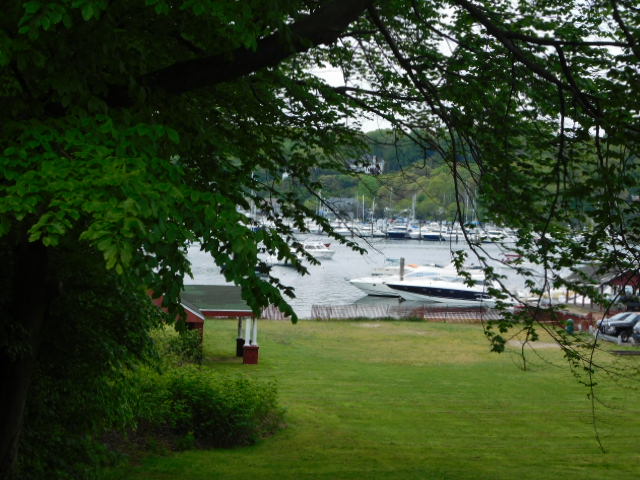
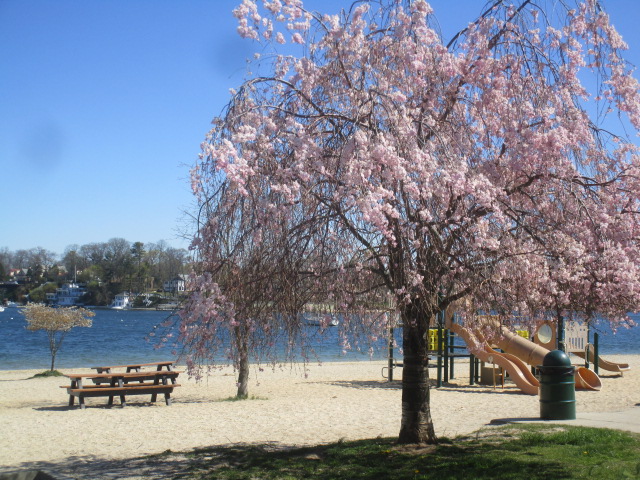
    Joan Barbara and I sit gazing, aligned with other human relics, at the sparkling azure carpet spread before us at Northport Harbor.  Behind dogs frolic in soft grass, children scream happily from the playground.  Along the walk in front of our bench, uncounted young couples stroll hand in hand, all but oblivious to surroundings.  Heavy winter garments have been discarded,  revealing attire as gaudy as spring itself.
    “Ah, hormones of youth,” sighs Barbara.  “Rose-colored glasses on everything.”
    “There’s some older people too,” Joan asserts defensively.  “It’s springtime after all.  Time for love.”
    “Well, I do think we tend to see the world more though our hormones than our senses,” I venture.  “When you’re happy and content the weather doesn’t matter much.”
    “The weather matters to me!” states Joan.
    Barbara enjoys a bit of a tweak.  “Maybe you’re just not in love anymore…”
    “I don’t think she ever had a pair of those special glasses, Barbara.  Family trait to remain steady and rational.”
    “I like flowers and spring a lot,” Joan gl
    ances at us in annoyance.  “I love flowers.  And when the sun is out, I’m always happier than when it’s raining.  I can’t help it, weather affects my mood.”
    “Well, I think those two there,” Barbara subtly points to a particularly demonstrative pair, “wouldn’t notice a hurricane right now.”

    We all grow silent for a while, probably each thinking that it doesn’t much matter why you enjoy being who and where you are, as long as you do enjoy it.

    Friday

    • Surely nothing mixes senses as much as water.  Memories scramble neuron connections so associations surface of hot, flavors,cold, thirst, drowning,  rocking, wet, dry, rain, mist, surf, wavelets, sparkles, leaden depth, seen breath and more.  Fear of high whitecapped waves, perhaps, soft meditations in calm reflections.  Tremendous mixtures of everything _ for life is mostly water, and echoes it closely.  Personal experience layers onto primal reaction.  No mistake why Rimbaud picked a boat _ a wagon would just not do.
    • I swim in this harbor, although some tremble at the thought.  I have even tasted it, a few times as water cascaded from a cooled wet head in blazing sun, although salt prevents me from drinking much.  Sometimes I swam to shore from a dock that became more distant as I felt myself growing tired, even as I floated without effort in the buoyancy.  At times, we have watched a red sun set hypnotically in double distorted image as gnats flit annoyingly.  Storms have battered the shoreline, ice floes have caked the surface, hard sleet and soft snow have poured from overhead.  And that is without the recalled distant memories of ocean, lake, and pond.  Water is my nature, and how I experience it remains as mercurial as the chemical itself.

    Saturday

    • Computers are digital apparatus, constructed of hard dry immovable materials, controlling electrons in a flow that imitates water.  They are not life, which is water entire.  Their inputs are not senses, even though our aqueous cells utilize electricity on occasion.  It is almost impossible to imagine synesthesia occurring in artificial intelligence.
    • I fear AI only because I distrust those who build it.  Those who try to develop vast grasping rationality, who claim that someday our minds will be poured into waiting crystalline structures and we will continue indefinitely as before, no, I think that most deeply they do not understand our reality.
    • Can a computer score beauty?  Perhaps, properly programmed and equipped, it can pass judgement and say this or that.  Can it make unexpected leaps between a work of art and remembrances of an afternoon lunch at a Parisian café?  Can it randomly spin an uncertain feeling that somehow a scene causes the viewer to be slightly disoriented, happy, or troubled. 
    • If builders allow such spontaneous connectivity, how to prevent insane association?  We are delicate balances and tensions.  We know when hard rationality shades into daydream, when happiness flips to nightmare, and we react and automatically control and bring our consciousness back to an almost rational calm center.  That has been the outcome of billions of years of trial and error.  What passes for such in the mechanical workshops of today’s Morlocks?
    • Our culture, driven by science and pseudo-science, has perhaps traveled way too far along the various branching paths of detailed narrowing specialization.  Focus too much on sight, on hearing, on taste, on feeling and we become less human.  We should allow ourselves to once in a while glory in being confused, in tasting irrationality, and in seeing hot and cold scrambles within our immense knowing and being.

    Sunday

    • Birches hang out here and there in odd corners of vacant spaces along the waterfront.  Anywhere wetlands exist these trees remain abundant, but local marshes were long ago drained, paved, or flooded.  All for good reason, reducing mosquitoes, providing power, growing salt hay.  In spring, petite long green seed stacks look a lot like early fruit, crisp and ready for snacking.
    • Of course people plant ornamental peeling-bark white birches everywhere, a lovely accent to yards in all seasons.  No doubt somebody somewhere is trying to make them fragrant or edible or _ given the speed with which genetic advances are occurring these days _ intelligent or talkative (as we know from our current politics, the latter two traits do not necessarily go together. )  I’m just happy to find this specimen where it was last  year, still making its way this spring, when so much else in this park and along the waterfront has succumbed to one mortal blow or another.

    Sweet Melodies

    Monday

    • Birdsong is now full throated, sweet, rounded, continuous and incredibly beautiful.  Fragments of melodies float randomly from anywhere and everywhere, surrounding with incredible music, even in densely populated areas.  This, like more subtle perfumes wafting about, is missed by everyone driving by in cars or on bikes, rushing through towns or malls, even walking with earbuds blasting some predictable human tune.  A cosmic gift, unappreciated, although avian artists hardly care.
    • Lilting phrases coming in and overriding one another resemble jazz soloists, each on their own interpretive tangent, somehow coalescing into a magical harmony.  Of course, there is no beat.  Of course, what music I hear is my own brain’s creation, feverishly weaving phantom patterns in its own artistic frenzy.  True or false is irrelevant,  what I experience is a perfectly enchanting wild symphony.

    Tuesday

    Unheard melodies are never sweetest
    Keats was wrong.
    Random birdsong fills May’s fragrant breeze
    Evoking music
    Finer than imagination could provide
    From my poor mind
    What reality have art and beauty 

    Except to me

    Wednesday

    • Porsches blast seventy on curves marked thirty,  yard garbage construction trucks roar, tires whine and growl, pickups rattle, each contributing not only noise but stench.  Arboreal chanteurs and chanteuses fortunately live in an umwelt that filters and erases all this just as we cannot hear background magnetics and radio waves screaming all around.  Once in a while human noise ebbs, and a natural beauty rises to the skies.
    • My umwelt cannot ignore these unpleasant intrusions _ in fact forces me to pay more attention to a garbage truck roaring towards me than to the blackbird in the reeds.  I can only try to tune and focus as possible to hear what else may echo above our constant din.  Often I am rewarded, more often than not I fail to try hard enough.

    Thursday

    Karen, Dave and I ran into each other at Caumsett one grey afternoon, then sat on a bench watching the parade of folks out for jogs, walks, and children’s outings on bicycles with training wheels.  A silent reverie, until Karen noted “It’s really a shame, isn’t it?”
    “What’s that?” asked Dave.
    “All those people ignoring everything, too busy to notice.  Look at that one glued texting on a cellphone, that one talking on another, and _ yeah those kids with headphones dancing along.  All of them in some other imaginary world, ignoring this one.”
    “Problem of the times,” agreed Dave.  “Too much to do, too much they think they are missing.  In the old days….”
    “Nah,” I broke in, “in the old days most people were just as bad.  Go read Thoreau or Aristotle.  Humans mostly ignore things except when it suits them.  The distractions may change, but not the behavior.”
    “It’s a shame, though,” continued Karen.  “I think they’re missing so much.”
    “What I think,” Dave looked around slowly, “is that a big part of the meaning of life is to just appreciate things.  Maybe that’s one of our main purposes.”
    “Oh, sure,” I responded sarcastically, “somewhere somehow somewhen something is paying attention and enjoying the sensations of its avatars.”
    “Don’t laugh.  Why not?  Besides, I think of it more as fine crystals or hand-crafted exquisite perfume bottles on display on a mantle or in a curio cabinet …”
    “Or stored in the garage, maybe knocked over and broken by a kid or pet-dog equivalent.”
    “Anyway, it’s a nice fantasy for at least experiencing the moments fully and imagining maybe they are more than they seem.”
    “Well, that’s true,” I admitted grudgingly.  “Experiencing the moment fully does appear to be what the rest of these guys are frantically trying to avoid.”

    We sat quietly, listening to birds and an occasional child’s laugh as the wind swept across the meadows.  Absorbed in our own thoughts, which, come to think of it, were probably just as distracting as anything anyone else out there that day was doing.

    Friday

    • Best days to hear birds or any other natural sound is heavy mist, when suspended water drops act like snow to muffle distant noises.  It also seems to be a spur to the birds themselves, who respond with hearty bravado and fill each copse of trees and brush with loud and continuous notes.  Here at Upland Farms, the trees are cycling close to normal, but ground cover, even ragweed, is weeks behind because of extended wet cold. 
    • I also appreciate that at such times, humans tend to hibernate in vast enclosed emporiums or hidden nests.  Dog walkers at the park thin to a hardy few, awaiting better times.  So I often get vast stretches of public lands to myself.  All I need is a poncho, heavier coat than I would normally use at this time of year, and the will to leave my comforts to find unexpected treasure.

    Saturday

    • As I watched a baby yellow finch fumbling in nearby branches, I realized how much more I appreciate now, as well as how little desire I have to learn extended conventional expertise.  My badge of becoming an expert once was to memorize common and Latin names, to be able to recognize tiny differences in plumage, to confidently search for a given species by recognizing its song.  Same with weeds and trees, arrogantly identified.
    • Now I am more skeptical that such helped my joy.  Was it really more important to identify the species by subtle feathers than it was to glory in its miraculous appearance set against leaves and branches?  Can’t I simply rejoice in what is, and how happy and open it makes me feel?  Doesn’t conventional expertise, to some extent, diminish that naïve enthusiasm?
    • Our ancestors had to intimately learn which cohabiting lifeforms were dangerous, or destructive, or tasty.  To control them for safety or food, they had to understand locations and habits, when to shoot on sight, where to stretch nets, which plants to encourage and which to destroy.  I do not live as my ancestors.  My needs are different.  My expertise probably should adjust as well.
    • Now, I do not claim it is wrong to know anything.  I enjoy knowing a hawk from an osprey, a finch from a robin.  Yet I will no longer interrupt my natural reveries and observation with frantic searches on the internet, quick photographs for later study, or opening a field guide.  Not only are those all distractions to experiencing the moment fully, I have also learned to my chagrin that age frequently clears my memory.  I once learned for all time, now I am lucky to remember what I thought I memorized a week ago.
    • In particular, these days as birds sing I am clueless.  I can recognize crows or seagulls by sound alone and that’s about it _  those are hardly the most melodious.  That once bothered me.  Now I just let unexpected music echo from nowhere to nowhere, and I love it as a sweet unassociated immersion in nature. 

    Sunday

    • Been a great week for focus on listening.  Wet and slow growth kept many of whining blowers and mowers in storage.  Heavy air damped normal industrial soundscape background.  Mating, nesting, incubation hunger kept avian activity high, no bird remaining silent for long.  Lots to see, but with effort that could be subsumed as well.
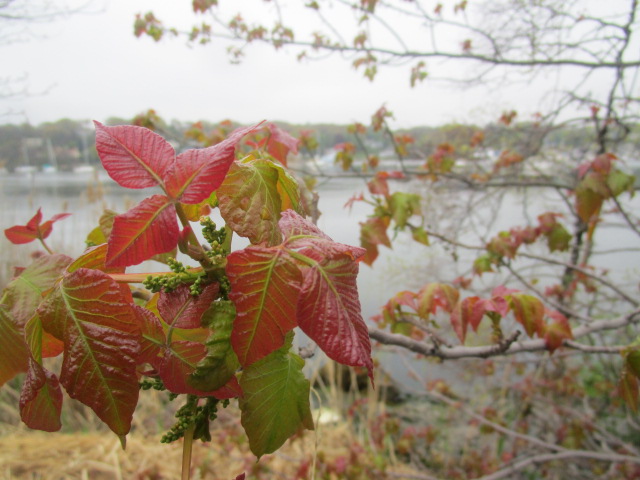
    • This tiny patch of woods displays skunk cabbage in a bog surrounding a tiny remnant outlet into what were once wetlands, now bounded by centuries of various dikings, embankments, and dams.  Already an adventure to get to, because poison ivy is springing up everywhere on the forest floor, delicate tiny red leaves and vines not yet impenetrable, but dangerous to those with allergies nonetheless.  I’ll have to be careful about touching the cuffs on my jeans for a while.

    Adaptation

    Monday

    • About a decade ago, this patch of waterside land was cleared and carefully replanted.  Signs boldly proclaimed a “Native Vegetation Restoration Zone.”  Keeping it such proved a Sisyphean task, effort and money ran out, and it has reverted to being a typical vacant lot.  The only native species remaining are beach roses and poison ivy, and the beach roses are succumbing rapidly to salt intrusion from higher tides and frequent floods.
    • Few local plants adapt well to the disturbances of human civilization.  Fewer still can compete with rugged global imports.  Our landscape changes much too quickly for any to evolve.  It is doubtful that we can preserve many plants or animals which require specialized niches over the next decades or centuries.  A few zoos or botanic reserves may somehow keep going, but I fear most will end up exactly like this impoverished _ but still beautiful _  bit of ground. 

    Tuesday

    Invasive species thrive and spread
    In upturned soil exotic flowers
    Are pampered yielding massive show
    We care not that such flower beds
    Displace what once received the showers
    Dried, and died, nowhere to go.
    A few lament, with glossy views
    In thick-bound books safe on our shelves
    What now is missing, wild and free
    As once it was before the crews
    Destroyed it all to please ourselves
    With artificial harmony.
    I do admit I’d fear the wolf
    Or cougar should they both return
    There’s limit to what I dare face
    Yet I’d allow plants to engulf
    My labors, even if they turn
    Out to be plain, they have their place.
    I’ll never recreate what was
    Ecologies are simply whole
    With parts replaced, the rest adjust,
    Or not, but something new with flaws
    A different unit fills the role
    As true as any, less robust

    Wednesday

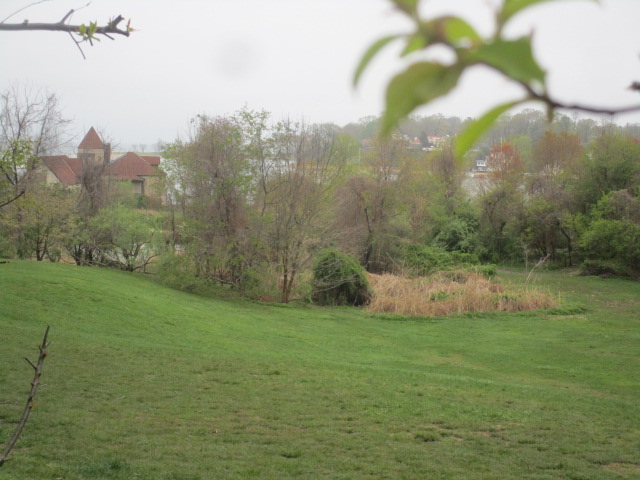
    • There is nothing quite so ecologically devastating as a farm, but close second is a large lawn.  Land is leveled, one species of grass is encouraged to grow, and everything is constantly cut and trimmed to a low height.  It has been said that nothing an individual can plant is quite as eternal as a lawn _ even completely untended, remnants of it will last for centuries, if only in woodland glades.  Designed by humans, but adapting to the wild.
    • Yet I love large lawns such as this, with sweeping vistas.  Close inspection reveals that many species of grass have crept in, some of them undoubtedly native.  Worms, birds, rabbits, raccoons, deer, and in more remote areas, foxes wander across as they wish.  As a person who tries to love nature dearly, I suppose I should be ashamed to enjoy this space, but such are the contradictions of modern life which I have learned to accept.  A fanatic may condemn, but emotionally I just cannot regard this green expanse as vast evil even as my mind recoils at the destruction of original habitat.  I guess I also must adapt.

    Thursday

    Joe and Linda were arguing about something or other, as I passed them up near the Civil War Memorial statue at the end of town.  I was just in time to hear Joe somewhat sheepishly admit “Well, I’ve evolved on that issue, you know.”
    That stopped me in my tracks.  I have a stupid habit of lecturing when I should keep quiet, but this is a personal vendetta.  “Individuals don’t evolve,” I stated, startling them.
    “What?” asked Joe, confused by the change in conversational direction.
    “Individuals don’t evolve.  Species evolve.  Individuals adapt.”
    “Everybody else says they evolve,” argued Linda.  “It’s common usage, after all.”
    “I know,” I responded, now a little sorry I’d started anything.  “But the theory of evolution is so clean and precise _ descent with modification.  No evolution without offspring.  Genetically modified offspring at that.  Individuals cannot evolve.  I just don’t like the term, it implies _ well more than that.”
    “Like what,” Joe asked curiously.
    “Especially like you just used it,” I reply.  “As if you are arriving at a better and higher and more perfect place.  I never hear anyone evolve into something they think is socially incorrect.”
    “Well, life does get more complex …”
    “Not necessarily.  Life can get more simple, lose limbs, fit a niche by being less demanding and precise.  Evolution is complicated, not a march toward some platonic ideal.”
    “My ideas however,” said Joe sternly, “do have offspring, and do evolve, and do turn into different creatures altogether.  An evolving meme species, as it were, ideas dying into entirely new directions.”

    He was right, I guess.  I shrugged and smiled, and continued on down the street a trifle embarrassed.  I guess I could use some evolution of social skills myself.

    Friday

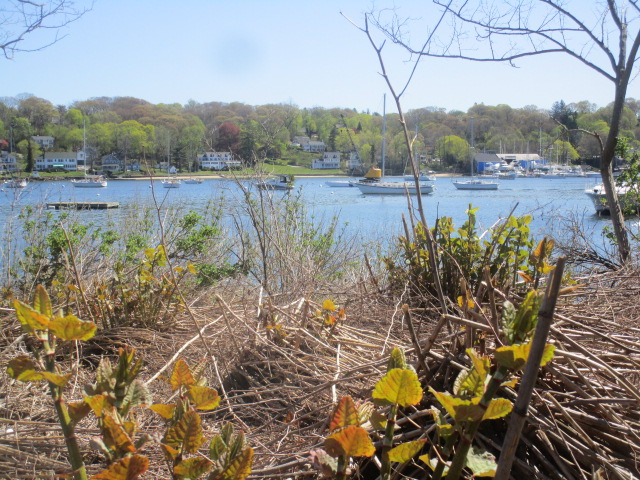
    • Grass matts have moved, somewhat diminished, and are once again sprouting up and rooting downward.  Under natural conditions, there would be plenty of open space for marshlands to gradually occupy upslope as water rose, adapting to changing sea level.  However, humans like to live near the shore, so above the actual littoral there are wide bulldozed beaches, rocky berms, concrete walls, and wooden or steel bulkheads.  There is no place left for the grass to adapt to.
    • I have no power in all this.  If I worry about each sparrow falling or marsh grass failing I will simply be sad all day long, and miss all the wondrous beauty that remains.  I dutifully send off my dues to organizations like the Nature Conservancy and desperately hope that somewhere, somehow, things will turn out well.  Today, I must content myself by being grateful that I have been privileged to know this world that is and what not long ago was.  Accepting powerlessness is no doubt a necessary adaptation of my mind.

    Saturday

    • Not long ago, all biologic thinking revolved around nature and nurture _ genetic makeup versus learning and training.  Only higher vertebrates could be taught much of anything, all the other species were trapped by their genes.  Adaptation to conditions was limited to being stunted, misshapen, or hungry.  Recent discoveries and observations have proved such a limited view quite wrong.  Not only is there vast variation in genetic genotypes for a particular species (height, size, whatever) but epigenetics prove that genes function by being turned off and on at crucial times, and that these triggers are often triggered by environmental conditions.
    • So even within a given species, individuals can often be born pre-adapted to conditions.  Hunger, warmth, and various other stresses on the mother or egg can affect the development of the embryo, and even organisms born with completely identical genes, such as twins, could theoretically grow to be different sizes and certainly non-identical later minds.  The more complicated the organic system, the more likely epigenetics will alter it.  The human brain, of course, is the most complicated organic system of all.
    • Adaptation after youth in all species, especially human, is well documented and much discussed, but hardly understood.  Why do some people, regardless of upbringing, become antisocial failures?  Why are others superstars?  What is the magic key that socializes human beings?  Why do some adapt to poor or wonderful conditions with increased vigor and success, while others fall into ruin and, for example, addiction?  None of this is known, and constant new studies seem to indicate that what is known is wrong.
    • I wake each morning, as I suppose we all do, preadapted to my immediate world.  If it has changed unrecognizably due to some disaster, I would be lost, but such is not usually the case.  Within that adaptation, I go about my limited daily routine, fitting quite well into the grooves of my life.  I accept my limitations, and strive with my ambitions.  I have been that way, it seems, for most of my life.  That is a long, ongoing, adaptation, founded on my genetics and modified by my environmental and social situation.
    • All this and more is strikingly obvious by observing not only other people, but especially the rest of nature, in which we have invested no envy nor internal competition.  Birds and trees, fish and weeds, can teach us a lot about ourselves, if we just open our minds to full contemplation of their world.  Life remains an open book for us to examine.  Unfortunately, at least for the hubris that we should know everything, that book contains infinite pages.

    Sunday

    • Today is the Huntington Harbor festival, and the tulips have cooperated.  Booths and music and various events have been planned for the extravaganza.  Unfortunately, this picture was taken several days before.  Right now is one of the most miserable mornings we have had in a while _ very below normal temperature, nasty drizzling showers, raw wind sucking away warmth, and a grey cast to every color.
    • Spring makes every plan for outdoor activity an anxious adventure.  The day may be too hot, cold, windy, rainy, overcast, soggy, or combinations of any and all of the above.  In a society that loves schedules, that leads to some frustration.  I have escaped anxiety of good weather on days off, but I remember how annoying it could be to have a lovely spell followed by a nasty weekend.  Our culture still has not learned how to adapt to circumstance except by ignoring it by moving events indoors.  I will take my poncho and make the best of it.

    Lovely Tease

    Monday

    • Arrives the summer!  Temperatures in the seventies, bright warm sun, flowerbeds overflowing, ferns uncurling, everyone outside rejoicing that winter has gone for good.  Truly it has _ but.   Well, it’s still mid-April, as those paying taxes know well.  Although this weather may hold for a while, it will bounce considerably, and chill rain, wind, and gloom could easily descend for a week or so at any time.  Any given day might have quite a bite to it, and nights can be downright cold. 
    • Home from a weekend wedding excursion to Maryland, we realize just how much we love our area of Huntington.  Perhaps other places can be just as sweet, but I think seniors _ me anyway _ always wear ruby slippers and wish to return whenever they are away very long, no matter the marvels encountered.  Of course, we are so adaptable that we can redefine “home” wherever we may settle later.  On this bright sunny morning, no place else could ever compare to my own back yard.  

    Tuesday

    So much to know, so much to see,
    So much to do, so much to be.
    No time to waste, gone in a blink,
    No time to rest, reflect, nor think.
    Like April showers nothing lasts
    Like springtime flowers fading fast.
    I’m finished chores, without a care,

    I contemplate all from my chair.

    Wednesday

    • Adaptability of temperate zone vegetation (and fauna) is amazing.  People may become upset or depressed about variations in the weather _ freeze, wind, rain, heat, sun, drought _ but they can always go inside to comfort and have a glass of water.  Trees and flowers and insects and birds have no such option.  Yet they survive and thrive.  At this time of year everything moves at a frantic pace: new leaves opening at nearly blinding speed, birds frantically flitting to find mates and build nests. 
    • Life on this planet is stunning.  Like everyone else, I take it for granted.  I read about life millions of years ago, and what may happen in the future, and what may exist in the far reaches of space, all interesting intellectual fantasies.  But I force myself also to try to understand exactly how miraculous and infinite the web of Earth _ Gaia _ is on this exact moment in this exact spot.  I can sometimes imagine a meaning or force in our universe that concerns itself with human affairs.  I remain incapable of imagining such encompassing every insect, leaf, bird, and blossom in our whole vast and miraculous world.

    Thursday

    We bask in warm sun high at Coindre Hall, gazing over the blue harbor, smiling at the noisy antics of two huge hovering bumblebees.  Higher temperatures have hatched all kinds of flying insects.  We futilely wave through a mini-swarm of gnats that unerringly hover directly in front of our eyes.
    “Mayflies,” snaps Ed suddenly.
    “What?” I slowly come out of my reverie.
    “Here today, one day, gone tomorrow.  All life’s like that, too short, too lost, too forgotten.”
    “My, aren’t you the cheerful one.  Well, I guarantee you there are no mayflies.  One _ it isn’t May yet.  Two _ they only live in running fresh water, of which we have none.  And three _ if there were any they wouldn’t be up here on top of the hill since they only skim a little ways above the surface until a trout leaps and gobbles them.”
    “That’s the idea,” he responds sullenly.  “Compared to the time and majesty of the universe we are worse and more useless and shorter-lived than mayflies.”
    “Well, compared to the time and majesty of the universe the sun itself is only around for a little while, and surely doesn’t count for much in the grand scheme of the galaxies.  Big deal.”
    “So depressing …”
    “Nope,” I chirp.  “We share one thing with mayflies that makes it all worthwhile.”
    “You’re kidding.”
    “We keep on going.  We want to fulfil our life span.  Survival, with all that implies.  Continuation to a new generation.  We have no choice, as long as we’re alive.  It’s what this,” I spread my arms, “is all about, if it is about anything.”
    “I still think it’s basically mayflies.”
    “Maybe mayflies are happy, in their own way,” I argue.
    “Jeez, go away and let me be grouchy,” Ed growls.

    “Well, of course,” I head on down the hill to the shoreline.  “That’s part of it too, you know.”  I didn’t wait for his reaction, the day was too beautiful.  Sometimes it’s better not to think too much.

    Friday

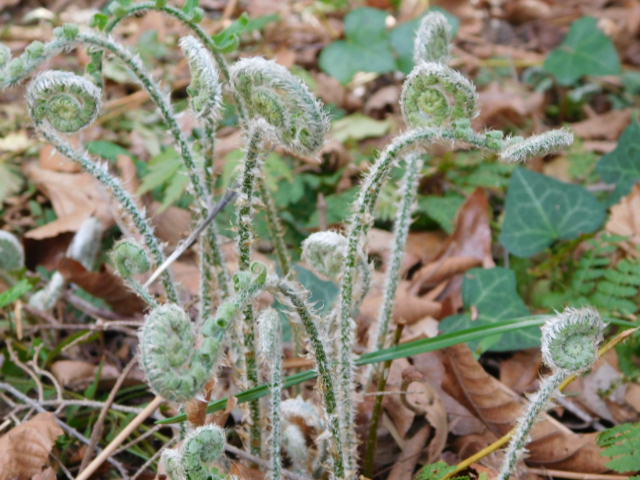
    • Ferns uncoiling from beds of leaves are almost alien forms.  So unlike the buds and blossoms and leaves of everything else except fungi, they astound with an alternate vision of renewal.  Fossils reveal an ancient lineage, ferns were here long before any flowering plants, covered lands before animals emerged from the sea.  Even now, they need no help for pollination or dispersal of spores, using only wind.  Easily ignored, yet beautiful in garden and woods everywhere.
    • My mind leaps into metaphors and similes perhaps too easily.  I can imagine my accomplishments as blossoms, my daily struggles like a tree in storm,  my aging like seasons through a year.  Trying to do so with fiddleheads unfurling is difficult.  They stand apart, comparisons escape me.  I am once again grateful that I can be so confused, amazed, and surprised.

    Saturday

    • All around this April, nature is “doing something.”  Each plant, each animal, even the molecules frantically circulating in all living beings is “doing something.”  I’m so tired of hearing that our political leaders should be business people who know how to “do something. “ What we really need is an ecologist or gardener, who understands complexity and contradiction and balance.
    • Business works by focusing on one narrow goal, with maybe a couple of side glances.  Make money.  Eliminate competition.  Throw out what is in your way.  It’s a bulldozer razing a rain forest, and well fitted for those with incomplete views of the universe.  It’s an artificial game, that has no relevance to season, nature, or human society.
    • People are part of an organic whole, just like my yard and our entire world.  Multiple goals, various strategies, conflict, tension and coexistence are more important than winning.  Adjustments and adaptations must be made.  Some complexity is never resolved, simply suspended in contradictory coexistence.  Principles based on that should guide society, which is a mirror of our natural heritage.  A business leader is befuddled in that situation, because desired outcomes lack a clear purpose or way of determining if the company is “winning.” 
    • The absolute worst leader a society can have is someone who wants to “win.”  That requires picking out one or two clear goals which will supersede any other consideration.  Such a situation resembles introducing an invasive plant like kudzu into a fragile ecology, and is just as disastrous in the long run for the culture which it overruns, impoverishes, and destroys. 
    • The lessons of nature are unfortunately lost in this election season, as candidates spend their time eating in delis and spouting canned speeches to crowds and cameras.  I wish that just once a week they’d be forced to spend a day in forest or field, observing silently the ways of a red winged blackbird or contemplating how the wealth of the world came into being, and how all humans need it still.  They might even notice that “doing things” can happen in different ways than they think.
    • My utopian dream of the week.  Now true April returns, leaving the eighty degree temperatures we have been experiencing as a fond memory while we return to more seasonable weather.  But this lovely teasing spell has served its purpose, and all the world unfolds once more, heedless of political parties and angry multitudes.

    Sunday

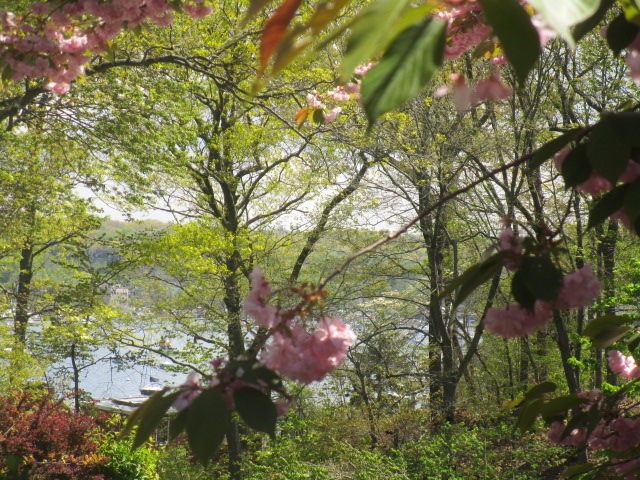
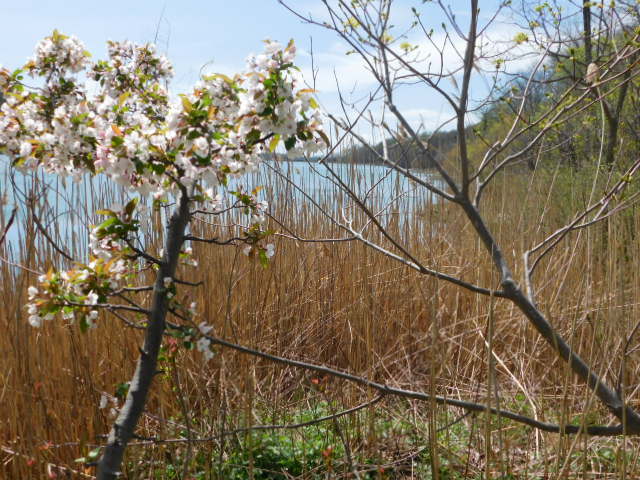
    • Perfect timing on weather this year has led to spectacular results.  Shots of very warm air have forced open some late bloomers like tulips and crabapples, while cool nights and a return to less extreme days preserved the rest.  So this area is covered in brilliant beds of tulips, carpets of dandelions,  ragged drifts of lingering forsythia, clouds of cherry blossoms,  brilliant accents of pink crabapples, and, of course, all the varied fresh colors of new foliage.  Only the magnolias seem to have left the parade.
    • Even people, now having had a taste of very warm and humid days, are relieved that we’re back to the usual sixties.  As long as there are no more drops below fifty, all will be perfect.  But _ that will change.  I find these patterns resemble my life track _ sudden change followed by a lingering plateau _ for better or worse.  This particular springtime plateau is one of the best seasons we have had since _ well, the last one.

    Transitions

    Monday

    • Our long-time neighbor from across the street died suddenly and unexpectedly over the last two weeks.  Someone who had retired, walked and exercised himself into seemingly the best shape of his life.  A minor pain, a simple operation, unexpected complications.  Shock. 
    • We were not close, but our lives moved in parallel.   And suddenly we are forced to realize that the great cycles, such as what this spring represents, are in some ways illusions.  This was also to be another typical spring leading into summer for him and his family.  Our world sometimes appears robust, but occasionally it takes unexpected tragedy to force us to understand how fragile and transitory everything actually is.

    Tuesday

    Living through entropic spirals
    We imagine cycles
    Each day like last and next, each year, each spring
    Sometimes, even, each life.
    Our universe, harshly rushes in mysterious time
    Ignores our pattern making, our silly mathematical fantasies.
    No day, year, spring, or person like another.
    No cycles.

    Only moments.

    Wednesday
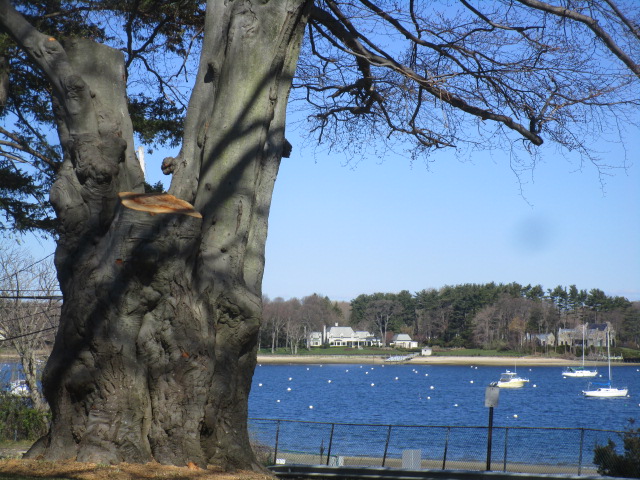
    • Another great aged tree in the neighborhood begins to die.  This giant purple umbrella canopy stood here since Beachcroft was declared a neighborhood in 1924.  My wife sheltered under it while awaiting her school bus in the fifties.  It’s the second immense beech in the last few years to be affected, and _ for a while _ it leaves a tremendous void, until our eyes and memories adjust to new reality.
    • We have a huge old fir in the front yard, almost as large as those carted to Rockefeller Center every year for Christmas.  It has become infected with insects that eventually destroy such species around here.  Now it is a year-to-year thing. Suddenly it will dry up and be cut away.  More permanence gone.  We expect trees to go on forever, part of our dreams, like rocks in the landscape, only felled by hurricanes or other accidents.  More transitory illusion.

    Thursday

    I plop myself down next to Mike and Annie at Mill Dam Park.  Boats launched down the ramps now at a pretty steady rate, mooring locations out on the water beginning to fill.  “Nice day,” I wave vaguely at the clear blue sky.  “Nice spot.”
    “Liked it better before they fixed it up,” grumps Mike.  “No shade trees, no charm.  Not nearly as nice as it was.”
    “Nothing is,” chimes in Annie.  “Too many cars, boats, lights, traffic, overhead jets.”
    “Trash on the side of the road,” adds Mike.
    “Leaf blowers,” I huff.  Everyone nods agreement.
    “All better when we grew up,” says Annie.  “I’ve lived here my whole life, and you wouldn’t believe what a paradise it once was.”
    “Yeah, my wife says that all the time,” I note.  “But then, she does like the shopping these days.”
    “I think we did grow up in the best of times,” muses Mike.  “Overseas places were still exotic, land was open, globalization hadn’t killed off local stores.”
    “People lived better, more rationally, more secure in family and tradition,” Annie scowls. “Neighbors were neighbors.”
    O tempora o mores!” I moan sarcastically. 
    “You’ll have to translate that for Annie, I’m afraid,” Mike watches a gull swoop down on a discarded wrapper.
    “Don’t be silly.  I went to a good high school _ education was better back then too.  But I definitely think we had golden age that nobody else will ever get,” Annie finishes as we all lapse into meditative silence.

    No matter what, I decide that like any adventure it has been fun.  Wouldn’t trade.

    Friday

    • Weddings in the good old days _ at least in myth _ were some of the most transitional moments of life.  Single life over, a family to start and grow, financial and emotional responsibilities.  A true moment of complete adulthood to enter the ongoing and enduring community.  Forever, supposedly.  At least by statistical measurement a lot of that, if ever true, is long gone. 
    • We head off to a wedding near Washington this weekend.  Fortunately, our niece is not one of those self-centered young things who expects everybody to jaunt to some remote island at their own expense and pick up all the checks.  It is also still planned that this marriage is to be the start of children, a forever family, a life together through whatever.  At least at the time of the ceremony, this will continue to symbolize significant transition.  Another era moves forward.

    Saturday

    I tried to never be a selective observer of fortune.  Good times are always intermixed with bad.  Wanting to live in a different time _ past or future _ always involves collecting its best aspects and ignoring everything else.  Much the same is true of envy of other people’s lives.
    I like to believe that these last sixty years have been some of the best, for most people, in most places.  Sure everyone faced nuclear destruction, pollution disasters, runaway population, and loss of confidence in what the future holds.  I will not list marvels, which are many.  I will ignore the fragility of lives _ being in control until suddenly some horrible disaster arrives.  That is the lot of humanity and always has been.  Does not matter if death is by earthquake, black plague, Mongol hordes, or ISIS.
    I also think the world is less rich in being.  Too much crowding ruins destinations, too much everything makes not only species but also entire experiences _ including certain types of lives _ extinct.  Places become subtly identical _ which I hate.  Everywhere is common, dirty, and annoyed.  Not at all as it was a short time past.
    Everything is melting into one massive stew.  I was privileged to taste some of the different flavors while they lasted.  No less than that, I was able to believe varied and delicious meals would be served each tomorrow.  Now _ well the meals are there _ the varied cultural lifestyles that made them memorable are not.

    Perhaps I am wrong.  I hope so.  Transitions have always happened and will for as long as people survive.  I’m just happy I enjoyed mine.  If I want to proclaim it as a great time to have lived through _ taking no claim or blame _ I feel free to do so.  

    Sunday

    • Curtains roll up on spectacle.  Days of warmth following rain transform the landscape.  Very little in spring weather is impossible, but by now around here snowfall has become very unlikely, hard frost only a little less so.  Insects are everywhere, less noticed than the massive showpiece blossoms.  Horticultural prima donnas dance on stage one after another, sometimes colliding.
    • A week of transitions.  One of the few certainties in the world is that more will follow.  Fortunately, for a while, there is a great deal of yardwork to do, and grand vistas to appreciate, and new little miracles pushing up each morning.

    Cold Hold

    Monday

    • Willows in Huntington’s town park ignore freezing blustery gales.  Spring rushed in on unusual warmth following a mild fall and winter.  Now that crocuses show only green leaves, daffodils wave in the breeze, and cherries are in bloom, nature has slowed the pace.  What seem to be snowflakes driven by fierce winds are actually petals ripped from tree blossoms.
    • Much of life involves managing expectations.  Perhaps that is one reason TV weather forecasters love exaggeration.  Expecting a blizzard and receiving a few inches is a kind of present, while expecting a calm day and finding that same snow can be depressing.  In that sense, early April is one long deception, with predictions about as useful as wooden nickels.  But as the saying goes, if you don’t like it now, wait a few minutes.

    Tuesday

    Deadly April breeze swept through
    Killing blossoms just begun
    Chilling winds in spite of sun
    Confounding truths I thought I knew
    Cold this day which haunts my soul
    Where went lovely restful scenes
    Warmly yellow reds and greens?
    When comes my summer soft and whole
    Lusty birds shriek all is well
    Ignoring freezes as they fly   
    No reason for my mournful cry
    I must adjust, escape this spell
    I’m spoiled, I want just what I wish
    Nature must conform to plan
    I seek control, I am a man

    But also webbed in all of this

    Wednesday

    • Water can serve as a moderating influence during temperature swings.  Harborside generally blooms later than a few miles inland, but on the other hand it is rarely blasted when infrequent deep frost settles in from the Arctic for a few nights.  Nevertheless, temperatures in the low twenties can rupture cell structures, even for these weeds.  In a few days new growth will shoot up _ that’s part of being a weed, after all.
    • Hard time of year to be a farmer (well, being a farmer is always hard.)  Early fruit blossoms look wonderful, but such frost can kill many of the blooms and reduce the apple, pear, peach, and cherry crops significantly.  Unlike weeds, tree blossoms are one-shot each season; once lost the chance for fruit is gone.  As climate changes, people can huddle in houses, but perhaps the most dire effects outside of droughts are the massive storms, high winds, and sudden temperature variations.  We can live through most weather, but not if there is nothing to eat. 

    Thursday

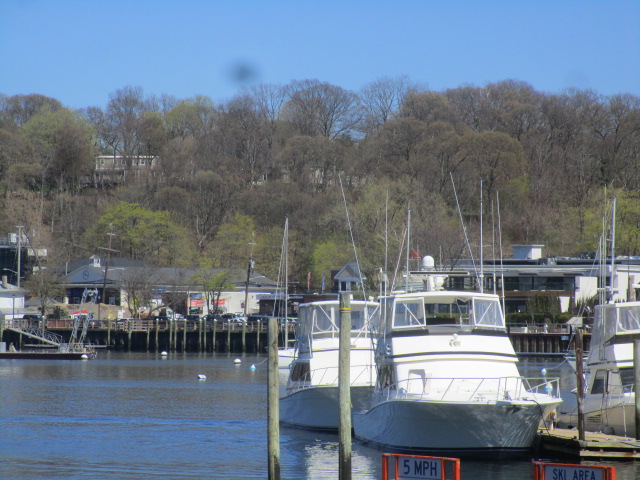
    I was just rounding the corner by Knutson’s Marina, finally shielded from a fierce north wind, when I saw Joanne jogging towards me, dressed in shorts and a light sweatshirt.  We both started to laugh.
    Pointing at me, she ran in place “Jeez, you look ready for the next blizzard, Wayne.”
    “Well, you look like it’s tropical beach time,” I retorted.  “My wife would say you’re gonna catch your death.”
    “My boyfriend would claim you’re about to give yourself heatstroke.”
    It’s true I was somewhat overdressed, with glove and knitted watch cap and heavy coat.  “Us old people,” I noted, “catch colds easily and find them hard to get rid of.”
    “Nah,” she replied.  “I just saw an older guy dressed just like me.  He was moving faster too,” she teased.
    “Knees,” I excused my speed.  “Anyway, how we feel weather is probably mostly in our heads anyway.”
    “Well, the calendar says spring and in spring I wear shorts to exercise.”
    “The thermometer says winter and I dress appropriately.”
    “Ok, old guy, creak along down the road.  You’re missing the lovely sunshine.”
    “If spring chicken doesn’t put on at least sweatpants she may miss next week entirely.”

    We laughed at each other a
    gain and continued our opposite ways on a morning that was apparently totally different for each of us.

    Friday

    • Nature seems almost suspended, as forsythias and daffodils remain in full bloom, tulips advance slowly green upward, and early azaleas are hesitantly swelling buds.  Each walk on each day seems identical.  It had been thus, of course, each winter day, but expectations of activity are high now.  Weather is far warmer than it had been, but far colder than impatiently desired.
    • There is no garden work to be done.  Just wait a little while and storms will break, I tell myself.  Just keep walking and enjoying and looking.  But it almost seems a personal conspiracy of elemental forces, suggesting I use this rather as an end of hibernation, finishing reading and whatever, before rushing off.  I should accept this all gracefully.  I am not saintly enough.
    Saturday

    We are all spoiled now.  Our ancestors were generally forced into daily or seasonal patterns.  Even with the use of fire, night was far different than day.  Food had to be stored carefully in fall for consumption during winter.  Crops had to be planted at the proper time, when even the moon was taken into account.
    Now we throw a light switch for utopia.  Instant light and heat, constant entertainment, feast food by driving five minutes down the street.   Driving down the street, for that matter, without hitching up old Dobbin.  
    Oh, I love being spoiled.  Being over sixty, especially poor and over sixty, was never this wonderful.  Louis XIV, the richest man in the world, was considered an incredibly ancient decrepit and useless man by the time of his death at 73.  Medicine and rising social standards of living have worked their marvels.  Rationally, I find my complaints such as they are trivial indeed.
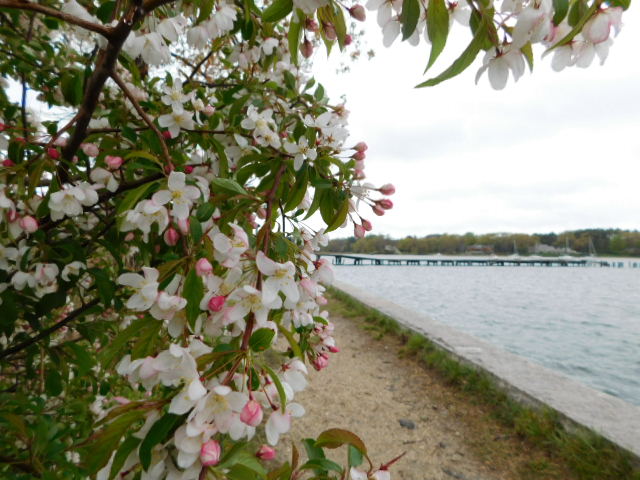
    And I am indeed caught in an odd state, like this week of April itself.  Rushing forward to summer, sap rising, grass growing, blooms swelling, sunshine longer, and a hint here or there of warm breezes to come.  Yet also holding back, enjoying what will soon pass, no more daffodils for another year.  If the world, or I, see another year and spring.  So I want to seize the life I have and enjoy it. 

    But holding fast is always an illusion, even in this week of drip and bluster.  All will change instantly with a single day or two of southern winds.  Or, more personally, with one catastrophic or ongoing change to our health.

    Sunday

    • As often at this time of year, outside beckons.  Birds flit madly about the seeds in the birdfeeder.  Squirrels pursue their incessant chases and frolics.  The sky is wonderfully blue, at least when clouds temporarily part long enough to see it.  Sunsets linger into evening, instead of rushing by in the afternoon.
    • Time to change the wardrobe and rush out.  And then, I step into the cold, feel the raw damp draining all my warmth and good spirits.  Often I merely content myself with a few minutes of staring from the porch, perhaps a short stroll to see what’s going on in the front yard, and then back to waiting for what should be better times.  A great time to develop meditation and philosophy.  Unfortunately, that brilliant sun keeps distracting me.