Mon-

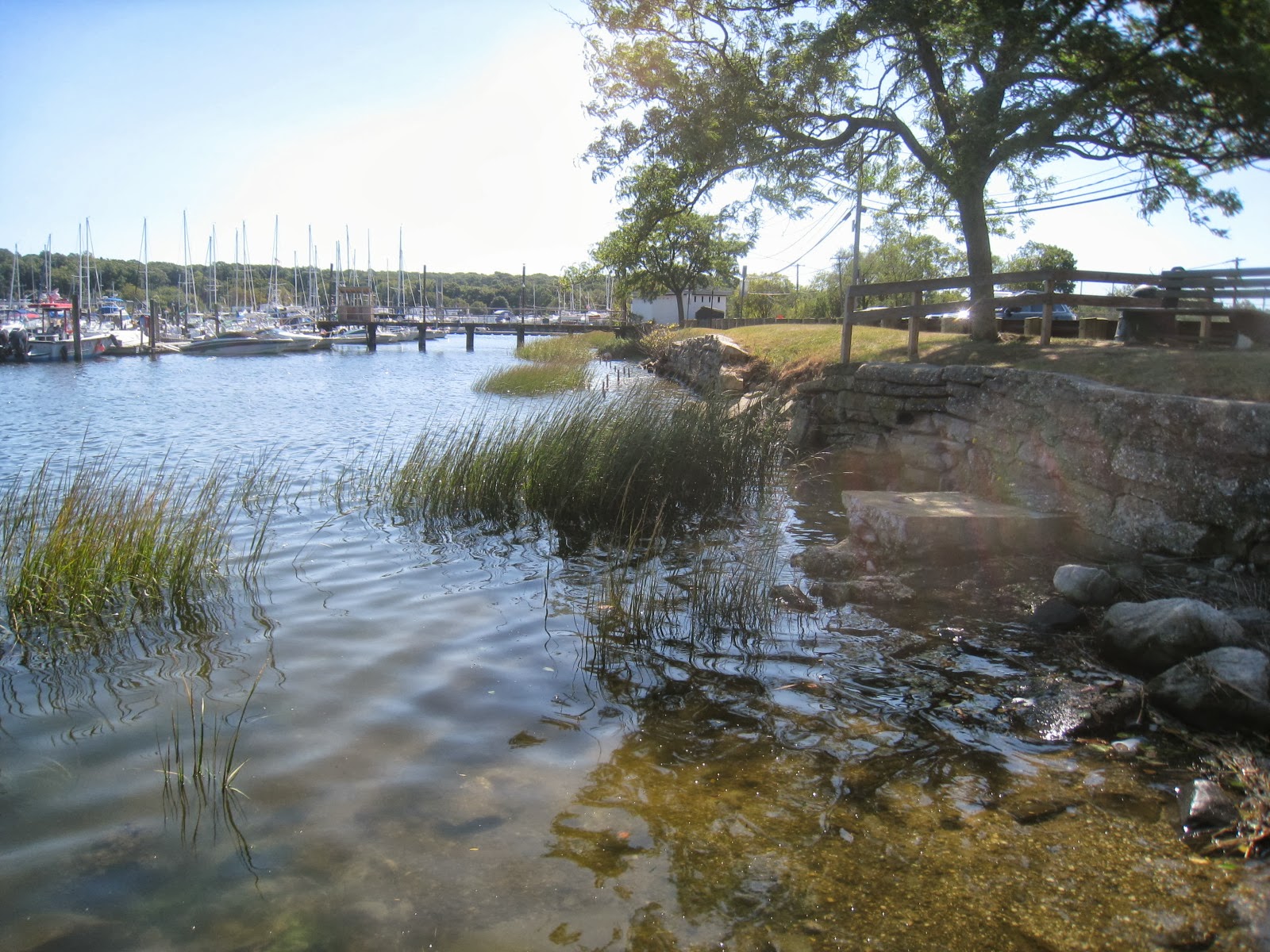
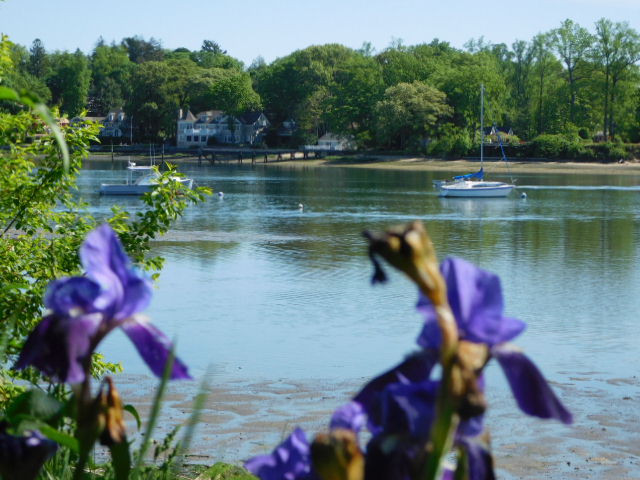
Somewhat presumptuous to pick the last leaves. They fall almost in a normal curve _ first a few, more and more, a whole bunch, less and less, and then a few singletons that may last until April. But at some point, you know they are mostly done, and the few remaining on the trees turn into curiosities.
We can ascribe all kinds of deeper meaning to this, and construct stories as O.Henry did. But you don’t really need much more than your basic instincts to realize that something has changed and the world will soon be different than it was.
Tue-
Tue-
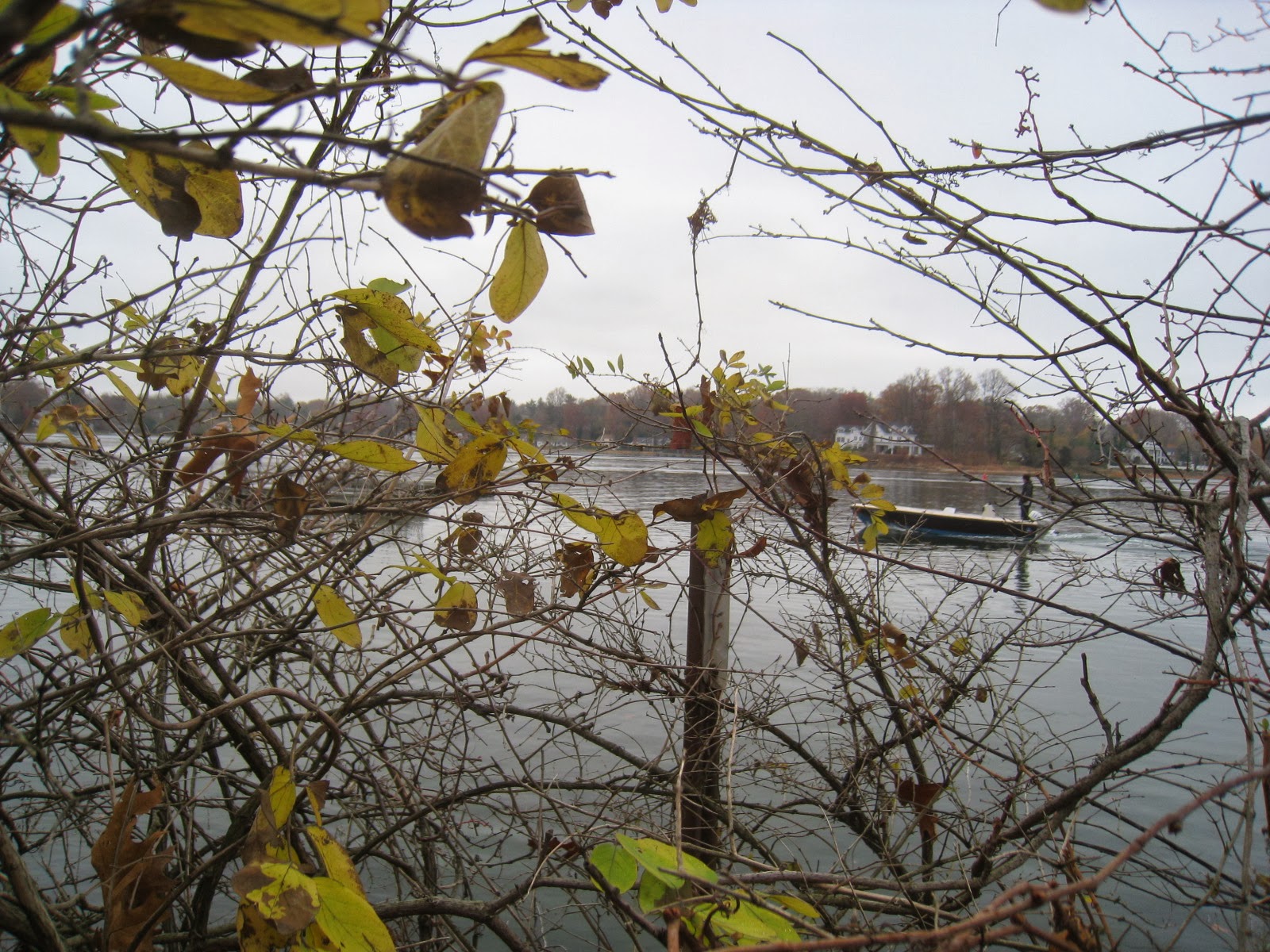
You can almost feel the leaves dropping one by one. Sometimes that is true, but often they are ripped in great bunches by the increasingly howling gales from the north as one storm system chases another. Sensible people stay inside at such times and miss the drama on the branches. The next day, we notice, there are a lot fewer up there than there were the day before.
These are the weeks of full transition, just as you get the sudden blossoming when the earth warms in the spring. The difference is in our inner perceptions _ we see this as a spiral into cold and death and tend to get depressed knowing the sun continues to go away for another month. Time grows darker, and we worry about making through the coming season.
Wed-
Wed-
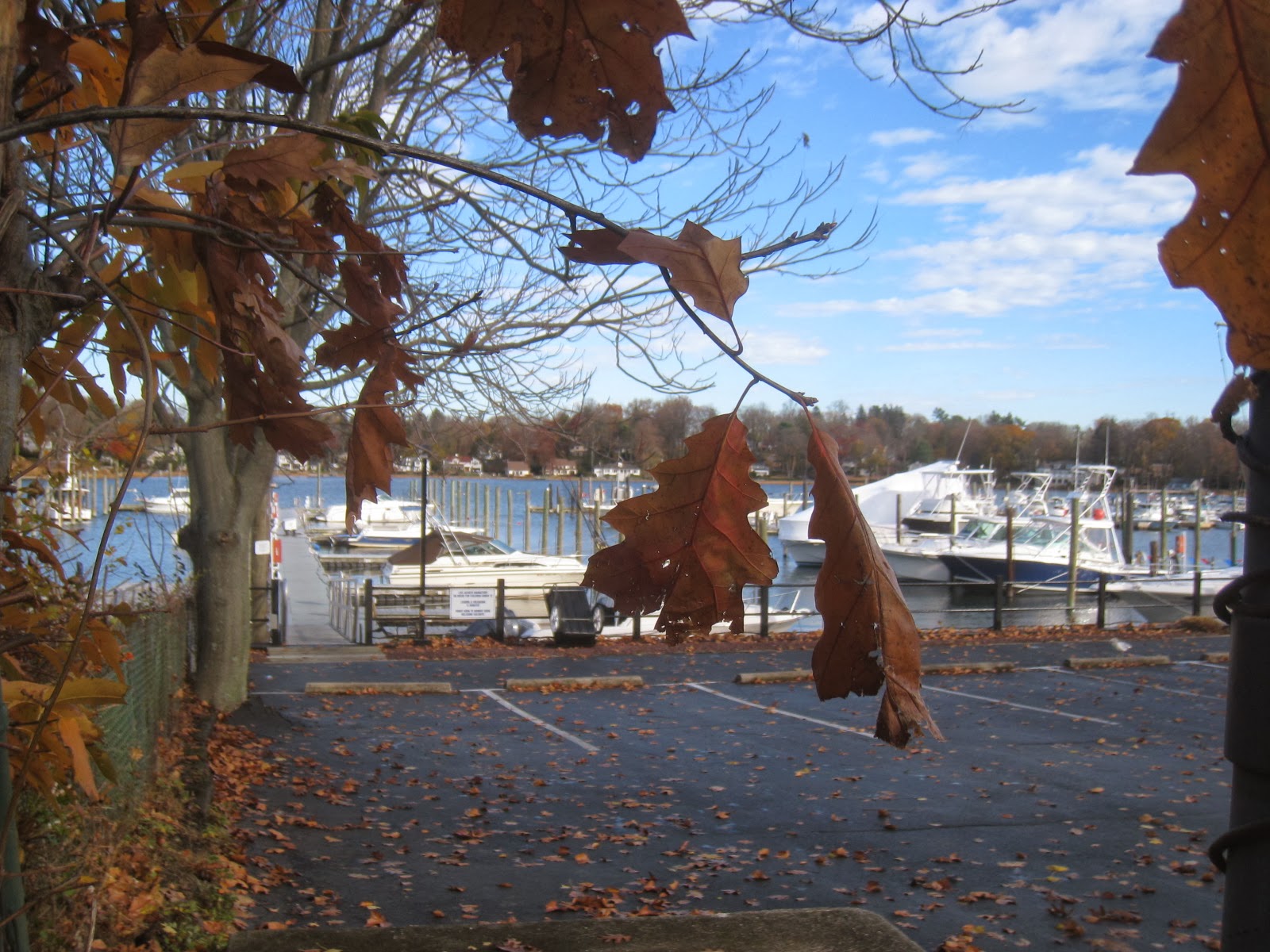
Summer barbeques in the parking lot are just memories, most of the boats are secured or out of the water entirely. Nobody expects good sailing days to return until spring, and for most people it would be an even rarer coincidence if they happened to be on a weekend. So the yacht club goes quiet, except for the inevitable bustle of blowing leaves and winterizing the equipment.
I like looking at boats, but I hate being on them _ the minute I am on board I feel trapped and I can’t wait to get out. It’s a peculiar form of nautical claustrophobia. Maybe like the ancients in arcadia I simply need the presence of dryads near me all the time.
Thu-

Thu-
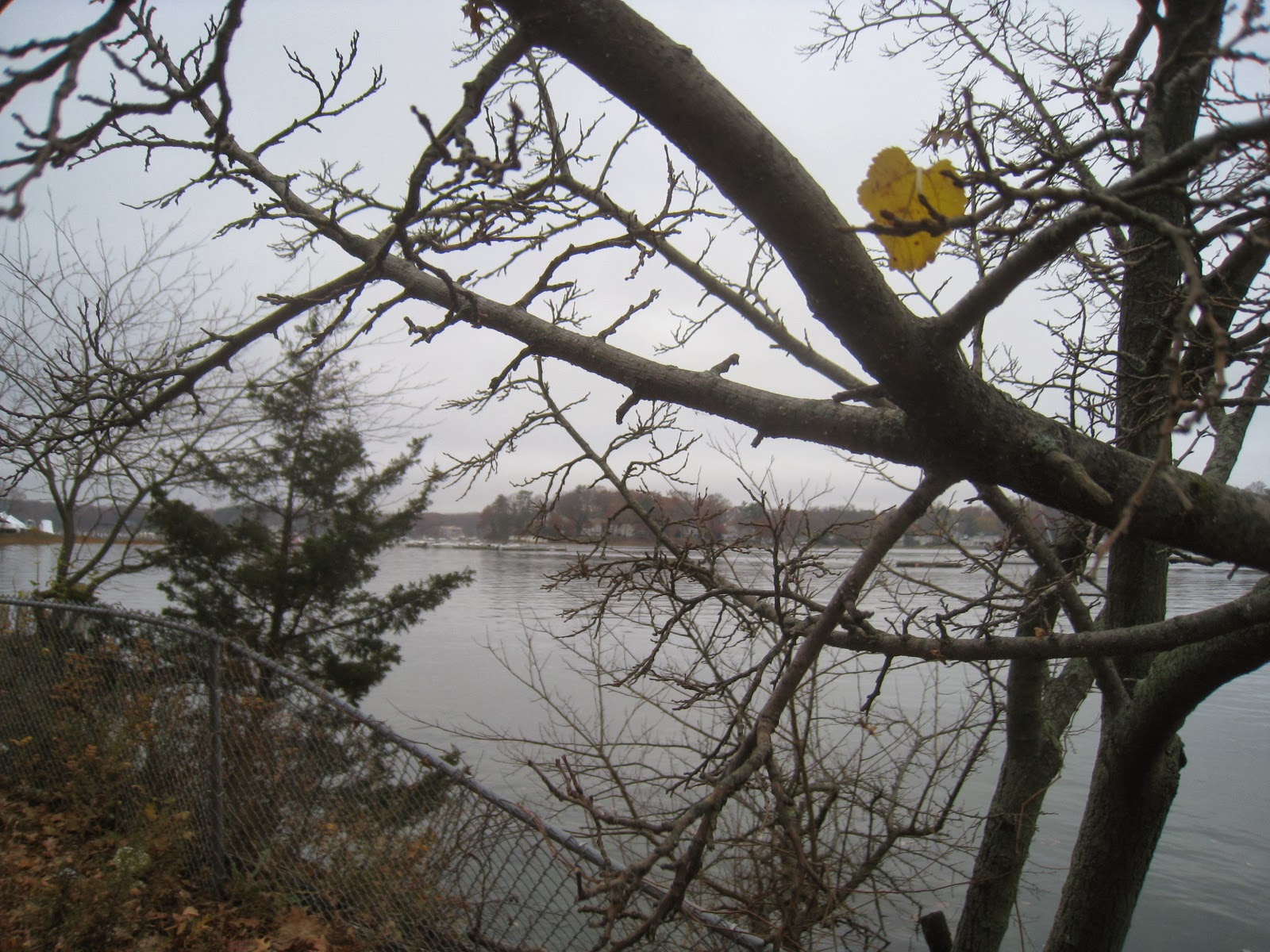
Lonely guy. Tough not to become anthropomorphic about almost anything. We have a built in sympathy that often gets in the way of reality (whatever that may be.)
So that one leaf is symbolic of _ well of whatever I want to make it symbolic of. And your story would be different. And most of the time, both of us are way too busy to bother making stories about everything we run into. I think it’s a miracle that we can ever agree on anything at all.
Fri-
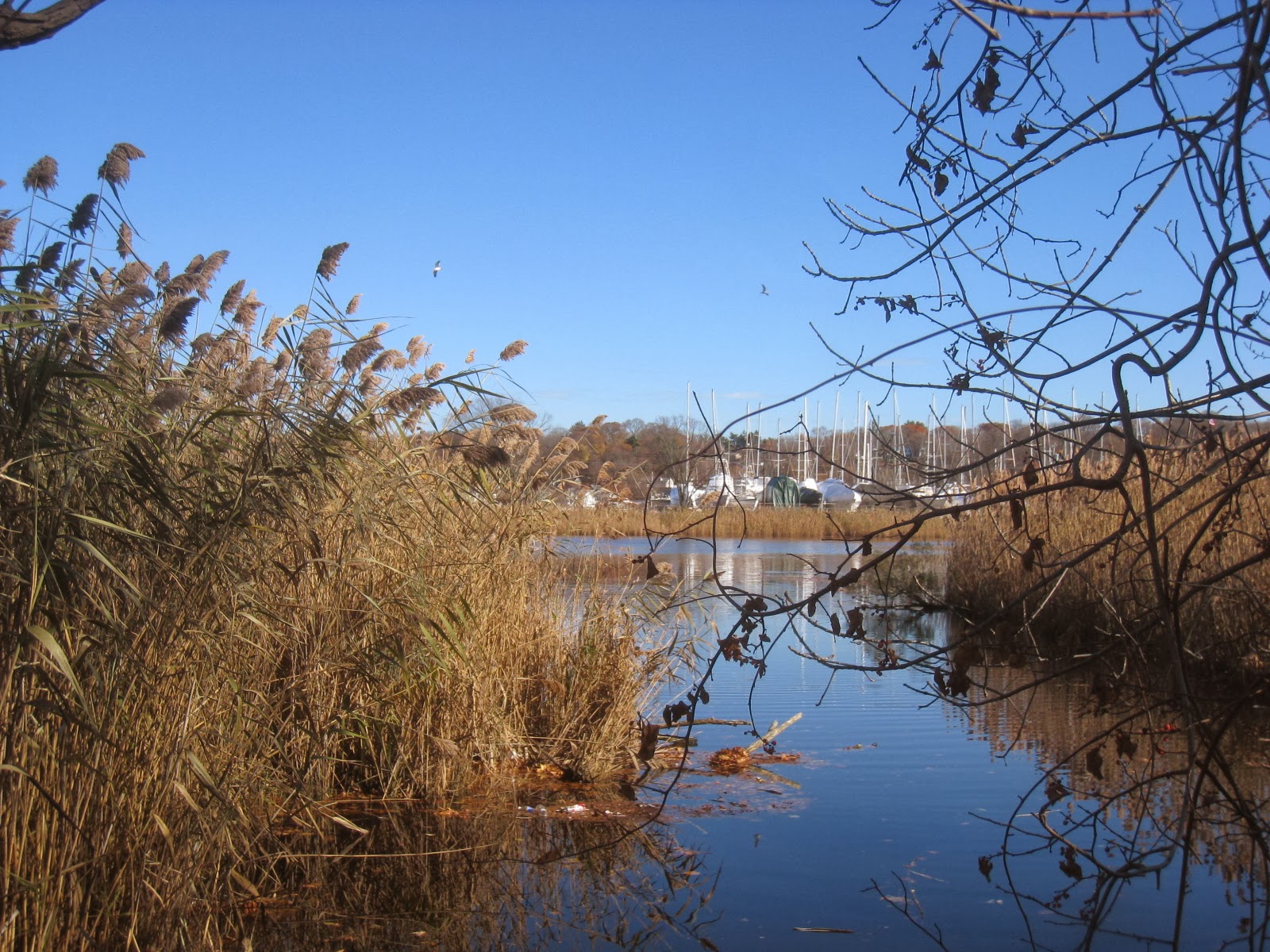
Across the remnants of the mill pond, still mostly fresh water, the startled ducks and geese have just flown away. Boats loom in the salt water across the dam bulkhead.
Quiet little inlets seem worlds away from everyone else. Yet, like almost everywhere around me, I find signs of heavy use even here _ a well-tramped mud path, for example. Maybe photographers trying for unusual seasonal beauty to sell at the fairs, maybe old bearded philosophers, the imagination can insert just about anything. Simply focusing on reality of dry stalks and stripped branches against blue sky is often the hardest thing you can do.
Sat-
Sat-

Bittersweet, appropriate name for the season as well. In a few weeks the berries will lose some color and start drying, but for now it’s a happy reminder of harvests that are pretty much done by now.
Now that we don’t have the agricultural cycle to ground us any more, it’s easy to remember that this time of year was a kind of respite after the long and arduous months of rapid harvest and preservation. Not yet into the salted and dried staples of winter, but very little to get out of the fields, by now even the potatoes should be safely stored. If the provisions looked adequate for the coming months, thanksgiving was surely called for.
Sun-
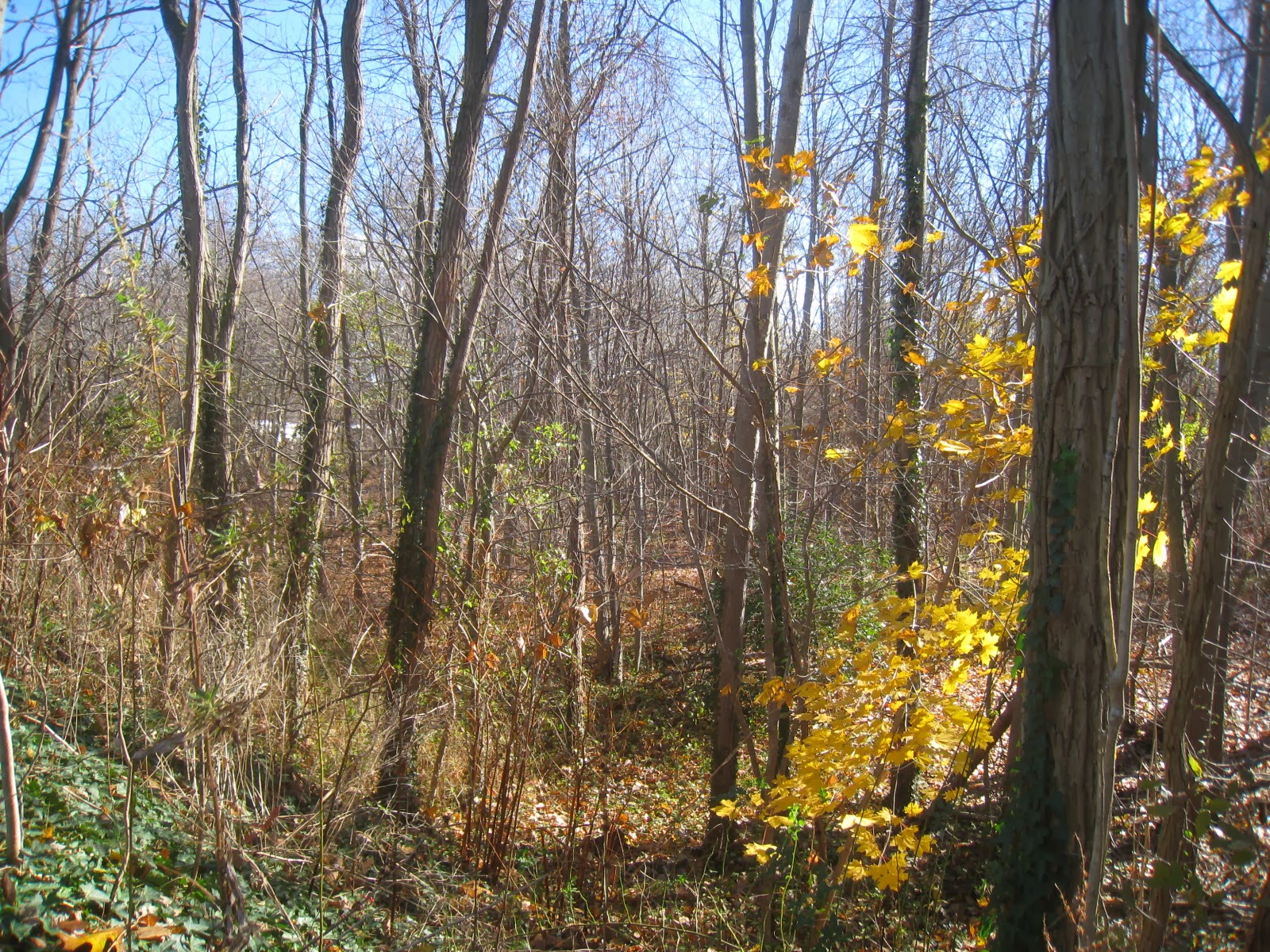
We still have a patch of woods here and there _ this happens to be an obscure bit of Mill Dam park _ accessible to the public. In my youth, you could take off into the woods and go for miles in any direction, but nowadays on the East Coast you get about three hundred yards at most before you hit someone’s property.
Fortunately, this being an old town, a lot had been preserved in parks and public spaces. I feel sorry for the newer suburbs, often planned with nothing more in mind than endless similar houses on zoned plots of land, and the only way to get away is to drive a pretty good distance.
Brown Harmonies
Mon –
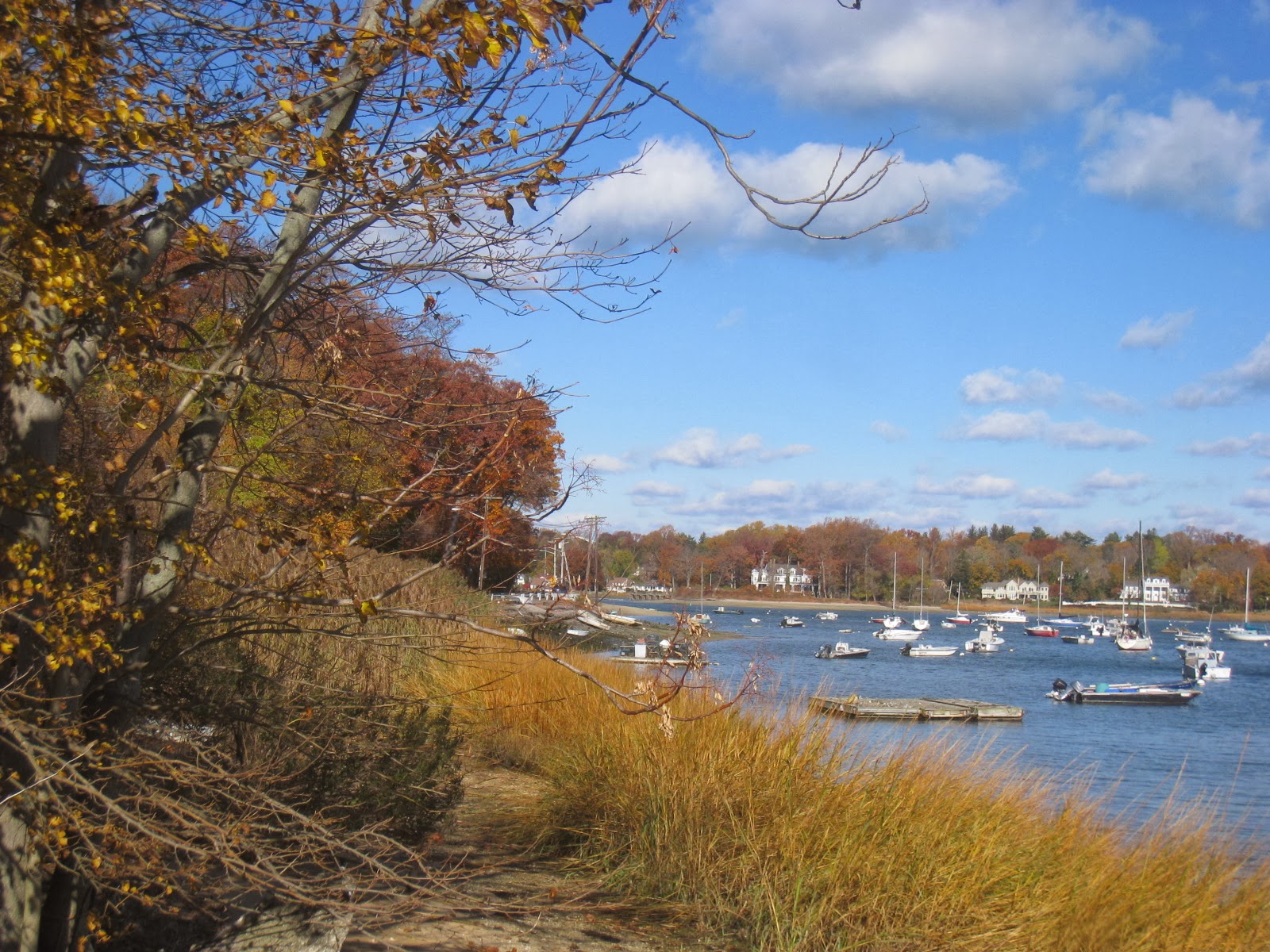
Whistler painted a series of works he called “Nocturnes,” using muted restricted colors. Nature in the fall and winter does the same thing, reducing the full range of colors to produce equally subtle masterpieces. What is left, after a while, are only the infinitely varied shades of brown of vegetation, and the striking blues of the sky and its reflection in water.
We are used to spectacular displays in art, so most of the photographs of the season skip right from the dramatic brilliant foliage of early fall to the harsh crispness of deep cold and snow. But the world doesn’t work that way. Shifts are often subtle and less theatrical, but deeply dramatic nevertheless.
Tue-
Tue-
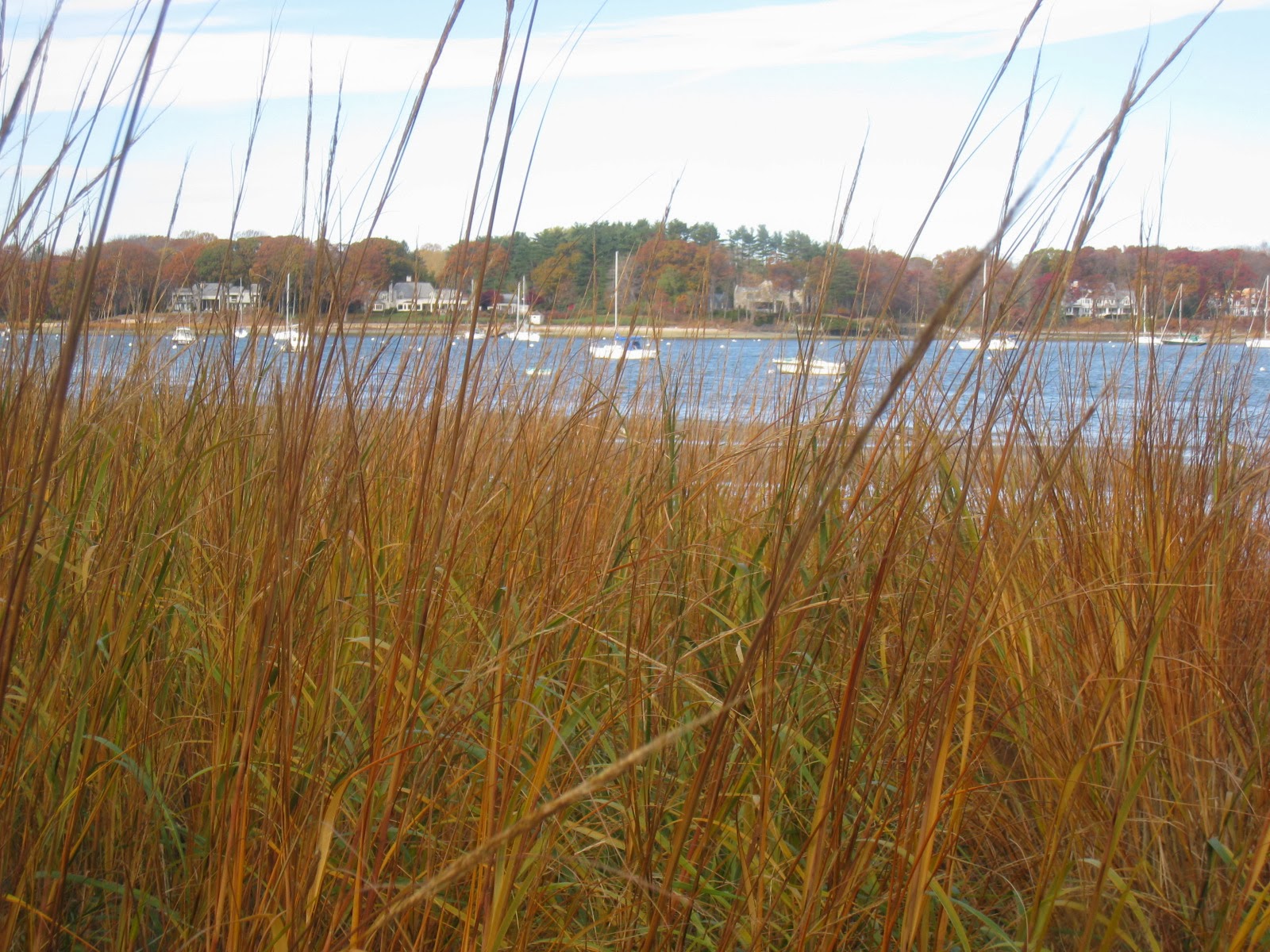
Brown shades vary tremendously but _ well _ they are all still brown. Kind of like our individual personalities, I guess. The boats have thinned out a good deal, all being put up safe on land. Soon the harbor crews will be going around to pick up the buoys.
The last of the green in the spartina will fade soon, but otherwise it remains almost the same until ice in the harbor flattens it and breaks off some of the blades, to wash up on the various beaches for cleanup in the spring. My particular joy in this time of year is that I get such scenes almost entirely to myself, either because they are at work or because they haven’t learned to discover the beauty of bundling up and spending time with colder nature.
Wed-
Wed-
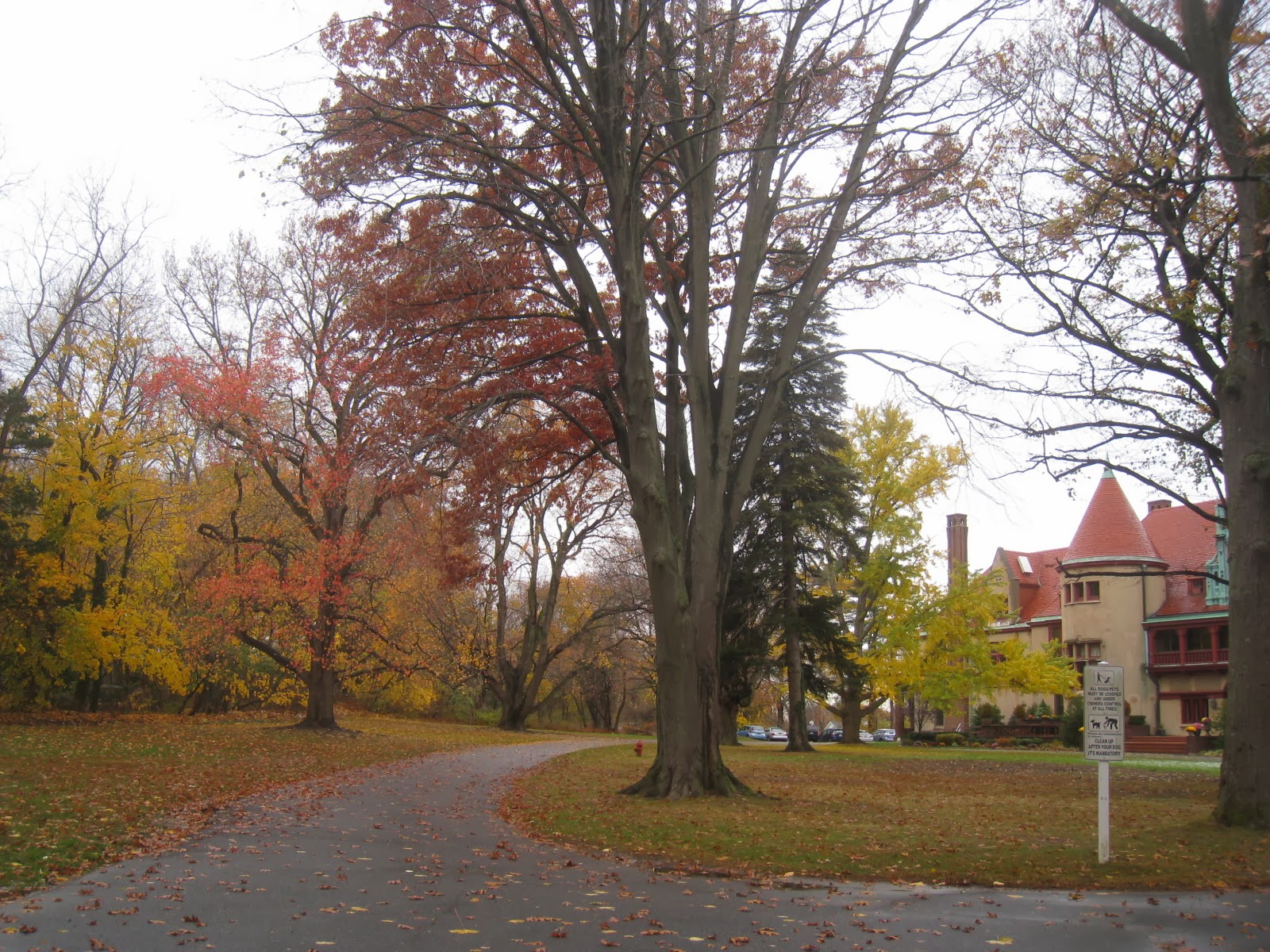
Seasons help us see the familiar as strange. This is a trait we should always cultivate. There is little more rewarding than a fresh eye, which makes the common world ever wondrous.
So this is just a driveway at Coindre Hall, caught between Halloween and Thanksgiving. Nothing special, and yet very special; just a moment in time and yet portending bit changes. Not a whole lot of brown here, I guess, but I always regard yellow and dark red as honorary browns anyway.
Thu-
Thu-
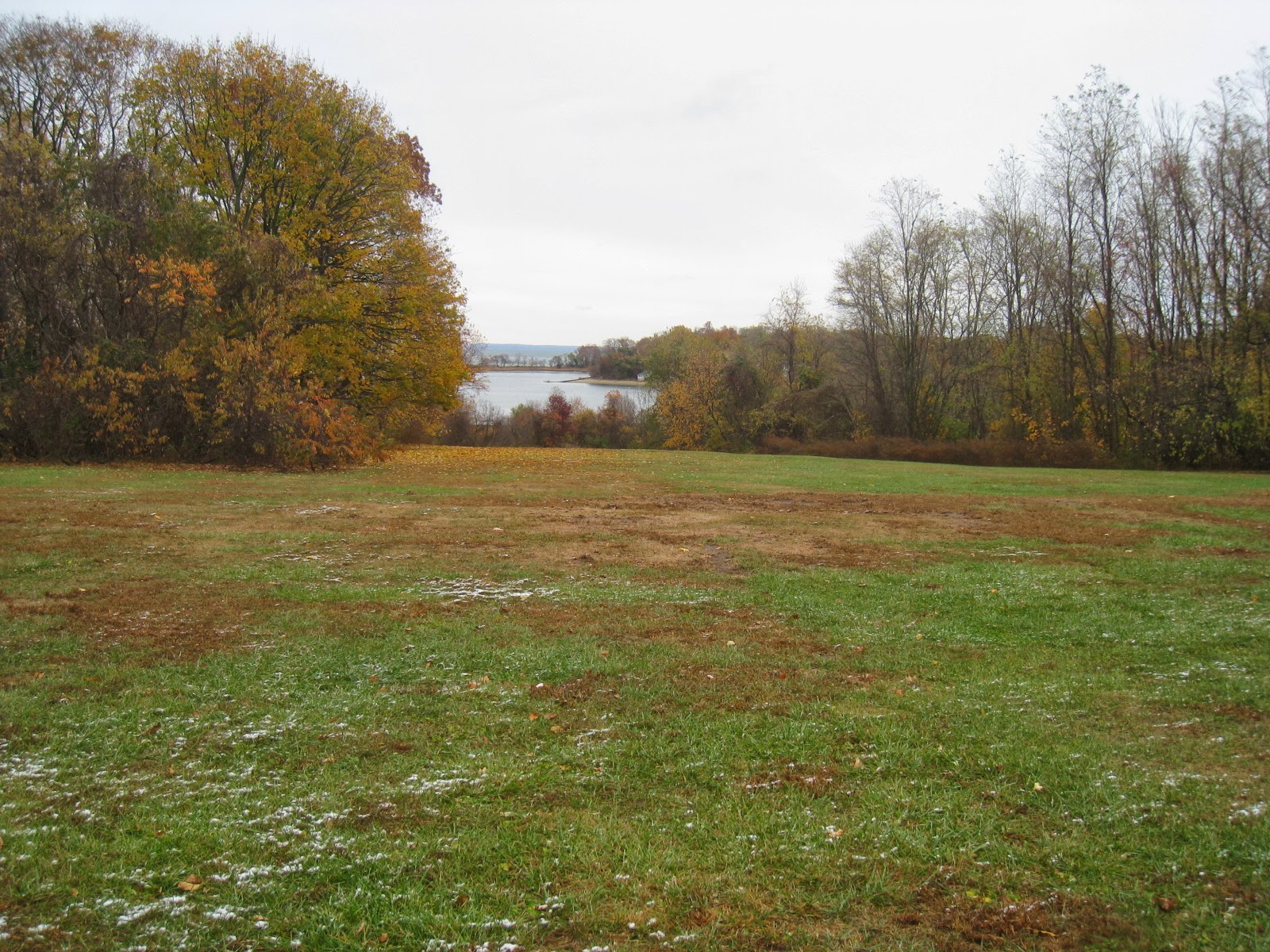
The first snow lightens the dark sky, as the trees rapidly darken with each colder night. Many of them by now have been stripped of foliage anyway. It’s always surprising how quickly this all plays out, after what seems an endlessly long interim period of green and gradual coloration.
Dark and pensive folks will relate the story of the grasshopper and the ant, neglecting the inconvenient fact that the grasshopper dies sooner and more certainly. The sad truth is that if you have saved all summer to have a picnic on this lawn today you need to dress warmly, and come with a different set of aesthetic expectations.
Fri-
Fri-
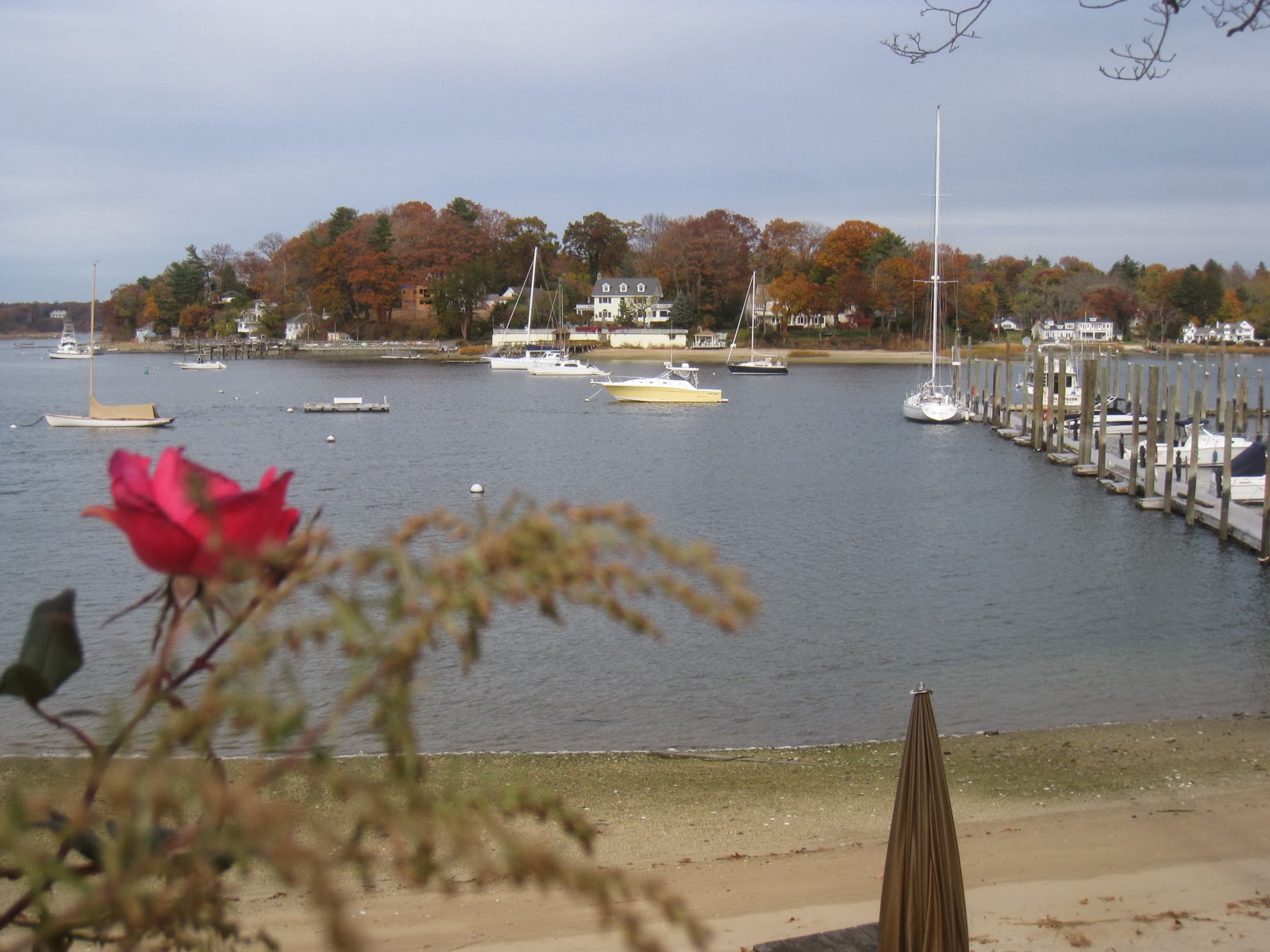
Last rose of summer, eh? Maybe a novel in that somewhere, if I could just find the appropriate vampires, adolescents, or mad artists hanging around. Anyway, since it actually exists it is not an anomaly, and the ragged trees on the opposite shore show how late the year is growing.
In not much more than a week the muted and varied shades of brown have darkened and lost most of their glow. There are also a lot less of them up there, which means the ones that remain are even more susceptible to the wind gusts frequently spilling in from Canada. Nature is a constant pageant, although whether we consider it a tragedy, comedy, or ongoing adventure series is pretty much up to us.
Sat-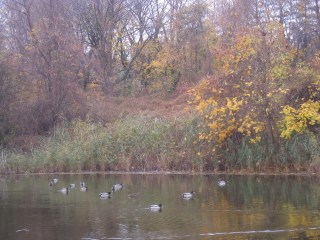
Sat-
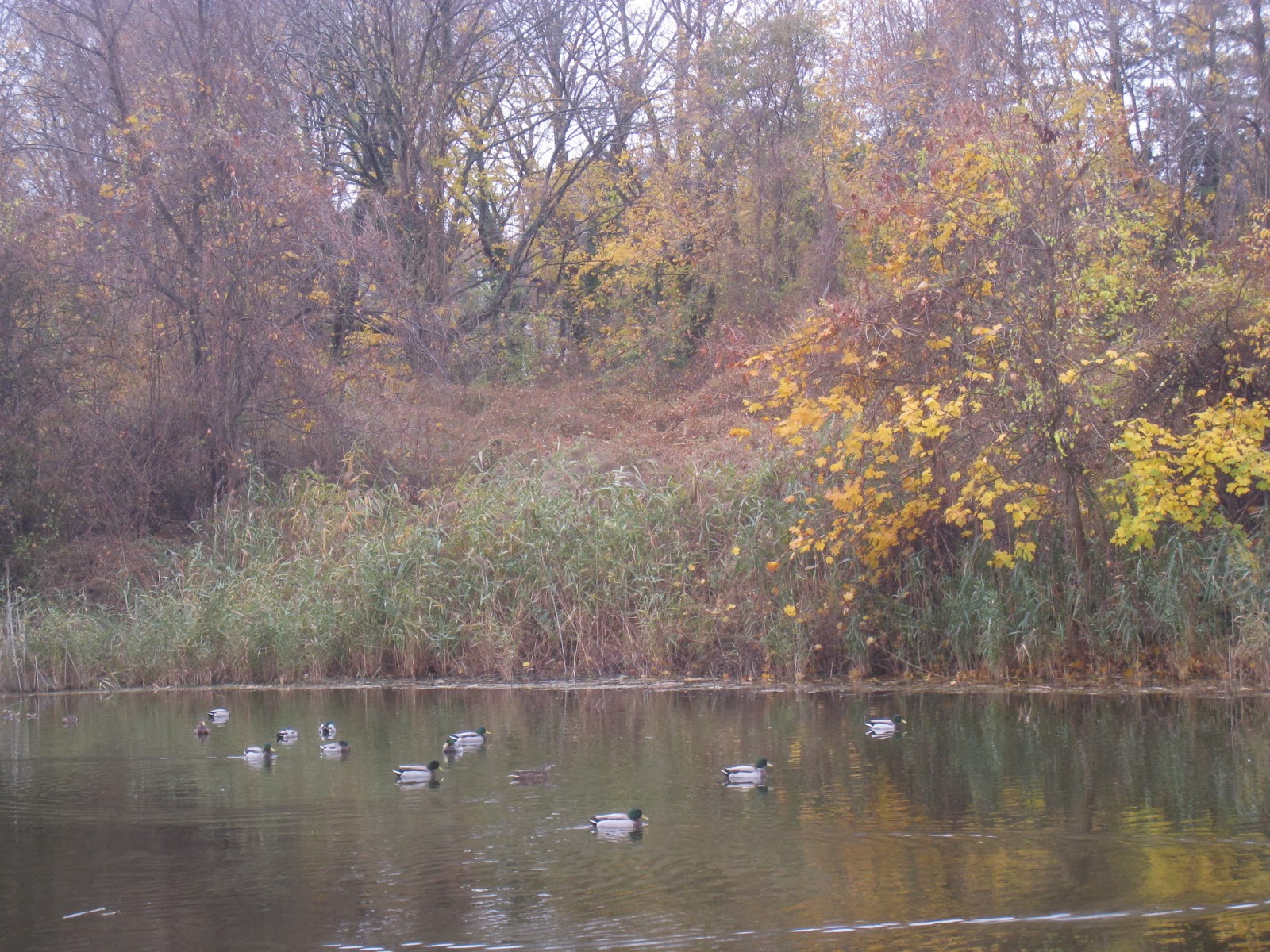
Ducks presumably happily floating on the Coindre Hall pond. You couldn’t have a more traditional mid fall picture if you composed all the elements in a studio. Soon enough this may be ice covered and certainly the area in the back will be nothing but dull brown branches _ but that is a wholly different and equally beautiful aesthetic.
One of the nice things, at least when you’re retired as I am, is that the onset of poorer weather means the exit of fair-weather crowds. The people taking their dogs out, for example, falls off dramatically with wind and temperature, and tends to jam into a few hours on the weekends when it is more a duty than a pleasure. I’m a crotchety old gent and selfishly enjoy having the loveliness to myself.
Sun-
Sun-
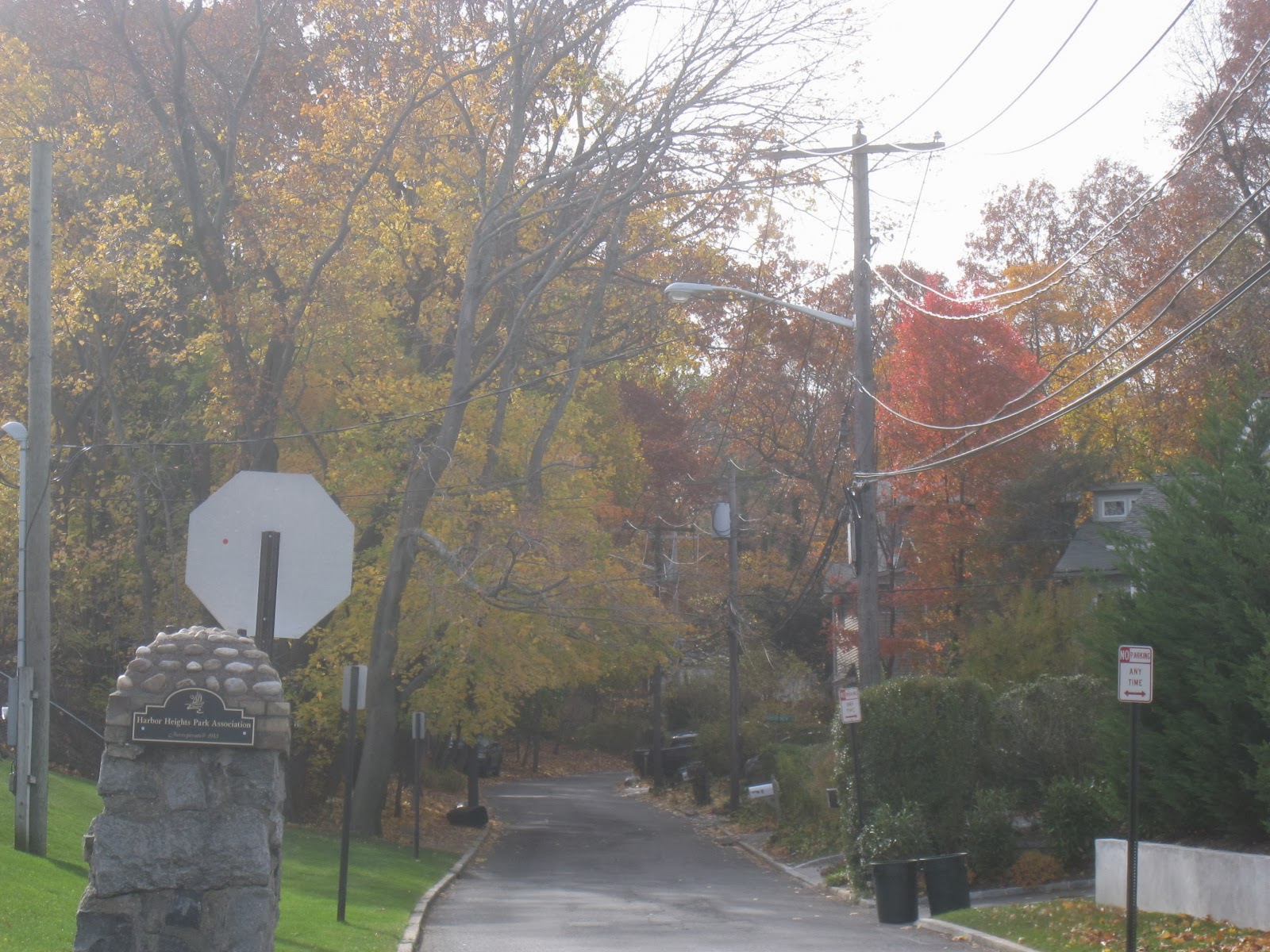
This neighborhood used to be a summer colony, back in the 1920’s, where the not quite rich would come to rub elbows with the wealthy of the gold coast. Glen Na Little trail is a remnant of that time, although many of the tiny bungalows have been winterized and expanded or torn down.
Water is not required for there to be beauty. In some ways, water is a bit too easy. One of the great things about the modern digital era is that so many people have opened their eyes and constantly practice seeing their environment, if only to have something to send to friends every few minutes.
Weeds and Seeds
Mon-

Successful flowers become fruits or seeds, and November is their time of display. These goldenrods are almost as handsome now as they were when bright yellow a month ago. The white puffs, the various methods of making sure there is adequate dispersal, the pods left behind are all fascinating.
Our tendency is to look at the very short run or the very long. We see that it is getting cold and soon winter will be here and we brace for it, ignoring this immediate day. We plan ahead to the warmer summer to come and years of what might be. But nature just cycles on in a rhythm of sprout, grow, flower, seed, spread over and over in a way that would calm us immensely, if we only take the time to contemplate it properly.
Tue-

So many seeds are produced from one plant that, as Darwin realized, they would soon fill the world with offspring if not destroyed by being eaten or otherwise fail to germinate. Yet such wasteful ways are what the world is filled with. A terrifying concept, really, which nonetheless informs our aesthetics so that seeing all these doomed little bits of potential future life is somehow beautiful.
This time of year is prone to meditations on death and birth and cycles. After all, the leaves fall, the ground cover dries brown, cold arrives and these seeds _ the hope of the spring _ are everywhere. How I fit into all this, if at all, is the most natural question there could ever be. Yet, its implications are so frightening that it is easier to head off to the mall and shop a bit more.
Wed-
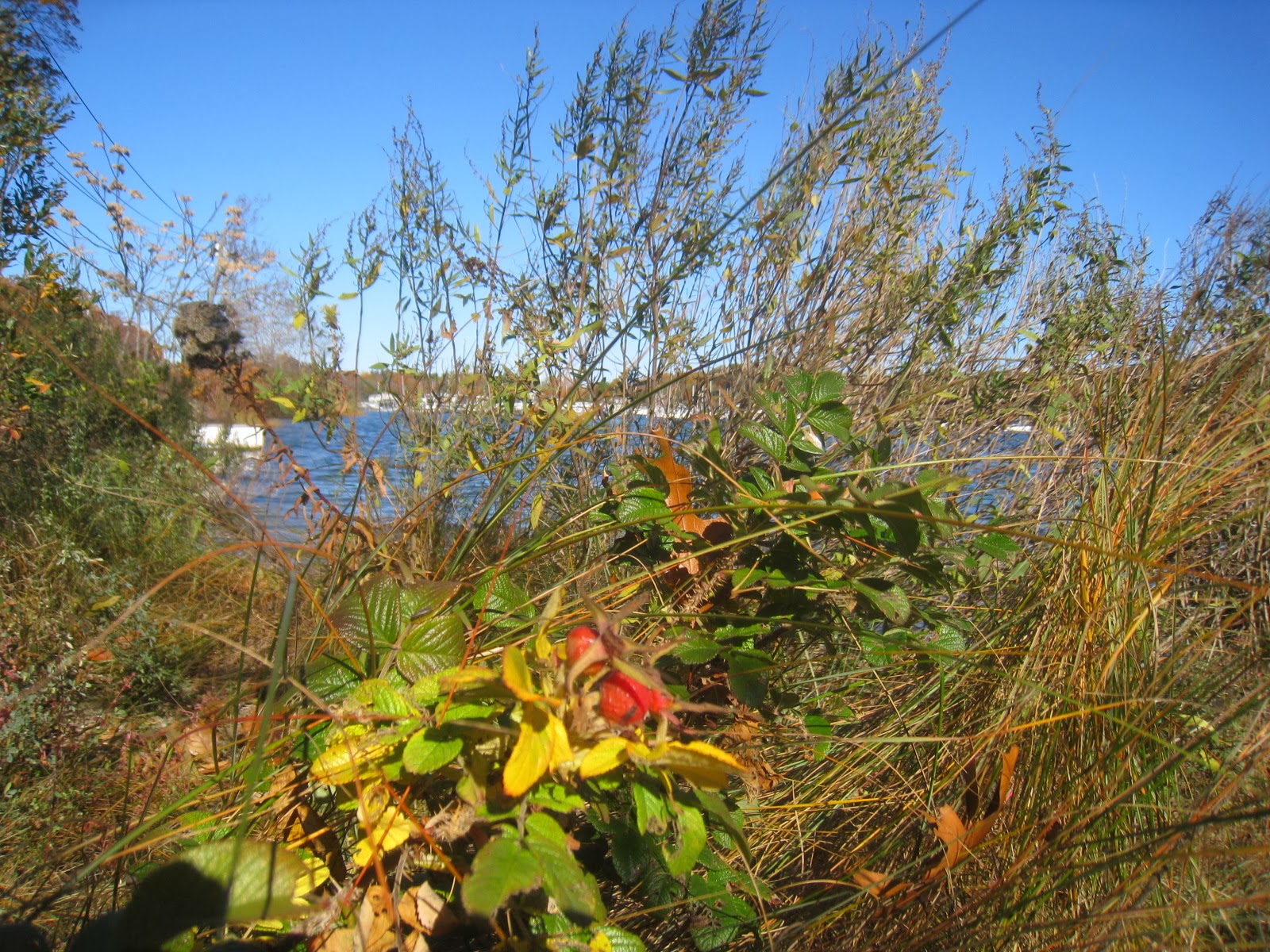
Scarlet rose hips and dry brown ragweed, not even that well composed, in front of the brilliant blues of an autumn sky reflected in the cooling seawater. I’m not sure words add anything at all. If you have been there and seen this, it makes sense, and if you have not, you wonder what’s the big deal.
The trouble with photographs and descriptions and all virtual reality is precisely that they are not reality. No matter what their claims, they cannot deliver the experience of being present. All I am giving here is an incomplete witness of what I enjoyed on my morning walk.
Thu-
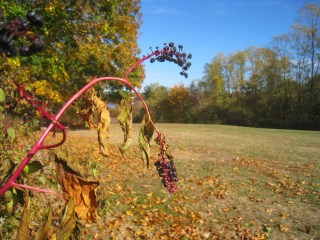

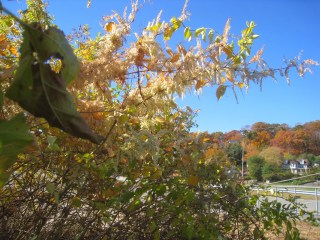


Pokeweed purple just about all gone now, soon to be nothing but brown stalks sticking out of coming snows. Whatever remaining fruits there are have been pretty much eaten by wildlife or stripped by winds, and what hang on all increasingly shrivel. Nothing really profound here, except that everything can be worthy of notice and produce beauty.
In another month, a shot from this same hill would show the harbor clearly though bare trees. The joy of knowing any place well is the glory of its changes over time and the memories of those transformations.
Fri-
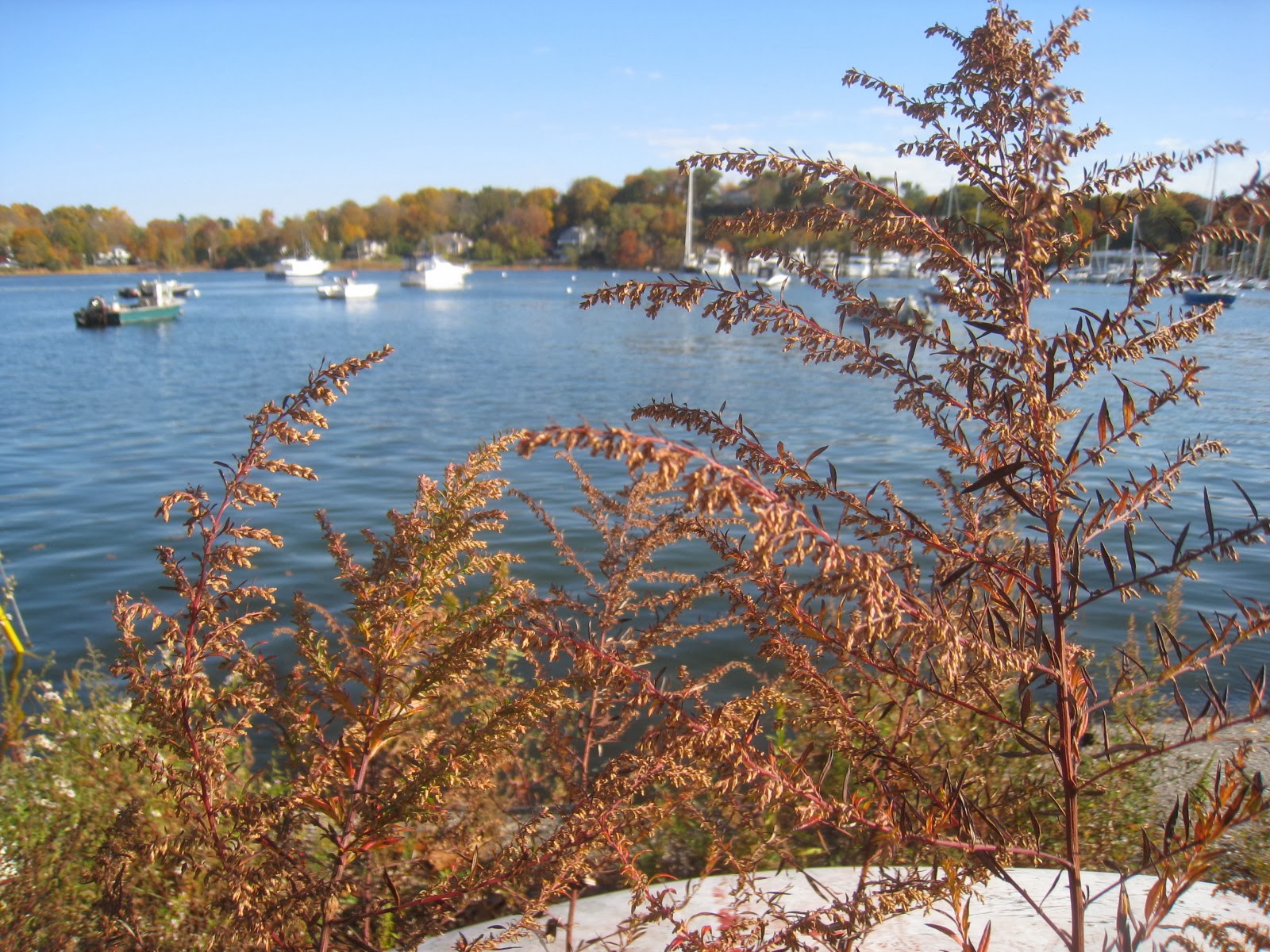
Nothing special _ just the bare remnants of lives lived_ but isn’t that something? Most of the day we flash by in cars or thinking about abstractions and never notice the fabulous decorations always
available. There are those who will spend hours in a museum, oohing and aahing at the work of master craftsfolk, and fail to open their eyes to the masterpieces around every day.
available. There are those who will spend hours in a museum, oohing and aahing at the work of master craftsfolk, and fail to open their eyes to the masterpieces around every day.
Ragweed as one of God’s masterpieces. That is an unusual enough thought with which to end this conversation.
Sat-
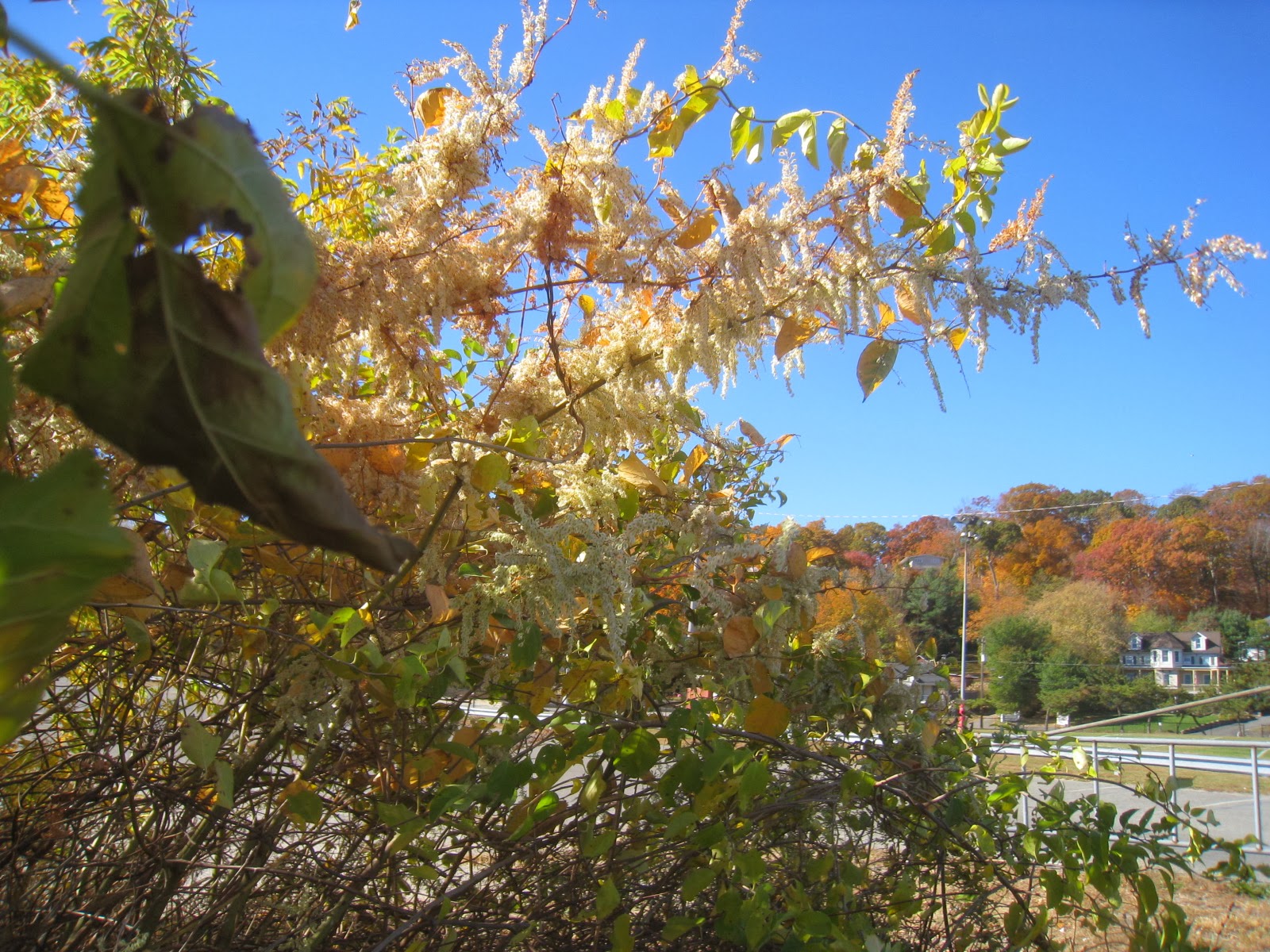
Some seeds bleach out to near white rather than brown, and to a casual eye seem to be incongruously in bloom in the cold breeze. In fact, there are an infinite variety of hues, for those with the patience to spend some time and see.
The immensity of the world can be stunning. This is one tiny corner of one tiny lot in one tiny town. The world for all practical purposes goes on forever at such scales. It is our loss if we lose local perspective by getting overwhelmed by the grand narratives of the evening news or twitter twaddle.
Sun-
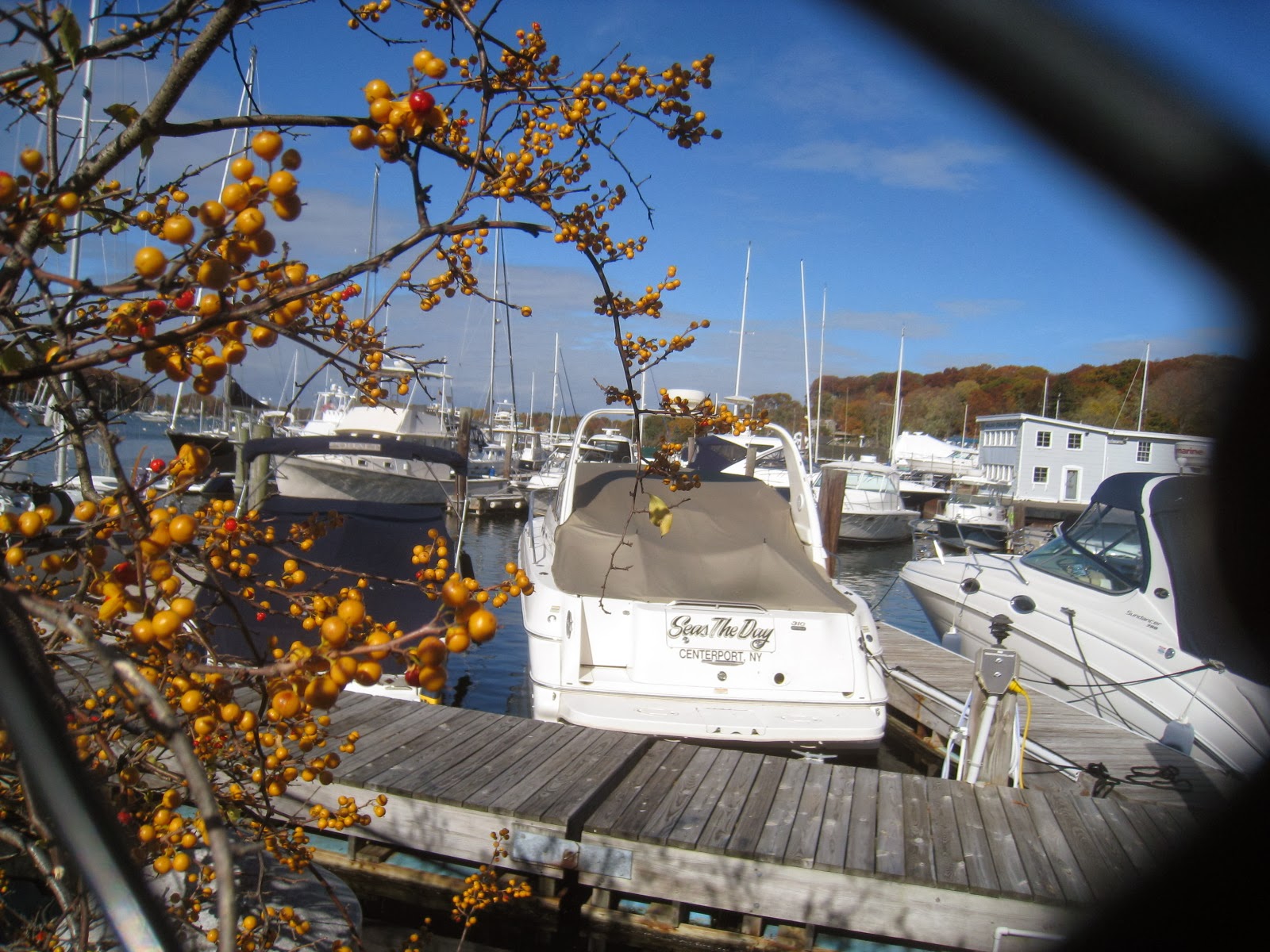
Beauty seeps in all around us all the time, if we only try to see, even in the most unlikely places. We have been shaped over billions of years to select and appreciate whatever fragments of the “real” universe we inhabit, and as we experience those patterns we become happy.
It is always easy to find beauty in nature, for we are part of nature. Usually, we can also find beauty in the works of humans as well. Part of the appreciation of our world is to be able to find how lovely our existence can be.
Cemeteries
Mon-

Graveyards are an appropriate topic for Halloween week, and at this time of year they are often particularly attractive. I should confess that I have always enjoyed walking through cemeteries, reading some of the tombstones, and meditating on life. Something I picked up from my Mom, long ago.
We have four cemeteries that I know of within walking distance. This is St. John’s, next to Hecksher Park. Our town may be unusual in not having a church attached to any of these sites, but many of the places on Long Island are like this. In the case of St. John’s, the congregation is now in the center of town, and this area, still maintained by them, also memorializes the original site of the church back in the early 1800’s.
Tue-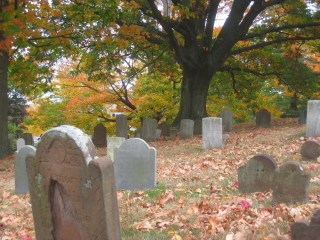

Tue-

Huntington was founded in 1653, and some of the markers in Huntington Historic Cemetery at the end of town on Main Street date from shortly thereafter. Not long ago this was a neglected and sorrowful place, full of weeds and fallen trees and irreverent litter, stones occasionally broken for some ill-conceived midnight prank by local drunken kids. It has cleaned up a lot now, for the better.
Sometimes neglected graveyards are fun, but more often they are sad reminders of how even the most glorious lives sink into oblivion. The more pretentious the memorial, the more ironic the setting. But at some point, it is nice for the present to connect to its past, and for people to feel the weight of past generations and centuries and the deeds of those here before us. That’s the meditative mood I want to achieve as I walk through the falling leaves here.
Wed-
Wed-

I suppose it’s appropriately ghoulish to visit your own grave occasionally. My wife assures me that we have the plot right here, next to her parents. Since I will spend so much time at “rest” here, I feel it is only right that I walk around it occasionally as well. Besides, who knows if we actually rest or not or if instead we chase rabbits for all eternity.
St. Patricks’ cemetery is about a half mile from our house, on rural Goose Hill Road. It was the original location of a small church where the only catholic priest for Long Island in the very early days would make his rounds and have services here ever week or so. Like many others, the church has moved upscale into the town.
Thu-
Thu-

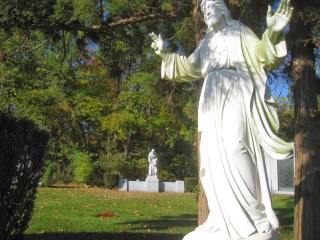
By far, the place with the best view is the Huntington Rural Cemetery rising high on sand hills on the south side of town, between to naturally carved routes into the interior of the Island. This looks north, over the sound to Connecticut. The graves are more recent _ mid 1800’s on _ and some of them, such as this figure, quite extravagant. There is also an early naval admiral _ a local celebrity _ with an old iron anchor on his stone.
It’s still active _ the latest area is dedicated to small children. I love coming over here all times of year. In spite of the motorcycle repair shop in the valley below, near the entrance, and the constant parade of trucks and cars on New York Avenue it can be calming and quiet and nearer heaven than the bustle below. A good place to think and enjoy the trees spread out as if humans were hardly here at all.
Fri-

Around here, cemeteries are about as close as we get to public sculpture gardens. Of course, the mythology is somewhat more restricted than it is in Europe. Still, it can be a nice stroll in various seasons.
Our town has two other public statues, on Main Street at each end of the five block central area. Up on the hill coming in from the west is a fairly bizarre bronze statue of Columbus, erected when the inhabitants went heavily Italian the middle of last century. On the other end, more traditional near the historic cemetery and in front of the soldiers and sailors memorial is a clunky cement or granite carving of a civil war infantryman. The local art museum is too sophisticated to allow anything representational near its grounds, of course.
Sat

The Rural Cemetery still has the old winter cold vault, where cadavers would be stored when the ground was too frozen to dig with picks and shovels. This was common, of course, before back-hoes made the seasons irrelevant. We take an awful lot of the power we command for granted, and forget how recently it became inexpensive enough to use for just about anything.
I try not to romanticize the past too much. I doubt it was ever grand fun to be a pick and shovel grave digger, even if you ran into Yorick. I am certain I myself would rather be sitting in a warm back-hoe cabin than out in the nasty wet mud of March thaw. Much too easy to pick and choose what we think it was like in other times, as we still do when we consider the ways of other cultures.
Sun-
Sun-
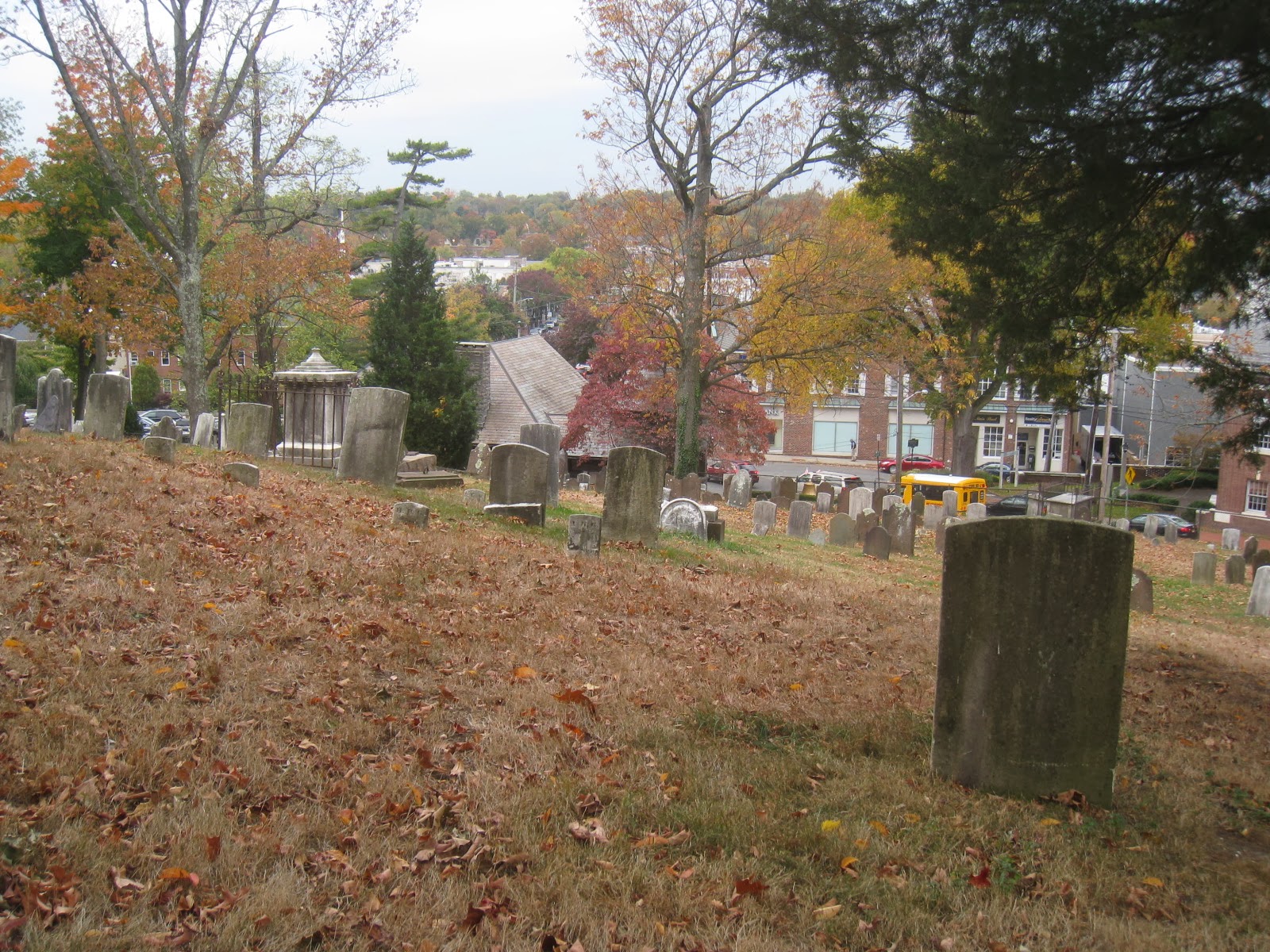
Looking to the west from the top of the historic cemetery, the whole town is laid out in the valley before you. Back in the old days, when most of the trees were cut down for farming, you could command a fine view all the way to the harbor.
Count Rumsfeld, on the British side, certainly thought so. He knocked down the rebel tombstones and used them as the platform for his cannon “defending” the town. This feat is well documented by all kinds of markers nearby, always ignored by the heavy traffic on 25A. Some would say he had no respect for the dead, some would say he was just a practical man, but probably he was just ticked off at the locals.
Curiosities
Mon-

Hard to make out the snapping turtle on this magnification, but its nibbling on leaves below the 15 foot high dam at Hecksher. About two feet head to tail, I guess. I’ve seen at least one above the dam all summer, but hard to believe this would be the same one. A few years ago, there was another a few miles away on the harbor beach.
So I guess it could be a breeding colony, or it could be a few here and there dumped in by lazy hobbyists. Certainly it’s possible that this one-time native species is following the deer, foxes, river otters, and osprey and recolonizing. Anyway, the first of a few curiosities.
Tue-


Tue-

How, you ask, is this bucolic scene in any way a curiosity? Because it is almost the last of such formerly numerous places tucked anywhere around the harbor. Somehow, this small slice of private property _ deeds dating back to the Revolution _ has escaped being leveled for a road or a marina, or turned into a private beach, or otherwise destroyed. It is just about as it was fifty or so years ago, perhaps with different chairs.
Sadly, I know it will also go soon. Neighbors complain about the fishing smell, the town covets it for a park, the owners rub their hands in anticipation of a sale. It’s not that what follows will necessarily be bad, just that I miss an occasional undeveloped patch here or there.
Wed-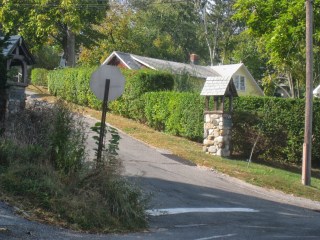
Wed-
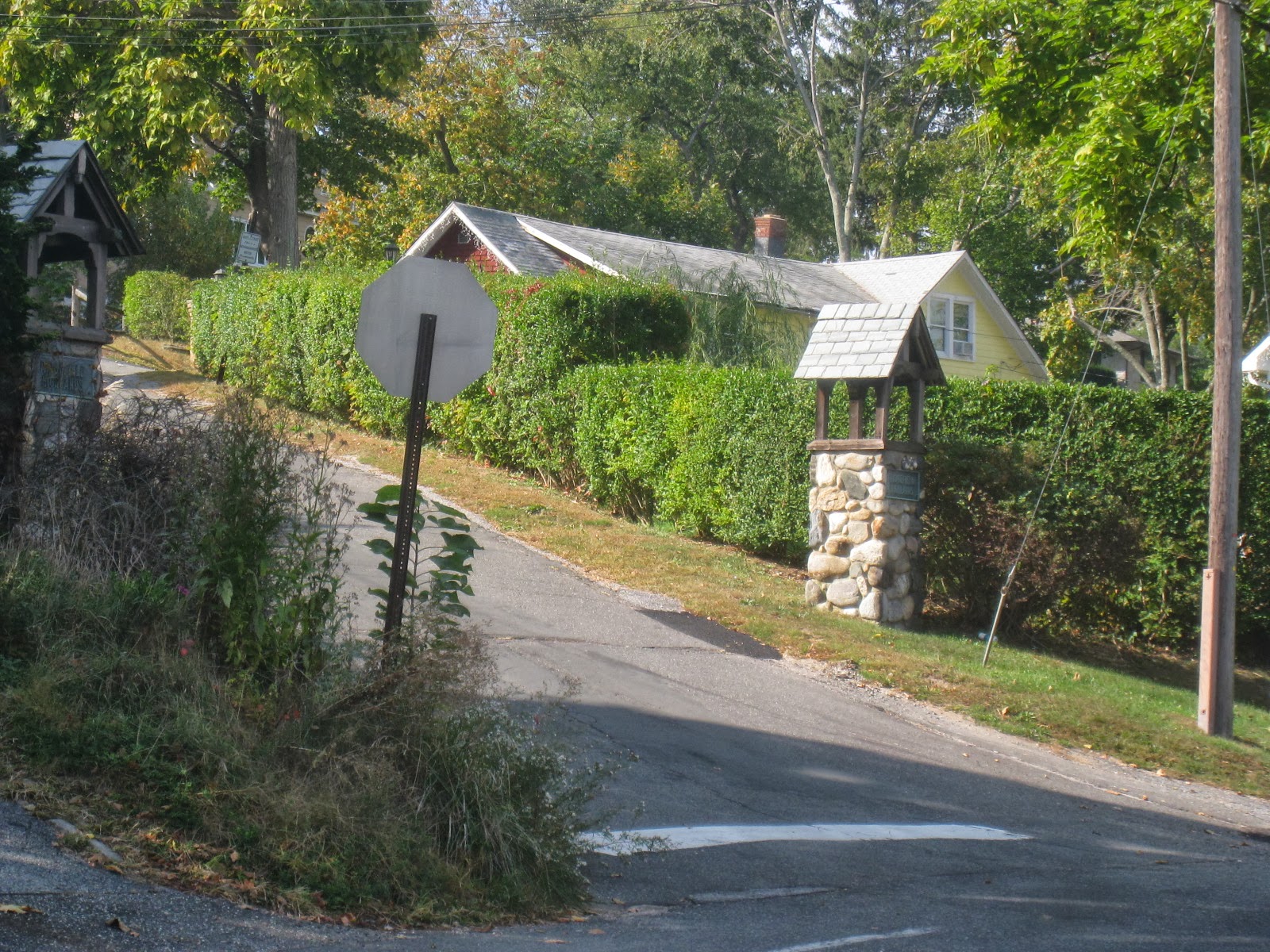
Some future marine archaeologist might snorkel upon this and think it a primitive alter on which sacrifices were offered to the gods. Alas, it is only an alter to upper middle class pretensions, burning wealth to the god of appearances. Nevertheless, it is a cute little thing, around for many years now, from the prehistory of our own little neighborhoods.
Part of the fun of life is to sometimes take note of the little odd things rather than the most magnificent, whether for example fungi in the woods or the ornaments that folks put on their lawns. Anything can be astonishing and lead to interesting mediations on life, meaning, and happiness. But only if I work at it.
Thu-

The green structure is the Ezra Prime Octogon House, built back in the mid 1800’s. Apparently there was a craze for eight sided structures, which fairly quickly subsided after people found out have difficult it is to maintain a structure without right angles. This one manages to hang on along Prime Avenue on one side of Hecksher Park.
We may not have the deep history of Europe or Asia, but there are a few centuries of history all around for anyone interested in it. Fortunately, we seem to be realizing it and preserving some of our heritage not so much to know who we once were, but as a relevant and living extension of who we are today.
Fri-
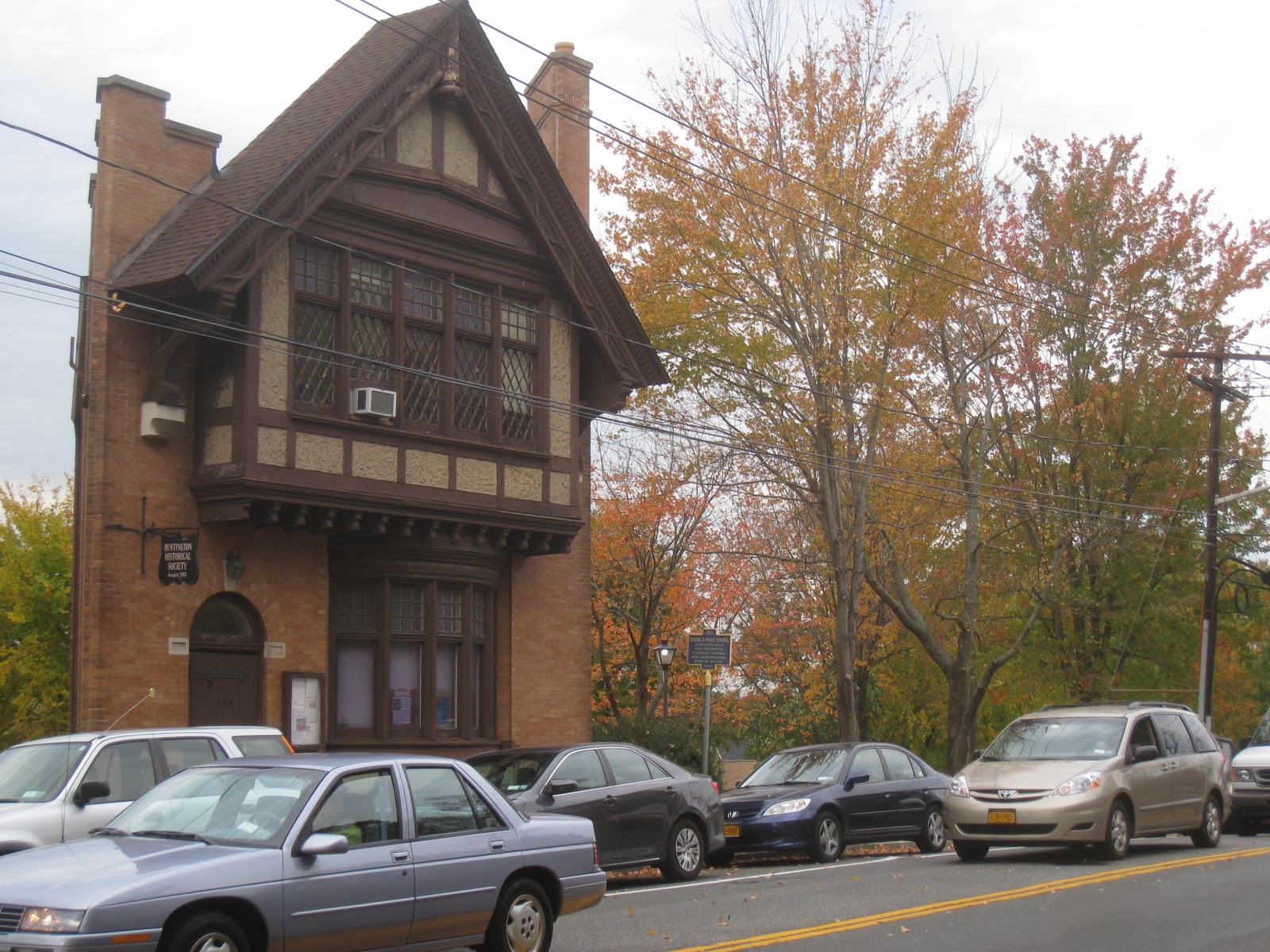
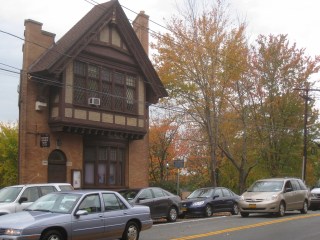
This is Huntington’s own version of a crooked house. Built as a public training school, it has its handsome front squared up along Main street, but the walks wander back at an odd angle possible aligned with true North (I haven’t bothered to check.) So from an angle like this, the side seems to disappear, leaving just a kind of old west façade surprisingly made of brick.
There obviously used to be a certain joy in architecture _ octogons, crooked walls, all kinds of turrets and gingerbread and towers _ that was all but erased in the boom from the fifties through a few years ago. Hopefully, some of that playfulness will now return _ but for right now the homes are all boring boxy McMansions and the public centers are all monotonous heavy concrete and brick.
Sat-

The Valencia Tavern is one of the few remaining landmarks of a distant time when many of the town’s inhabitants went out for lobsters, fish, and clams for a living. Which is to stay it dates from before the 1950’s suburban sprawl and population boom that transformed everything. Nobody knows how long it can hang around _ some forlorn baymen still end (or sometimes start) their day here, but there are no crowds and the regulars are sparse.
The fiberglass bull statue is an affectation of the owner put up sometime in the last three decades. It is cute, and out of place, and has an affectionate place in many hearts, but it is fighting a losing economic battle. Only some miracle fad of young people suddenly deciding for some reason it is a interesting place to be could save it now. Like most of the old town, it will soon be gone, torn down or repurposed. Nobody yet thinks of landmarking a bar.
Sun-
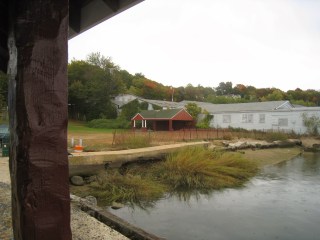

An obscure and neglected little park tucked in among the ramshackle Knutson’s boat works, built on what was formerly (and well before my time) a pottery factory which used local clay deposits since the time of the Revolution. Once upon a time there might have been grand plans for it _ as this picnic pavilion now completely unused indicates. Even this shed on the waterfront _ and concrete along the waterfront it faces _ is ready to go one winter or another.
No doubt, as at the end of the harbor, these picturesque old friends will soon be leveled for something shinier and more in keeping with what the town lawyers think is appropriate for avoiding lawsuits. Most lawyers seem to pass Anti-Aesthetics 101 easily, so my guess is that the inevitable results will be pretty awful.
Nautical Procrastination
Mon-

With the cold season closing in, you might expect the boats to be thinning out a bit. But it is just the opposite. Some people suddenly realize they have not been out on the water all year, and try to squeeze in any few moments before the snow starts. Those with boats already out keep hoping that there will be at least one more Indian summer day to cruise in warmth and sun.
So instead of fewer vessels out there, there are sometimes more. The boatyards get ready for the rush _ the first hint of a fall storm or late hurricane will bring everyone at once. In the meantime there is nothing they can do but wait.
Tue-
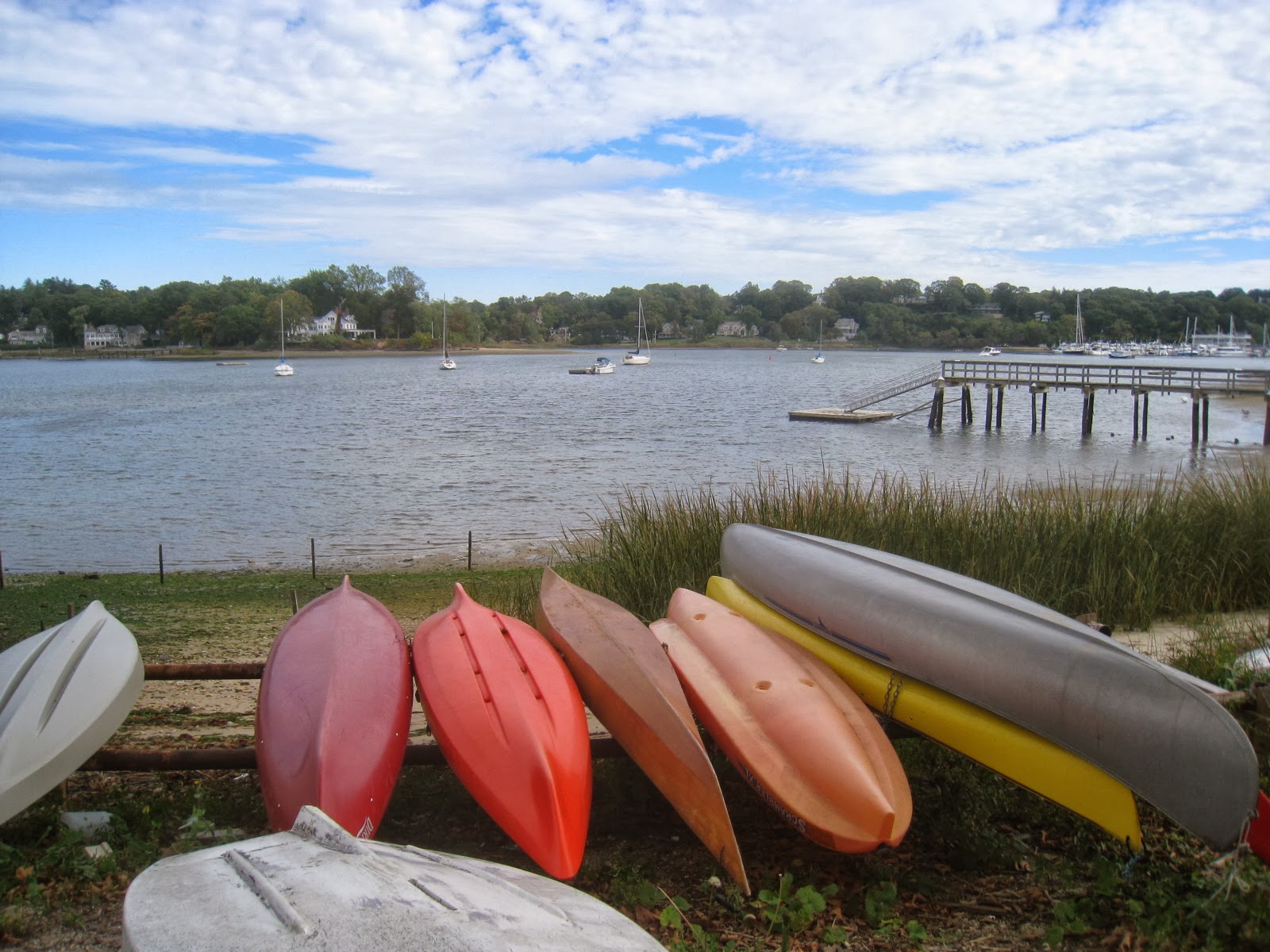
An awful lot of boats seem to be purchased in a fit of enthusiasm and then lie unused forever. There are fads, sometimes sailboats, or canoes, or these kayaks, or lately stand-up-paddle boards. But they all share a common element of being taken out every day for a while, and then just stored somewhere along the shore as the weeds grow. At least they provide some color.
By the time you get to mid October most folks around here _ not having Eskimo blood nor fortitude _ never venture out on small craft. A few hardy souls will be there even in December, when the water temperatures actually start to make it dangerous. But generally, it seems, pleasure vessels are mostly to be admired rather than take up too much of anyone’s valuable time.
Wed-

An assortment of craft used mostly by the town summer camp. Pretty soon they’ll be collected by trucks and carted from the beach to some indoor storage facility. Like the turning of the leaves, these seasonal changes work to their own rhythms. Like leaves also, they have outlived their usefulness for this year.
Thu-
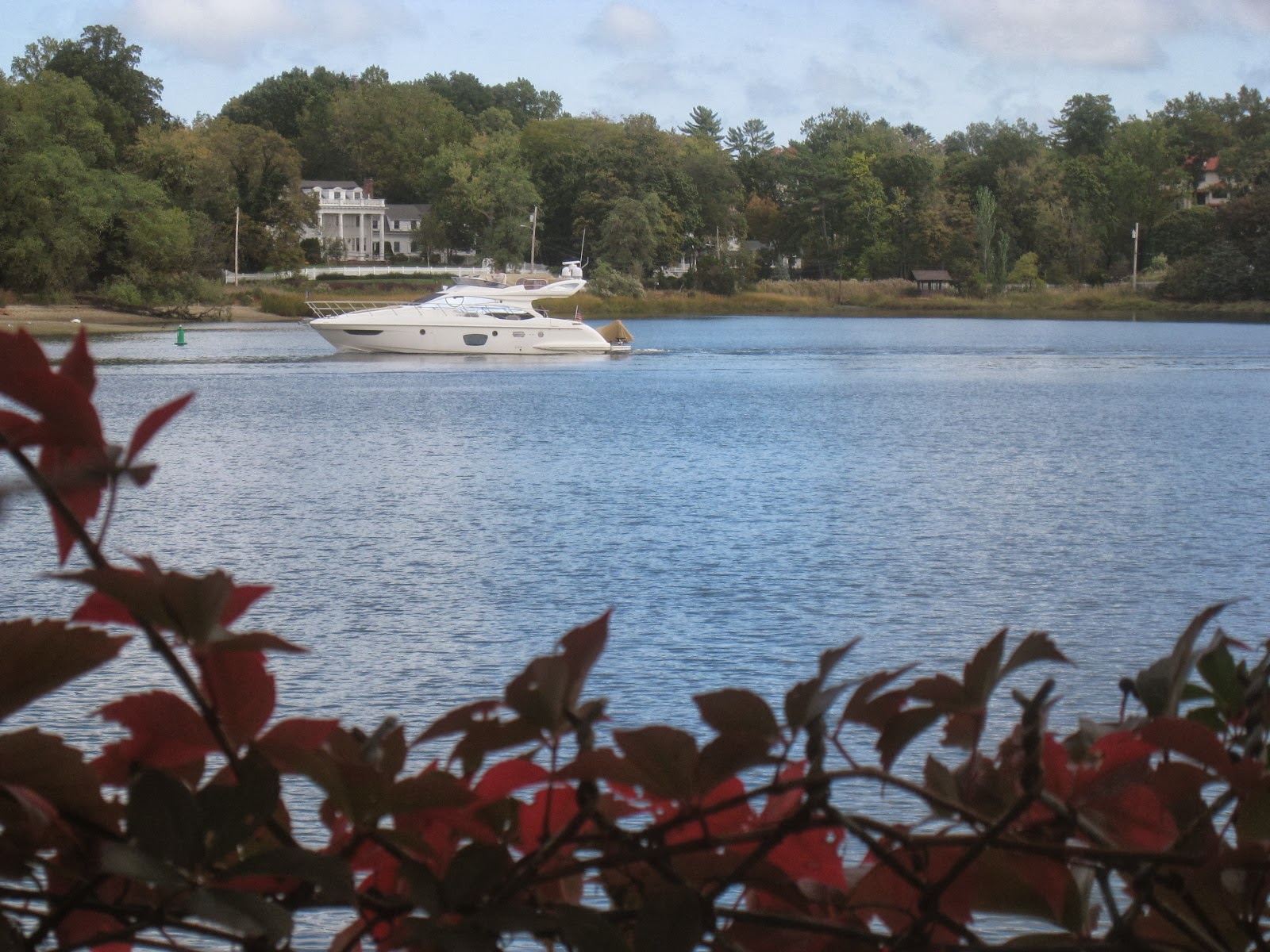
Cabin cruiser heading out for a late season spin. Boats equipped this well, of course, could go out all year if they wished _ probably have TV and showers and who knows what else on board. Usually, however, the only time I see a real parade is on holidays, not even weekends are very busy. Maybe it is good enough to just show folks they want to impress what it looks like from the road, or maybe they hang out at the yacht club admiring their prize.
I’ve never developed boat envy _ I like my feet on dry land, thank you very much. Easy touches of seasickness when I was young play a part in this, but mostly being cramped in a small place for hours drives me stir crazy. A long cruise is one of my visions of Hell.
Fri-

Can’t resist a pretty picture, whether it fits the theme or not. Life should be a bit chaotic; one of the worst faults I fall into is getting so wrapped in a train of thoughts that I ignore wonder. That of course is very helpful in “real life” and work, but dulls and limits our experiences.
So there are no boats here, unless you squint, and not nautical themes except that any body of water is a potential nautical theme. Sorry.
Sat-
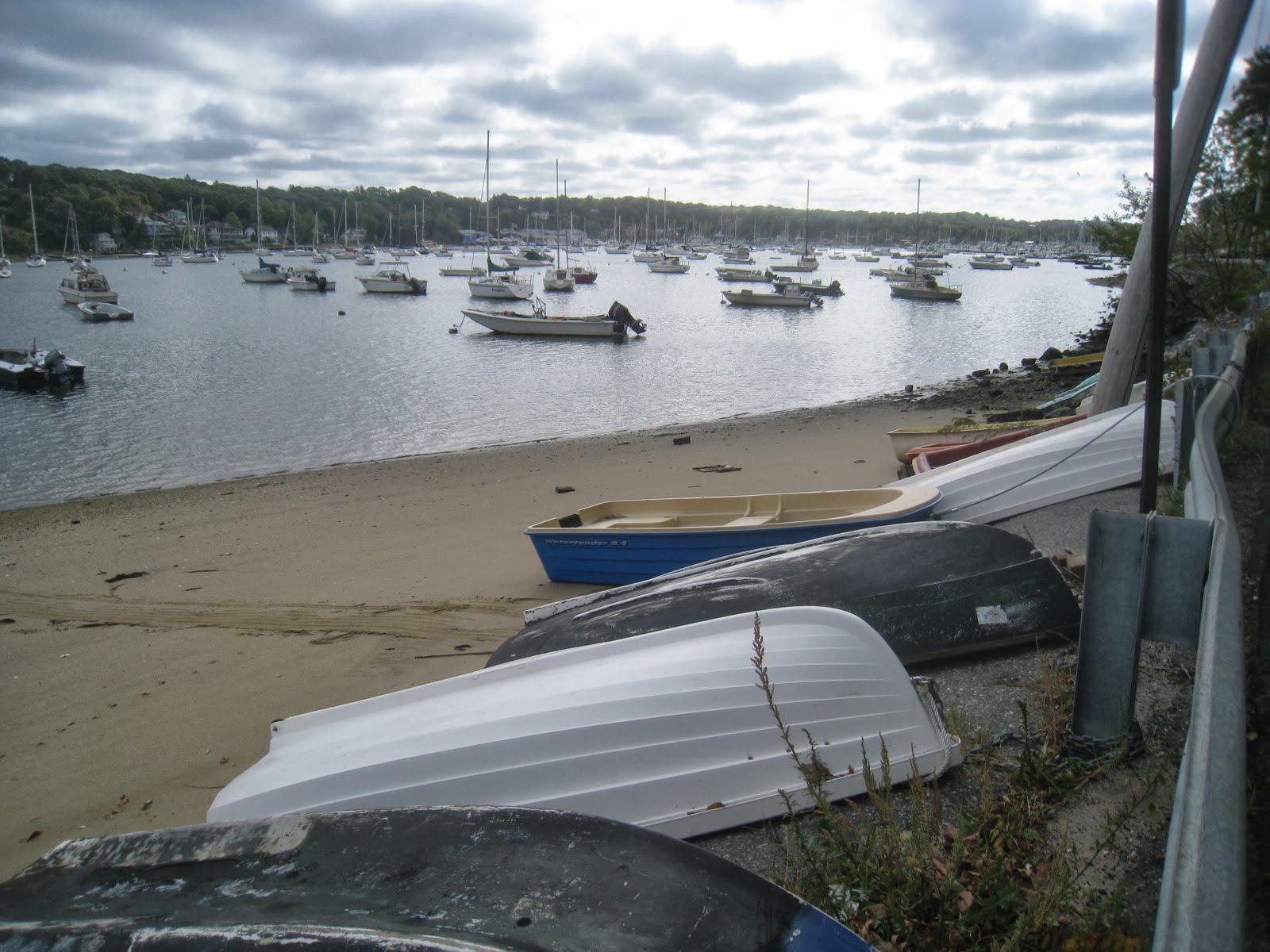
Dingys are used to reach the clammers’ working boats beyond the tideline. These are pulled up and tied to the guardrail along the shore road _ which results in a constant political battle between the town road department and the fishermen. Sometimes there are annoying signs, sometimes chains around the struts, sometimes neon stickers screaming “this vessel will be removed!” . Eventually an accommodation is reached, usually around elections, and things settle down for a while.
It used to be that nearly all the sailboats would be gone in November _ they are certainly never used in the winter _ but lately people have gotten somewhat lazy because the harbor rarely freezes thick enough to damage hulls. No doubt the forest of masts will thin a bit, but it no longer vanishes completely as the snow begins to fall.
Sun-

Not everyone waits. There can be a long line to get into the dock and have something as large as this lifted out of the water, cleaned with pressure hoses, covered in white shrink-wrap, and slowly driven across West Shore Road to the large sand pit where it is safely stowed row on row. Unless, of course, a tree falls on it, but that’s a different story…
This marina stays busy throughout the year, even in the dead cold of winter something is going on, if only to clean the machinery in readiness for the next summer. In some ways, these are the new fishermen, working long, cold, wet and dirty hours in all weather _ unfortunately with a lot of the romance and beauty stripped from their jobs.
Leaf Colors
Mon-
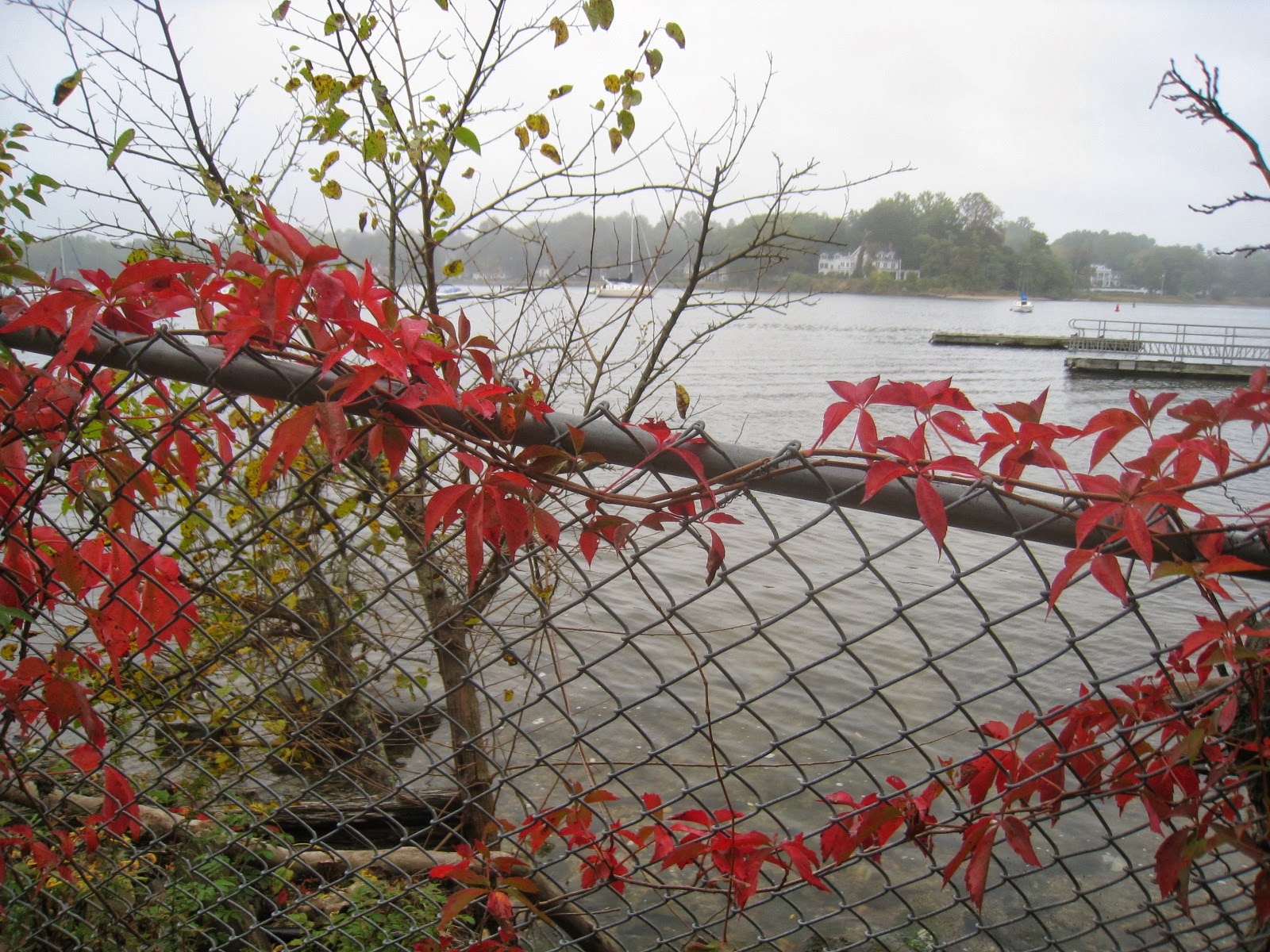
The next two weeks are peak colors around here, what there is of it along the harbor. The vines go first, like this one draped along a fence. The locusts are mostly bright yellow, everything else _ not so much. Upland a bit _ say at Hecksher park _ there are a few bursts of brilliance.
In a way, it’s a time somewhat hard to focus on, almost a dreamtime. It is still very warm and humid, even when the mists settle in. Too late for swimming, and to tell the truth many of us are a little tired of heat and humidity. Yet we also know that in another month we will be fervently wishing for the return of spring. The problem, always, is to focus on today and experience it _ ignoring what will come or has been or might be. Harder than it sounds.
Tue-
Tue-

Mill Dam park, built on filled in salt marsh at head of harbor, has at least one sugar maple _ at least that’s what I assume it is, which stands out for its brilliance around now every year. But as certain as the leaves are the organized fall sports and their parents sitting on the sidelines. This is the great time for such activities _ the weather is pleasant, hopes for teams and individuals are high, everything is beautiful and possible. In another month it has turned into a chore, in cold rain and wind, with a losing record or second string status, or parents starting to realize that their seven year old might not be headed for a college scholarship after all.
Human activities constantly change, but I suppose there have been analogues to this through all societies in all of history and before. The trees and seasons don’t care at all, and have been constantly marching on to their own rhythm.
Wed –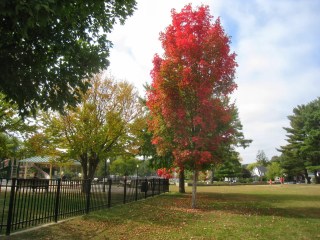

Wed –

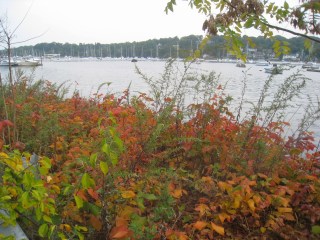
Hecksher Park is far enough removed from the water that some of the trees become pretty spectacular, this being an early example. A little further on, the historic cemetery (with graves from well before the revolutionary war) has fantastic seasonal ambience (and sobering reflections) in late October.
The main thing is, it is fleeting, and not guaranteed. The media now inform about the weeks of peak color, but peak color is only really there if the weather holds. Sometimes the trees are just turning and get stripped by a storm before there is anything to look at. You need to seize the day where you are, each moment, and not where you might go on some ideal weekend afternoon that may never come.
Thu –

This view is far from timeless _ anchored in artifacts of exactly this time, from the chain link fence to the dock, to the yachts in the marina. Fifty years ago, this would have been pretty empty with no fence, no docks and maybe one anchored clamboat. Fifty years from now, it is probably all under water. We think the world goes on as we have known it forever, and what we have known has been there always, but that is never true. We are truly dust in the wind.
Fri-
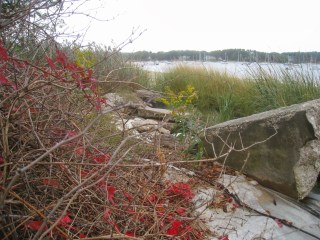
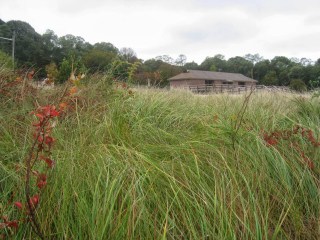

Storm clouds, light rain, wind, and a feeling of autumn even though the temperature is pretty warm. The grasses are turning, the leaves are stripping off the branches, berries are ripe, and the goldenrod is in full force. Yet almost nobody comes down here to the beach to see anything _ busy rushing somewhere on the highway above, they might simply note that the sun is not out today as they drive to their important engagements.
You have to live, and you need to do what you must to do so. I myself have often driven by, only concerned with whether the rain would hinder my commute. To comment on how people sometimes cannot appreciate the world fully is not to say they are doing anything wrong or could change today. You can, after all, only take advantage of opportunities to see sights such as these if you actually have the time and energy and opportunity to actually do so.
Sat-
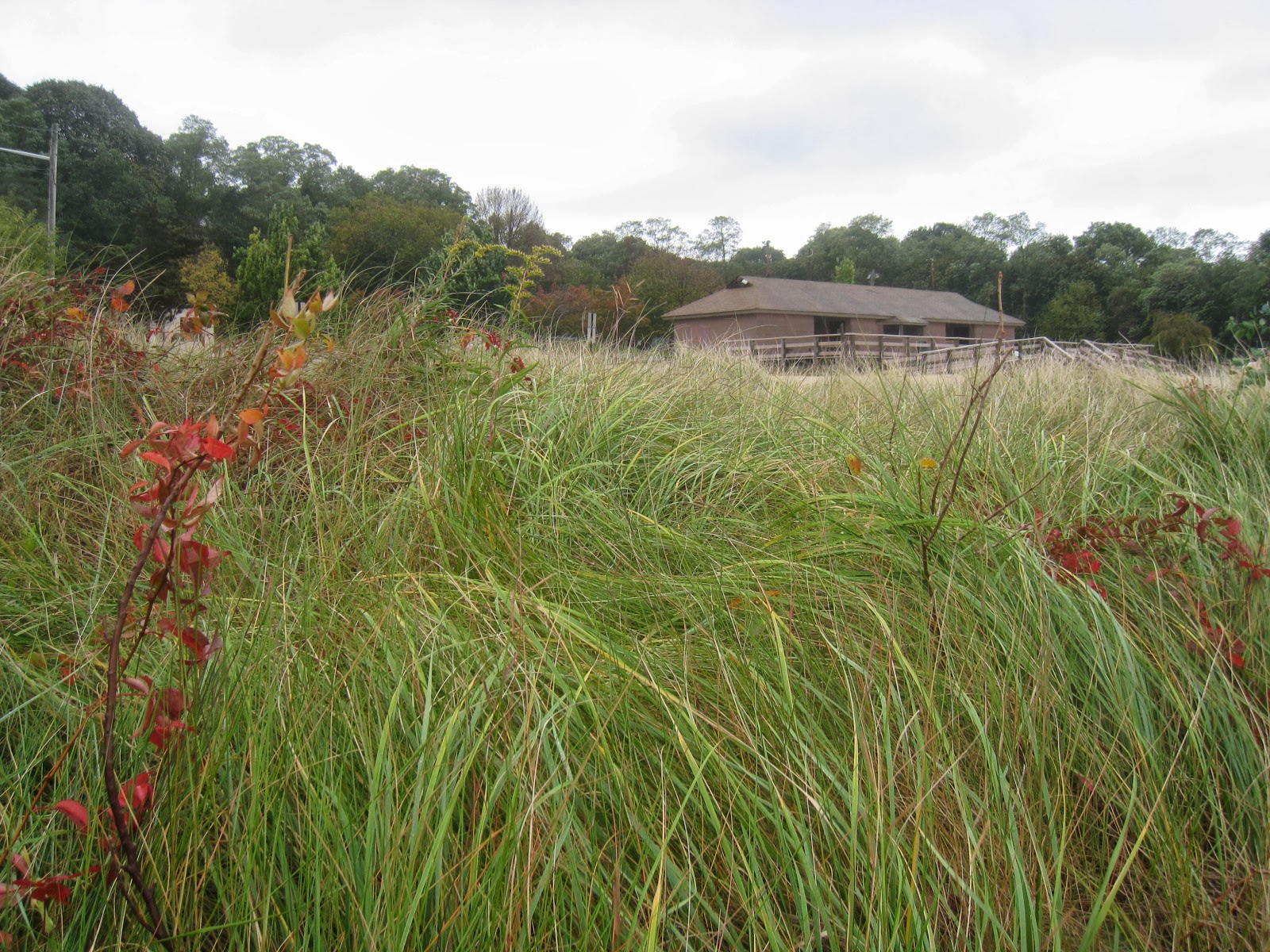
From the beach, through the grass, to the bathhouse on Gold Star Battalion beach. The restrooms are locked and the staff and life guards long gone, but the windows still need boarding up against winter storms. The big sandy stretch in front has been taken over by dogs and their owners.
One of my great joys in these later days is to be able to go to the common places I go all the time, but to spend a little effort to see them in a different way, or find a slightly different perspective. It does not take a trip to Egypt or Brazil to jog our perceptions out of their normal ruts, if we simply cultivate a sense of adventure and wonder no matter where we are and how familiar it seems.
Sun –

Poison Ivy is such a pretty plant in most seasons that it is difficult to avoid using it in pictures. Were it not for its obnoxious qualities it would be used heavily in gardens _ but it is certainly hardy enough around here not to need much help.
The amazing thing about ecology is how many things fit together. Poison Ivy, precisely because it is harmful to humans, is a real benefit to wildlife, with berries and hiding places for birds and small mammals. A reason to learn about the natural world is to appreciate how different things can work to make a larger whole, and to then apply those lessons to our own lonely inner self and occasional feelings of inadequacy. There is a place, somehow, for almost everything and everyone in some meaningful way.
Changes
Mon-

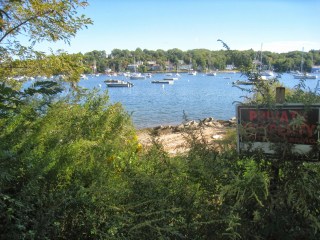
For almost a quarter-century, almost every week, I’ve sat along one of the benches along the park here on Mill Dam road, under large leafy trees, listening to birds in the pines. I’ve seen them in cold, and snow and storm and sun. It seemed they the scene had been there forever and would continue well after I could no longer return. Alas, time catches up to parks as well as people. The trees, the benches, the grass _ all gone. Who knows what comes instead?
Admittedly there was no choice. The same storms and cold and snow and sun had done their work on the bulkheads, and the earth was crumbling into the bay. For a while it looked quite picturesque, but of course there was danger, and in any case the situation was rapidly growing worse.
So even in the short time I keep these notes, change presses on massively, and what once was is no more.
Tue-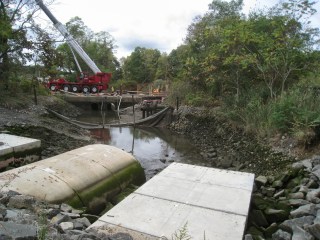


Tue-

In Halesite, the stream from Hecksher and the pond outlet empty into the harbor. This has long been a difficult area prone to flooding, since there is a constant stream of mud and water silting up whatever pipes are constructed. The latest greatest project had ripped up big chunks of the former roads, wiped out the former ancient dams, and apparently is going to create a new lake as a kind of large settling pond.
The point is simply that such changes, no entirely dramatic, happen all the time now everywhere. There is no place, however remote or forgotten, that is not touched often by one of the seven billion. There is no parcel of land, however forsaken, that might not suddenly sprout an office tower or shopping mall or mansion. I can always lament the old days, and rue what is going away, but the only real lesson is to appreciate what is here while it is here. Trying to preserve is a lot like trying to hold back the tide.
Wed-

Until a decade ago, this barren little patch had a concrete pier with a cute abandoned red shack, something that would not have been out of place in Maine or on one of the tourist towns on the Massachusetts coast. But, like many such unused pieces of history around here, some lawyer deemed it dangerous and convinced the owners it must be destroyed. So we get a different view, perhaps a bit more natural, but less attached to the open world as it used to be.
America still destroys its history wholesale. We tend to see the heritage of our country as preservation of wilderness, rather than celebration of the people who lived on the land. Preservation costs money, and although it is useful for everyone in general, is useful for no one in particular unless it can be fenced off and admission charged.
Thu-
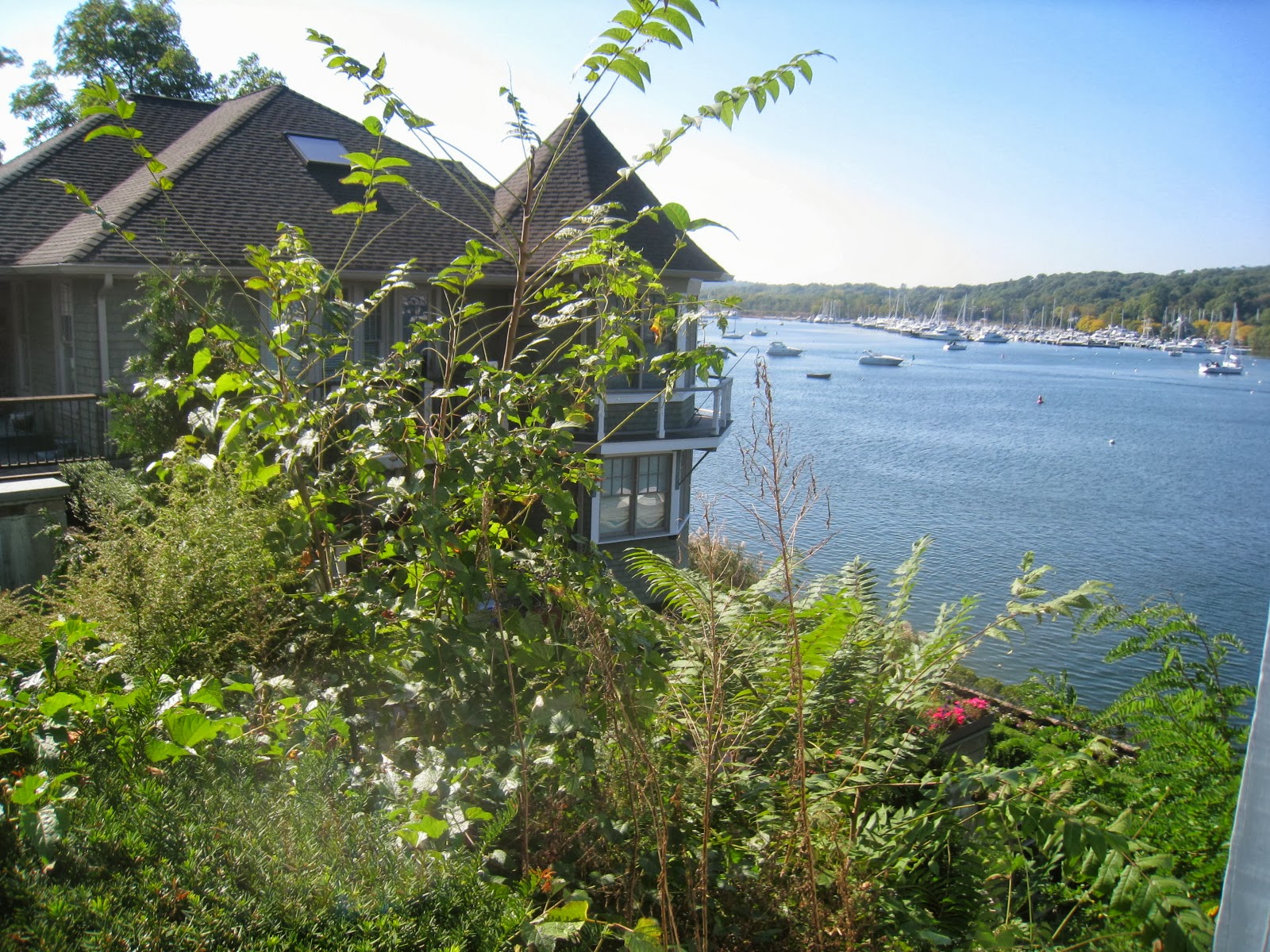
Not all changes along the harbor are for the worse. This property formerly held a rather nondescript house, which has been replaced by quite a handsome and well-done dwelling. The entire area, of course, is going upscale, regardless of possible rising water.
For an old guy like me, it is far easier to complain about all the bad things I see around me and the way the world is going to hell than to appreciate some of the good things that also occur. For example, at least global warming and climate change have entered the realm of political, social, and economic discussion, instead of being ignored as they were not long ago. I need to smile and enjoy wha
t is, especially when it is fine, rather than scowl at how much better it could all be.
t is, especially when it is fine, rather than scowl at how much better it could all be.
Fri-

The gold coast magnificence of the Ferguson Castle _ before my time _ can only be inferred from the survival of its gatehouse, preserved when the land was transformed into condominiums at the end of the last century. Like many such artifacts, it was hardly worth preserving.
Some might argue that except for nostalgia, that is generally true of just about everything around here. There is little of historic significance or substantial world heritage. I would say, rather, that just as a tree or blade of grass has a certain amount of rightness in simply existing, so does the land and the works of the past. I believe we are wiser to change carefully when possible, rather than simply level to zero and arrogantly assume that our shiny new design is wonderfully better than coexisting with previous obstacles.
Sat-

Storms have torn a big chunk out of the sand bluff on which West Shore Road is built at the bottom of our hill, resulting in the sag in the chain link fence. The erosion of the next big northeaster will no doubt crumble part of the pavement. The town and county are supposedly fighting it out to see who, if anyone, has responsibility for trying to fix it this time (there have been a series of such incidents over the last thirty years.)
Life in general is relatively stable and constant, but in detail is chaotic and transient, every bit as brutal as the “nature red in tooth and claw” interpretation of the meaning of evolution. Sandbanks are not themselves immune to the process. In a way, I guess, we are fortunate in having such a short personal window into infinity that we can exist in the illusion that we have some certainty and control over our world.
Sun-

Some things have not changed yet, but probably will soon. With advances in transportation efficiency gas stations around here are already becoming somewhat scarce, as evidenced by the closed business across New York Ave. It would seem only a matter of time before others such as this one will also be gone forever, replaced by something, maybe better, maybe worse.
It’s playful to think of the savage battles that will be fought by preservation groups to save the last vestiges of cheap oil as part of our heritage _ declaring this station or another part of our industrial heritage and keeping it operating with public funds. Many of the things I took for granted have already gone away forever, and should I live a few more decades, or even years, this view will probably also join them. Is it a loss? Who knows _ but it will certainly be a change.
Autumnal Equinox
Mon-

You can’t feel the cold stiff gale requiring me to wear a vest for the first time, and the changing angle of the sun is not obvious. Even the pictures do not tell the whole story, since they don’t give a full view of the scene. But for those who look, the clues are obvious.
We don’t usually get the full effect of seasonal change for another four or five weeks _ it often arrives ferociously around Halloween. But the grasses shown here, certainly know. The people, in their own way, by letting the yard go to seed also provide clues. The changing colors, the dry leaves on the ground, the sparseness of the foliage in the trees, all agree with the solar calendar.
Tue-


Tue-

Directly along the shoreline spectacular fall colors generally do not happen. The oceanic water refreshed on each tide moderates the air temperature too much. Mostly the tree and bush leaves just turn brown and blow off in one of the first northern gales.
You need to go a little inland, not much, maybe a mile, to get some real reds and yellows. Even on the harbor. though, if you get up a few dozen feet from the water _ as in this shot along a bluff property _ you can get a little action. Yet, for the most part, all that will really become noticeable is the drying out.
Wed-
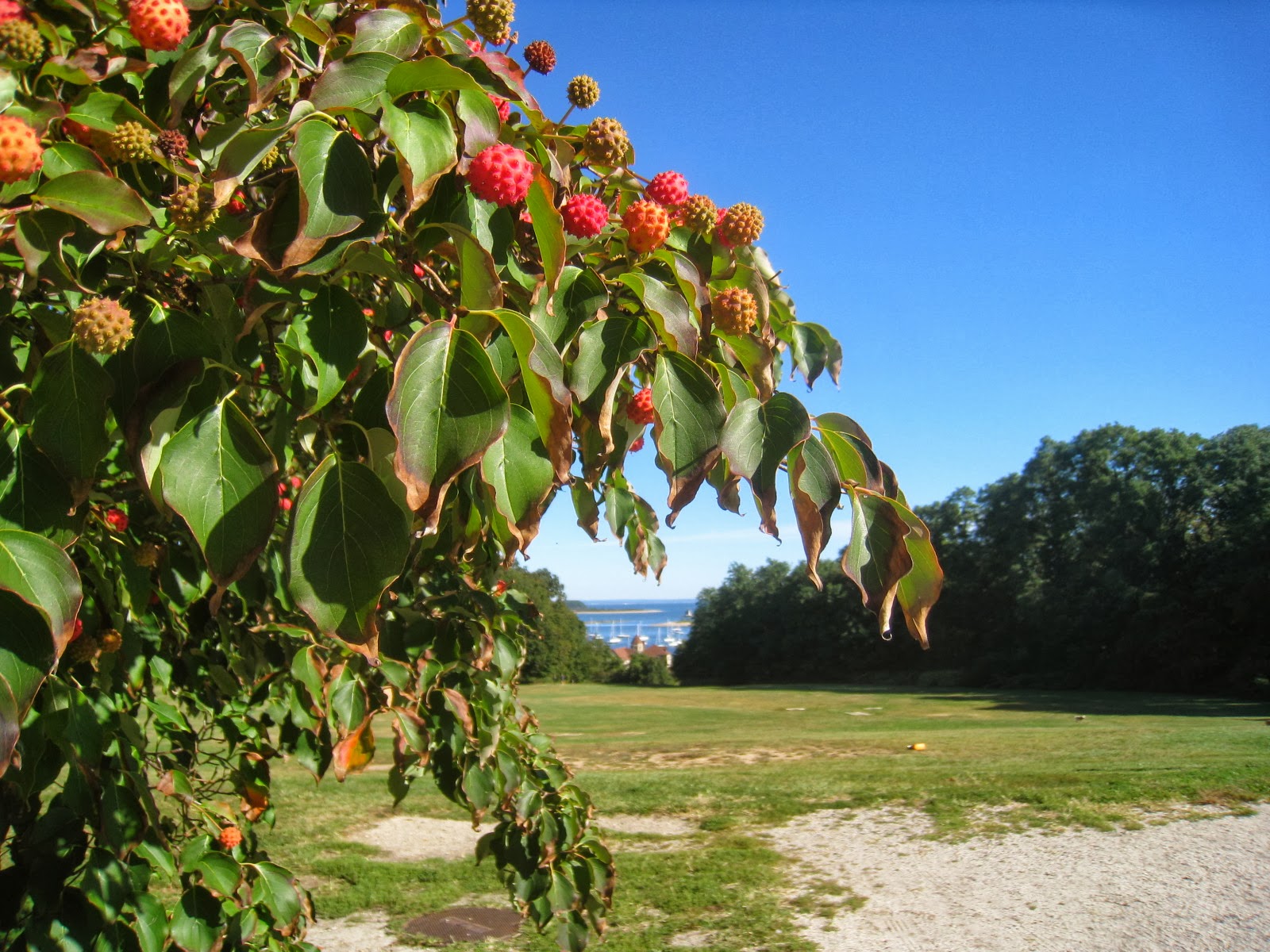
Not all the color comes from leaves, nor all the indications of fall from any color at all. There are many fruits and seeds ripening in various shades, and for the more knowledgeable the autumn annuals like goldenrod and aster have arrived in all their glory. Many of the lush grasses are turning brown and stiff, many of the early flowers are stiff and grim skeletons.
The important key is that there can be celebration in each day. I always loved a place with actual seasons because for me the transience of each moment is reinforced by the certain knowledge that soon it will be gone for another year. When these fruits fall, there will be no others until next equinox. That is both discouraging and a source of constant wonder.
Thu-

Spartina becomes a beautiful orange-brown, starting at the tops and working down, as the seeds ripen and fall into the bay. These sheets of grass make wonderful frames for the water, of course, but also provide a rich habitat for the wildlife that remains, including innumerable hermit crabs. Unfortunately, for many reasons, many of its vast beds are dying back over the last few decades, after being viciously destroyed in previous centuries.
In any case, current predictions claim this will all be underwater in another few decades, and hopefully spartina will have enough time to drift its seeds to sprout where lawns are now. I will never know, except in imagination, so I just enjoy this day before the seas rise.
Fri-
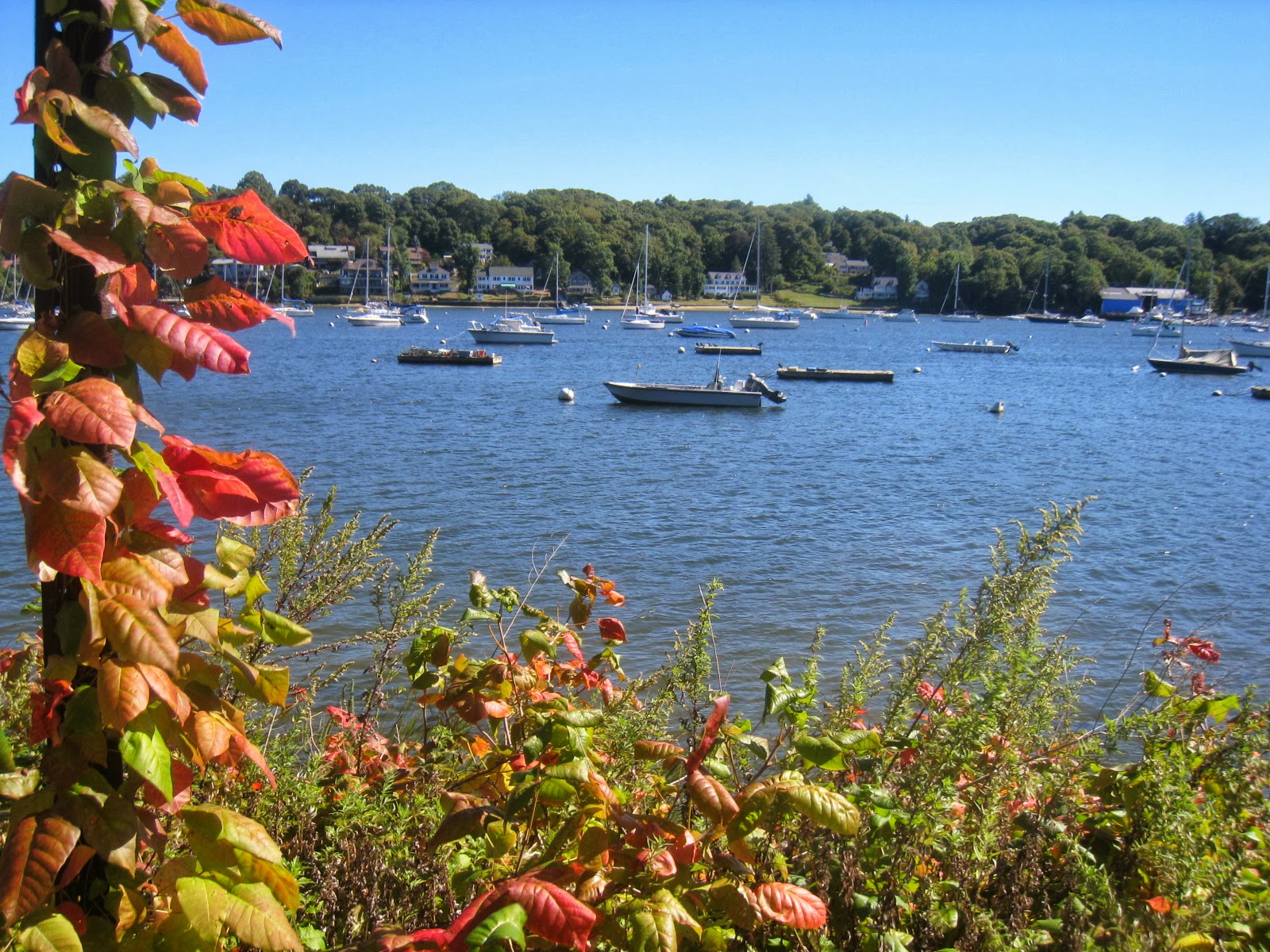
Poison ivy is so pretty in all seasons that it’s almost a shame we react to it so strongly. Apparently, however, its seeds are good food for wildlife, who don’t share our difficulty. In the early fall, in particular, the vines turn spectacular shades of red, orange, and yellow, while some of the lower leaves retain their lush glossy green.
There may be some moral here about looks being deceiving, but of course in terms of pure visual interest looks are just looks. Sometimes our culture tries too hard to find meanings and hidden metaphors in what should simply be taken for granted and enjoyed for the beauties given, and the value to the environment.
Sat-

Most of the year, Montauk daisies are a clump of nondescript dark green, impenetrable to any other flowers or weeds. In the fall, they come into their glory and bloom in their native element, along the beaches and on the dunes. The wild goldenrod adds a nice touch.
In today’s hurried electronic times I tended to rush by these sights on my way to work or leisure or just wrapped up in my own cares. Nature is too vast. I would glance at it, say, ah, I have seen that, and quickly move on. Now I have the time, and there are miracles of beauty everywhere. Even consciously taking the extra time, however, I fear I still rush by much too fast.
Sun-

No composition, no artistic merit, but you get the idea. The prickly hedge is going orange, the bay is in the background. It’s an open question how much snapshots should bother trying to have some kind of formal architecture anyway. In fact, the whole field of photography seems pretty wide open, since what seemed correct and proper and striking generations ago has faded into formal dullness, and the various crude shots which were dismissed at the time are recognized as masterpieces recording time and place.
The Romans used to say “life is short but art is long.” That may be, but the appreciation of art, the evaluation of art, is faddish and fickle and usually even shorter than life itself.
Trash
Mon-

In spite of heavy use, the water, shoreline, and highway are kept relatively clean. But you can’t escape the culture, and our culture generates a lot of garbage, much of it never collected or recycled. Everyone learns to pretty much ignore it _ if it doesn’t fit into the pattern of how beautiful everything is while you are taking time to do so, you try not to see it. Of course, some artists reverse the process and shove it in our faces.
Doesn’t matter _ it is still there. As the paperback spiritual guides often assert, there must be Buddha in the discarded beer can as well as in the swan. Those of us less sophisticated just realize that it is part of everything. Deposit requirements have helped a lot with cans and bottles since I was a kid, and in general trash is better taken care of than a few decades ago, at least in this little local area.
Tue-
Tue-
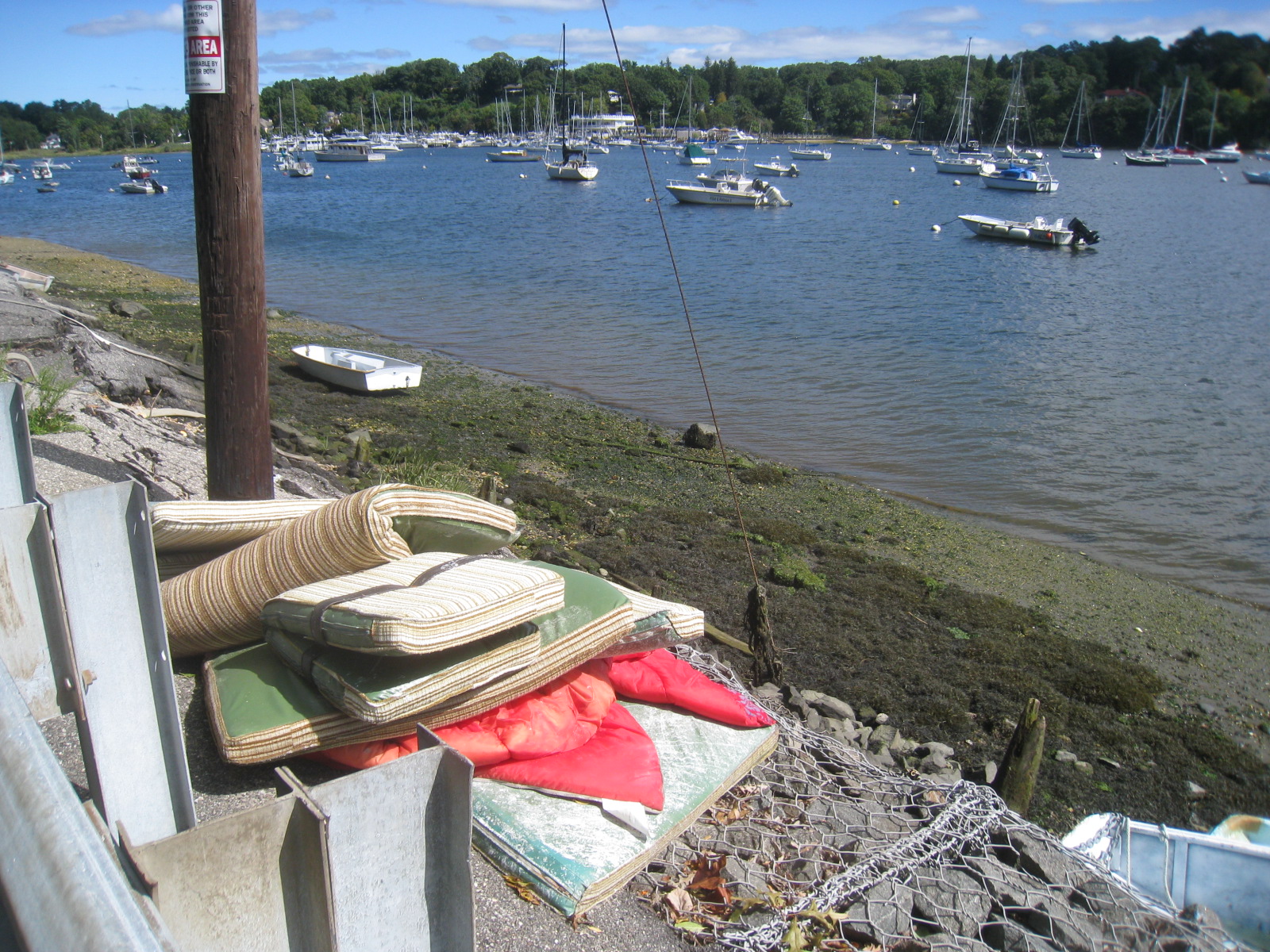
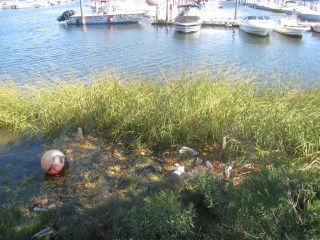
Some trash is kinda cute and picturesque. Some is just plain ugly. An inconsiderate oaf unloaded this pile, and now it awaits _ what? High tide, garbagemen going beyond the call, a civic-minded citizen?
It’s precisely at this pile that I part ways with libertarian tea-party fanatics. My simple solution is to pay a government to clean up the common areas and punish the oafs. Their brilliant idea is either to let the junk pile up forever or let the roadside be sold to a private interest who will keep it clean but restrict the view so the rest of us can’t enjoy it. I believe in common heritage, common rights, and common responsibility, including access and control of common natural areas. Libertarians do not. Simpletons.
Wed-

Not a bad harvest for a strong wind pushing flotsam into the wall. Mostly leaves, a few bottles and the inevitable loose buoy. Of course, the glass and metal sinks, so you never see it, the paper rots away, and most of the plastic, we are told, turns into a kind of oceanic mush that permeates the world’s seas and will not go away for thousands of years.
Nevertheless, the general pattern seems to be more considerate than it used to be. Most people, at least around here, have accepted that the world is finite, and that the environment is precious. Social pressure can influence individual behavior far more than laws, and right now that social pressure concerning trash disposal is pretty good.
Thu-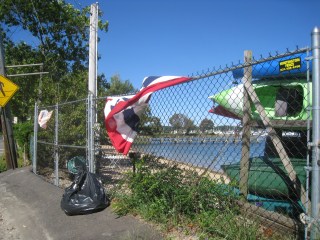

Thu-

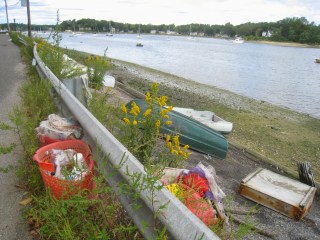
Well, most people would probably say this is not trash. After all, it’s carefully in a bag and on the road and will be picked up by the town and magically disappear from the landscape. And yet, it is trash. It will join tons of other material on our landfill, which grows larger daily. Eventually, as the icecaps melt and the sea rises, perhaps only the landfills will jut up from where Huntington used to be.
I’m as guilty as anyone. If you are part of a culture, you pretty much need to accept a lot of that culture. We are trying to change over time, but we are far past my boyhood days when we buried cans in a trench in the back field, composted all the organics, and didn’t have enough surplus to be picked up more than once a week.
Fri-
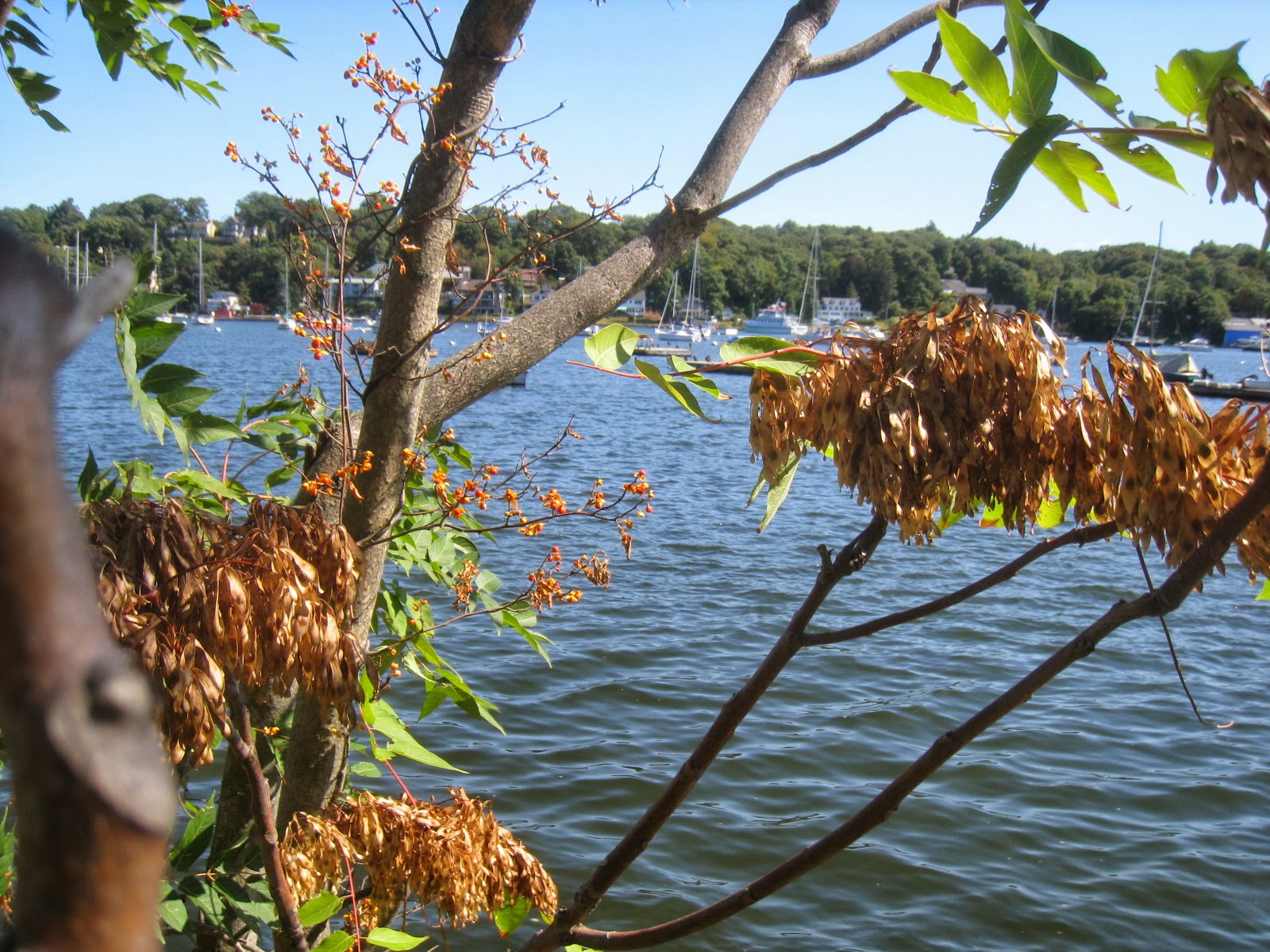
Even in the midst of the garbage crisis, nature continues
on its merry way. The bittersweet turns orange, the ailanthus goes brown. We wonder how much of our proclivity will finally end it all.
on its merry way. The bittersweet turns orange, the ailanthus goes brown. We wonder how much of our proclivity will finally end it all.
I ask, what can I do? Is there anything one person can change, or is it all ordained by heaven, for us to accept as we will? I wish I had an answer. In the meantime, I just enjoy the season and the signs all around.
Sat –
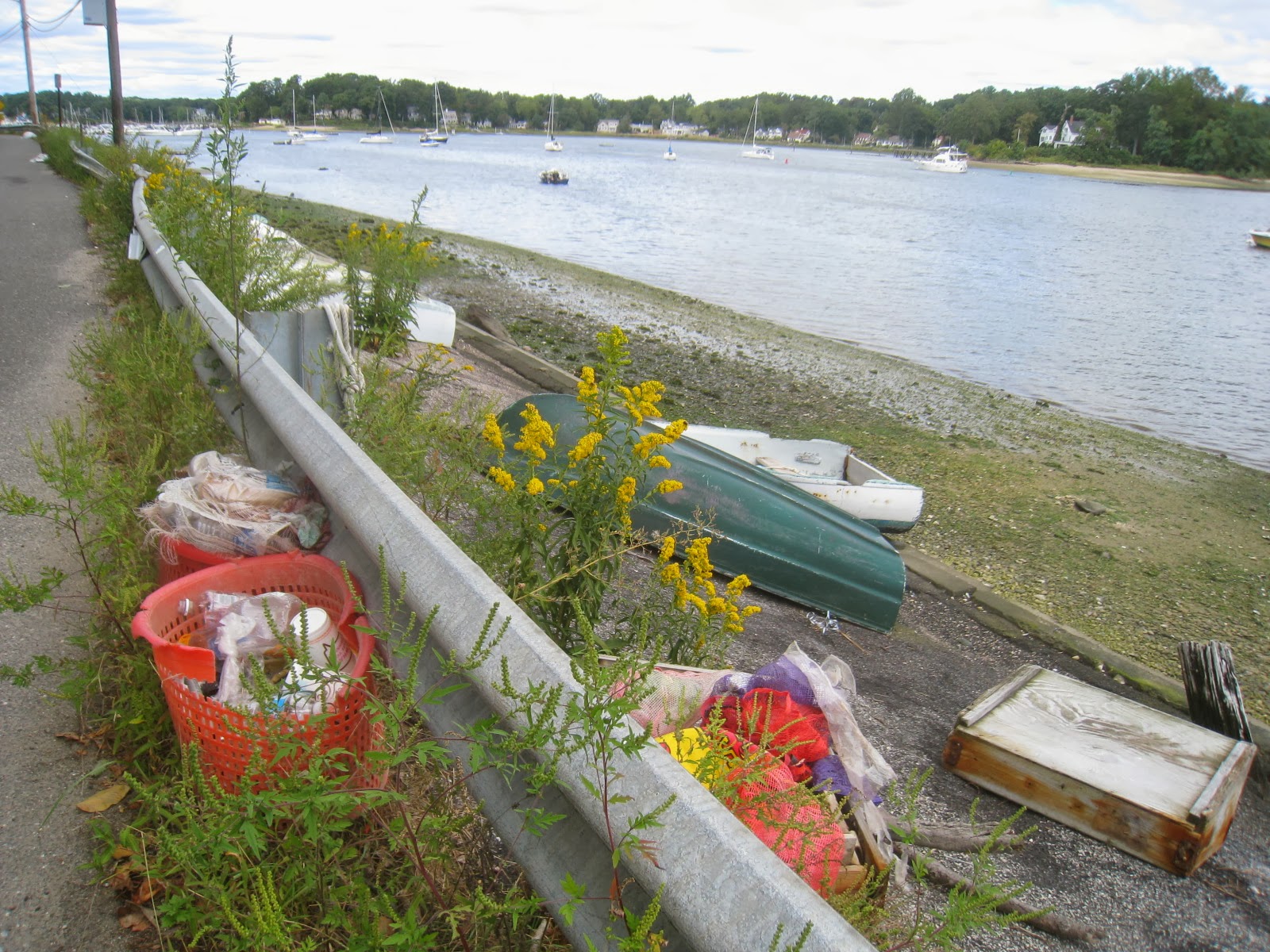
I suppose it’s colorful enough, just another human pattern at the interface between civilization and nature, but when it strikes your consciousness (which it often does not, because we suppress so well) trash heedlessly thrown in beauty is jarring. We hardly ever pay artists to create hideous works, so creative efforts usually go in the direction of apologizing for the junk and making it somehow pretty and interesting.
Nevertheless, that is a lie.
Sun-
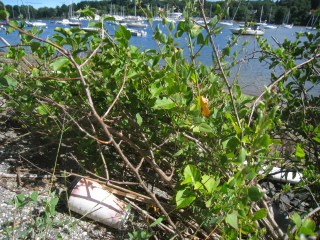

Eventually, a lot of garbage just fades into the underbrush, decaying gracefully or not. Since we cannot get people _ at least all people _ to be responsible in disposing of their leftovers it seems the only real solution is to make it as innocuous and organically degradable as possible. It’s not a good solution, especially in the long term _ but its better than the current alternatives.
 HuntingtonHarborThoughts