Over The Hills

Monday

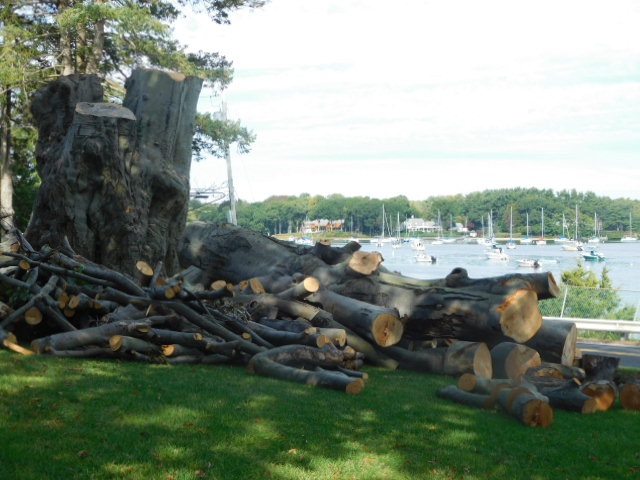
Centuries-old beech finally felled by disease, another part of our historic community vanished into memory.
  • I accuse myself of increasingly ignoring the wider world.  Digging into my own patch of paradise to appreciate it more, I screen out tragedy and portent and disengage from guilt.  This is, perhaps, wrong. There are small chores to be done, family matters to handle, our own daily routines. 
  • But what our civilization increasingly seems to lack is a well-developed personal center.  All the running and shopping and eating and entertaining and confusion appears not only shallow, but unsatisfying to deeper instinct.  Like most, I have been too busy in life to deeply contemplate.  Now, if ever, is the time I can do do.

Tuesday

Joan and the neighbors decorate yards and porches with reminders of the season.
  • Happily, some bats are back, darting about overhead in twilight.  They had almost disappeared for a few years, victims of white-nose disease.  There was apparently nothing anyone could do to save them, and if indeed they are recovering it will be from their own biological processes.
  • This is how it is with many things.  Can any one of us save local bats?  A friend who has bat-houses on his home also noticed the severe decline, but remained helpless.  Like so many things, we seem to have power to spare and knowledge to fix, but we have both less power and less knowing than our hubris would have us believe.  Not much more to be done than to take notice and hope.  

Wednesday

Like turning leaves, boats will soon mostly vanish from scenery as winter preparations continue.
  • The farther you go …
  • It is possible to learn more, but also possible to be blind to what you see.

Thursday
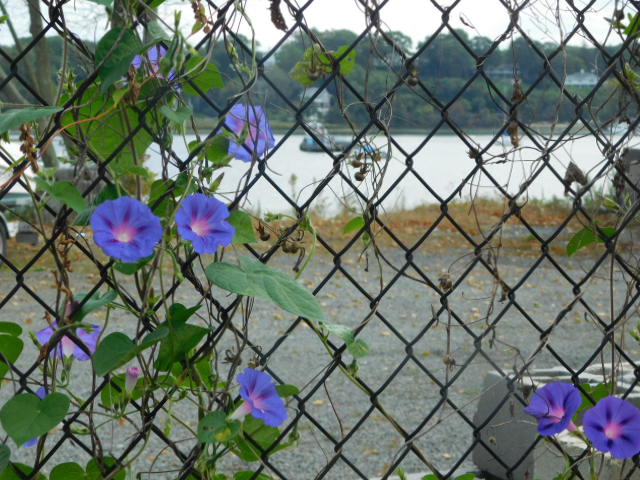
Unexpected morning glories glow in late morning deep into the season.
  • There are current fads to apply scientific methodology to our interior ecologies.  I am always amused at this or that latest finding in such things as selfishness or happiness.  None of those experiments can be easily replicated, and even the conclusions are debatable depending on how one interprets the results.  Humans are much too complex for such things to work.
  • I wish our electronic age would start to put some real effort into a modern philosophy.  The moldy scraps we still use _ ancient Greeks and more ancient prophets, discredited economists, the confused babblings of the enlightenment writers _ do not provide much comfort in these unsettled times.

Friday
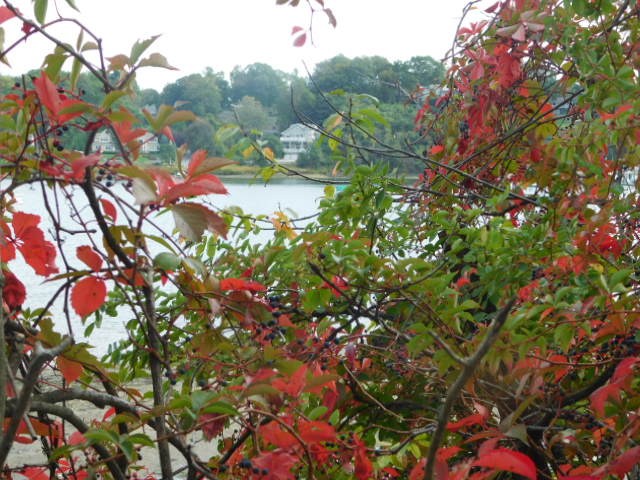
Flashes of color here and there can be stunning, but usually we are in too much of a hurry to notice.
  • In this later than usual season, I have been pleasantly surprised to finally notice a few monarch butterflies.  I was even more astonished at a hovering hummingbird seeking nectar from a purple phlox right outside the window.  Here, then suddenly gone, as if hallucinated.
  • I wish to believe that even now there remain wild spaces beyond this narrow heavily populated zone.  Somewhere butterflies romp freely, hummingbirds congregate, and fish thrive.  But I know all too well that is more an illusion than reality.  I fear some of these visitors who bring me such joy are the last of a declining multitude, and that each must be cherished as possibly the last one.

Saturday
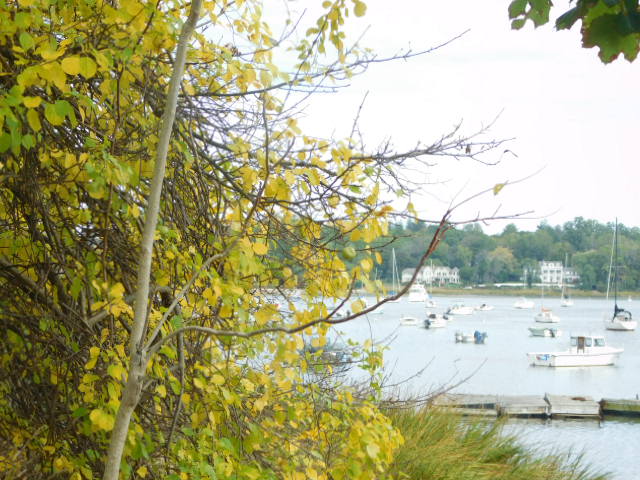
Autumn becoming more obvious with each passing day.
Out in late twilight putting garbage at the end of the driveway.  The sound of insects and tree frogs is overwhelming, so different than the birdsong of early morning.  Nobody else around, but glows emanate from windows everywhere.  It is easy to imagine what sounds would be coming out, if anyone had windows open.
“Three dead in latest shooting incident …”
“Korea threatens and the president responds angrily in spite o
f …”
“More bad news from school scores …”
“Police reports claim that …”
“The latest massive study of the effects of red meat and avocados reports that …”
“Hurricane gathers strength, latest in series of natural disasters to strike Florida tomorrow.”
A faint siren wails from town.

Troubles all around, apparently troubles everywhere but here.  I gaze at final glimmers of deep red in the western sky, take a deep breath, and try to restrict my perceptions to my own personal space.  The rest will intrude soon enough.

Sunday

Low warm morning mist softens the sky behind glowing aged foliage.
Ancient wizened sage
Ignorant on mountain
Claims

Insight and wisdom
In Like A Lamb

Monday

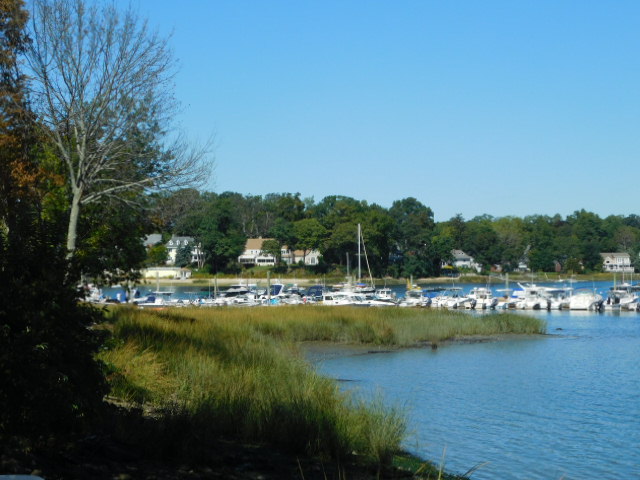
Only the bronze tint of waterside grasses betray an idyllic scene that has appeared changeless since July.
  • In Huntington, March weather does not match that of Merrie Olde England.  But a reversal of the old proverb usually fits October perfectly _ it comes in like a lamb and leaves as a lion. 
  • To start there are cooler days and especially nights, a few chill breezes, earlier evenings.  But gardens are still intact, flowers bloom, lawns grow.  Once in a while there is need for a light jacket.  Greenery remains mostly in place on the trees.  Rain is light and storms not too ferocious.
  • Ah, but in the 31 allotted days, all reverses.  Deep cold and frost hit hard.  Nights constrict daylight and shortly after Halloween, take over as daylight saving ends.  Children running about in shorts as the month begins have to put on heavy sweaters or coats under their costumes.  Harbingers of fierce November tempests arrive.  Clearing leaves is an ongoing chore.  Those who have put off winterization scurry to their tasks.

Tuesday

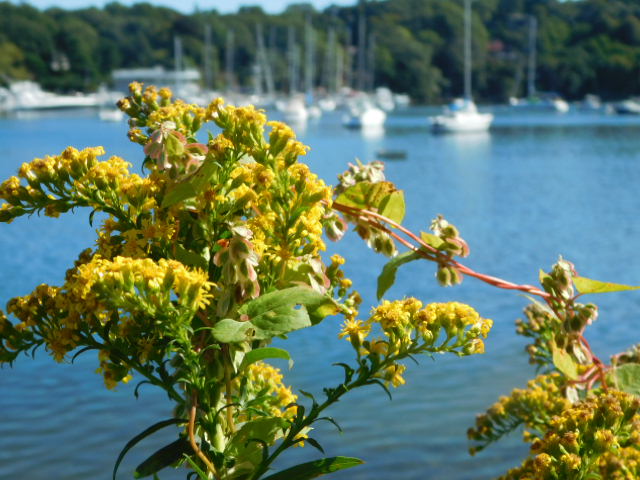
Goldenrod dominates most scenes, bees are busy gathering nectar even as temperatures drop.
  • Skies hover blue and fair, with high white clouds.  Almost impossible to imagine the coming purple heavy gales, or possible snowflakes, or killing frost.  Sunsets have started to be glorious, all red skies and garish painted colors.
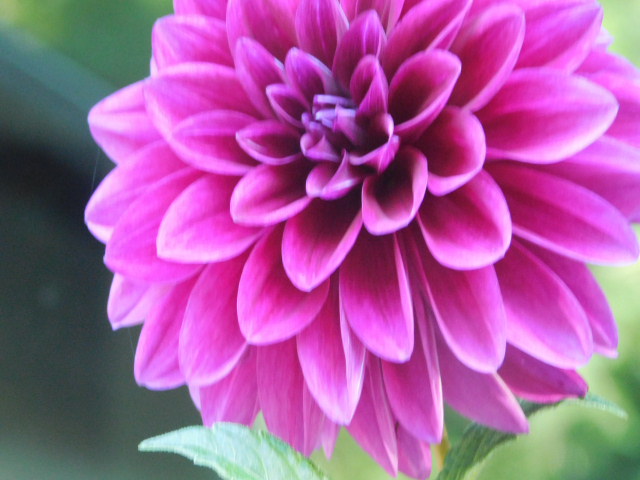
  • I force myself to walk about, savoring each moment as if it may be the last of the year.  The last dahlia bloom, the last day without a sweatshirt, the last time barefoot on the grass.  Personally the month of October, more than any other, is the time of loss.

Wednesday

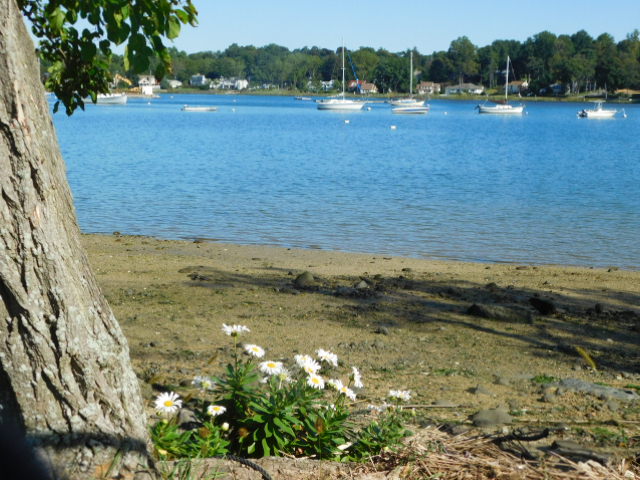
Montauk daisies are in full display, some clumps thriving on little more than sand and salt water.
  • Gather ye rosebuds ….
  • Or rosehips, which will also soon shrivel and vanish

Thursday

Old green-apple tree beside the ancient farmhouse on Lloyd Inlet.
  • I’m enjoying about the last of local field tomatoes, and fresh corn is becoming rare.  Harvest lingers, but except for vineyards, most crops have picked and stored.  This is no change from generations and centuries past, except that we no longer care much.  Once October would begin a time of resignation, and possible panic.   Were the food-crops plentiful, is a great deal stored away for the privation of winter, are we truly prepared for eight or more months before there is again anything fresh?  If a disaster like hail or drought or flood had ruined the plantings, many would go hungry and too many might die.
  • Now, of course, we like to pretend we can eat locally, but only as a fetish.  We are confident food can be stored indefinitely, and brought from anywhere else on the planet, and even grown fresh further south while we shelter snowbound.   The terror is gone.  Perhaps we fool ourselves _ the supply chains are, after all, quite fragile.   But the fact that it is October does not matter at all.

Friday

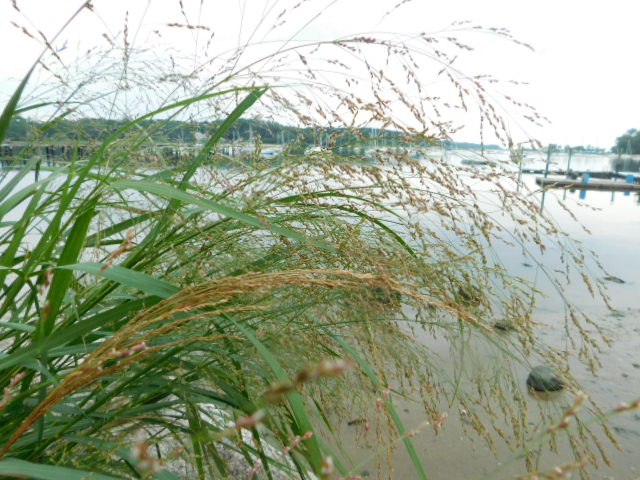
Weighed down by heavy seeds but not yet battered, grasses float elegantly in water reflecting the clear sky.
  • Goldenrod has flamed into glory, taking over whole fields and roadsides.   For a few weeks, its yellow mist pervades the scenery, then it too shrivels brown with white patches of seed carriers.
  • As for the rest of the vegetation, brown and brittle is gradually edging out the greens and yellows.  There are no young replacements, except in foolishly planted human gardens.  When a leaf falls, it is gone.  When a stem dries, no shoot springs forth below.  For a little while, cultivated roses will continue to grow, bud, and flower, but the long nights are already taking toll on that last growth as well.    

Saturday

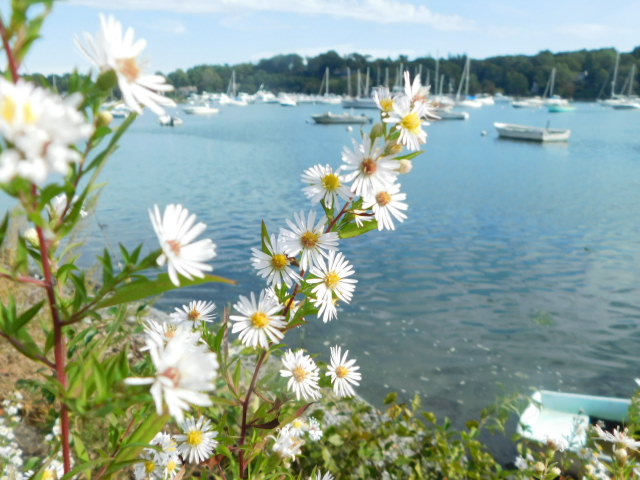
Asters are another joy of autumn, springing from nowhere into full, furious blossom as temperatures fall.
“Looking sharp, Mr. Shadow!”
“Thank you, thank you, Ms. Sunbeam.”
“How’s your crowds, these days?  Doing well, I hope.”
“Could be better, could be.  A month ago they couldn’t get enough of me, everyone jamming into shade everywhere.  Now they even seem to be avoiding me whenever possible.”
“Fickle.”
“You can say that again, Ms. Sunbeam.  No longevity in our business.”
“Well, just talked to Billy Wind.  They used to cheer when he showed up in July and August, now he claims they not only complain but sometimes boo and curse.”
“Fickle indeed.  Not like the old days.”

“Nope, Mr. Shadow.  It was all better back then.”

Sunday

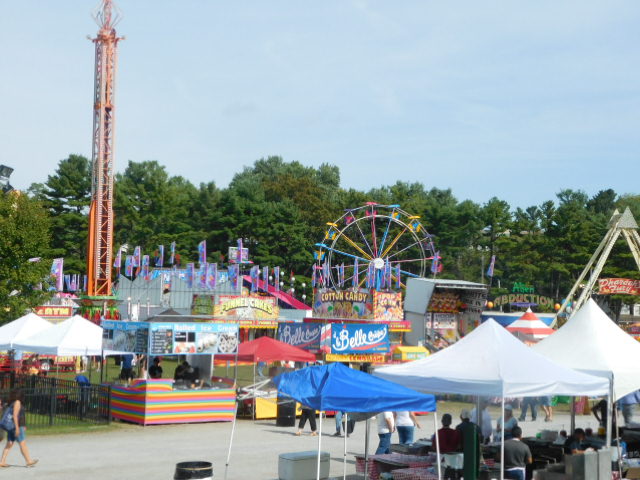
Huntington Fall Festival beginning to fill up on a beautiful hot morning as families forget the cares of the world.
So warm this early October
Not Indian Summer, no cold spell yet
We appreciate sunny skies
At least for today
Worry a little

What it may mean long term

Seeing Red

Monday

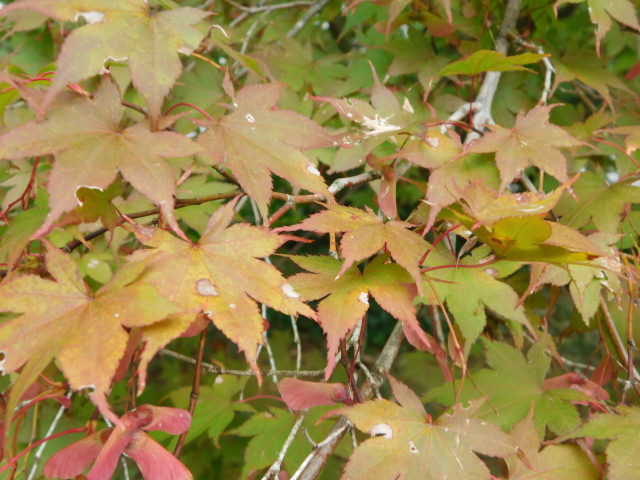
Nothing quite brilliant yet, but lovely contrast in its own right on display in the Japanese maple.
  • This September has been unusually warm and well-watered.  There have also been no overly windy storms.  Some trees continue full display as if this were md-summer. 
  • Closer examination reveals, however, that the chlorophyll is starting to leach away .  Some leaves may gleam more shockingly scarlet than others, some reveal insect damage, and a few have already crisped brown and drifted onto pavement.

Tuesday

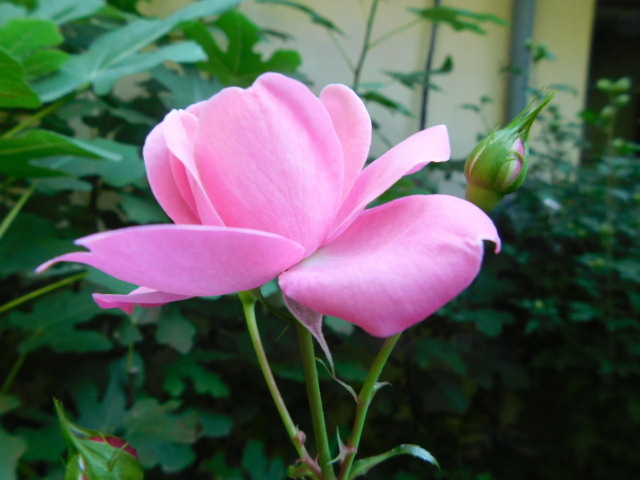
A few sheltered roses may bloom until first frost, but for most this is its final flower of the year.
  • There is plenty of red left over from summer this year.  Roses still bloom sporadically, various fragile annuals have not succumbed to deep overnight low temperatures.  But internal clocks on even those are setting off alarms to produce seed, and either die of old age or begin the work of hibernation.
  • Rose cycles remind me of the standard-issue biography of artists.  As spring goes by they quickly grow from seemingly dead stalks and by early summer are in full glorious display, covered with huge, marvelously shaped, and often fragrant flowers, with buds the look even more delicious.  From these a few few rose hips are produced into midsummer.  Although the exuberance is gone, a few blossoms burst forth through early fall, becoming less and less, always unexpected.  And then it is over.

Wednesday

It can be the most unnoticed niche which provides great beauty, simply because we usually fail to see it.
  • Red sun at night, sailor’s delight.
  • Weather on Long Island does not always arrive with the west wind.

Thursday

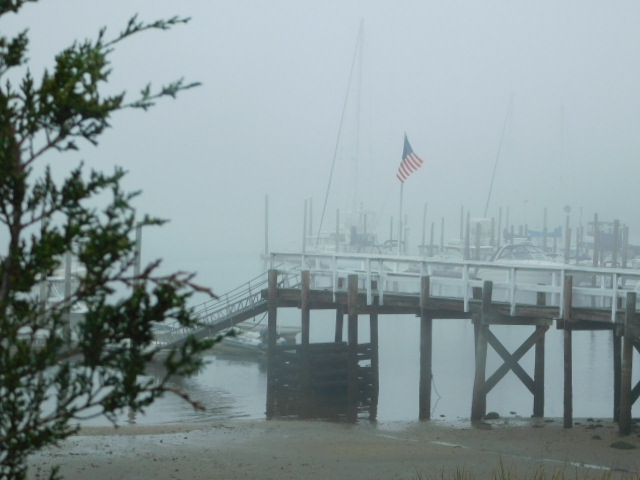
Autumnal fogs often arrive bringing a tactile spray of light mist to mysterious luminosity and silence.
  • In my youth we thought we knew all about biology.  We remained almost totally unaware, not even at the point when as, today, we admit our own ignorance.  A little beyond the application of some mysterious life force to animate the inanimate, but not much.  Trees in fall were one example.
  • We learned that trees stop making chlorophyll which turns leaves green.  That reveals all the pigments that remain so spectacularly in sugar maples.  Then the water stops, leaves brown and fall, and another yearly cycle is complete.
  • Now it turns out to be far more complex.  The tree actively reabsorbs a lot of difficult-to-find molecules and stores them.  Ecology is enriched and partially controlled by what hits the ground, and becomes self-reinforcing for the parent.  Triggers such as light and moisture and cold are still unresolved. 
  • It is a wonderfully intricate dance, which people who just looked and marveled knew a long time ago.

Friday

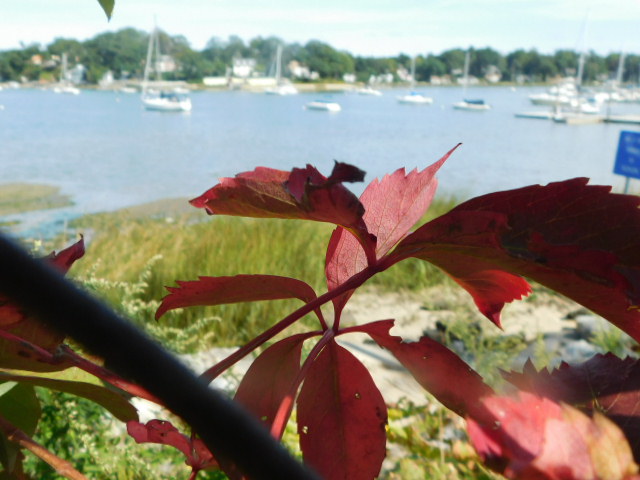
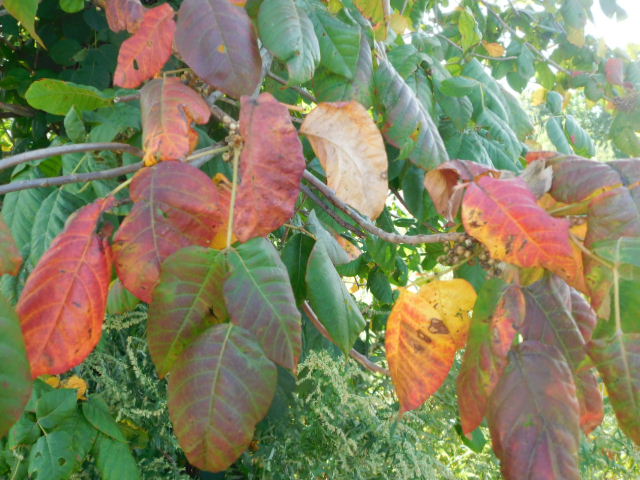
This ivy is poisonous only to humans, which seems appropriate, and beautiful as it dies back.
  • Maples are beginning to tune their crowns, and spaced here and there are dashes of a branch or two glittering orange, red, and yellow.  Maples are glories in New England autumn.  People take long trips to see them, lingering in groves that are naturally as spectacular as any other sights on this continent.
  • Unfortunately, climate change and pollution have severely cut back the local examples, many of which have died out even in the last thirty years or so.  I still have my known specimens to visit, and they mostly still reward, but more and more I see them as hardy survivors, the likes of which will not be seen around here for some time.
  • A lot like myself.  

Saturday

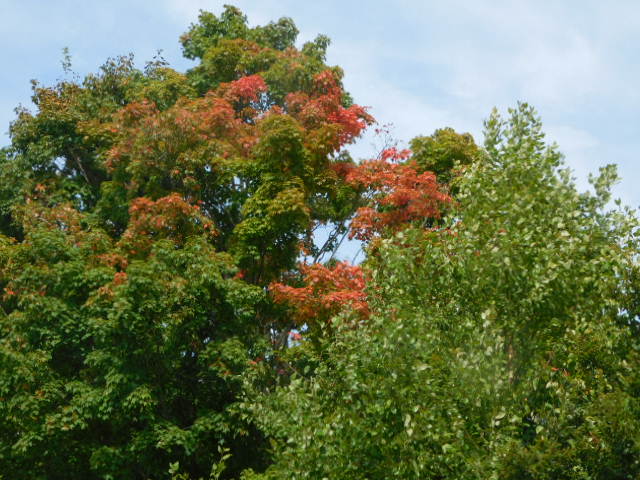
Genetic quirk or microclimate allows a few early red branches to creep into landscapes,
“Little Snowbird, have a good time far away!”
“Shiver as you will, Big Maple!”
“I like the change of seasonal views!”
“I like the warmth and food.”
“I get time to meditate and think.”
“I get to watch flowers, swim, and eat all winter.”
“Well, be careful .  Have a wonderful time!”

“You too.  See you next spring!”

Sunday

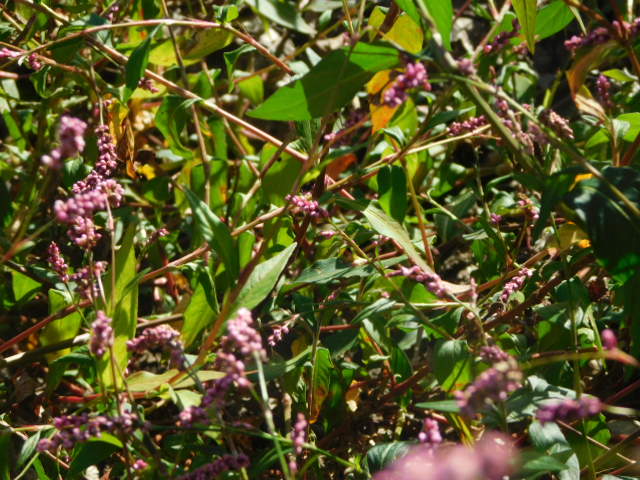
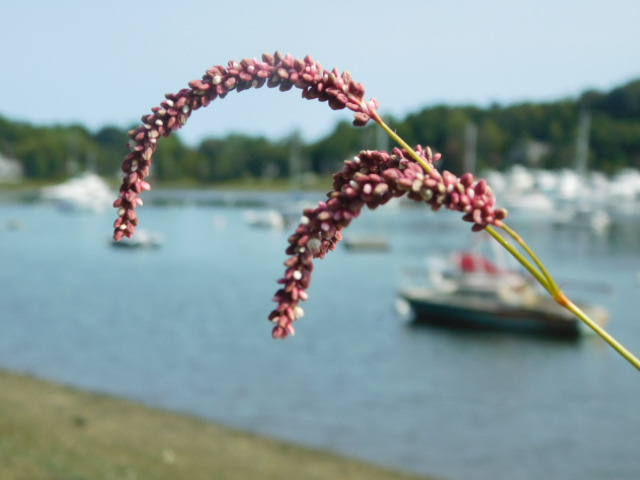
Smartweed has matured everywhere in thick masses, hidden in plain sight under everything else.
Each day so fine, cannot be told
Nor instants counted, saved, nor sold
A construct of time’s flashing blade
Which my own memories have made.
A week, a month, a year, and more

Perhaps once here, now gone for sure.

Equal Lights

Monday

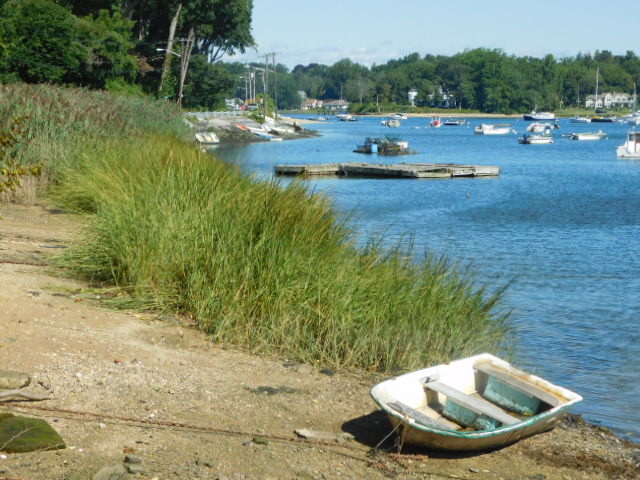
Mid-morning dingy awaits an overslept mariner who will row it out to his clamming outboard.
  • For a few thousands of years, astronomers have scanned the skies.  Ancient civilizations paid them well as the pundits of their day _ predicting what would happen based on the positions of moon and stars, and the portents signified by novas and comets.  They were probably as accurate as any of our talking heads today.
  • Scanning the skies is more difficult in summer in the Northern Hemisphere, where most of those astronomers were located.  They were no doubt happy as the nighttime reclaimed hours of the day, giving them more time to do their work.  More modern practitioners like Copernicus and Galileo probably rejoiced as equinox approached, even though it meant their fingers would be numbed in the crystal clear cold

Tuesday

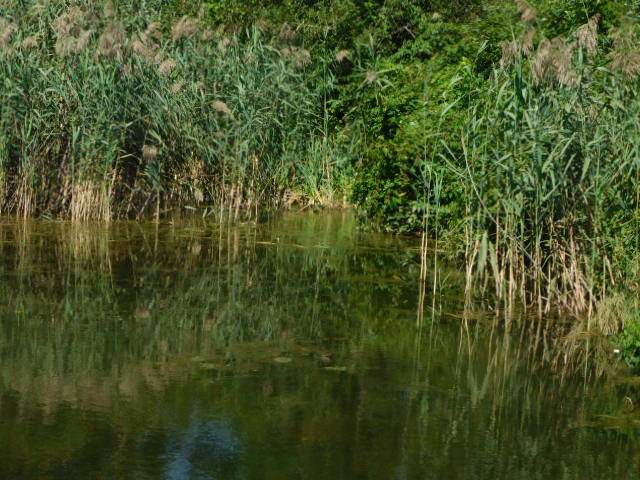
Reeds have finished growth and seeds, the pond reflects a quiet calm transition.
  • This time of year is when I most appreciate sunset.  In the summer the days are long and warm, but at my age they are perhaps a little too long.  When the sun finally goes down, I am often fully into my evening routine, usually indoors.  And if I do try to watch a sunset at the park or harbor, I must contend with swarms of gnats and mosquitoes who think I have arrived to provide dinner.
  • Spring equinox remains too chill to linger.  But autumn nights are perfect.  Bugs are vanished.  Air remains balmy.  The sun remains magnificent, and there are often clouds to accent amazingly beautiful hues.  Each evening strikes me fully because I am still active, and I can pay attention to the daily drama.

Wednesday

Twilight falls darkly with hurricane remnant clouds.
  • Shine on, shine on harvest moon ….
  • We each pretend it shines especially for us

Thursday

Red sky at night brings hope of a clear tomorrow.
  • September has crept up subtly.  Last year, lack of rain had a lot of trees with shriveled leaves, weeds dried to brown, and flowers vanished.  But most of this foliage is still verdant and ground cover mid-summer thick. 
  • There are still enough triggers around to start autumn transformations.  Cooler air, of course, is one factor, but the shorter days are the real clock for bird migrations and leaf shutdown.  I imagine the cosmic conductor crying out “all aboard” as the seasonal train pulls out of the station.
  • Among the many indicators are the ripening of fruits and seeds, now almost complete.  A few flowers may continue just in case winter never arrives this year, but for the most part generational preparations are complete.  Birds are feasting, squirrels are burying, and invisible preparations are underway all around.  

Friday

Evenings fall noticeably sooner now, even week by week.
  • Strangely, fire which has been our constant companion since before humans migrated out of Africa _ perhaps before there were modern humans _ is largely absent in the modern world.  In the summer there may be a bonfire or two, tiny flames at a weekend barbecue, but no candles late at night.
  • For our ancestors, having fuel for fire ready for the coming seasons was indispensable.  Otherwise bedtimes were earlier with each passing day, dawn awakenings later.  In a few months, unchecked cold could kill.  Keeping a fire handy and having the means to restart one if extinguished was a matter of life and death.
  • Today we rarely notice it.  Even now, as days shorten rapidly, we flick a switch as always and possibly turn up the heat for a moment.  Fire?  What’s that, our children ask.  Fire is only associated with disasters like houses burning down.  Civilization hides its presence away along with our other detritus.

Saturday

Sep
tember has lingered warmly, in some ways even nicer than August had been, keeping much in full bloom.
“All right guys,” shouts Moon from the stage rising above a flickering darkened field.  “We’ve finally retaken half the North, and the rest will soon be ours!”
“Do you really think it’s true, this time?” one Pleiade whispers to another.
“Mars, Mars get up here.  What a show!  Venus _ Jupiter _ here they are folks, the big heros of the night forces!”
“Don’t know,” comes the soft reply.  “Seems the same old garbage every year.”
“And Orion, of course!” booms Moon, as applause rises.  “Ursa, Ursa, where are you?”
“Notice how the South is never mentioned at times like these … I hear it’s going badly down there ….” notes the first.
“All you starry host _ we are winning!  We’re gonna really conquer Earth this time!”  Cheers everywhere.

“Sometimes,” her companion glances around to be sure nobody is listening, “sometimes I think it would all happen anyway even without our heroics.”

Sunday

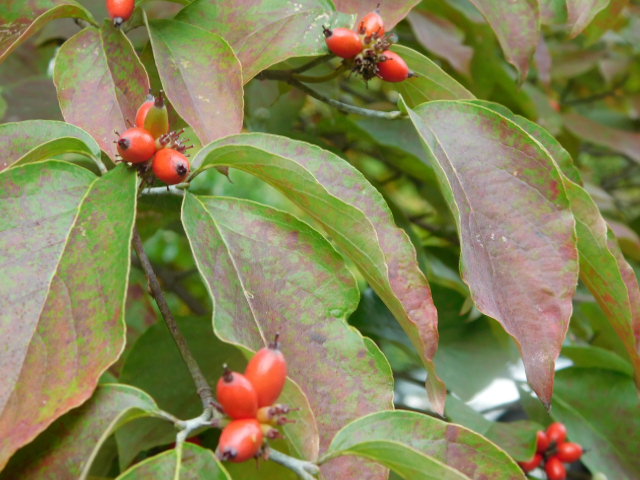
Berries ripe on the dogwoods, and foliage beginning to give notice.
All great philosophies agree
Without contrast, nothing.
No yang means no yin.
No evil means no good.
No dark means no light.
Perhaps all these fine thoughts
Have simply taken daily cycle

And molded it to our deeper needs

September Seeds

Monday

Milkweed puffs ready to take flight over the ripening goldenrod fields at Upland Farms.
  • In September all the fruits and seeds finally ripen and begin their hopeful dormancies for seasons to come.  Fields are filled with floating white silk milkweed rising into clouds of dragonflies, while thistle weeds begin their journey through the bowels of yellow finches which will spread them about.  Wild grapes await harvest, although many birds prefer abundant poison ivy berries.
  • The last flowers are rushing to climax.  Goldenrod and asters join the late parade of pigweed and grasses of all kinds.  There are only a few weeks until equinox,  a scant two months until first frost. 
  • I have known that intellectually for some time.  But did I not, the bounteous climax of the natural world would inform me that vast changes are soon to occur.

Tuesday

If smartweed were not so invasive, it would probably be cultivated for its late, bright, vigorous display.
  • Few songs and poems are composed to our native hickory trees.  Oaks are mighty and strong in song and story, willows weep for poets, and stately beeches inspire young lovers to carve initials.  But hickories are frankly dirty nuisances to suburban homeowners.
  • Their tannic acids poison the ground around them, making it all but impossible to grow things underneath.  Branches sprout at right angles, tempting breaks in snowfall and wind, forcing expensive trimming.  Compound leaves get caught in gutters and ornamental bushes as they fall.  And the nuts.
  • Oh, the nuts.  If they were only easily opened and sweetly edible they would provide a vast wonderful harvest.  They are neither.  Instead the huge green fruits dent cars as they fall, bruise the unwary head beneath when the wind blows.  And fall by countless pounds to be swept painfully into barrels.
  • Of course, this was once their climax forest.  Sometimes I think they know it, and are screaming their resentment of our intrusion all year long.

Wednesday

Hickory nuts ripening and ready to be knocked down by autumnal storms or scampering squirrels.
  • Great oaks from little acorns grow.
  • The very concept of seeds is an incomprehensible miracle.

Thursday

Dandelion puffs are clichés of literature and photography _ for very good reasons.
  • Autumn harvests are the grand reinforcement of temperate zone natural cycles.  In the tropics monsoons come and go, dry periods arrive periodically, but September in the Northern Hemisphere signals a need to get crops in, to save seeds for next year, possibly to sow overwintering cereal crops for early harvest.
  • Daily cycles are easy to understand.  Tides are much more difficult.  Weather is impossible.  But anticipation of winter arrival in most of the northern hemisphere was once a matter of life and death.  Until our ancestors were intelligent and culturally wise enough to prepare half a year in advance of their quotidian needs, they could not struggle onto the vast panoramas of Europe and Asia. 

Friday

Lovely purple bunches of ripe pokeweed rarely survive bird appetites for very long.
  • Fruits now have become huge and heavy, hard or rotting, depending on evolved natural strategies which are always fascinating.  These plants depend on attracting animals to eat their seeds and spread them about.  An alternate poetic method of vegetation mobility is flight on the winds.
  • Dandelions are almost done, but the autumn air is filled with white motes of milkweed, thistle, and vast variations such as asters.  These depend on fluff to ride stronger breezes and gales.  By necessity, such seeds are minuscule, and it is hard to believe they can pack in enough genetic material to begin anew on some appropriate soil after a harsh winter.   

Saturday

Graceful plumes feather against blue skies as summer slides away as quietly and inevitably as the tide.
“Whee!  What a ride!” cries tiny Alda, floating along a blue breeze.
“The golden hours, just as they told us,” laughs Janice, “What a view!”
“And to think they taught us genes are all work and no fun …”

Tiny milkweed parachutes in the immensity of early autumn, fragile, eternal, wonderful.

Sunday

Grasses flicker in constant breeze, blurring meadows, seascapes, path sides, and edges of ponds.
Gigantic firs, stupendous fungi
Start as tiny invisible spores
Impossible but true
Throughout lives we worship nature
For all our science

Life as ineffable as ever was

Locally Grown

Monday

Sumac ripens along field borders, all but unnoticed in our daily rush.
  • Cool wet weather all summer long delayed the usual local harvest of zucchini, tomatoes, and corn.  Besides, most of the farms on Long Island are being eliminated by suburban sprawl, and by the simple fact that the farmers have decided there are better ways to live.  But finally, most have arrived.
  • We hardly notice.  A few people try to be locavores, and I appreciate getting things at least from nearby upstate or New Jersey, but the fact is transportation and the selection of traits has made almost everything local.  New Zealand lamb, Brazilian beef, Nicaraguan bananas, Mexican tomatoes _ I expect to get these and more any time all year round.  More than that, the varieties of local zucchini or cucumbers or apples I search out will most likely be identical to those from global sources.
  • This does not distress me.  In olden days, only fortunate countries like France were able to have the culinary resources now available to everyone every day.  I am grateful that in deepest winter I can feast on strawberries at breakfast, or fresh green beans at night.  And still enjoy very expensive Long Island tomatoes from a few farms out east.

Tuesday

The solitary apple tree on the harbor is having a hard year, with dying lower branches and only a few fruits.
  • An accidental apple tree at water’s edge illustrates the dilemma of organic farming.  With no use of fertilizer or pesticides the fruits are small, mottled, hard, and riddled with worm holes.  Some years there is no crop at all.
  • Many of us do not realize how much effort goes into apple culture.  Trees must be kept reasonably high, trimmed constantly much like grape vines or apples are almost impossible to harvest.  In spring, efforts are necessary _ sometimes unsuccessful _ to protect delicate blossoms from late frost.  If native bees are in short supply, professional hive-keepers must arrive at the proper time for pollination.  And even organic fruit must use at least “natural” bug sprays like Bt.  Finally, even with machine help, there is considerable manual work getting all the apples picked and packed at the right time and sent off, often across the continent, to reach our supermarkets where we take their availability for granted.
  • This apple tree might supply a few families around here, if we were careful and lucky and spent a lot of time working with it.  But it is already way too big for effective use, I’m not sure there are enough bees around, and the constant air pollution from the nearby road _ not to mention what might be in the groundwater _ might not be good for us anyway.

Wednesday

Beans and tomatoes from a friend’s garden are organically flawed but delicious.
  • Too many cooks spoil the broth.
  • Overly complicated recipes spoil our palates

Thursday

End of season finds boats cramming docks as clouds thicken.
  • Some people have perfect pitch, and for them much of the amateur music the rest of us enjoy is a painfully untuned torture.  Some experts can identify one beer from another, but blind tastes also show that most folks cannot tell the difference, especially after the first drink.  Our senses are marvelous and quite perfected for our daily needs, but not as highly tuned as those of animals. 
  • That is why I look with suspicion on current food snobbery.  To be honest, I think a lot of the current diners who rave over specialized heritage or rare foods are engaged in what has been called “food pornography.”  Written descriptions of what they are eating overwhelm the actual experience.  I doubt most of these experts could tell the difference between types of tomatoes if blindfolded.
  • That goes double for “organic” food.  I understand we should minimize use of fertilizer and pesticide, I fully support being very careful with genetic modification.  But minimizing and being careful is not the same as pretending we can avoid them altogether.  And, again, with very few able to taste the difference nor to prove there is any kind of scientific effect on our bodies, this is just another snobbish way to claim you are somehow better and more in tune with the universe than someone else.  

Friday

Wild grapes encapsulate the difference that domestication has made in our food supply.
  • Locally grown tomatoes have arrived in stores, and I enjoy them more than those raised in greenhouses the rest of the year.  On the other hand, these commercial tomatoes are indistinguishable from those from
    backyards and given to me by happy neighbors.  Same for zucchini and cucumbers, which I accept gratefully.
  • We have become a bit impoverished by monoculture, and have perhaps gone too far to select the sweetest corn and best-keeping tomato.  Seeds and plants nurtured by amateurs are much the same as those on industrial farms.  I’m happy someone is trying to bring back heritage species, although I myself cannot taste the difference.

Saturday

Clams remain about the only truly local commercial harvest, a vestige of abundance long departed.
Two tomatoes presenting themselves from overflowing bins at a farmer’s market.  Each tries to outshine the other, as busy hands are picking up fruit around them.
“I’m bigger than you are, you know,” says one.
“Yeah, but I look bright and shiny and ripe,” claims the other.
“But I’m the real deal,” insists the first.  “Completely organic, heritage, traditional.”
“Pooh, pooh.  I’ve just as many genes and carbon atoms as you do,” scoffs the second.  “Pesticides carefully washed off, fertilizers completely integrated into my superior presentation.  You’re a loser.”
“But I am real, honest, natural.”
“So what do I look like, chopped liver?  Your whole presentation is a hoax.”
“At least I am more expensive,” shouts the first, turning a bit redder in the blazing sun.

“Which means I am going first,” exults the second, as it is plucked into a bag and carried off.

Sunday

Kansas (the sunflower state) grows these as a crop, but here they are purely ornamental for the birds.
Frantic finish
Fruit fulfilled
Fitful fun

Summer’s done

Hard Labor

Monday

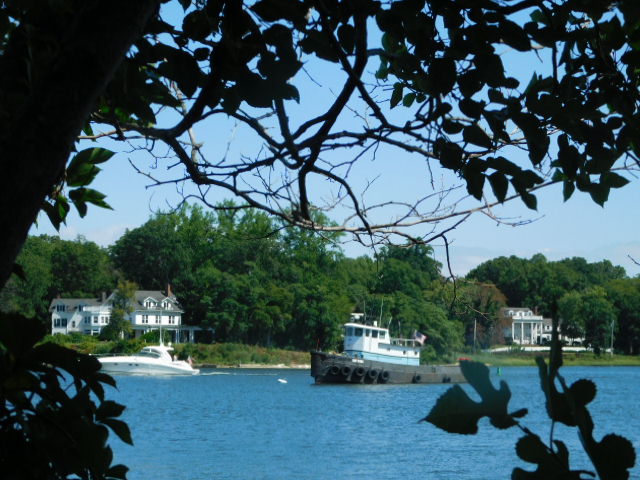
Idle tugboat anchored  near the harbor channel is used to jockey various work barges into position.
  • Ten thousand years ago, the invention of agriculture created successful human societies (what we call civilization) based on masses of food-producing slaves supporting an elite aristocracy.  Several hundred years ago, this transformed into wage slavery as the industrial revolution made peasant farmers obsolete. 
  • Aristocracy for all those eons has come up with various justifications for its existence.  Communal protection, the will of the gods, human nature itself.   Almost everyone always admitted there needed to be an aristocracy, the question was only who should be in it and why.
  • But, like economics and other artifacts of a certain period of history, all was based on the idea of scarcity and the simple fact that only humans could make a modest surplus of goods from scarce resources.  As automation progresses, those paradigms may be as obsolete as old medical theories of bad air creating disease.  What happens in human society without scarcity?
  • The elite today desperately claim meritocracy for themselves, and the joy of purpose for everyone else.  These claims will probably ring more and more hollow as machines start doing everything.  This labor day is not a bad time to wonder what may replace massive work for stable and happy civilizations to come. 

Tuesday

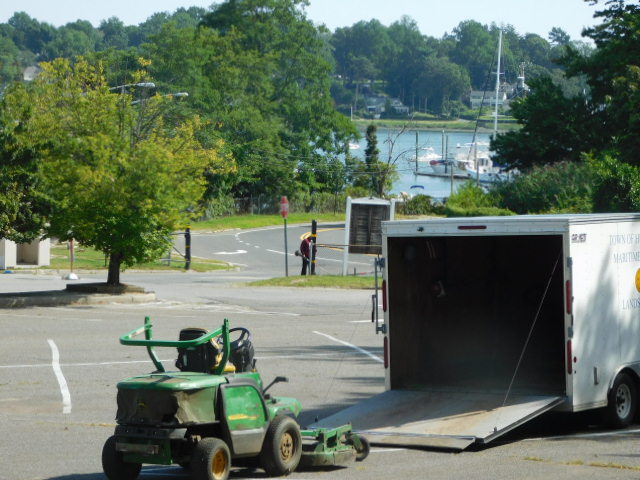
Mowing outdoors seems a relatively pleasant chore as long as somebody else is doing it.
  • We are not sure exactly how long it took to domesticate wild grains and animals.  Basic biology seems to indicate it was less time than we might expect.  Corn, for example, hardly resembles its ancient predecessors, but was only bred in the last five thousand years.
  • During ten thousand years of agriculture, we should also recognize that humans have been domesticating themselves.  In spite of wars and other horrors, the simple fact is that civilized humans _ those that could cooperate to form extended societies _ conquered the planet.  If we could study ancient pre-agricultural cultures and people, we would no doubt find significant differences from ourselves. 
  • With good reason.  That is why stupidities like the paleo-diet and other cults trying to “get back to our roots” are useless.  We left our roots a long time ago, and we are as self-domesticated as any of our useful animals and plants.  Like good little corn stalks, we mostly happily fit into whatever laboring niches our societies provide.

Wednesday

No paddleboard rentals when dark skies threaten and a stiff sixty-odd degree wind sweeps the waves.
  • Load sixteen tons, and whaddaya get ….
  • Ah, but doesn’t the thought of accomplishing so much set a purposeful tingle in your brain?

Thursday

Already end of summer tasks like cleaning boats for storage are in full swing.
  • Nobody can predict the future, but sometimes it is reasonable to project certain possibilities.  Right now, most philosophers seem to be throwing their hands up at the impossibility of understanding how people would live in a fully automated society.  A few science fiction writers have given that a try, now and again, but even they seem to find it hard to figure out what most people to do if nothing has to be done.
  • Regardless of ultimate outcome, we are already encountering issues which call for completely different perspectives.  Economics of scarcity are obsolete in an affluent society.  Hierarchical politics are dangerously irrelevant in an ecologically interconnected technological world.  Universally recognized individual accomplishment is vanishing as instant communications fragment social networks back to small tribes. 
  • Some problems solve themselves.  But we should be aware of how such massive shifts in how we regard the universe _ the largest change in human organization since agriculture _ play out locally and in our own outlook and daily life.  

Friday

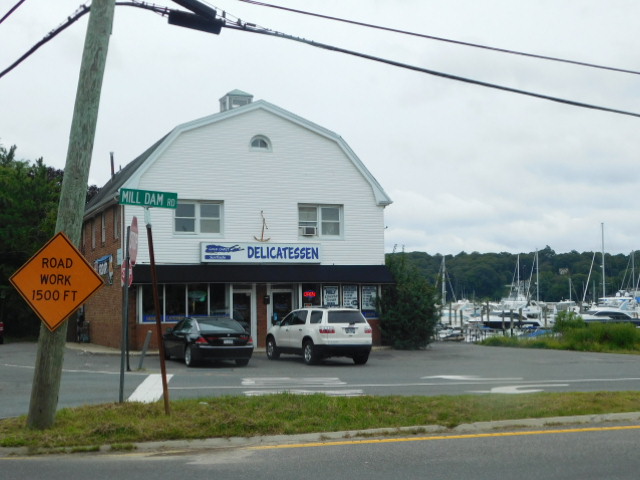
This deli under various names has served a few generations of boaters and ball-players and, lately, cyclists.
  • A current fad is to claim humans are a social species, like bees or ants.  Society is our hive.  Evolution has worked through our intertwined culture, rather than individuals, for at least the last hundred thousand years.  A strange thought _ New York and Beijing filled with busy workers and drones.
  • For the last ten thousand years, especially in the northern hemisphere, agricultural societies have eventually crushed the competition.  In these cultures, eighty percent or more of the males, almost all of the females, were basically slaves, serfs, or peasants.  That is what used to be called “the march of civilization,” from the golden crescent through Egypt, Greece, Rome and Europe, not excepting China and India, with a side glance at Maya, Aztec, and Inca. 
  • For the last couple of hundred, almost all that muscle and brain and desire rushed off the farms and exchanged plows and butter churns for industrial jobs.  That is still true, although the jobs have mutated greatly and are themselves fading into meaninglessness as machines do the real work.
  • But how is society itself mutating, as this happens?  I sometimes wish I could hang around to see how it all turns out.  Being part of it, I suppose, is privilege enough.

Saturday

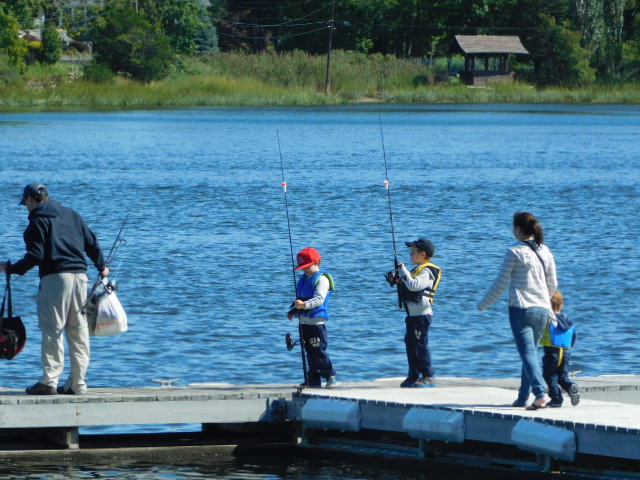
September is bobber fishing time for snappers grown large and impossibly hungry on incoming high tide.
As I wander through crowded Union Square in late August, I notice a group of demonstrators who are apparently just wrapping up.  The speaker has climbed down from his improvised soapbox and is putting away his loudspeaker.  As the crowd thins, I am intrigued by the signs they carry and hasten over to speak to one.
“Workers of the World, Relax!?  Don’t you mean ‘Unite’?” I ask.
“Who wants to unite?” responds the middle-aged brunette.  “Unite with whom?  No, we don’t want to unite with anybody, just to change the old boss for the new boss.”
“But …”
“What we want is for work to become more fun, less of a hassle and not so important to just staying alive.  Give everyone a secure place in the world, and then pay them on top of that for whatever needs to be done.”
“But …”
“Life is too precious to waste working.  Well, it always has been.  But now we have machines to do all the big stuff and it’s time for us to take it easy.”
“But …”
“The rich lately have just been freeloading.  I want to get up when they do, take time off like they do, and have the chance to focus on what I think is important like they do.
“But …”

“Relax,” she smiles.  “It’s going to happen anyway.  We just want to put some thought into it.”

Sunday

Boats, sand, seeding grass on a lazy morning while the rest of the world goes crazy.
I’ve been working on my purpose, all the live long day
I’ve been working on my purpose, doing what the rich folk say
I would be so sad and lonely, not rising early in the morn
Wouldn’t know how to be happy, if no factory horn
Boss Man won’t you blow
Boss Man won’t you blow that ho or orn.
Boss Man won’t you blow
Boss Man won’t you blow your horn
Someone’s in the office with Boss Man
Someone’s in that office I say ay ay ay
Someone’s in that office with Boss Man
Scheming how to steal our pay
And chanting

We’ve got more than you

Hazy Horizons

Monday

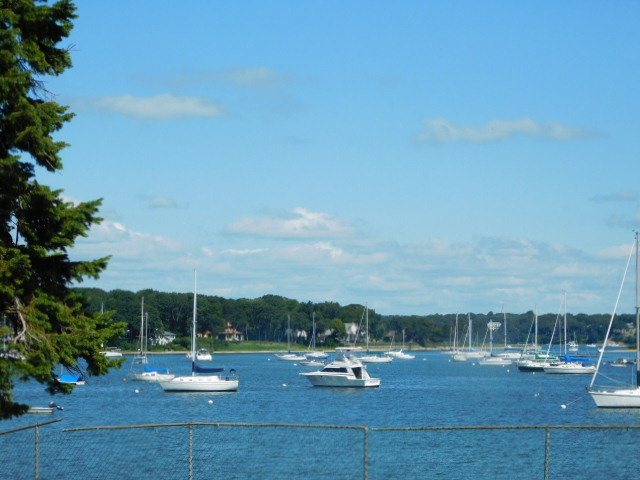
Clouds float over nearby distance, watercraft shrink with perspective, vapor blends multiple blues.
  • Any window with a glimpse of sky offers a horizon, although some are building roofs only a few yards away.  More traditional horizons are those from a mountaintop or on the beach, where the world ends in unachievable distance.  Often in August humidity is high, pollution prevalent, and horizons become lost or blurred beyond a dim bluish line.
  • Horizons naturally lead our thoughts to infinity and limits.  We perceive an immediate barrier beyond which we cannot see, but we also understand an implied universe of more beyond.   This is an interesting contradiction, contraction, tension, or summary of existence itself _ a line between known and unknown, a statement of where our normal world ends.
  • For most of us, horizons are of little more than aesthetic value.  We empty our thoughts and stare at pretty colors, perhaps picking out shapes in clouds.  We vaguely appreciate extensions beyond the vanishing points, but it is too removed to worry about.  If we are on the beach, we turn to more exciting local sights, and more immediately demanding concerns like shade and beverage and how much time is left for this particular interlude.

Tuesday

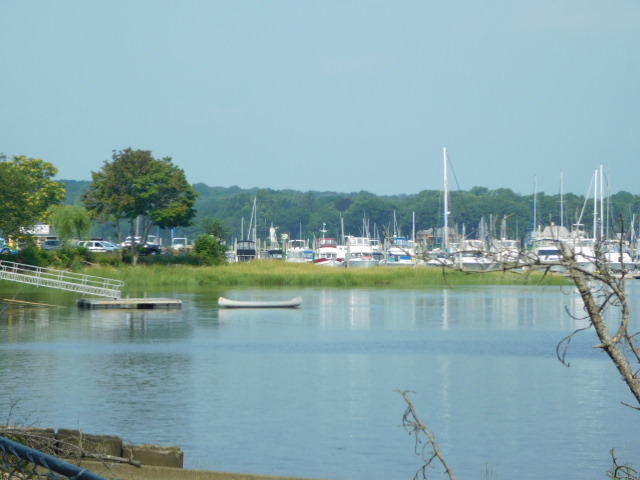
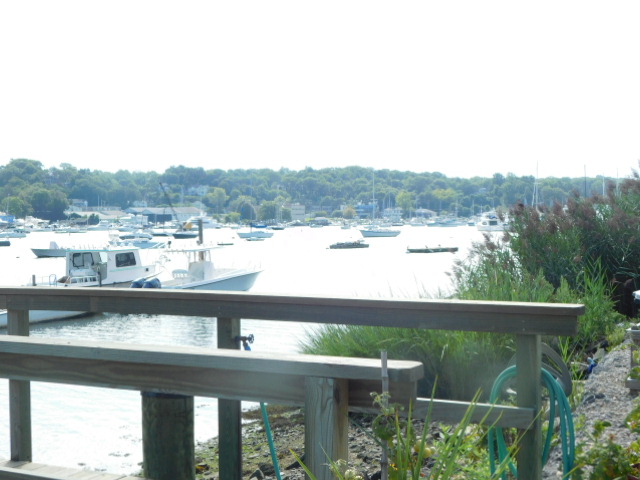
No photograph fully captures what we see; I can hardly recognize this harbor horizon as shown.
  • I’m not a bird watcher, so my normal repertoire of waterfowl recognition is gulls, egrets, cormorants, crows, ducks, geese, and an occasional hawk or osprey.  Gulls are the least intimidated of the set and often dive-bomb unsuspecting beachgoers trying to snatch a bit of food.  Sometimes they act as if they are about to become militant singly or in groups _ a minor version of Hitchcock’s classic.
  • What I enjoy as I sit is partially the unpredictable entertainment.  However the most entrancing element is demonstration of perspective.  A tiny bird down the beach or out on the waves heads towards me and magnifies immensely, suddenly looming huge.  Then diminishes quickly to a dot as it swoops away.  Reflections on how I regard my own problems _ tiny in the distance, giant when nearby _ is inevitable. 
  • Then I come to my senses, stop thinking, and simply enjoy the view, all the way to the infinitely far horizon.

Wednesday

Canoes have become rarer than paddleboards and kayaks, all welcome alternatives to powerboats.
  • Somewhere, beyond the sea somewhere …
  • Romantics experience the unknown as hope.

Thursday

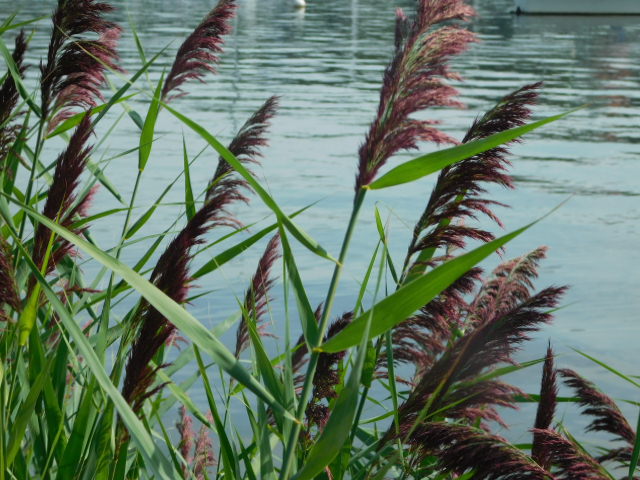
Reeds fully grown now, preparing grain seeds for next year, beautiful even though invasive in this area.
  • Thinking people have long realized the Earth is round, but everyone experiences it as flat.  The horizon is the demarcation, in this case, between logic and senses.  We may know there is something out beyond the farthest we can see of ground or water, but what is real is all about us, to be touched or smelled or used in some way.
  • Unconsciously, I think we carry this over to our perception of time.  There is an almost invisible line between now and whatever may be in past and future.  Yet we know the past contained more, and assume the future _ whatever future _ will as well. 

Friday

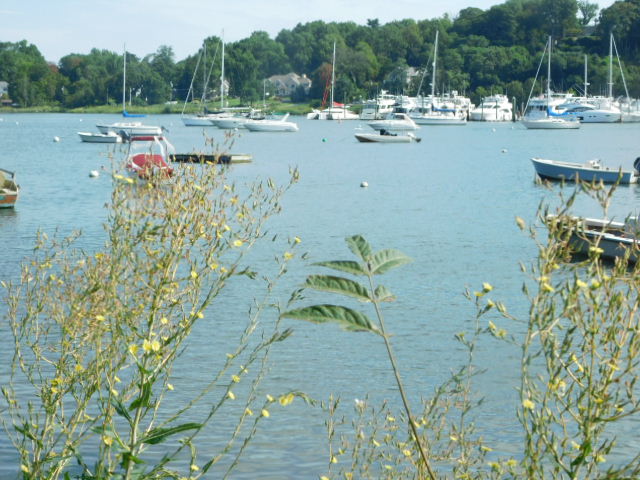
Late yellow flowers grab their moment and rush to seed as the frantic pace of people during summer ebbs.
  • I look across the wide water and see nothing.  Below atomic structure, immense eternal energies seethe, in tensions that eventually create the world of molecules we know.  I remain ignorant of this infinite battleground all about me.
  • I likewise fail to notice the molecules themselves _ gases and water vapor and tiny chunks of every element known to man _ drifting on the wind.  I cannot see the miniscule detritus of life such as skin flakes and bits of feather.  My eyes fail to record viruses, bacteria, pollen and tiny seeds, arachnids, and insects.
  • I stare through the soup and all that registers is that the horizon is clear or fuzzy.  All I decide is that the air is clear or somehow stained with vapor or pollution to impede my view.  My ignorance of true reality is complete, but nevertheless the horizon I do notice and the effects of the air in between are all I really need to fully exist. 

Saturday

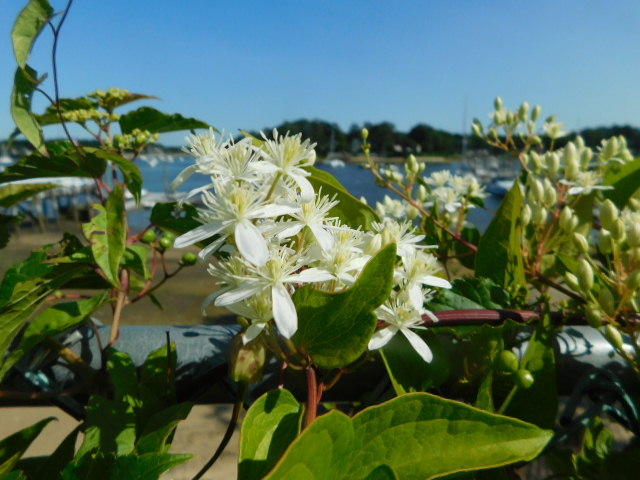
Silver Lace Vine begins to shroud fences and neglected shrubs with a blanket of delicate white blossoms.
“Look at that beautiful sailboat,” my wife exclaims.  The sun sparkles brilliantly on crisscrossed waves stirred by an inconstant breeze.
“Sorry,” I say, looking up, “don’t have my glasses on.” 
“So you can’t see it at all?  Has the horizon vanished?”
“Oh, I see a blur.  I know something is there.  I just can’t quite make it out.”
“Very peculiar,” she says.
“Not so much.  It’s like your problem with reading.”
“I don’t see how that could be the same.”
“You know there are words on a page, for example, you just can’t quite make out the letters.”
“Oh, OK.  Well, put your glasses on.”

“I’m looking for them now,” I say.  I slip them on and the distant world jumps into focus once more.

Sunday

Glaring brightness blurs far and near, perhaps a metaphor for mindless meditation.
Perfect Shangri La I think
More lazy crazy hazy days
Far from all the madding crowd
While swarms surround me nearly naked
Contradictions fill my mind
I try escaping into breeze
And for this while, a fleeting calm
Allows ignoring outside worlds.

Isolated introspection

August Beauty

Monday

Spicebush at Caumsett smells infinitely better than it looks, and it looks pretty good.
  • In August, I wallow in mature beauty.  Spring is crystalline promise, but late summer provides perfect culmination.  We can enjoy all possible masterpieces completed.  Early flowers may be gone, but their fruits continue to be displayed.  Leaves do not yet show inevitable decay.  Animal young flourish as they rapidly grow to prepare for winter.
  • It seems a good time to just sit back in appreciative sloth.   Of course, most times are like that for an old guy like me, but August has its own relaxing potion filled with slow flavor.  The world just is, marvelous and amazing.  A time to almost forget what it was, what it will be, what might happen.  Existence on most August afternoons simply could not be improved.

Tuesday

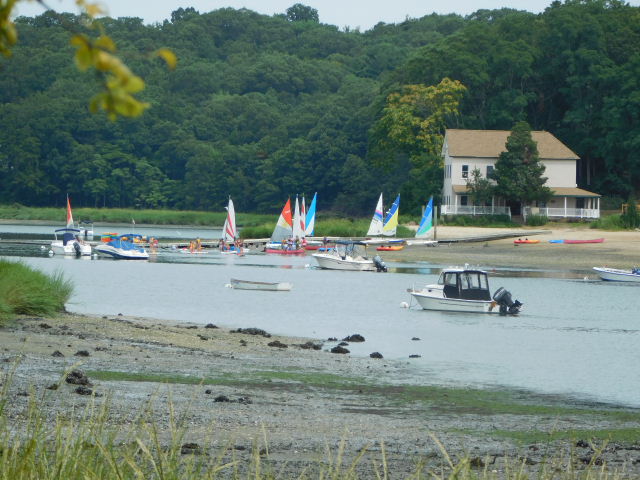
Centerport children’s summer camp echoes with laughter beyond the tidal flats as life goes on.
  • Painting landscapes has never paid well.  Before photographs and movies, artists were paid to either capture portraits or to provide entertaining drama (like the Sistine Chapel.)  Seascapes were either backgrounds, or thrilling illustrations of dangerous moments. 
  • Perhaps that is because it is so easy to appreciate open natural magnificence.  It hardly requires specialized training to be entranced by mountains, plains, or rolling ocean breakers.  Nature helps by allowing each of thousands of viewers at a given location to focus on a thousand different things, something for everyone. 
  • At the beach I happily gaze at sailboats along far shores, or sparkles on the wave.  My wife watches children nearby frolic in sand and tide.  When I was young, I eagerly scanned young women against the spotless sky.  Tomorrow, should I return, it will all be different.  But just as common, just as normal, just as rewarding, just as spectacular. 

Wednesday

Grasses ripen almost invisibly in various nooks along a high stone seawall.
  • A rose is a rose…
  • A rose is also several trillion cells working together to impress my several trillion cells and trillions of companion bacteria.

Thursday

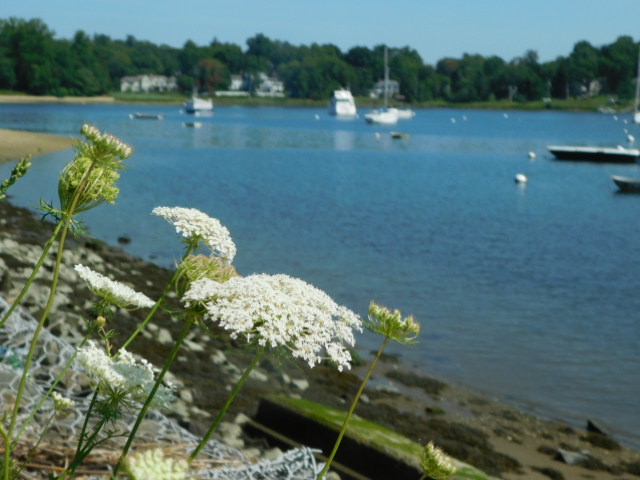
St. Anne’s Lace begins the ongoing parade of late flowers which murmur summer’s passing.
  • We rush about, doing almost anything to prove we have existed.  Take a photo, talk to someone else, build or wreck something around us.  Industrial culture is a culture of doing.  Dig a ditch, fill it in.  Prove your day has been well used.
  • I’m not completely sold on frantically merchandised varieties of meditation, but anything which slows us down is a good idea.   Just as important are attitudes which allow us to feel accomplishment without affecting an external artifact.
  • I spend more time sitting and looking deeply, pause for a moment to engage with a bee or flower or cloud.  Stop in the middle of a meal or a walk to appreciate my exact point in being.  The young laugh and claim I am making a virtue of necessity.  Perhaps that is so.

Friday

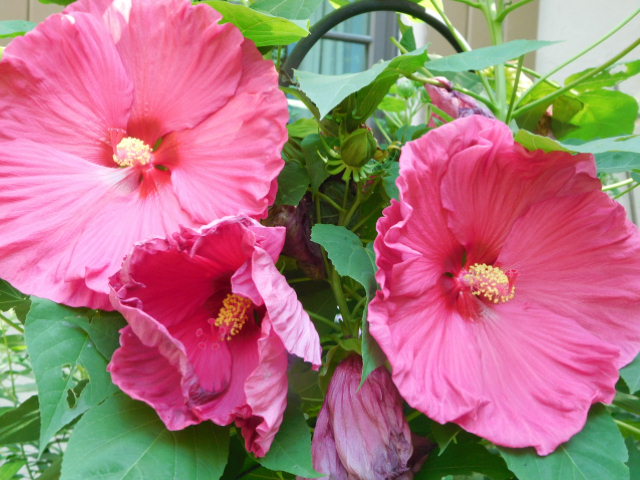
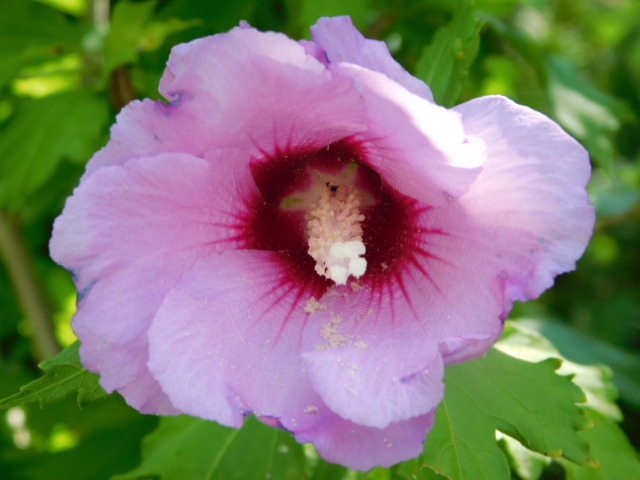
Perennial Hibiscus amazes us each year with such grand reward for so little garden effort.
  • There are many kinds of snobbism, as varied as people’s beliefs.  Some, for example, dismiss cultivated flowers as less impressive than native ones, no matter how they look.  Others refuse to enjoy anything which is too common, or too easy to enjoy.  “Oh,” they exclaim, “that’s just a cheap variety of red rose.”
  • A newspaper story recently queried some “floral professionals” on flowers they claim to hate, and as might be expected, the answers were always common flowers that everyone else loves most.  How otherwise could they maintain that their own expertise is valuable? 
  • But I love whatever blooms I can find this month, after the midsummer annuals have gone to seed.  If the hibiscus and rose of Sharon and geraniums march on in brilliant beauty only with human help, I am content.  It is just as much a mistake to pretend people are not part of the environment as it is to ignore our environment entirely.

Saturday

Marigolds compete with kayaks on our misty public beach, a scene which will probably vanish within twenty years.
Shadow from a hulking twitchy young man falls on a woman lounging back in a beach chair.  Gulls fight for bread which small children throw at them.  “Hey Mom, doing nothing again, I see,” he laughs roughly.
“Ah, Justin, this is just so beautiful and perfect.  You should try it sometime …”
“Waste of time, beauty, What good is it?  What is beauty anyway?”
“Deep questions from you?  I guess college has broadened your mind more than I thought.  You guys get into heated discussions like this over beer at the bar?”
“Not hardly!” he exclaims.  “But we have one teacher … Anyway, I’m sure you can’t answer the question.”
She thinks a moment.  “Well, whatever it is, I think it requires variety and change.  And people.  You’ll never convince me a bird or dog experiences beauty.”
“Is that all?” he snarks.
“Enough.  Anything more just gets muddy.  But this, right now, is beautiful.  Now, Justin, you sit down right here and tell me everything that is happing with you.”
“Aw, Mom.”  In resignation, he flops on the towel next to her and begins his story.

The gulls flop off to panhandle further down the sand.

Sunday

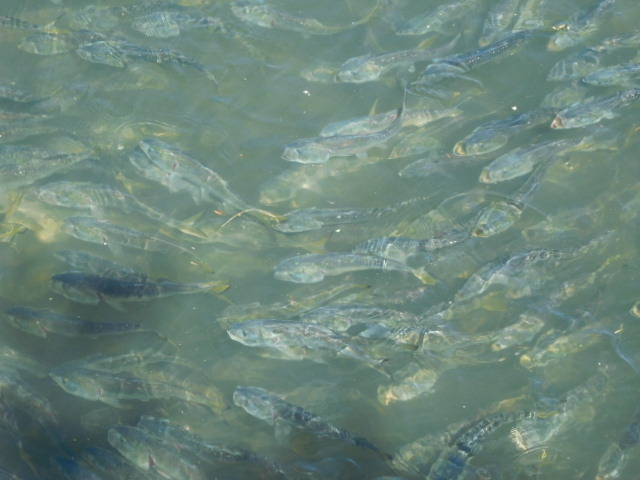
Fish clustering in thousands at head of harbor presumably trying to advance up streams that have been dammed.
August moon fills harvest songs
But now we harvest all year long
Summer sand and beach once rare
We visit year round through the air
I take for granted all my days
Hardly note late summer haze
My mind as emptied as the sky

August simply rushes by

Firmly Middle

Monday

Ho hum, just another pleasant view on another normal day, nothing to be excited about, unless I am alive.
  • “Jack of all trades, master of none” is the pejorative version of “renaissance man” who is, presumably, master of everything.   A renaissance person is now conceptually impossible even for an immortal _ who could possibly know nor use all the knowledge that has accumulated over time?  We could, of course, select categories _ a master flute player who is also a Nobel physicist and industrial tycoon _ but even the most outrageous of such fantasies ignore all the rest of human possibility. 
  • So the common wisdom is to give up breadth and simply be the best at some specialization and let everything else fall as it will.  I think this is a disease of our culture, not merely in careers but also in daily life.  Folks who narrow themselves into pure categories to fully enjoy the essence of perfection are giving up a large part of the simple joy of being.  It is possible, for example, to enjoy wine or food without becoming a connoisseur of vintage and cuisine. 
  • Perhaps time spent in carefully cultivating nuance could be better utilized for modest appreciation of other worldly miracles.  We resist this thought because then we would simply be one of the crowd, like everyone else, and this culture pushes hard to terrorize us about not being uniquely worthwhile.

Tuesday

Rose of Sharon, like goldenrod, is an early reminder that summer is slipping away quickly.
  • Darwinism has been twisted into all kinds of pretzels to explain and justify almost anything.  “Survival of the fittest,” which is a perversion of “natural selection” attains the status of holy writ.  We automatically think of “biggest” “best” “most agile” “best adapted.”  Of course, most of the really specialized magnificently focused species are evolutionary dead ends, and die when their environment changes.  Like some job categories these days.
  • Consider our most successful evolved companions _ mosquitoes, cockroaches, rats, bacteria, fungi.  Hardly specialized.  Mosquitoes are pretty pesky things and seem not to care too much about which blood they feast on.  If a particular bird species dies out, mosquitoes don’t starve.  We should recognize that like them, we are happy generalists, and it is our lack of specialization _ not our ability to focus narrowly on problems _ that provides us true freedom.  

Wednesday

Under billowing overcast skies, water grasses dance delicately amidst reflections and shadows.
  • Anything worth doing is worth doing well.
  • But perhaps “well” should be defined as “just good enough.”

Thursday

Abstract light and dark form phantom compositions only my mind might notice.
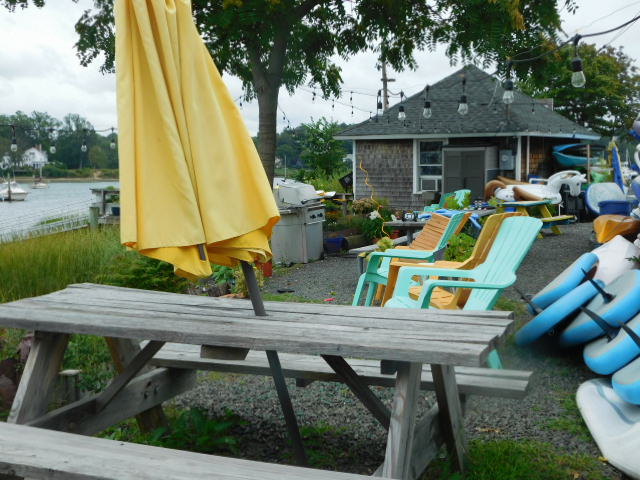
  • Everybody wants to be special, we are told.  It’s a pillar of social control.  Blue bloods always preach that they are in charge for a reason, even if that reason is simply that god or fate has been on their side.  Lately they claim they are smarter.  It’s always a justification for why they have more and everyone else has less.  Once upon a time their needs were insatiable, but now there is a bit a trouble as all needs have generally been overfilled.
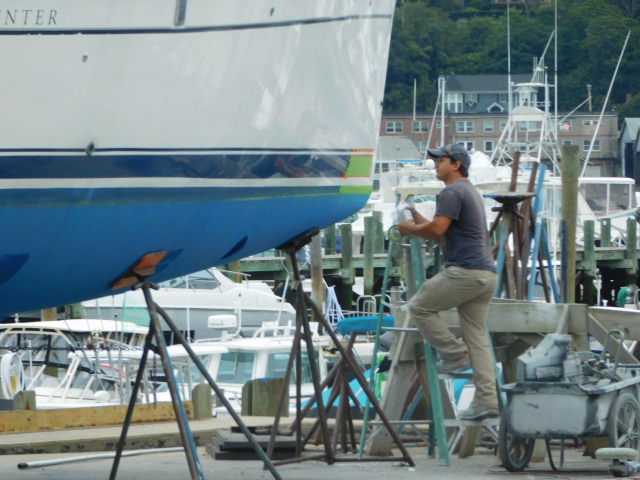
  • At this point, elites sprouting ever more plumage look like sickly extremes of a genetic bell curve.  How many pretty (expensive) tail feathers can they display?  How does that make them more fit? 
  • Humans do not generate peacock feathers or saber-tooth fangs.  Our singular adaptability for survival is our individual mind and our social skills, which we can adjust internally.  Being happy with what we have, at least in an affluent society, may be a better survival strategy than frantically and neurotically racing to be at the head of the pack.  

Friday

Vegetation reaches its peak, in this greenest summer in memory.
  • Seagulls seem to be among the least specialized birds, or perhaps they are simply the best adapted to human environments.  When other avian species that none of us ever encounter vanish, seagulls will still be around.  Like most animals that exist near humans, their specialization is that they have none.
  • As our current culture evolves, I believe our current high-strung never-sleep desperate patterns will self-destruct in either chaos or burnout.  As machines replace all the necessary slavery of the agricultural age, the apparatus of that era _ which has now run amok _ becomes useless.
  • I like to believe that our descendants, if any, will be more like sea
    gulls than cockroaches.  Flying free, always finding enough, enjoying mock crises, and strutting independently or riding tides peacefully however and whenever they wish.

Saturday

Colors hinting at autumn are beginning to creep into leaves here and there.
“Lurk, you’re looking a bit thin these days.”
“Yeah, Vlad, I know.  The trouble is I think I’ve developed a bit too fine a palate.”
“Not sure what you mean,” whines Vlad, hovering as he scents the air for stray carbon dioxide trails.
“Suckella dragged me into a fine blood tasting event, last week, and I discovered I was able to tell the difference between various samples.  Fish, for example, is awful, and bird’s just cheap.  Humans vary an awful lot but a few are simply delicious.”
“Ok, but what …”
Lurk holds up a few of his six legs.  “Hear me out … The fact is the only food I can stand right now belongs to that sweet littlest child that comes out only once in a while.  I’ve been waiting for days now, but I’m still not hungry enough to go back to _ ycch _ bird.”
“But there’s a big guy now!” yells Vlad, whirring in excitement.  “He won’t even notice me under his knee until I’ve  finished the feast.  Why don’t you try his forehead?”
“No, no,” sniffs Lurk, pretentiously.  “Common sour stuff.  I’ve tried it before.  No, I will just wait and hope.”
“Suit yourself,” says Vlad, zipping off, as Lurk alights on a nearby hemlock needle.

Neither could comprehend the big human when he called to his mate “I hope little Sue Ellen has a great vacation upstate.”   It’s doubtful Lurk will survive the week.

Sunday

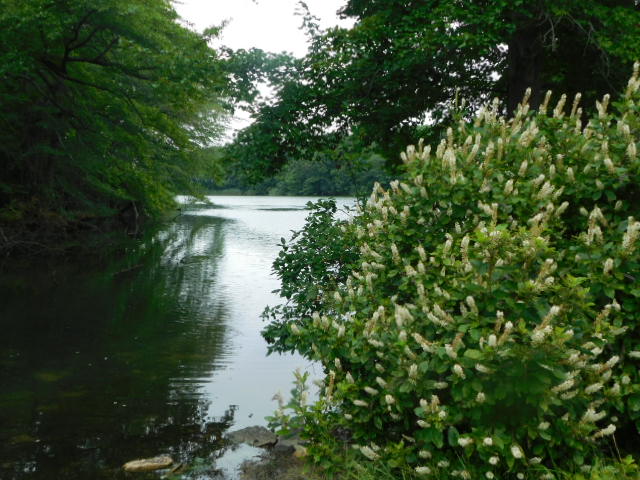
Flooded marshes gradually recover from centuries of being channeled, drained, and harvested.
Middle is infinite.
Around, below, above, within, without
Extend endlessly.
The farthest is too far.
Deepest is too deep.
All directions are pursued futilely.

Middle is perfect.