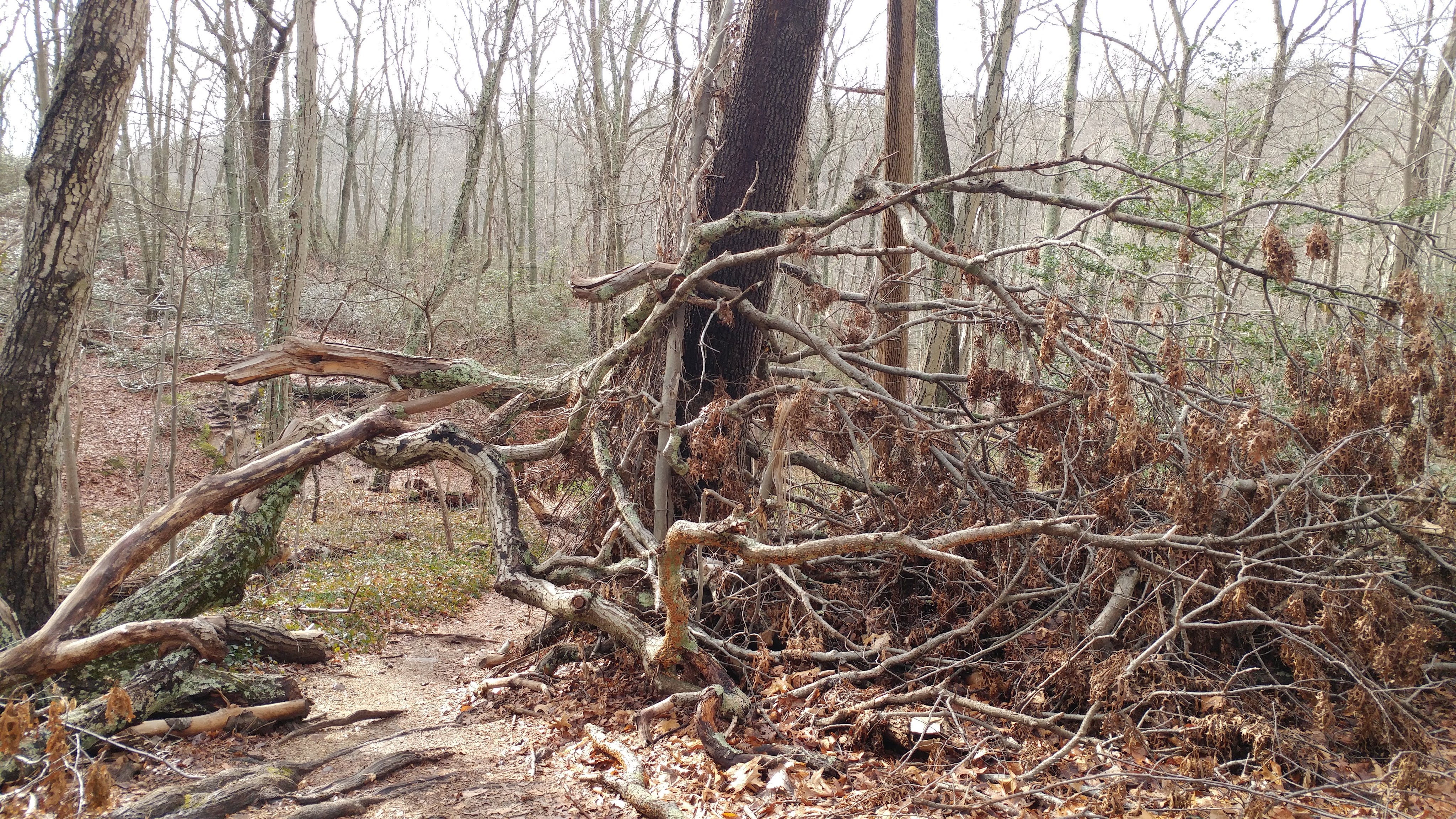
Small

A mantra among Republican politicians is that they want government small. I agree. I want everything small.

I would prefer everything with tiny, not grandiose plans. Small neighbors, small businesses, small foreign countries, small dreams, small visions, small natural disasters. One of the ailments of the modern world is that an individual has remained small, as the rest of the environment supersized.

Whenever humans get involved in grandiosity, bad things happen. Individuals vanish into statistics. Actions become divorced from everyday common reality. With religions and social visions, with institutions of all types, it often seems that the bigger the idea or its implementation, the more horrific the outcome.

Unfortunately, big always wins. The essential problem with Republicans is that their view is too restricted. Without big government, all the other big players _ big business, big billionaires, big foreign countries, etc _ become the de facto big government. There seems to be no escape.

My big idea about small, therefore, becomes merely personal. Appreciate the small wonders in my life: health, property, family, existence. My house need not be as tacky as that of my neighbors. And the best thing I can do with all the big stuff around is to shrink down and avoid it as much as possible.

Innocent

A cornerstone of American law is that an accused person is “innocent until proven guilty.” Like much of the rest of our quaint judicial system, this should probably be scrapped.

In much of our lives we are rightly considered guilty until we prove innocence. My parents believed I ate the cookie or broke the dish unless I could prove it was done by a sibling. My boss thought it was definitely my fault if a project was late or incomplete.

With modern police tools of DNA, electronic surveillance, and other marvels we usually know who did what. With modern media and communications we know it right away. Much though we fear the omnipresent state, it is already here.

Yes, mostly we should (with reasonable precautions) be guilty until we prove otherwise. Most trial now involves arguments as to why something was done or if breaking a law was justified. Or perhaps if a law (such as a speed limit) was reasonable in the first place.

Yes, it is too easy to slide into lazily assigning a scapegoat based on prejudice of previous behavior. Yet the fact is that someone who has lied to me or cheated me in the past will probably do so again.

I’ve given up on assuming innocence. The lawyers who nominally run the country will never do so since it is so lucrative. Or, at least, not give it up until enough pitchforks are outside the courthouses.

Pool

Our lawyer neighbor with one child is putting in an Olympic-sized ground pool. In our climate it can be used only a few months a year, and we know from past experience they will probably use it only a couple of times a month. But it is prestige and useful for parties.

On the one hand, I am amused. In the long run it is after all a hole dug followed by a hole to be filled a decade or so later. On the other, I am kind of horrified at useful resources thrown into such a wasteful potlatch.

The socialist in me would rather he be taxed more. The capitalist in me argues he earned it. The property owner in me knows he has the right, as I do myself . And the private mind says to take a deep breath and accept reality gracefully. It’s a fine example of how conflicted my multiple selves are. And there are surely even more clamoring for attention if I let them.

Now this is America, and some would say “well if you don’t like the taxes or the zoning, vote and change it.” But votes of themselves are a kind of illusion . You must generally throw yourself into a cause to have any effect and I am not even sure this cause has any worth. 

Like much else, it all comes down to momentary spasms on my attention, soon forgotten. Nevertheless temporarily annoying. Like my neighbor . 

Takers

The rich, ever anxious to justify their position, prefer to be referred to as the “elite” or the “makers.” They stress their accomplishments in a meritocratic system, which proves they deserve all they have. And the rest of us deserve all we don’t.

Upon a time there were aristocrats, commoners, and slaves. Since the Industrial Revolution it has been mythologized as students, workers, and drones (“takers”). But what we really have as automation takes full hold is producers and consumers, who are actually one and the same and interchangeable.

If everyone is pretty well taken care of, I have no quarrel giving more to those who are smarter, work harder, take risks, and are luckier than others. There are general social benefits to well-directed ambition for society as a whole.

The minor problem is that many of the elite see success as money expressed as a zero-sum game. They have gold for whatever reason which means others don’t. That seems to make them feel very happy. Nothing new.

The major problem is that the elite begin to believe their own propaganda and _like the divine kings of old _ think they can do no wrong. They try to control society in ways _ no surprise _ that somehow end up making them richer and more secure.

Bad kings had a limited sphere of influence and effect. With technology, a bad elite can destroy everything.

Dante

I’m a peasant when it comes to art, music, literature appreciation. Enjoy the surface appeal and history, not involved in different meanings. One exception was reading The Inferno as an adolescent.

Dante, of course, makes the punishments in Hell fit the crimes. But the deeper reveal is that the punishment is the crime. Angry people are consumed by their anger. Nice idea.

That has limits. People who hurt people and society need to be disciplined and controlled regardless of their internal angst. The meek must fight for their rights here on Earth and not depend too much on eventual justice after death.

But as a day-to-day salve, hoping people stew in their own juices has psychic merit. For example, that idiot in the tailgating car may be developing ulcers. The wealthy constantly waste precious barren hours of their limited existence to preserving and displaying their gold. At least, it is a comfort to believe so.

True or not, fables can help us get through the varied theaters of life. A great deal of philosophic thought is devoted to little else. At certain times, in certain situations, believing that nastiness rebounds karmically on the annoying person can make me smile.

Perhaps were I a deeper thinker, more such tools would be available to me. But alas I am a small geezer of little brain, and obliviously I bumble on through Hundred Acre Wood.

Sermons

In the long run, everyone dies. In the extremely long run, the universe becomes cold dark nothingness. In historic perspective,each of us is an irrelevant hostage to fate. Each of us in our own moments feels immortal, eternal, omniscient, and everything.

Those who ponder the world beyond themselves have come up with many grand ideas. It is all illusion, it is all real, it is simply preparation for what may come, it is random chaos, it is directed by destiny. The one commonality to all the viewpoints is that none seem verifiable by logic, experiment, or even common sense. But each construction also has its charms to help us through our difficult days.

Most of us, who must live in society, are extremely adaptable. No matter what our internal beliefs, we easily get along, usually by “doing what the Romans do.” Dealing with how to get dinner or enjoy a friendship is far more important right now than the fate of the entire world in hundreds of years, or the universe in its billions.

When we meet those who cannot be changed, we are either entranced or horrified. If they speak well we can be, at least momentarily, swayed to their vision. Such sermons from the true believer are difficult to resist. We respect certainty and seek the security of truly knowing the meaning of it all.

Unfortunately, in historic terms, most such orators have been driven by ignorance or derangement. Equally unfortunately, we are rarely granted time to gain perspective that such is the case.

Small Comforts

For most of humankind’s history, being well-fed, warm, and secure was a blessing devoutly to be wished. We all appreciate the small happinesses of our lives, even if we argue about which of them are more important. There is no doubt that a personal philosophy rooted in satisifed happiness begins with an appreciation of those often unnoticed states.

Concentrating on the small enhances our feeling of control, but does limit our possibility. Nobody ever had grand accomplishments by staying safely in bed eating donuts. On the other hand, grand accomplishments always arrive wrapped in complexity and riddled with contradictions.

Equally, it is not fair to claim that small comforts lead to common good. Selfish personal preoccupations may be evil in the extreme to those around us or to society in general. There are historic examples enough of mass-murdering madmen who were kind to the children and cats they encountered locally. And of sadists who found joy in inflicting suffering on others.

Ah, but I do not consider myself such a madman. Anyway, I try to start each day being grateful for all the little things easily taken for granted. Such as eyesight, or electricity, or books, or just about anything nearby. Happy in such contemplations, I can minimize my annoyance at all the worrisome larger issues.

Sunshine on my shoulders makes me happy. And that is at least a fine way to start each morning.

Wise

Wisdom is often portrayed as an old man sitting quietly in a silent subdued setting. Plato in his grove, a monk under a tree, a guru on a mountain top, a professor in a boring lecture hall. Somehow, also, when asked a question they always give exactly the same advice.

Life won’t cooperate. Sometimes we are calm, sometimes angry. If angry we can fight or walk away. Sometimes it is right to walk, sometimes best to fight. The truly wise know what is appropriate each time, but it is never the same.

Myths and holy books which endure contain massive contradictions: “love thy neighbor but sometimes you must kill them all”. Fanatics seize on one phrase, ignoring others. The wise seek to find which response is appropriate for current conditions.

The wise one maintains a massive set of mental templates. These are not simple and not singular, but complex and numerous. The wise select from a vast pallet of possibilities _ wisdom is being able to (usually) make the right choice.

So no easy simple command _ nor even 10 _ from a bearded prophet on a mountainside. Even there, always exceptions. And too often, different from Monday to Tuesday or hour to hour.

Is being truly wise impossible? Sometimes, I think so

Unborn

Right-to-life propaganda presents all stages of human fetal development from egg to live birth as a standard image of a cute innocent infant, cuddly as a puppy. The only thing missing is floppy ears.

Real gestation, of course, is a lot uglier, squishier, and fraught with issues. All of which are conveniently ignored. But I wish to ask, why are all “future people” sacred? Certainly real people never were in our species past, filled with slaves and war and murder and plague and famine.

The fact is all cute cuddly infants do not grow up to be cute cuddly adults, nor even happy robust supportive citizens. Most would agree that the world would have been better off had some old-time dictators, mass murderers, and evil geniuses never been born. Perhaps the less civil among us could do without a lot of current criminals, lying internet personalities, megalomaniac rulers, and scheming billionaires or politicians. And me, I’m not so sure about you…

Humans are not turtles or fish, laying millions of eggs in hopes that a few survive by chance. Babies require nurture or they may grow into monsters. And current civilization certainly has not yet figured out how to provide guaranteed nurture.

In spite of mythology, most poor people once used offspring as helpers and near slaves, most of the historic wealthy farmed progeny out to teachers and boarding schools. The middle class nurturing nest is a modern invention, and rarely achieved.

The unborn, in fact, are a lot more frightening than the undead.

Gym

For most of my adult life, I have avoided gyms. Never cared much about upper body building, would rather walk in nature. I prided myself on buying the clothing necessary to go out in any weather, and I was religious about getting outside on work lunch breaks.

But – well at 75 some indoor routines seem to work. The local Y is cheery, well lit, comfortable, nearby, convenient. Usable even in really bad weather. I can get there, through a short intense workout, and back in an hour or so.

Of course everyone says it is good to exercise. Our evolutionary origins demand it, studies prove it, just common sense.

Ah, but how much and what kind is enough? There, things become unglued, not only at the gym either. Walking a half hour or so can escalate into marathons. Weight workouts graduate toward tons. I see grim people, forcing more and more until they are stopped by body or mind. 

As in much of our culture, the evil is obsession. I use the gym but only to a point. I love to walk, but try to adjust to limits. I continue to believe that stretching and pushing towards the infinite perfect is ridiculous.

Sound mind in sound body. Period. Stop.