Gift Horse

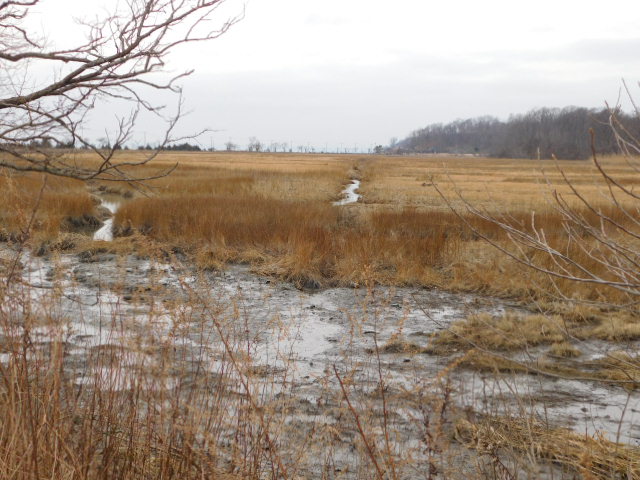
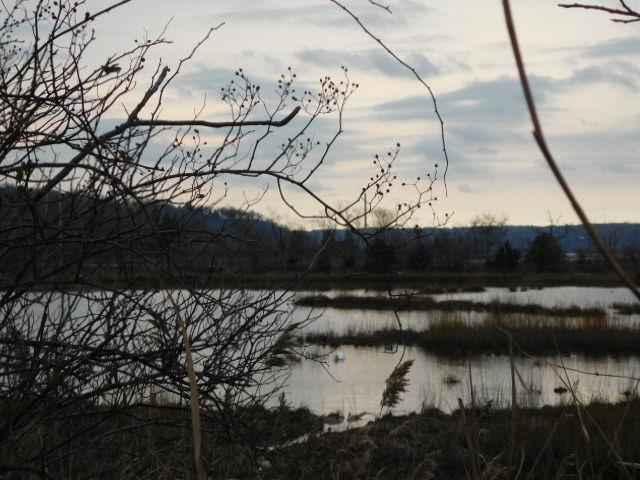
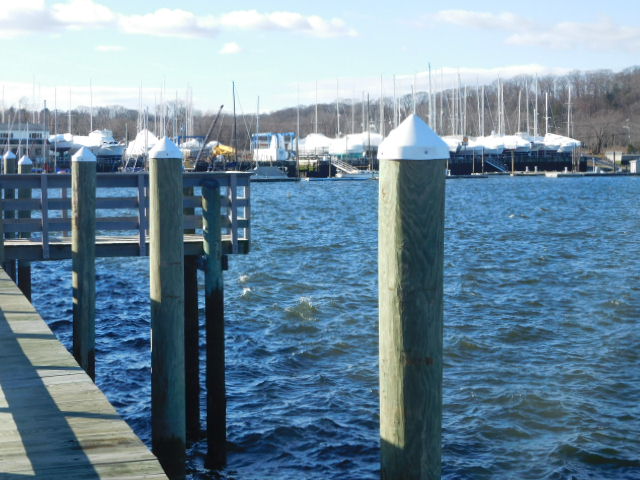
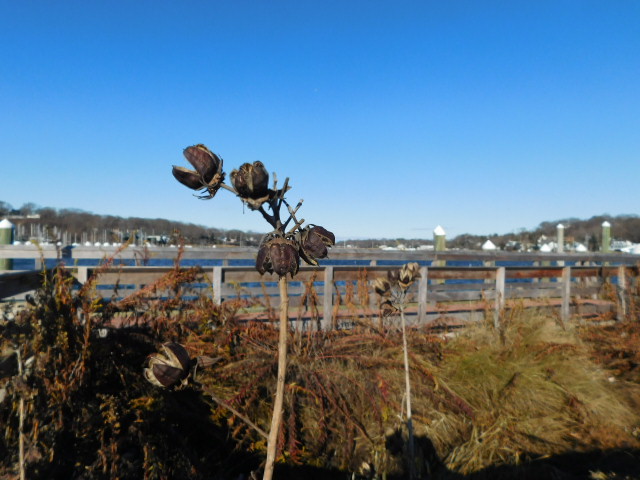
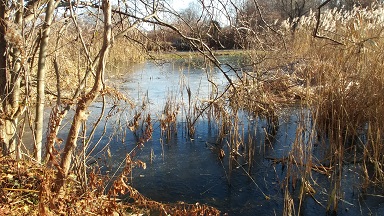
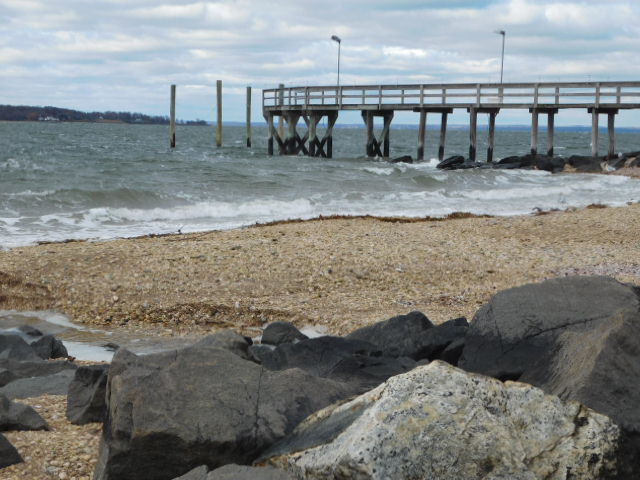
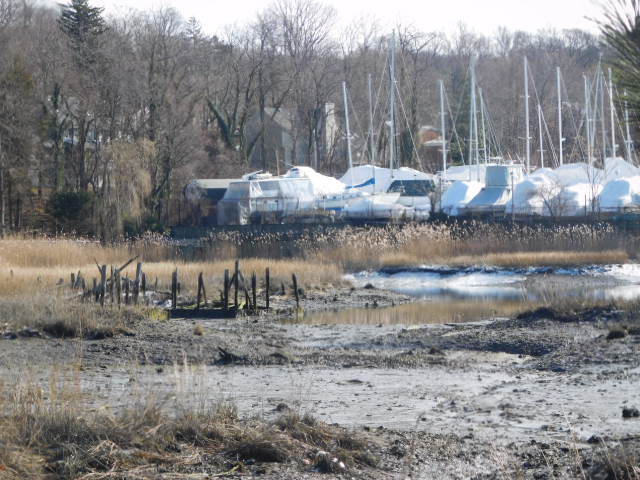
Frozen wetlands, decaying early docks surrounded by increasing “affluence.”

 “Don’t look a gift horse in the mouth” may need explanation to younger readers.  At a time when horses were valuable possessions, the idea was that if you received one as a gift, it was improper to search for what was wrong with it.  No matter what, it was, after all, a horse.

Sometimes it seems that everyone is examining our own gift horse _ life in a wonderful era _ in its mouth and elsewhere with microscopes.  Compared to past generations here and now is paradise for an awful lot of folks, and much less hell for others.  Famine is almost banished, diseases have hope of control, frostbite is rare, and entertainment and comforts are at a level unknown even to previous emperors.  “But, but, but,” naysayers cluck.

Part of this is simple lack of time and focus, too much information to digest, and vertiginous sense that all is adrift.  Who has time to read real history?  Rushing from moment to moment seeking ever greater thrills is hardly conducive to contemplation.

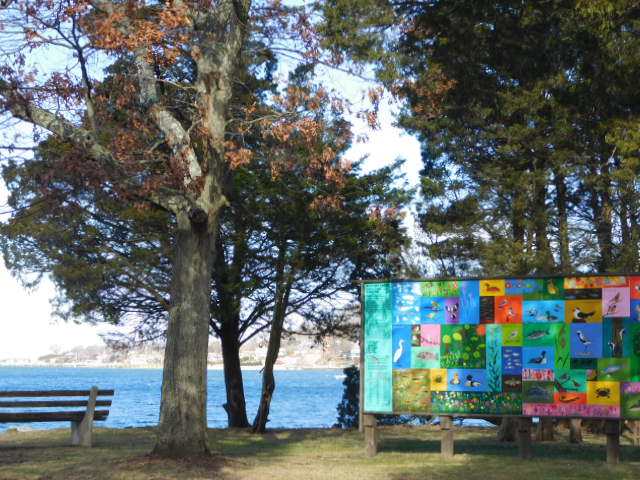
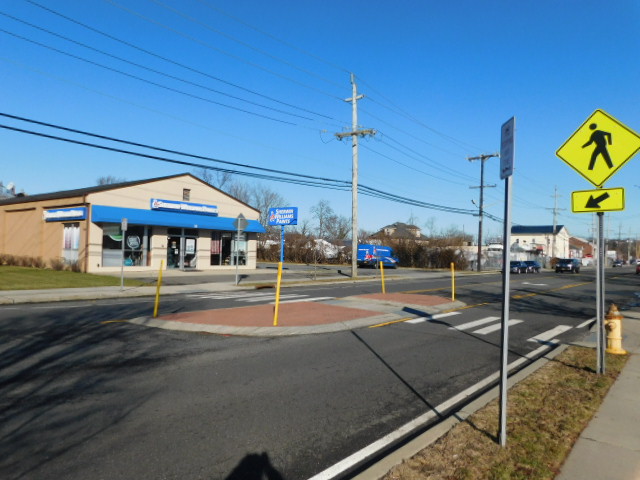
Colorful billboard proclaims summer joys in the midst of frigid wind-chill

I recently finished an eye-opening 1934 book A History of Agriculture in the State of New York State by Ulysses Prentiss Hedrick.  Farming upstate in the 1800’s, even with Iroquois subdued and gone, was wretched by modern standards. 

Chopping massive trees to clear stony land, never-ending work inside and out dawn to dusk, preserving your own food, making your own crude tools, struggling with no money, alone almost always.  Worn out, tired, and nothing to do at night in the dark except _ well many women having 10 or more babies (offspring useful to help with the chores, if they survived), most dying eventually in childbirth.  For some women, death became freedom from a hard life.  You need to read the details to appreciate the agonies _ and I know none of you have time.

And yet _ in spite of insects, disease, relentless toil, accidents, and the hardest winters in modern times _ life was so bad where these settlers had come from that many of them considered that frontier as paradise.  At least there was always something to eat, and never any armies rampaging through to rape, mutilate, and loot everything which could be carried off.  

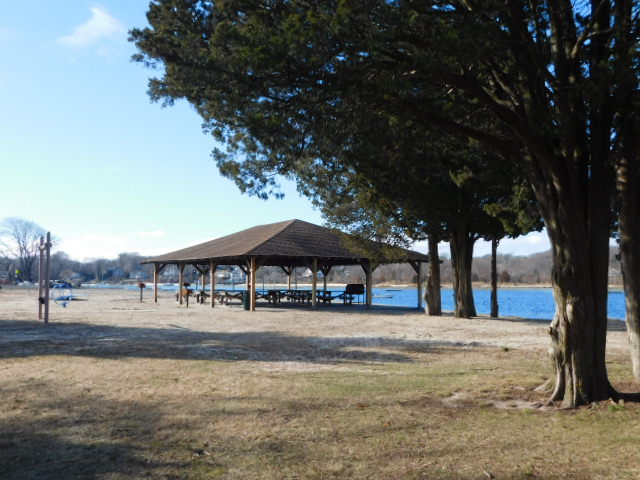
Free pleasure-palace for locals, taken for granted by all, an amazing artifact of our complacent civilization.

Disdaining common sense, capitalists claim human needs are insatiable.  We always want more. We may be rich, may own exquisite and massive objects or property, may live lives that our ancestors could only dream about, but economic declared truth is that we wish to be richer, own more, live better.  We can never be happy as long as there is the possibility that we might exceed our visions.

Yet we are clearly sated at times _ we cannot drink infinite amounts of water or beer, we get sick with too much food, we are unable to sleep all day.  In the midst of plenty, I can become bored and restless.  Happiness and contentment seem to be inner attributes, only modestly enhanced by externalities after a modest plateau of satisfaction is achieved.

I believe the possibility of happy equilibrium is simply achieving a stable situation where I feel relatively secure, exercise general control over my predictable local days, and have hope of changing or eliminating whatever bothers me directly.  That is quite a lot, and certainly sufficient for a good life.  Anything more is whipped cream and illusion, in spite of what advertisers shout at me.

Sometimes, being only human, I do forget my fine fortune: being alive in this day and age, having had a valuable and mostly happy life.  Then I need to remember, read, and contemplate the relatively horrible times endured by my ancestors and all other humans in the not-so-distant past.       

World As Play

World As Play

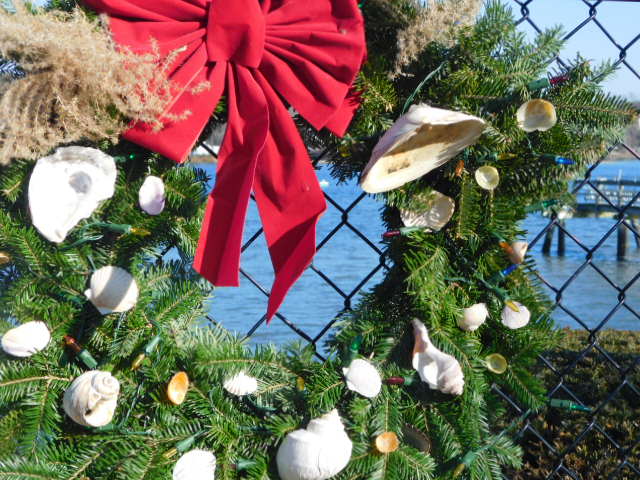
Whelk shells free for taking and examination, a young child’s treasures.

Growing elder by the day, I am enjoying the world as a child of 11 or 2.  It is a tremendous playground which constantly excites me, and with which I can interact as I please.

I often anthropomorphized the unknowable universe as a personal God.  What rules should I follow, how should I judge my actions?  Rules are necessary, whether I accept them by blind supernatural faith, cynical social requirement, or some logical combination of attitude and experience.  Most of the time, rules were useful ways to set boundaries and let me concentrate on my duties of each moment.

But now I am free of most of that.  I have done my part.  Each day dawns and I run to the swings or the sandbox or just dance through the meadow.  I am happy, and if I am wrong I accept whatever consequences may arrive.

Beauty shines in expected and unexpected places, if only I train myself to relax and observe.

Religions _ regardless of outward appearances _ address the biggest questions of being.  How much control do I have over my life?  Which set of morality should I follow, or at least pretend to follow?  What is the best direction for my time and energy?

Answers have ranged from rigid predestination to absolute control of my fate.  The easiest morality is that which everyone around me accepts, but sometimes it seems better to resist.  Often I have felt very little choice in the direction of what I had to do to survive and thrive.

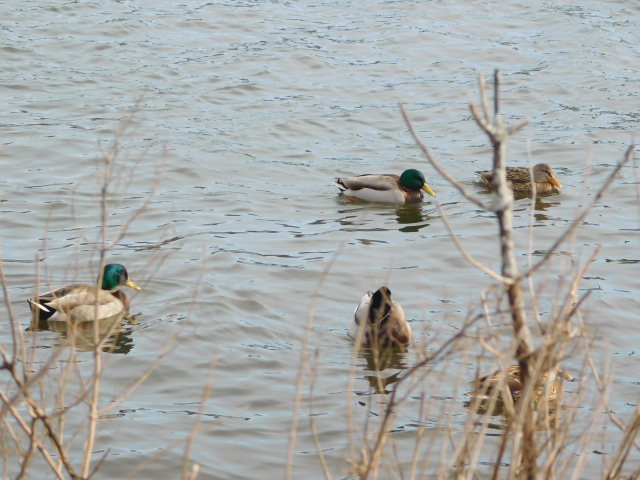
Once upon a time, I felt more in control than a wild duck _ now I’m not so sure.

Most “normal” adults, in a “normal” life of seventy or so years, follow a normal curve of skill and competence.  We begin with none, and end with none, and in the middle of our lives we feel masters of our universe. 

Unfortunately, power often trails skill.  Our early mastery is often recognized in hindsight.  Old people with decaying skills retain vast residues of power which they use badly.  Some reign as arbitrarily vicious patriarchs or matriarchs of extended families, some wreck fine companies they once created, and some damage civilization by playing politics as they angrily slide into  senility.

Shiny New Inertia

Rising water, fouled air, vanishing wildlife _ yet it all looks the same.

New Year!  Time to change our tired old ways!  We take stability for granted, and swear resolutions of hopeful progress.  Better diet, more exercise, less wasted time, whatever. 

Meanwhile, we take daily continua of marvels for granted.  We see stability where universal chaos hangs in the balance moment by moment.  Before we rush off to do things differently, we should pause a moment to celebrate inertia.

Our body is a seething cauldron of tensions, all but unnoticed until something goes wrong.  Trillions of cells are, each second and nanosecond, engaged in complex engineering feats of building and destroying molecules, harvesting or storing energy, frantically replicated.  Almost those cells will have been replaced by the next time we celebrate this arbitrary celestial checkoff.  Our body less a delicately balanced machine than an infinitely complex contraction in which one tendency (barely) balances off another, always threatening to veer out of control.

Our mind _ we cannot describe our entire mind.  Fleeting memories, focus that floats and overlays, that forgets and modifies.  Senses that lie even as they describe how to survive or which bring terror and beauty.  Consciousness is a mystery completely to itself, isolated from logic, infinitely mysterious and wonderful.  Always present, almost always unnoticed.

Salt marshes may soon drown but remain for now as beautiful as ever.

After all time, most of the universe has settled into a predictable pattern which continues along heedless of all the time that remains.  Each day the sun rises, the moon pulls the tides, the solstice stars journey through the heavens, the planets wander.  Even that ponderous inertia is illusion.

Earth calmly orbits the sun _ no, not really _ this planet tries to go in a straight line but is forcefully dragged into a curves generated by mysterious gravity.  Photons and neutrinos flick everywhere, leptons seethe in and out of existence unseen.  Atoms are assemblages of churning forces constantly contending with one another _ all solid matter is mostly raging space.

The stars and sun spew out massive amounts of energy, although radioactive elements spark a bit.  It all seems so normal.  Because we have evolved to accept what is, almost everything at human scale appears to us as stable, right, and natural.

That is the inertia we take for granted.  The wonderful platform of all we are.

Even threatening skies are beautiful, a blessing and curse on our perceptions of change.

Stability is useful.  Mostly, we want everything to be as it is, just a little better.  Resolutions are usually pretty minor things, in the grand scheme of our existence.  The inertia of daily life carries us along and allows us to make adjustments.

So as an arbitrary new year dawns, flush with grand plans and high expectations and vows of wonders yet to be, we should also pause a moment in gratitude for all that continues.  We are learning that it may be necessary to spend much time and effort protecting all that was, all that is.  The shiny inertia which we inhabit, physical, social, moral, and personal.

Good Will

People people everywhere with traffic, buildings, noise, and joy.

Platitudes fall as numerous as snowflakes in Siberia this time of year.  Most express some aspect of good will.  Many involve other people.

We rarely wish good will to the moon, or the inert universe.  Sometimes we meditate on a hopeful balance of all nature and life.  Almost everyone will agree for a while that other people should have decent lives, at least if that is not too much trouble for each of us.  Humans are social enough that it is more likely that we hope even strangers intend well than that we desire them instantly dead.

We should probably spend more time considering just how fortunate it is that we are a social species.  It allows us to perform miracles.  Those miracles would be far more harmonious with other, grander, ideals if they include everyone, and not just you, me, and our tiny limited little tribe.

I rarely pine for wilderness and ancient times as I stand on a dock warmly dressed in biting wind, grateful that civilization (good will to it) has given me so much.

Good will _ being free _ is hardly part of economic analysis.  If it were it would be included among the set of non-zero-sum games.  Wishing good will to you and hundreds of others does not diminish our share of the bounty.  It may even add to my own.

Perhaps caroling “Good Will” is useless.  Perhaps action speaks louder than words.  Perhaps talk is cheap.  Perhaps even thinking about good will is a philosophic scam in a sad world filled with horror and calamity. 

I believe attitude is an important part of life.  A cheerful outlook may be ignorant, perhaps the pessimistic and cynical reap all the material rewards.  Good will is not material (unless you are an accountant) but it has a value, and can make each of our lives better than living without it.

Some claim hell is other people.  Or no people.  I’ve occasionally felt each way.

Life is an improbable wonder.  Trillions of cells, insanely complex chemical reactions, improbable conscious means of experiencing the sensory world.  To take all that for granted, in ourselves, in everyone else, is insanity.  To think a diamond or an extra square inch of dirt or even love or honor is worth more than a second of life is the anchor of core criminality.

Ain’t we the lucky ones?  Good will to us all!

Gift Simple

I rejoice each morning in the delight of electricity.  My wiser sister praises our abundance of clean water.

At all funerals, it seems, the current anthem is “Amazing Grace,” as it once was “Taps.”  Although the tune is nice, the words are baffling.  Who among listeners really believes they are a “wretch,” once lost.

If picking one spiritual song from America’s vast storehouse,  I would choose “’Tis a Gift to be Simple.”  That one I can relate to.  Being simple, appreciating life as it is without dreaming of more, accepting fate rather than cursing it for victimizing our hope.  A gift nourished by monks, peasants, and plain old folks throughout the ages.

Even in our consumer colossus holiday madness, being simple provides a streak of sanity.  Enjoying a flurry of snowflakes, a crescent moon dimmed by high ice particles, noisy geese resting on a frozen pond _ this has always been available in Northern winter, as other joys are freely available elsewhere and elsewhen.

Not long ago were times even in affluent countries when mercenary gifts were hard to afford, when a season of gifts was truly special because wants throughout the year were often unfulfilled.  Not far away, there are people who still do not enjoy such wealth. 

1812-08

Colors are magic, I am fortunate not to be blind nor unable to tell red from green.

Simplicity requires elimination of envy.  Our great gift is consciousness.  If we also possess health there is little more required.  Of course, somebody will always have more of something or other.  Our gift should encompass not wishing to be that person, but to appreciate yourself.

In this frenetic world, simplicity is difficult.  Electronic needs wrap us, there is always something which must be done.  I am no Luddite _ work and ambition are necessary and good in moderation.  Moderation is hard to come by.

Who has the time to notice anything?  Even simple meditation _ there is an app for that!  Staring at a rose for a minute or more seems a complete waste.  So much to do, so much to acquire, so much to wish for.

1812-09

Maybe not too simple _ flash and dazzle have their place in fending off winter darkness.

Tin Pan Alley, in the thirties Depression, produced numerous tunes of happy poverty _ “The moon belongs to everyone/the best things in life are free”, “the best things in life to you were just loaned,” and so on.  Many folks had to be content with the moon, dreams of cherries, and stale bread with their thin soup.

Poverty, illness, war, crime _ there are genuine terrible things that happen to many.  But there remain complex simple gifts _ beauty, love, hope, the sheer exhilaration of waking up sane.  As we rush to avoid poverty or to stave off inevitable mortality,  we should occasionally pause and become simple.  Without worry, without envy, without even hope _ simply a free spirit in a complicated and marvelous dance of existence.

Dual Duel

Since retirement a few years ago, I have been writing a weekly blog, mostly concentrating on my observations of my local environment, and general philosophical points concerning the world.  It has been a way for me to get back in touch with nature, and have some fun thinking grand and useless thoughts.

Google has been my home for this, and it has worked very well.  With changes coming to Google,  I have decided for a while to have a parallel blog in the WordPress community.

This entry marks the point at which I have copied all the old blog from Google Blogger (several years worth) and begin the experiment of updating both simultaneously, and possible differently.

Getting used to the new tools, possibilities, and necessary background information may take a while, but I am interested to see how things are the same, and different.  Please put up with changes and irritations I may introduce over the next few months.

Joy and Evil

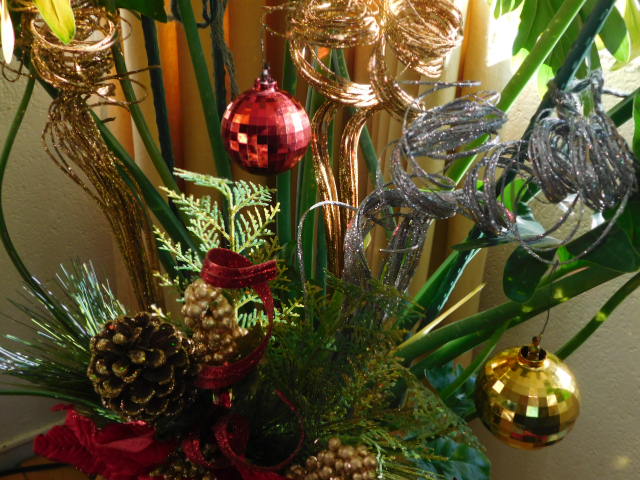
Festive decorations are part of human heritage, regardless of whether the universe pays attention.
  • December is our official season of joy, contradicted by the simultaneous existence of global evil. Religions proclaim spiritual causes,  stoics shrug,  humanists attempt to mitigate its manifestation.  Yet evil remains, but there is much joy.
  • Our technology rests on scientific outlook _ science merely studies objects and their interrelations.  There is no moral judgement.  A rock falls to earth, a child dies of viral infection _ infinite causes and effects, each interesting, a few useful.  Security and material abundance have resulted.
  • Morality, on the other hand, is not so simple.  It addresses people and consciousness as other than objects.  Ethics cannot easily resolve definitions _ what is meant by “good” or “responsible,” for instance.  Logic quickly becomes useless.  Faith remains intractably divided _ rarely shared exactly between individuals and tribes.  Everything becomes relative _ it is ok to kill an enemy soldier, but not an angry neighbor.
  • We should celebrate this season of joy.  Perhaps it is acceptable for a while to gloss over evil.  Temporarily, simply appreciate the gift of being.  Joy.
Early ice on the pond, as the rest of the world begins to boil.
  • Humans are intensively social creatures.  Individuals interact well with each other, especially in a non-threatening situation.  Unfortunately, we also easily form tribes composed of those like us.
  • I believed a solution would be to incorporate all humans into one tribe.  Sharpest evil appeared when one tribe dehumanized another.  I naively assumed that more education and affluence would incorporate a benign inclusive tribal mythology.
  • Evil people _ as judged by what is done rather than what is said _ have decided to shrink tribes to those few who agree with them on all morality.  To gain power they demonize differences and ignore similarities.  Evil concentrates in fanatics , lunatics, and amoral egotists who rejoice in driving us apart.

1812-06

Brown, dry, dying, short days, frigid nights, true winter yet to come _ bleak and hopeless seems mid-December.

What can I do, as an individual?  What should I do?  I have no power, and do not ever expect to have any.  To be more honest, I never wanted any.  I am no more certain of my own morality than that of anyone else.  I live life mostly joyfully, and I believe that is no small achievement.

I try to interject what I consider calming sanity into discussions.  I find that there is basic agreement between individuals I meet on what is good and what is bad.  Only those who switch tribal allegiance into extreme cults lose my sympathy.  My reaction is to treat those folks as lost, and walk away without provocation.  Is that wrong?

For all that, much evil can and should be corrected over time.  I retain faith that our society can once again overcome the evil voices among us and together form a better world.

In the meantime, I take joy in every moment, and try to help others do the same.


Toyland

Holiday displays everywhere, grander and grander lights, bizarre yard sculptures, harmless fun.
  • Old people nurture Dickensian memories _ “best of times, worst of times.”  Christmas was special but we never had all the things you guys have.   Toys arrived only once or twice a year, and pitiful things they were, too.  Department stores were extravaganzas, seeing Santa could take all day, and displays didn’t happen until after Thanksgiving.
  • Even so, by the 1950’s Christmas was already mostly a secular holiday in the US.  It was, in fact, very much about consumerism.  The nods to religion were _ as today _ pro forma and lip service.   Times were just as hassled and tense, people trying to fit in extra hours were just as grim, and from that standpoint not much has changed.
  • Toys were generally a lot different _ nothing electronic, only a few electric (trains, etc.)  Erector sets for boys, tea sets for girls, clothing.  Things that were either useful, or concrete items for play and construction.  Mobility with self-pedaled tiny cars, or a bike when we got older. 
  • And then the long wait for next December, with maybe a brief burst of something special on our birthday.
Seniors accumulate their own nostalgic versions of toys over the years, less for show than for memories.
  • In spite of thousands of years of counter-examples of monks and saints, capitalist and psychological theorists claim people never have enough.   Generally, they seem to be right, although sometimes fads follow “less is more.”  Christmas has always been excess, but perhaps there are cracks in a constant need to spend.
  • Objects are now freely available to just about anyone all year round.  American poverty hardly resembles that of the middle ages or even of industrializing England.  Most folks get what they want, when they want, unless their dreams are impossible illusions.  In the grand scheme of things, the little stuff like food, clothing, shelter, transportation, education and even entertainment are freely available to all.
  • So apparently the big gift for millennials has become object-free.  They want experiences.  Travel to exotic places, unusual adventures, nights out of the ordinary.  Money, and presumably lack of satiety, is still involved _ but not with objects that can be wrapped and put under a tree.

Perhaps a bit too self-righteously, we prefer “real traditional” toys for our grandchild.
  • What bothers me about children’s toys _ now that I am once again looking for a 2 year old grandson _ is that so many are magic.  By that I do not mean wonderful beyond compare.  I mean that they are mostly black box affairs, electronic or otherwise, that teach nothing about our common world.
  • A set of blocks teaches gravity, positioning, hand skills, even aesthetics.  Dolls allow interactive play with real materials.  Other traditional toys were always invitations to think and do and interact with others.  Imagination played a part, but so did interaction with reality.
  • Now, virtual incomprehensibility rules.  What to make of boxes that squawk, boxes that talk, buttons that light, screens that display?  Oh, I see that legos are still doing well, and I am just grumpy and behind the times, but I wish there were more ramps to the natural world and less of the gee-whiz and no idea how to fix it if it breaks.
  • Already most of us adults are unable to fix most anything.  Maybe that bothers me more than the toys.

Beaches in Autumn

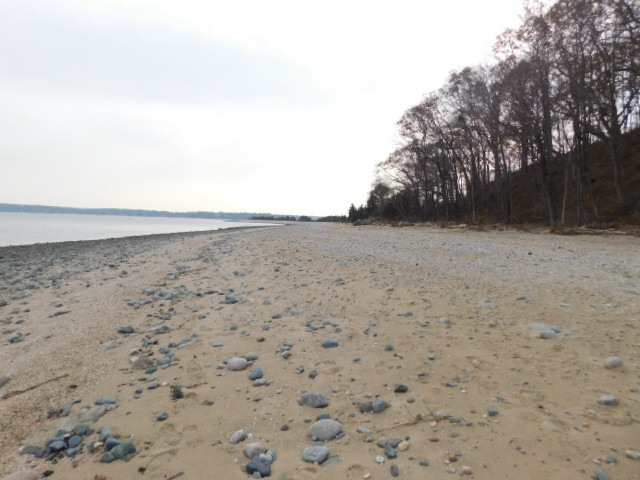
Wide sand as empty as a promotional postcard of remote island getaways.
  • Huntington preserves numerous town salt-water beaches, and also contains a large state park and a national wildlife preserve.  On some unwelcoming weather days in autumn and winter, it is possible to enter a realm of solitude and relative quiet.  Distant shores hide suburban development, wide expanses of water shimmer as always, shoreline stretches invitingly abandoned.
  • Of course, nothing is absolute.  This is one of the most crowded areas on Earth.  Usually there is at least one person _ perhaps walking a dog _ somewhere in sight, or a motor boat on the cold waves.  Leaf blowers in season echo their distant whine.  And too frequently, flight paths from the city airports direct descending jets directly overhead.
  • However, compared to other beaches in the developed world, these remain in an almost pristine natural state.  No boardwalks or massive high rises or ridiculous mansions.  No kites or dune buggies.  No tourists or gaggles of school day-outings.  It seems almost a crime that such beauty and meditative opportunity is effortlessly available to me.
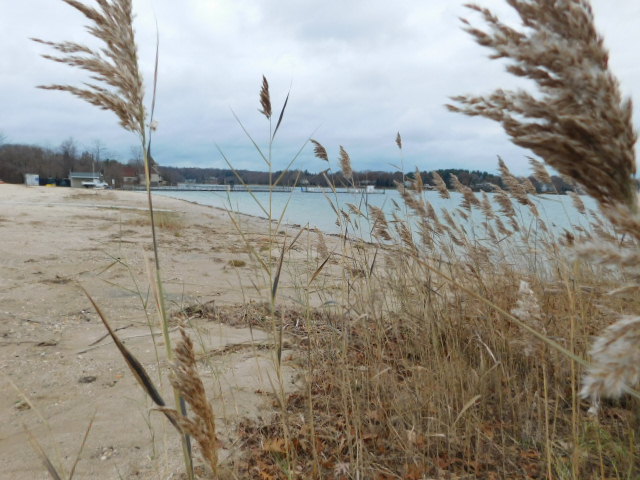
Reeds are evocative in every season, always beautiful, poignant in autumn.
  • Huntington was oriented to maritime activities from its founding in 1643.  Boomers think they have lived through whirlwind changes, but such were minor compared to those faced by early colonials.  In 1620, Pilgrims fled from religious persecution (including burnings and beheadings) into a cold land almost depopulated of natives (dead from repeated plagues.)  In theocratic charge of their own persecutions, Massachusetts Puritans banished many of the tens of thousands who arrived in Boston over the next two decades into Connecticut, Rhode Island, Vermont, Maine, and Long Island.
  • Until the 1950’s, the Huntington area remained a rural economy connected to the wider world by water_ exporting lumber to the West Indies, supplying food to New York City, becoming a summer playground for day-tripper casino excursions, Gold Coast estates.  After WWII, of course, suburbs grew as people wanted to be near the ocean and sound.
  • And now, a pleasant place indeed.  Many old mansions and their grounds are now public areas.  Many early industrial sites like brickyards or boatyards have become public beaches.  Marshes and wetlands, once used to grow salt hay, are forbidden to new construction.  Much seems to have been preserved, and on a dreary day at Target Rock one can almost feel transported back to the seventeenth century.
I’m not yet adjusted to a remarkably frigid gusty north wind.
  • All this, probably futile.  I realize I am one of the last generations who will be able to walk such beaches, which will be underwater in the not too distant future.  Disastrous storms will make inland living far more attractive than terrors of the coast.  Almost anything may happen, and almost none of it appears to be good.
  • When I was young, I worried about nuclear war.  When older mused on bleak certainty of a universe dying in a few billion years no matter what I did.  Now there are other worries and concerns.  Nuclear war held off for a while, perhaps climate change will be less drastic than feared.  The end of the universe has dramatically shrunk from billions of years to a (personal) decade or so _ if I am lucky.
  • In the meantime, a walk on an autumn beach on a drizzly day is a treat not to be missed.  I need not fly anywhere, spend money, nor miss the comforts of home later to rest my weary legs.  All the glory of existence amid wonders of nature are near at hand, and still available if I only make an effort.

Guilty Thanks

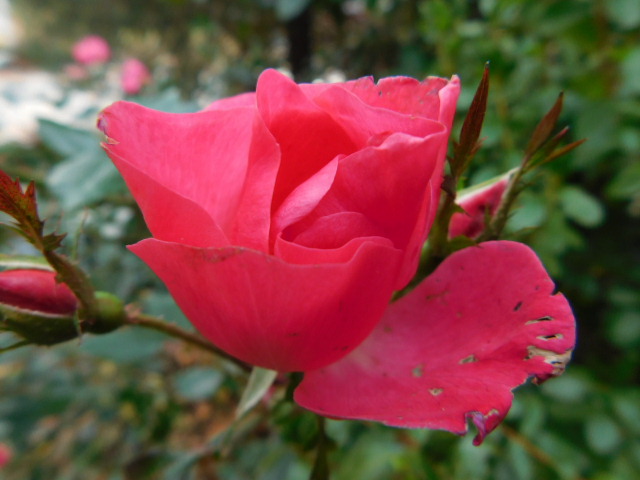
Holiday rose is a small miracle _ like much of life _ except that no miracles are truly small.
  • I was raised a good solid Episcopalian.  I dutifully attended weekly church, my parents unconcerned with religion at home.  November Sundays would echo Thanksgiving hymns from stone walls, sermons would focus on our undeserved blessings.  “I have done those things I ought not to have done and left undone those things I ought to have done and there is no health in me.”  A solid and lasting rebuke to hubris.
  • I have sometimes been infected by my local culture,  believing that I am responsible for my good fortune and wonderful life.  I staunchly bellow how hard I have worked for everything I now enjoy.  The sin of envy creeps upon me as I regard neighbors or media phantoms better rewarded with less effort.  I wax wrathful as the unworthy are enriched, and the worthy (guess one I consider myself) are denied their due.
  • Sanity sometimes returns, and I acknowledge that almost all I have is the result of good fortune.  Born into the right family at the right time and place, blessed with good health and a stable society, lucky in love and career.  Following such meditation, my only remaining emotion is guilt.
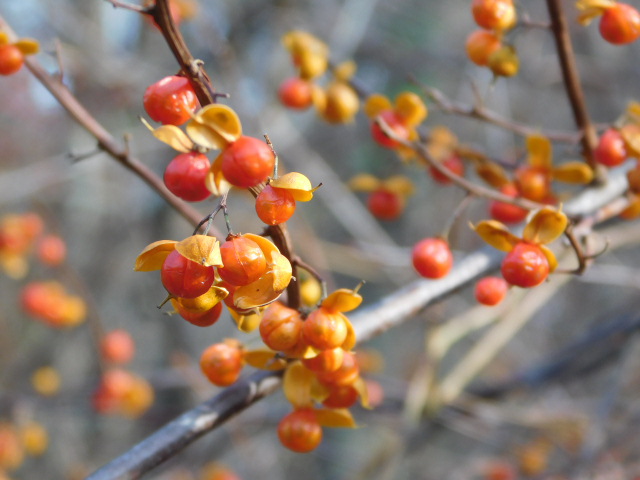
Bittersweet accents this season, more prominent each day as surrounding foliage drops away.
  • Humans are born helpless, but most have capacity to gain godlike powers over their first decades.  Yet wealth and opportunity and the possibility of happiness are unfairly spread.  How much guilt should I feel?  What should I do to ameliorate reality?  I believe in protected public property (what used to be called “the commonwealth”),  strong government to protect basic human rights, and minimal levels of economic and social security (food, clothing, shelter) for everyone at all times.   
  • True psychopaths are rare _ most people easily relate to others.  Our major difficulty has always been that we also easily form small tribes to exclude and ignore everyone else.  Various rationalizations are always provided for such divisions, very few logical to a naïve outside observer.   Tribes remain the largest human problem of this age and how we handle them may determine if our species survives.
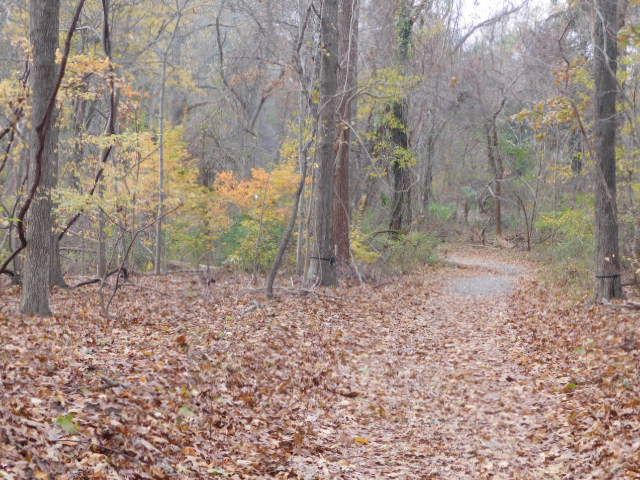
Quiet dirt road through woods evokes eighteenth century _ oops, wait, my cell phone is ringing.
  • We mythologize the first Thanksgiving, forgetting that Pilgrims and Puritans were what we would now call cultist weirdos,  who believed that all mankind except a few predestined “elect” were condemned to everlasting hell no matter what they did.  Our current celebration has none of that fervor, and tries to be a time when we are happy with what we have.  That too, is a mythologized counterthought to our daily belief _ which is that we must always strive to be better, and we will eventually get what we deserve, and we are to be judged by what we accomplish or accumulate.
  • People do strive for their own and the common good, which is a fine thing.  Capitalism has proved one way to reward economic roles appropriately so that material comforts increase.  Whether actual people temporarily filling certain roles should be so much wealthier than others is an increasingly puzzling question.
  • I wonder when enough is too much, whether anyone’s quality of life is indeed measured by the quantity of goods privately owned _ or even by how many or how powerful their deeds of creation or destruction.   I have found it much easier to redirect sources of happiness than to try to fulfill impossible strivings.  Sunset, moonglow, autumn leaves are still, thankfully, free.  Am I truly happier playing a phone videogame than spending an hour with nature?
  • I remain most thankful that I can still freely contemplate such things, in almost absolute comfort and joy.