All paintings at: https://sites.google.com/view/cabinetofvanities
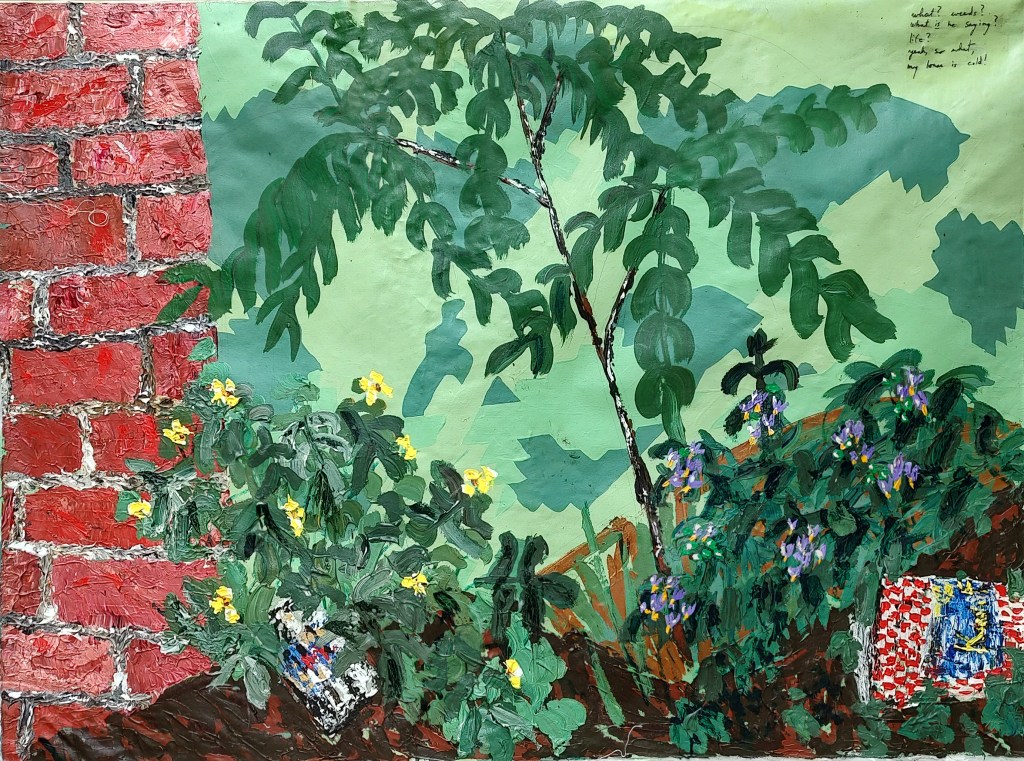
Acrylic on Canvas, 1976, 30×40
What? Weeds? / what is he saying? / Life? / yeah, so what / my house is cold!
All paintings at: https://sites.google.com/view/cabinetofvanities
Acrylic on Canvas, 1976, 30×40
What? Weeds? / what is he saying? / Life? / yeah, so what / my house is cold!
All paintings at: https://sites.google.com/view/cabinetofvanities
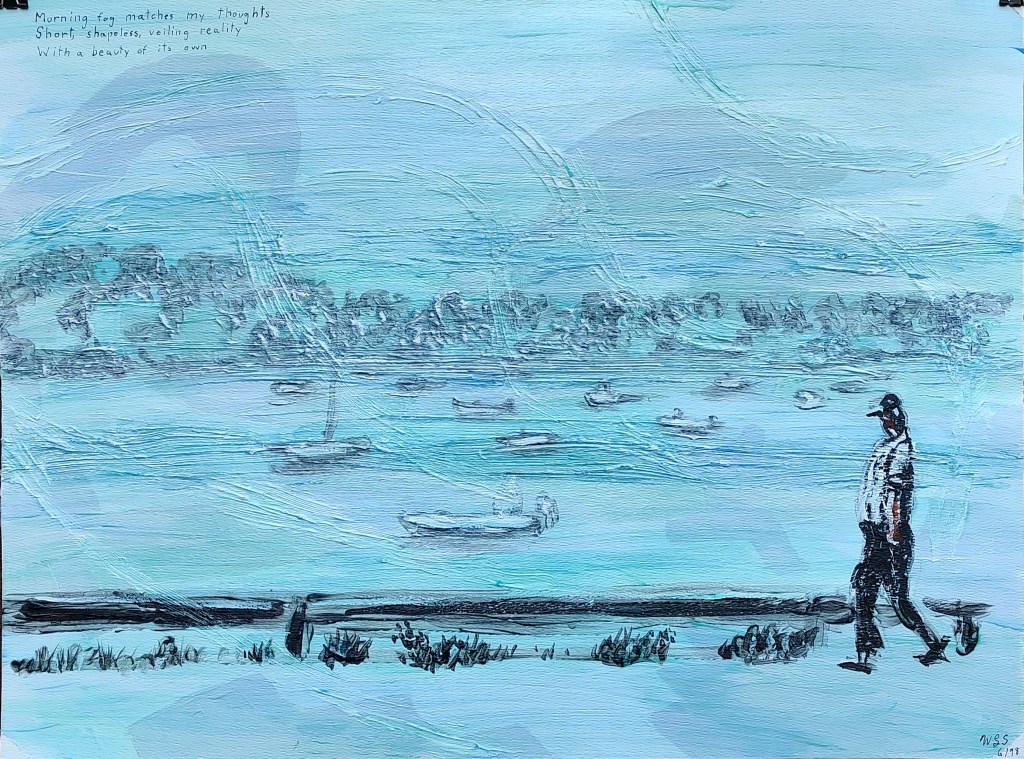
Acrylic on Watercolor Paper, 1998, 18×24
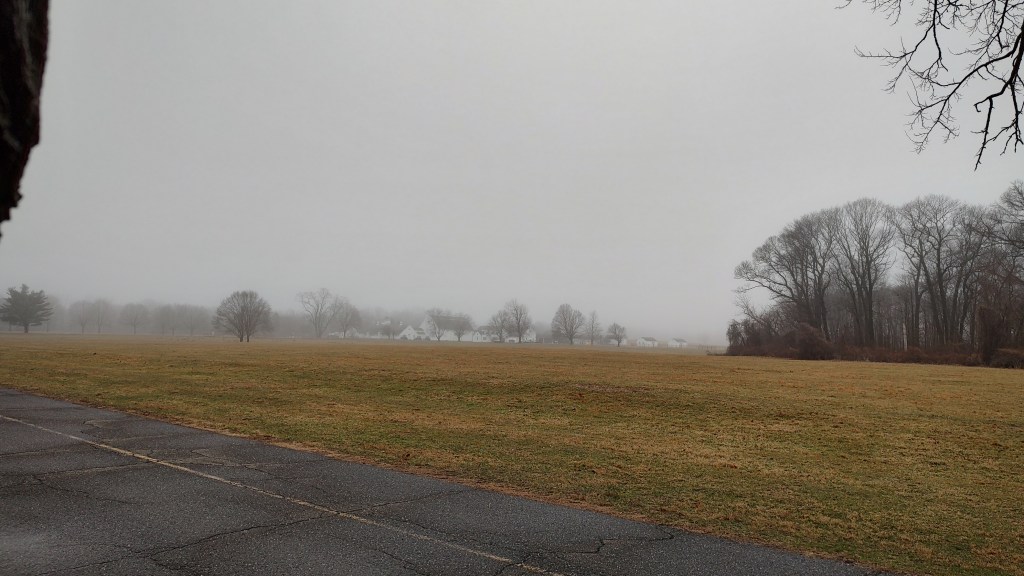
Morning fog matches my thoughts / short, shapeless, veiling reality / with a beauty of its own
All paintings at: https://sites.google.com/view/cabinetofvanities
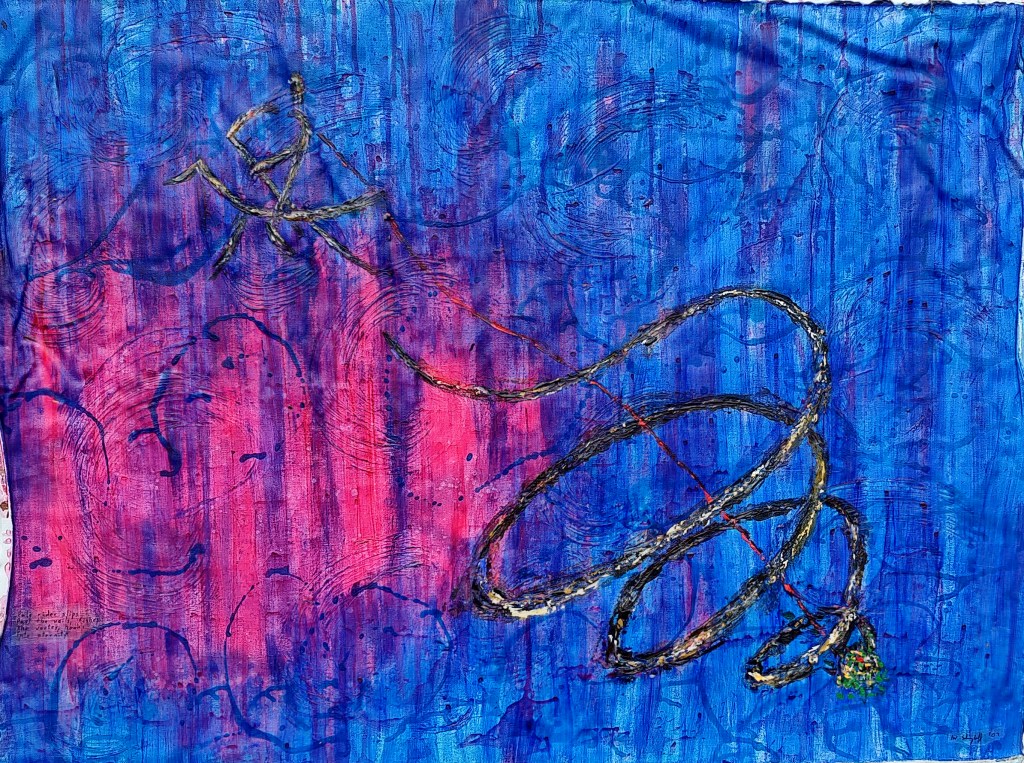
Acrylic on Canvas 2002, 30×40
Pale Rider slips / past the veils, fishes / this vortex, hooks / into eternity
For the last few months, I’ve been engaged in exercises making relatively simple copies of my old sketches onto new small drawings with ink and pastel. It has allowed me to regain some technical facility, engage in quality time in a rough winter, and – lately – ponder philosophical questions .
First, of course, is what was the purpose of the original sketch? It is not a copy of what I see – a photograph does that much better. It is rather an active comment of my momentary existence, leaving a lot out, rearranging as I please, constrained by my abilities and completed in a reasonable amount of time. When doing it, I am almost in an enchanted trance state .
To copy THAT to another media is totally different. I categorize the activity as more “inspired by” than “reproduce”. I have more lingering choices of how to do it, what to accent, what to redo. And never slavish reproduction. More time to plan, more chance to react. Alas, still greatly constrained by ability. Less of a trance, more of artisanship .
Copies of art have always been artistically in style. Until recently, only a painter could give a true replication of a painting, although engravers could produce the essence. Patrons often paid, but artists probably enjoyed what they were doing .
Unlike “real art,” copies do not try to amaze, shock, or change the world. As pleasant as a good meal, with just as few long-term consequences .
All paintings at: https://sites.google.com/view/cabinetofvanities
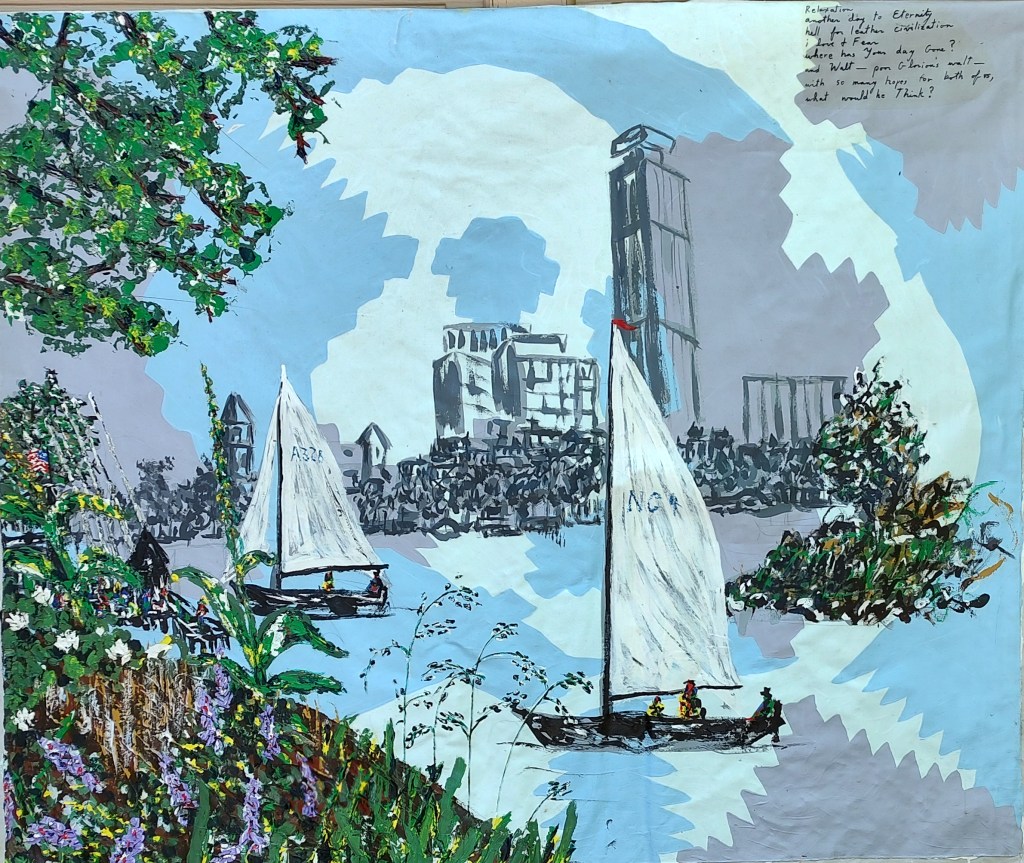
Acrylic on Canvas 1975, 32×38
Relaxation / another day to eternity / Hell for leather civilization / I love and fear / where has your day gone? / and Walt – poor glorious Walt – / with so many hopes for both of us / and what would he think?
Or Shitao – translations are imperfect and names often change with careers. A Chinese painter contemporary with Reubens and Rembrandt who could not be more different. I’ve never really enjoyed Rubens, but I adore Rembrandt as a free spirit. Shitao is much more modern and kin to John Marin .
Whatever visual art may be in its many forms naturally reflects on its culture. Much of the Renaissance work now seems pretty boring in light of cinema, photography, AI, and slick advertising. The “shocking” impressionists are easily imitated by ubiquitous computer programs. What is a painter to do ?
I’ve gone my own way. I accept my various handicaps as part of what makes me unique. I try to correct a few things, work on fluidity and spontaneousness, be creative but not lose touch with the real world as I experience it .
There’s a great satisfaction in that. It’s why I’ve always admired the “literati” tradition. Although often observed in the breach, the ideal was of gentlemen of means who made pictures in their spare time and did not need to sell them. With a bit of philosophy thrown in .
So periodically I pull out my library volumes and admire some nearly life-size color reproductions. It truly helps me relax and create on my own blank sheets of mulberry paper .
All paintings at: https://sites.google.com/view/cabinetofvanities
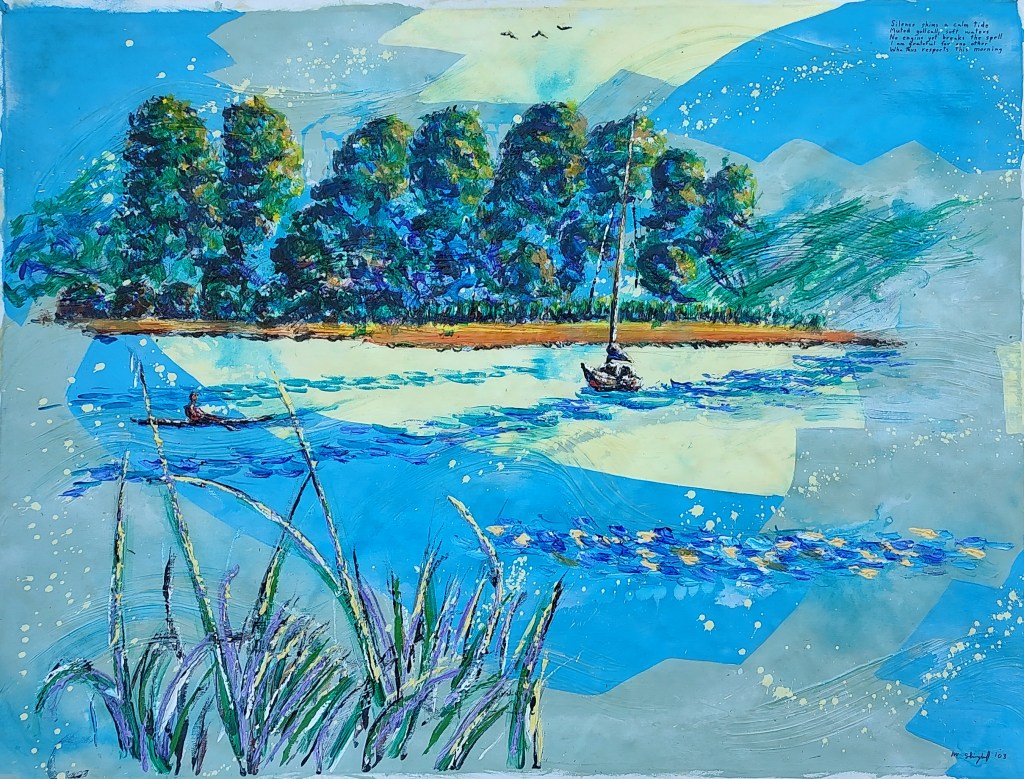
Acrylic on Canvas 2003, 30×40
Silence skims a calm tide / muted gullcall, soft waters / no engine yet breaks the spell / I am grateful for one other / who thus respects this morning
All paintings at: https://sites.google.com/view/cabinetofvanities
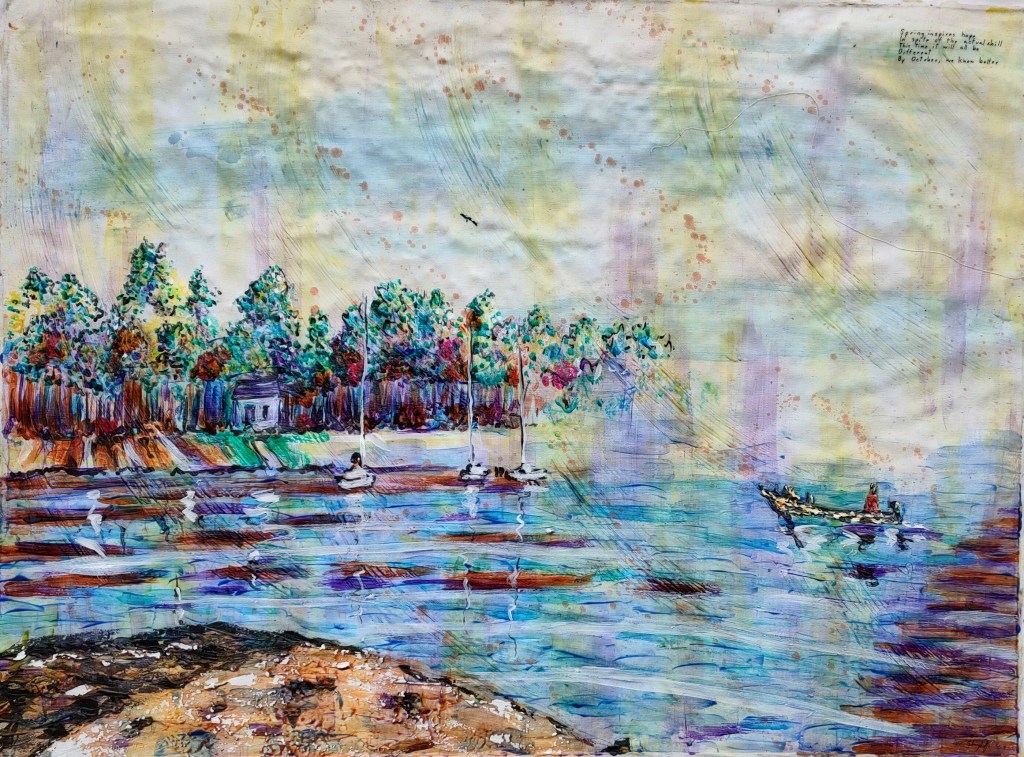
Acrylic on Canvas 2004, 30×40
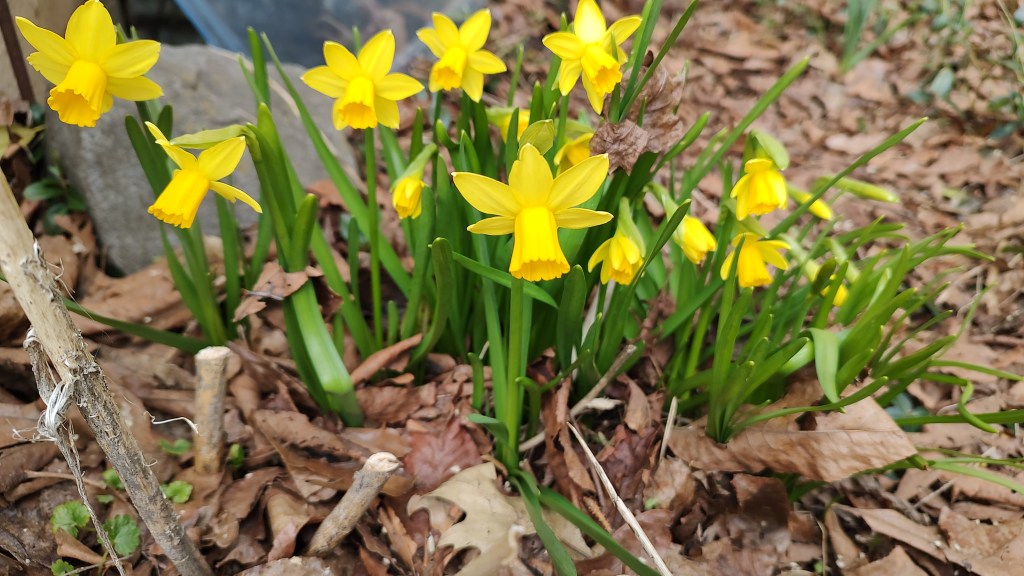
Spring inspires hope / in spite of the actual chill / this time it will all be, different / by October, we know better

All paintings at: https://sites.google.com/view/cabinetofvanities
Acrylic on Watercolor Paper, 2000, 22×30
Sentinel for hours / as the light grows stronger / nowhere to go, nothing to do / danger a forgotten concept / habits die hard
All paintings at: https://sites.google.com/view/cabinetofvanities
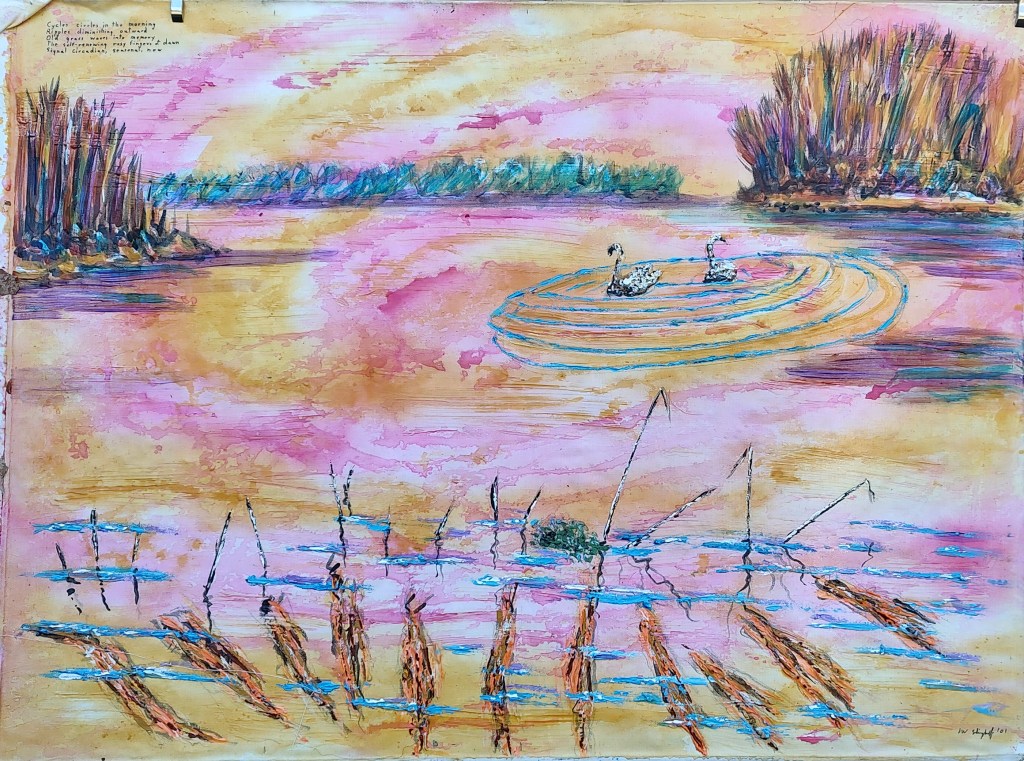
Acrylic on Canvas ,2001 30×40
cycles circles in the morning / ripples diminishing outward / old grass weaves into memory / the self-renewing rosy fingers of dawn, / signal circadian, seasonal, now
 HuntingtonHarborThoughts