Monday
- A brief survey of the news this morning will surely show there are many horrors happening to many people everywhere. Whether there were ever less is impossible to know, but awareness is probably greater. Trying to pay attention, or to begin to care, about everything can be irritatingly painful. Ignoring everything and crawling like Candide back into the garden also seems wrong.
- We live in a cultural mythology that claims we can “do anything,” leaving us guilty if we are doing less than we think we should. But this is dangerous too, for it is easy to become overextended and empty. We have no better answers to life’s philosophical questions than any of the ancients. Yet hubris is not only rampant in our engineering, but also in our everyday thinking. Too much attention to the news, too much worry about how we should affect it, is also dangerous to our health.
Tuesday
Children starving, folks in pain
World is warming, acid rain
Open any page or screen
Then try to hide from what you’ve seen
Why should I care, what ought I know
Of Paris, Peking, Chicago?
.
Olden times had plague and war
Vikings, Mongols, Huns and more
Frequent famines, bitter freeze
Hungry wolves, uncured disease
Somehow humans stayed alive
At least enough to fill their tribe
.
Just down my street, I’ve read of crimes
At the market, hunger lines
I’m built of several trillion cells,
A few, I know, are shot to hell
And even if it all goes fine
Age claims I’m running out of time.
.
I’ve always managed, found a way
To reach tomorrow through today
I may not fix those distant ills
I may not guess what future wills
I can make dinner, loan a smile
And hang on happy for a while.
Wednesday

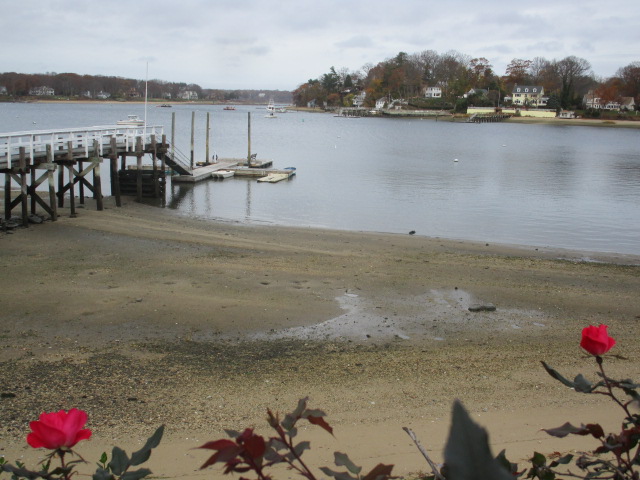
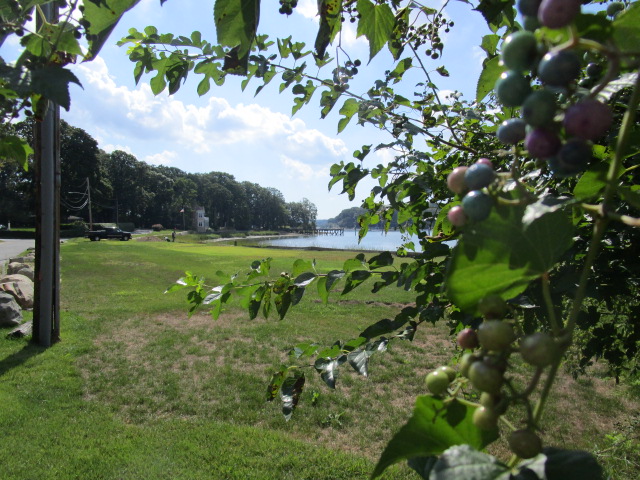
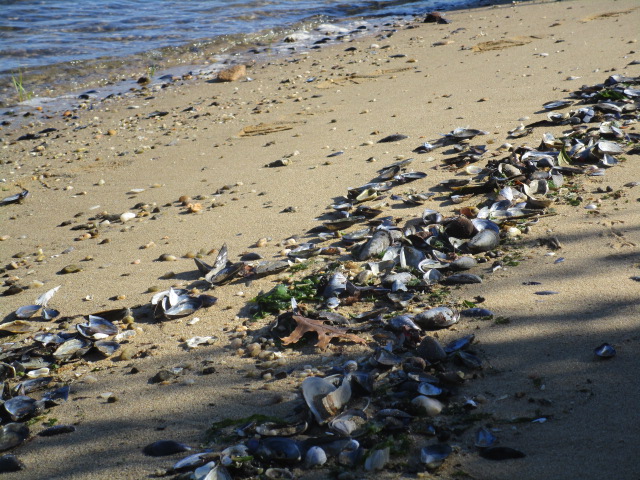
- Hardly expected to find a squid washed up on Gold Star beach. Well, surely not washed up, more discarded from some disappointed dreams of a late-season fisher. Its origins were definitely not in the harbor proper _ seems even the seagulls have not recognized it yet.
- This fits well with the weekly topic _ here was a (presumably) happy little sea creature, blithely squirting along, suddenly scooped up into events beyond its control. Some old religions told of gods netting people as if they were fish, for their own hidden purposes. Regardless of the scientific validity of such gods, the metaphor is spot on. And I wonder if this squid _ had it been aware of and worrying about human nets _ could have lived any better or longer a life.
Thursday
Mark was looking sullen when I stopped him by the Dairy Barn. “What’s got you so upset?”
“Oh, Ephron yelling at everyone over there,” he gestured down Gerard Street. Ephron is our local prophet of doom, always seeking ears and shoulders and wallets to carry forth his struggles against evil in the world, as he sees it, anyway.
“Free country, Mark. What’s he spouting today?”
“Oh, he’s got them all mixed, now. Global warming, of course, aggravated by the police state, wealth inequality, genetic modification, political corruption, all orchestrated by the CIA.”
“Interesting brew. But I’m sure he has proof, he always does,” I noted sarcastically.
“Sure, pamphlets, a few wet-around-the-ears junior high kids. You can disappear into any belief you dream up these days. Always find as much support as you want anywhere on the internet.”
“Harmless,” I ventured.
“Nah, I think it destroy
s civility and common sense. I’d like to sue him for child abuse and being a public nuisance.”
s civility and common sense. I’d like to sue him for child abuse and being a public nuisance.”
“He’s got friends. Even a one-trick pony has a right to be heard. He doesn’t really bother me as much as those people with weird fixes.”
“Like?” asked Mark.
“Oh you know, religions or new age junk, or silver bullets, or wishing to make it so, all the way up to killing off those who you want to blame.”
“The only thing that works, for most of us, is small local actions. Driven, I am afraid, by money rather than idealism.”
“I don’t understand.” After all, I did think a lot of the problems were important and should be addressed.
“Pittsburgh and LA only cleaned up pollution when it was destroying the economic viability _ Beijing will no doubt do the same. Here we didn’t get most of the trash off the streets until our municipality could get money for recycling and there was a return bottle deposit. And individuals like us only cooperate when we can save costs with lower electricity use or insulation, or improving our life by not wasting so many precious hours in cars.” He paused for breath.
“But” I began to protest. Too late.
“Just entertainment anyway, all this stuff, a new opiate for the masses while those in power play their little games,” he huffed in disgust.
“Oh, not that,” I finally decided to play along. “More astrology. Everyone now thinks science can be used to predict and control all futures. Like the Babylonians staring at the heavens. And you can always find an astrologer or scientist who wants to make a buck. At least if they can keep their options opaque and open enough. You know, ‘If you do this or don’t do that a mighty empire will fall.’”
“But not how, or when, or which empire,” he laughs.
“Yep!” And we, like the world, continue on our daily ways.
Friday
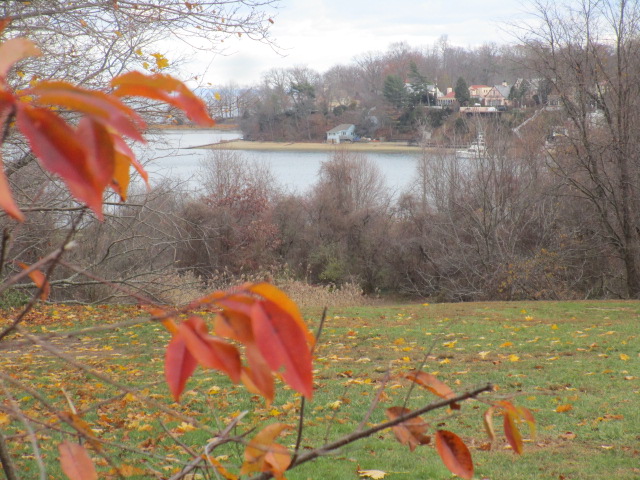
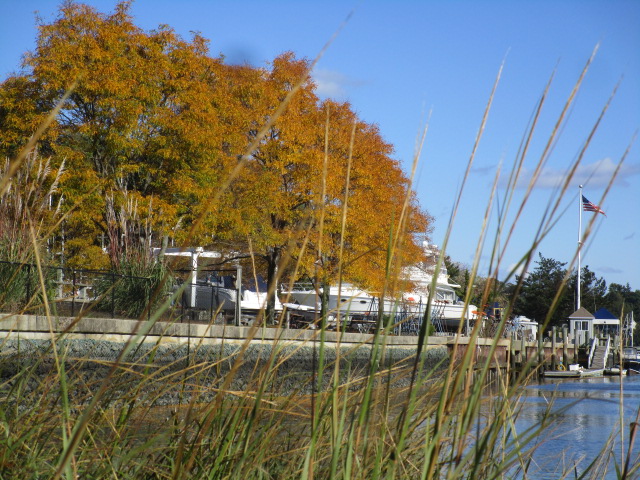
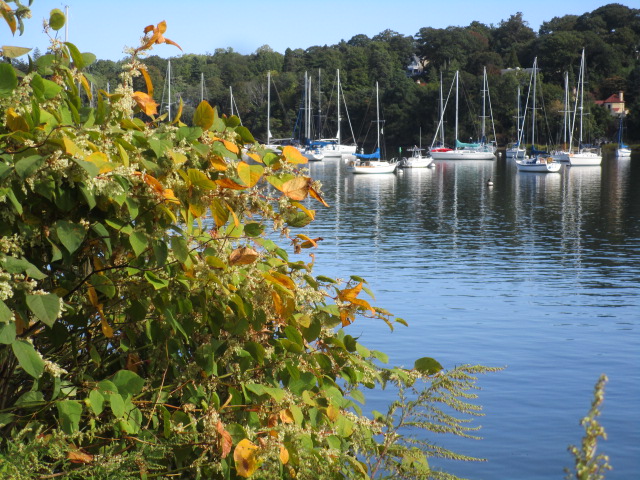
- Following another distant workplace mass murder, Huntington’s little world is calm and quiet, seemingly unaffected by events elsewhere. Like an idyllic Pacific atoll where inhabitants remain unaware that the Japanese and American navies are steaming toward it. Perhaps the island will escape future problems, but that seems less likely by the day. Yet the natives still must fish, still must eat meals, and might as well celebrate luxurious beauty while they can.
- Before routine security scanning, I once toiled alongside the cubicle of a fellow programmer _ a normal enough fellow who liked to brag about his various collections, including quasi-legal automatic weapons. Harmless enough, until I overheard him muttering to himself about “they can’t make me do that,” “I can’t stand this,” “I’ll show them.” With some trepidation, I contacted management. He was fine once HR stepped in to put him back on previously unsuspected medications. My middle-aged colleagues and I might have survived an attack from his Samurai swords (another collection) but would have done less well facing an M16 or AK47. Today I consider weaponry control similar to other collective legal responsibility, such as driving safe cars or not dumping poison into lakes.
Saturday
- How to deal with large problems, especially those outside your age bracket or field of competence and influence, has been a problem since tribes became large enough for humans to specialize. Some issues have always been so overwhelming that there is little anyone can do but hunker down and hope. Today we believe we are masters of the universe, which may be more true than it ever was, but does not quite extend to really huge difficulties, nor down to individual catastrophes. Nor does it help us resolve contradictions when individuals are hurt for the presumed greater good.
- Mark Twain, for example (I know, I know, just a pen name, but who cares) never fought in the Civil War, during which he was prime army material, even though he was against slavery. Would the world be better off if he had been killed at Antietam? What good would have been served by Picasso scrabbling around in the resistance, rather than painting serenely in the south of France. And those were people of influence, unlike most affected.
- We like to think we can control wars and violence, but in spite of the chants of democracy, choices of leaders are limited and nobody can predict the tensions they will be under when they face hard choices. We like to think we can overcome plagues and disease, but often resources are redirected too late, and sometimes only crude blind luck saves whole populations. We dismiss hunger and famine as things of the past, but a simple breakdown in our grids and networks _ caused, perhaps, by a massive solar flare _would have civilization starving within a matter of days.
- I am much better off than those who lived centuries ago. The modern industrialized world for many of us is a far more controllable and sane place than anywhere used to be, even for those in power. Random accidents still occur, of course, and the threat of disaster will be with any species until the final days when the sun dies. But day to day, mostly, is more than adequate.
- We probably should worry. It’s good for the culture. All of us aware of global warming will lead to actions that may help, just as enough people getting sick of massive pollution eventually led to cleaner local water and air. But reading, knowing, talking _ well those aren’t direct and don’t feel real.
- My guess is that our worries about future horrors _ whether climate or otherwise _ will be dealt with or resolved in ways we have no way of anticipating. I’m glad we are concerned _ we should always remain concerned and willing to do something together. But when we focus on one problem we lose sight of the correlations _ what happens to coal miners, or industrial production, or food supply.
- I would like to believe we and our leaders are honestly trying, but I don’t think we have all the knowledge and control that we imagine.
Sunday
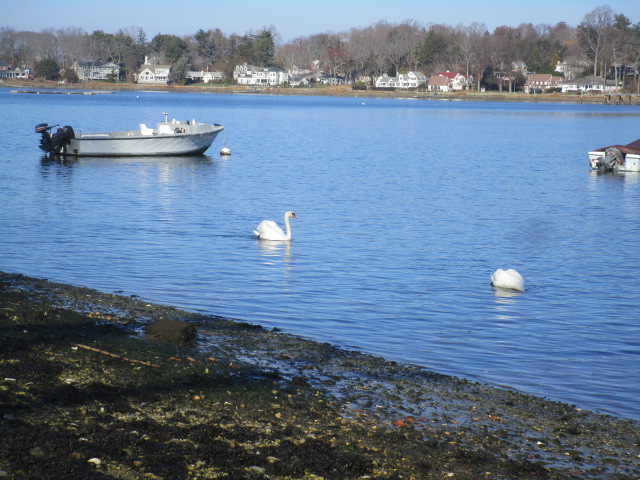
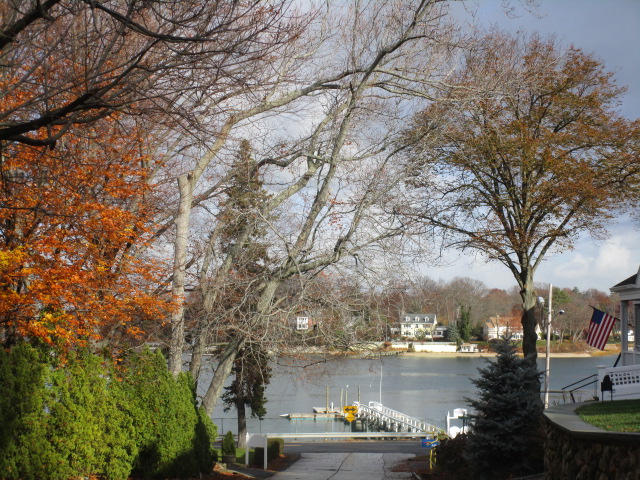
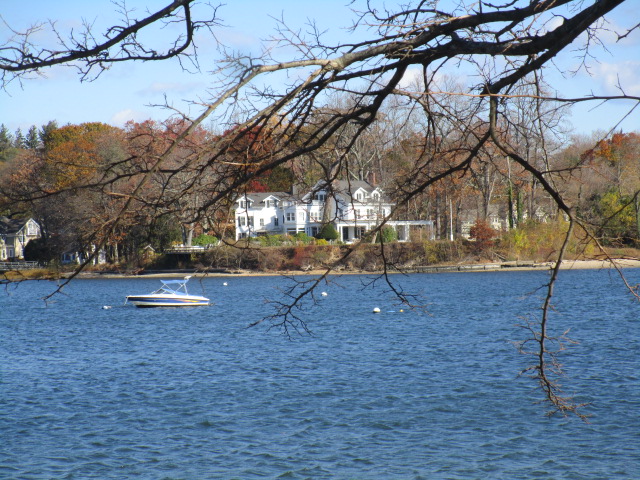
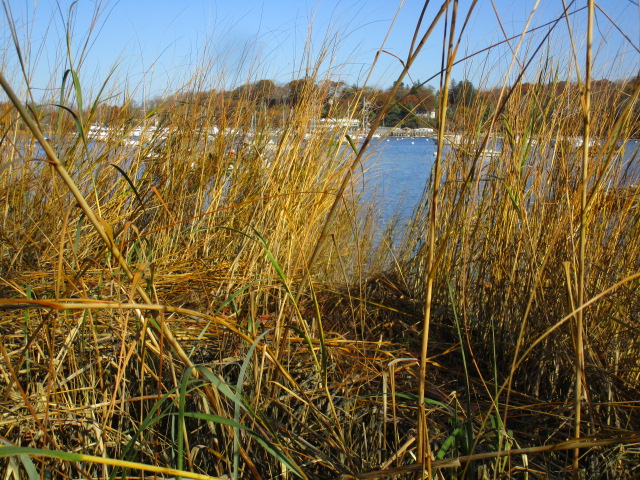
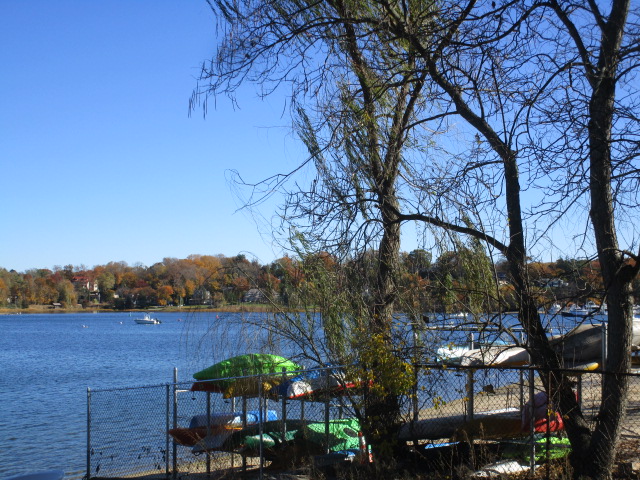
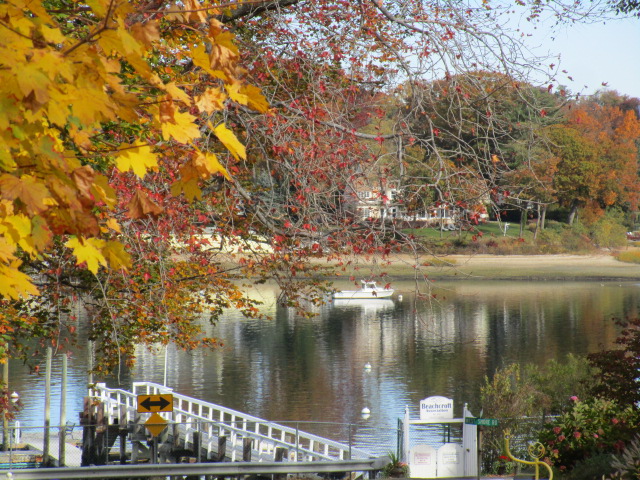
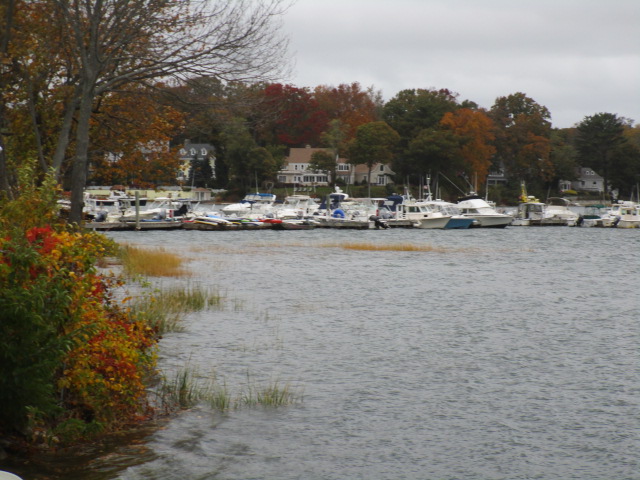
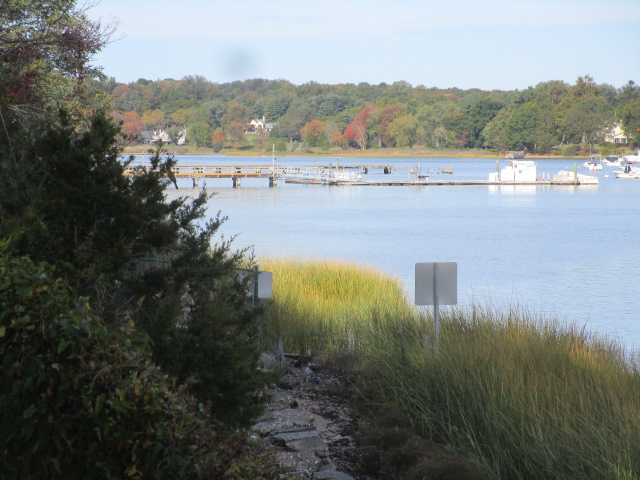
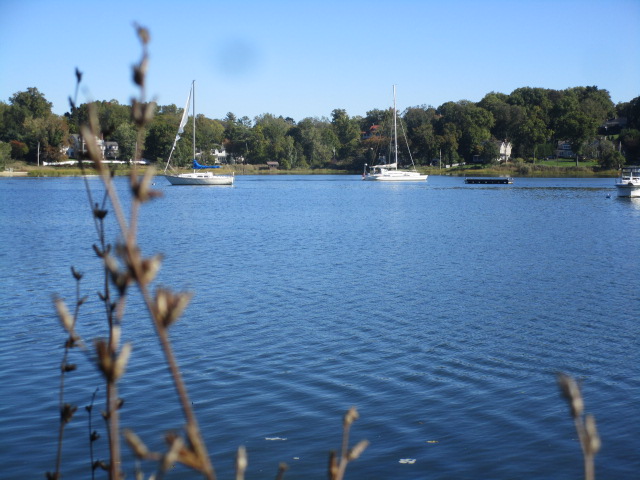
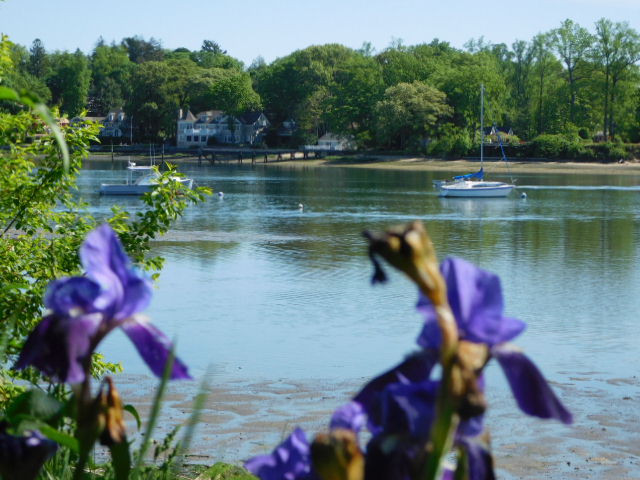
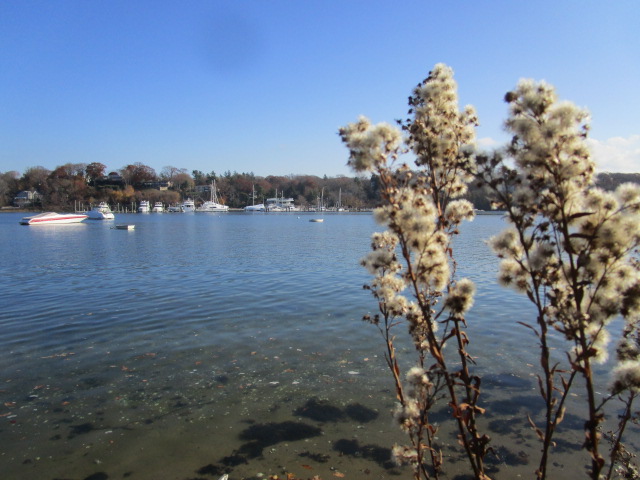
- Tides have flowed ceaselessly for eons, but not precisely here. Huntington harbor was formed by melting glaciers _ an instant ago geologically, soon followed by people, much later by swans, and finally these houses. If high tide damages a home along the shoreline, or high wind damages one atop a hill, what responsibility do the inhabitants of each have for the other?
- My consciousness is a brew of complicated urges and tensions, finely tuned by billions of years. A person with no empathy sees everything as entertainment, and becomes a psychopathic monster. One with too much feels the pain of all and falls into fatal melancholia or unsupportable innocence. We are immense, fluid, mysterious, and impermanent. Our societies must be mirrors of that complexity.