Cohesive Complexity

Monday

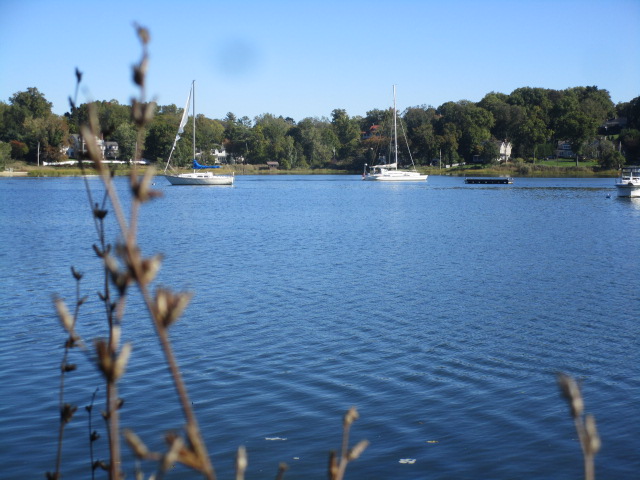
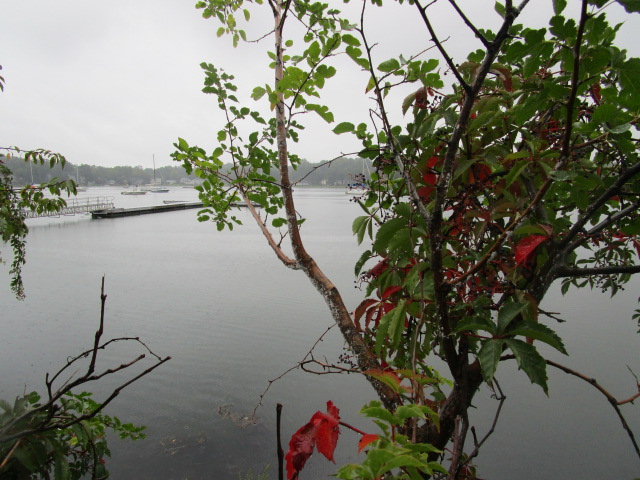
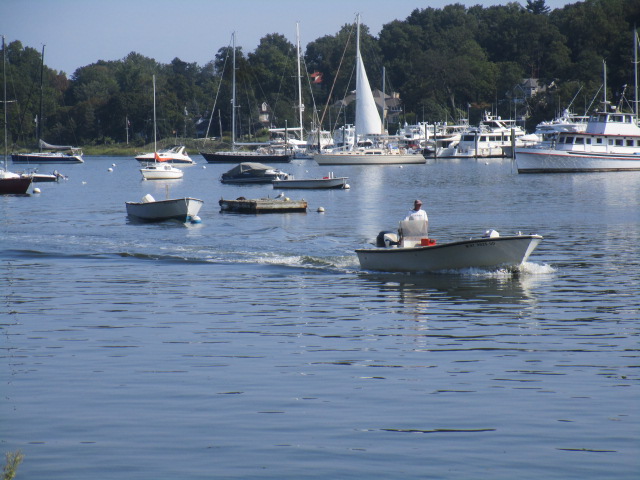
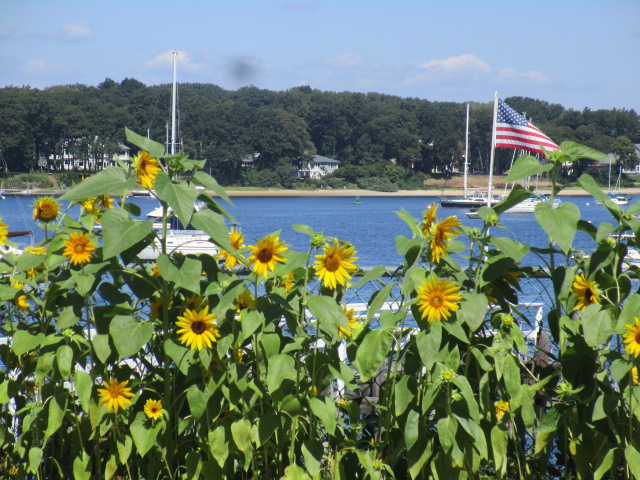
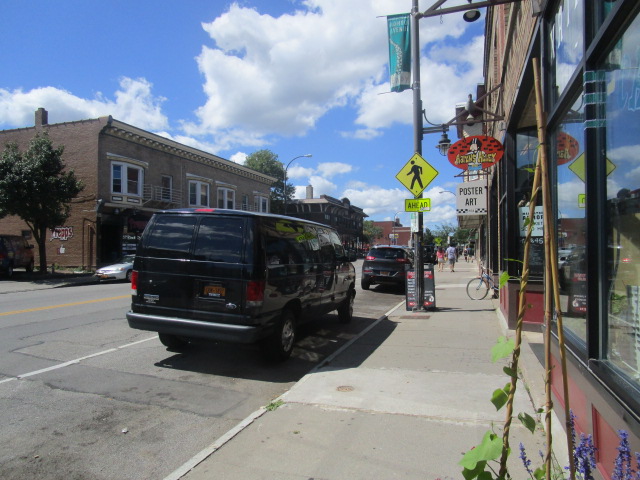
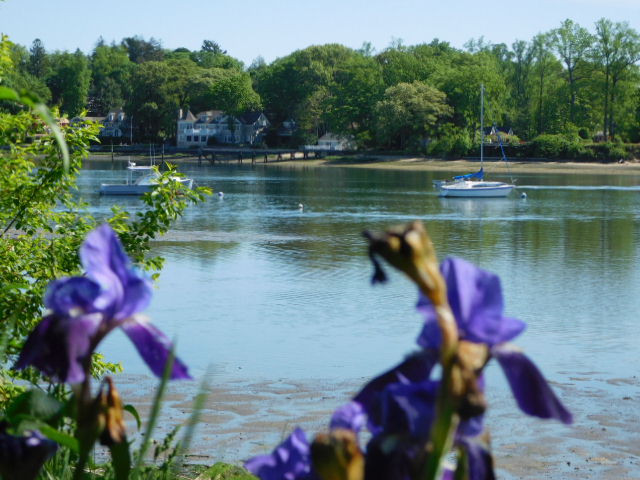
  • All that is, is.  Everything is connected to everything else in space and time, sometimes in unknowable ways.  Even in a simple scene such as this, invisible radio and x-ray radiation surrounds all, countless neutrinos pass by, and dark matter, dark energy, and spiritual values are unknowable.  To believe that any element can be an island is an illusion.
  • Society seems just as interconnected, and just as complex.  Each of us is a complete universe, and a group of us is almost an impossibility.  Our hubristic illusion, fostered by our scientific outlook, is that somehow we can break society into little elements like “government” and then control each piece in isolation.  That’s a dangerous fallacy.

Tuesday
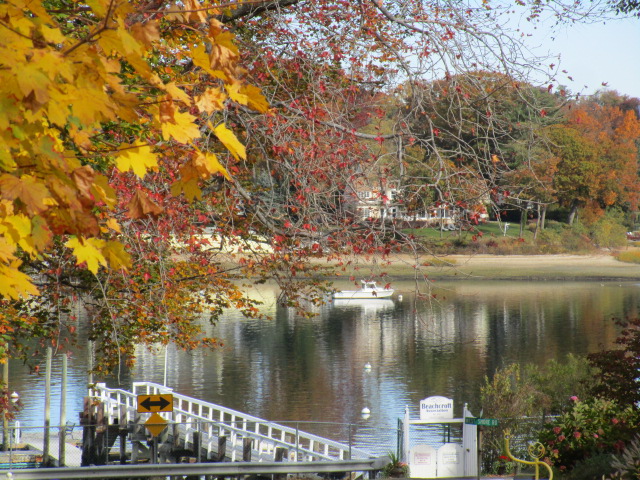
Wisdom treads fearful
Sensing complication
Waits

Universe moves on
Wednesday
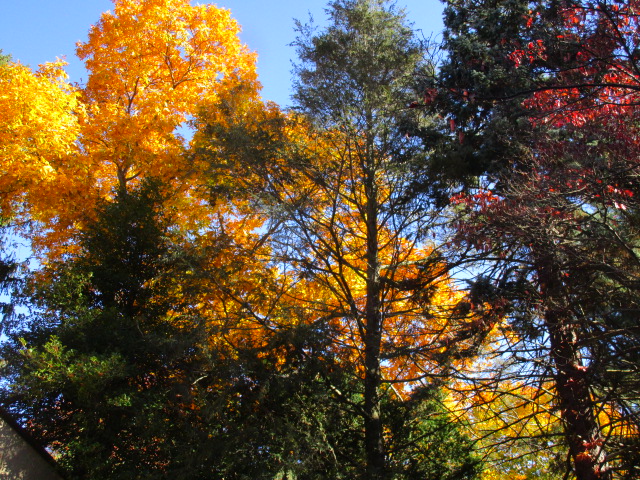
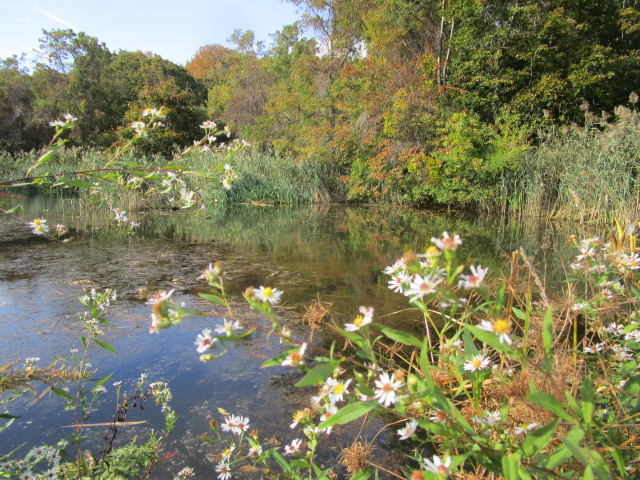
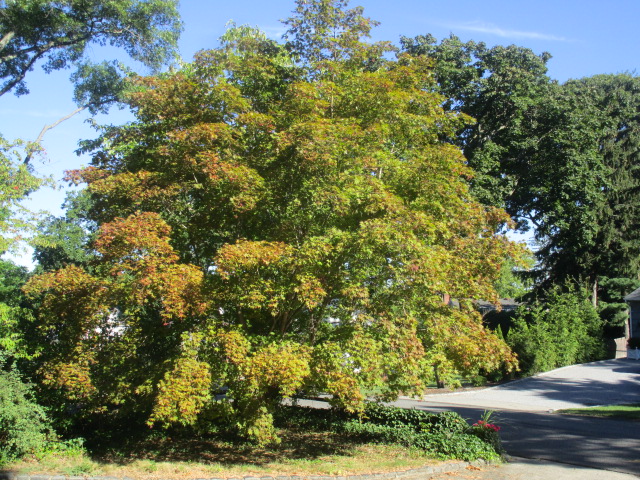
  • Away from the water, this is one of the most spectacular autumns ever.  Experts try to predict which years will be particularly colorful, but none dare try earlier than July.  And even a week ago, nobody could plan a day reaching nearly seventy degrees.  Times like these are when industrially scheduled jobs are the most painful for those who must remain indoors, because this special confluence of wonder cannot last long.
  • Walking on my way to vote, I remembered that three years ago, doing the same task, I left a frigid home which had been without power for days, and I dodged fallen trees all the way.  Nobody had predicted that superstorm either.  If we cannot determine such simple things, what ignorant hubris must be driving us to believe that changing a tax rate or extending a jail sentence will have a known outcome years from now.

Thursday
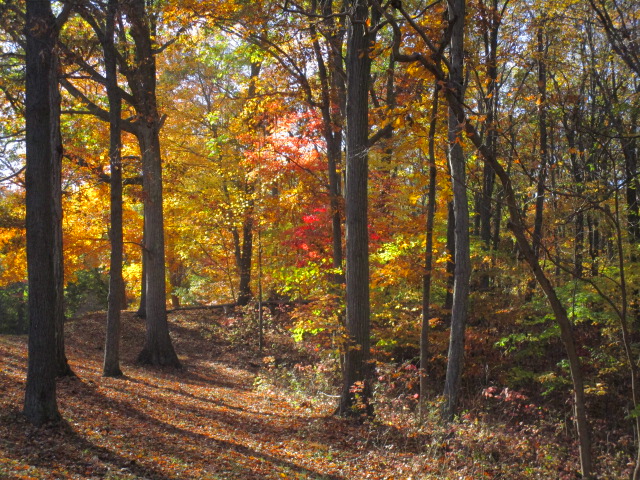
John’s sitting on a bench in the park, watching the swans run along the water to take off.  “Got another traffic ticket for turning too soon.”
“One of those automatic cameras?” I ask.
“Yeah.  Stupid things.  Nanny state.  Full stop on red instead of common sense when nobody is around.  What can you do?  Government regulation and power …”
“Just part of law and order.” I reply smiling.
“Never goes after the ones they really should catch anyway.”
“Which is everybody else, no doubt.”
“Well, yeah, I suppose,” he admits.
“What did they say _ ‘if men were angels there would be no need for government.’”
“As I recall,” he notes, “the angels in Paradise Lost didn’t do any better than people.”
“The problem is,” I remark, “that we switch roles so easily.  If I’m a pedestrian crossing here at the light I curse the stupid drivers who don’t slow down.  But if I’m a driver I curse the pedestrians paying absolutely no attention to me.  I always think I should have the right of way, you know?”
“Cameras don’t care,” he notes glumly.

“Price of progress,” I say as I continue with my laps around the pond.

Friday

  • Heavy fog, unnoticed by bats, fish, trees, and probably dogs.  Organisms, according to current theory, inhabit a restricted umwelt of which they are aware.  Nothing else is perceived.  Fog is invisible to a bat using echolocation, or to a dog primarily aware of smells.  Anything outside the umwelt simply does not exist.
  • Science claims we extend our umwelt with technology, and although I have never experienced radio waves, neutrinos or nuclear forces in a carbon atom, I concede they are “real.”  Some people claim they foresee the future, or talk to the dead, or hear meaning in the universe.  I am not vouchsafed such abilities or illusions, yet I am less dogmatically sure about such things than I once was.  I am too well aware of my own umwelt to swear that all the fogs I cannot perceive are someone else’s fantasy.

Saturday

  • This culture is afflicted with what may be called “simplistic utopianism.”  If only one thing could be changed, the world would become a paradise.  If only th
    is swamp were drained, if only this forest were cleared, if only taxes were lowered, if only I were left alone, if only everyone could be made to work, if only all agreed on what was right.  Yet doing any of those things, even successfully, has side effects and produces its own set of problems and paradise continues to slide away.
  • We have only recently become aware of impossibly intricate webs of ecology in nature.  My favorite example is a simple one:  in India, killing all the cobras menacing people tending rice fields seemed a simple “silver bullet” to make life better.  But the natural prey of cobras are rats, and without predators the rats multiplied geometrically, ate the rice, and caused the dirt dikes _ the result of centuries of work _ to collapse as they burrowed freely.  Dealing with cobras is awful.  Getting rid of cobras has costs.
  • Society is even more complex than ecology, because each individual is a complete universe.  Degrade poor people enough and they will either willingly die or revolt.  Redistribute wealth and some things taken for granted _ parks and museums and new hospital wings _ may no longer exist. 
  • The “Goldilocks” society in which we live has evolved just as fiercely and purposefully as any fruit fly species.  Nooks and crannies that make no sense, annoyances that would seem to be easy to eliminate, idiotic and convoluted chunks of daily life _ all possess some purpose.  Eliminating the wrong ones may leave us without the dikes we take for granted, and civilization may degenerate into the family and tribe Hobbesian struggle now apparent in the Mideast and parts of Africa.
  • I am not against draining swamps, clearing forests, or killing cobras.  Ecology also informs us all is in constant flux, and change may be good, change may come no matter what we do.  But I do insist that we realize nothing is simple, no “if only” will produce utopia, and we should worry more about side effects before we begin to slice our culture into something better.

Sunday

  • The thing about everything is that it is so unexpected, because we ignore it until we don’t.  We’re so busy talking, thinking, planning, driving, or doing something requiring concentration that much of the world never exists in our perception.  Like in that famous experiment where people instructed to count the number of passes in a video of a basketball game never see a gorilla that is walking casually through the scene.
  • I know I miss an awful lot of gorillas every moment.  Even more distressingly, even the ones I take note of fade as time goes by.  That’s one reason I am less certain of what I am certain of these days.      
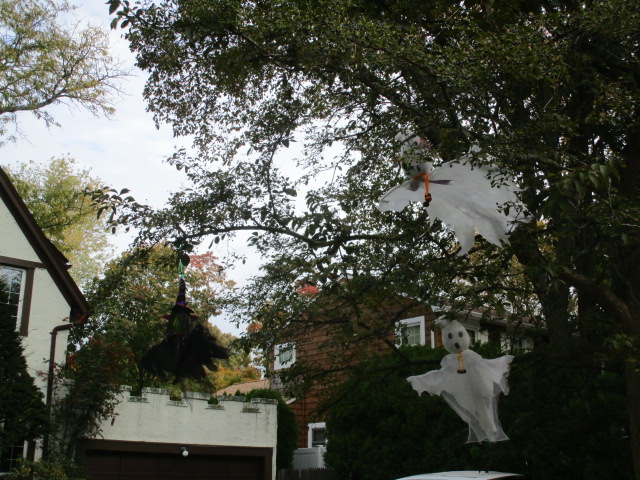
Exercising Ghosts

Monday

  • American Halloween has become a surprising world export.  Costumed people, carved pumpkins, ghosts and tombstones and giant spider webs now appear in Europe and China.  Perhaps it is because these fears are so imaginary that they banish real ones for a while.  Nobody comes dressed as a crazed serial killer, drunken driver, cancer patient, religious cult maniac, or any of the other terrors truly to be feared daily, even by the most well-off.
  • Originally, I suppose, “hallowed eve”  was a sly counterpoint to “all saints day” in the Catholic European calendar, something to make the dull saints themselves more appealing.  Maybe it safely encapsulated pagan traditions of druids and ghosts and witches into one well-contained night.  But it took American ingenuity and perversity (and the imagination of Washington Irving) to turn it into candy and dress-up. Since it is one of the few holidays not associated with pompous tradition _ no commentators are spouting off about “remembering the true meaning of this day” _ folks are just glad to have a chance to celebrate being alive in a slightly crazy way. 

Tuesday

I don’t fear goblins, ghosts, or ghouls,
Vampire’s silent flight,
No poltergeists come haunt my dreams
I love the still of night.
Chainsaw clowns bring no alarm
Zombie hordes no dread
Nor headless horsemen swinging swords 
Giant spiders prowling webs.
I have my worries _ pain and age,
Illness striking deep
Shrinking finance, loss of home,
These all disturb my sleep
But let young children trick or treat
False terrors cause shrill screams
The real world is what bothers me

As lovely as it seems.

Wednesday

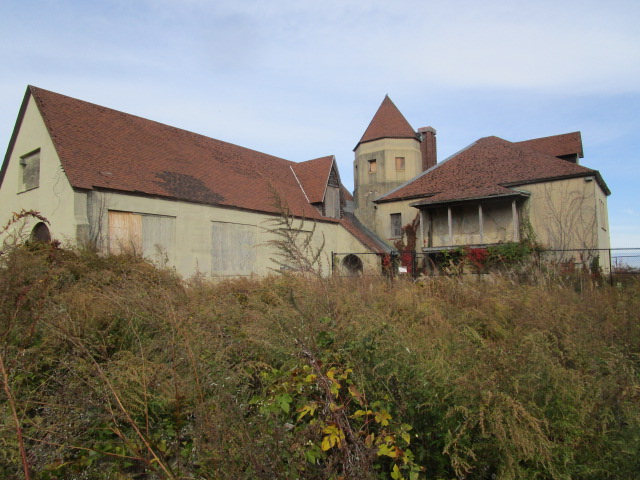
  • This boathouse falling into ruin is probably as close as Huntington Harbor comes to a traditional haunted castle.  It’s easy to imagine mad scientists, rats in the flooded basement, bats in the belfry.  And a sinister lightning rod raised into roaring gales some dark and stormy night.
  • Modern mad scientists don’t need abandoned mansions nor liquids bubbling ominously amidst incomprehensible apparatus.  They sit munching Cheetos and drinking cola in some dark room, as they peck away at computer code that will end civilization as we know it.  Doesn’t make nearly so good a movie, but the story is excessively frightening just the same.

Thursday

“Hey, Jim, what’s new?” I asked, pausing outside the library.
“Grandkids scared me to death, making me take them to the movies.  I didn’t even know they made stuff like ‘Prince Vlad Goes Mad At Home Depot, Part III.’”
“Sounds strange enough, I admit.”
“You have no idea what can be done with the chainsaws and other stuff from the tool section during a hurricane blackout …”
“Are the kids all right?”
“Oh, them, they laughed through the whole thing.  Me, I have trouble sleeping.  What ever happened to stuff like the headless horseman or witches in the forest?  That, I could handle.”
“Maybe when you were younger,” I mused.  “I was always unable to take any suspense.”
“What?”
“Strange, but I needed to know the ending.  It was not knowing how it would turn out that I couldn’t stand.”
“Well,” he laughed, “at least that made your own life easy.”
“How so?”
“You always knew , like the rest of us, the inevitable end of that story.”
“A mean, low blow, Jim,” I managed.

“Happy Halloween!” he chortled.

Friday

  • Cemeteries are haunted by ghosts, which inhabit each human mind.  Some ghosts are of the past, of times that are no more, of people who once meant much to us or to their worlds.  Some are of futures and where we might be and how we could be remembered.  Some are hopes into the vast unknown about what life really is.  All these ghosts truly accompany us amidst the stones, here in the present.
  • Depending on your outlook, cemeteries are interesting, or meditative, or depressing.  And that too is because all interpretation on Halloween, as on every other day, resides in ourselves.  Our responsibility is to achieve insight from these spaces, and apply it well to what we can affect now.

Saturday

  • We believe other “higher” animals engage in play, but none so completely as humans.  We have the capacity to encapsulate all kinds of information into metaphors, tales, riddles, dreams, and songs and somehow all that helps us survive in our world.  Play is a miraculous gift, we can shape our world magically to fit our needs.
  • Tragic or triumphant tales of evil spirits, for example, are a playful way to put our lives into perspective.  We can face ghostly danger, even allow ourselves to be terrorized by it, while nevertheless retaining some control of the narrative.  Sometimes such play gets out of hand, when imaginings project balefully into our environment _ such as blaming problems on a witch or demon-possessed other .  But usually we understand that the spiritual world is truly beyond our immediate reach and control.
  • An ability to play is a survival skill for consciousness.  At Halloween, for example, we direct can pretend to be something else, to imagine a world controlled differently than our daily one, to ignore usual mundane roles. 
  • Halloween and other holidays help us realize that what is normal may not be the only way things could be.  That’s what play is all about _ imagining alternatives and sometimes using them to create a better reality.

Sunday

  • Foliage mellows into subdued colorations; crisp breezes slice through patches of warmer air; ducks land with splashes as geese fly noisily overhead.  People either decide it’s time to return to the climate controlled gym or bundle up appropriately.  Fall not yet fierce, but definitely arrived.
  • I feel bewitched and kick the leaf-piles along the street, an expression of the child I still think I am.  Most people have now shed their costume, unfortunately I am still clad in mine which is bald and wrinkled and much more than skin deep.

Real Mysterious

Monday

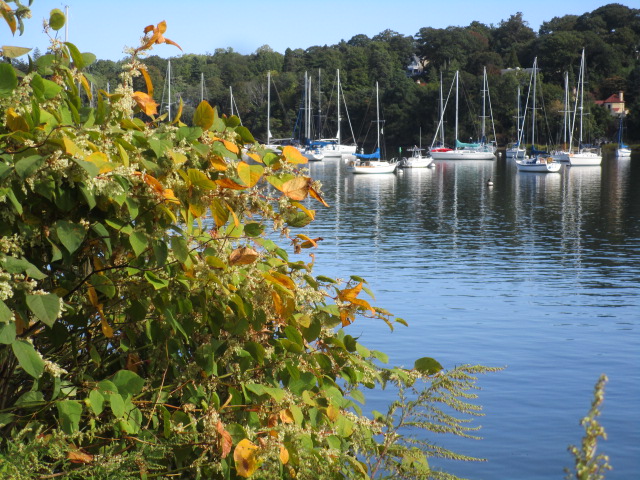
  • Science would analyze this image as shapes, or possibly emanations of platonic mathematical interactions.  Hidden forces, nucleonic stress, covalent bonding, wave interaction, and hidden bits sleeting through mostly empty space.  That is reality, science claims, if only poor human senses were better attuned.  Pleasure, beauty and all the rest cannot be measured by a machine, are transient and incomprehensible, cannot be detected by a supercollider. 
  • I see water, trees, autumn; I feel my body my breath; I experience memories and fantasies; I am joyful tired; meanwhile an old tune floats unbidden through my mind.  And much else, simultaneous.  I do not see mostly empty space and forces.  I claim all that _ and more _ including all I am each moment _ is what is real in my universe.  We need to push back against a technologic age that measures all truth with electrons and pretends intelligence is the same as conscious being.

Tuesday

We’re each a universe unique
I can’t know yours, nor you know me.
Existing fully human,
Sole mystery worth knowing,
Entire the purpose of our day.
You’re just a bag of water, salts
A walking, talking, thinking sea.
Unbidden hormone magic
Keys ancient fears, joy, hope
Bids you rest, or run away.
No quark holds hope, no hidden force
Casts joy or hope or fear or glee.
No meter measures joy nor fear
No container safe stores dreams
No switch turns on love’s ray.
“A kind of farthing dip”? Oh no
Much more the lord of all I see.
Turn water blue,  ride liquid wave
Paint sunrise gloried expectation

Singing on my way.

Wednesday

  • Warm days have everyone thinking summer again, but that will shortly change as another cold front moves in.  And then, will these days have existed at all, or are they figments of memory?  Everyone knows they live only in the moment, but few comprehend what that actually means.
  • Time and the other dimensions of space are the big elephants in the room for our logical mathematical models of the universe.  There are no time particles, no width leptons, no depth atoms.  These things _ just are.  Isn’t that obvious?  Well, no it’s not, and although faith that time is somehow real colors all we learn, we are fools indeed to think we have any true grasp of its nature.

Thursday

“I see they think they found another elusive particle,” says Bill, looking up from his paper.
“And that will solve all the world’s problems,” I answer sarcastically.  “A lot of money for something nobody can see nor use.  And the proof is pretty flaky, as far as I can tell.”
“Oh, you’re one of those anti-science people, like my various fruitcake relatives?  They never met a spiritual idea they didn’t like and take for absolute truth, even though each vision contradicts the other and is demonstrably useless in real life.”
“Not anti-science, not anti-spiritual either.  Not sure a crazy particle is much more valuable than a yoga session, is all.  After all, what’s more real _ your happiness or the hormones and electric currents that presumably cause it?”
“At least the equipment and techniques use
d for science eventually yield something tangible and useful.”
“But Bill, you could say the same about philosophical insights gained from various spiritual disciplines.”
“Nutcase!”

“Frigging Geek!”

Friday

  • Are clouds real?  Science would say yes, as areas of condensed water vapor capable of blocking or reflecting sunlight slightly more than surrounding atmosphere.  Human characterizations of clouds as white, fluffy, floating, soft or threatening are purely subjective.  Only imagination can project faces, animals, and other objects into such random shapes.  Meanwhile, clouds form part of an experienced moment, a casual scene, and may alter mood by portending future or recalling past events.
  • All these characteristics are unities complete which do not sum to a greater whole.  A cloud is never 10% soft, 2% threatening, 12% water vapor, and 30% looking like a puppy.  Casual mathematics fails to enter this reality.  For me at any time a cloud can be all these things and more, or may slip by completely unnoticed.  Yet each perception is a reality in itself while part of the reality of the whole, and it’s little use to try to constrain all that with logic and mathematical models.

Saturday

  • Theoretical scientists continue to search for the “Theory of Everything” which will tie together all their mathematical models of the universe.  Religious scholars seek to divine the meaning and purpose of life, which will explain who we are and what we should do.  These are natural quests of a human mind focused on discovering patterns in its environment.
  • Renaissance humanists resisted the scholastic Christianity of their time, which sought to understand God through deep perusal of ancient documents and dense logic constructed on fragile intuitive foundations.  I think we need some of that same refocusing now.  Science is wonderful in giving us a better understanding of how to be comfortable in our physical world.  Religion is useful in defining ideal personal values and social interactions.  Both, however, are tools.
  • Each of us is an embodied Theory of Everything as well as the central meaning and purpose of our own consciousness.  We each know that.  It does not seem enough.  Surely, we believe, we must be part of a greater pageant, something more eternal and grand than our flickering and insubstantial moments of brief existence.  Besides, to fully embrace that we are nothing more important than our own being can easily lead to monstrous conclusions, from solipsistic isolation to truly horrible behavior in the pursuit of our selfish needs.
  • The sane path, and the one most of us eventually accept, is that on all the most important issues, not only do we not know but we cannot know.  Whatever the deepest scientific construction of the cosmos, whatever the spiritual dimensions of the universe, we are middle players, incapable of knowing beyond our inherent limits.  I accept science as it affects my life; I conform to philosophy (religious or otherwise) as it helps me feel and act better in society, which is a massive part of my experience. 
  • We are individuals, and alone in our minds.  You wake up yourself each morning.  But in just as real a sense, you are part of your society, and without its mirror you also do not exist.  My language, my behavior, my goals and triumphs are defined within that construct.  Nothing is easy, except that possibly the most obvious fact of all is that each of us is absolute reality.

Sunday

  • “Whence cometh Jack Frost?” Dylan Thomas asked.  He knew better than anyone that Jack came from stories, from people.  For children and those with memories or imagination, Jack Frost is as real as white ice on grass or sparkling crystals lining leaves in mockingly brilliant dawn sun. 
  • Our practical society exhorts us to use our imagination only to conjure technological improvements or to focus on distant monetary goals.  Daydreaming is an idle waste of time, an abomination deeply etched in our puritanical book of sins.  Yet I enjoy imagining impossibilities, fantasizing with no purpose at all, entertaining myself far more effectively than can most media extravaganzas.  Fabled anthropomorphic characterizations are one of our most powerful tools to achieve enchantment with the world.  Even though I know whence Jack Frost, I’m glad he has stopped by for a few visits.  

Turnings

Monday

  • Weekend of extended late November weather suddenly reminded everyone of the true season. It’s been deep summer for so long that many turning points to autumn passed unnoticed.  Spartina grass is almost done with seeds and beginning to shade orange-brown , for example.  Some leaves have hardly had time to begin turning colors before they were ripped down by fierce winds.
  • We think of seasons by average _ a perfect summer day, a crisp fall afternoon _ but no day is truly average.  Natural cycles are determined by far more than mere temperatures, and proceed along almost heedless of how warm or cold it may be.  On the other hand, I tend to ignore everything except how warmly I must dress.  A fault in my makeup, aggravated by our technological isolation from those cycles.  No complaints, of course.

Tuesday

While walking woods, inspecting leaf,
Each flower, mushroom, bird, and beast
Looking up, I’m struck amazed
Fields, not forests, meet my gaze.
Strolling sandy shore in dreams
Lost in fantasy’s bright gleams
A splash of wet shocks thoughtful train
When did the sunshine turn to rain?
Toiling troubled on some task
All concentration focused fast
Hours speed in heedless flight
Suddenly long day is night
Compartments sharp, division tight
Twixt field and forest, day and night
By logic crisply boxed in mind

But nature blends, obscuring lines.
Wednesday

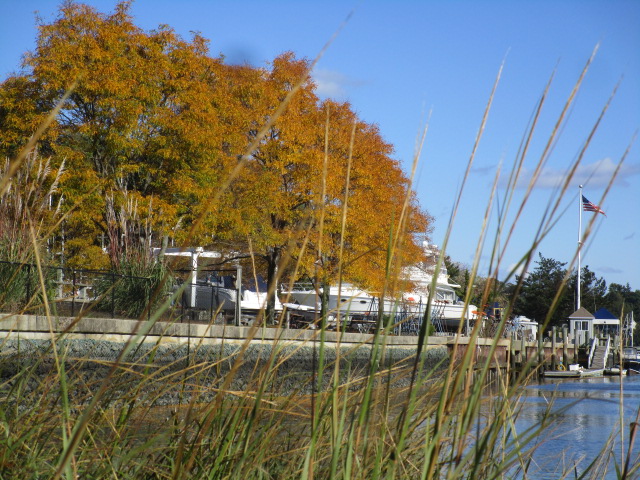
  • Not all the signs of autumn are purely natural.  This boat yard was recently an empty lot, and now is quickly filling with craft wrapped against the coming weather.  For each area filled thus on land, an empty space is left in the harbor, so that view becomes more open.  Marinas busily scrape and wash the bottoms of each vessel as it is taken from the water, covered with an accumulation of algae and barnacles.
  • Besides that, all I really need to do is look at the people, including myself.  I’ve been wearing long jeans instead of shorts for some time, usually with a sweatshirt, occasional light gloves, sometimes even a heavy jacket and wool cap.  A few die-hards will run until snow in nothing but shorts and tee-shirt, but this time of year more and more pedestrians give in and subtly wish summer goodbye as the temperature dips and a chill north wind becomes a daily presence.

Thursday

“Water looks pretty clean today,” remarked Josh when I passed him near the head of the harbor.
“It usually does clear up this time of year,” I noted, “when the algae stop blooming, I think.”
“Surprised there aren’t more oil slicks, though, with all these boats.”
“I’ve been noticing that there seems to be a lot less junk floating around as well.”
“Maybe things are getting better.”
“They say there were whales in Long Island Sound this summer.  Seals too.”
“No lobsters, though,” added Josh.
“Yeah, hard to tell.  Lots of fish, but maybe that’s just cause the ocean’s so bad with all the little plastic pieces.  Sometimes I do hope we’ve turned a corner.”
“You’re too much an optimist.”
“Hey, look at China.  It turned into one big 1960 Pittsburgh with smog and polluted rivers, but it looks like they’ll end up cleaning it up almost as fast.  The air and water is certainly better around here than it was twenty years ago.  I can dream.”
“Me, I think it’s too late, like the climate scientists say.  We’re travelers in the desert who suddenly start rationing water halfway across, but we should have been doing so from the beginning of the trip.”
“Today is nice, the water’s clear, the sky is blue.  Enjoy the day.”

“Oh, I suppose, I suppose.  See you tomorrow.”

Friday

  • Doesn’t take keen observation to see increasing patches of color _ some brilliant _ on scattered trees.  Nor to notice that most ground plants are blending into a mélange of brittle browns.  Over the next month, seasonal cues will be increasingly obvious, some almost brutal.  Not only visual, of course, a fair amount of wind, rain, and temperature will get into the act.  And the sun _ already rising later than most people, drifting southward at an alarming pace, and setting way too early.
  • I try to enjoy each day and season as it comes, so I do not live in keen expectation nor dread of winter.   I can’t help hearing other people expressing relief that the cool air has finally arrived, or fear that snow and cold will soon block the highways.  For us, in this time, in this place, it is far less fraught than it was for our ancestors.  We don’t worry if the food supply is sufficient and has been properly preserved, we don’t measure the woodpile to be certain there are enough cords to be chopped later, we don’t anguish over the last of the fresh vegetables we will eat until next summer.  Most of us have it remarkably easy, which doesn’t keep me from complaining.  Human nature.

Saturday

  • Worries of human-induced global climate change are shrilly echoed in most media, except for anti-science purposely ignorant folks who have their own reasons for things to remain as they are.  We are assured that we are reaching tipping points, statistics of melting glaciers and rising temperatures are paraded before us, and computer models show increasingly dire outcomes.  Logically, it is hard to disagree that something is going on, possibly something bad.
  • And yet _ well there are always Cassandras and prophets of doom.  Most of them slink back down from the mountain caves when their predicted end dates come and go.  Computer models just don’t work with the vast chaos of large systems of weather and society.  Tipping points are just dramatizations of dream visions.  No computer model can give you the exact local temperature an hour from now, and it gets worse from there.
  • Extrapolations are horrible, scientists will claim, because of “black swan events” like meteors or varied output from the sun or whatever.  But there are always such events.  What would be the effect on global warming of, say, a plague carrying off eighty percent of the humans?  Historic recreations of society give no clue what we might do _ no model in 1910 could have predicted the next fifty years of war; no model in 1960 could have predicted that humans would avoid nuclear war, let alone engulf everything electronically. 
  • So, we are right to be skeptical.  And sometimes humans do change.  Our environmental awareness is better, pollution is less, resource usage per capita is stabilizing.  Amazing things seem to happen when we recognize true dangers and concentrate on them.
  • But right now, who knows?  Some even assert that global warming is holding off the return of an ice age.  And it is hard to seriously believe that changing all my lightbulbs and lowering the thermostat will make a dent in a world of war planes dropping bombs and spewing gasses from their exhaust.

Sunday

  • Sometime in the last month, this old pine slipped from dying into death.  For the entire summer that seemed inevitable, yet there was still some shock at its final loss.  Soon it will fall, or be cut down, and another scene will be replaced.
  • I always enjoyed this one tree of its type, reminding me of old Chinese ink paintings.  Layered in snowfall, standing firm against the north wind, glistening from rain, needles and cones framing lovely views.  And now _ well I have old pictures, and memories, but they slip away.  The gap between life and death spans far more than simple cessation of certain chemical processes, even for a tree clinging to the harborside.

Berry Happy

Monday

  • Berries are everywhere, along with fruits, nuts, seeds, even hidden tubers.  Although some are stunted from lack of water, like children everywhere lives of offspring were prioritized by parents, and the crop remains far too large to be fully consumed by birds or the few remaining small ground animals.  Some will hang on through winter, when finding enough to eat is a different matter entirely.
  • Once upon a time in much of our Northern hemisphere, this was harvest time and harvest moon, with final picking, pickling, canning, drying, salting and smoking.  Busy days and nights storing bounty against the certain famine to come.  Today _ well according to most media, harvest moon is just some curiosity to point out to youngsters, another irrelevant tidbit from the past like the names of months.  Most of us claim to be overworked, but at least as frost approaches again, I think we are clueless as to what our ancestors accomplished.  

Tuesday

Fruits promise future
Encapsulate life gone
Carry

Universe complete

Wednesday

  • Berries, unlike most seeds and nuts, tend to attract attention with color or scent.  They sit in field or forest flashing a bright “eat me” message.  Seems a peculiar way to do things, going to all that work only to have offspring begging to be consumed.  Ah, but the fruit is not the seed, and the undigested seed falls wherever it is dropped by animal or bird, enclosed in a handy packet of fertilizer.  Such long-term complexity is astounding.
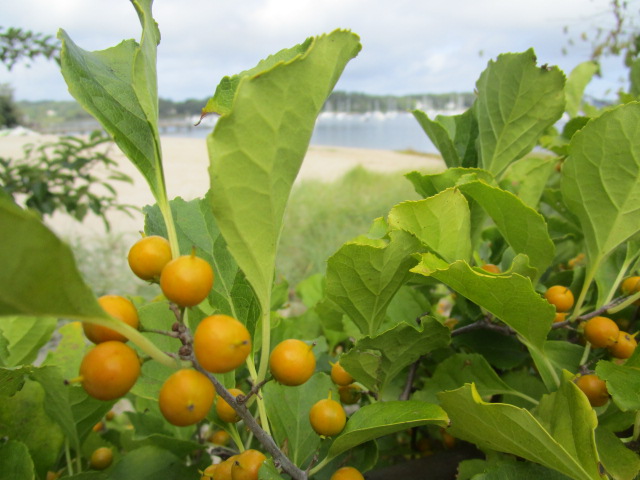
  • Many berries are nutritious and delicious for humans, although others try to keep our species from bothering with them, like this hard, dry, tasteless and (for all I know) poisonous yellow variety.   I came late to berry appreciation, although these days I have them on my cold cereal every morning.  When I was a kid, the only way to get them year-round was as some kind of jelly or jam, since the natural harvest season for any given berry is often short indeed.

Thursday

Met Joe coming out of Been & Jerry’s on Main street, waffle cone in hand.  “That looks good!  What flavor?”
“Cherry Garcia,” he responded happily, wiping his mouth with a paper napkin.  “I like cherries, especially after the pits are removed.”
“Ah, but I think the sugar helps,” I said.
“Of course, of course.”
“Tell me,” I asked, “I’ve been wondering because I read so much about it.  Do you think that berries and vegetables and all tasted so much better when we were growing up?”
“Well, you know, I could taste things a lot better back then.”
“Agreed, but to read some of the reviews now, once upon a time each bite was an orgasmic sensation.  I don’t find strawberries or tomatoes or _for that matter _ cherries remarkably different than I remember.”
“Well, I do know store tomatoes were pretty awful for a while.”
“Yeah, but that was true even back then.  We grew our own _ I guess tomatoes might be nicer just picked from our garden, but everything else was just fruit and whatever.”
“I liked most of them better in jam or with sugar,” he admitted.
“I know nobody wrote them up.  The farm stands didn’t get much beyond fresh and local.  Sometimes sweet, especially for the corn.  But nothing matched current fantastic descriptions of luscious heritage crops.”
“Capitalism in action,” Joe noted.
“They can get away with it,” I said, “who’s going to remember or call them out anyway?”
“The old days were always so much better,” sarcastic.

“I think it’s too many food writers with nothing real to do, and maybe too much food.”

Friday

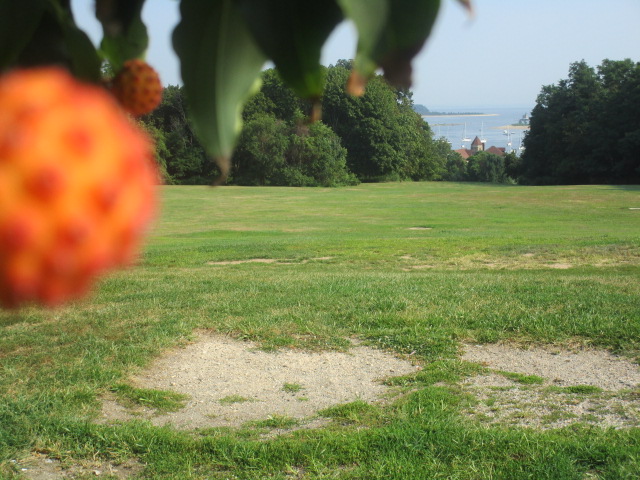
  • Small fruit like this crabapple is hard to distinguish from berries, and for that matter by common scientific definition a lot of what are called berries are “really” fruit.  But a berry is just one of the many sub-specifications of fruit in general. Sometimes it’s more fun to go with the
    obvious and decide anything within a certain size range is a berry for all intents and purposes.
  • Our age has a mania for classification, for we have largely convinced ourselves (like primitives supposedly used to think about photographs) that by fully describing something in words we have captured its soul.  In a nutshell, that represents the problem with all those who gabble on about artificial intelligence and how a computer “like us” will soon be constructed.  The name of the thing, the description of the thing, a model of the thing, are not the thing itself, and wisdom respects that.

Saturday

  • Like children, we smugly believe that a workable theory explains everything, and we gain control by knowing.  Thus it has been with evolution.  Lots of time.  Drive to reproduce. Overproduction of offspring, some of them genetically varied from parents.  Survival of the fittest.  Bingo, nothing more to be said.  Before that the theory was just a simplistic _ a god or gods who created everything just so just for us. 
  • Anyone who pulls themselves out of the madness of basic simplicity realizes that even if basic ideas like “survival” or “gravity” or “atoms” are “true”, their manifestations in our real world are certainly not.  In a way, it is the exact opposite of Plato’s cave.  Instead of the “ideals” outside the cave casting shadows which we take for real things, the real things we know cast shadows into our logic which create models we mistake for reality.  Reality always is what is, our explanations are necessarily incomplete (but useful) ways to gain power over our environment.
  • Berries, fruits, seeds are examples of incredible complexity.   Stationary plants that use insects to cross pollinate to produce enticing fruits to be eaten and spread farther than the wind could carry.  Animals that eat the fruits.  Insects that need the flower pollen.  Environments to support everything.   And sure, some smart aleck will show how any particular part of it is easily explained with a simple modification of this or that theory, until another layer of infinite onion is peeled off and yet more fantastic anomalies are revealed. 
  • I admire science as much as anyone, and believe it is a better tool for human control than anything else.  What I am not sure of is that a tool for control is necessarily the best tool for figuring out what should be done.  It’s the old “use the hammer for everything because we have a hammer” problem.  The need now is not to stop using science nor to limit its applications, but rather to understand that in certain areas we have better tools that we should be concentrating on. 
  • The analogy I would close with would be cooking.  Scientifically, we can more and more finely describe and tune how to make and season a given dish, such as a cheese omelet.  But sometimes we want a steak, or ice cream, or salad.  Understanding why we want such things, how they might make us happy or unsatisfied,  how much of a role cooking should play in our lives, and our very thoughts concerning meals and memories and how each of us is totally different from each other rapidly become too complex for any equations which can be applied to our fast-moving “real” world.

Sunday

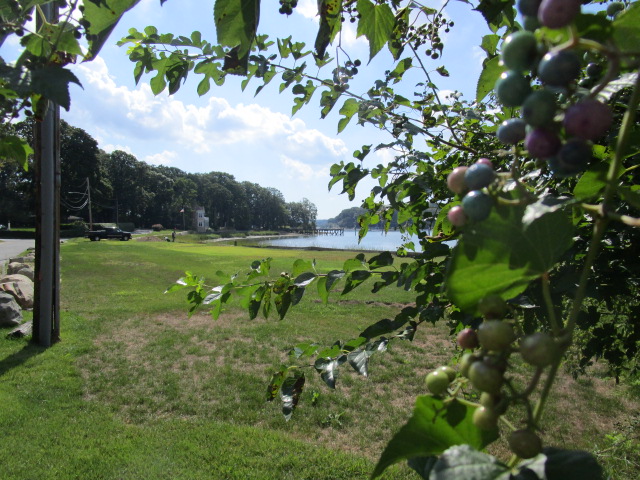
  • All mammals learn by observing others, as well as through their own senses.  Humans add to that being able to convey information with modulated sounds or irregular marks on some surface.  Poison ivy seems to be a combination of all three _ warnings by parents, experience with leaves, and unappetizing appearance of the berries themselves.  Birds and other wildlife apparently enjoy these immensely.
  • By the time the fruit appears, even the most stubborn child has learned that shiny three lobed leaves should be left alone, which is fortunate because otherwise there might be some wicked poisonings in the fall.  It takes longer for older folks to realize that even the bare vines are hazardous, and burning smoke doubly so.  Yet for all its inconvenience, poison ivy is much too hard to root out entirely, and pretty enough if left alone.  So we follow a live and let live philosophy, one of the few rigorously enforced by both man and nature.

Equal Times

Monday

  • Now night becomes longer than day, warmth is lost not only because there are extra hours to radiate into space, but also because at these upper latitudes light rays hit with diminishing force.  Ancient peoples in the Northern Hemisphere mythologized that evil demons were eating the sun. Now with fire and electricity people conveniently ignore such superstitions and logically move indoors to enjoy the benefits of science.
  • We have our own mythologies: that an individual can control his fate, that a culture can ignore environment.  Hermetically sealed people dismiss climate and relentlessly concentrate on what matters  _ wealth, power, entertainment.  If descendants survive our orgies of destruction, they will no doubt look back with a wiser philosophy and wonder about us _ the demons who wrecked their world.

Tuesday

All days are lovely, if I take the time
Moods generate beyond known bounds of space
Internal visions, filters finely honed
Each tame my world, force it as I wish
Cast a spell _ enchantment or dark curse
If all were gone, still I my universe
Could build, project, imagine as I dare.
When I am gone, entire this infinite
Must also vanish, swift as fragile thought
Meaningless as bubbles bursting free.
I love and care and know that this must be:

That nothing else can e’re exist as me.

Wednesday

  • Went to the city yesterday, and toyed with the idea of taking a picture or two.  But with the Pope and UN and President all arriving later this week, there will surely be more than enough pictures to satisfy anyone.  New York City is filled with people, Long Island is filled with people, Huntington is full of people.  There are people everywhere around here _ it’s one of the most densely settled places on the planet _ even though this blog attempts to give some impression of solitude and lonely meditation in its pictures and thoughts.
  • But the question rises to mind _ how often do we consider seven billion others just like us (alive at this moment, the dead would double that number.)  How many of those have I heard of, even to remember a name?  A few thousand but no more, were I forced to list names.  We each try to excel and be important in our little circles and tribes, but looking at the larger picture we vanish like protozoa when the microscope is no longer available.  That is not to claim anyone is unimportant _ just that fame is irrelevant beyond our immediate environment.  I need such humbling thoughts once in a while. 

Thursday

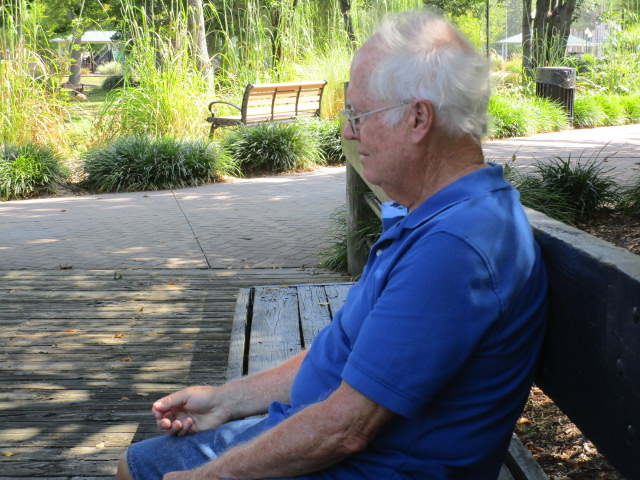
Wayne and Joan sitting in the park after lunch in Northport.  Cool breeze, warm sun on an early fall afternoon.  Brilliant colors, many dogs, almost no children who are in school until a little later.
“Oh, look, there’s a cute one,” says Joan.  “I wonder what type that is?”
“Smallish, brown, four legs and a tail,” answers Wayne.  “That’s all I know or need to know.”
“You’re impossible.   Not a Pomeranian, but,”  meanwhile her thoughts wander as they often do to her poor little companion, dead these three years now.  None of these as cute or nice as my little angel.  Wish he were here so I could show them a perfect pet.
“Look at that beautiful boat,” he points to a colored sailboat swinging in to the large dock.  Oh here we go again, on and on about the dog.  Why doesn’t she just look around and enjoy the day?
“Maybe I should get a new one.”  Of course he could never be like my little angel and you never know if it will turn out nasty.  But at least a little dog would pay more attention to me than my husband does.
“If we got a boat it would be something like that, but of course I don’t want a boat,” continued Wayne stubbornly for the hundredth time, trying to change the subject.  Well, I guess that’s what we old people do, chew the same old cuds over and over out here in the pasture.
“Like you say, though, it would limit our travels and does take some care.”  But, on the other hand, we hardly ever seem to do anything exciting anyway.
“That sun and the sparkles are just perfect for paintings.”  The trouble is, it never stays a dog but turns into a little child that requires all kinds of effort and can never be left alone.  Well, no use creating waves.  I’ll just enjoy being here with so many fine vistas.

And so it went, for an hour, two streams of conversation barely registering, two streams of consciousness in alternate universes.  The trouble is, as you get on in years, you tend to stay in a comfort zone with a few people, and all those people tend to tell the same stories and topics over and over again.  The advantage, of course, is that we all forget conversations almost as fast as they occur.

Friday

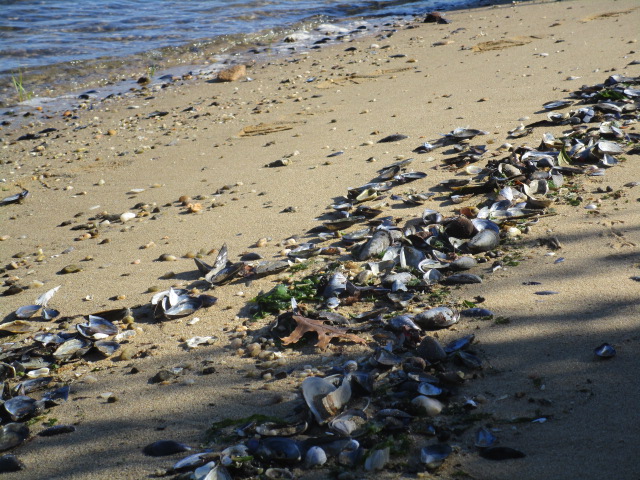
  • Scenes are distant, but near is important.  Shells marking the tide line along the sand remind that although we are part of a grand vista, we are also just little fragments of flotsam washed up by endless waves.
  • I try to marvel at near as well as far.  Closely inspect the petals of a flower, take pains to study a seed or leaf.  Often I fail, in too much in a hurry to bother.  The tiny as well as the large surround me with miracles, and I am the poorer for not recognizing them each moment.

Saturday

  • Obviously, everything changes.  Yet we assume there is an underlying solidity to the universe.  A rock will remain an inert rock, a tree will grow, water will stay in an ocean.  That seems simple truth, and we frame our thoughts to accommodate the pattern.  Such simple truth is wrong.
  • Matter is not solid, but a strange blend of forces in tension, leptons leaping in and out of existence, nuclear forces pushing or pulling other forces to form atoms, atoms ignoring a hurricane of neutrinos and other subatomic “particles”, once in a while interacting with a passing photon.  The earth does not simply go around the sun, it is in a precarious balance of gravity pulling one way and inertia another.  What seems to be equilibrium is the result of contrasting forces, each forever ready to break the current illusion of stability.
  • Life is even more so.  Our bodies do not maintain a steady temperature  _ certain processes raise heat, others carry it off, and when it goes too far wrong we die.  Likewise with countless biologic “norms” that we take for granted, but which are almost magically balanced _ until they are not and we are no more.  Processes build on one another to larger cycles _ hunger, sleep.  Everything changes, but much changes within certain boundaries.
  • All these discoveries are recent and counterintuitive.  Our concept of society has yet to catch up with what has been learned.  Economics, government, religion still assume natural balancing states rather than uneasy and temporary accidents of countering vector forces.  Yes, we know about equations for supply and demand, and checks and balances for rulers.  But supply and demand, for example, are not solid in themselves, but rather composed of infinitely and indeterminately fluctuating energies.
  • Amazingly, we still accomplish great things, plan and deal with problems, get by with little more than our intuitive understandings.  Perhaps, at this point, we should trust that intuition more than quasi-scientific logic. 

Sunday

  • Final trio of showy wildflowers are goldenrod, asters, and Montauk daisies usually blooming last.  A few stubborn blossoms remain on other plants, ragged and scattered, especially the annuals that have now mostly dried to stiff brown.  Even these daisies show significant damage from the extended and deep drought this summer.
  • Cultivated gardens will continue to show color until the first frost, when the final performance will be given by maples and hickories and beeches.  But we all know that this is just a matter of time, and pretty quickly advancing time at that.  Already in the evenings I can be tempted to turn on the heat, and it’s nearly frightening how dark early mornings have become, and how quickly late afternoon shadows transmute to night. 

Ragged Edges

Monday

  • Days quite warm, evenings may require a sweater.  Trees lush full green, yellow orange red tinges peeking here or there.  Half the annual wildflowers and weeds are brown, ragged, and dry while the rest are showing signs of becoming the same.  Harvest is producing more than anyone can eat, but already production is falling and soon crops will be complete.
  • Alone amidst life on earth (and possibly anywhere) humans are blessed and cursed by being able to imagine the future, doubly so by being able to communicate those visions to others.  That results in our grandest triumphs and most despicable disasters.  As we project and plan what might be, we crowd the beaches and waterways today, imagining the harsh weather to come.  I worry about food, shelter, age, children, civilization, my house and a thousand other notions great and small.  But my anchor of sanity remains this particular, and most glorious, today.

Tuesday


Old man sits alone
Feeding flocks of pigeons,
Dreams

He is Emperor

Wednesday

  • Hard to tell exactly what these are, but they demonstrate the principal of the season.  Fluffy carriers bearing seeds have almost all been dispersed by the wind.  Parent plant has done its duty and now simply awaits rain and other elements to recycle it back whence it came.  There are more and more of these remnants every day, contradicting the humid heat and brilliant sunlight which seem to claim nothing happening
  • As in spring, each hard look at anything is a revelation.  Trees that appear green actually are yellowing _ the very hues of entire landscapes have changed.  We tend to focus on dramatic foliage of fall, but that has begun already, even in deepening greens of evergreens.  I seek not to rush the seasons, but to notice the more subtle marvels that keep me more interested than hurried glances would provide.     

Thursday

September afternoon nearing ninety, even here along the beach, smoggy trees on the shoreline opposite as powerboats race and sailboats add notes of grace.  We’re just cooled off from a dip, dripping in old cloth chairs.  Children speaking all languages laugh and screech, adults yell and jabber, a polyglot happy crowd.
“Don’t see why they can’t control their kids,” complains Joan, as she does frequently.  “We knew how to teach our own how to behave.”
“Too many lower classes, all over,” adds Marge.  “Too many, too poor, nothing like when we grew up.”  Another constant refrain.
“Well, when we grew up it was _ what _ 2 billion or so.  Now at 7 and climbing.  Problems to be expected,” says Jim.
“Our son,” I note, “expects a plague to wipe out just about everyone.  And my investment counselor is constantly worried about global worldwide collapse.”
“No wonder, with younger generations like these coming along to try to take over.” Marge slaps at a greenhead fly.
“Born again expect the rapture, a lot of nut religions expect the final apocalypse any moment.”
“But Bill,” I reply, “almost everyone everywhere has expected some immanent end of everything at any given moment.  For at least a few thousand years.”
“And some of them were right!” exclaims Marge.
“Of course,” I gesture around at numerous clumps of aged beachgoers, “we elders could solve a lot of the problem by just dying off like we used to.”

“Don’t know about all that,” Joan adjusts her sunglasses.  “All I know is I can’t stand the yelling.”

Friday

  • Hard to call rain a “ragged edge”, especially when this island is running a ten inch annual deficit.  Besides, everyone is back at school or work or shopping, all safely indoors, so who cares?  Somehow, there remains a strange distaste for people to get wet from rain, even though they happily take a shower each morning and swim whenever they please.
  • I care less, especially if it is warm.  These days, I just throw on a poncho and walk in my own little shell, like one of those hermit crabs down on the tidal sands.  Heavy rain, mist and clouds form a welcome variation sometimes on clear hot skies unending.  Unless this weather should overstay its welcome, of course.

Saturday

  • Many claim the American Empire, like that of the Romans, is in decline and fall.  Intellectuals cite Edward Gibbon,  common folks center on movies of bread and circuses and lonely last legions.  People seem to think that we may lapse into dictatorship overnight, that within twenty years all that we are and have stood for will have disappeared, that lonely peasants will pass ignorant days fearing the howls of wolves in the encroaching forest.
  • Like the American Empire, Rome took centuries to rise.  The Republic had already conquered the Mediterranean and most of Western Europe.  The century before Augustus was filled with bloody slave revolts (Spartacus) and bloody “temporary” dictators (Sulla, Pompey) and bloody Senate infighting.  All Caesar and Augustus (both from Patrician families) did was formalize the changes that had already happened and make the government manageable again.  But the change from Republic to Empire was not instantaneous, not at all like, for example, Hitler.
  • The Roman Empire also took its time falling.  It lasted 450 years in almost full vigor in the West, over a thousand while shrinking in Constantinople in the East.  Pax Romana was mostly welcome, with relatively light 5% effective taxes, cohesion that encouraged trading wealth, and secure stability for its citizens (not so much for its huge slave population, of course.)
  • Those causes of the fall?   There were bread and circuses, to be sure, although the bread was more part of the salary of the lower level bureaucracy and merchants, while the circuses were often exemplary executions of condemned criminals and war prisoners.  What ended up really hurting (in addition to trying to control so vast an area with Roman numeral arithmetic and horse-speed communications) were incursions of barbarians who had learned Roman tactics and technology, driven by drying climate change.  A plague that may have killed a quarter of the Empire’s population in the early 400’s didn’t help.  And after the fall, much of the basic culture hung around, preserved in small feudal kingdoms and the increasing networks of the church.  
  • Gibbon himself blamed a different prime cause: the fundamentalist superstitious Christian religion, which made people concentrate on their spiritual future rather than secular present.
  • Certainly, America will decline and fall.  How, when, over how much time, for what reason, and what its legacy will be must be left to future historians, not to silly shallow authors peddling dark fantasies or ignorant immoral politicians who would claim the Earth is flat if that delivers a few more votes. 

Sunday

  • Rain has finally arrived, psychologically terminating deep summer with clouds and a major drop in temperatures, especially at night.  Already boats flee the water, beaches are emptied, tasks of preparation (like getting out snow blowers, cleaning gutters, checking heating systems) are being contemplated.  Soon enough there will be leaves to rake and outdoor furniture to protect.  Yet, for all that, it is still summer, still warm, and when the sun returns there will be sufficient days to visit parks and enjoy long walks in cooler air.
  • For those who truly love seasonal change, and do not pay lip service to it because such changes must be endured, these transitional times are perhaps even more beautiful than the heart of each quarter year.  I find this helps me mark and remember what I have done, place my life and experience into a moving context, and resist the temptation for each day to just be like the last and the next.  With modern convenience, of course, everywhere we live is truly potentially a static meteorological paradise, conditioned by heat and air conditioning in transportation, work, housing, and shopping.  I am an old reactionary, and wander about in my poncho as rain falls and wind blows, a madman among civilized multitudes.

Summer Swansong

Monday

  • Planned to lead with a picture of a swan, but no shorebirds around this morning except a few crows and a solitary cormorant.  Perhaps all on vacation, perhaps scared off by frantic vibes of impossibly numerous shell-shocked humans rushing about in panic.  “Where did the summer go?”  “Oh, crap, its back to school/work/daily grind.”  Even retired people, who have seeming escaped that seasonal wheel of sorrow, are mostly planning how to get through the coming winter or (more philosophically) how to engage in meaningful projects to add purpose to their self-perceived irrelevant lives.
  • I’ve always like the romantic concept of a swansong _ a brief glorious act immediately before death.  A curious term _ and I won’t spoil it by looking up the origin.  Etymology is much more easily determined on the internet than political “truth” or historic fact.  I think it well fits this last week of freedom, as everyone tries to cram a last bit of relaxed happiness which becomes impossible knowing what will immediately follow.

Tuesday

Summer going, sun drifts south,
Through days of humid hot
All this green, hard to believe,
Soon turns to brown and rot.
Cycles come and cycles go,
Cycles flow again.
Massive change, except that I,
Alone remain the same
And yet I know, remembering back,
I’m not as in my past.
A larger cycle, once ignored,

Now looms to close at last.

Wednesday

  • If summer end is a tragic opera, goldenrod is the messenger bearing irrefutable proof in its long solo that the final act is nearing.  A few other flowers dot the woods and fields, but none so overwhelmingly turning entire hillsides and shorelines yellow.  No matter what it may feel like outside, goldenrod’s sign is September.
  • I rush seasons as much as anyone.  There are still many fine times, spells of heat, lovely sunsets, relatively long days, and a hoped-for final Indian summer.  But worse weather is immanent, not infinitely far off as it seemed in June.   Nature has adapted to all this, and so should I, but sometimes there remains a hint of sadness not simply at this summer gone, but at all summers I so well remember.

Thursday

Old people nursing beers at Finley’s, late afternoon, grumbling as usual.
“Too bad old King Canute is dead,” says Dan.  “He could run for president.  Holding back the tides would save billions or trillions, and it’s no more impossible than what the other candidates are promising.”
“When did kids get so stupid?” asks Jean.
“Magic,” mutters Bill.  Everyone looks at him in expectation.  “We boomers are the last generation to understand the world.  Everything now is magic _ nobody knows how technology, global trade, society, anything really works.”
“Yeah, I think you’re right,” Allen agrees.  “Politicians are all shamans _ do the right spell and poof.”
“Right,” replies Bill.  “The republicans think all the problems are caused by little devils that can be exorcised with the right slogans or talismans like a four thousand mile long fence.  The democrats claim they can tame Lady Fortuna and force her to distribute her fickle favors more equitably.”
“I blame the schools,” states Flora.  “They teach anything is possible.  We all know anything is not possible.  You can’t turn lead into gold.  When people think anything is possible, nothing is possible, and nothing gets done.”
Jean responds “So the kids aren’t stupid?”
“Sure they are,” Dan looks around.  “The masses are stupid and willfully ignorant.  The educated elite have them wrapped around their little fingers.”
“I wonder,” Bill continues darkly as he finishes his beer, “I wonder what will happen when the magic goes away?”

Friday

  • This is the first extended hot and very dry period this year, although rain has been below average.  Some vegetation is beginning to show effects, although the trees remain relatively untouched since there is abundant ground water.  But all the plants are now being triggered into survival and shut-down mode as the days grow shorter.  There will be no compensating new growth on these branches as there would be in the spring.
  • I bask in the late summer glow, going swimming, enjoying sweaty walks in nothing but tee shirt and shorts, marveling at nature.  But there is a small part of me like the trees, getting ready to slow down and hibernate, concentrate on indoor and internal mental activities, develop my own resources and projects.  It’s silly to worry about the coming winter, which after all lasts two months at most.  Right now I look forward to rain, and brilliant foliage, and the first snowfall.  By then, of course, I will much lament the loss of these final weeks of the season.

Saturday

  • We pride ourselves on being reasonable and scientific, always believing in cause and effect, unlike primitive peoples.  But cause and effect in itself is not scientific _ any human who ever lived knows that eating will ease hunger and getting cut will bleed.  It’s just that before science, it was easier to take shortcuts and assign most causes to spirits or gods.  As far as I can tell, there are many primitive thinkers among us now, many running for president.   I propose a few causes (and solutions) that I expect to hear any time soon:
  • Climate change is not caused by human activity.  God intervened to create modern man using the highly unusual ice ages.  Now that the God of humans has died, the planet is reverting to its natural paradise-for-dinosaurs equilibrium.
  • The Mideast is populated by crazy fanatics.  Obviously living in a desert drives anyone mad.  We should remove everyone from deserts, possibly by seeding the sand with radioactive waste from nuclear power plants (thus solving two problems at once.)
  • Our government is a mess, all branches, all levels, from top to bottom.  Our government is 99% composed of lawyers.  Thus lawyers, in addition to being naturally sleazy and evil, are totally incapable of ruling a country.  There should be a constitutional amendment banning anyone holding a law degree from ever running for elective office.

Sunday

  • Ragweed rules triumphantly,  pollinated and seeding for next year.  As far as it is concerned, everywhere is as fertile as Indiana,  each climate as welcoming as the Amazon basin.  Perfectly adapted for the modern world, which humans colonize and disturb and ignore each year.  Some say it is an ugly and ungainly plant, but it fills all the peripherally noticed borders of our views in solid green, contributing subtly but strongly to what seems natural and right.
  • If the meek are to inherit the Earth, ragweed will no doubt be among them.  If I am a weed, I could do worse than to emulate this survivor.  Were I such, I would not complain of destiny, or poor soil, or adverse growing conditions, or lack of rain, nor envy the cushy situations of other plants and prettier flowers, all well-tended in gardens.  I would just accept my space and flourish.  My meditations are unexpectedly enriched.

Home Bound

Monday

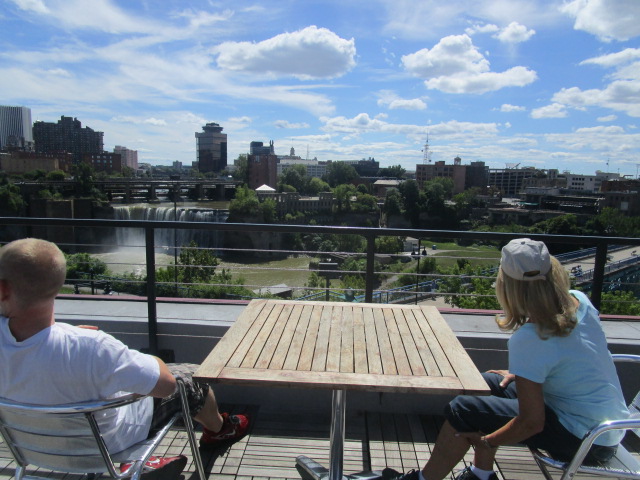
  • The High Falls of the Genesee river furnished the power to mill much of the western grain traveling along the early Erie Canal.  Rochester was known as “Flour City,”  but since then the area has hardly lived up to potential, rusting and industrial.  The city keeps trying to make this into a hip new area, but the recession broke the first efforts.

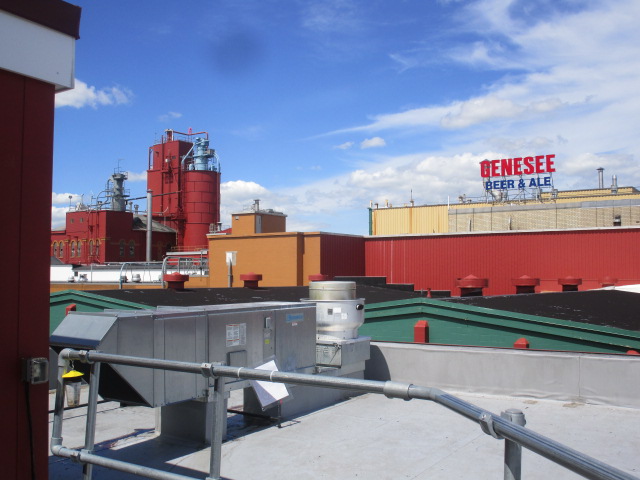
  • Meanwhile, the Genesee Brewery (a real big affair over a hundred years old) realized what a prime location they occupied on a cliff opposite the falls, and has recently built a large beer museum, tasting room, and restaurant.

  • It’s a pleasant place to spend afternoon August hours, plastic cups of Genesee beer in hand, on the roof deck, listening to a live band playing Rolling Stones classics.  A pedestrian footbridge over the gorge carries tour groups, couples wanting pictures, and on this particular Sunday, a person marching with a Puerto Rican flag from the nearby festival.
Tuesday

  • Lake Ontario extends to the horizon North, has wide sandy beaches and surprisingly large waves, capable of wrecking sailing ships in the old days.  A huge metropolitan park with carousel occupies one corner of the intersection with the Genesee, where the seemingly inactive “Port of Rochester” welcomes shipping to the United States.  Small restaurants line the docks along the river, and a half-mile walkable breakwater extends to a lighthouse.
  • New York never fear running out of drinking water _ half its border is on this lake, and almost all the water and snow that falls on lower Canada passes through here on the way to the St. Lawrence.  For those that prefer a less civilized experience, a few miles up the shore there is a large park with undeveloped beaches _ still sandy _ beneath high bluffs almost as wild as when they were first encountered by Europeans.
Wednesday

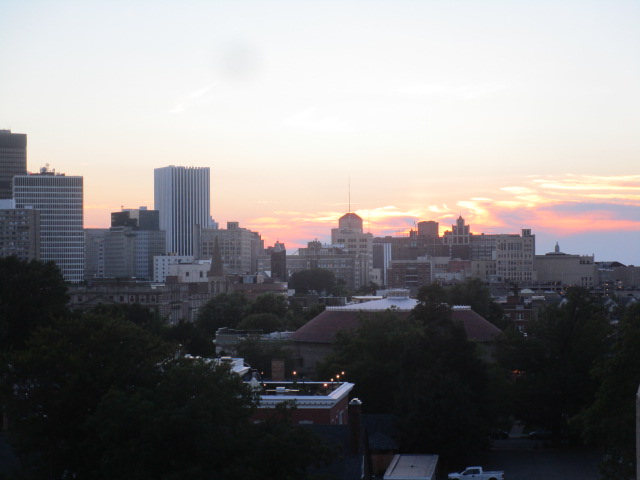
  • The Strathallan has the best location in Rochester and knows it.  Taken over by Hilton a few years ago it has renovated upscale (sadly in my opinion) to become a prime destination for weddings and corporate events.  One of its new amenities is a rooftop café to overlook sunset on the skyline with a beverage of choice.
  • I was a little shocked to discover that we had traveled far enough west that the sun goes down a half hour later in this time zone than it does in Huntington.  I tend to think of the world as discontinuously greater.  When places like this were founded, every local time was different.  Nobody cared. Only the coming of the fast railroads forced the issue by making our standard time zones so that train timetables would make sense to anyone.  We watched the later sun go down, looking exactly like the earlier sun does back home, if we only take the time to go out and experience it.

Thursday

  • Newly opened rows of sunflowers greet my return to the usual haunts.  Surprising changes can occur to the environment in less than a week.  Even more surprising changes to my outlook.  A good vacation helps me reorient and establish new perspectives.
  • The ride up was an adventure:  heavy dead stop traffic jams all through New York, then just when we thought we could relax, the nasty sound of something under the car detaching and dragging along pavement.  With that eventually cleared up, driving through a Niagara from the skies outside of Syracuse.  On the other hand, it made us appreciate a country where cars can be repaired in the middle of nowhere in half an hour, automobiles and roads don’t care about rain, and a comfortable lodging and adequate food await at day’s end.  The trip back, by contrast, was like a car commercial _ well above the speed limit, no delays under clear skies, only light traffic the whole way until within a few miles of home, where one of the local roads was being torn up by the water utility.

Friday

  • Rochester’s Seneca Park Zoo is smaller than Huntington’s (18 acre) Hecksher, but manages to contain _ in addition to the usual suspects (monkeys, sea lions, snakes, fish, birds) _ a snow leopard, an Asian tiger, a white rhino, two polar bears, four elephants, and three lions.  Here the king of beasts surveys the fat luscious snacks parading below him.  In another area a bald eagle, probably injured with flight feathers clipped, preens alongside a pond.
  • I bring this up because sometimes I feel caged and clipped in what I do here.  Any artisanship requires limits to allow mastery, and in this day and age most limits are self-imposed and completely arbitrary.  This current blog format has served me well, but I want to experiment a bit over the next month, and maybe
    settle into something different.  The pictures will remain similar, but the thoughts they trigger may veer in different directions.  Nature is inexhaustible, my commentary on it far less so. 

Saturday

  • Nights are cool and dry, days delightfully warm with heat in full sun.  Adequate rainfall has kept most foliage lush.  Yet, for the observant, summer is winding down.  Nights come on more quickly,  the sun is moving south.  Some trees are showing hints of fall color.
  • I claim to love all seasons, but like everyone around here I sometimes wonder in the depths of winter if it is worth the trouble.  Tuned to the culture of my youth, when September marked a time of returning to school or beginning the push to end-of-year at companies I worked for, I find this is the time for resolutions and plans and projects.  The challenge is always to find the best ways to use enforced indoor activities.  And so, more than New Year’s, I start into thinking about the next year and what I want to accomplish.

Sunday

  • Spartina dispersing seeds into late summer wind and wave.  More miracles, that beds of grass can come from such tiny dry kernels.  Contemplating the spread and continuation of life _ positive impossibility rather than evolutionary competition _ can be far more rewarding than studying the entire remainder of the cosmos, stars and all.
  • I can be religious in the sense that I believe there is an awful lot of the reality of our universe that nobody is capable of understanding.  I’m no neo-Platonist _ our reality is far more substantial than shadows in a cave _ but our reality is only part of much more.  I am not religious in that I think worrying about it, trying to figure it out, or submitting to my own or other’s ideas of what metaphysical reality (or purpose or meaning) may be is completely futile, silly, and almost a blasphemy on merely accepting and appreciating existence.

Openscapes

Monday

  • Huntington is blessed with many landscapes, seascapes, townscapes, and harborscapes.  Language mavens were obsolete before anyone got around to naming mallscapes, ballparkscapes, and parkinglotscapes, among others, but those are here as well.  A photograph from a cheap camera in such a place never really captures the view nor invokes the actual experience, but it can give an idea.
  • I try to come up with a theme each week that unifies my daily entries somewhat, and in this case I am trying to be more general than usual.  We’re driving up to see our son in Rochester on Thursday, where there are farmscapes quite different from the few remaining on Long Island, and vineyardscapes much more vast.  So, for a while, I will concentrate on the large rather than the small.

Tuesday

  • Skyscapes, of course, are available to anyone anywhere who is not locked in a cell.  Some are more dramatic than others, but all bestow a sense of freedom. 
  • It takes a professional photographer, with an artist sensibility, to truly record a sense of such things.  I see well enough, but do not have the technical skills to convey much.  On the other hand, the purpose of this blog, if it has any beyond keeping me occupied, is to encourage people to open their eyes and hearts to all the fantastic opportunities that surround us all the time.  Suggestions, then, are all I can offer.

Wednesday

  • Few hillscapes exist in Huntington (or even Long Island.)  This area is just a big pile of sand left by the glaciers.  Still, there are bluffs along the North Shore and long ridges (called moraines) further inland.   Huntington exists where it does because three passes through such obstacles allowed easier access to the interior by horse-drawn wagons.  Even small hills can be steep, and for draft animals (or people of a certain age) any hill is too long.
  • I probably picture this hill too much.  On the other hand, there is something to be said for knowing a locale intimately through years, seasons, and changes.  Utrillo painted Montmartre as if he had caressed each wall (and possibly had, returning from the bars.)  Corot treated Fontainebleau forest as his own private garden.  I find an awful lot of professionals these days concentrate too much on the same famous feature and put all their effort into effects.

Thursday

  • Temporary farewell to tidal vistas.  Rochester is four hundred miles away, through cities, forests, mountains, plains, fields and at least one huge swamp, crossing once nearly impossible barriers like the Sound, Hudson river, deep ravines, high bluffs, following the only early (water) path connecting the East Coast to the center of the country.  Seven-odd hours, taking it all for granted.  Hundreds of years ago, most people in Western Europe hardly traveled more than five or ten miles from their village; until very recently almost everyone else in the world did the same.  Today such a person is considered a sheltered recluse.
  • By such standards, I am almost a habitual hermit.  I try to appreciate the daily miracles _ even the man-made ones of abundant food and water, electricity, medicine, entertainment.  But once in a while, we break out a bit, and at such times I strive to view such things as wide clear highways and fast cars not as ordinary conveniences, but as magical passages to places that are different enough to refresh my sense of perspective.  

Friday

  • Didn’t take pictures of farmland, although much of western New York was flush with crops, having received adequate rainfall this year.  Hard to remember that New York is a major agricultural state, fortunately situated in the event of global warming, since it is unaffected by sea level rise, is not within any models of severe systemic drought, and would only benefit from a few additional degrees of temperature especially in the winter.  Of course, tourism, as the main (only) street of Canandaigua demonstrates, remains a strong element everywhere.
  • I’ve told my son to purchase land up there, only half jokingly.  Unfortunately, because of the time scales involved, only governments and corporations (and wealthy aristocratic land-holding families) gain much from long term trends.  The rest of us must get by in our mayfly lives with whatever short term events are going on.

Saturday

  • Lake Canandaigua, one of the Finger Lakes, demonstrates why folks upstate do not feel deprived of water activities even without an ocean, sound, or salt-water bays.  Unaffected by tides, the docks are a little unsettling to someone used to high pilings. 
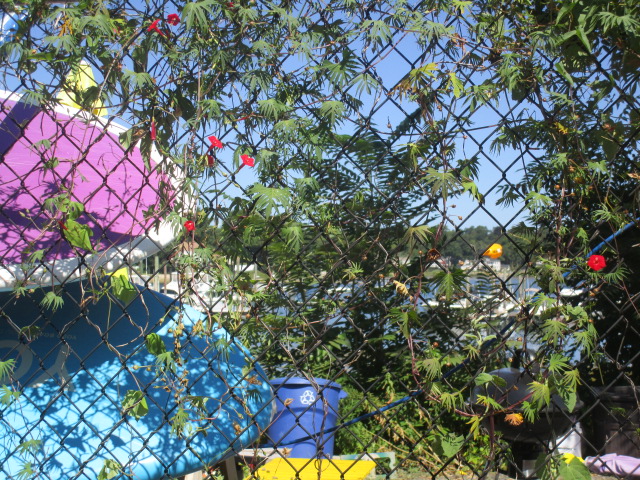
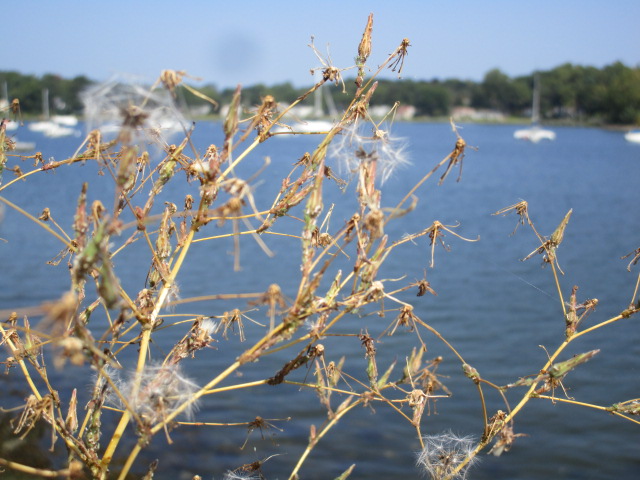
  • I had hoped to take lots of pictures of farms and fields, which were qui
    te plentifully in evidence while on the thruway.  But as it turned out this was a complete family vacation, and our son is an urban professional no more into spending time looking at cows and corn than any of his peers in Manhattan or any other city.  So I’m making do with whatever pictures I did take.  Trust me, however, we passed lots of farms just getting here and back to Rochester.
Sunday

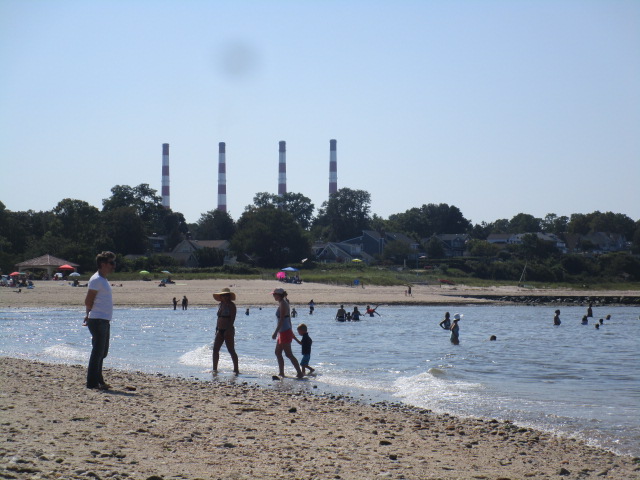
  • Gritty Monroe street, a block from Wayne’s apartment, resembles in some ways the old Greenwich village, the only difference being that there are back yards and tree lined side streets behind it.  But the ambience of all kinds of odd people _ bikers, transvestites, near-hippies, young professionals and college students provides an interesting mix, which he claims is mostly kept in check and is a lot less frightening than it was ten years ago.
  • The south side of Rochester is the good side, not the one with crime and murders and urban poverty.  It is slowly gentrifying, but never sank particularly low, and has a wonderful housing stock.  Hopeful government redevelopment and infrastructure improvement is in evidence all over.  In the meantime, rents and houses are affordable.  It’s lovely on a hot August afternoon, in its own way.  We have been assured it is far less so in the middle of February, although even with snow piled high a vast assortment of restaurants and bars of all types stay open.