I have decided that since the study of philosophy is necessarily illogical, I need not write about it in a logical way. I cannot declare axioms and corollaries nor trail their inevitable implications.
So I am free to wander. Some of it must be fully personal because the core of philosophy must begin with the philosopher. Some have even questioned if anything beyond that is illusion. Should I accept that as a ground rule? Or is my feeling that there are external realities a valid philosophical bedrock? Outlining a roadmap of chapters just will not work.
So a sporadic entry referencing a jumble of what falls into my head, off my lists, from my experience, may be as valid for this project as any other approach.
Fortunately my elementary school teachers will not be grading, so each proto-essay does not even have to make much sense. Not much different than a lot of material these days.
All nature is spectacular, but some a little more spectacular
First, perhaps, we should throw everything out. The world is different than at the time of Lao Tze, Plato, Marcus Aurelius, Aquinas, Kant, or even James or other famous philosophers of the last century. My life does not resemble theirs in any reasonable way.
Sure, they were people just like me and the seven billion others alive today, the billions who lived in the past. Same bodies, same brains, same _ well exactly what else is the same as anyone a hundred or more years ago?
And this is a key to the main problem. How can philosophical concepts or tools be applied to anyone of any time in any condition? Should there even exist such tools?
The past is of little use because _ face it _ the past was ignorant and crude. Trying to mine the “wisdom of the ancients” is like trying to understand thunder by collating every legend of thunder that ever occurred to anyone.
Given that, is trying to understand philosophy a lost cause, impossible? Is it in fact too amorphous to conceptualize? It certainly often negates logic.
Language communicates concepts. Animals use calls to convey information _ a blue jay shrieking about a hawk nearby. Non-auditory communication involves visual clues _ like flower color _ or olfactory _ like insect pheromones_ or various tactile signals like grabbing a friend’s arm.
In a narrow sense human language requires a vocabulary which consists of predefined concepts associated with words. Obviously, for language to be effective, the meaning of words between people must be congruent. That is not so much an issue when at the gross simple level _ “look, a deer,” or “it is day” _ but meaning is easily confused when applied to fine details_ especially intangibles like emotions.
Science tries to pulverize concepts into tinier and tinier bits _ each more restricted then the last. A chunk of gold is carefully measured,weighted, defined by crystalline atomic structure and chemical and physical properties. Thinking of problems in this fashion almost defines our technological existence.
Philosophy is not able to do this. All concepts are chimerical: anger becomes laughter, love becomes hate, beautiful turns ugly. Not because the concept has changed but simply by our shifting of the perspective of the concept. Trying to break “love” into tiny bits may yield a splendid poem, but scarcely a better definition of what it “really” is.
Language is almost useless for discussing philosophy, but it’s all we have. Language is best for describing objects, a little less adequate for actions, barely competent for properties. And it fails as often as it succeeds for emotions and thought itself.
Language is nevertheless the premiere human tool, and we can (literally) not imagine intelligence without it. Only verbal imagination even lets us try to understand life without intelligence (such as how does a bird think.). Only language allows us to construct a framework of past and future, predict cause and effect, develop tools that control our environment.
Yet language easily founders. A “rock” can be many things and can imply different things to others or even to ourselves as time passes. Some human experience such as emotions, dreams, being itself, cannot be verbalized _ we hope to merely evoke the same response from other beings with whom we assume we share our essence.
Given all that, it is amazing that we do, in fact, endlessly discuss philosophy. But almost all such discussions work primarily in analogies, metaphors, and similes, which are helpful but surely not conclusive.
I will, naturally, be forced to use language as I go on. That is merely the most glaring and deepest problem of the many we shall encounter.
But we must always keep in mind that the word is not the concept itself, No amount of words can nail down a “truth”. There is no equivalent to Plato’s ideal forms in the jungle of language nor even a true equivalent to shadows on cave walls.
Euclid intelligently began his presentation of geometry by declaring certain axioms, which he could then build upon for further discussion. Axioms could not be questioned, and they led logically to a consistent view of a universe of angles and lines. Eventually, mathematicians challenged the axioms and came up with completely different topologies.
We’d like to do the same for philosophy but, alas, the axioms are missing. We cannot even agree on what they should be, let alone what they are. And should we find valid axioms, which is probably impossible, we could never agree on their relative importance, nor their logical connections. Problems Euclid never faced.
Instead what we begin with are amorphous concepts. They are not only vague and slippery, they are also impossible to define otherwise. Even vague and slippery ideas are useful, of course, and we use them all the time _ joy, love, life, good.
Can we somehow use these vague foundations to construct something useful in real life? Or can it at least provide a means by which we can discuss our existence?
I note that I restarted this blog with the idea of a formal inquisition into these very topics. But I already find it impossible, and have shifted to approaching the questions of the philosophy of life by nibbling away at the edges with notions of my own. I hope they provide you with food for thought.
We inhabit an era in which all has changed completely from what it was three centuries ago.
Except philosophy.
Scientifically-oriented people rely on two sets of old thinkers. Ancient Greeks who were basically an ignorant prejudiced elite, none of whom could have passed third grade. And those prolific Enlightenment dilettantes who might have been able to do so with a little summer schooling.
Anti-science people, in opposition, point out that everyone was always just like us. They seek wisdom from the remnants of tribal superstition or solitary religious vision. Usually, the stranger and more illogical, the better.
Neither of these approaches are relevant when both the quantity and quality of human knowledge has changed multi-exponentially. We may be happy and sad just like our ancestors, but we also control and understand why we control a great deal of our physical environment.
Unfortunately, it has turned out that the increased specialization necessary for a person to thrive in current culture creates geniuses in one field who are morons in another.
Philosophy, when considered at all, retreats to tired simplistic tales of shadows in a cave, or the matrix, or libertarianism, or life with a purpose. Neighbors shout slogans because we are too worn down to think with complexity.
Yet we do live just like everyone always has. Philosophy should be brought up to date.
From a true modern perspective the whole edifice of current philosophic thought should be bulldozed into the ocean and the site cleared for something new.
Our grandson, like many toddlers who have spent most of their conscious lives in the pandemic, has recently developed an off and on desperate fear of germs.
I wanted to write a little booklet to explain my interpretation.
This ended up being an interesting project for me, even if he never pays any attention to it.
I learned how to use google docs, then google slides, then turn it all into a video and upload. I was amazed at the ease with which this could all be done.
So for what it’s worth, you can use this link
or type nicholasgerm into either google or youtube to see the results
This pandemic has allowed me to review my home library. A few weeks ago, I rediscovered an old battered paperback copy of Walden. This time, instead of speed reading out of sense of duty, I have been taking my time and listening to what he says. Turns out to be somewhat different than the memories and mythology I had about a young man who rejected everything to live humbly in the woods.
Thoreau was, of course, well educated, and the events related took place in a sedate and settled community, not in raw wilderness. Finally, I realize he did not so much reject the consensus of his civilization as stand a bit outside of it _ for a while_ to see how it related to what he wanted to do with his life. All of us have been there, but many of us fail to act on our meditations. He did so, but only for a while, and only moderately, and with an eye to writing about it.
What I had missed in an earlier rushed read, was that he was not really advising anybody to do anything different. Walden is not a polemic against civilization. Thoreau appreciates a lot of modern comforts. He is not against using iron nails, precut boards, shirts, or even occasional meals from friends. He simply wonders how much he really needs to be happy, and what he should be willing to pay for it in hours of his short time on the planet. But he constantly reminds himself, and us, that he hardly believes that his conclusions have much if any relevance to anyone else’s life.
That is a standard problem. Almost all of us work out our own approach to life in a more or less satisfactory manner. We think we have done about what we could have and should have. As we grow older, most of us become more proud of our life accomplishments, and more content in the paths we have taken. But then, rather than stop there, we try to tell others that such is what they should also do, or should have done, or compare their (poor) choices and actions to our (correct) legacy. Even if we end up bitterly hating our lives, we try to tell everyone else how to avoid our mistakes, or at least how to fight those who we think made our life a disaster.
Thoreau brazenly states that he has never met a sixty year old who had anything of value to tell him at thirty. More uncommonly, as he discovers his inner peace, he makes no pretense that his conclusions will apply to you or me. He just lays them out and challenges us to challenge ourselves in a similar manner. Compared to fanatic diatribes of current philosophers, that is a refreshing approach.
Contemplation of the right way to live automatically drifts to definitions of utopia. How do I live the best life for me, how does society provide the best life for everyone? Thoreau is the proper starting point, not with solutions glibly offered but with profound questions. More interestingly, in these times when everyone is admonished to “be all that you can be,” he questions just how much “all” in socially defined terms is really important.
A pathetic new plea by Karl Rove reiterates the false mythology of Republicans as the party of small government. This has been a mantra (when they were out of power) since Reagan’s famous line about “I’m from the government and I’m here to help,” followed by “starving” Leviathan with tax cuts as fantasized by Gingrich. But everywhere, in everything, all the time, bigness has won.
The only national players _ superpowers and others _ are the big countries with bigger militaries. Amazon has destroyed the corner stores and regional malls, big fast food chains have driven out smaller competitors, big citizens make billions of dollars, superstars dominate entertainment, big media reigns, big pharma produces drugs, and each small success startup is quickly gobbled by some giant corporation. Saving a local park or recycling household bottles means nothing in the face of global climate change and mass animal extinction.
Meanwhile in the US there are only two big political parties, each fighting the other as if in a war, with only a winner or loser for whatever “base” supports it. The good of all is tangential to simply having power. And that power _ bureaucracy _ must be big to keep the other big parts of society _ police, military, corporations, billionaires, states, media _ under control so that civilization does not rip itself apart. The deep state is a necessary infrastructure for remaining socially cohesive.
I admire small things. The local entrepreneur, contractor, restauranteur, professional are to be encouraged. But each of them is supported by large networks, especially the huge protection of our immense court system. They purchase what they need, generally, from appropriate goliaths _ contractors, for example, frequent big national home-goods centers. But they exist largely on sufferance and are likely to be snuffed out by a change in taste, or a pandemic, or new legal consensus.
I admire representative democracy when it is organized as a republic whose purpose is formally to respect the rights of its inhabitants. But I am not sure what these rights _ in a modern technological crowded and globally connected world _ should be. I have lived through vestiges of “blue laws” and worry about the fanatic beliefs of evangelicals because the freedom of one may be the chains of another.
So what should a conservative _ or for that matter libertarian _ mindset consider? Simply how is all this bigness somehow subordinated to an individual’s rights. I do not want to be told what to do by billionaires, deep state, or corporations _ yet I also know that if these and the huge military keeping us protected from other countries and each other would cease to exist, my life would be awful indeed.
We’ve gone about as far as we can with enlightenment philosophies _ generated before electricity and the global community. We need some new ideas. And if current conservatives or anyone else cannot provide them, they should step aside. But I guarantee that whatever the solutions or outcomes, smallness will not play much of a part. Current civilization and its needs have killed that forever.
Everything is big now. A small government would be crushed by other governments and other forces, and would in fact be a pitiful and useless annoyance.
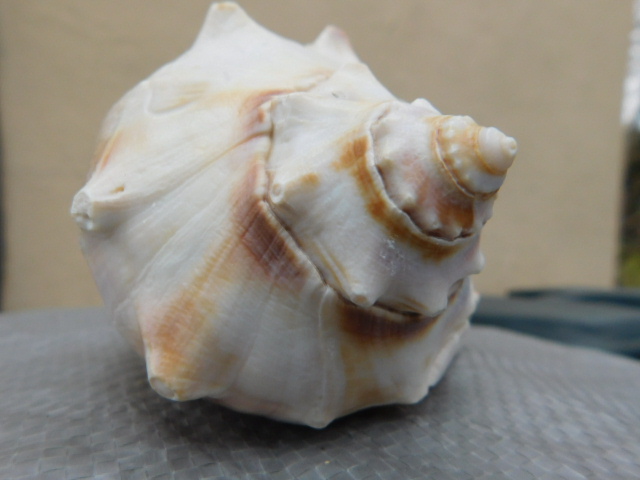
An atom is a weird assemblage of leptons and strangeness. There are 100 trillion atoms in each of our cells. Current Cosmology outlines the astonishing path required to create each of the 118 elements in the universe, and the distribution, accretion, explosion, and implosion to get them all here now. Geology and Biology add more layers of ineffable wonder with tales of molecules, force, erosion, decay, and evolution. Properly understood, a shell on a beach is an impossible object.
There are about the same number of cells in our body. Some are symbiotes or parasites, most are parts of complex systems. Each of these cells is undergoing incalculable chemical and electrical internal interactions at each moment. A breath or heartbeat is incomprehensively complicated. Digestion, disease control, all our basic functionality, let alone consciousness and memory, are infinitely convoluted and intertwined. We happily assume that such “natural” conditions continue as we enjoy holistic health.
Understanding environment and social structure can be frustrating. How is oxygen level maintained, where does water come from, why can humans build and maintain cities _all the “simple” questions of children _ are really only partially answered, no matter how much we think we know. Yet at this level, at least, we have always claimed a certain amount of understanding and control. Hunting, farming, tribalism are part of our nature. We try to figure things out and then use tools as necessary to make them better or at least keep them from getting worse.
A primary mental tool is belief in cause and effect. It did not require Newton to grasp that when an object hits another object, there are consequences. Since we can manipulate the “cause” in many cases, it is natural to assume that something else controls what we cannot _ such as making lightning and thunder and rain. This idea of agency requires a guiding principle or intelligence for everything we do not understand. Usefully, it allows us to ignore deep and often irrelevant underlying issues so we can deal with how to move that rock from here to there.
People conflict when seeking to control that agent. Praying to a spirit which brings rain is inconsequential to society unless a tribe decides such prayers require human sacrifice. Which brings us to current civilization. Science has discovered too much cold complexity; we dream of comforting simplicity. Cults fill that need with slogans and beliefs _ for example, “my job and life are bad because of immigrants.” Even if we can do nothing about it, it is a solid backstop in our confusing existence.
Little of that is new or necessarily bad, everybody needs illusions. Unfortunately, we are also at a point where slogans have taken on the varnish of unquestionable writ, at which point those who oppose it are seen as blasphemers who must be silenced. As frequently noted, this is the opposite attitude to that of science, which questions everything. But surrender in the face of complexity is not only intoxicating, but also paradoxically allows us to sleep peacefully at night, happy in knowing the simple truth.



 HuntingtonHarborThoughts