Grasshoppers

End of summer during my lifetime in the Northeast has always put me in mind of the fable of the ant and grasshopper. The frugal hardworking ant preparing to survive a harsh winter to come, the grasshopper fiddling and dancing the whole day long with no thought of tomorrow.

For many years, the persistent rhythms of culture around me reinforced that story. Vacation was ending. Back to school, back to work, lots of new projects, return to grim reality. The inevitable degradation of weather as we lost sunlight and headed into a long tunnel of cold and dark.

These days it seems a similar “fin de siecle” mood has seized the entire world all the time. As in late summer, life seems pretty fine today. But the aging boomers are suddenly running hard into personal mortality and decay. Youth has been stridently informed that nature is dying and the world may soon be much worse than anything they have known.

Most folks are grabbing fiddles and enjoying life while they can. A few stubborn ants are grimly digging burrows hoping that there will be a springtime. And the less emotionally well equipped simply go crazy.

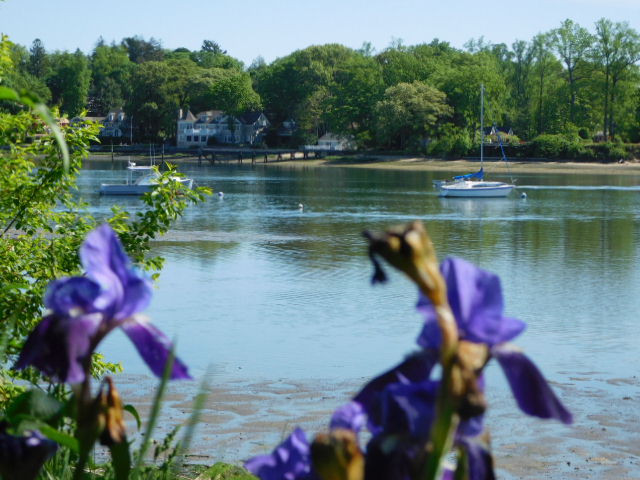
I sit on a beautiful beach in hot sun, watching children play and elders sunbathe, while boats glide on the harbor. It is only in my mind’s eye that the future appears so terrible. For most of my life, I have often embraced the grasshopper mode, and right now I am extremely grateful for having done so. 

Art and Science

Essays are at best a way of playing with concepts. That necessarily involves words, and, more to the point, the meaning of words. What I mean by “art” and what you understand by “art” may be very different. Yet constantly refining definitions is usually a tedious legalistic dead end.

“Science” for me has come to mean a method of discovering consistent relations in the physical world. I will let it go at that, except to note that science has also often been used to preach that there is one right solution to problems.

“Art”, on the other hand, has gradually assumed in my thoughts the vast universe of non-physical issues. What is correct social behavior, or beauty, or meaning, or existence? And in art there is clearly more than one best answer to any such question.

Other people will pick other words _ religion, philosophy, whatever. I prefer the more tangible aspects of art, which can manifest itself in contemplative objects for communication or simply internal and personal explorations which lead to a deeper enchantment with the world. 

That all becomes very fuzzy very quickly, but such is the true nature of language and our actual thoughts. I am generally much more aware of the art of life than of the science of life. And, in truth, a great deal of the spontaneous events around me seem more irrational and chaotic than not. 

Thus “art.” Definitely not a way to seek the “one important truth” about anything.

Peripheral Awareness

As I age I am increasingly aware of a decline in peripheral awareness. I can focus well enough and within that focus I seem almost as competent as ever. But I am also aware that I am less aware.

Concentration is a wonderful thing and allows grand tasks to be accomplished. A fisherman on the shore catches more fish if he purely studies waves and other subtle signs. But that may lead to not noticing the storm approaching or even the tide becoming dangerously high. 

That bothers me about aging politicians _ and aging movements, for that matter. Young people are able to handle multiple distractions, refocus or even incorporate them if necessary. Older people seize on ideas like life preservers or pacifiers, and obsess completely. They are fine with the core idea, they just forget that it is one among many. More than that, they hardly notice that _ like storms approaching _ conditions often change.

That is the real danger in old folks remaining as leaders. Even if they do not become senile, their days as smart opportunists are long gone. Through eyes misty or sharp they still make out that one single shining goal for which they have always striven. But everything around them is different and they have no idea.

Sad for them. Calamitous for followers and society.

Free Speech

Our lovely originalist Supreme Court increasingly assures everyone that “free speech” is an absolute right. The law can never stop you from saying what you want to say. And most of us agree with most of that. But most of us also possess a degree of common sense that there are, in fact, limits.

One historic one has been that you are not allowed to shout “fire” in a crowded theater. But why not? Surely you can shout “fire” on a sidewalk. What difference between stating in a bar conversation that they “should be destroyed” and phoning in a bomb threat?

And then there is the weasel cop out of hate speech. You are apparently free to declaim “”someone should kill my bastard neighbor” but not “someone should kill my Chinese bastard neighbor.” Perhaps a degree of common sense, but tenuous legality.

Mostly we agree that people should be responsible for their actions and the consequences. And that implies that limits to free speech should be indexed to power. Provoking panic in a theater is one example, for everyone will crush at the exits.  The more strongly people react as an individual speaks, the more that person is responsible for what happens. 

The mafia tries to get away with lawyer arguments for the crime boss “hey ,he didn’t kill John Smith, he just suggested it would be great if someone did.” Free speech in action. 

Good material for a movie crime drama. Very bad behavior for someone like a president.

Here and Now

One great attraction of drugs and alcohol _ not to mention fanatic obsessions of all types _ is that they restrict our worries about things distant in time and space. This glass of beer is great, I enjoy talking to you, I can forget the awful boss and the deadline next Friday. 

This is, after all, a culture that glorifies planning for the future by learning from the past. Our media carps on the long-term effects of this and that, science claims to be learning about the birth of the universe. We are aware of floods in Tahiti, and next year’s possible shortage of coffee or computer chips.

Imagination is a fine thing, but the farther away it gets from where we are actually standing, the more it can splinter into possible but increasingly uncertain fragments. We can agree that there is a tree in front of us right now, even argue if it is healthy or beautiful, but it is truly there. What will be here a year or 10 or 100 years from now? Opinions differ.

One mark of sanity is to live primarily focused on a shared immediate existence. One problem is that our electronic social media do not do that and by definition promote insanity. 

It is important to wake up each day and really try to taste the coffee, smell the roses, notice the sky. And to try to maintain some of that awareness all day long.

Minuscule Madness

I have never been a complete rebel. I value social stability and the rules and customs that maintain it. Being polite, the golden rule, obeying the law all seem sane and correct. But pursuing rules into a forest of fashions and styles always seemed ridiculous. That tables should be set “just so”, that hair must be cut this way, that this color does not go with that seem very silly. Possibly because those guidelines change so often, possibly because there are always counter examples. Possibly, just because I didn’t like the cliques of people who follow them as a signal to each other.

The problem only got worse with the arrival of industrial abundance, and the runaway consumer economy. It is not enough to eat well, one must eat just so. The tiniest differences are scrutinized to determine if something is correct or not. Tolerance grows less and less.

Fashion, of course, has always been the curse of the affluent elite. The poor never had time, energy, nor _ especially _ money to be snobbish. They made do with religious signaling, which was usually within their means

Today life is largely unhinged. Like some of those old aristocrats, the only thing we have to define ourselves is fashion and the hope that it will be noticed for fitting us. Sad, but true. The tiniest things are the most important

Avoiding the tides of miniscule fashion undoubtedly can lead to a more contemplated and contented life.  But, of course, being unfashionable brings its own set of problems.

Adam Smith

I use Adam Smith only as an example _ in this case of the idea that free enterprise is the best economic system. People like to encapsulate both virtues and evils in the form of heroes or villains. A person becomes a quick lucid symbol of an entire ideology. And, as a symbol, is stripped to the bare essentials. Scholars later point out that all heroes have warts, all ideas are complex. Jefferson owned slaves. Smith allowed for government interference. Then the lesser thinkers among us seize on bits and pieces, quotes or thoughts, to buttress our own, usually logically fragile and factually thin ideologies.

Complex writings of any type _ philosophical, religious, scientific, historic _ are complex. They necessarily consider contradictions, often without easy resolution. But all that is embedded in a larger context frequently ignored by strident acolytes.

My point really is not exactly about Adam Smith per se, but about a tendency surrounding heroes. Educators have taken to claiming that merely learning something is equivalent to knowing something. That is not true  Reading about Adam Smith’s thinking is like reading about Henry the 8th feasting. It will put pictures in your mind, but you will still be hungry and need to eat something real.

Similarly unless you think deeply about what you learn by reading, you will be just as ignorant as you were before. And isolating little snippets to quote does not make you smarter.

Joyful Obliviousness

I write in the midst of the “hazy lazy crazy days of summer”, still available here in the Northeast this year. I can more or less mindlessly sit in a chair on the beach, swimming occasionally, or walk through dense green woods without a care, or vegetate watching flowers and insects on the backyard patio. Give the worried brain a rest.

There are different degrees of being oblivious, of course, from the profound peace of deep sleep to the intense focus on something locally important. All cut out distant horizons, so we cease worry about the future, the other side of the planet, fevered imagination. We are reminded, if we care to make an analytical effort, that anything beyond our immediate perceptions is an illusion. The more distant _ the more irrelevant. 

There are also differing ways to achieve such a state. Alcohol, drugs, meditation, concentration, sex _ a myriad of methods. All of them can deliver for a short time a release from the too present modern world. 

I do not proclaim that such willful abandonment of the toils of planning should be a life goal. There are other joys besides a hedonistic mindlessness. But like any cool refreshment, a sip of obliviousness now and then can refresh and even add depth and perspective to who we are and how we manage our lives.

Once upon a time,leisure was thought to help us forget cares. Alas, for many, leisure and even play have become work oriented. A struggle to meditate seems a true Zen oxymoron.

Poison Apples

No, not the wicked witch kind, although that might be appropriate too. Rather the proverbial bad apple that can rot a whole barrel of good apples. Social interaction seems increasingly poisoned by the dumbest, loudest, most obnoxious person or small group of people who lose all perspective while making sane assembled conversation impossible.

These fanatic crusaders began gaining power and arrogance on social media, ruining civil communities of interesting or meaningful dialogue. Now emboldened, they increasingly disrupt actual meetings in Town Halls, schools, or even library lectures and the like. And by destroying free communication, they fundamentally threaten democracy. 

I don’t much mind if they keep to themselves or are civil in public. But as crusaders they hardly ever are such. After all, they claim, what they believe and want is important, unlike the trivial cares of everyone else. And, by golly, they are going to scream until everyone is forced to agree with them or just gives up arguing rationally.

Unfortunately it only takes one or two to ruin a meeting in an auditorium. More unfortunately, they can now organize flash mobs of dozens or more at any time. Sometimes I think they are folks with nothing else to do with their lives, like religious mendicants of old.

I’d feel sorry for them _ it’s no way to live happily _ but that is very hard when they make my life and our times so miserable.

Moral Reform

Somebody is always clamoring for “moral reform.” Often it is not so much that people are evil as that they should be better. There is an assumption of social entropy _ a golden age has given way to silver and so on down to the low clay age we inhabit. 

The simplest morality, of course, is the golden rule. But that is easily warped by time and circumstance _ what I wish to do unto others is different if I am well-fed or starving. And all bets are off if two opposing traits _ say rich and poor, boy or girl _ meet one another. What each wishes for or from the other may have no congruence at all.

Moral codes must vary with situation. It’s okay to hurt someone trying to kill me, or a loved one, or _ well _ so many exceptions. Is it a relative or a stranger? Is it for social stability or personal gain? And very quickly simple, strict, consistent morality becomes either mush or enforced tyranny.

The other thing I notice about many moral reformers is that they assume being moral should be a struggle against a bad inner tendency. And they usually project their own tendencies onto everyone. The sex obsessed think everyone else must be so. 

Like most people, I consider myself moral enough, most of the time and within limits. I tend to be less concerned with reforming people who might be threats than simply keeping them under control.  

Finally, I find moral reform a pretty dull subject and its proponents usually crashing bores.