Ragged

Monday

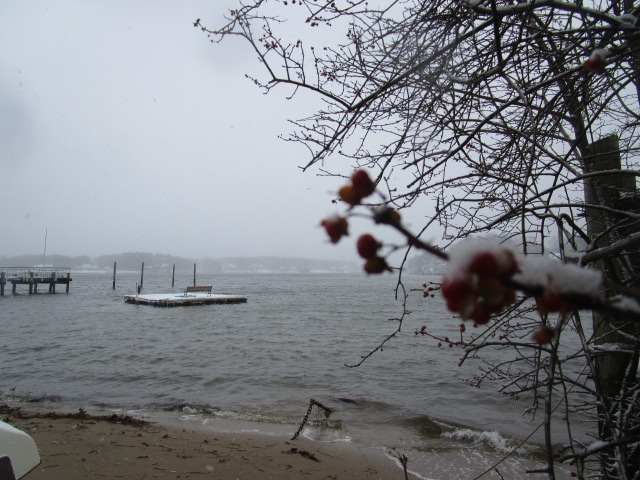
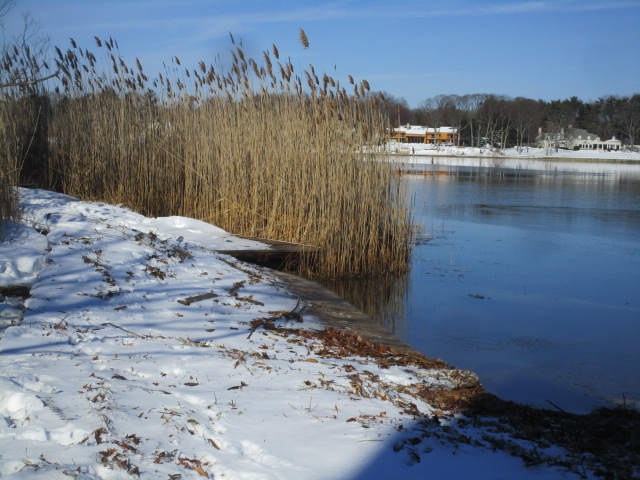
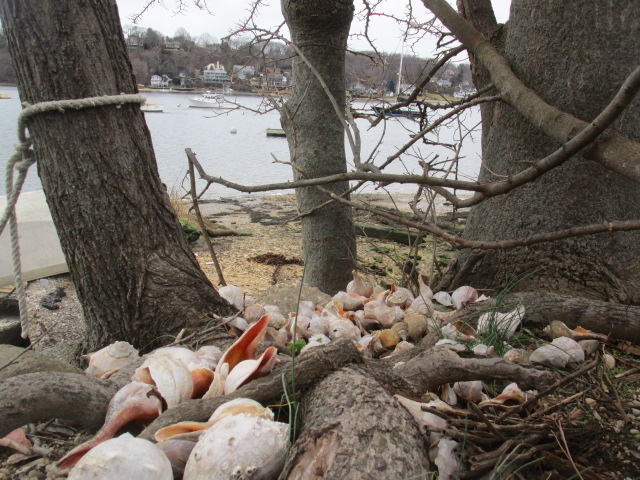
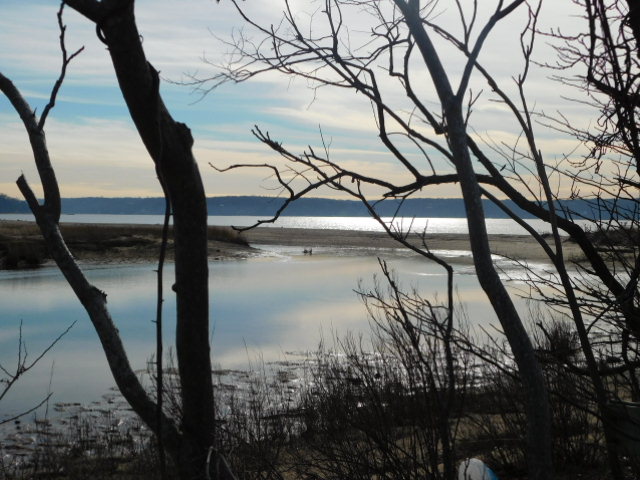
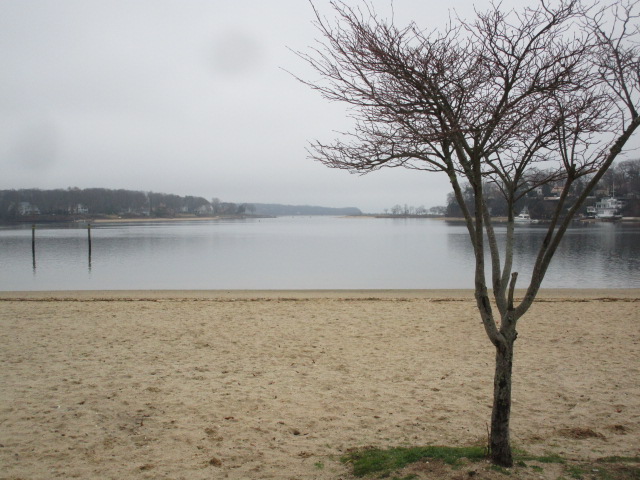
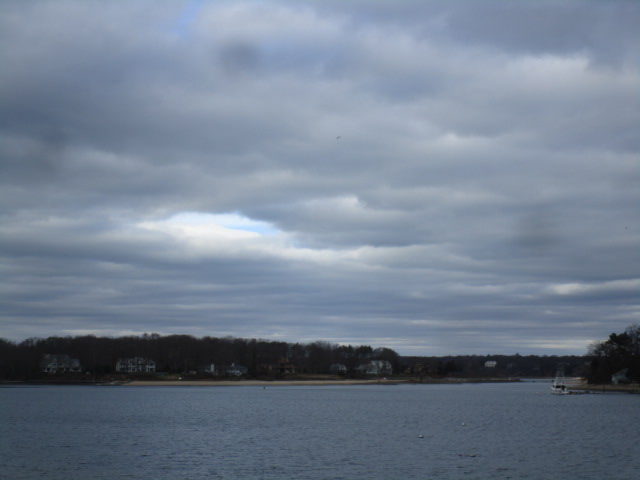
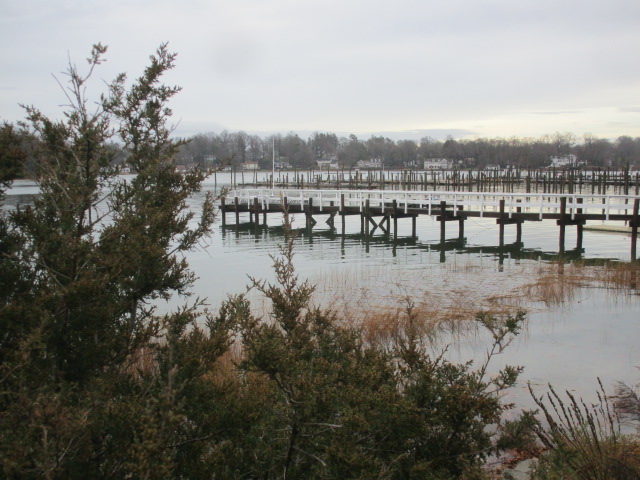
  • Earliest March is frequently ragged.  Temperatures spike high, plunge low overnight.  Dry brown reeds and weeds lie broken and torn.  Winter storms have littered ground with needles, branches ripped off trees, broken limbs and whole trunks expose fresh scars.  Not least, human detritus glitters and shines incongruous colors everywhere, since nothing has yet been hidden by new growth, nor remains covered by a melting blanket of snow.
  • Like everyone else, I unconsciously filter what I do not want to see.  Trash is invisible to my eyes seeking flowers or sprouts.  Seemingly dead elements of nature fade behind a desire to discover new growth.  I can mold my world as I wish, and that is not wrong.  But it is never truly the entire story, either.

Tuesday
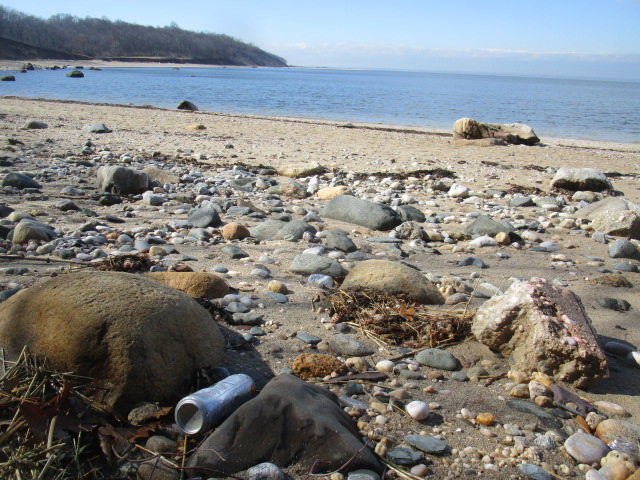
Imagine all time all space infinite
Multiverses, fractal dimensions, physicists’ dreams
In all immensity, could there be,
Another beer can just like this?
People consider other forms of life
Perhaps intelligence, bug eyed monsters everywhere
Even gods playing with stars
Are candy wrappers strewn throughout the Milky Way?
Are hydrogen clouds celestial chariot fumes?
Asteroids discarded kitchen tiles?
Suns residue of playful thunderbolts?
Must trails of trash proclaim each life or act?
I’m certain that is true of us
Since flint flakes littered ancient hills
Cuneiform shards piled in smooth desert sands

Beer cans, garbage, natural as me.

Wednesday

  • By moonlight, this scene would be wild and haunting enough for the most romantic poet.  Another tree toppled by heavy snow and fierce wind, leaving only a question as to why those others survived the midnight onslaught.  Dreary, bare, browned downs of soggy low grass and stiff reed stubble.  Not even enough forage for flocks of geese, abundant everywhere else.
  • As snow gives way to mud, shrill sharp sounds of chain saws envelop woodlands and clearings.  When the mud dries, ubiquitous whining drone of leaf-blowers will make quiet a rare commodity even in deepest forest.  And yet, I am content, not querulous.   No saws, no blowers at this moment, cool but not cold breeze, blue sky.  One tree toppled, but most sturdily remain.  Grass will soon grow, weeds jump forth.  I find it too easy to project fears into the future, to worry about what may be, and my frightened mind discounts current happiness and wonder.  My consciousness only truly exists in this moment, after all, and both past and future are mere memory and fiction.  

Thursday

Dashing under shelter of the narrow awning at Surfside Deli, I bump into Carl, also huddling from the fierce sudden spring squall.  “Whew!  Sure didn’t see this coming …”
The Surfside Deli has never seen surf and never will.  It’s on the opposite side of the Island from the Atlantic, and even the minor waves kicked up in the Sound don’t penetrate the narrow inlet.  There are occasional tiny whitecaps on parts of the harbor, but this end is too sheltered even for those.  I guess Rippleside Deli doesn’t have the right sound, so the owners use the same poetic license that yields “Lakeview Drive” in the middle of an Arizona desert development.
Carl squints into the driving rain, “Nothing about this on the weather last night, that’s for sure.”
“Last night nothing!” I exclaim.  “No radar on the internet an hour ago.  I looked.  Should have brought a raincoat.”
“And hat and gloves,” he adds, ruefully.  “So cold, so fast.  It was warm and sunny when I left.”
“Yeah, the bad part is I have to trudge back into this mess.”
“You appreciate the plight of those old-time farmers before we had any idea of what was going on,” he noted.  “When you get trapped like this out of nowhere you can understand all the deaths from the blizzard of 1888.”
“Oh, we have it easy,” I agree.  “And nice warm houses, hot water, electricity to get back to.”
“We’re just the most lucky fellas, I guess,” he jokes sticking his hand into a river cascading from a drainpipe.  “
You gonna try to wait it out?”
“What was that old saying about spring weather _ if you don’t like it now, wait a minute?”
“Something like. “
“I’ve got stuff to do,” I insist, as I tighten up the collar of my already soggy “water-resistant” jacket.  “My skin at least keeps the rain out eventually.  Time to play duck…”

“Quack, quack,” he calls, as I lean into the stinging gale.

Friday 

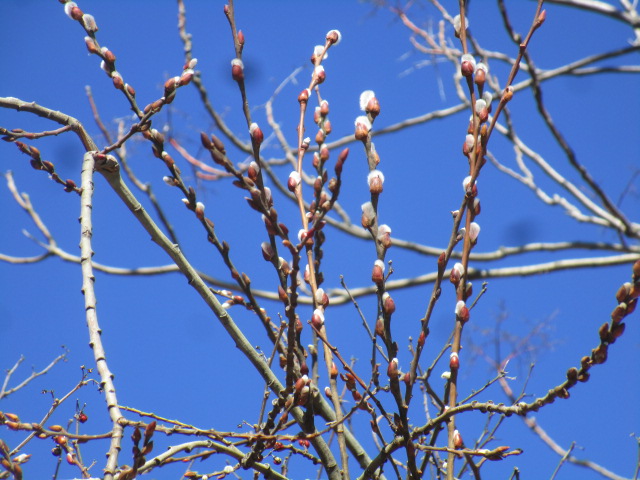
  • Ragged implies random, like these branches thickly clustered.  There seems to be no discernable pattern, each twig formed by circumstances and twisted by the luck of sun, shade, cold, wind, and wet.  At this time of year, as we anxiously scan for swelling buds, we are more likely to notice such underlying structure.  Plants which appear smooth and carefully-shaped in full foliage reveal themselves much less so when support is revealed, unlike our own more predictable skeletons.
  • I have learned to accept that luck is part of the universe.  We inhabit a relatively quiet and stable bubble of time and space but even our sun flares violently ragged.  Elsewhere galaxies collide, asteroids smash.  I am happy if tornadoes avoid my house, if my tall trees survive a snowstorm, if my zillions of furiously fermenting cells hold together another day.  To find beauty amidst infinitely twisted nature is an art skill of highest order.  

Saturday

  • Chaos theory and the indeterminate character of whatever underlies our universe decree that science and other human tools can never accurately predict exact moments or events, such as this snowfall.  No matter how fine our observations and massive our computations the result of one coin flip can no more be foretold than exactly when the next drip from your faucet will occur, or the exact second a given crocus will open.
  • On the other hand, we’re pretty good at averages, probabilities, and ranges _ how much water will fall from that faucet in an hour, how likely a snow event may be this morning, when backyard daffodils should bloom.   I have a fifty percent chance of losing one coin toss with you, but almost no chance of losing a bet that after we have done a thousand the count of heads will be around five hundred.
  • Humanity has taken what it’s got and run with it.  Hard work, difficult thought, and using averages intelligently have yielded a gigantic _ and I would claim beautiful _ civilization.  On average. 
  • My real problem, like yours, like everybody’s, is the specific.  I may care deeply about that one coin flip.  Odds are I will not be struck by an asteroid or hit by lightning or even run over by a car _ but I can never be sure I am not the one out of whoever who gets blasted.  There are ragged possible terrors all about, and if I obsess on them I walk in constant fear.
  • Of course, I work it the other way too.  The odds of dying today increase with every day of my life, yet I tend to ignore that prediction.  Death is certain for any mortal _ but am I really mortal?  Most things happen to other people. 
  • What value, then, odds to me?  If I cannot know, is that perhaps a blessing?  I seem to have wandered far from chaos theory and ragged nature, but in fact I think I have burrowed towards the core.

Sunday

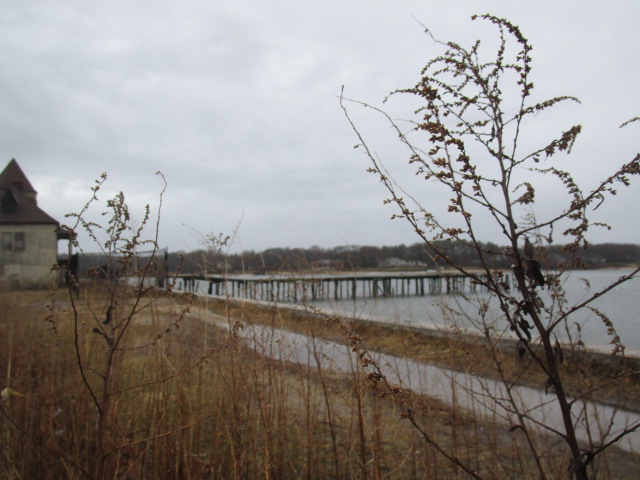
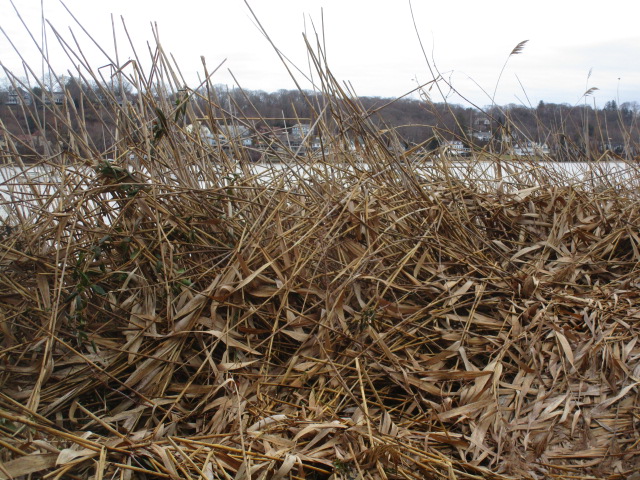
  • From this tangled ragged mess of dead stalks, ripped leaves, twigs stripped from overhead branches, and all the dull brown detritus of seasons past, new growth emerges.  Buds on thorny runners, green shoots thrusting out of still frozen soil, dark leaves that have somehow survived periods of intense cold and dark weeks buried under snow.  Nature’s next spectacular is underway.  Ignorant of humans’ gloomy thoughts and depressed attitudes, cycles continue.  In a short while, this patch of land will be unrecognizable.
  • I remain too impatient.  I miss many of signs.  I cannot quite make out patterns.  What will bloom where, which seemingly dead buds are swelling to life, what stirrings occur beneath the superficial cover which is all that I see?  I hardly notice that bird species are changing, as new migrants flit by, and robins begin to search for worms.   The most wonderful miracle is that one day soon I will suddenly awake to embrace the overwhelming beauty of another vibrant spring.
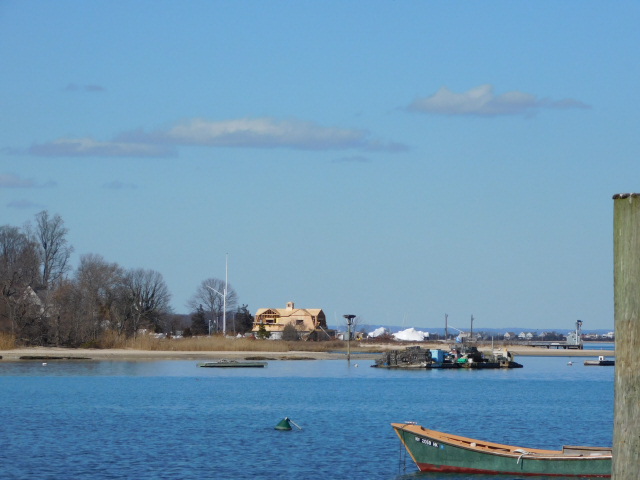
Taking Notice

Monday

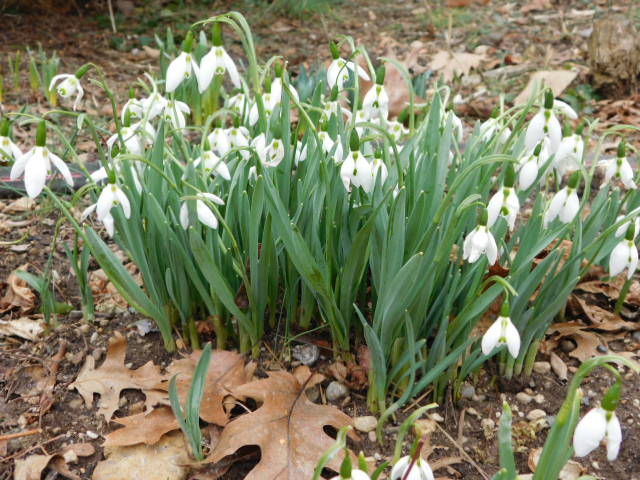
  • Snowdrops have been blooming off and on since mid-January, so they are hardly a reliable indicator of spring.  It’s been a mild winter with rare intense seasonal episodes.  Yet suddenly vernal equinox is only one month away, so a previous anomaly may become an omen.  Soon it will be apparent if early shoots of bulbs and buds on trees _ unprotected by snowdrifts_ were destroyed in a record cold snap.
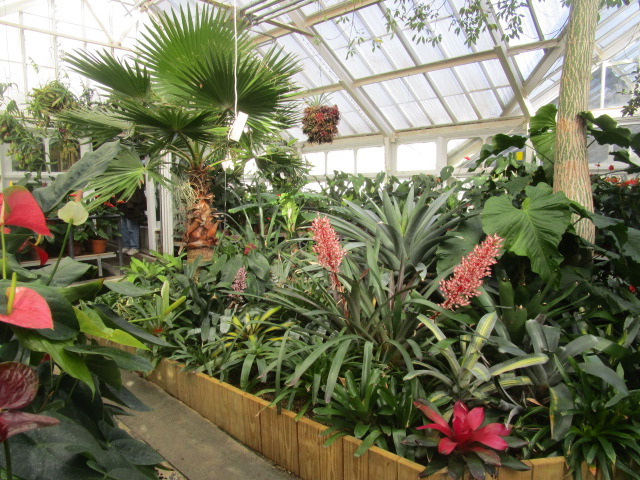
  • Last year’s harsh weather led to a late and concentrated awakening _ everything suddenly flowering at once and shriveling in heat immediately thereafter.  I think this year may be a more gradual series of waves flowing uninterrupted from late winter through early, mid, and late spring right into early summer.  I’ve been known to be wrong _ so I shall try to pay particular notice to what shows up when.  No matter what, I’m sure it will be worth watching closely.  

Tuesday

Homage to The Cloud
“I am the daughter of Earth and Water
And the nursling of the Sky”
Poetry flowing incredibly knowing
Beckoning me to try
But Shelley’s a genius, a gulf lies between us
I can’t write like that, we know
His visions are sweeter, I envy his meter
Mere wishing won’t make me so.
If I could but borrow his skills for one morrow
Perhaps create something which gleams
To craft a fine phrase which might thrill and amaze

Nice having impossible dreams

Wednesday

  • Catkins arrive this time of year regardless of outside conditions.  They are a kind of “save this date” reminder that something marvelous will be arriving in the future.  Often they have fluffed out and disappeared before any significant foliage opens. 
  • I admit that I sometimes prowl seeking something specific.  Such focused concentration unfortunately reduces my chances for serendipity.  A loud noise, a strong smell, an extravagant display may break through my reverie to reignite my complicated, marvelous experience, understanding, and enjoyment.  Otherwise I wander half-blinded by my thoughts.

Thursday

“I see where you’re writing about noticing things,” says Ed, coming up behind me on the beach.  I’m marveling at the full moon high tide as waves begin to develop angrily in the raw north wind.  A duck rides them out unperturbed.
“Confess it’s true,” I reply noncommittally.   “Lately need a topic _ any topic _ to kick this old brain into gear every day.”
“Ok, but do you mean to notice the big things or the little things?”
“Both, I guess.  You have examples?”
“Big things the length of day, the warming air.  Little things garlic clumps and chickweed flowers.”
“Haven’t seen any chickweed yet …”
“You get the idea.  So which is really important?” he insists.
“Both.  Both.  The universe is all connected and …”
“Oh, you’re one of those guys,” he waves dismissively.  “Why not notice decaying logs and rocks which have been sitting around doing nothing for the last few years?  ‘Everything’ is basically nothing.”
“Whoa!  I like my brain in gear, but not this much!  I didn’t expect the Spanish Inquisition.”
We both laugh and chorus loudly “Nobody expects the Spanish Inquisition!”

That startles the poor little duck which takes off away from the rising gale.  Fittingly, it has finally noticed us.

Friday

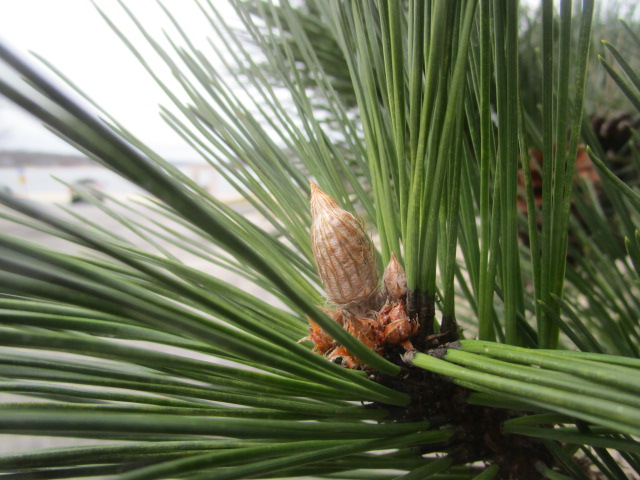
  • Pines depend on wind for pollination _ in arrogance science labels that “primitive” although they’ve been around longer than the flowering plants.  They need not wait for insects and simply rely on seasonal breezes to waft fertilization.  Then they produc
    e seed-bearing cones over summer, dispersed by birds in fall, and require a few surviving seedlings available for spring rains.
  • In point of fact, this year I have already noticed insect activity.  Of course, what I see of flights of gnats or flies is only an infinitesimal showing of vast unseen activity.  Termites and ants are rousing underground and in vegetation, bees have been busily fanning hives warm all winter, who knows what else strives beneath and around me.  Anytime I think I am noticing everything, I can be humbled to realize how crude my senses and understanding really are.

Saturday

  • Our thoughts revolve around pattern creation, matching, and recognition.  If something fulfills a pattern, we are pleased.  If something does not match what we expect, we are surprised, for better or worse.  Fortunately, we are often so dominant in our environment that many surprises make us joyful enough to encourage curiosity.
  • What happens when I expect rain and find snow?  When I confidently seek signs of awakening spring and discover only desolation?  That’s the trouble with being too attached to preconceptions.  On my walk, I must be able to shift from, say, a naturalist perspective (buds are swelling) to one of an artist (aren’t the bare outlined branches lovely.)  Or anything else I choose.
  • Nobody can predict everything nor notice more than a fraction of what exists.  Even one seashell, one other person, provides more than enough basis for meditation to last hours or days.  If we could predict all, we would literally die of boredom.  Maybe that’s what happens to any god.
  • Proper balance is hard to achieve.  It is necessary to wear patterns strongly enough to be pleased when they come true, lightly enough to be happily surprised if they don’t.  The best observers and scientists utilize surprises to better understand what they think they know.
  •  For me, being surprised by noticing things is less utilitarian.  Rather it is a method to remain engaged and happy _ the word often invoked is “enchanted” _ with all I encounter, no matter how well it matches my particular transient expectation.

Sunday

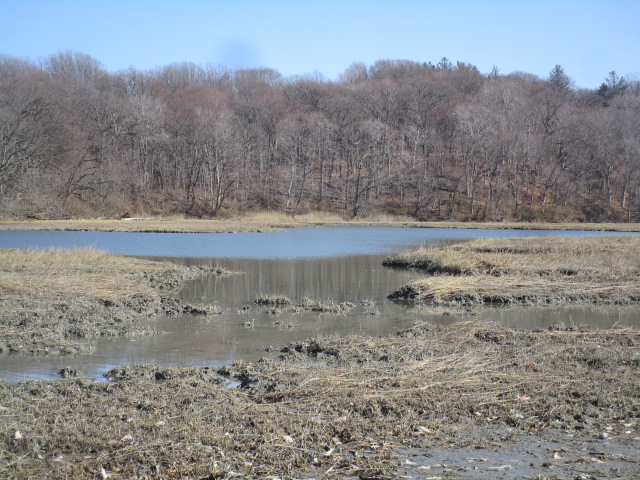
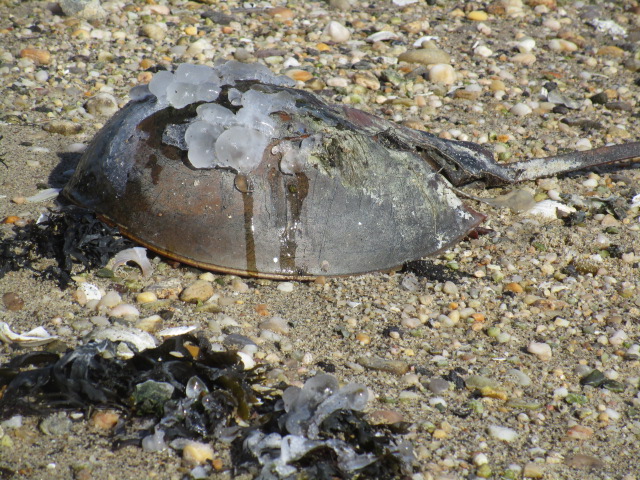
  • Incoming water in cold tidal marsh.  Nothing to see here _ empty carapaces of horseshoe crabs, dead reed mats woven together as if by demented artisans,  ubiquitous fragments of garbage, and mud, mud, mud.  Ospreys have not returned to nesting poles high overhead, egrets are wherever egrets go when it is thirty degrees, even seagulls are over on the other side of the causeway.  Brown and black, tones as monotonous as the vestibule of Hades.  Wet organic decay is the only, hesitant, smell.  Sounding occasionally over persistent low murmur of seabreeze is the deep hissing rush of car tires as people race to warm restaurants and shopping experiences.
  • I have forced myself here precisely because I never do.  I am usually in one of those hermetically sealed vehicles, eyes glued forward, mind racing ahead to where I am going.  Desolate scenes do not appear in National Geographic, nature documentaries, nor any newspaper unless there is a motionless body involved.  Yet this too is the world, nature, as integral to our universal miracle as any dandified gaudy flower bursting forth in a few months.  Winter marshland does not lack unique marvels _ I have just been sadly unable to notice them.

Brilliant

Monday

  • Surprisingly quickly, the darkest days of winter are just memories.  The sun rises early, sets in evening instead of afternoon, and is brilliant and blinding at high noon.  Somehow the snow has remained white for the last week, and newly formed ice sparkles with crystalline dazzle.  Sometimes high ice clouds dim the solar disk to a pale ghost, but often the sky is an impossible glaring blue.  Sunglasses may be required.
  • In December, the indoor lights were on by 4pm, now I wait until almost 5:30, and each day edges a bit farther into night.  Soon I will become impatient as I assume the beckoning outdoors has become more temperately hospitable than it actually is.  Late winter and early spring for a casual gardener can be a tediously long season of disappointments.  I must content myself enjoying abstract visual patterns, which abound in ubiquitous contrasts.

Tuesday

Cold sunbeam, hard water,
Sharp rain
Seem incongruous

Are not

Wednesday

  • The perversity of the universe tends to the maximum _ at least as regards individual plans.  A topic like “brilliant”, conceived when mornings were blindingly bright is greeted by days of snow, rain, mist, fog, and dense overcast.  No use trying to convince anybody that dark and gloomy now is much less dark than it would have been in early January.
  • However, the core idea holds.  One or two senses are easily misled.  Morning thermometer readings over the last three days were -2, 13, and 50.  Jumping out into beautiful sunlight was jarringly deep-freeze, heading into depressing rain is warmly enveloping.   Only the wind has remained constant, present via sound indoors or via touch outside.  Perversity adds contrast and interest and excitement to what would otherwise be a dull, logical existence.

Thursday

As I strolled out to pick up the mail delivery, I ran into Ed, clutching a huge thick bundle of the latest deliveries.  “Looks like you have a lot to look through,” I joked.  “Sure hope they’re not all bills.”
“Mostly spring catalogs,” he replied, reshuffling the pile which had started to slip out of his grasp.  “I made the mistake of ordering some bulbs from them last year.  Now there is no end to the offers.”
“Ah, then I am sure I will be faced with the same as soon as I open my mailbox.”
“They time them carefully, I suppose,” he continued.  “By the time you can actually plant anything,  no offers show up.  Right now they’re just feeding dreams and hopes while we sit depressed in our living rooms waiting for spring.”
“Speak for yourself,” I begin.
He cuts me off, “You said you do the same thing.”
“Well, yeah.”
“Just two suckers, trusting the brilliant beautiful pictures.  The sunlight seems as if we could go out and stick them in right now.  The catalogs imply you can put them out as soon as they ship in a month or so.”
“Yeah,” I laugh, “and watch them shrivel up in some late frost so you have to order them all over again.”
“Well, they’re cheap dreams,” he began to walk off.  “Promises that warm days and blooms will be coming along following the longer days and brighter sun and warming soil.”
“Just not for a while …”  I add, taking out my own stack of flyers.

We wave goodbye and head back inside, still marveling at our own unrepentant gullibility.

Friday

  • Thirty degree wind in crystalline Canadian air feels invigorating rather than depressing.  Brilliant sunbeams cast jeweled sparkles on tiny wavelets that support ducks already pursuing mating bonds.  March looms with promises of spring fever, already noticeable in some swelling buds and blushing branches.
  • I need not hurry the season along.  My universe is determined not by what arrives from the outside world, but by how I greet each event and observation.  Today I am fortunate: this sharp wind accelerates my step, this bright dome of immaculate blues clears my senses.  My world feels poised for a new and exciting beginning, and I can only marvel that time has streamed by so quickly.

Saturday

  • Brilliant usually connotes something desirable.  Outdoor life can be marvelous when brilliant sun shines.  Everyone wants to hear that their plan or their child is brilliant.  But, like most of our words and concepts, desirability lies in context rather than attribute.
  • Brilliant sun on endless desert, on vast icefield, on trackless ocean can be horrible.  Eyes are poisoned, skin crisps.  Lacking rain, crops perish.  Life in any niche depends on average certainty, too much brilliance just as fatal as too little.
  • Brilliant people may use their gift to bad ends.  We do not need James Bond villains as reminders that intellectual brilliance without socialization is the definition of evil. 
  • In this age of pasty bling, we have lost sight of context.  Brilliant inventions like atomic bombs or genetic modification or computerized culture may destroy civilization, yet we gasp and applaud at magical flashing demonstrations of achievement.  Brilliant religious or political logical scaffolds built on unprovable or insane foundations cause misery and cult violence.
  • Brilliance can be noble.  However, it must connect to its environment and be harnessed not only by its opposites, but also by surrounding tensions.  Life and consciousness exist as a balanced mesh of necessities.  Untamed brilliance has now become a threat and a curse.    

Sunday

  • Nearly sixty degrees, full sun, low wind, Saturday, and Caumsett Park packed like a rock concert.  It’s good that so many people still appreciate the value of nature _ media seems to believe everyone stays inside on the internet most of the time.  Lots of children riding bicycles, seniors “walking briskly”, everyone enjoying this unusual meteorological gift.
  • Being an old curmudgeon, I slipped away from the crowds and strolled the empty shores of Lloyd Inlet, marveling at the continued destruction of mussel beds.  Spring and summer now start to rebuild what ice has torn to pieces.  Naturally, a brilliant sun blazed low on the horizon, blinding anyone trying to look across the wetlands in that direction.  No matter _ I’m still capable of turning my head the other way.

Heart

Monday

  • Heart of the winter, here in the heart of Long Island’s North Shore.  Walking here good for the heart, and the end of this week is the festival of hearts.  Take heart, the end of the cold is near.
  • One reason to study another language is to learn about my own.  Words have multiple definitions, and varying connotations depending on context.  Less frequently recognized, words have obscure cultural associations, such as Valentine’s day.  Almost never noticed, each of us carries our own unique entanglements associated with words we use, perhaps, for example, of a loved one who died from a heart attack.  Some words carry more freight than others, and one such is “heart.” 

Tuesday

“A heart once lost is never found”
Meaningless, yet seems profound.
“Be still my heart” a silly phrase
Remains in use, at least in plays
Language poorly mirrors more
One dimension, never four
Yet magically, with hiss and tone

Can make us feel much less alone.

Wednesday

  • For the last few years this particular time of February has involved one heartless snowstorm after another, with a few days in between.  The only difference year to year is how low the temperature between, and how much snow melts.  Once again, another all-day snowfall reminds us that Long Island is the southern boundary of New England.
  • Bundled well, I heartily brave the freezing wind, regardless of the new-fangled (from my perspective) wimpy “wind-chill factor.”  In my day, by golly, we took the temperatures raw!  I experience a certain amount of fun feeling the freeze and enjoying the break of waves at high tide as snow quiets the world except for wind and the mournful, muffled, fog horn at the inlet.  For a few minutes, anyway.

Thursday

“Doing anything special for Valentine’s Day?” I ask Max as we check out of Southdown Market.
“Brenda wants to eat out, of course,” he grimaces.  “So we’ll go have spaghetti somewhere with wine.”
“But that’s wonderful!” I exclaim mockingly.  “With whoopee to follow no doubt.”
“Ah, those were the days,” he smiles.
“They say the earlier memories come back as we get older,” I note.  “For some reason, I’ve been remembering elementary school, valentines, back before political correctness.”
“I’m thinking, but what do you mean ….’
“Oh, you know, we’d all get those cheesy valentines to punch out of perforated cardboard booklets with trite bland greetings and some kind of cheesy animals or cupids or hearts with arrows through them. Used to do it in class, too, sometimes.  Good for motor skills, I guess.”
“Oh, yeah, I remember now.  Seems a century ago in spirit as well as years.  I wonder what they do now? Hearts with arrows seem a little too violent for the public school zeitgeist.”
“No idea.  Do you really care?”

“Nah,” he checks out and heads towards the door.  “I’ve got enough on the plate just handling my spaghetti.”

Friday

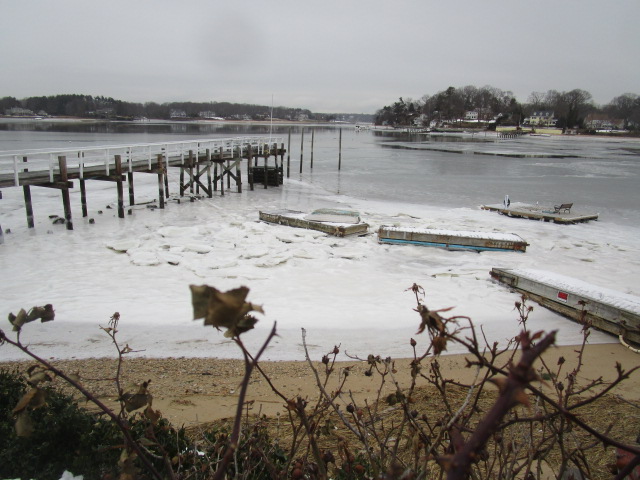
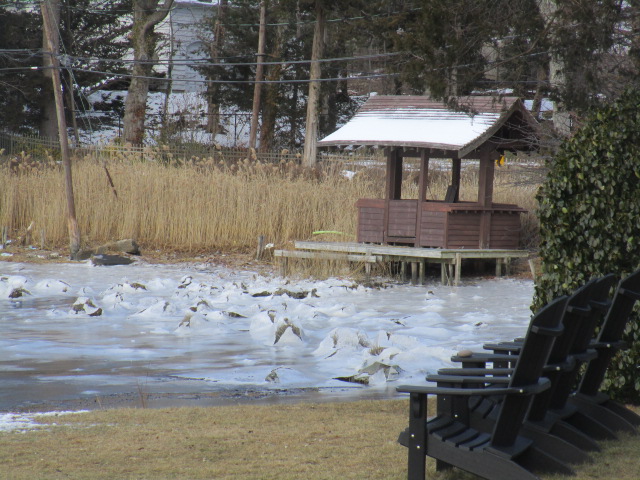
  • After a few doses of snow come the shots of cold.  It’s been a warm winter, even to the point of mostly melting all the white stuff before the next batch arrives.  Nature is apparently done fooling around, and temperatures may get below zero for a few days.  The harbor has yet to develop even a skim of ice, so perhaps this will do the trick.
  • Ice coming off gutters always fascinates me, with icicles above dripping onto clear stalactites and stalagmites below.  Sparkles beautifully in the sun, constantly changing shape.  I have been warned that they should be knocked down, lest they damage the drainage system, but it’s held up for over 60 years with no problem so I feel little urgency to go out with a broom.  What I do instead is hypnotically gaze at the spectacle each day, regarding the abstract sculpture as a temporary wonder restricted to this season alone.   

Saturday

  • Poetry and literature can quickly convince us how hard it is to communicate everything.  The main thoughts, of course, come through even in translation.  But connotations, even if exquisitely captured by the writer, often fail to make it through to a casual reader, and almost never survive translation.
  • A word like heart, in any language or use, defines mostly one or two things.  That carries the logic _ anyone knows what is meant by a stopped heart, or even a heart-stopping experience.  Logic easily survives translation, and is grasped by just about anyone. 
  • Connotations are more difficult.  In our culture heart is associated with love, honor, even bravery.  For some, it carries tinges of religious rapture.  And all the historic references _ general and personal _ are associated with those connotations:  chocolate candy for valentine’s day, purple hearts for military wounds, bumper stickers praising certain destinations.  These cannot carry through translation _ they often cannot make it from one generation to another.
  • And then, there are the noises itself, crucial to the final impact of the phrasing.  Rhymes are the most obvious _ heart, art, fart.  But there are more subtle entanglements _ heart sounds a little like hard or hurt.  Heart has the same beat as dirt. 
  • Those artists who carry language to the fringes of comprehensibility _ like Joyce or Pound _ are often hailed as geniuses.  But the fringes of comprehensibility usually contain the least core logic, and are not only difficult to read for contemporaries, but quickly lose all possibility of being understood except by those devoting lifetimes to doing so. 
  • On the other hand, purely logical writing is deadly.  It’s what lawyers specialize in.  Not that a reference to lawyers is particularly relevant here, since very few of them have hearts of any kind.

Sunday

  • “Lowest temperatures in decades” due here for the next few days.  Just to prove it is actually the heart of winter.  Sometimes it seems that weather forecasters must take college courses in “Hysteria 101” and “Panic 203.”  There seems to be no normal situation any more, always drought or flood or freeze or deadly heat.  Tide rises and falls normally anyway, creating these little ice castles as it goes.
  • A romantic would claim that bitter cold and wind on valentines day should lead to more happy snuggling with loved ones.  A cynic would say that cabin fever may result in domestic mayhem.  As far as I can tell, however, it actually makes no difference to anyone at all.  Schedules are set and our insulated culture lets us pursue them unaffected by almost any meteorology that happens along.  

Renovation

Monday

  • First heavy snowfall marks the beginning of new year psychological renovation.  Ground details are blanketed, only soft patterns of white and stark branches on crystal skies remain.  Now it truly seems the world is ready for renewal.  Sunrise, sunset, even the full moon casting blue shadows distill an unspoiled primal beauty.  Such a mood is only enhanced by harsh chill winds insisting people not linger too long.
  • Being perverse, now that the expectations of winter storms have been fulfilled, I am quite ready for daffodils and robins.  But like any good renovation project, that will take longer than I really want.  We probably have at least a one month of deep winter to go.   My goal now is to greet it with anticipation, rather than endure it with dread.

Tuesday

Fresh coats of paint, deep winter snows
Refocus what we see
For better, worse, or much the same
May never be agreed.
Fine beginnings may require
The loss of what once was
That is progress, we are told,
Conformed to natural laws
But new’s soon old, and in the way
Our racing lives move on
Fresh moments fill our circumstance
Each day unique at dawn.

Wednesday

  • Birds can be observed all year, although an advantage of winter viewing is that they can be almost tamed by a properly positioned bird feeder.  Maybe more than that, the viewer can be tamed by having little else to do.  Sometimes, during renovation, one is forced to observe a bit harder and deeper because normal avenues of excitement are restricted.
  • I rarely take pictures right around the house, or, as here, from inside it.  But when snowbanks block the shoulders of the road, I use our treadmill for walking and am nudged to notice what can be discovered a few yards away from our bed.  Often, it surprises me immensely _ sunset, woodpeckers, beautifully patterned bark.  It is an internal fault that I need such excuses to pay attention to things I usually ignore. 

Thursday

As we met at the library on a drizzly February afternoon, Anne complained “The potholes are back.”
“Yeah, noticed that,” agreed Earl.  “After the fortune the town spent last summer resurfacing the roads.”
“That’s the nature of fixing things that break,” said Sam.  “They just break again.”
“But you expect them to stay new longer than six months.  My kitchen looked newer for almost ten years.”
“And things like park renovation at Caumsett can last for decades.  Lots of decades.”
“The other problem is, I don’t think they do them as well as they should,” continued Earl.  “That park they redid on Mill Dam is a big step down in character from the old one.”
“Which would have been in the water by now, with the storms we’ve had, if they hadn’t done something.”
“Wish they could renovate us,” mused Sam.  “Wish they could renovate me.”

“You could use it.  You do remind me of one of the old roads before they worked on it.”

Friday

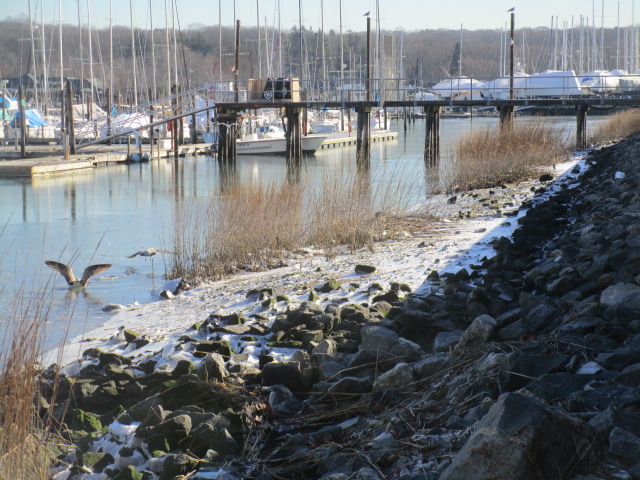
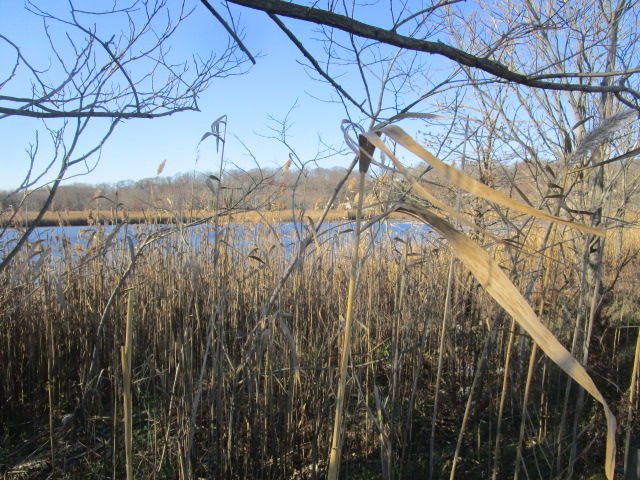
  • Nature is the grand renovator.  By summer, these brown flattened reeds will once again be green and upright as if winter storms had never happened.  Foundation roots remain firm and strong, and will soon provide the necessary impetus for spring growth back to verdant glory.  Nature spends solar energy around this harbor to the same effect as humans use cash to update their kitchen.
  • Our perceptions depend on how closely we examine the situation.  For example, this reed patch is a small fragment of the local environment.  And no matter how exactly our memory claims they have been recreated come July, no set of growth is ever precisely as it was.  Again, like our own renovation projects, getting the results necessary require more complexity, time, and resources than we anticipate. 

Saturday

  • Huntington is in one of the older sections of the United States, so it faces some of the same issues that have confronted Europe for centuries (at least when wars were not making such decisions for it.)  When old structures or areas become decrepit and decayed, should they be cleared for reuse or renovated?
  • Razing something to the ground and starting over has a lot of advantages.  It is often cheaper and can use new technology.  Tastes change, as do public and private needs.  Rebuilding confronts the core fact that the people who are alive now are the ones with needs and desires.
  • Renovating preserves links to the past.  That is romantically attractive, and has the virtue of fostering historic civic virtue.  But to work well, it must bind itself to certain rules: thus far and no further.  Such is the terror in living in historically designated houses, for example.  Preservation of patrimony is expensive and while wonderful in concept, inconvenient in application.
  • For various reasons, American culture has generally built in a throw-away manner.  Except for various public edifices, even large buildings and public works were considered temporary.  A town might remain for hundreds of years, but nobody was concerned about the fate of the local hardware store building.  Besides, most people firmly believed their descendants would be living elsewhere in the not so distant future anyway.  Public attitude has leaned toward razing the outmoded and starting anew on the rubble. 
  • As a romantic, I deplore cheap practices.  Towns do not have the resources to perform preservation, so they flatten and start over whenever something requires extensive fixes.  Parks, schools, village centers _ get rid of everything possible and redo at least cost.  Redoing at least cost means the elimination of just about every aesthetic consideration.
  • As a taxpayer, I’m not so sure.

Sunday

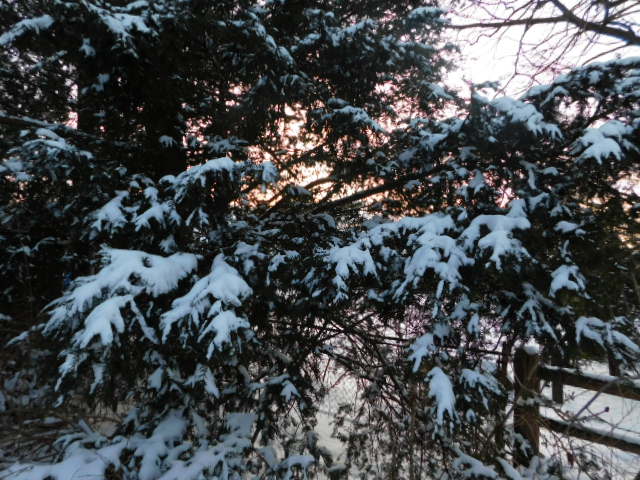
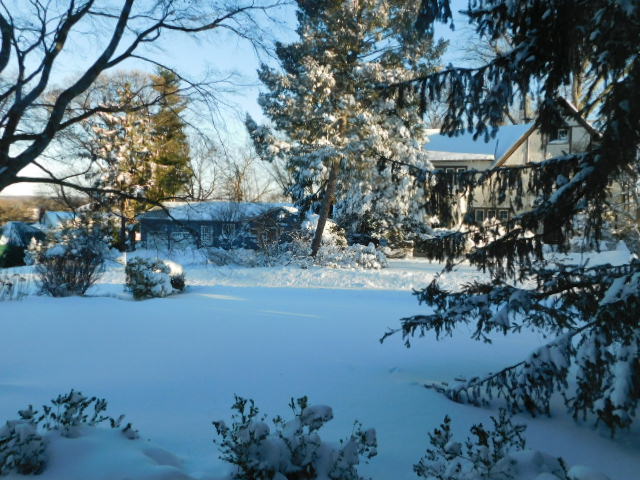
  • After two feet of dry blizzard snow had mostly melted away, another foot of wet snow coated everything.  Branches broke, evergreens and shrubs bent low to the ground like penitent monks.  February, after all, is the month in which such things are supposed to happen.  White ground cover is good for the prematurely emerging bulbs.
  • I focus on the beauty of the clean white cover.  Enjoy the exhilaration of crisp clear air.  Marvel at the contrasts provided by bright sky, golden sun, blue shadows.  But, being human, I have a little voice continuing to wish spring would just hurry along a little bit faster.

Instability

Monday

  • Weather predictions are often wrong, seasons disappoint expectations.  The whole world beyond a narrow local environment seems out of control.  Some seek stability in scientific certainty, some in spiritual foundations, some in calm infinite vistas of eternal nature.  But science revises conclusions, religions reinterpret revelations, and nature itself mutates and shifts.
  • A rock is stable.  People are not, and probably should not try to be.  A perfect couch potato is a poor example of human possibility, though it has achieved a state as still and certain as death.  We were probably born from thunder to ride the storm, and whatever we may do will involve change and catastrophic lightning. That is the truly inconvenient truth.

Tuesday

Inconstant illusions enliven dreams
But when awake

Foster madness

Wednesday

  • Unstable life on Earth is based on water, which is weirdly unstable in its own way.  Within our “normal” temperature ranges, it can be solid, liquid, and gas at the same time.  As a vapor, it surrounds us at all times, mostly invisible except when condensing to form clouds, but can congeal to magically fall as liquid or solid.  As a solid it floats _ oddly compared to many other substances _ and can when thick enough deform, flow, and carve channels through rocks.  As a liquid its weird properties _ such as ionization, ability to dissolve almost anything, tendency to deconstitute into its elements under certain conditions _ are too numerous to mention.  Nothing lives without it.
  • We just take it for granted.  Hey, it’s water, all over the place.  Maybe it will snow soon.  I need to drink a glass.  On and on, just thinking it is one of the more normal eternal things we can possibly encounter in the universe.  As stable as we may wish our chaotic lives would be.  But if water were an inert substance, we would not exist.  I should learn a lesson from that regarding what I am and ought to be. 

Thursday

“Ah, this is so nice,” exclaims Joan, sinking into a bench at the Arboretum greenhouse.  Flowers are in bloom, the warm air is filled with semi-jungle scents, we have yet to explore the wondrous rooms of orchids.  “Too bad everywhere can’t be like this.”
“It takes a lot of work,” I note.  “All of this could get destroyed in a day or two if the heat failed.  And somebody has to trim and water and keep the insects down.  It’s beautiful, but not natural. “
“This time of year,” she continues, “I don’t really care for the natural.”  She gestures at the bare trees beyond the glass windows.  “Unless, of course, we were in Florida.”
“Oh, they have their issues too.  The whole world does.  It’s one unstable, inch-away-from-disaster, beautiful mess.”
“I guess,” she looks more closely at the bird-of-paradise next too us.
“That’s what I don’t like about the political slogans this year,” I continue, ignoring the fact that she is ignoring me.  “Make America great again implies some kind of golden age.  This is the golden age.  Make America greater I might be able to support.”
“Oh, relax and look around, this is wonderful.  What’s that?” she points at a tree.  I read the label, but she does too.  “Ah, coffee.  Interesting.”
‘We’re all hothouse flowers now,” I grumble.  “If our heat, water, food, electricity, police, social services, or anything else we expect fail, we will be dry and dead as quickly as anything here.”

“Stop it,” she commands.  “Unstable or not, we are having a perfectly wonderful time, and at least this afternoon the flowers seem just as happy as we should be.”  As usual, she has the last word.

Friday

  • Long Island is probably no older than modern humans _ it was underwater when North America’s crust was pushed down by weighty glaciers not much more than fifty thousand years ago.   It’s composed of all that is left from those frozen bulldozers.  Mostly just sand mixed with clay _ which is just sand ground finer.  In such a short time were inland mountains worn away.  A hundred years from now, parts of this land may still remain, for a while, above water after Florida submerges in the rising seas.  The way things are going, it may outlast people.
  • Soil is even more recent.  I sometimes contemplate the long view and mistakenly think the natural world stays quiet and stable as our lives flicker briefly and vanish.  But that is not so, not for rocks, nor mountains, nor entire large islands.  For that matter, most of these mudflats themselves are composed of the decaying remains of not-so-ancient trees, fish, and birds.  I may regard my existence as brief, but everything else that I love also has a surp
    risingly short role in this world.

Saturday

  • Human intelligence and consciousness is probably rare or unique in the universe.  I’m sure life exists in many places, but the peculiar circumstances that led to homo sapiens and the extinction of other hominid lines are unlikely even at gazillion to one odds.  Nothing else on earth _ not anything ever in the sea over billions of years, not dinosaurs who roamed and fought for hundreds of millions of years, not even other mammals and primates,  have more than a glimmer of the toolmaking,  learning, logic, and multigenerational culture that people possess.  And it is all based on climate instability.
  • Dinosaurs, like sea creatures, lived in unchanging and almost static environments.  Land mass configuration led to stable climates just about everywhere _ what changed, changed slowly.  Specialization led to dominance, but also to extreme niche sensitivity.  It remains an open question what might have evolved from dinosaurs were they not wiped out by a meteor, but even the next age of mammals was rather sluggish until the ice ages began.
  • Then, suddenly, came a time of ongoing slow-motion catastrophes.  Rising or falling oceans, extensive floods, extreme extended droughts, periods of freezing cold, areas of tremendous heat.  Over and over, never exactly the same way in the same place twice.  Hominids began to despecialize, out of desperate necessity, but nevertheless were ruthlessly slaughtered by unexpected climatic anomalies.  Many lines failed, our own branch survived by the skin of its teeth, apparently at one time reduced to a tribe with only a few thousand individuals, if that many.  And it did so only because of a set of genetic accidents which allowed the development of _ yes, exactly _ toolmaking, learning, logic, and multigenerational culture.
  • Our core being remains animalistic, our drives are ruled by hormones and sensation.  We can apply logic and learning to our situation.  We are conscious of the contradictions.  Nothing else we know of comes close _ not whales or dolphins, or dogs, or cats, or rats, or parrots or anything at all.  We are unique on this planet, now, because we handle instability.  We actually enjoy instability and are bored without it.  When deprived of change, we retreat into dreams and entertainment to keep us happy.
  • So _ what are the chances that life anywhere else went through _ and survived _ such a phase?  The Goldilocks and Anthropocentric view of the universe _ our universe _ seems more and more likely.  I’m kind of sorry we won’t get to meet space monsters and their foes.  But that just seems incredibly unlikely.  And, never forget, we ourselves have not yet survived the ice ages.

Sunday

  • Speaking of ice ages ….  A blizzard yesterday has left almost two feet of snow everywhere.  There could hardly be a greater difference between two days ago and this morning, when leaving the house is difficult if not impossible.  So fragile is the equilibrium taken for granted that a shift of ten degrees one way or another determines if precipitation will be relatively harmless water, or annoying and sometimes dangerous snow. 
  • We fortunately live in the electricity age, when such vast storms are almost inconsequential novelties.  We stay warm, we watch news, we have light, we cook, we even drive and push snow where we want.  No other civilization has had such benefits.  If we conquer instability, at least to make it a harmless relic like the cheap thrills of an amusement park ride, it will be because we adjust fully to the use of limitless electricity.  The word power is often thrown about as if it is synonymous with our “industrial age,” but none of it goes to the heart of our being like our casual use of all that is electric _ a harnessing of the unstable shells of electrons in atoms _ to gain control over a completely unstable world.

Off Season

Monday

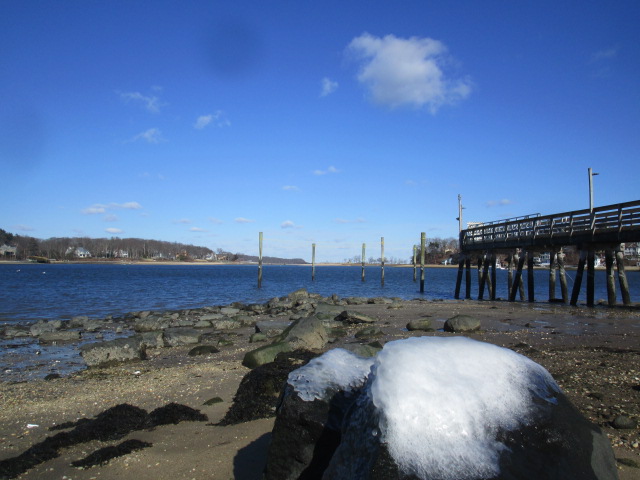
  • Properly speaking, Huntington is not a resort community.  However, the harbor itself is a resort-type recreation area, filled with beaches, moorings, and artifacts which support summer leisure activities.  Those are largely abandoned and ignored in the heart of winter each year, although depending on the actual weather some hardy souls continue to use boats when possible.  Furthermore, as the temperatures continue colder, many of the older residents migrate south for a while, to be joined by families in a month when recently culturally iconic “winter break” arrives.
  • My own happiness with such a fallow period is limited to enjoying silence _ leaf blowers have been stored for a month or so.  Once in a while I will head for an empty town beach, or _ if snow cover is limited as it is this year _ to empty fields and woods in other parks.  Pedestrians have also been culled to the hardy few, hardly recognizable in heavy attire even though I have seen the regulars almost every day for a long time now.
Tuesday
I love to go where crowds avoid
Beach in winter, woods in rain
Meditate or just enjoy
Nature singing pure again
Romantic poets felt the same
Artists wandered empty hills
Mountains, seacoasts, blasted plains
Freed of shallow cultured ills.
Alone so happy, yet compelled
To soon return where I belong
I seek companionship as well
Madness balanced by the throng.
Wednesday

  • Restrooms locked.  Picnic area cleared.  Lifeguard chair removed, toll booth vacant.  Mostly, sand and playground are devoid of people as well.  On nice days, or if cabin fever has built too high, small children very bundled run around the open beach.  Every day _ rain, shine, sleet, snow, bitter wind, or raging storm _ someone will be in the parking lot, often not leaving warm dry car, letting their dog or dogs experience the outdoors.
  • Off season even in truly seasonal places has permanent residents.  I may fantasize that they are even more deserted than here, but actually recreation areas are all equivalent.  Better outerwear has made outdoors year-round activity accessible to everyone.  I know that is a good thing. I wish more folks would take advantage of it for our collective mental sanity even as I gripe about how there is nowhere to be alone except in my own house.

Thursday

“I wish we were going away again this year,” grouses Joan, for the millionth time.
“I’m perfectly happy to stay here,” I reply.  “Besides, it’s been mild.  Certainly better than last winter.”
“I can’t stand the cold.”
“Dress warmer.”
“I miss flowers growing.”
“Get some more indoor plants.”
“It gets dark too soon.”
“No different than anywhere we would go on vacation in the Northern Hemisphere.”
“I can’t believe all the people who are still here.”
“Me neither.”
“I hate winter.”
“I kind of enjoy it.”

Irreconcilable differences.

Friday

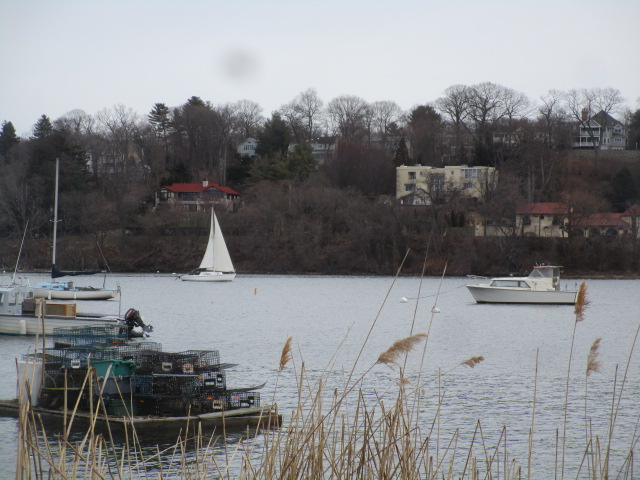
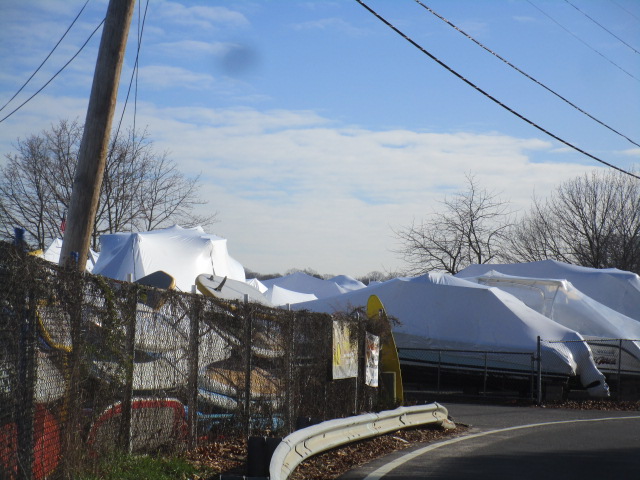
  • In spite of modern materials and paints, marine life such as barnacles still manages to cling to or thrive on submerged hulls, cutting efficiency.  High tech engines need service and recalibration.  Birds and dirt manage to coat exposed surfaces.  An expensive annual off-season ritual involves hauling craft out of water, power washing everything, wrapping tightly in shrink wrap, and stashing them somewhere safe until spring.  This reduces shoreline land, but waterfowl probably approve more open water and flyways. 
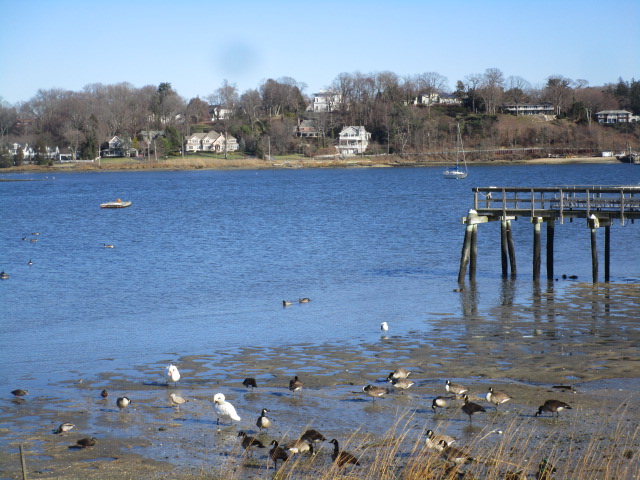
  • I know Iapprove more open water.  Summer harbor can resemble a junkyard, filled with odd detritus that people convince themselves they might want to
    use sometime, but rarely do.  Winter’s crowded storage lots are an inch from actually being junkyards, sometimes literally if anxious owners who have finally had enough are unable to unload their “investments.”  

Saturday

  • Greatly simplified, until a few centuries ago, Northern Hemisphere civilization was organized by season.  Agricultural production forced sowing, growth, harvest, and fallow at certain times of year.  That other favorite activity _ war _ was generally bounded by when the peasants were available and when the ground was dry _ which usually meant it was only waged in summer.  Washington, after all, went into “winter quarters” at Valley Forge, as did the British at Philadelphia and New York.
  • Less than a hundred years later, with mechanized agriculture providing possibility, the American Civil War inaugurated our current era of any battle any time _ today from climate-controlled machines.   Rural populations the world over have migrated to cities that know no season at all.  There is no universally valid cycle of planting or harvest, nor on-season, nor off-season for anything else. Tropical bananas, or tomatoes and strawberries grown in greenhouses almost anytime anywhere, are harbingers of what will come.
  • My wife, for one, would not care.  She’d love to live in a spaceship or mall at a constant 72 degrees exposed to exactly 12 hours of sunlight each day.  Humans evolved in relatively climate-steady Africa, so any yearning for seasons is hardly instinctual.
  • I wonder, though, whether our 24×365 world is corrosive to civility.  Until civilization itself adapts, I think many people miss enforced down time.  Being constantly needed and always on call is possibly necessary and rewarding for parents of young children.  It is hardly a benefit when working for a faceless corporation.
  • I’m not trying to bring back a golden past.  Good riddance to days of slaves and peasants chained to land and sun!  But I do not believe our individuals and institutions have yet come up with the right replacement for us to live relatively happy and balanced lives.  
Sunday
  • Hecksher Park also has its off-season, although this winter it may seem more like off-weather.  This playground being deserted probably has more to do with wet and clouds on this relatively mild day.  In any case, at almost every park, people have decided they will be happier and healthier if they get out and jog or run or walk or ride.  It remains a rare day indeed when there are no people in any given open space.
  • People driven by media fads are as much fun to watch as any ducks responding to instinct.  While I recognize that I am just one of the herd, I always manage to maintain some spirit of detached observer.  I mean, I may make gentle mock of obsessed overweight seniors grimly striding their triple rounds of the pond, but here I am obsessively taking pictures and writing obscurely.  The duality of being in and out at the same time _ whether as part of a crowd or as part of nature _ is one of the grand joys of the game of life.

January Frost

Monday

  • Last year, rosebuds had been blasted black by mid-October, permanent snow-cover settled in shortly thereafter, and by now everyone was fervently awaiting a January thaw that never arrived.  In contrast, Huntington Harbor’s first hard freeze is predicted in the next few days.  Roses, weeds, birds and squirrels take it in stride.  People worry.
  • Averages, like the Equator and hope, are useful imaginary mental tools that help us make sense of and survive in a chaotic universe.   But meteorologists, mathematicians, physicists, and digital wizards who mistake their equations and models for reality are as dangerous to our mental health as any other completely certain religious fanatics.  We need to live as squirrels or birds, not as models.  We ought not waste too much time (although some time may be useful) worrying about  temperature and rainfall variations or limited projections of possible futures.   

Tuesday

We dream first flakes, white whisper, settle soft
Instead sleet sting, cold chop, deep drift
Incongruous
Wisdom’s beauty simmers slow

Reconciliation

Wednesday

  • Even at twelve degrees, underlying ground remains warm.  Only a skim of newly-formed ice coats the sweetwater pond. Tender green weeds and leaf buds have been flash frozen but so far show little damage.  As with many fatal trauma victims, the full effects of injury will only show up later, either when plants wilt and shrivel in the first thaw, or later in spring when blossoms and leaves fail to develop.
  • I admit that although I enjoy seasons, this unusual late onset of winter suits me.  Although there is still plenty of time for cold and snow, days are already notably longer as spring rushes closer.   Both artificial calendars and solar activity increasingly signal more benevolent weather in the future.  I snuggle into my parka, content with the way things are going.
Thursday

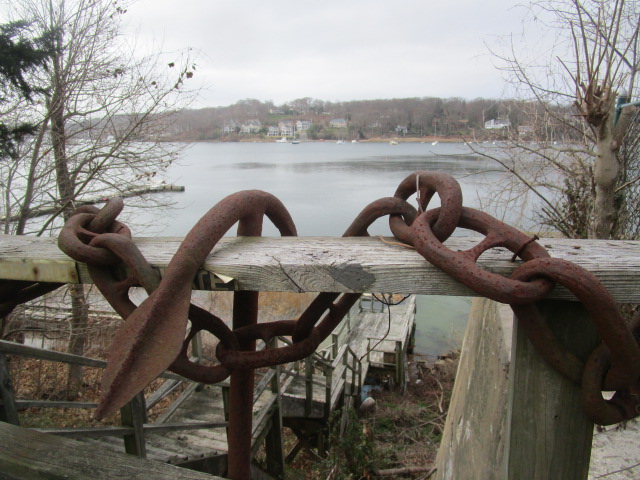
Joan and I watch bandit pigeons and more desirable cardinals, bluejays, and woodpeckers diving, strutting, and chasing each other for a chance at the birdfeeder.  “There were a lot more birds when I was young,” she remarks.
I groan sarcastically.  “Oh, yeah, and the winters were harsh, the summers long , and spring filled with fresh flowers and no showers.”
“Well, I remember deep snows.”
“But that’s the trouble with the past,” I note.  “Since we have sixty-odd years of seasons, we select out the few that made an impression.  And that’s before we begin exaggerating.”
“I guess.  But winters were colder, I know the snow was intolerable even to my parents when I was little.”
“I’m sure you remember it that way.  But the last two years just now have been no picnics.  Our kids will surely remember them as being as bad as anything you can think up.”
“With global warming, that may be the only snows they remember anyway.”
“There you go again.  Why does everyone always want immediate apocalypse?  I doubt our immediate descendants will live through either an ice age or a fire age.  Things change a bit more slowly than we expect.”
“I don’t know,” Joan says stubbornly, “last year to this year is a pretty drastic change.  And the storms around the world seem to be getting a lot worse.”
“I’ll agree with you there,” I admit.  “Who knows?”

We turn back as the birds suddenly scatter, frightened away by the neighbor’s prowling old yellow cat, which seems not to notice the cold at all.

Friday

  • Each season has nearly unique lighting effects.  Winter light is affected by dry atmosphere, ice particles in high transparent cloud layers , and low sun angle.  The lovely pastels which result are easily contrasted with stark bare branches.  Real photographers capture it better, but anyone can observe just as well by simply taking some time.
  • We each choose how we wish to focus our spare moments.  Some try to connect with the electronic networks, being aware of sparrows falling in far off lands and wondering what it may mean.  I prefer to force myself into the cold, enjoying solitary moments at a deserted beach with only gulls for company.  Well, it is true that there is a scattering of cars back in the parking lot where people eat lunch or talk on their phones _ Long Island is a crowded place.  But I had the sands, the shells and the sky to myself for a few delicious moments.

Saturday

  • No day is absolutely average, no season repeats exactly.   We think our perception of time is reality, and our lives are the measure of normal.  But nature moves more slowly than any of us.  Except, of course, for its occasional massive demonstrations.
  • From the standpoint of seasons, and years, and centuries, humankind is like those speeded pictures of scurrying ants, rushing about building mud mounds, fighting, and moving on.  Once in a while the mound is flattened by buffalo, or flooded, or attacked by an anteater, but generally it comes and goes regardless of monsoon, snow, and chill.
  • We consider our works as mighty and potentially eternal.  We proudly point to the Pyramids or to the ruins of the Colosseum as proof.  Yet we could as easily remember drowned Alexandria, volcano-choked Pompeii, and the vine-covered ruins of the Mayan peninsula.  All destroyed, all deserted, all irrelevant to the humans that came afterward.
  • That is why most scenarios _ especially psychological scenarios _ of the future are wrong.  People may or may not fight to preserve Venice, Shanghai, or New York.  They may simply move inland a bit as the seas rise.  They might even move undersea as the temperature and winds rise.  They will look back at the ruins and think it applies to them as little as the Pyramids do to you or me.
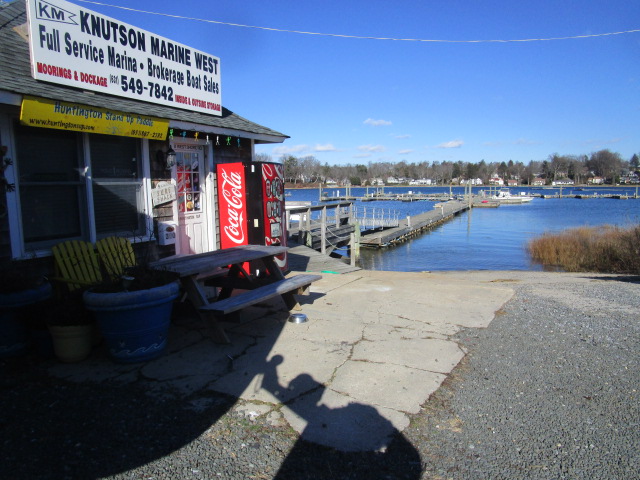
  • We are aware finally that the climate itself changes faster than our ancestors thought, even though they lived through such events as the Little Ice Age.  Only the perception of average stability is completely false.  A big volcanic outburst will chill the world for a while, unusual sun activity may heat it, and a flip of the magnetic field would wreak merry hell on our comfortable illusions.
  • So enjoy the media comparisons of today to the average, worry about lack of rain or too much wind if you will, but none of it really is as it seems.  And the future is as unknown as ever it was.

Sunday

  • Short sharp January freeze thawed already.  Seems strange to see the harbor so empty, prepared for bad weather that seems perpetually predicted next week.  People are equally confused, some in heavy coats, others jogging in shorts.  Plants as uncertain as humans, but ducks are probably just happy to have so much open water.
  • Weather announcers try to scare everyone, particularly with wind chill factor.  Since there is always some kind of breeze along the shoreline, I mostly ignore everything except a howling gale, and base my outerwear protocol on absolute temperature at the house.  I find that dressing properly, no matter what the season, is required for maximum enjoyment of my daily stroll.

Resolutions

Monday

  • Reality simply exists, without volition nor plans.  Perhaps “simply” is a poor choice of wording for something so infinitely variable.  Sky, clouds, water, all things on above and below this thin shell of habitat which confines life.  Another day, another year, another bit of imagination applied. 
  • Resolutions are traditionally made once a year.  Usually one vows to be better (never worse) in some way.  And sometimes that intention is kept for almost a week.  Our lives are momentary and constructed of complete instants one after another.  If I am to be better, I must be so each second.  The sky, clouds, and water may not care, but I should.

Tuesday

Resolutions seem so strong
Don’t last long
A wish is just a wish
To really change
We must exchange
Instant soul for soul
Become another
But why bother
What should matter
Is more laughter
Joy creating joy
Love inflation
Appreciation
Day to better day
Strive and cope

Live with hope

Wednesday

  • There are people who cannot figure how to enjoy a “nasty” day.  Fog and drizzle following sleet with about the first average temperature of December.  Ducks don’t need resolutions to handle weather.  Most waterfowl have already followed instinct to migrate to appropriate locations.  Others _ not this little bufflehead _ have further retreated to some leeward cove to escape misty wind.
  • My resolutions no longer follow years, or even seasons, and are more limited to each day.  Mine was “get out of the house, take a walk, snap some pictures, and think about what to write tomorrow.”  If I am lucky my resolutions may harden into a schedule that is nearly instinctual.  Then, hopefully, I can be more like this tiny creature and apparently frolic about no matter the clouds and temperature.

Thursday

Joan and I out with friends, finishing up salads, nibbling bread.  “Any resolutions?” asks Janet.
“More exercise.” “Better Diet.”  “Spend time with kids.”  “Travel somewhere.”  And, to laughter, “Make it to another year!”
“But that’s what it does come down to, isn’t it?”  I ask.  “Our resolutions get a little shorter and more precise as we get older.  More personal, less idealistic.”
“Sure, I’m not about to change the world,” smiles Joe.  “I doubt I’m even about to change myself.”
“Agree with that,” I add, “sometimes just getting out of bed and doing something is about all the resolution I can actually do any given day.”
“None of us are that bad, yet,” protests Joan.  “We still stay active.  I have projects and I know Janet has some as well.  There’s gardens and dinners and …”
“Yep,” agrees Joe, “Lots and lots of chores.  Don’t sound much like resolutions to me.”
“Well, I guess people who made it this far are pretty much in the groove they want to be in,” notes Janet.
“Or have to be in,” adds Joe darkly.
“Well, I don’t care much,” Joan insists.  “There’s lots to do, that’s the point.”
“Don’t you want to change anything?”  Janet inquires.
“Nah, not much,” say Joe and I almost simultaneously.
“Well, you should.”
“Maybe, but we’ve put in our time.  No guilt.  Just enjoy the year and hope we get a few more.”

“Yeah, exactly,” I say as the entrees arrive, “Carpe diem because we sure don’t know how many more diems we’re gonna get to carpe.”

Friday

  • Shiny new year, bright with promise, filled with hope, casting off old fears…  But tides roll as always, sunset and sunrise cycle as before,  darkling season remains.  Individuals and entire species do what they must to survive, one day at a time. Plants and animals know nothing of new year, or promise, or hope.
  • Real magic is not in artificial calendar resets, but in the very fact that there is continuity.  Life rolls on through tides, days and nights, seasons without end.  We alone perceive the connection, and assign imaginary demarcations of years or eras or eons.  Our magic is in creating intertwined stories all the way back to an imagined beginning of the universe, or, for that matter, to this same calendar day,  exactly one arbitrary human year ago.

Saturday

  • God and the universe need no resolutions _ what was, was; what is, is; what will be, will be.  Only a sense of alternative futures leads to plans, fears, hopes.  Some life may dimly sense choice, but most is blind existence, instinct, or training.  No rock, tree or bacteria resolves to change for the better or worse.  Only in human imagination do rabbits swear to outwit hunters.
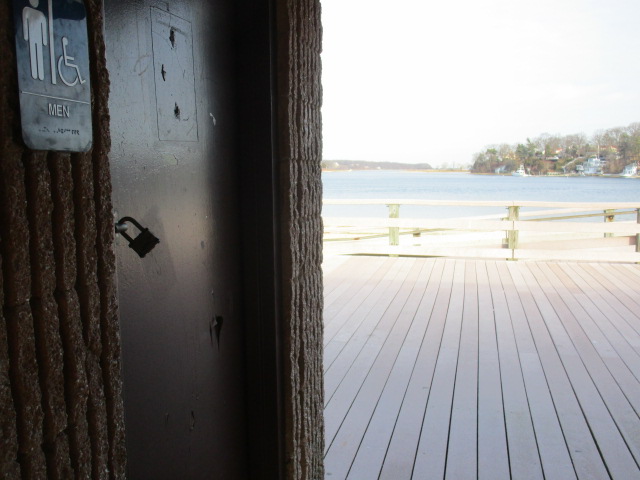
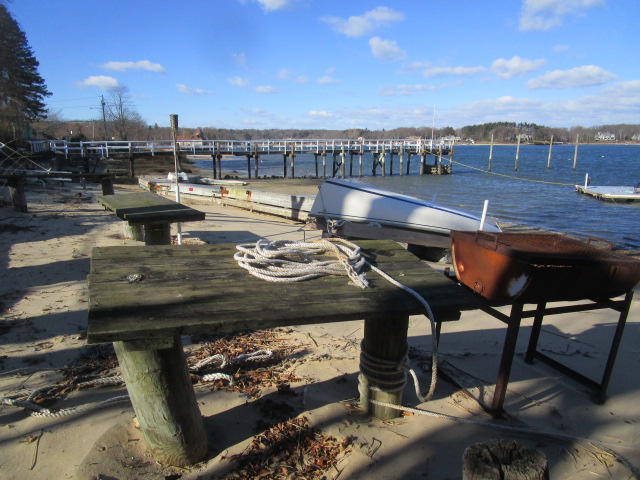
  • We are deeply identical to all life in chemical composition, genes, attributes.  Objectively, our differences are trivial or nonexistent.  Yet we are quantitatively and qualitatively removed from nature, in infinite ways.  “Higher” animals may know fear, but I do not believe they are aware of beauty.  A mighty list of such anomalies would include art, writing, engineering,  good, and evil.
  • So I study the natural world, but what should I learn, what should I apply?  I am so like and  so unlike a blade of grass, an insect, a clam, you.  What does a gypsy moth _ fighting for survival against terrible odds, decimating forests, threatening its own species by destroying its necessary ecology _ teach me?  Is such doomed behavior inevitable?  What could one moth do?  How much do I resemble that moth?
  • My contemplations realize that no answers exist, for answers, like choices, are human constructs.  There is only tension, resolution, outcome.  Preserving balance is a game of which only we are aware.  Does that make it less real?  I think not.  Appreciating the game may be one of the higher goals of our consciousness.
  • I am most unnatural.  In all the universes that ever are or might be, I am unique.  In my self-absorbed being, I feel important.  I may understand that feeling to be wrong, but just by understanding it is wrong, I prove it is true.  A lovely, illogical game rolling in syncopation with our magnificent perception of time’s tapestry.

Sunday

  • Nature continues brimming with infinite wonders.  Sun rises unnoticed, winds blow evoking only wishes that they become more mild.  Crows flap from branch to branch with raucous calls, above squirrels chasing each other ceaselessly.  Only the scents of the activities of people remain.  Thus it seems it was always and will always be.  Yet this entire world is a fragile slice of time with nature and people appearing briefly on a tiny stage.
  • I dare not resolve to spend more time in wonder.  Part of the mystery is that I cannot.  There are practical things to do, limits to meditation.  I am a microscopic part of the moving pageant, and if I stand still regarding how magnificent the show appears I will only be trampled by the passing parade.  But once in a while, each day, I must try to find a quiet space and continue to marvel at all there is, and be grateful I can continue to do so.

Birthday!

Monday

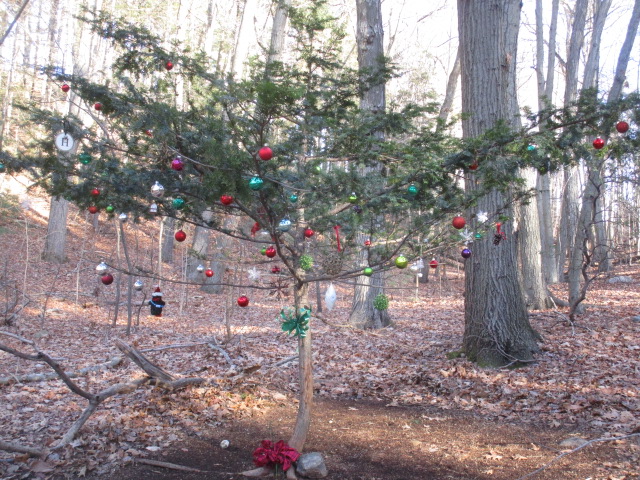
  • Bedecked tree in deep woods on the Nature Conservancy’s Upland Farms.  Winter Solstice the shortest day of the year in the Northern Hemisphere,  appropriate time for a new year via the Romans, Druids, Christianity, and Western European colonialism.  In about a week it will be “2016 CE,” a world standard ferociously enforced by computers. 
  • We are one, at least in aging digitally together.  Not long ago, hardly anyone knew how old they were, or when their birth date might be.  If you survived childhood, you became an adult.  If surviving thirty or so years of adulthood you became an ancient.  Years were measured in passage of the season and collection of taxes, and otherwise left everyone unaffected.  Now, we calculate our calendar age to the microsecond, tie our “secret equivalent age” to biometrics, and have a grand vision of what must be done in each annual cycle.  Sure, we each have our own birthdays, but Earth, as always, provides the real downbeat.   

Tuesday

Ok, folks, all together, one, two, three:
Happy solstice to you
Happy solstice dear Terra
Happy solstice to you.
How old are you now?
We just can’t believe that!
Happy Solstice to you!
Now everybody make a wish while Terra tries to blow out all our emissions ….

Wednesday

  • Last winter this day freezing and snow, this winter nearly sixty and fog.  The land does not know date nor season nor weather.  The land did not know trilobites nor dinosaurs nor people.  Most inhabitants of the land just recognize it is daytime and survive until darkness.  Only humans compare one year to another.
  • Ancient Greeks _ and most other religions _ assigned no birthdate to their gods because that would be certain blasphemy.  Prophets, on the other hand, are often dated by year _ which is difficult because true prophets are often not recognized until they are well along in years, and even in literate cultures born vaguely “in the fifth year of the reign of good king Maniac.” Assigning a specific birthday is impossible, and generally evolves by convenient convention.  Yet, here we are, celebrating one “birthday” after another, and happy for doing so.

Thursday

Joan was once again trying to fit our celebration of Greg’s birthday into the complicated holiday schedules of everyone involved.  “He always did get cheated, you know,” she says.  “Only five days before Christmas, everyone forgets and merges them together.”
“Oh, I know.  My grandmother was an actual Christmas baby.  One party and, of course, the presents all jumbled up.  Much better to be born on the other end of the calendar,  June or July.”
“Too hard to plan,” she laughs.
“In a few years, I’m sure that everyone will actually be timing things exactly.  Maybe they are now, for all I know.”
“What I hated were the cutoffs for school _ that you had to be so many years old by, say, January 1.”
“That’s the real problem.  Years in general.  How old you are _ especially at 5 or six _ should really be measured in months or days by the calendar.  Not to mention that everyone develops differently.  Still, I thought that someone nearer a year older always had a big advantage in sports and maybe in achievement.”
“You’re awful yourself, these days,” she accuses.  “You always round up.  You say you’re 69 when you’re still 68.  Nobody does that.”
“I round up everything, expenses and years.  I’ve consistently found that more useful.”

“Let’s see now,” she returns to the calendar.  “What about Wednesday, after he’s done work?”

Friday

  • Warm fog and showers unable to satisfy eccentric cultural longing for white coating on the ground.  ‘Tis the season of extravagant expectations _ family, love, bonuses, gifts, myths, anything at all.  Now that all other needs and whims are more or less instantly satisfied,  what remains are holidays on steroids.
  • I’ll spare you the “I was happy with a yo-yo” stories; we were not deprived, but  major kid stuff was reserved for Christmas,
    and there was a lot less of it.  Our parents did not treat a car or new appliance  as a gift _ those were major expenses that involved planning and penny-pinching.  I see people infinitely more goods, but none happier than we were back in “the good old days.”

Saturday

  • The natural cycle for life on the surface is the sun.  Hawks and squirrels roam the day, Owls and raccoons the night.  We are advised of our natural circadian rhythm,  and most of us are forcibly reminded to sleep periodically each twenty four hours.  Day and night are probably most of what many animals are aware of.
  • On the other hand, bacteria, which own the earth. presumably don’t much care if there is light or not.  Fish and shellfish are probably far more affected by tides.  Inhabitants of the deep sea never notice sunlight at all.  An insect cycle may be complete in less than an afternoon, the prototypical active time of a mayfly.
  • Humans have invented measurement.  Days pass into numbers and the moon waxes and wanes and the seasons warm and chill down or dry up and rain.  We plop them into proper places on a calendar, find how close we are to solstices or arbitrary year end.  We annotate our own place in these records, when we have precisely checked off another three hundred sixty five.
  • Even more intriguing, people have fashioned metaphors.  One of the most complex, at least in European-influenced cultures, is that a year is like our lives.  Like the year we are born helpless and nearly dormant, then thrust and blossom into grand and beautiful virility, then slowly dry and finally disappear.  A folklore version of Ontology recapitulating Philology.
  • Yet all that is false.  Years don’t exist, except in our minds.  Our lives and growth and achievements are not at all at the same pace or with the same attributes  as the environments of the northern hemisphere.  We know that our consciousness exists in the moment, but we always seek some deeper pattern.

Sunday

  • After the excitement of a wonderful holiday, the slight let-down and then a final remaining glow.   After much work and worry, the house is all decorated, the lights cheering the foggy air, the presents exchanged and (mostly) properly appreciated.  Then everyone goes home, another year older, another set of memories layered on the old ones.
  • So one of our religions has had yet another birthday, the sun has passed solstice, soon the calendars will change to recognize the facts, and we all feel, somehow, a little more aged than we did a few weeks ago.  Even the mild weather has been unable to hide that winter is ready to swoop in at any moment.  I’m not a person who ever hated the holidays, but I did get more keyed up in the past than I do now.  Much to be grateful for, of course, but that has fortunately been true every day of the last year for me.