A Time for Every Purpose

This crumbling structure once served some purpose of which it reminds us even in decay.

As I grow older, I resist binary division _ something being “this or that.”  And yet, it is such a natural and useful way to think.  An example is our experience of time as being either a “cycle or an arrow.”  Do we see this moment as a unique part of a journey, or a repetition of something we have done before and will do again.  In full complexity and contradiction, I realize that both perspectives are true and false at the same time, and moreover that time itself is a slippery concept not only beyond binary understanding, but beyond any comprehension at all.
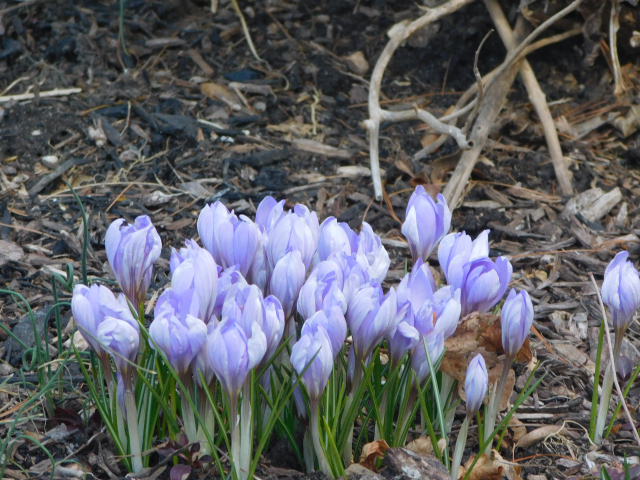
Crocuses in the spring claim that life inhabits a solar cycle.

My essay is really about how to view my life (as an elder, I frequently waste time considering such things, rather than doing something useful.)  I have increasingly come to view my past as a series of stages on a long parabola of change.  There are lots of people who resist thinking of time as an arrow.  Their internal perspective is a perpetual cycle, in which they view themselves as forever thirty.  At twelve years old, they have planned their future, and they continue to map imagined days to come as they near eighty and beyond.  Working at a purpose from adolescence until death, doing the best they can, unwavering exemplars of ants on a mission.

For fortunate survivors of life’s lotteries, time should be a varying gift.  Existence is remarkably different for a child, an adolescent, a young adult, a mature adult, an aged adult, and an old geezer.  And all the stops in between.  That biggest chunk of “middle age” also has its own subsets, some more definitive than other.  Ask any woman past menopause, or a professional athlete nearing forty.  People tend to refer to aging as a series of “losses”, but the proper way to see it is as ongoing fractal gifts which allow us to examine our universe in different ways. 
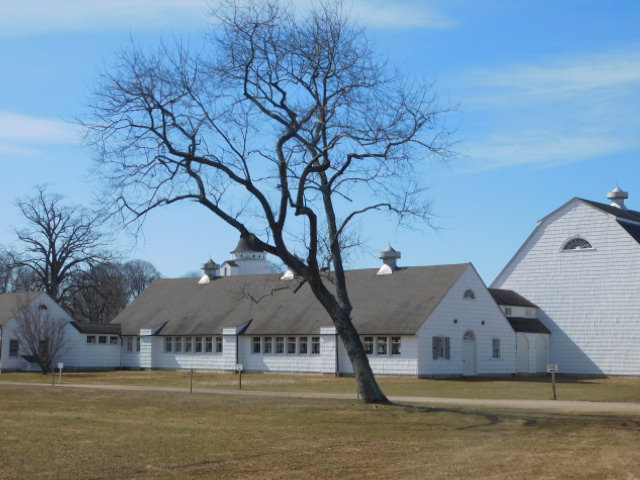
Apparently a farm from the 1800’s, actually from 1920’s, through various grand uses.

Ancient Greeks were right in describing their immortal gods as silly, shallow people.  Endless cycles are simply monotony, good or bad.  Buddha strove to escape that wheel.   Masters of the Universe in our economic society are equally foolish, equally shallow _ old charioteers who claim they are just as good or better at whatever they always have done as they were when young.  Even if they are _ what a sad and claustrophobic trap they have set themselves.  All the cosmos to explore and they happily prowl a tiny cage of their own construction.

Should we not fear death?  I suppose _ it is almost inconceivable _ except that we do approach it each night as we fall asleep.  Personally, I more fear incapacity, and I have always feared suffering.  Death is just an ending.  What we live is far more important.   When we define our lives as simply routine cycles _ go to work, make money, for example _ our whole being can be written in a few pages.  A journey, on the other hand, goes on and on through volume after volume, each amazingly different as each year and decade provides new challenge and response.  

Western thought dreads the purposelessness of oblivion, hoping for “life after death” or meaning in the advance of civilizations.   Its myths teach of eternal heroes, salvaged from whisper by mighty deeds of honor.  Heroes whose memory will live forever.  It dreads the claim of science that the cosmos is temporary, that not only does everyone die, not only are all deeds and civilizations eventually dust, but also the universe itself will encounter a definite and complete ending.  Some retreat into hopelessness, or hedonism, or denial.  Everyone is affected.  Can there be purpose when everything is doomed? 
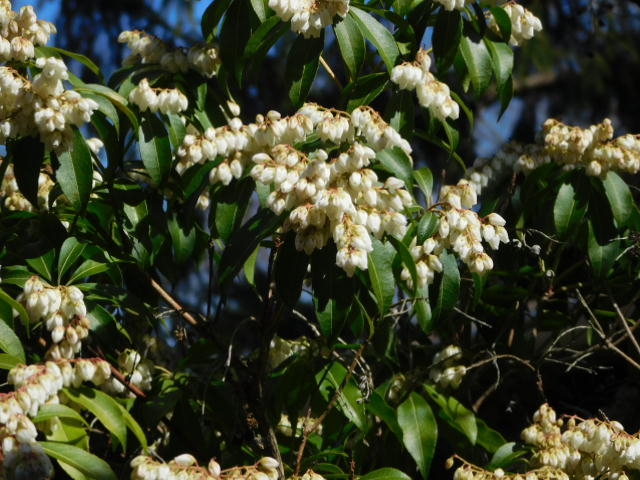
Andromeda flowers in this climate are useless except as beauty itself.

Not all human thought is Western, of course, even though that dominates our current world.  Other cultures, and more ancient civilizations, survived happily and comfortably with a mythology and philosophy that easily encompassed temporary achievement and death.  Some animists thought that there were three stages of a person’s existence _ actual life, remembrance by others after death, and the final forgetting.  Others taught that gods and fate were fickle and much of went on in heaven was irrelevant to our common day to day reality.  All such peoples were not lost in morose contemplation of ultimate meaning.

So I wake up in a world where there are truly troubles and my own small cares.  But there are also wonders around me.  I concentrate on the wonders, grateful for their experience, and honestly do not care at all what will come after I am incapable of knowing.

Seeking Spring Signs

Bare branches of forsythia cut to bloom after about a week indoors.

March marches in with better sunshine, equinox only weeks away.  This is often a turbulent month, with high winds, unexpected deep freezes, and an occasional blizzard roaring in out of nowhere.  For me, March also heralds real new year, when my brain begins to unclog, casts off the pallor of imaginary hostage confinement by weather, and plans actively for good times to come.

If I search diligently, spring emergence is ubiquitous.  Bulb shoots thrust higher by the day.  Rose and briar stalks streak red and green.  Buds swell on almost all trees and bushes.  The andromeda tree in front is ready to flower, and I have cut forsythia to force in our kitchen for a burst of color.  Garlic clumps dab emerald among fallen leaves, soon to be followed by more unwelcome mats of chickweed.  Already, in sheltered spots, ragweed stakes out territory.

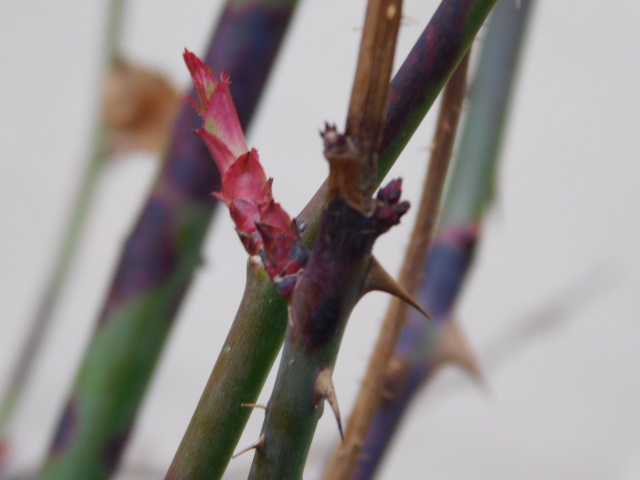
Roses begin to demonstrate a few hopeful hints of what is to come

Fewer birds have overwintered near our yard this year, perhaps scared away by a nearly resident falcon which often perches on a dogwood tree out back.  I’ve not yet seen a robin, but they will return soon.  Crows and jays are beginning to screech.  Small birds flit about as they have all winter.  On the harbor,  waterfowl resume mating antics.   If I stop and pay attention, I can believe another cycle begins as always.  If I pay more attention, I realize that there is less wildlife than I remember.

On a warm afternoon, clouds of gnats will puff in shafts of sunlight.  An insomniac bee may start making a futile search for flowers.  Spiders might produce webs.  In warming beds of leaves, all kinds of larvae stir after their long rest.  One day, suddenly, there will be ants and unwelcome termites, and other arthropods which I cannot name.

Only the most ambitious and restless have begun spring chores.  I do know people who already turn over garden beds, while here and there chainsaws and leaf blowers pierce the lovely quiet we have enjoyed for such a brief respite.  But mostly it is too early to paint, too cold to put out patio furniture, much too winter to even think about flowers and grass.  However, the thought that all this activity will soon arrive in force is enough to make me grateful for a little longer period of rest, sort of like pushing a snooze button on the seasonal alarm clock.

Bay and beach look fine as summer, but are swept by bitter wind.

The worst frost spell is unbound; I begin to dream of green fields and gardens and long afternoons on a hot beach with gulls flying overhead as salty drops dry on my skin.  Not too long from now, what will we do, where will we go?  I compose a wavering list of places to visit once again, to renew acquaintance with locations in the most pleasant weather imaginable.  Not memory, although remembrance is involved, but dreams of how fine it will be.

Still, it is only March.  I have to rein back my thoughts and return to actual blustery conditions.  I continue to sit inside on too many dreary wet days.  All those wonderful spring-summer-fall marvels to come are _ well, just “to come.”  It is real easy to become fidgety and wonder why grey skies do not break open, why the beautiful promise of brilliant sunbeams is so often crushed by actual conditions when I step outside the door.  March by the solar calendar of our latitude continues defined as winter. 

Then I return to the cold comforts of a season of hibernation.  Reading in warmth, able to sit and not feel guilty for not doing something _ anything_ more.  Enjoying thick hot soups and stews.  As always, when I try, grateful for progression in my life, for the fact that days are not always the same, for the variety of being.  Spiced with the meteorological variety offered by this month.

Wonder Not So Simple

One of many wonders I ignore unless it is not working right.

We just are.  We wake up as reality surrounds us, dispelling the intricate mythology of our dreams.  We wander a world that mostly makes sense, solid and predictable in all kinds of little ways, mostly beautiful when we bother to examine it, intricate beyond reason, flowing into futures fully unseen.  Because of what we are, we usually take all these marvels for granted.  Nevertheless, as curious monkeys we keep asking “why?”

God or gods _ supernatural beings, some conscious _ were the easiest explanation for how all this came to be, and how it is eternally maintained.  Prayer is part of our mental evolution, whether as mantra, placebo, or true incantation _ it does seem to work for most.  The simplicity of “just so” is blinding.  A tree is a tree because it is a tree.  Why?  It was made that way.  Why are our lives as they are?  Fate so wills.  Having a leading part in some cosmic narrative, having some important place in the universe, having some justification for everything that occurs is essential to our egos.  Any link to wider purpose soothes our spirit.

Science offered another option.  In the last thousand years, especially the last few centuries, written knowledge and scientific inquiry dominated our logical framework.  Knowing cause, we manipulate effect.  First, we became masters of the universe.  Discouragingly, then, we discovered that everything is infinitely more intricate than it appears.  Once it seemed we were eternal homunculi, or a bag of chemicals to be activated by an electric charge, or inanimate dust animated by divine spirit.  Now biologists marvel at trillions of cells working together, each doing innumerable tasks in unmeasurable time, just to keep me animate.  Chemists stare into complex chemicals formed by atoms which are almost empty space.  Physicists compose mathematical sonnets to weird components of such atoms. Yet with all that powerful knowledge, the scientific answer to “why?” remains little more than “because.”

There is no scene like this anywhere else in the universe, and there never will be.

Ask again, “Why are we here?”  The easy answer is the gods have their reasons.  The scientific answer, more and more, looks like we result from a gambler’s run of cosmic accidents.  If not for the precise collision that gave us the moon or unlikely combinations of events that led to a water atmosphere and oxygenation from a chance bacterial creation of photosynthesis _ there would be no life as we know it.  Without plate tectonics and snowball Earth _ possibly no vertebrates.  Without other extinctions_ perhaps no animals as we know them.  Without a lucky asteroid of just the right size, velocity, and vector, dinosaurs would still rule the planet _ and no, they would not be intelligent.  Or everything would have gone extinct.  Without the inexplicable ice ages mammalian intelligence focusing into humans would never have occurred.  Increasingly it appears that we must accept that we are alone in time and space, the tail end of a string of devious improbabilities.  And “why?” has become a pretty scary question indeed.

As for humans _ miracles do not apply _ we are way beyond miracles.  The glory of senses, the incredible existence of memory, the magnificence of logical trains of thought, the infinite range of imagination _ all are literally incomprehensible.  Even those, however, pale when compared to your supernatural consciousness.  Each of us unique, each of our moments unique.  Our outlook has cycled back towards a person being the height of creation.  We are immersed in a sea of awe.

Sure, bad things happen.  I often fear that we are, or will have been, those fabled giants of old, heroes of a golden age once upon a time, vanished gods with awesome powers.  As in ancient stories, we are flawed by wrath, stupidity, and trivial pursuits.  Each of us endures more or less terrible twists of fate, although in overcoming such problems we may become glorious.   We admire beauty and are entranced by the multiple facets of life _ but happiness is complicated.  Some guys have all the luck, others do not, and life is definitely not fair. 

Finding joy in the “ordinary” is one core secret of happiness.

Good or bad, I know that I take too much for granted.  I often pay little attention to the fact I can see, hear, taste, feel, rest, do, or think.  I worry too much about mistakes in the past and plans for the future and miss the reality of each moment.  I am part of a social framework that delivers knowledge and support and enjoyment and _ well, I simply assume that is normal.  None of it is normal.  As the saying goes, we don’t know what we’ve got ‘til it’s gone.

I try to arise each morning overwhelmed by the gift of being me.  I try to pull myself back into that state whenever I am becoming too bored or complacent or anxious.  Perhaps it is shallow and foolish to do so, a modern Pollyanna Pangloss.  I don’t care.  I finally realize how little I comprehend, how much I experience, and I rest content.

Frozen

About the only freeze we’ve had, ice almost as rare as in Georgia.

Usually mid-February is a frozen wasteland.  Dirty snow piles are everywhere, refrozen puddles mottle roads and parking lots.  Salt spray creeps up cars.  In an obscure town lot, giant mountains of white are filled with trash and decorated with cinders.  Often not even a hint of brown grass peeks through crusted layers of ice on lawns.  Bitter raw cold discourages even minor strolls into desolation.

This year _ not so much.  It is fashionable, and probably true, to blame global warming.  Almost no snow, and that melted almost immediately.  Exposed grass more or less green.  Roads clear.  Even the skim of ice that often forms on ponds and puddles overnight has been hard to find.  Rain and fog, mist and mildness and wind, and a lot more green everywhere than what used to be normal.

Rhododendron leaves curl into little cigar shapes as the temperature drops into teens.

It seems the freeze has migrated _ metaphorically _ to politics.  Rarely have I encountered people, including myself, so set in their view.  Upon a time, people could at least argue.  Now, it seems, we are internally opinionated statues.  For this, against that, policies or people.  Each of us fanatically certain and each equally certain that others are wrong.  Even remedies are cast in flawed bronze _ utopian visions from Marxian dawn, or technocratic fantasies of fifties science fiction, or nostalgic senile remembrances of childhood when the world was all bright and shiny.  Compromise or reevaluation taking into account the contradictory complexity of our existence is considered the worst moral turpitude.

Frozen February defeated by global warming is a harbinger.  Frozen politics handled by slippery politicians is a contradiction.  Lately, ignorant solipsistic leaders who casually lie tend to win.  Money is hardly an issue _ like ancient Roman Consuls, each candidate knows that you cannot spend too much to win an office that will repay, legally or not, hundreds to one.  A truly amoral vindictive candidate has the added bonus that almost all prudent patricians will contribute to its (sic) campaign simply for self-protection.

Too early flowers, like too early ideas, can be blasted by a return to normal conditions.

February is filled with local misery _ the cold, the snow, cabin fever, boring days and nights following one another in short daylight.  Similarly, politics is filled with local grievances _ every citizen seemingly certain that someone else is to blame for anything that goes wrong in life, and equally certain that any other citizen deserves whatever they have got, for good or bad.  What should be our happiest era filled with social harmony is rapidly devolving into pure idiotic envy based on ridiculous comparisons of perceived wealth.

Just as the big picture seems irrelevant to those dealing with immediate weather, it seems that we are all missing other big pictures.  The old saying “the more things change the more they stay the same” is no longer applicable.  Big changes have indeed happened, more big changes are coming, and, just like climate itself, things will never again be the same.

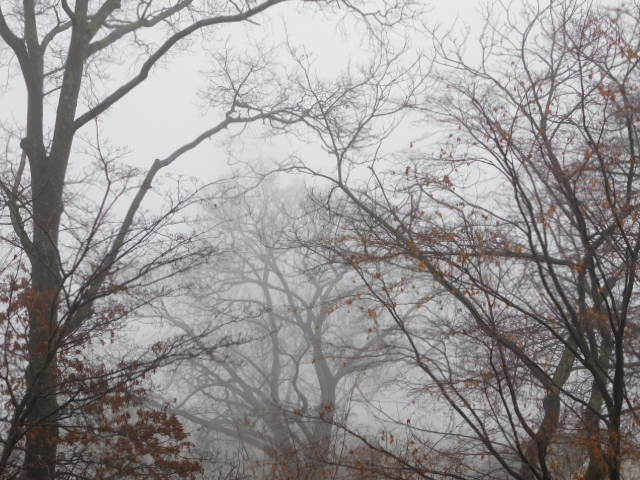
Fog also presents a relevant metaphor about what we think may occur.

Although we are aware of constant variation in our situation and environment, we take an awful lot for granted.  Days follow nights, air is breathable, supermarkets have food, our home will be there when we return.  Sometime soon that may no longer true.  A so-called “tipping point” sneaks up on us _ we are suddenly old and unable to walk easily, for example, after years of limping along more and more painfully.  This February feels filled with such tipping points in nature, politics, personal life, society.  I honestly do not have a clue what to expect next February, and more and more I find the only rational response is to suppress such thoughts.  The future is definitely not frozen into the patterns of the past.

For now, it is rain and wind and more rain and more wind.  Better than deep freeze and snow, I tell myself.  But there is a little nagging worry in my soul that maybe our universes would be better off a little more solidified and frozen and “normal”, at least for a while.

Heart

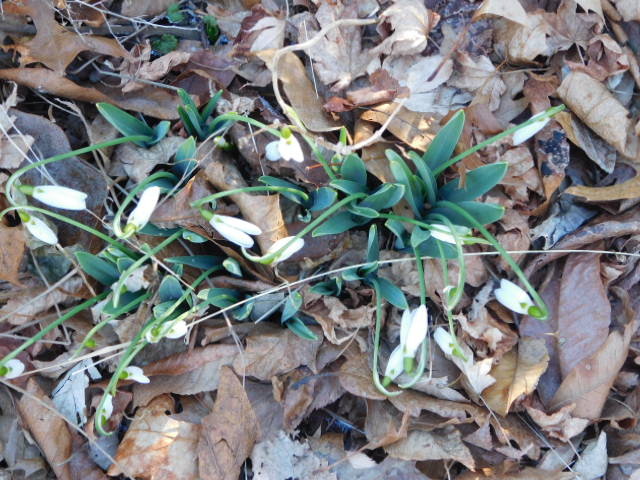
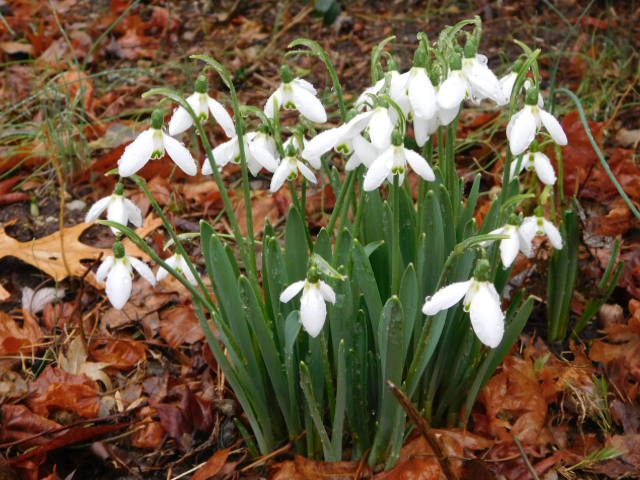
Perennial snowdrops bloom in welcome defiance of normal calendar expectations.

February was named for an obscure Roman purification ritual, and was also the last month of their calendar.  That doesn’t matter at all, but a traditional way for any student to begin an essay is with either a definition or an etymological detail.  Any word is a nonsense sound until language assigns an agreed meaning _ although each of us assigns implicit personal connotations which vary from explicit dictionary entries.   My “February” is not necessarily yours.

I guess most people dislike such a blah month _ not really to hate so much as to endure.  Mostly it is true entry to the new year, a firm footstep into all that is to come.  Its predecessor is much too slippery and burdened with fresh memories to provide that springboard.  February firmly faces forward.

Trees are jagged and bare, grass brown and muddy even if visible through dirty snow, cold settles in, birdcalls are muffled.  An act of will is required to bundle up and walk around.  The rewards of doing so are a little harder to find than in other seasons.  We are told to indulge in an hour of sunlight a day to reset our circadian rhythm _ good luck in finding any patch of open sky.  

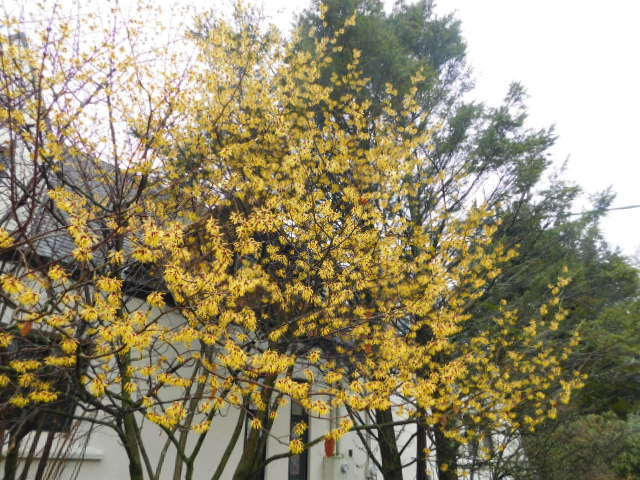
Witch hazel is strange _ what could possibly pollinate flowers so out of synch?

Even at the beginning of the month, there may be hopeful signs.  Some waterfowl begin mating rituals, swans for example flapping lustily off the water in brief showy flights.  White snowdrops have opened at the end of our driveway, and other bulb shoots are beginning to show.  A nearby witch hazel tree is in full golden bloom.  On milder days, birdsong tentatively echoes over the silence.  Blue Jays and squirrels are becoming frisky.  Close examination will show a bud or two on bushes swelling noticeably as days creep by.

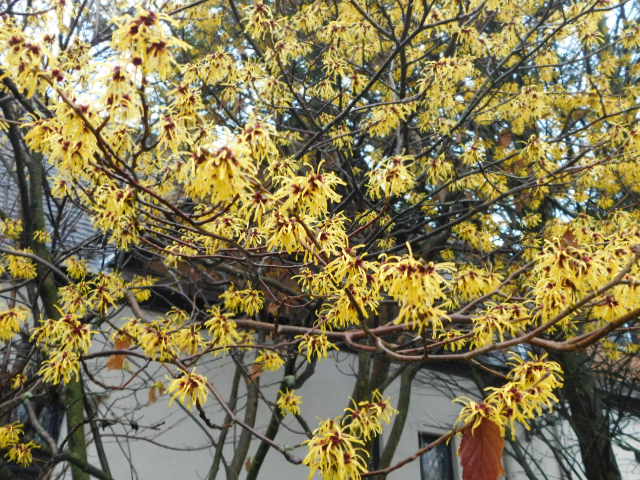
Even the flowers of witch hazel are a little weird, but easy to enjoy when nothing else shows.

Symbols for hearts and cupids are everywhere, displayed as money-making guilt-markers by restaurants, romantic venues, gift shoppes, and just about anyone who can invent a hook.  Exotic cut flowers become ubiquitous, flown up from summertime growth in the southern hemisphere _ prices doubling as Valentine’s day nears. 

In my youth, we sometimes had Washington’s birthday off, but now it is common for schools to go into “winter break,” a custom which has caught on with parents and random employees.  A great migration to warmer places for a week or so fills the coffers of the airlines, and empties our town (already a bit thinned from the exodus of snowbirds after Christmas.)  The remaining population dreams of spring travel or summer excursions.

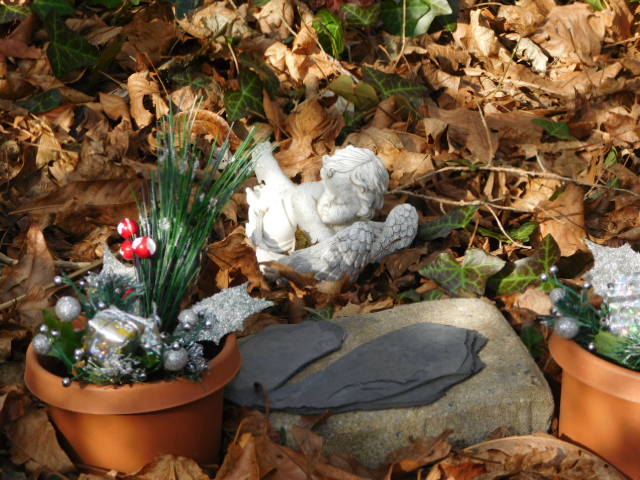
Joan maintains a small shrine to the love of her life _ a loyal Pomeranian.

On dark mornings, I often wake up in a meditative mood.  Well, why not?  No rush to get outdoors _ yard chores are out of the question, woods are almost uninviting, weather is often wet and raw.  I’ve visited most local indoor refuges, and had my fill of eating out.  I remember our lives, and try not to evaluate the past too severely.  I plan and try not to worry/hope too excessively about the future.  I relax and enjoy the mere fact that I can relax in such security and luxury.

February is a quiet time, a great time to just snuggle in for those of us who can do so.  As one of those fortunate folks, my task is simply to recognize that this short interlude is a genuine gift as the rest of life rushes by.

Fond Farewell, January

Has been a “good” winter with mild temperatures and almost no snow.

In New York, February is by far the hardest month to endure.  Frequent snow and ice lingers mercilessly in cycles of unfreeze and freeze, accumulating soot and garbage, creating potholes.  Even ski resort operators worry because the quality and quantity of necessary white stuff is uncertain, and many folks simply head elsewhere for higher mountains and more perfect conditions.  A few early bulbs may be tricked into blossoming, only to be blasted by an unexpected “polar vortex.”  And yet, for all that, I might still cast a vote for January as my least favorite month, to which I am always happy to bid farewell.

One of the problems is simple letdown:  Holiday Hangover.  After the bacchanalia of New Year’s and Christmas, the feasts of Thanksgiving, and increasingly fabulous Halloween, January offers very little in the way of excitement.  People go back to their normal, often dull, sometimes glum lives.  All hope resides in the future _ winter or spring breaks, upcoming summer vacation.  It’s as if all the good times have packed up and gone away for an interminable stretch of weeks.

In a “good” January, temperatures hover around forty degrees during the day, and precipitation falls as rain.  A “bad” January, on the other hand, is filled with afternoons rarely getting above thirty, and several heavy snowfalls that never melt.  The rays of the sun are too oblique to do much; ice remains forever.  Adding insult to injury, daylight grows longer, but the average temperature continues to plunge.  Grey skies, in any case, are usual.

And then, there are those resolutions.  Almost everyone plans to improve their lives, engage in better things, erase bad habits.  By the middle of the month all that remains is residual guilt at all that is not going very well.  Thankfully, with the arrival of February, even vague unease has departed and vows are gratefully stowed away until the next winter solstice.

A proper attitude enjoys infinite shades of brown and pastel skies, but a proper attitude is sometimes hard to maintain in winter.

Welcome sunshine is surprisingly too bright.  Glare from low rays blinds us morning and night, giving way to the glare of headlights in mid-afternoon twilight.  If there is snow cover, sunglasses are required.  Yet this brilliance is a tease, which looks welcoming warm from inside, but quickly disabuses anyone who steps out.  Those lovely beams seem to put all their energy into the visible spectrum and leave the warmth in outer space.

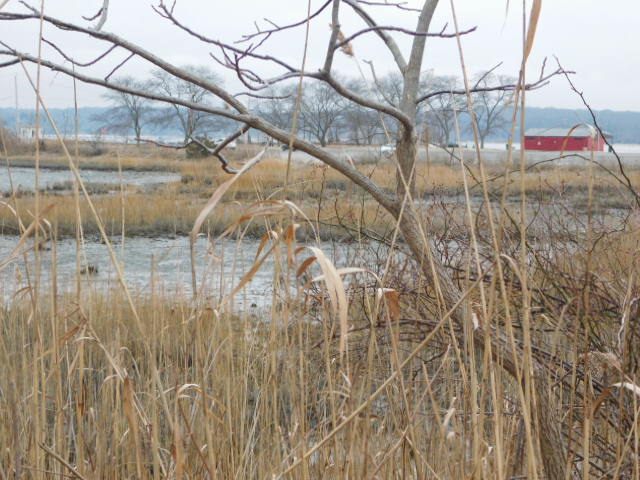
Long stretches of marshland calm the eyes and soul in all seasons.

For a lot of us, there is too much time to think.  Janus was famously the god of past and future, looking both ways at the same time.  Curled up on our couches during spare time, our own minds wander equally, regretting what has happened and worried about what will come.  The lethargy of the season assures that we marinate in such useless apathy for a long time rather than jump up and engage in the always fruitful present.

Goodbye and good riddance, January.  Happily, I have survived you yet again.  Admittedly, this has been one of the “good” winters so far.  Enduring the upcoming shortest month of the year may not be so bad after all.

Wind Chill Wind

aWind is by nature fickle, and my photography day dawned completely still

Childhood memories get sharper after middle age, seeming to reference ancient times that were more extreme and sharply defined.  “You don’t get winters like we used to …”  Deep freeze, however, is often ameliorated by compensating images (in my case) of roaring wood fires in oil drums beside a skating creek.  A child is small, so snow seems deep.  Nevertheless, I do not recall high winds as much of a concern, perhaps because we were kept inside when they blew. 

Local weather is only on average affected by climate change.  This winter here has been relatively mild, but contains occasional sharp dips.  Storms are intense, even if mostly rain.  And strong wind, even very strong wind, has been almost constant.  Since the advertisement of wind chill by media, numbers are all about how cold it would feel if you didn’t have any clothes on, which is kind of silly.  But such measurement is as pervasive and ubiquitous as TV meteorologists themselves.  Wind chill has become more accepted than mercury readings.  Yet, even now, allowance is hardly made for how greatly humidity affects how we experience temperature. 

Modern civilized folks take food, electricity, water, and warmth for granted.  Nobody is so poor they cannot find a coat, or a public space to hang out in.  The days of folks shivering in threadbare cloth on icy street corners _ except by choice _ seems long past.  But how cold is it, wind chill or not?  Some of us need layer after layer plus hats scarves and mittens.  On the other hand _ a few years ago I saw a guy running after dark in sandals, shorts, and T-shirt when the temperature was near twenty.  It is well known that some physiques love cold, and fat is a good insulator.  So even if we could agree on the “objective” temperature, what each of us may feel varies considerably from one to another.

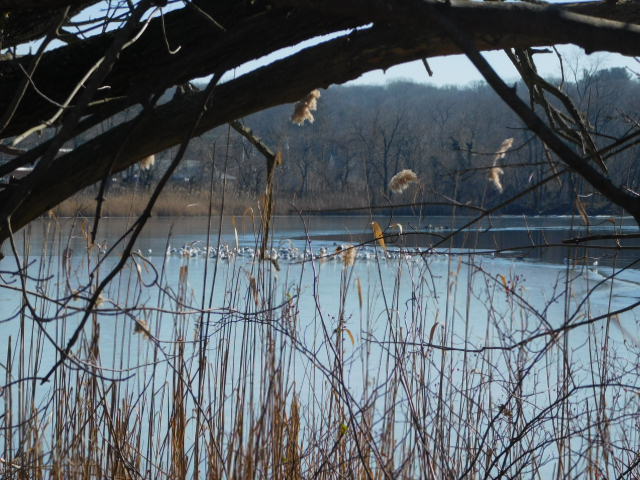
Calm lovely pond and sky, delicate reeds, a niche of nature in suburban sprawl

Logically, it seems easier to add warm clothing when necessary in a cold climate than to try to remain cool in a hot one.  Winter hardly seems much of a warmth issue, even outdoors, in a time when technology has given such wonderful new fabrics.  Ski resorts and skimobile sales attest to this, of course.  But along with easy comfort has come great laziness, and some folks hate being anywhere that is not a constant range of, say, 72 to 75 degrees.

Seasons can be magical but also depressing.  Cycles proving that time is passing faster than we wish.  Reminders of mortality as blossoms die and branches become naked.  This is offset by the rush of hope as spring surges and promise of summer glows in the near future.  Not to mention that many bugs and weedy nuisances are kept in check.  But mostly, I just enjoy the temperate natural play of time and temperature, like a great spectacle with constantly changing opening performances and replacement by totally new productions every three months or so.  That most certainly includes winter, a time to meditate and reflect.

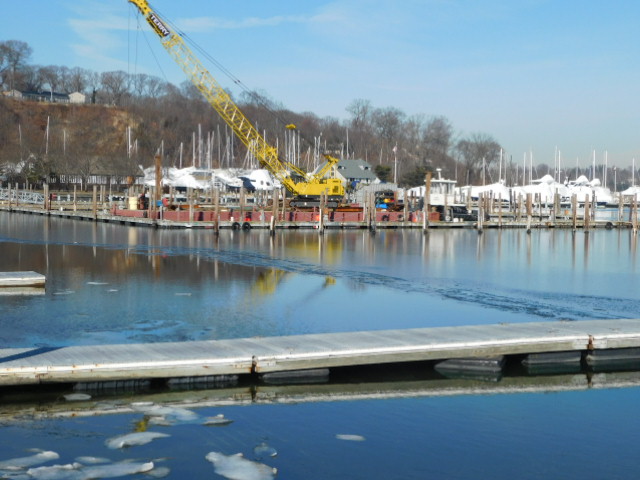
Dockwork never ceases unless the harbor freezes solid, an unlikely event in recent memory

Those of us who remain in Northern climates like to think of ourselves as busier and more industrious than the indolent folk of lazy warm lands.  They lie around under palm trees all year, sipping drinks from dawn to dusk, occasionally selling a t-shirt to get by.  We, on the other hand, must do something or become bored with cabin fever.  We consider ourselves forced by the cycle of nature to plan ahead like proverbial ants for tough times certain to come.

That is all mythology now, if ever true.  Everyone works just as hard or as little everywhere as anyone else anywhere.  And in the depth of frozen howling winter,  dealing with slippery streets and drafty houses or frozen pipes, having to wear layer after layer to get from door to door _ well, being in sunny warm greenery all the time looks pretty good.  After all, it’s where we all began to evolve, we should enjoy it more.  But usually mythology of one type or another is what gets us through the day, and most of us easily adapt our personal myths to circumstance.

Leaving Leaves

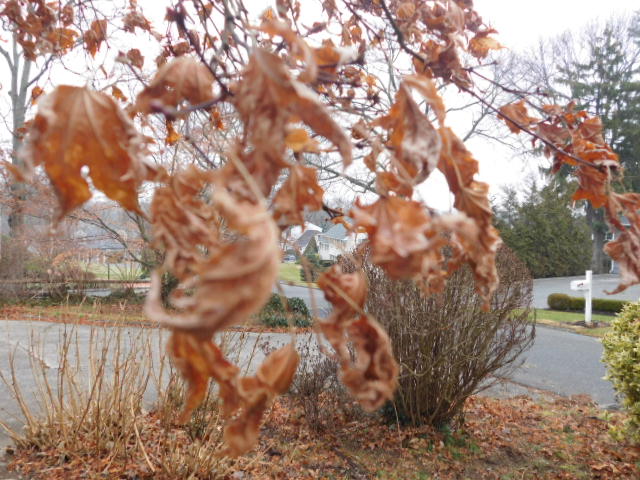
Some leaves seemingly resist giving in to the season.

This year, nature has left unusual drifts of shriveled brown leaves clinging to the Japanese maple outside our living room window in mid-January.  It is a little worrisome _ what could it mean _ some strange malady?   I stare at and through them each morning, and even tried tugging them off only to find each one fiercely held.  Another small mystery, which only spring can solve.

Huntington sits in the middle of a deciduous forest ecology, which on its own runs through maple and oak to climax beech and hickory.  Scattered fir or pine groves break up the monotony, once upon a time chestnut was abundant.  Usually the lush canopy falls by the first week in December, but this season stretched a bit longer.  With no snow yet on the ground, leaf blowers continue to ruin silence from near dawn to dark as yet another yard crew ekes out a few more dollars for food and fuel, paid by the hour, taking their time even in bitter cold.

We raked leaves quietly by hand when I was younger, mostly to keep thick mats from smothering grass.  We burned piles in the back yard.  A few patches and strays always remained and nobody complained.  Now, of course, we can no longer burn, but the clean smell of wood fire has been replaced by nasty uncombusted gasoline fumes, a bad trade.  Suburban normality evolved _ if that is an appropriate description _ to a need to have an absolutely living-room-clean lawn in winter.  In the next century perhaps all trees will be cut down and replaced with paved piazzas.

Oh the horror of leaves decaying naturally on a suburban property!

One of the problems with today’s “service economy” is that _ like aristocrats of old _ we lose a lot of natural feedback.  Meals are preprepared whether in restaurants or the freezer.  Clothes come from big bins and racks.  Food magically appears in ever-open stores.  And property is just something to be seen out of a window.  Without true connection to cooking, making, finding, or tending we lose perspective and fail to appreciate the world.  We wander mindlessly as faux connoisseurs of shallow trivial impressions.

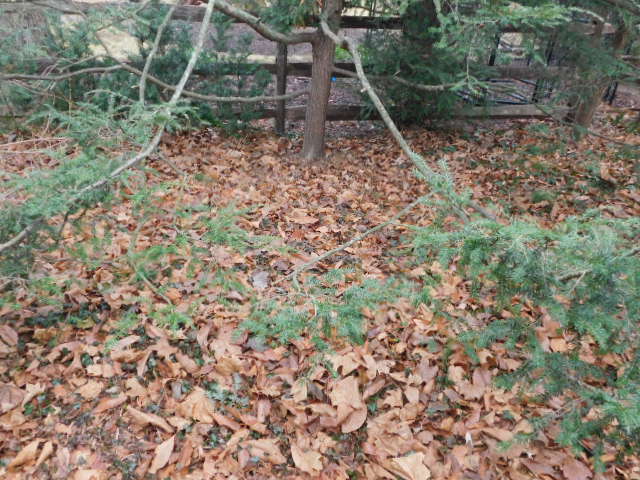
In Caumsett park, leaves coat forest floors thickly through November and the rest of the winter.  Somehow, they are all reabsorbed by spring, enriching soil with nutrients and organic material.  Nobody, as far as I know, thinks this unnatural and hideous.  But, if things keep on, perhaps in the future robot armies will be dispatched to remove each leaf immediately (and then be sent to beaches to be swept clear of sand.)  In the meantime, I enjoy kicking through piles and hearing the rustle underfoot, even appreciating mottled brown tones everywhere.

Lately, I’ve left most leaves on fern and flower beds.  The ferns seem to appreciate a more normal environment and respond vigorously and without difficulty when fiddleheads erupt, endure later dry heat spells much more easily.  Flower beds, I admit, are more for deep freeze protection and I do clear off most of the detritus when I begin to plant or as tulips and daffodils emerge.

Some suburban leaf obsession is simple ignorance, some misplaced desire for full control, some misguided conformism.  All ignores the facts of common cycles.  Leaves do fall, they do decay, and perhaps nobody likes to be reminded of our eventual and certain fate in our human cycle.  The frequently quoted proverb “dust to dust” would be more accurately and organically rendered “leaf to leaf.”  Perhaps then we could view autumn and winter as useful metaphors of our own real destiny in the larger scheme of time and space.  Remaining leaves then could represent both memories and promise.

Winter Shore

– Dormant grasses before an open distant sky

From a beach or esplanade, winter shorelines on Long Island are as beautiful in winter as in all other seasons.  Because of the long history of New England in general and Huntington in particular, we are blessed with abundant public access to water views, some in parks, many roadsides.  Unlike some places, most development is hidden under trees, partly from climate, partly from low density housing, so distant shores often appear uninhabited when gazing across the waves of Oyster Bay or other ubiquitous wetlands and inlets that surround our island.

Seen from the North Shore, Connecticut is usually just a hazy blue ribbon across wide Long Island Sound.  Underfoot sands crunch with innumerable moon shells, fewer oyster and clam shells than there should be, and less plastic flotsam than one would expect.  Gulls, geese, ducks, ospreys, crows and egrets are fairly numerous, dwindling populations of migrating and other birds add to worry that nature is in trouble.  Yet on a frigid January morning all is deserted and quiet, I listen to surf and the swish of sand, and almost imagine that I am viewing the world in a more pristine time.

This place is basically a giant sand bar formed when the Wisconsin glaciation receded twenty one thousand years ago.  As such, it was always doomed to a short life in geologic time, although its disappearance may have been significantly accelerated by oncoming sea rise.  Thus it postdates the emergence of modern humans from Africa and perhaps was created simultaneously with the migration of people to North America.  Folks were living here by eleven thousand years ago.  From the first, it was heavily wooded, and stuffed with game, shellfish, and marine bounty in general.  Before the European invasion, corn and other crops were widely grown in clearings and on the fire-cleared Hempstead plain.  By all accounts it was peaceful and as near a paradise as possible for Neolithic tribes.

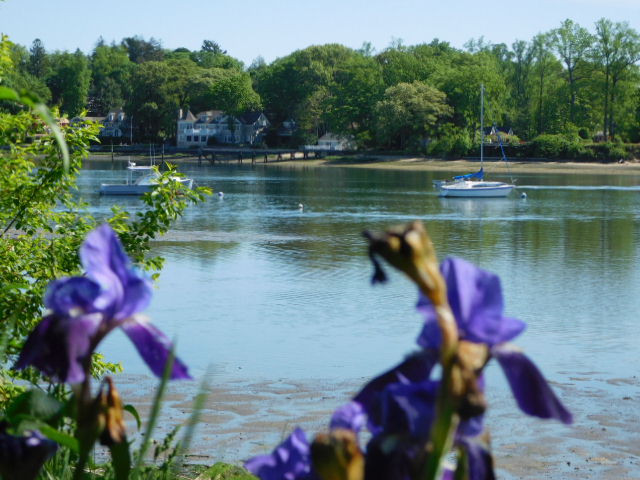
Crystal waters display pebbles behind rippled reflections

The water is almost hypnotically clear on another early Sunday morning.  Sixty degrees _ a January thaw although we have not had much to thaw from.  The local beach is deserted, not even birds.  Houses crowd adjacent hills, boats are removed to storage.  Lovely blue sky streaks under scudding clouds as it ever has done.  A mild breeze brushes my hair;  water from an underground spring bubbles gently behind me as it forever flows into the bay.  One lonely seagull meets another high overhead above decaying piers.   Repose and meditation in another beautiful place on this Earth which we must treasure.

Even in the short half century during which I have been aware of Huntington harbor, it has changed dramatically.  Some old structures from colonial times have fallen into ruin and been removed.  Many houses have been rebuilt partially or totally, as new mansions crowd previously vacant lots.  The old oil and coal depot is now a marina, and the barge that once conveyed fuel is sunk in puppy cove and long decayed.  Boats elbow each other in summer, dolphins which my wife saw in childhood are long gone, lobsters vanished decades ago.  Diebacks of marsh grass are increasingly evident.  There are, in short, few signs of the environment getting better.

On the other hand, water scenes remain a joy.  Waterfowl in declining but still relative abundance fly about, squawk on sand, float majestically.  Children play at the beach in summer, dogs race endlessly, old folks just sit and reminisce.  Cars still slow down on the shoreline drives, happy for a few moments to have spectacular views that do not require trips on an airplane.  And for those few, like me, who have the time and desire, there are hidden pockets of wonders from unexpected wildflowers to magnificent sunset, storm, and peaceful dawn.

So what is real?  The historic paradise of centuries ago, the short few hundred years of European dominance, the presumed decay now, or the projected destruction of all this by climate change already making its mark in toppled trees and too-high tides?  Unlike many around here, I am aware of all of them, yet only my moment really counts for me.  That is a selfish attitude, but natural for a human consciousness.  Should I feel residual guilt at all that society is wreaking on the environment?  Or should I just accept what is and enjoy my remaining days as I can, even accepting trash and destruction alongside the beauty and life?  No answer, perhaps not even a meaningful question.

The Old Days

Daily breakfast. Fresh milk from hundreds of miles upstate, processed oats from a thousand miles away, berries flown 5000 miles over the equator, fish oil from an ocean, exotic coffee. Modern miracles everyday.

Old folks edit memories into nostalgic golden auras, young folks have no ancient memories to edit.  By default, the old days become fantasies filled with shining knights, noble warriors, nature priestesses or the like, and endless summer beckons.  Men were men, a simple world calmed the spirit, and strong beliefs helped everyone through dark times.  Each individual who imagines those daydreams also imagines themselves as one of the winners _ always a knight or warrior or princess, never a slave or peasant, surely never shivering famished in winter.

The really old days need not harken back to Greece, Mesopotamia, Egypt, or Neolithic China.  We have trouble conceiving of daily life before 1900, and cannot really grasp it before 1850.  No electricity or plumbing, food preservation mostly using salt, horse manure (and worse) stinking everywhere, almost no bathing especially in winter, violence rampant, heavy drinking because of bad water, frequent hunger and desperate cold.  Women always pregnant, often dying in childbirth.  Almost half of children dead before the age of ten.  Men crippled or killed by machinery, beasts, infections, and other men.  You don’t realize how tough the human race is until you dig deeply into true histories of such times.

My Pennsylvania childhood in the fifties is nostalgically seen as a golden age.  We were taught that we were the exceptional people, inheritors of the earth, the vanguard of coming wonders.  But that was based on a world where all other industrial powers had been ravaged by war, their most productive citizens killed, cultural illusions destroyed.  Worse was to come in places like China and Africa as new ideologies replaced the old.  But we kept on working in untouched America, confident that it was our virtue that made us strong.  Even so, children were placed in iron lungs from polio, poisons were freely emptied into land and water, junk piled up in unseen lots, and the “melting pot” of culture was rude and crude and kept certain groups in helpless poverty.

Fog an appropriate metaphor for both past and future.

Today many worry about the dire effects of climate change.  Others consider threats from artificial intelligence, and the always fragile logistics of a technological civilization.  Doomsday worries have been common since people could first construct and tell stories.  In my childhood it was mostly nuclear war. 

But local personal doomsdays have always arrived with the four horsemen _ war, famine, plague, and ubiquitous death.  Villages and provinces have been wiped out.  Losses of over half the population have been common.  Today, those problems are both more real and more abstract _ real because most problems are truly universal and global, abstract because so far they are all merely possible rather than actual.

Back then, it is true, the numbers were less.  A few billion, rather than seven going on nine.  Especially in the Americas a lot of open land which is open no more.  More spread out into rural communities, rather than jammed into massive cities and clustered suburbs.  Some say, “too many people, the planet will certainly be destroyed, species go extinct.”  Granting some of that, it may not be so bad as claimed, no petri dish of a bacterial culture that will end up eating itself.  Population overload is one of the least worrisome problems these days _ humans certainly have ways to take care of it without plague or massacre.

Looking back or looking ahead? Not quite sure.

Everyone wants to believe in Neverland fairy tales, where we all stay young and vibrant and the world is a fantasy of constant wonder.  You know what?  That almost describes today, for about half the world’s population.  Maybe we can bring up the other half into similar fortune, and let everything we worry about vanish into the horror realities of the old days.  That, anyway, is my unrealistic new year’s wish.