Whiteness

I see “wokeism” as a degenerate form of anti-colonialism. And in complement, I’ll call “whiteness” a simplification of what used to be “eurocentrism.” Both consist of low intellectual thresholds and angry activism.

Whiteness is not simply, perhaps not even primarily, racism. Yes, skin color is an important marker. But the crucial tenants of whiteness concern the restricted role of women, the assumption of a masculine authoritarian anthropomorphic god, meritocratic class justification of wealth and power, and a vision of destiny fueled by conquests of land and technology.

The anger of both sides is aggravated by modern change. Whiteness believes it is being destroyed by the tribalisms of the woke crowd. The woke on the other hand, see themselves as simply in the right and being repressed. But both sides view the struggle as a moral war, with no compromise possible.

Whiteness probably disturbs me more than wokeism because I came from a more moderate, but nevertheless eurocentric background. I dislike dumb thugs of any type, and right now such people seem to cluster in whiteness, although they are everywhere.

At it’s finest, eurocentrism used to mostly value getting stuff done and trying to improve life. Whiteness lost that ability, along with much else, and prefers to see things decay rather than fixing them.
Art (1)

For years, I considered myself an artist. As a painter sometimes full time, sometimes hobbyist, but never commercial. As a software creator, a kind of Renaissance minor character putting unique code frescoes in tiny commercial corporate monasteries.

Visual art has entranced me, off and on, and added a great depth to my life. There are so many aspects that I begin by numbering this entry in the expectation that many more explorations will follow.

This particular focus is on the validity of alternative self-views in our lives. It has become far too easy to become a compulsive self-declared expert and slip into a constricting rabbit hole. Maybe social media, maybe work, maybe family, maybe almost any odd thing. A blinding obsession distorting or eliminating all else.

I used art, mostly, as a balance. It opened doors to other goals when I studied the lives of artists.. it granted me new perspectives on meaning as I considered such things as aesthetics. And on an intimate level, it let me feel I was doing something real when all else went badly.

But I emphasize the “all else.” My life involved work, family and a few other necessities. Art remained a side reward. I think that is the value and purpose of hobbies.

Industrial Jobs

There is a dirty little secret in economics, which is that for a typical industrial worker it makes little difference in what economic system he finds himself. That person has niche things to do, he may be rewarded or reprimanded depending on how well tasks are accomplished, but the greater picture is the same whether in a brutal free enterprise, comfortable democratic monopoly, directed government company, bureaucracy, slavery, or just about anything else.

Your immediate boss in any system may be lazy or fanatic, marvelous or incompetent. Far up the ladder decisions are made into which you have little or no input. External forces wreak havoc.

So whether working for the state or some wildcat visionary or anything else, a worker tries to remain sane, receive the support needed to live in society, and get through one day to the next. With luck things might get better if you work hard. In any system, no guarantees. And lots of unexpected turmoil.

In industrial society, at least so far, by far the bulk of citizens are employees of some type. And no matter the announced political ideology, their lives are much the same. No matter whatever the opportunities of risk and luck, most workers are for one reason or another stuck with eternally being workers.

Like any mythology, economics believes it considers the grand important ideals. But truly very little of it matters to most of us day to day.

Divine Right of Wealth

In medieval tradition, kings were appointed by God. That Divine Right meant that a king could do no wrong. A badly run country or an evil king was not the result of God making a mistake, but rather a sign of his displeasure with those being ruled.

The Industrial Revolution replaced that ideology with the divine right of wealth. Capitalism assured that meritocracy could guarantee that those who were rich deserved all they had because they were better than anyone else. If things were going wrong in society, it was because capitalism was being foiled by those being ruled.

Republicans have further distilled this creed to wealth being the only measure of worth. They need guns to protect wealth, strong borders to protect wealth, a strong police power to protect wealth, and an intrusive government to make sure capitalism protects the wealthy at all costs. Once in a while a poor person will ascend to riches which _ like knights or saints from the peasantry in the olden days _ proves everything is working well.

Eventually, for better or worse, the kings were replaced by various new mythologies, capitalism being only one among many. At some point, the sheer increasing folly of any system causes social collapse.

I’m not sure exactly what point we are at, but the voices claiming wealth is always right have grown very loud.

Transitions

Drove to the post office to drop off two letters with checks _ there have been episodes of “check washing” around here recently. I ended up musing on how fast things I take for granted are going away. 

The pandemic years will probably mark a boundary. A decade from now there may be no daily mail, no checks, no printed newspapers, darn few internal combustion vehicles. Such bad and massive transitions have occurred before, as when automobiles replaced horses.

The experts preach that short-term pain will lead to long-term gain. Perhaps so, but the world will feel much different. Anyway, we elders know that for us “short-term pain” is pretty permanently the rest of our lives. It takes young folks to get excited about the wonderful possibilities of massive turmoil and wreckage.

All I can do is take some effort to appreciate what is and has been. To notice as everything becomes something else or a mere historic memory. I understand as well as anyone that things come along .

So I drive, enjoy weather and flowers and shopping, and try not to worry too much about what might happen. I have this day, and_ well used _ a day is all I need.

Myth April

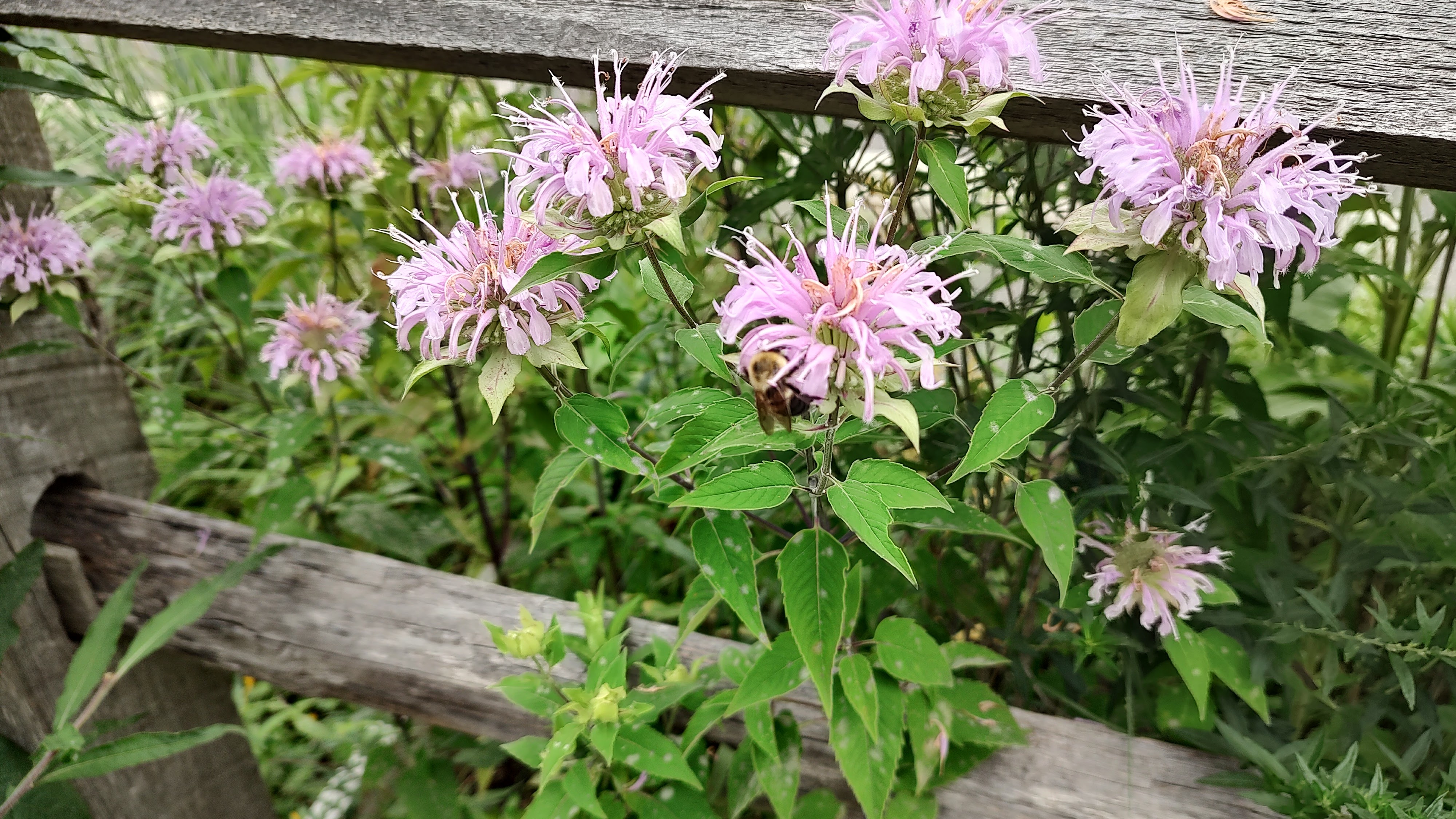
In American story books and our immediate definition, spring _ particularly April _ is a wonderful breakout from dreadful winter. The air is pleasantly cool, flowers bloom in profusion, bees buzz everywhere, trees break into brilliant new crisp foliage. And there is some truth in all that, in general.

But in particular, April has some nasty surprises. Depending on where you live it has frost, snow storms, high heat, tornadoes, floods, destructive wind. It can be filled with mud, black flies, mosquitoes, and ticks. Each day varies tremendously even if the average matches our idealization. 

And I think that summarizes a lot of the problems with our thinking in general. On average, maybe mostly true, but reality always contains contradictions and extremes and varies a lot from place to place and day-to-day. And even the idea of “average” is a little suspicious. As the old saying goes, “if you have your feet in boiling water and ice on your head, on average the temperature is just right.”

So I am suspicious of media reports about how things are going “in general.” People are angry, youth is violent, and so on and on. Maybe on average, maybe not, but even if true less meaningful in particular situations then it sounds.

Today, fortunately, is one of those fine April days that matches the beautiful myth. 

Cultural Suicide

Wall Street Journal editorials are often infuriatingly silly. Recently Gerard Baker claimed western civilization was committing suicide because of “woke” business practices, which apparently to him means caring about anything but short-term making money. He crowed about how he along with other best and brightest happily made the world great as employees of Goldman, KKR, Bain and so on.

For me, the great divide was the “”Chicago School “of economics, which claimed that the only rule of business was immediate profit, the only proper goal of the elite “makers” was to generate money, the only role of the masses of impoverished “takers” was to be religious, and the only function of government was to aid the wealthy, who deserve it all because in a meritocracy by definition the best are the richest.

Actually we know that in the “good old days”, in the US, business was more complex. Small firms were part of the community, large firms were part of society, and there was an implicit agreement that for the most part employers and employees were in it together for the long term.

The corporate raiders ended that. They trumpeted “creative destruction,” but they practiced pure piracy. Gobble up anything with a bad quarter resulting in excessive assets, plunder it, sell it off, move jobs offshore, close plants, get rich on paper stock manipulations.

They turned life nasty and mean. If cultural suicide happens, it is because they have already stabbed and poisoned civilization into everyone-for-self hedonistic nihilism.

Unknown

I’ve been happily organizing slides of hundreds of paintings I did in previous decades. Never able to sell any, but then I never really tried. Grateful for the aesthetic experience, happy at how life turned out.

When I get into one of those contemplative funks about how differently life might have been “if only,” it helps to consider myself a literati artist. Those ancient Chinese painters, known by only a score or so of existent works, if that many, claimed to paint only for themselves and friends. I admire them and feel kin. Then I become properly attuned to the universe and heave a sigh of relief when realizing how badly things might have turned out “if only.”

Before I gave it up painting altogether 20 years ago, I made an honest living creating software projects, until I retired from that about 10 years ago. More unknown projects, gone with the snows of yesteryear, fun in their time and at least I got paid. But now I have much more left of my art than I do of my software.

Of course those artifacts too will vanish in another decade or so. Most lives are fully unknown outside a small circle. I salute them, join them, and realize we have all been just as meaningful and infinite as anyone who briefly adorns museum walls and history books.

Blinders

Blinders are devices placed on a horse so it can only see straight ahead. Avoiding slowing distraction. Our current term is “focused like a laser.” That is often a useful tool when trying to accomplish a defined task. It is a tragedy as a guide to life.

We evolved, after all, with luck and pluck by being able to be aware of and quickly evaluate everything in the environment. Those who ignored the various surrounding possibilities of danger and advantage were probably not the most successful members of ancient tribes.

Beyond individual problems, blinders often prevent people from participating well in society. Since, above all, our species only exists as highly social animals, that is a massive handicap for the person, and a possible tragedy for everyone else.

Blinders came to the workplace with the industrial revolution. And their success there encouraged wider efforts to adapt focus to social and philosophical tasks. A great error, always ending in an ironic, incomprehensible swamp of seeming contradictions. Life and consciousness is so complex it overwhelms targeted organization.

I think we need to throw out the blinders and limit the lasers. They have done enough social damage. It is time for each of us and our collectives to accept that distraction is just as important and more central to our well-being as dedicated narrow concentration.

It’s Not a Small World

Global era mantra “It’s a Small World After All” has been drilled into our minds for decades. An era of instant travel and electronic communication shrinks time and distance. We need to accept that this is a tiny shared globe, shrinking daily.

Except that it isn’t, at least for each of us. We may view real-time feeds in Japan, or take a jet to Florida, but to walk across town still takes a while. Walking 100 miles is a significant accomplishment requiring time, energy, stamina. Outside cities, there remain vest stretches of terrain, perhaps not wild, but not suburban or urban paved over.

More than that, each of those actual places, viewed as we walk, contain infinite marvels. We may never notice much from a plane or a car but the fantastic variety of life goes on, fractal in intensity and meaning.

Yes, I know it is different now. Humans change the climate, could destroy the biosphere with doomsday weapons, affect every ecological nook and cranny evolved over the last millions of years. We are a nasty invasive species. Everywhere, all the time, and that was never true before.

But I go forth daily, and the immediate world is still large, and gives a clue to how vast a planet really is. There is a lot of space. And everywhere is not quite so crowded as our immediate area may be.

Hopeful.