Unskilled Immigrants

Of course, the real drive for immigration limits has always been to keep out “others.” I fear it will be solved in the modern world only with biometric IDs for everyone. But the anti-immigrant crowd in the US _ historically a uniquely immigrant country _ has adopted a strange twist, saying we should only allow in highly skilled people like doctors and scientists.

This is a very odd attitude when you consider it. Generally immigration to this country has been “poor huddled masses” totally unskilled. They worked at awful hard jobs nobody else wanted to do in hopes of a better life and dreams of a future. We still have lots of jobs nobody wants to do. Waves of German, Irish, Italians _ peasants or equivalent _have built the United States.

The only “people” who truly want skilled immigrants are the corporations, who can use these more compliant and less well paid professionals to keep down the positions and wages of the native-born and educated. As a programmer, I saw these tactics for years, as companies pleaded for high-tech immigrants because of a “labor shortage” that only existed because they did not want to pay more. 

Most people, in fact, should want only unskilled workers to compete in the marketplace. Anyone in a better position_ even including only speaking English better _should be happy to have an unskilled person _ who is no threat to their job _ washing the dishes or doing the other necessary menial chores. As the poorest have done throughout the ages.

Wage Inflation

The Fed is currently battling inflation. Of course that is a condition of rising prices _ most notably food. Revolutions are more often caused by a spike in the price of bread than in the cost of a coat.

One of the main indicators this economic elite considers most strongly is “wage inflation.” But not wage inflation of CEOs, bank managers, or corporate board directors. No, the wages they care about are those of waitresses and taxi drivers and retail clerks. The peasantry, in fact.

Of course the Fed wants to keep down the price of a loaf of bread. But its real judges _ who control the jobs of the Fed governors via massive political bribes _must pay for services. How much for a good meal, or a car ride, or a nanny. They want the peasants kept where they used to be. 

I know it’s a cynical attitude. But seriously, do we ever hear the Fed claiming that “CEO’s pay is rising over 2% a year, something must be done!”? No, of course not. How could the salary of a king or anyone else in the elite possibly matter in the grand theme of things?

So I take all the babble about wage inflation and shortage of labor with not even a grain of salt. It’s high-toned economic gibberish.

Like much economic doctrine, by for and of the elite.

Grand Thoughts Drifting

In this crazy meteorological year, the rest of the world and country has baked, while around here it has been cooler than normal. In fact our first heat wave of three 90° days just occurred, following Labor Day. 

The beaches officially close, no lifeguards nor pavilions. But on our town bay sands, people still gather and dip into the calm waters now and then. Mostly seniors, with a sprinkling of anyone else lucky enough to find time in this busy season.

I took my beach chair, an old paperback, and sat for hours. Hot blazing sun, cool calm saltwater with lots of little fish. I stared at the horizon, prepared to think all kinds of grand thoughts, and suddenly found myself hypnotized and emptied of all save a remembrance of peaceful meditation.

Unfortunately, that happens a lot these days. Good intentions to think deeply and in focus, somehow led astray and into a tangle of minor observations and memories. 

I suppose I should feel guilty. Yet I’ve put in my social work time over the years, for what that may have been worth to the greater good. There’s 8 billion other minds out there, many younger and sharper. Let them do some of the heavy lifting.

In fact, I wish a lot of our industrial leaders and politicians would put down their self-anointed leadership roles and spend some mindless time on the sand themselves. I’m less and less sure a geriatric-led society is good for anyone. Grand thoughts and assumed wisdom or not.

Lightning Strike

One of the things I learned as a sheltered young man reading the autobiography of Malcolm X was how rational it was for poor people to “waste” money playing the numbers lottery. Saving a quarter was hardly worth the loss of a dream even though saving those quarters might add up.

The idea that quarters add up is something that everyone pays lip service to, and that is mostly preached by the wealthy. For those with lawyers and accountants and lots of assets, quarters more or less add up by themselves. For the rest of us _ not so much.

As many have realized how economically stuck their lives have become, the lightning strike of fast wealth via magical luck has become ubiquitous. Much in gambling and lotteries, of course, but also in lots of other dreams of small enterprise or legal lawsuits.

Well, like the numbers and the poor, such dreams do help to keep us sane. In spite of hype, standard meritocratic propaganda hardly applies to most people. The hardest working and best employees are not usually the ones making a lot of money, nor the ones most likely to do so in the future.

It’s an old affliction of civilization, going back into prehistory. Gambling is human, and must help us cope with cultural restrictions. For the most part, it is a fairly benign activity, rational within limits.

Like lightning strikes _ amazing when it happens, but pretty rare for any given individual.

Riders of the Storm

Metaphors and imagination are wonderful tools with which to control our mood. Imagine, for example, that the sky seems to be going crazy. Then imagine two scenarios. In one, you are secure in a snug cabin while the storm rages. In another, you are harnessing its power and surfing the changes in exhilaration.

I’ve fluctuated between both states, as I guess is normal. As an elder, I find many current social turmoils frightening and even incomprehensible. And some days I retreat into my snug internal cabin, shut out interruptions, and read or putter away at projects while the weather is forgotten. But other times I float above the angry clouds, enjoying the wild entertainment, even dipping in here and there as the notion strikes.

I think in many eras, those fortunate enough to reach old age have been confused and upset at how their world has become different and usually more hostile. When that happens to me I severely remind myself how privileged I am to have been granted so long a period of existence.

Of course, that does not help the young _ even if they ask me for my opinion it is usually of little help. I have mostly outlived my days of riding the storm, even though I can remember doing so when (I think) the storms were far different than they are now.

Joy of Fantasy

As far as we can tell, most mammals dream. For whatever reason, we also do so. Dreams can be controlled, wild, incomprehensible, fantastic, immersive. Mostly, dreaming is a wonderful entertainment.

We can, of course, carry that into our waking hours. We imagine all kinds of things, often believing them to the exclusion of mundane reality. Sometimes it is a coping method to escape a harsh environment. Sometimes it is just a means to relieve boredom.

Many sober instructors harshly tell us to keep dreams under control. A few, carefully nurtured, they accept as a spur to ambition. “Do this and you will be rewarded!” But extravagant dreams, too often, we are warned, are simply gateways to lazily doing nothing and wasting time.

I suppose there is some truth in that. Reading too much fiction or watching too much entertainment can become similar to an enforced catatonia. As can obsessions such as religious visions. Better, perhaps, to jump up and actually do something.

But I also think a life without fantasy is kind of like a nutritious meal with no taste. We can survive day-to-day in a gray slog of useful activity, but at what cost to our psyche?

So, at least within reason (and what would that be?) I applaud fantasy, and try to treat it as another remarkable gift of human existence.

Public Education

Rigid education for individuals never seems to work out logically, although somehow cultural transmission to the young for masses of people obviously does. But attempts to raise children into a certain mold fail as often as not. 

Ignoring actual history, Americans like to believe in a mix of models. The family, public or private schools, churches, peers, life (work, the street, the school of hard knocks.) And, eventually, self. Their main fantasy, however, has been faith in the golden era of the ’50s, when they are sure that schools provided academics, nuclear families trained values, churches tuned young minds to higher spiritual aspirations.

Now, they lament, the schools are wicked, the family is broken, the church has shattered to dust.

In reality, public schools have evolved a lot in a few hundred years. Originally conceived to provide the foundations of good citizenship, they were harnessed to industrialize the thinking and work habits of the masses. In more recent times, they have served the role of babysitter and warden to keep youths out of trouble until they are 20 or so.

In an affluent society, what should schools be? What education should they provide? Interesting and profound questions but…

Unfortunately, hijacked by the most ignorant, bigoted, fanatic minorities of society. It will be interesting to observe how that odd and exciting confluence of forces plays out. Not, of course, that any of it is good for the children themselves.

Grasshoppers

End of summer during my lifetime in the Northeast has always put me in mind of the fable of the ant and grasshopper. The frugal hardworking ant preparing to survive a harsh winter to come, the grasshopper fiddling and dancing the whole day long with no thought of tomorrow.

For many years, the persistent rhythms of culture around me reinforced that story. Vacation was ending. Back to school, back to work, lots of new projects, return to grim reality. The inevitable degradation of weather as we lost sunlight and headed into a long tunnel of cold and dark.

These days it seems a similar “fin de siecle” mood has seized the entire world all the time. As in late summer, life seems pretty fine today. But the aging boomers are suddenly running hard into personal mortality and decay. Youth has been stridently informed that nature is dying and the world may soon be much worse than anything they have known.

Most folks are grabbing fiddles and enjoying life while they can. A few stubborn ants are grimly digging burrows hoping that there will be a springtime. And the less emotionally well equipped simply go crazy.

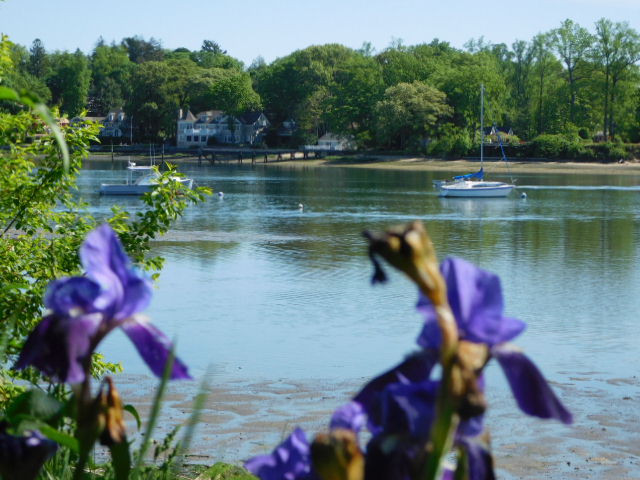
I sit on a beautiful beach in hot sun, watching children play and elders sunbathe, while boats glide on the harbor. It is only in my mind’s eye that the future appears so terrible. For most of my life, I have often embraced the grasshopper mode, and right now I am extremely grateful for having done so. 

Art and Science

Essays are at best a way of playing with concepts. That necessarily involves words, and, more to the point, the meaning of words. What I mean by “art” and what you understand by “art” may be very different. Yet constantly refining definitions is usually a tedious legalistic dead end.

“Science” for me has come to mean a method of discovering consistent relations in the physical world. I will let it go at that, except to note that science has also often been used to preach that there is one right solution to problems.

“Art”, on the other hand, has gradually assumed in my thoughts the vast universe of non-physical issues. What is correct social behavior, or beauty, or meaning, or existence? And in art there is clearly more than one best answer to any such question.

Other people will pick other words _ religion, philosophy, whatever. I prefer the more tangible aspects of art, which can manifest itself in contemplative objects for communication or simply internal and personal explorations which lead to a deeper enchantment with the world. 

That all becomes very fuzzy very quickly, but such is the true nature of language and our actual thoughts. I am generally much more aware of the art of life than of the science of life. And, in truth, a great deal of the spontaneous events around me seem more irrational and chaotic than not. 

Thus “art.” Definitely not a way to seek the “one important truth” about anything.

Peripheral Awareness

As I age I am increasingly aware of a decline in peripheral awareness. I can focus well enough and within that focus I seem almost as competent as ever. But I am also aware that I am less aware.

Concentration is a wonderful thing and allows grand tasks to be accomplished. A fisherman on the shore catches more fish if he purely studies waves and other subtle signs. But that may lead to not noticing the storm approaching or even the tide becoming dangerously high. 

That bothers me about aging politicians _ and aging movements, for that matter. Young people are able to handle multiple distractions, refocus or even incorporate them if necessary. Older people seize on ideas like life preservers or pacifiers, and obsess completely. They are fine with the core idea, they just forget that it is one among many. More than that, they hardly notice that _ like storms approaching _ conditions often change.

That is the real danger in old folks remaining as leaders. Even if they do not become senile, their days as smart opportunists are long gone. Through eyes misty or sharp they still make out that one single shining goal for which they have always striven. But everything around them is different and they have no idea.

Sad for them. Calamitous for followers and society.