Intelligence and Consciousness

Ongoing arguments about Artificial Intelligence employ foggy definitions.  What is intelligence?  What are we?  Will our smarter and smarter computers achieve consciousness?  Will they endanger or replace us? 

Intelligence is pattern recognition.   One might even claim that life itself, starting with DNA, is based on chemical or instinctual intelligence.  Which nucleic acid fits next?  Animals develop instincts to recognize dangerous or favorable patterns and act on them.  Humans are the most ingenious and flexible of all life in finding patterns _ some provably false _ in their universe and using them to control the future.  If a rock falls, we predict it will end up inert in a lower place.  If the stars align in a certain way, we may believe fortune favors our actions.  We recognize partial patterns and seek to fit them into known larger patterns to predict our future.  Those most capable of discovering and verifying new true patterns are hailed as the most intelligent. 

There is more to consciousness than intelligence.  Does consciousness require life? 

This is not a simple question.  The consciousness we know _ human and animal _ is embedded in a biologic matrix.  We drift in a chemical bath of hormones and synapses.  You and I are each unique, but we are also supremely tuned machines of survival.  Surely all that wetware provides more than just a nice platform for dry intelligence.  We know of idiot savants who can perform mathematic miracles, but are unable to find their way home or prepare dinner.

Computers are increasingly capable of discovering patterns.  Not only that, but they are becoming extremely good at recognizing big patterns from smaller ones.  A certain arrangement of shadows and colors can lead them to identify an individual within a stored database.  Deep learning allows them to find interconnections previously invisible to humans.  In that sense, artificial intelligence is already present and growing more capable each day.

Consciousness, however, involves being a universe.  Full recognition of all that is around, how it relates to me,  what I should do to improve my moment.  Flitting thoughts, imagination, fear, happiness.  My beautiful integration is only slightly connected to intelligence.  Our motivations are subtle, complex, contradictory, and sometimes stupid and devoid of intelligent thought.  Consciousness is a complex of motivation, evaluation, satisfaction and edited remembrance, all leading to integration into a personal and social matrix which helps assure a drive to survive and reproduce. 

No doubt a computer can follow instructions, including those to survive and reproduce.  The core problem is “what constrains it?”  Humans are adapted into built-in cultural limits, shaped by animal desires,  socially remarkable.  And each human is an uncharted self-aware entity,  immersed in the environment.  Those who worry about Artificial Intelligence  believe that simple instructions to “survive and multiply” will not create consciousness, but rather an unconstrained stupid machine savant that will wreck everything. 

We know we can create things of immense destructive power _ witness the atomic bomb  Whether an AI computer has any more “soul” or consciousness than such a device is my worry.  Can a digital device ever appreciate beauty or rejoice in its being alive?
We Are Alone

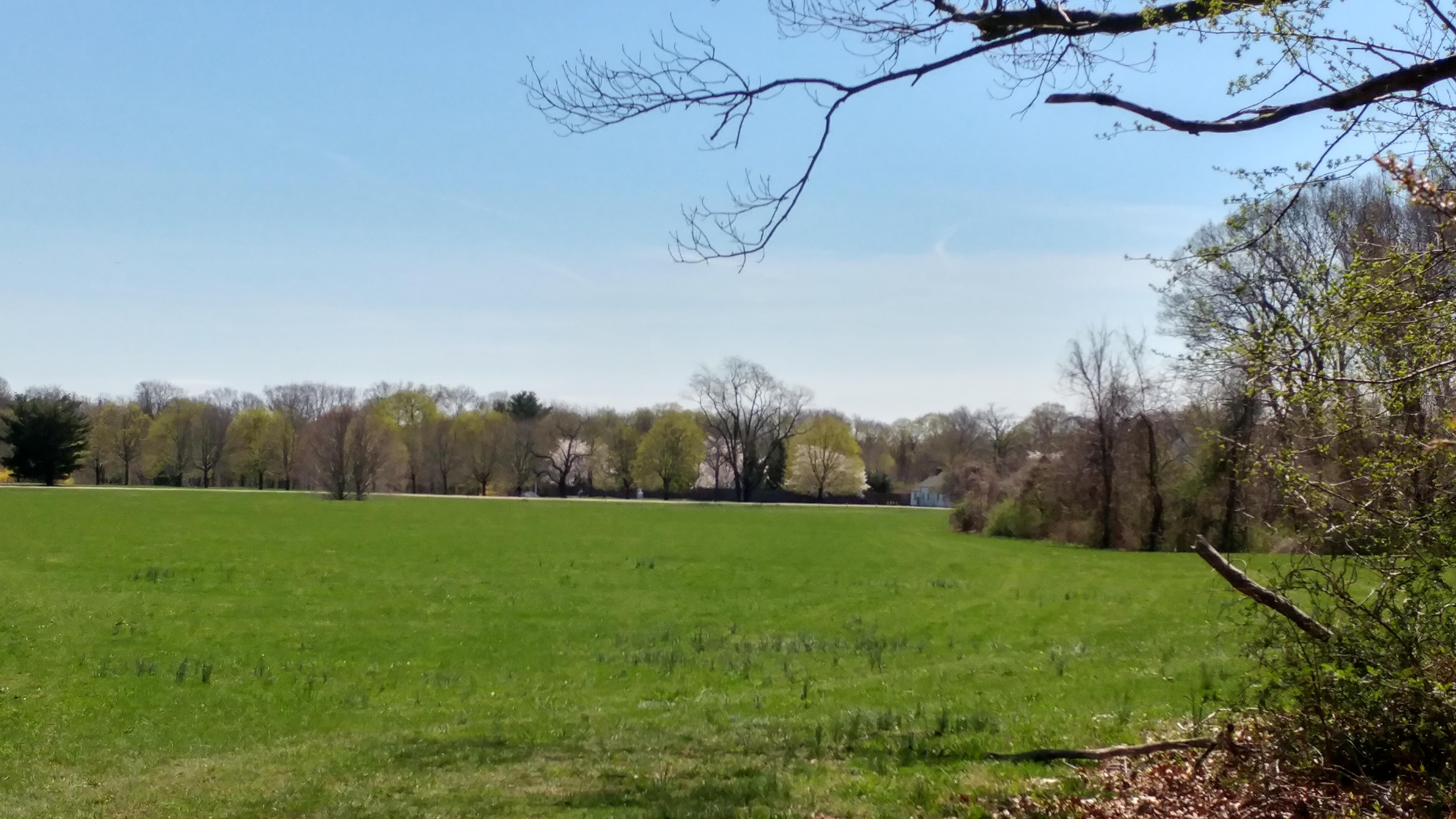
Early spring reminds us we remain creatures of which mind is only a part.

Internet, science fiction, reputable scientific journals, popular magazines and even religious works speculate on the search for life and intelligence in the universe.  “There are nearly infinite stars, so somewhere there must be intelligence to match ours.”  Physical studies, exotic instruments, philosophical essays all point to the inevitability of little green folks, if we can just find them.

Sensible thoughts.  I think they are wrong.  We are probably alone.

“Nearly infinite” is not infinite.  Lots and lots of stars do not mean anything can be happening somewhere.  Even multiple bubble universes would not be truly infinite.  Mathematically, it does not “stand to reason” that there must be other intelligence like ours. The odds against may be greater than the “nearly infinite” stars available.

Daffodils inspire poems and sprinkle joy on the landscape.

Life itself is improbable and requires significant conditions, like developing radiation resistance and the ATP energy cycle.  But even granting that life arises easily and everywhere, there is no definitive path to intelligence.  The earth itself is 4.5 billion years old, and 3.8 years ago life probably began here.  Single-celled organisms arose at 3.5.  And then, for almost 3 billion years, nothing really happened _ it was all single-celled organisms with this and that peculiarity.  And remember that years are only meaningful to us _ single celled organisms move at lightning pace measured in seconds or minutes rather than years.

So the rise of multi-celled organisms might be much more unlikely than “life itself.”  And special factors like our moon may make it even more unusual.  Not until .5 billion years ago are there animals with backbones.  .25 billion years ago almost everything is wiped out in the Permian Extinction,  which may have been a trigger for rapid evolution. Consider that:  4.25 billion out of 4.5 just fiddling around, then almost starting over (which may have been required for intelligence).

Darwinian evolution promises nothing beyond survival and reproduction honed to the environment.  Not until 20 million (.02 billion) years ago do primitive hominids show up.   An improbably varied ice age was required to generate homo sapiens at (earliest) 350K. 

In the last 40 thousand years we conquered the world.  In the last 10K or so we developed technological prowess.  In the last 200 (.00000002 B) we have electricity.  Pretty long odds right there. 

An awful lot of stars would need an awful lot of luck to come close.

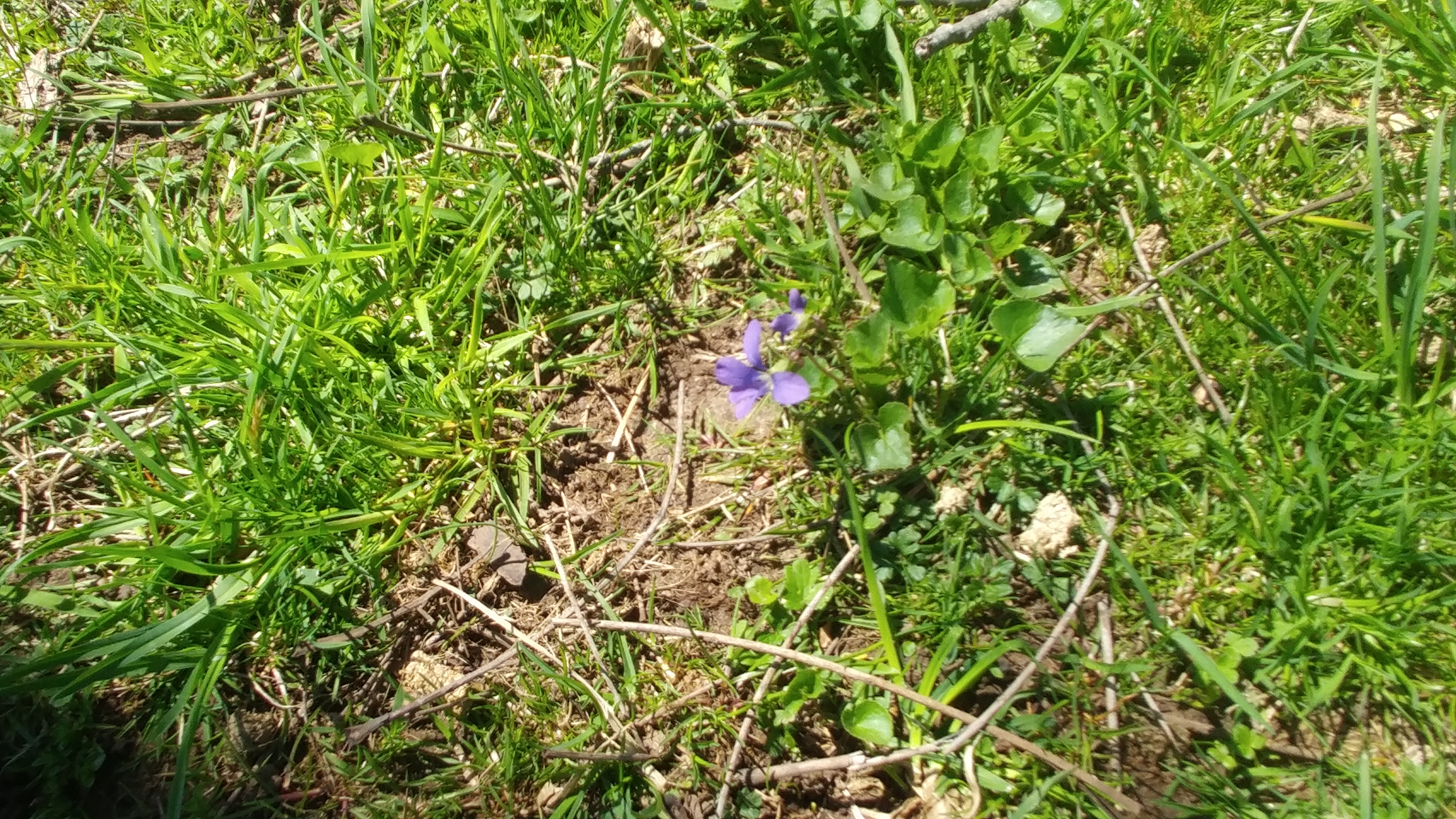
A few wild violets break the monotony of burgeoning emerald carpets

In the short life of our species, most cultures have populated their cosmos with similar but not quite identical spirits, gods, and beings.  No doubt we are hard-wired to look for cause and effect, inventing magic when we cannot find anything obvious.  Since we increasingly understand our “mundane” reality, projections have moved farther away.

There is, I suppose, no harm in looking outward and imagining strange intelligences somewhere.  On the other hand, you might stare with a clearer eye at your mate, neighbor, coworker, or celebrity to find that genuine alien intelligence is not at all that hard to find.

Morning Prayers

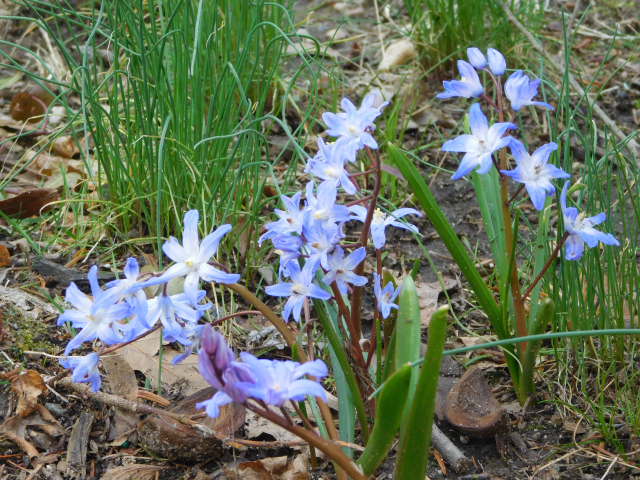
First bright spring flowers break the monotony of brown leaves and old hickory nut shells.

As a lifetime “morning person,” I treasure unblemished early hours.  I am increasingly grateful simply to wake up, to find myself able to move and (eventually) to think.  Early sun as spring turns to summer enhances my jubilant mood.  Stepping outside to hear birds and wind, smell flowers, view crystalline scenes is wonderful even if it happens to be raining.

Increasingly, I realize I know nothing about the true meaning of reality or being.  So I simply give thanks for another experience, amazed at the miracle of consciousness.  Little things _ familiar or not _ impress me.  I am comforted by routine, but often adventurous enough to stare closely at a daffodil or closely observe as squirrels steal bird food.

Sometimes beauty comes wrapped in scent,  much less prevalent now that hybridized flowers are primarily grown for display.

Unlike some of my peers, I relish losing control.  The future is way beyond my grasp, the present is only held together with spit and baling wire, the past is gone and all I can do (which is a lot) is to forget the bad and remember the good.  When it all ends, as it must, does not much frighten me.  I’ve had a good run.  I have some chores to accomplish, but nothing to shake the world.

But morning still allows plans at least for this day.  Where shall I go, what shall I eat, who should I contact.  In fact, I remember well how hard I laughed as a young person that the only thing elders ever seemed to do was worry about their next meal.  Not laughing so much any more.  I do not envy those making long-term plans, and I pity those who try to manipulate the universe from beyond their graves.

Daffodils are dramatic enough even without late afternoon light effects.  For many of us, these are the happiest blooms of spring.

Morning is bright and cheerful and filled with promise.  Aches and tiredness are not yet manifest, the residual issues of yesterday can be put off for another hour or so.  I slowly sip coffee and enjoy absolute peace and quiet, before the inevitable cacophony of modern industry begins to shake the house, fill the atmosphere with harsh noise, and obscure the hills with the dust of “progress.”

Birthday Blues

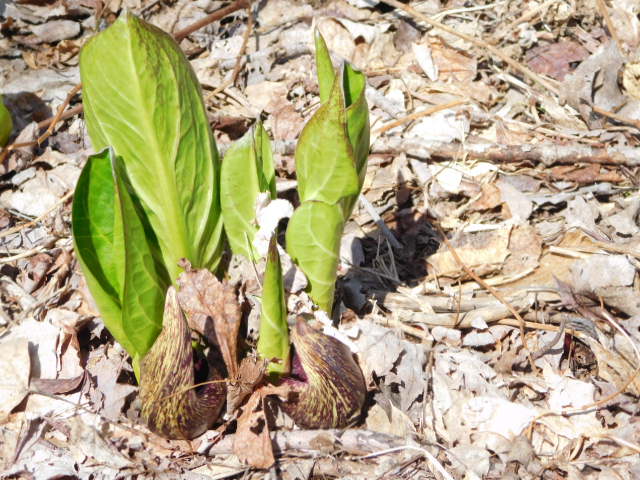
Generating its own heat, skunk cabbage remains reliably in sync with my calendar expectations.

Septuagenarian birthdays are naturally contradictory.  As I enter 72, I am extremely grateful for all that I have, my health, my stability, my family, my history, an infinite list of blessings on the scroll of life.  Yet each year, sometimes subtly, sometimes with loud gongs, I am less than I was.  I have never been one to pretend, and today I am much less energetic and focused than even a short decade ago.

People tell me not to worry about it.  After all, most of our political leaders, many of our industrial leaders, a lot of our cultural leaders are my age.  Aren’t they doing just fine.  Well, no, actually.  A culture headed by geriatrics frightens me. 

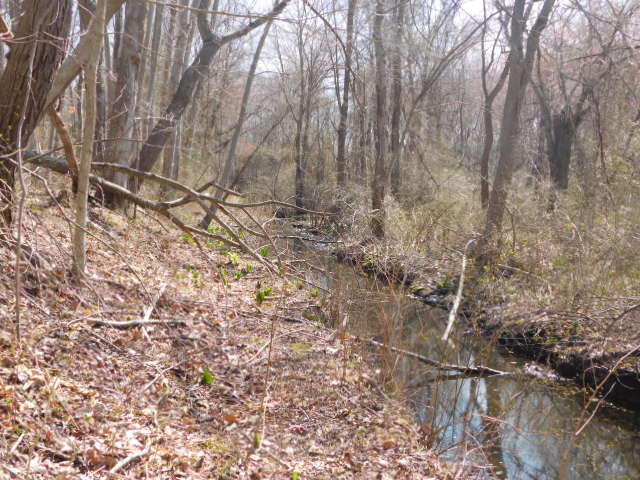
Tiny bits of green grace this hidden woodland, otherwise a wintry view.

I am in most ways more free than I have ever been.  My responsibilities have grown up and moved into their own lives, my only ambitions for our house is that it not fall down on us for a decade or so.  I spend time sitting, and talking, and puttering around, and am very happy.

But I am going nowhere.  I am as free as a tree rather than as a bird.  Nothing wrong with contemplation and remembrance and gratitude, I tell myself.  Even if I am doing those things more because I tire easily and ache afterwards than for any noble reason. 

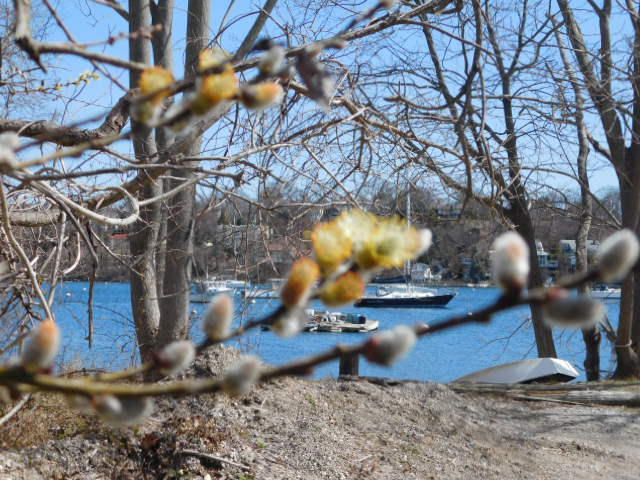
Pussy willows have moved right along their inexorable path, unnoticed by rushing traffic.

Well, the adage goes, consider the alternatives.  Oh, I do.  Because they loom over the next day, or next month, or next season, or next birthday.  It is hard to escape wondering if each twinge or momentary pang is not a signifier of something worse.  Over 70, I think a lot of people become natural hypochondriacs, often with reason.

Spring cures a lot.  At least for a while everything is full of energy and beauty and it is easy to feel rejuvenated with the rest of nature.  Having a birthday near the beginning of April is nice.  All I need to learn is to simply accept cycles and changes as do the daffodils and crocuses and arriving robins, and frolicking squirrels.  Just another bit of life on a magnificent planet. 

No Extravagant Equinox

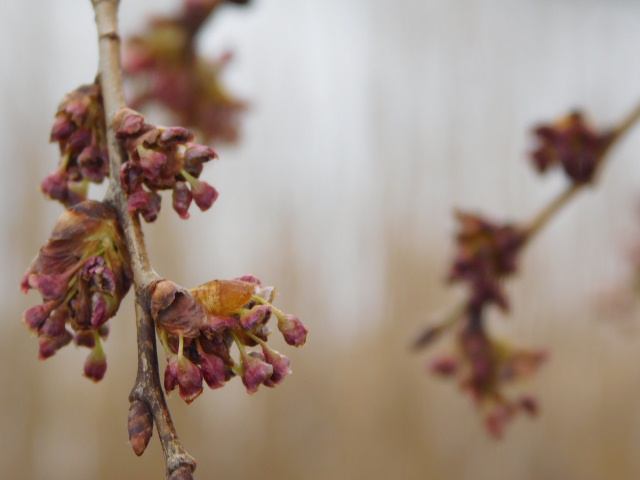
Relentlessly, silently, new growth and promise creeps from what long appeared dead growth.

Equinox has come and gone, with only TV meteorologists paying attention.  Spring has arrived, they claim, but it is still cold, and the land remains dormant.  Oh, the sun is brighter, and longer, and there are moments of warm hope.  Birds arrive from the south, chipmunks come out of hibernation, any time now pockets of insects will float on the breeze. 

But an industrial culture hardly notices.  No flags, bagpipes, or marching bands down city streets.  No wild party celebrations.  We’ve had Mardi Gras and St. Patrick’s day and soon the (anti-festival) of Income Tax Day.  Equinox goes by with less of a whimper than even Summer or Winter solstice.

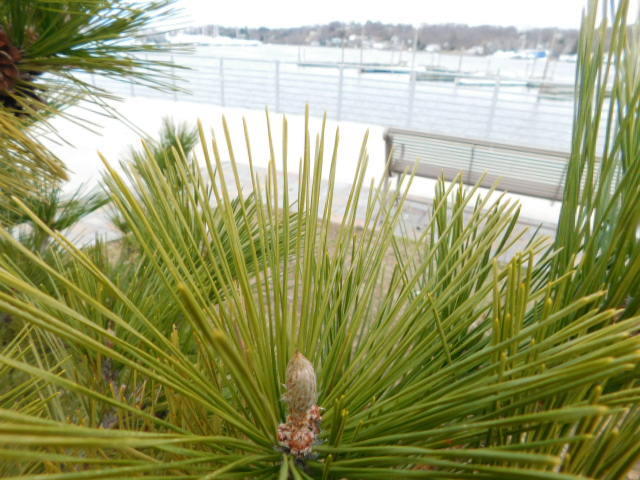
Sky winter grey, air February cold, but bright hopes shine for those who know where to look.

In ancient, agricultural and hunter days, there were rituals for the various moons of the seasons, careful calculations of solar events, occasional sacrifices to the various gods.  Especially on the great Northern land masses, it was critical to know when the days reached certain points, for the stars, sun, and moon guided when to plant, when to do other preparation for the climax of natural cycles.

Spring signs are often confusing.  Crocus, forsythia, greening grass, animal mating ritual all occur to their own needs and rhythms.  Appearances deceive, for water can be warming, ice thinning, earth reawakening with almost no outward sign.  The sun, however, provides a relatively stable fixed point from which farmers and hunters can confidently say _ in one locale _ that this is likely to happen now.

All that is lost to us.  We have a rich and interesting culture, but it is not oriented to solar, nor even terrestrial, events.  Equinox hardly matches the excitement of basketball tournaments or the start of soccer and baseball training. 

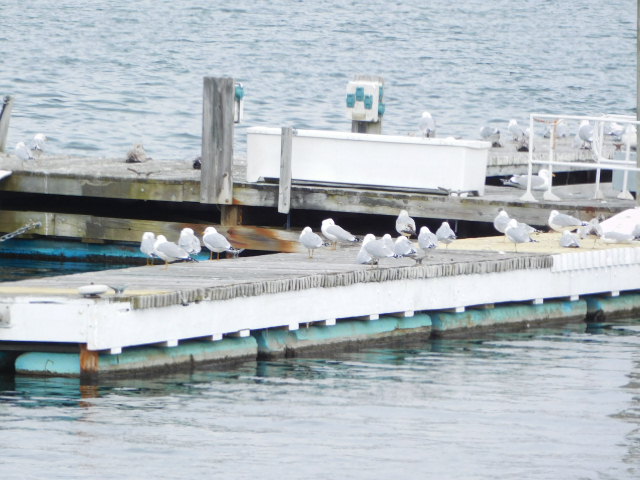
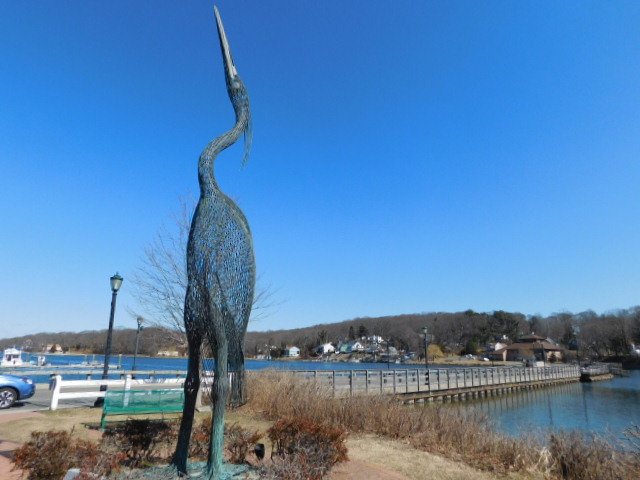
Seagulls rule the dock until the masters of absent vessels try to take it over once more.

Clocks and watches and automobiles and electricity and indoor malls and electronic entertainment and … well the list is endless … have destroyed our sense of cosmic time.  We live seconds and hours and even days that are artificial.  Seasons have little meaning, for work continues with only scattered interruptions.  Besides, almost anyone can escape to another climate anytime for a weekend or longer.

I am not complaining.  In the “natural order” of not long ago, I would have probably been dead over thirty years ago, certainly dead ten years ago, and if I had somehow managed to attain my current years I would have been a lonely and pain-racked cripple, unable to do the simplest tasks of the culture.  Today I eat well, I drive, I live a life that is “normal” for these wonderful times.

Paradoxically, that means I am one of the few folks who have the time and energy to actually enjoy seasons, nature and the old-time celebrations of a sun-based seasonal calendar. 

As A Child

Jumbled relics line the shore, each mysterious and magical, ignored by those over 3.

Every young grandchild is above average in every way.  My wife and I find that we had largely forgotten our own sons’ toddler years, when we were too busy to think or notice much more than how we never got any sleep.  Now that we babysit a two-and-a-half year old, I am constantly amazed at how rapidly humans become competent.

We thought we childproofed our house, but we were wrong.  Clever hands and inquisitive mind.  A little while ago he was babbling incoherently, now he easily orders everyone around.  Shaky crawling has given way to study runs, jumps, and spins.  Expensive baby toys are no longer relevant.  Impossible puzzles have become boring exercises. 

Each day, it seems, another ability manifests.  Cutting, or counting a little higher, or recognizing a complex symbol as a letter, or remembering the pages of a storybook.  Following complicated instructions, knowing how to get older people to do things, finding interesting ways to become interested in the world.  Showing, at times, fierce concentration to obtain mastery.    

A fortunate few manage to hang on to a sense of whimsy as they grow up, some of them produce unexpected sculptures.

Some people, particularly the lonely, now claim consciousness and intellect for various species.  That all depends on definitions.  Dogs, bred to be both useful and appealing, are the most commonly noted.  There seems to be majesty and intelligence behind those big eyes.

But compared to what any normal child in their third year can do, the rest of the animal kingdom is pretty dumb.  They cannot respond to a complex choice (“would you rather go outside or sit and watch tv?”),  they cannot manipulate blocks into a building which then then play with as a fire station, they cannot draw a circle on a chalkboard, nor learn to sing along with myriad songs.  Watching a person grow at this age easily demonstrates why humans have become, for better or worse, masters of the planet.  Without really exerting themselves too much.

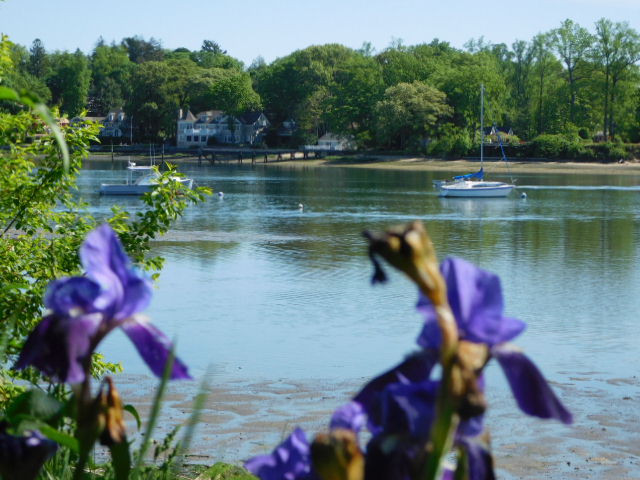
Ripples and reflections and rocks under shifting light _ a natural abstract artwork for those with eyes to see and just a little more time than most of us have.

We all ask: why do perfect little angels grow up into something else?  But adults are amazing too _ we just take everything for granted.  We take ourselves for granted.  We are not simply logical machines, we are not just wetware instinctively reacting to the environment.  Truthfully, no person who contemplates existence ever believes they understand the reality of our being.

This is a cynical time, in which we all consider ourselves worldly-wise.  Each of us is Hamlet _ able to recite “what a piece of work is man …” but finally agreeing with him that each of us is just temporary futile dust, of no consequence to anything.  Our little toddler is certainly “a piece of work,” and hopefully has a long way to dustdom.  In his simple momentary happinesses, I find my own better equilibrium with our miraculous universe. 

Coiled

Often by mid-March andromeda has been blooming a while, but not this year

When I was working, early March was the easiest time.  New annual projects were in their most productive and least annoying stages.  Commuting was relatively mindless and hassle free.  There was no envy of passing the day at a beach or park.  And increasing daylight promised that vacation and outdoor fun, not to mention late spring holidays, were just over the horizon.

Now, brilliant sunshine deceives.  I spring  out the door into what I think will be a glorious experience, and am hit in the face and bones with biting raw chill.  I frantically seek signs of emergence of life, and find them (if at all) creeping much too slowly for my taste.  Where are the daffodils?  Where the pussy willows?  Alas, only in the supermarkets, flown in from foreign lands.

My environment remains coiled.  The force of spring runs in maple sap, bulbs are gathering strength, migratory birds are already on the way north.  Mating antics break out in wildlife everywhere.  Careful examination reveals that indeed tree buds are beginning to swell and color, briars and roses are unwrapping leaves.  But all resembles sprinters prepared for the starting gun, coiled for action, motionless at the moment.

A few clusters of rose leaves brighten my increasingly desperate examinations.

March is, after all, part of winter.  Ski resorts do landmark business.  People flee to relax on warm beaches in the south of Florida or always-warm Caribbean.  Snowblowers, shovels, and salt must be kept at the ready.  Evening soup is preferred to salad.

But as equinox approaches, we remember similar daylight back in September, when all was still warm, trees green, and the outdoors lingering in hospitality.  The cruel differences are not quite apparent as I gaze out the window.  

Fortunately, we humans are also aware of time and cycles.  I know, intellectually at least, that September is a crueler harbinger of a long dark cold time to come.  March is the beginning of new bursting joyful life.  Both take a little while to get fully underway.

Bulbs shoving up in earnest, now leaves must be cleared and fertilizer applied on the thawing flower beds.

Like those in ancient tribes, I find it elegantly easy to anthropomorphize nature.  Spring is posed, ready to move, just awaiting the perfect moment.  Animals and plants are moving into position in the coming extravaganza.  The wind is cruel, the storms capricious, mother nature fickle.  Each cold snap or snowfall seems a personal affront, each day over fifty degrees a reward.

Science is a fine thing, civilization wonderful, but we remain deliciously tied to our prehistoric instincts.  In some ways they are more captivating and real than all our logical constructions.  March can be crueler than April, and is easily visualized as being so on purpose.  That gives us perspective, and for all we know is true reality.

Comin’ Tomorrow

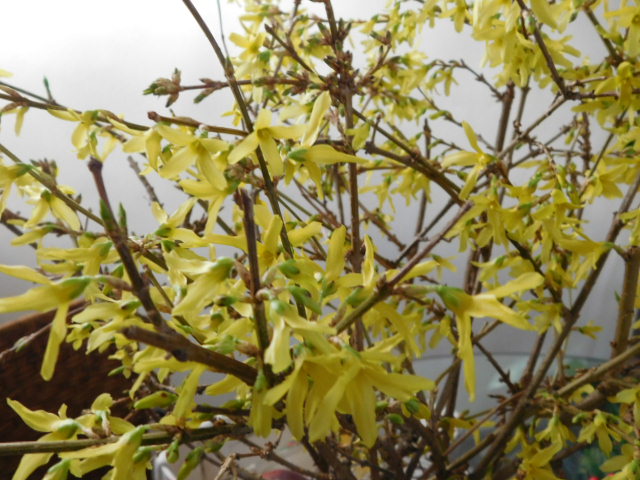
Forced forsythia still bloom extravagantly in the kitchen, promising better days outside.

Took a frosty morning walk along frozen paths at Caumsett State park, enjoying clear blue sky, bare tangled woodland, brown meadows.  Horses soaking up strengthening sunshine, beech leaf buds surprisingly swelling, a chipmunk early out of hibernation scampering on a leaf, and daffodil shoots barely peeking above the soil here and there.  Late winter harbingers of spring recalled all my other springs as if nothing has changed. 

Away from the constant cries of print and electronic media, the world seems well.  But I am informed that it is not, that in 12 years or less than a century _ or possibly next week _ environmental disaster will kill everyone, or civilization will crash into desperate anarchy, or human dreams will finally end in nihilistic failure.  The beech tree and the chipmunk are deceptively normal:  I am enjoying the last glories of a doomed planet.

An old depression-era song goes “don’t know what’s comin’ tomorrow.”  Nobody does.  Any savant who claims knowledge of what will be in 20 years is a charlatan.  Extrapolations, predictions, prophecies have a way of twisting into strange forms, even though some of them may get some things right, in some kind of way. 

March contains nasty snowstorm surprises, each one hawked as the next grand disaster.

I may be cynical because as part of the boomer generation I have often heard, and occasionally heeded, experts crying wolf for over seventy years.  “Ban the bomb” and the “Population Bomb” and millions of other doomsday scenarios have come and gone.  Life, culture, reality have endured.  Maybe this time scientific experts are right.  I remain too jaded to worry.

Individual existence has always been precarious.  None of us know if we will see the next weekend.  All of us know we will not see the next century.  Science has tried to seduce us into seeing reality in the long, geologic view.  Consciousness, however, is measured in moments, not eons.  My personal story is hardly different than that of any peasant in any other age, when famine or plague or barbarians or simple bad luck could ruin all hopes, and even being, in an unexpected instant.

This time is different, they chant.  The problems are not individual, not local.  This time is everywhere, global, for all time.  I understand intellectually, but viscerally I still exist today under clear blue skies, watching a chipmunk run.  I sip a glass of water, read a book, write this as I always have. 

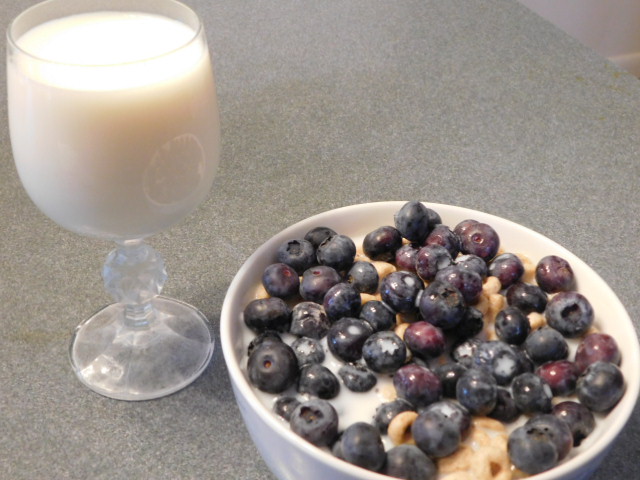
My seemingly simple breakfast is composed with oats from the Midwest, blueberries from Chile, milk from upstate NY, all using energy to grow, prepare, package, transport _ industrial civilization on a grand scale.  

The ditty continues: “travlin’ along, singin’ a song, side by side.”  Each day which remains is special.  These moments are special.  The future may hold terrors, or everything may work out nicely, but I will never know.  Trying to know is futile, and I confess that I regard most of the gestures of many others as useless superstitions, placebos of the mind.  Bicycling to work will no more stave off carbon disaster than wearing a saint’s relic will prevent black death.  But it makes us feel we are at least doing something.

After my walk, I remember trees abundant over hills, horses romping as breath glows around them, and countless geese taking a sedate crowd walk across a field before one panics and the rest take startled flight with raucous cries.  Tomorrow _ well I don’t know.  I will fight for memory preservation of today, never extended forever.

Cold Comfort

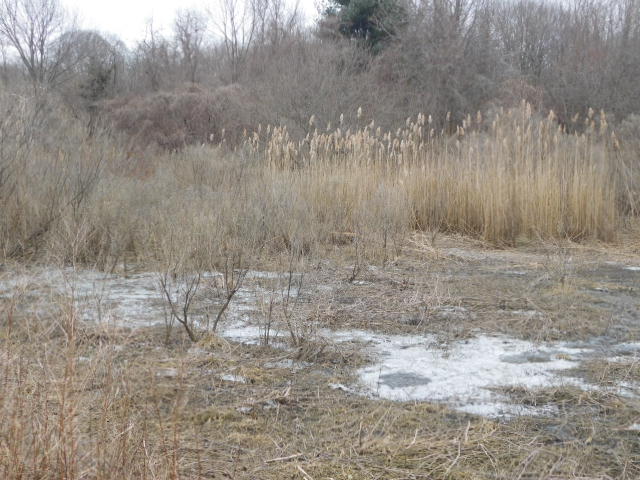
Ice barely skims puddles during this year’s freeze/thaw gymnastics.

Around here, some people love the winters.  Others despise, endure, ignore, or accept its cold and snow.  When I worked I was often happiest in winter because I did not think I was missing out on anything else.

Most residents claim they like the change of pace, the natural reset.  We get fabulous cycles of spring, summer and fall.  My own feelings are probably the result of growing up in a similar environment; perhaps we are always eventually happiest where we recall our childhood.

But sometimes, day after day can be wearing.  We have fortunately avoided heavy enduring snow cover this year, but by late February with no signs of breakout, winter has worn out its welcome.  Not even the tips of spring bulbs are showing, except for a few snowdrops.  Brambles have no baby leaf shoots.  Grass remains brown.  Bright sunny days are a kind of mockery.

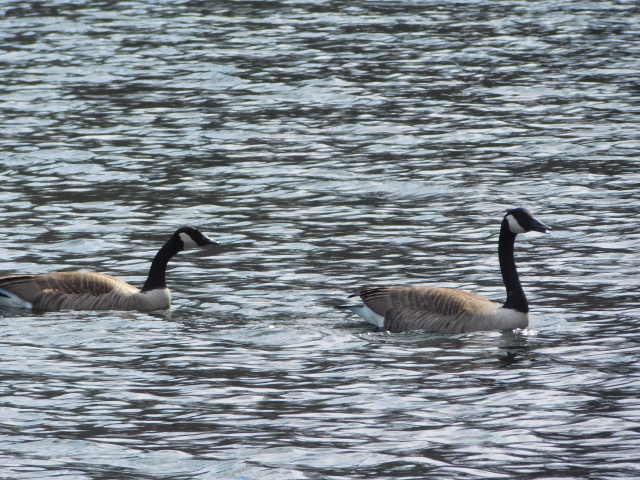
Male geese display as much frantic pre-spring bravado as any human males at the local bar scene

Enervation and cabin fever are likely afflictions.  It is all very well to try to meditate or think deep thoughts, to catch up on reading or entertainment, to go out to eat or attend various events.  We are fortunate to live in a society that offers so much.  And yet …

Sometimes when it is 23 outside, and clouds promise chill wind or damp snow, it is awful hard at my age to jump out of bed.  I become prone to just sitting with an empty mind and no ambition whatsoever, content with memories and less.  Any activity a bit too much to begin.

However, when I do get a move on, when I ramble through silent muddy woodland trails or near-tundra meadows, I am profoundly grateful for the unusual quiet and solitude.  Everyone else seems to be somewhere else, my whole immediate environment is mine alone.  King of the world.  Empty spaces all around, as close to nature as it is ever possible for me to be.

In spite of occasional power takeoffs with frantically flapping webbed feet, swans emanate total calm.

Besides, the glide to spring is in full force.  Days are much longer, sunsets much later, daylight much sooner.  Most puddles melt when hit by the increasingly strong rays of the sun.  If I search hard enough there are plenty of signs of life stirring, from the frisky squirrels stealing from the birdfeeder to the swans beginning mating flights over the harbor.  Rumor has it that a local park already offers lessons in maple-sugaring. 

The best thing about the end of February is that these deepest of winter hours also hold the most hopeful promises of what is to come.  For one more year, I have survived the bleakest times, and any terrible weather day is simply a temporary setback. 

Truly nothing to complain about.  I’m warm, well fed, healthy and entertained.  By all measures, a genuine king of life.

Fading Omens

Raindrops and fog are just as pretty as flowers glowing under clear sunny skies.

Our environment is so infinitely rich that we often fail to notice the absence of something.  Unconsciously, we are tuned to detect threats from something, rather than nothing.  That is why the so-called sixth extinction is so insidious. 

I would worry if thousands of dead ducks floated on the harbor, but I am less aware that this year instead of scores of buffleheads I have seen only two.  I would be aghast at masses of dead monarch butterflies carpeting my yard in summer, but rarely pay attention to the fact that there are few where there used to be many.

Extinction in our times is not often massive.  It is a phenomenon of less and less, becoming none.  It is not suddenly in one area, but gradually everywhere.  That is the most frightening aspect of the tragedy, that we will be mostly unaware until it is too late.

Truly empty puppy cove, not even a seagull or crow, let alone a wild duck.

Children of the suburban post-war era are used to vanishing local wildness.  I grew up familiar with roaming box turtles, ground-nesting birds, various types of snakes, odd insects.  As they disappeared, I assumed there were still lots more over the hills, upstate, in the jungles described in National Geographic.

On Long Island, only forty years ago, there were lobsters being harvested nearby, toads in the sand of the south shore, bats flying at twilight.  My wife remembers seals in Huntington harbor.  We assume that they have simply moved to better places.  We are overoptimistically wrong.

Life is tenacious.  There are lots of squirrels, pigeons,  gulls, rats, raccoons and mosquitoes.  Current worries are diminishing bees and other useful insects, a drop in numbers of horseshoe crabs, but they are still easily found. 

For years, migrating bird counts have been plummeting, a sign that all is not well elsewhere.  Articles from alarmed scientists note the end of many species, a disastrous fall in insect activity, the possible collapse of rain forests.  But those are far away, out of sight, out of mind, as I take my local walk.

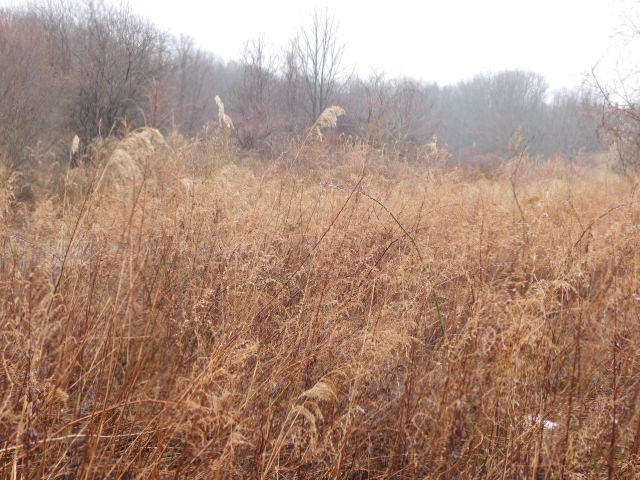
Weeds will certainly survive any human apocalypse, and all unknowing will provide what was once considered beauty to an unappreciative world.

I like to fantasize that something will be done, that it all will work out, that somehow my childhood Pleistocene paradise will be saved or will save itself.  Logically, I understand that such is too late already. Looked at one way, humanity is just another natural catastrophe, like an asteroid.  No more use to lament extinct birds or frogs than extinct dinosaurs.

I grew up thinking nuclear war would destroy everything.  It has simply taken a little longer.  Back then, I knew there was nothing I could do about it.  Still feel the same way.  An awful lot of people voted in an anti-science administration.  An awful lot of people are willing to kill a rain forest to have a new floor.  An awful lot of people need to eat and are willing to do whatever it takes.  Me yelling “stop” at them has no effect whatever.

So at times like this, I simply put it all in one bucket and enjoy a possibly dying world as I am enjoying a soon-to-die self.  There are still wonderful experiences, still possibilities.  Maybe all the rest will work out, but I will never know.