
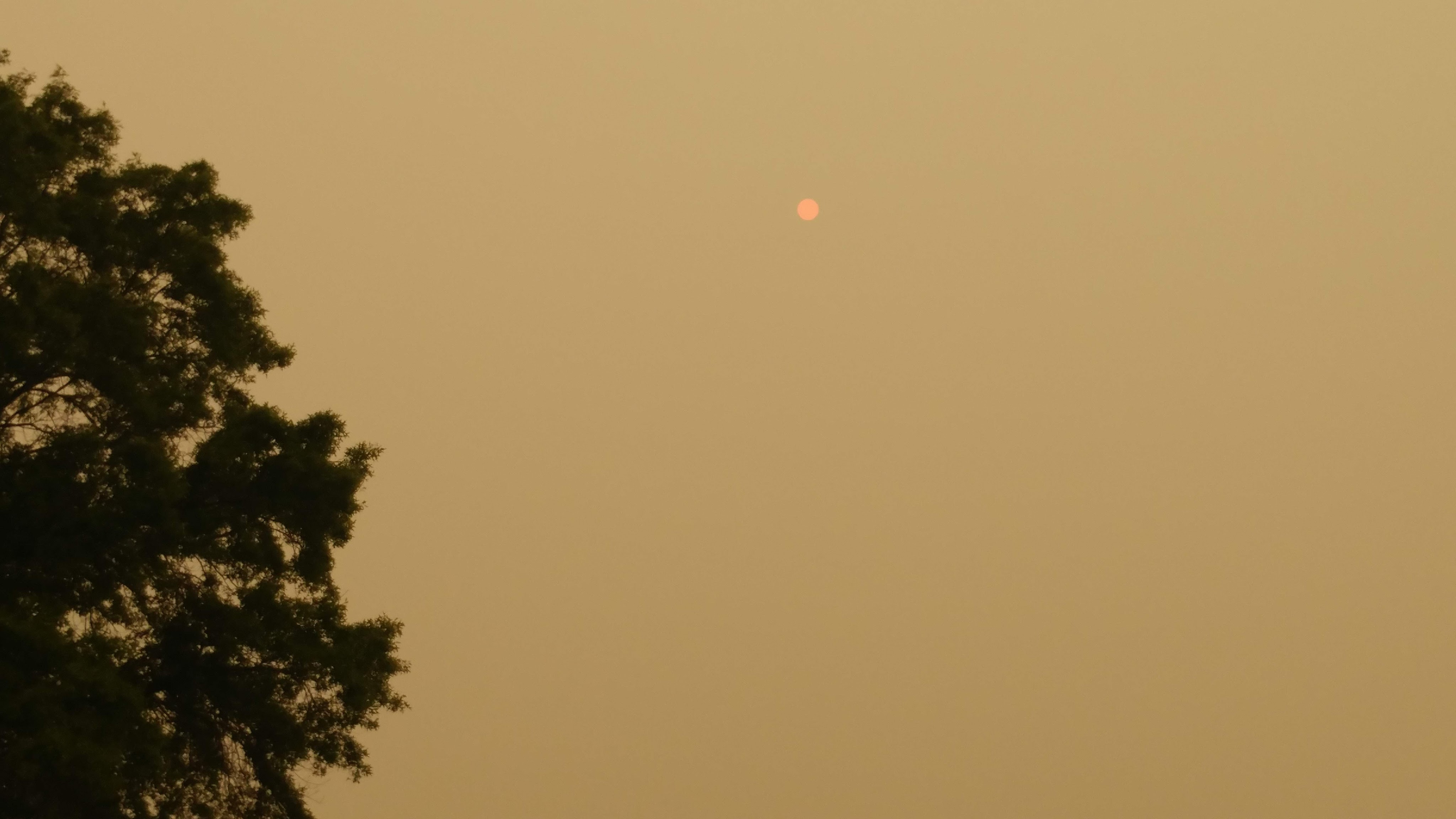
An early childhood lesson for all of us is that one time events are not reliable predictors of the future. Being forgiven once for breaking a dish does not mean that such will always be the case. Useful patterns come only from repetitive series. Even then, we are often mistaken in what is cause, what coincidence.
So a day of heavy smoke from Canadian wildfires blotting out midday sun in Manhattan does not prove climate change _ let alone climate catastrophe _ is real. Nor do a series of fires during consecutive dry years. And it definitely does not prove human causality.
But in this debate, I sense a stubborn resistance to new theory, based only on what people are used to thinking. I am reminded of the cigarette debates of the fifties, when it was seriously argued that sick people prone to cancer were attracted by the curative properties of tobacco, and that cigarettes worked for all those smokers who did not die of lung cancer (only because tobacco as medicine was not 100% effective.) And of the dire predictions about the millions of people to be burned alive in car crashes because they could not unbuckle their seat belts. Or, more to the point, of those who long ago claimed species could never go extinct because God had created them once.
Human climate change _ and ecological disruption by all other human activities _ is increasingly verified as prediction. Whether or not red smoke confirms it is irrelevant. But sometimes such direct omens and harbingers of doom _ like comets in ancient days _ do more to change public opinion than any well-presented weighty scientific analysis.
Words can be ignored. Coughs and tears from dense red smoke everywhere much less so.

 HuntingtonHarborThoughts